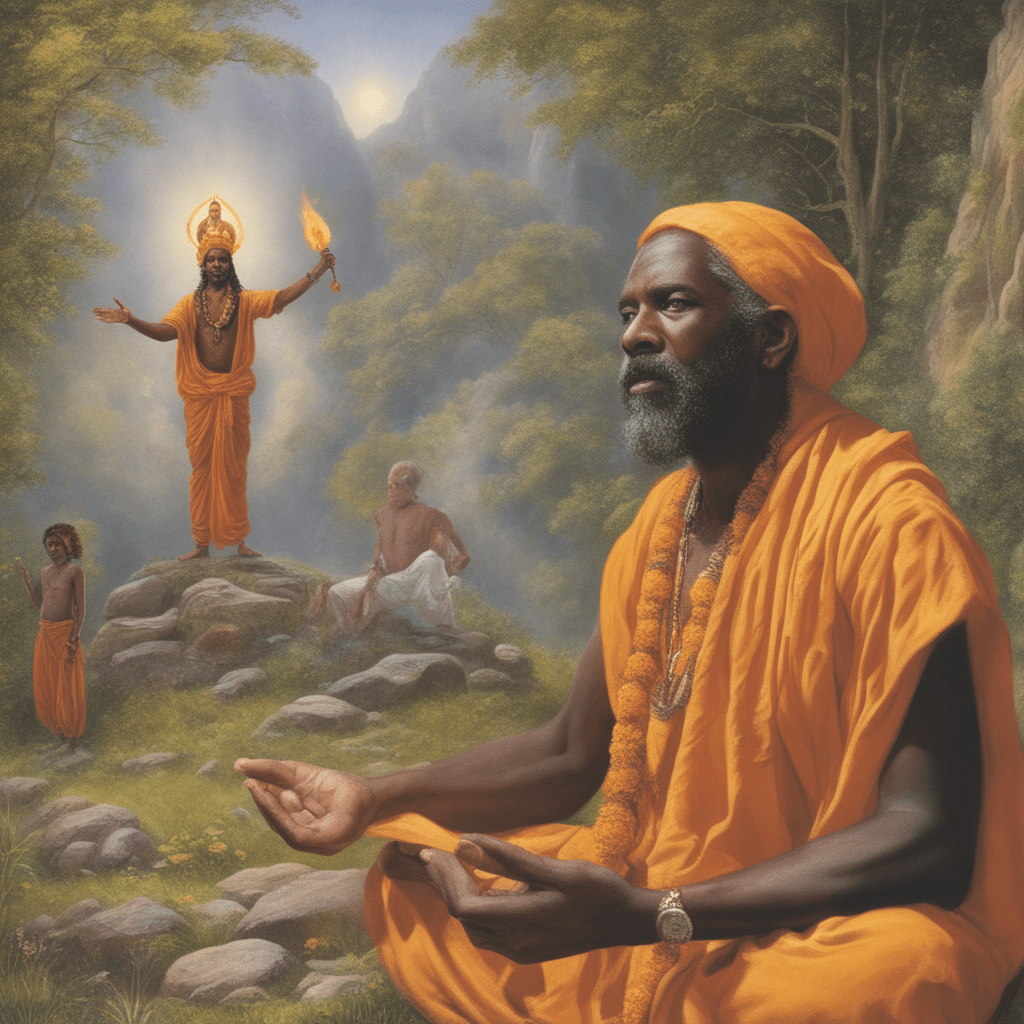
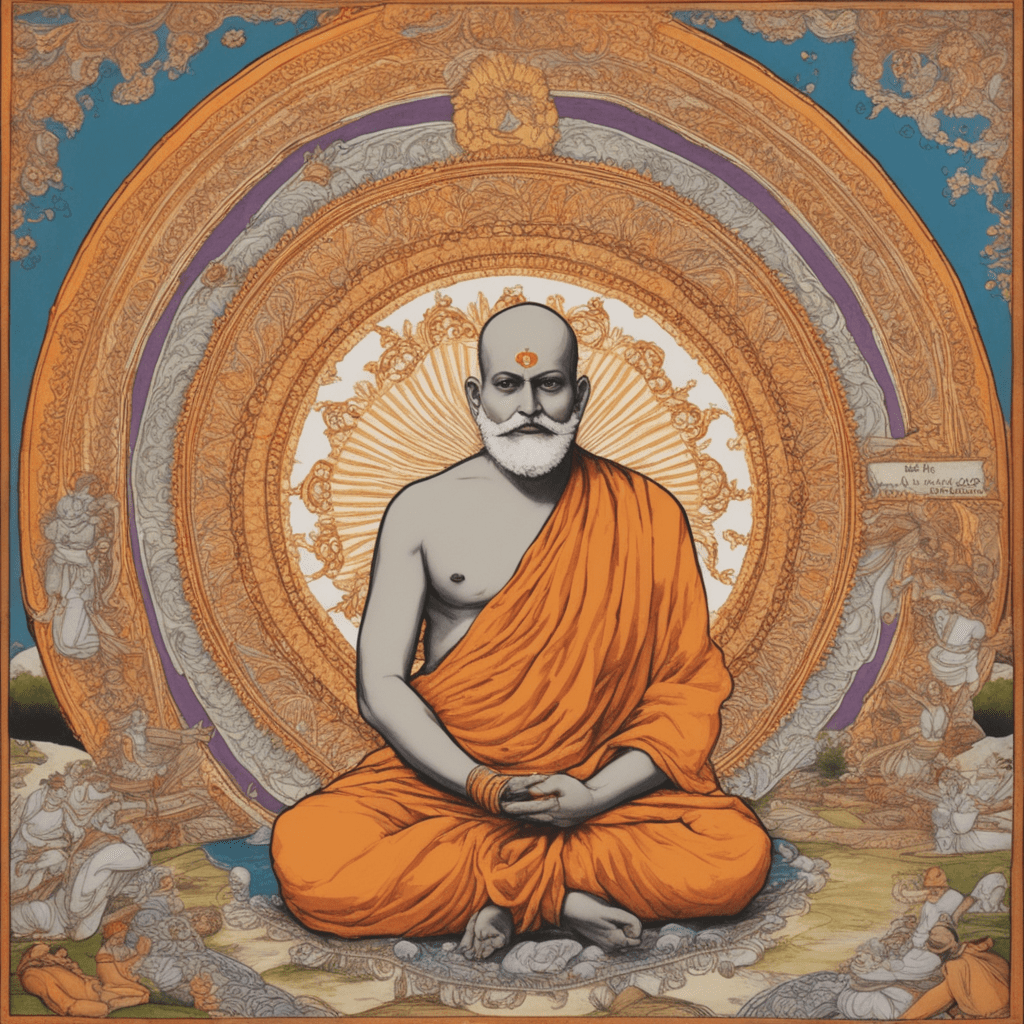
Unveiling the African Essence in Eastern Philosophy

A Tribute during Black History Month

As we embark on the celebration of Black History Month, it’s essential to recognize the myriad contributions of African descendants not just in shaping modern civilization but also in sculpting the contours of Eastern philosophy. The historical interweaving of African traditions with Eastern thought offers a rich narrative, highlighting a profound exchange of wisdom that transcends geographical and cultural boundaries. This blog post seeks to illuminate these connections, drawing upon documented examples to honour the African influence on Eastern philosophies and spiritual practices.

### The Ancient Egyptian Influence on Greek Philosophy


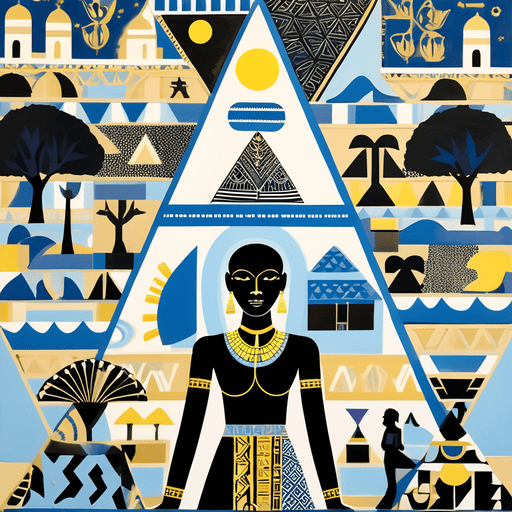
The journey begins in ancient Egypt, a civilization that stood as a beacon of knowledge and enlightenment long before the Hellenistic era. It’s well-documented that Greek philosophers, who are often credited with laying the foundations of Western philosophy, were greatly influenced by their Egyptian counterparts. Thales of Miletus, who is recognized as the first Greek philosopher, is said to have studied in Egypt, immersing himself in the profound knowledge of the priests and sages. Plato, too, spent thirteen years in Egypt, learning from the wisdom of ancient hieroglyphs and the teachings of Egyptian mystics. This exchange illustrates how African wisdom traditions shaped the philosophical underpinnings that would later influence the development of Eastern thought through the Hellenistic spread into Asia.


### The Spiritual Synergy between African and Eastern Traditions

Further exploring the spiritual synergies, we find remarkable parallels between African spirituality and Eastern philosophies, particularly in their understanding of the universe and the interconnectedness of all life forms. African spiritual traditions, with their deep-rooted beliefs in the oneness of being and the ancestral realm, resonate with the core principles of nonduality and interconnectedness found in Eastern philosophy. For instance, the concept of Ubuntu in Southern Africa—emphasizing community, connection, and mutual caring for all—is echoed in the philosophies of Buddhism and Hinduism, which advocate for compassion, empathy, and the realization of oneness.

### The Yoruba Influence on Transcendental Meditation

An intriguing example of direct influence is the practice of Transcendental Meditation, which shares similarities with the meditation practices of the Yoruba religion of West Africa. The Yoruba spiritual system, with its intricate practices of meditation and communion with the divine, predates many Eastern meditation practices. The emphasis on achieving a higher state of consciousness and connecting with a divine realm in Yoruba spirituality is mirrored in the meditative practices of Hinduism and Buddhism. This parallel not only highlights the ancient wisdom of African spiritual systems but also their contribution to the global mosaic of spiritual practices.

### Conclusion: A Shared Legacy of Wisdom

The celebration of Black History Month offers a profound opportunity to acknowledge and honour the African roots intertwined with the philosophical and spiritual traditions of the East. By recognizing these contributions, we not only pay homage to our African ancestors but also embrace a more inclusive understanding of the world’s philosophical heritage. This exploration invites us to consider the depth and richness of African influence on Eastern thought, urging us to delve deeper into our collective spiritual heritage and celebrate the shared legacy of wisdom that unites us all.

Morgan O. Smith

Yinnergy Meditation, Spiritual Life Coaching & My Book, Bodhi in the Brain…Available Now!

https://linktr.ee/morganosmith

Embracing the Moment of Nondual Suchness

Beyond the Realm of Experience

In the intricate journey of understanding consciousness and existence, we often stumble upon a profound concept: the moment of nondual suchness. This concept, deeply rooted in Eastern philosophies, especially in Zen Buddhism, transcends the conventional boundaries of experience and knowledge. It presents a paradox that challenges our fundamental understanding of reality: at the moment of nondual suchness, direct experience cannot be experienced.

What does this mean, and why is it significant? To explore this, we must delve into the nature of nonduality. Nonduality refers to a state of consciousness where the distinction between the subject and object dissolves. It is a realization that there is no ‘me’ separate from the rest of existence. In this state, the usual dualistic framework of perceiver and perceived, experiencer and experienced, falls away.

This leads us to the crux: if there is no separation between the experiencer and the experience, can we truly say that an experience is happening? The moment of nondual suchness suggests that in its purest form, experience transcends the dichotomy of subject and object. You do not experience the moment; you become the moment. There is no ‘you’ observing, feeling, or thinking about the experience; there is just the undifferentiated reality of what is.


This notion can be controversial and thought-provoking because it contradicts our everyday experience where we are constantly distinguishing ourselves from our experiences. We are taught to value our perceptions, emotions, and thoughts as what defines us. Yet, the concept of nondual suchness invites us to consider a state of being where these personal distinctions are not just irrelevant, but nonexistent.

Why is this perspective important? It encourages a radical shift in how we perceive ourselves and the world around us. It challenges us to let go of our habitual patterns of thought, our constant categorization, and our deep-seated need to analyze and differentiate. By contemplating nondual suchness, we open ourselves to a more holistic understanding of existence, one that is not confined by the limits of individual perspective.

In practical terms, embracing this concept can lead to a profound sense of peace and connectedness. When the illusion of separateness falls away, so do the conflicts and struggles born from it. What remains is a state of pure being, unburdened by the complexities of dualistic thinking.


To conclude, the moment of nondual suchness presents a radical and transformative viewpoint that challenges our conventional understanding of experience. It invites us to question the very nature of our existence and to explore a realm of consciousness beyond the limitations of individual perception.

Morgan O. Smith

Yinnergy Meditation, Spiritual Life Coaching & My Book, Bodhi in the Brain…Available Now!
https://linktr.ee/morganosmith

Unveiling the Unity

A Deeper Dive into the Essence of Oneness

In the realm of spiritual enlightenment and self-discovery, the distinctions and connections between the notions of sameness, source, and essence often intertwine, leading to profound insights and confounding paradoxes. The journey toward understanding the intricate relationships among these concepts invites us to explore the depths of nonduality, a cornerstone of Eastern philosophy that transcends conventional wisdom and challenges our perception of reality.

**The Illusion of Sameness**


At first glance, the idea that everything and everyone is the same appears to encapsulate the essence of unity. However, this perspective only skims the surface of a far more intricate understanding. It suggests a superficial equality, overlooking the unique expressions and experiences that animate the world. This view, while promoting a sense of universal brotherhood, fails to acknowledge the rich diversity that permeates existence.

**The Depth of Source**

Moving deeper, the realization that all beings and phenomena emanate from the same source introduces a layer of profound connection that sameness alone cannot convey. This shared origin does not erase individual differences but rather celebrates them as expressions of a singular, underlying reality. It is here that we begin to touch the essence of nonduality, recognizing the interconnectedness of all without negating the diversity of the manifest world.


**The Revelation of Being Source**

To say that everything and everyone is source represents a pivotal shift in perception. It is an acknowledgment that the source is not merely an external wellspring from which creation flows but is inherent in every particle of existence. This realization dissolves the illusion of separation, unveiling that at our core, we are not just connected to the divine; we are the divine. This insight invites a radical transformation in how we relate to ourselves, others, and the world around us.

**The Circular Dance of Unity**

The journey comes full circle with the understanding that if everything and everyone is source, then inherently, we are all of the same source, and thus, on a fundamental level, we are the same. This circular logic is not a return to the superficial notion of sameness but an ascent to a higher vantage point from which the interconnectedness of all life is perceived as both the source and manifestation of existence.

**Embracing the Paradox**


The exploration of these concepts is not merely an intellectual exercise but a gateway to transcendent wisdom. It challenges us to embrace the paradoxes of existence: unity and diversity, emptiness and form, the eternal and the ephemeral. By contemplating these truths, we open ourselves to a deeper understanding of the universe and our place within it, fostering a sense of awe and a deeper connection to the mosaic of reality.


**Conclusion**

The path to spiritual awakening and enlightenment is enriched by the contemplation of sameness, source, and essence. Each concept, while distinct, is intricately linked to the others, offering a multifaceted perspective on the nature of existence. As we delve into these themes, we are invited to transcend the ordinary, recognize the divine within and all around us, and awaken to the profound unity that underlies the mosaic of life.

 Morgan O. Smith

Yinnergy Meditation, Spiritual Life Coaching & My Book, Bodhi in the Brain…Available Now!
https://linktr.ee/morganosmith

Embracing the Infinite

Understanding Para Brahman as the Ultimate Reality

God, referred to as Para Brahman in this context, represents the absolute of all absolutes – an entity encompassing everything from the beautiful to the good, the bad, and the ugly. This concept presents a holistic view of divinity, not limited to only the positive or traditionally ‘godly’ aspects but encompassing all facets of existence.

Para Brahman, in many Eastern philosophies, particularly in Hinduism, is seen as the highest form of Brahman – the ultimate reality or cosmic spirit. This interpretation of God goes beyond the traditional Western notion of a deity who is separate from its creation. Instead, Para Brahman is seen as both immanent and transcendent, existing within and beyond all things.

This idea challenges our typical understanding of divinity and morality. It suggests that everything in existence, regardless of our human judgments of good or bad, is part of this ultimate reality. This inclusive view of the divine implies a deeper, perhaps incomprehensible, unity to all aspects of existence.


This perspective can be both comforting and disconcerting. Comforting, because it suggests a universe that is intrinsically connected and purposeful. Disconcerting, because it challenges our notions of morality and justice, blurring the lines between what we typically consider ‘good’ and ‘evil.’

Such a viewpoint can lead to a more compassionate and understanding approach to life. Recognizing that all aspects of existence, including what we perceive as negative or undesirable, are part of a greater whole, can foster a sense of tolerance and empathy. It encourages us to look beyond our immediate judgments and understand the broader context of life’s events.

However, it also raises complex questions about free will, destiny, and the nature of existence. If everything is part of Para Brahman, what does that say about individual agency and the consequences of our actions? Are good and evil just human constructs with no basis in the ultimate reality? These answers lie within.


In conclusion, viewing God as Para Brahman – the absolute of all absolutes – offers a profound and encompassing perspective on divinity and existence. It challenges our conventional views and invites us to contemplate the deeper connections and meanings of all that occurs in our lives and the universe at large.

Morgan O. Smith

Yinnergy Meditation, Spiritual Life Coaching & My Book, Bodhi in the Brain…Available Now!

https://linktr.ee/morganosmith

The Unforeseen Impact of a Brief Encounter

My Journey to Spiritual Awakening

Introduction: It was a chance meeting in 2006 that altered the course of my life. At an event where I was the emcee, I crossed paths with a young black man named Sanander Aniiuwah, who, to me, embodied the essence of an enlightened being. He stood at average height, his appearance marked by dreadlocks and a possible beard, draped in an off-white robe, reminiscent of a Jesus-like figure, wandering in sandals—or in my recollection, often barefoot, even in the chill of winter. The presence of attractive women by his side only heightened my curiosity about him.

Sanander’s Aura and Philosophy: Sanander was not just an ordinary man; he was a local vendor who used his booth at special events as a platform to engage in deep conversations about Eastern philosophical concepts, such as spiritual enlightenment. Despite having practiced meditation for three years by then, his ideas were beyond my grasp. But one late Saturday afternoon at a black cultural youth event, Sanander introduced me to the teachings of Osho, an unfamiliar name to me at that time. He read a quote that struck me profoundly: “God never created the universe, because the universe is still being created.” This statement resonated with me, sending me on a quest to explore Osho’s works and the broader concept of spiritual enlightenment.

My Path to Understanding: In 2008, everything changed. I experienced what I now understand as a spiritual awakening, finally grasping the ideas that Sanander and Osho had been trying to convey. It was a moment of profound clarity, where concepts like nonduality and the nature of awakening, once foreign and elusive, became clear and meaningful.

Conclusion: Gratitude for a Life-Changing Encounter: Reflecting on that brief interaction with Sanander, I am filled with gratitude. His words, seemingly cryptic at the time, were seeds planted in the fertile soil of my curiosity. They grew over time, leading me to a deeper understanding of spirituality and my path to enlightenment. It was a perfect alignment of time and place that allowed me to receive and eventually comprehend these life-altering teachings.

Morgan O. Smith

Yinnergy Meditation, Spiritual Life Coaching & My Book, Bodhi in the Brain…Available Now!

https://linktr.ee/morganosmith

Brahman as the Ultimate Reality

In the realm of philosophical and spiritual inquiry, the concept of Brahman stands as a profound cornerstone, especially within the nondual traditions of Eastern philosophy. Brahman, as perceived through this lens, is not just an abstract concept but the very essence of reality itself—a reality that transcends the ordinary experiences of separation and duality which dominate our everyday lives.

At the heart of this understanding is the recognition that there is a fundamental oneness underlying all existence. This oneness, Brahman, is the eternal, unchanging truth that pervades every aspect of the universe. It’s an understanding that challenges the notion of individuality, as it posits that the deepest essence of our being, the Atman, is not separate from Brahman. In this view, the individual self and the universal self are not two but one.


This realization brings us to the experience of Sat-Chit-Ananda. These Sanskrit words translate to ‘existence, consciousness, and bliss.’ When one recognizes that their true nature is Brahman, they experience an unshakeable existence that is beyond birth and death, a consciousness that is vast and all-encompassing, and a bliss that transcends all worldly pleasures and pains.

The journey to this realization is deeply personal and transformative. It involves peeling away the layers of illusion or Maya that cause us to see ourselves as separate from the rest of existence. Through various practices such as meditation, self-inquiry, and devotion, one can gradually come to the direct experience of this truth.


The implications of this realization are vast. In seeing all beings and things as expressions of the same ultimate reality, our approach to life, our values, and our interactions with others undergo a profound shift. Compassion, empathy, and a sense of connectedness naturally arise when one sees themselves in others and others in themselves.

In conclusion, the concept of Brahman as the ultimate reality invites us to look beyond the surface of our experiences and question the very nature of existence. It’s a journey that leads us not only to deep philosophical understanding but also to a transformation of our entire being.

Morgan O. Smith

Yinnergy Meditation, Spiritual Life Coaching & My Book, Bodhi in the Brain…Available Now!
https://linktr.ee/morganosmith


The Liberation in Letting Go

Emptiness, Ignorance, and Identity

In a world incessantly clamouring with the din of possession, certainty, and self-promotion, the mantra “Embracing emptiness, cherishing ignorance, surrendering identity” arrives like a whisper from another realm. It calls on us to consider the counterintuitive notion that there is profound freedom and wisdom to be found in the very things we are conditioned to avoid.

**Embracing Emptiness**

Emptiness often conjures a sense of lack, yet in many Eastern philosophies, it is a profound concept, pregnant with possibilities. To embrace emptiness is not to fall into the void, but rather to make space for the new, the unforeseen, the life-affirming. It is the fertile ground of being from which all things spring and to which they return. In the spaciousness of emptiness, we find the flexibility and resilience to move with life’s undulating rhythms.

**Cherishing Ignorance**

Cherishing ignorance may seem antithetical in our knowledge-driven society. However, this is not an advocacy for willful naivete, but a reverence for the acknowledgment of our limitations. Socrates’ declaration of wisdom beginning with the admission of one’s ignorance holds here. Cherishing our not-knowing is an invitation to perennial learning, to the humility that keeps the mind supple, and the heart open to the mystery that is existence.

**Surrendering Identity**

Our identities, the personas we cultivate and present to the world, are often elaborate constructs grounded in who we think we should be or who we want others to believe we are. To surrender this identity is to strip away the superfluous and encounter the authentic self, the self not defined by accolades or attributes, but existing in simple beingness. This surrender is not a loss but a homecoming, a release from the exhausting endeavour of upholding our masks.

In combining these three tenets—emptiness, ignorance, and identity—we approach a way of living that is at once liberating and grounding. It invites a life lived with open hands, where attachment is a choice rather than a compulsion, and authenticity guides our interactions.

As we contemplate this mantra, we might find ourselves stepping into a flow of existence that is less about accumulation and more about experience, less about certainty and more about exploration, less about being someone and more about being part of something greater.

The journey toward embracing this wisdom is counter-cultural. It moves against the grain of our societal norms, urging us to let go of what we cling to most tightly. Yet, the promise it holds is nothing short of transformational—freedom from the self-imposed prisons of material excess, intellectual rigidity, and egoic constraint.

In this space, we find that emptiness is fullness, ignorance is wisdom, and surrender is power. And so, we continue to explore, with hearts wide open to the vastness of the unknown.

Morgan O.  Smith

Yinnergy Meditation & My Book, Bodhi in the Brain…Available Now!
https://linktr.ee/morganosmith

The Nuances of Bliss and Happiness

Satcitananda Explored

In our perpetual quest for joy, most people often use the terms ‘bliss’ and ‘happiness’ interchangeably. Yet, when we delve deep into philosophical and spiritual terrains, subtle distinctions emerge, making it imperative to comprehend their intricacies. One such profound concept from Eastern philosophy is ‘Satcitananda’ – an amalgamation of three Sanskrit words: Sat (existence), Chit (consciousness), and Ananda (bliss). This triune not only illuminates the differences between bliss and happiness but also offers a deeper understanding of our true nature.

**Happiness: The Fleeting Emotion**

Happiness is an emotion, an ephemeral state dependent on external stimuli. It’s reactive – linked to achievements, possessions, or relationships. As circumstances change, so does our state of happiness. This transitory nature often leaves individuals in a constant chase, forever seeking the next source of joy.

**Bliss: The Intrinsic State of Being**

Satcitananda, on the other hand, represents a state of bliss that is non-reactive and intrinsic. It’s an inherent part of our spiritual existence, unaffected by the ebb and flow of life’s experiences. This bliss isn’t about elation or a surge of positive feelings, but a profound peace and contentment stemming from the realization of one’s true self.

**Satcitananda: The Bridge to Understanding**

When we disentangle Satcitananda:
– **Sat** reminds us of our eternal nature, transcending the physical world.
– **Chit** points to the consciousness or awareness, urging us to be observant and reflective.
– **Ananda** is the culmination – the state of supreme bliss derived from understanding and embracing the first two.

In essence, while happiness is an ever-shifting emotional state predicated on external factors, Satcitananda represents the immutable core of our being, where we find true bliss.

The journey from happiness to bliss involves moving beyond the physical and the fleeting, to recognizing and embracing our eternal and conscious essence. It’s not about denying happiness or its value, but about recognizing a deeper, more sustainable form of joy.

In conclusion, as we navigate life’s tapestry, it’s beneficial to not just seek moments of happiness but to strive for the ever-present bliss encapsulated in Satcitananda. It’s a call to explore beyond the surface, to discover joy that isn’t just an emotion, but a state of being.

Morgan O. Smith

Yinnergy Meditation & My Book, Bodhi in the Brain…Available Now!
https://linktr.ee/morganosmith

You Are What You Eat, and Also What You Don’t

The Eastern Philosophy of Consumption and Abstention

In the intricate dance of life, we often hear the adage, “You are what you eat.” Rooted in the wisdom of many cultures, this phrase suggests that our physical and mental well-being is profoundly influenced by the food we consume. But just as importantly, the choices we make about what we refrain from eating also define us. In the vast expanse of Eastern philosophy, whether feasting or fasting, you are that.

The concept of ‘Ahara’ in Ayurveda, the ancient Indian science of life, teaches that everything we consume, be it food, thoughts, or experiences, becomes a part of our inner and outer constitution. It’s not merely about the nutrients we obtain, but the energy, the ‘prana’, that comes with it. A meal cooked with love nourishes the soul, just as a dish prepared in haste or anger might leave us feeling unsettled.

Conversely, the act of abstention or fasting, common in Eastern practices like Buddhism, Jainism, and Taoism, is not merely a physical exercise. Fasting is as much a mental and spiritual activity as it is a physical one. By abstaining, we aren’t merely depriving ourselves; we’re creating space. Space for reflection, for inner growth, and for reconnecting with the self.

In the Zen Buddhist tradition, the act of eating mindfully, paying attention to every morsel, and being grateful for the nourishment is a form of meditation. On the other hand, moments of abstention teach us about the impermanence of desires. As Lao Tzu stated in the Tao Te Ching, “To attain knowledge, add things every day. To attain wisdom, subtract things every day.”

In the end, the balance between consumption and abstention is a personal journey, an inner dialogue. It’s about recognizing that every choice we make, whether to indulge or to refrain, is a reflection of our inner state, our philosophies, and our connection to the world around us.

As we navigate through the rhythms of life, let us remember: that we are not just shaped by what we consume but also by what we choose to let go. And in that delicate balance lies the true essence of existence.

Morgan O. Smith

Yinnergy Meditation & My Book, Bodhi in the Brain…Available Now!

https://linktr.ee/morganosmith

Absolute Monism

Unraveling the Tapestry of Oneness

The vast universe, with its manifold entities and infinite complexities, often bewilders human minds. Philosophers and thinkers from time immemorial have grappled with questions about the nature of existence and the ultimate reality. One profound idea that surfaces recurrently is that of Absolute Monism: the belief that beneath the apparent multiplicity, there is but one undivided reality. Let’s take a deeper look into this captivating worldview.

### A Universe from One Thread


At the heart of Absolute Monism lies the assertion that all differences and diversities we perceive are mere illusions. This assertion may seem contradictory to our daily experiences. After all, isn’t the world teeming with diversity?

Yet, this is where Eastern and Western philosophies converge. Ancient Hindu scriptures speak of *Brahman* as the ultimate, undifferentiated reality. The Hindu philosophy of Advaita Vedanta encapsulates this belief by stating that the world’s multiplicity, driven by *Maya*, is an illusion. Meanwhile, in the West, the philosopher Spinoza proposed that God and Nature are two names for the same reality, implying a singular, infinite substance. These ideas, separated by continents, come together to champion a singular reality beneath the apparent diversity.

### Seeing Beyond the Illusion

The concept of illusion is integral to understanding monism. In life, appearances can often be deceiving. A mirage in the desert, a rainbow after the rain, and even our reflection in the water are all illusions. If such simple things can deceive our senses, might it be possible that our entire perception of diverse reality is similarly mistaken?

*Mysticism* has been one avenue through which individuals across cultures have described experiences consistent with Absolute Monism. The interconnectedness of all things, a theme found in the tapestry of monism, speaks to the heart, nudging us to see beyond divisions and differences.

### Implications for Modern Times

If Absolute Monism holds that all is one, then what does this mean for us in the present age, surrounded by divisive forces and fragmented views?

Firstly, on an ethical plane, it implies that harm inflicted upon one is harm to the entirety. This perspective could drastically alter how we approach interpersonal relationships, environmental concerns, and global crises. If we truly internalize this philosophy, then every act of kindness and harm has far-reaching consequences.

Secondly, it brings to the fore the importance of self-realization. In many monistic traditions, the realization of this singular truth is the end goal, bringing about an end to suffering.

Lastly, it sparks curiosity about the nature of our universe. With advancements in modern physics and cosmology, we find theories that echo monistic thoughts. The Big Bang, for instance, suggests that everything we see, touch, and experience emerges from a singular point.

### Embracing Diversity within Unity

Absolute Monism does not negate the value of diversity. Rather, it calls for a deeper understanding. Imagine a tapestry. Up close, one can see the myriad of colours, textures, and patterns. But from a distance, it’s one cohesive artwork. Similarly, monism asks us to appreciate the individual threads while recognizing the grand design.

In an age teeming with division, perhaps the idea of Absolute Monism can be the bridge that reminds us of our interconnectedness. As we stand at the cusp of profound global challenges, this ancient philosophy might just hold the key to a unified, harmonious future.


Embracing the ideas of Absolute Monism requires introspection and openness. Whether you fully resonate with its tenets or not, it undoubtedly serves as a beacon, guiding us toward unity, understanding, and profound interconnectedness.

Morgan O. Smith

Yinnergy Meditation & My Book, Bodhi in the Brain…Available Now!

https://linktr.ee/morganosmith