The Ego

Many Faces of the “I”

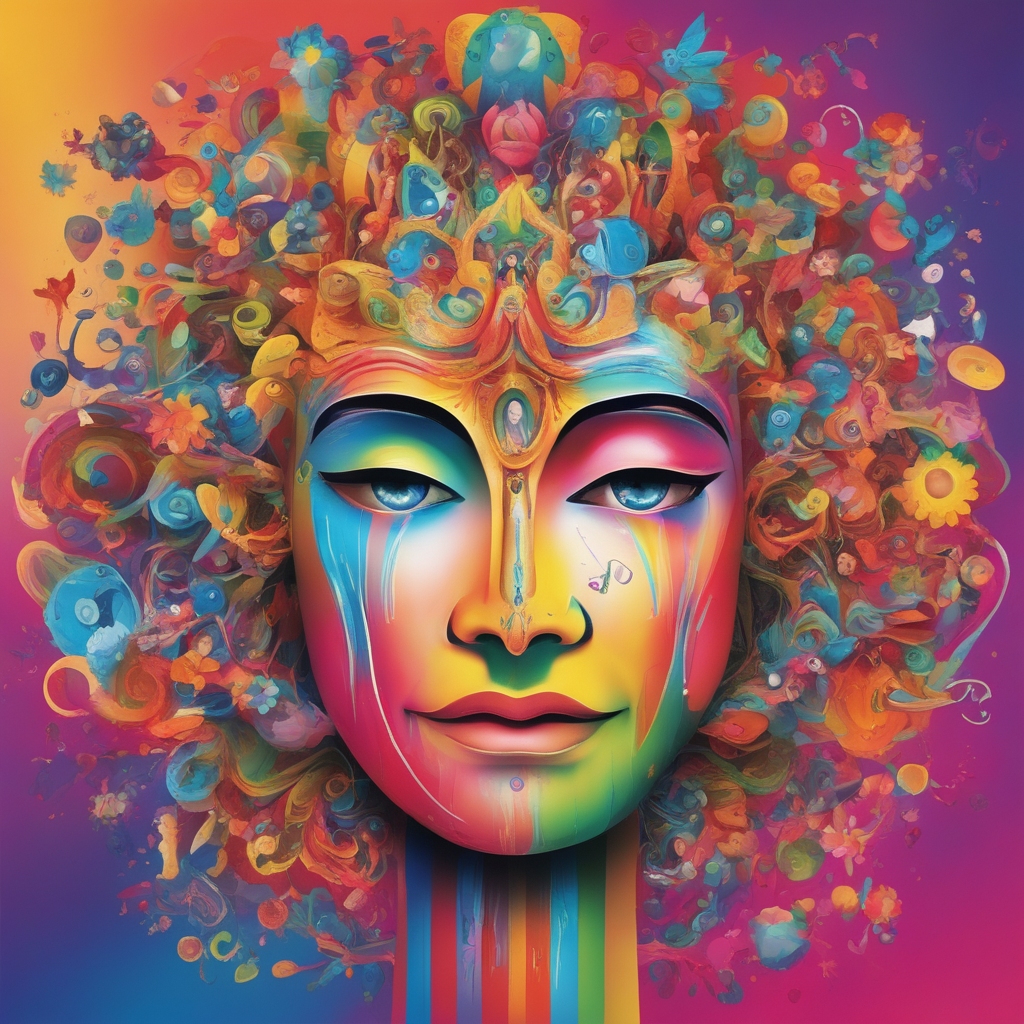
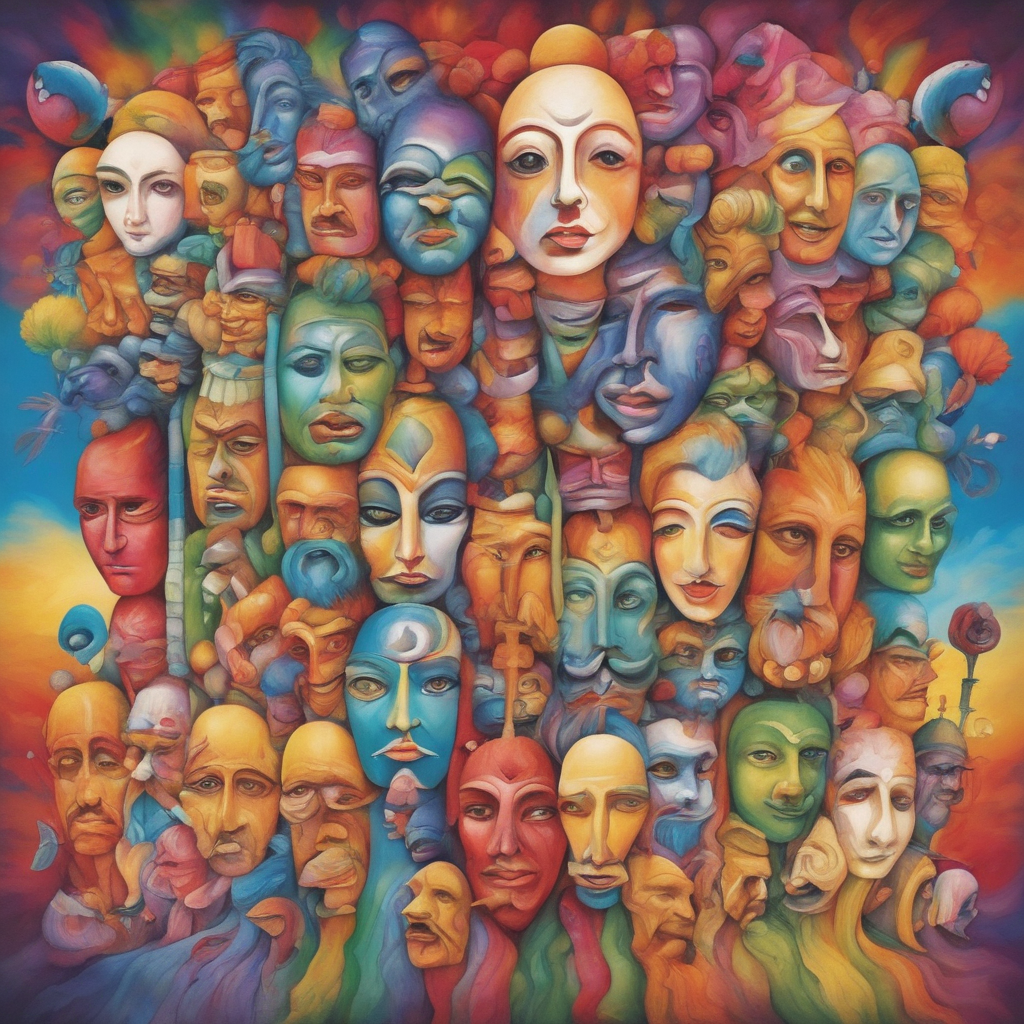
In our quest to understand ourselves, few concepts are as debated, dissected, and deliberated as the ego. Spanning from ancient spiritual scriptures to the modern therapist’s couch, the ego stands as a reflection of our sense of self and our relation to the world. Yet, its definitions vary, painting a multifaceted picture of this central aspect of human existence.

### **1. Ego in Psychoanalysis: The Mediator**

Freud’s tripartite model of the psyche introduced us to the ego as the balancing force between the primal urges of the id and the moral compass of the superego. Here, the ego isn’t an adversary but a necessary mediator, guiding our actions in a world of societal norms. It poses the question: Is our ego the voice of reason amidst internal chaos?

### **2. Ego in General Psychology: The Self’s Mirror**

When we talk about self-esteem or self-worth, we’re often referring to the ego. This definition paints the ego as a mirror reflecting our perceived value and place in the world. Yet, this raises a thought-provoking inquiry: If our ego is a mirror, who or what determines its reflection?

### **3. Ego in Philosophy: The Conscious Observer**
Descartes’ famous dictum “Cogito, ergo sum” (I think, therefore I am) encapsulates the philosophical perspective of the ego as the conscious thinking subject. If our ego is the conscious observer of our experiences, it invites us to ponder: Without this observer, do experiences lose their significance?

### **4. Ego in Spirituality: The Illusory Self**
Many spiritual traditions view the ego as a barrier to enlightenment. It’s the illusory sense of separateness that binds us to suffering. The spiritual perspective urges us to ask: If the ego is an illusion, then who indeed are we beneath this veneer?

### **5. Ego in Pop Culture: The Mask of Pride**
Everyday parlance often equates a “big ego” with arrogance. It’s seen as a mask, sometimes shielding insecurities, other times amplifying genuine pride. This usage compels us to consider: Is the ego merely a façade, and what lies behind it?

### **6. Ego in Eastern Philosophies: The Creator of “I-ness”**

Hindu philosophy introduces Ahamkara, the aspect of us that births the sense of “I.” This ego is neither good nor bad but a natural facet of being human. Reflecting on this, we might wonder: Is the ego, not an enemy but an inevitable companion on our human journey?

**In Conclusion: The Infinite Layers of “I”**

The ego, regardless of its definition, remains at the core of human introspection. Its multifaceted interpretations offer not just explanations but a myriad of questions. As we navigate our understanding of the ego, we’re not just uncovering the layers of this concept but also the layers of our very existence.

In exploring the ego, we’re invited to embark on a profound journey inward, to question, understand, and perhaps even transcend the confines of the “I.” For as varied as its definitions might be, the ego’s ultimate gift is the invitation to self-reflection.

Morgan O. Smith

Yinnergy Meditation & My Book, Bodhi in the Brain…Available Now!

https://linktr.ee/morganosmith
The Multiverse Within

Exploring Chakras Beyond Our Perception

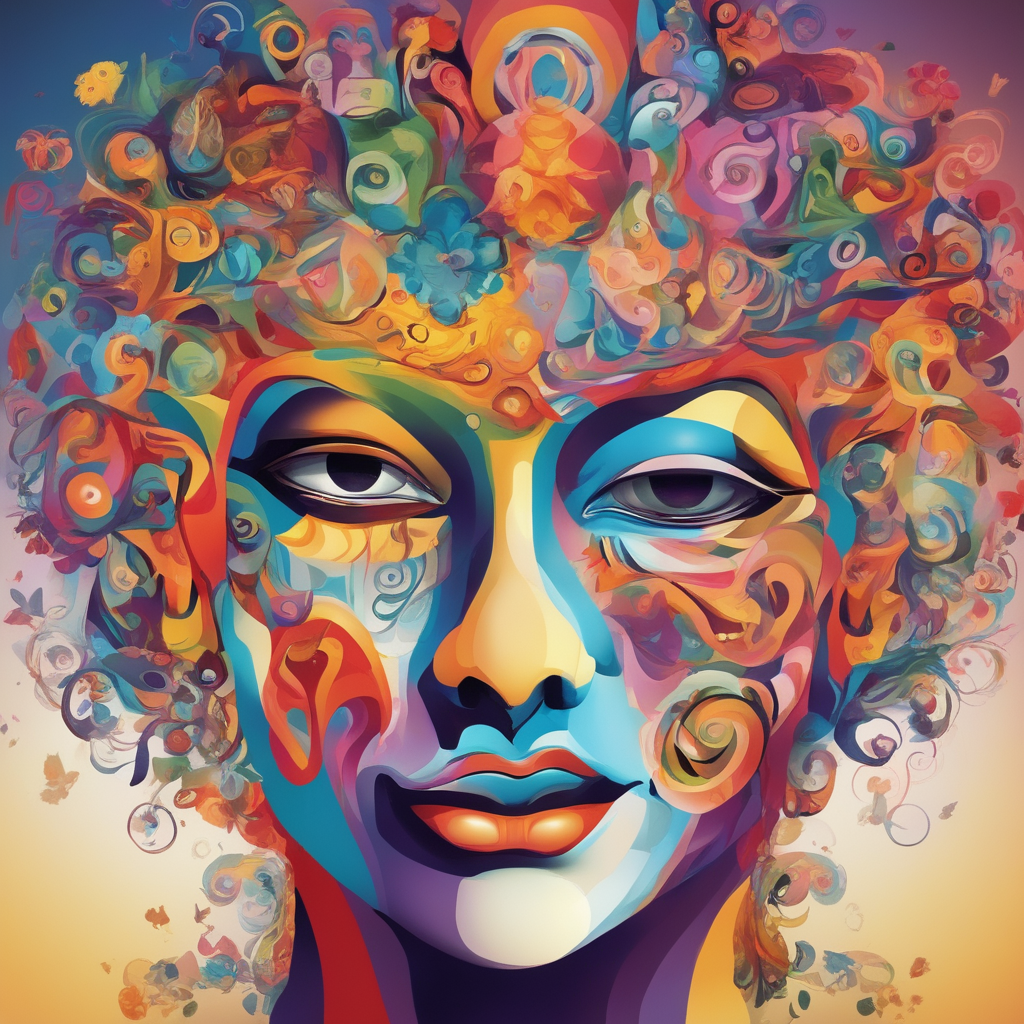
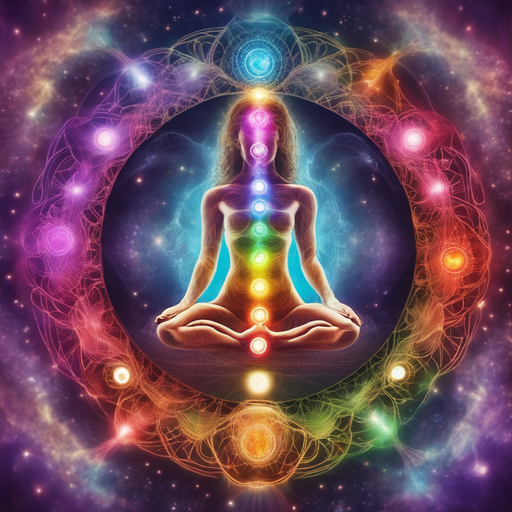
In the rich tapestry of Eastern philosophy and spirituality, the concept of chakras and kundalini awakening has long captivated the Western world. But a deeper, more expansive understanding of these ideas prompts us to transcend the traditional seven chakras in the human body and see them permeating the universe at every level – from the massive galaxies to the tiniest sub-atomic particles.

This perspective’s core is the belief that chakras are not exclusive to the gross or subtle human body. They are ubiquitous and omnipresent, extending their influence to every cell, every molecule, every atom, and even to the most infinitesimal particles. Just like each human has energy centers, these minuscule entities – bodies in their own right – are also believed to possess chakras.

This viewpoint is a confluence of spirituality and quantum physics. It suggests a microcosm-macrocosm principle where the patterns of the universe repeat themselves at different scales, connecting everything from the vastness of the cosmos to the smallest particles.

During a full-blown kundalini awakening, a transformative spiritual experience often depicted as the release of divine energy stored at the base of the spine, it is proposed that not only the individual’s chakras but also these infinitesimal chakras, in each ‘body’ within our physical body, come to life. It is a grand unison of consciousness awakening at all levels of existence, interconnecting every particle within and beyond us.

In such a profound event, each ‘body’, from cellular to atomic and sub-atomic levels, reaches a state of self-realization, comprehending that it is part of the ‘Brahman,’ the ultimate reality or absolute in Hindu philosophy. This concept equates to ‘The Ground of all Being,’ a term that mystics and spiritual teachers use to describe the deepest level of reality.

This fascinating belief presents an interconnected universe where the microcosm and macrocosm continually interact, affecting and reflecting each other. A place where every entity, regardless of size or subtlety, is a unique expression of the same energy, bound by a common cosmic rhythm and linked through an intricate network of chakras.

In conclusion, the belief in a kundalini awakening of not just the seven primary chakras, but countless others within every atom and sub-atomic particle, invites us to broaden our perception of reality. This concept urges us to look beyond the boundaries of our current understanding and explore the uncharted territories of consciousness that might hold the key to our oneness with the universe. It is a philosophy that doesn’t merely expand our knowledge of self and the universe; it transforms it.

Morgan O. Smith

Yinnergy Meditation & My Book, Bodhi in the Brain…Available Now!

https://linktr.ee/morganosmith
A Meeting of East and West

Advaita Vedanta and Ken Wilber’s Four Quadrants

As we navigate through life’s labyrinth, we encounter myriad philosophical viewpoints designed to offer us clarity about the nature of reality. Two such perspectives – one rooted in ancient Eastern spirituality, Advaita Vedanta, and the other a more contemporary Western theory, Ken Wilber’s Integral Theory – provide us with intriguing interpretive lenses. While appearing distinct, when juxtaposed, they unfold a captivating dialogue, revealing the interconnectedness of diverse paths of wisdom.

**Non-Duality: The Heart of Advaita Vedanta**

At the core of Advaita Vedanta lies the profound principle of non-duality. The term ‘Advaita’ translates to ‘not two’, pointing towards the notion of unity beneath apparent multiplicity. According to this philosophy, all phenomena – whether perceived as separate entities or diverse experiences – are manifestations of a singular absolute reality known as Brahman.

This philosophy posits that the perceived distinction between the individual self (Atman) and the ultimate reality (Brahman) is an illusion (Maya), born out of ignorance (Avidya). The journey of spiritual awakening in Advaita Vedanta is about transcending this illusion, recognizing the non-dual nature of existence, where the Atman and Brahman are not separate but one.

**Ken Wilber’s Four Quadrants: A Comprehensive Map of Reality**

Ken Wilber’s Integral Theory, particularly the Four Quadrants model, offers a different but complementary perspective. Wilber presents a holistic map of reality, dividing it into four quadrants: Individual Interior (consciousness), Individual Exterior (behaviour), Collective Interior (culture), and Collective Exterior (society). Each quadrant represents an integral part of our existence and must be considered to understand reality holistically.

**The Interplay: Advaita Vedanta and Four Quadrants**

Drawing parallels between Advaita Vedanta and the Four Quadrants can create a fascinating synthesis of Eastern and Western thought.

The Upper Left Quadrant (Individual-Interior) aligns with the individual’s subjective experience, mirroring the Advaita exploration of Atman. The Upper Right Quadrant (Individual-Exterior) encapsulates the physical manifestation of the individual, aligning with the Advaita concept that even our physical existence is a manifestation of Brahman.

The Lower Left Quadrant (Collective-Interior) represents shared beliefs and cultures, resonating with the Advaita perspective that cultural differences are superficial, and at a deeper level, unity prevails. The Lower Right Quadrant (Collective-Exterior) mirrors societal structures, all manifestations of the same non-dual reality.

From the Advaita viewpoint, the division of the four quadrants are themselves expressions of Maya, as they create apparent separations where none ultimately exist. They are valuable tools for understanding and navigating the world but do not represent the deepest truth of non-duality.

**Uniting Perspectives: A Path to Enlightenment**

Exploring the intersection of Advaita Vedanta and Ken Wilber’s Four Quadrants offers a richer understanding of reality, harmonizing subjective and objective, individual and collective, Eastern spirituality and Western theory. As we understand that the lines dividing these quadrants are more porous than they seem, we move closer to the non-dual truth of Advaita – that beneath apparent diversity, unity pervades.

At a time when division and fragmentation are rampant, this synthesis could offer a path toward the kind of transcendental insight that can bridge divides, fostering a deeper sense of interconnectedness and wholeness. After all, as Advaita Vedanta teaches us, beneath the surface of multiplicity, we are ‘not two’ but one. As we embrace the wisdom of the four quadrants, we might just find ourselves taking a step closer to that unity, opening ourselves to a richer, more holistic understanding of the world.

Morgan O. Smith

Yinnergy Meditation & My Book, Bodhi in the Brain…Available Now!

https://linktr.ee/morganosmith
Sand Castles of Consciousness

Discovering the Essence Within

Introduction:


In the tranquil tapestry of Eastern philosophy, where contemplation converges with existence, there lies a profound revelation – Everything in existence is composed of Pure Consciousness. Here, Consciousness is not merely an attribute; it is capitalized, symbolizing its omnipresence as the very fabric that weaves through the cosmos. It is akin to an ancient tale of a castle crafted from sand, reflecting that though it may don the guise of a majestic structure, it remains, in essence, sand.

The Sand and the Castle:

Visualize a child meticulously building a sand castle on the shore. The grains of sand, amassed and sculpted, assume the shape of a castle. Does the sand cease to be sand when shaped into a castle? Certainly not. This allegory mirrors the realization that while the myriad forms around us may appear different, they are all permutations of the same unyielding Consciousness.

The Essence of Consciousness:

Consciousness is akin to Brahman in Hinduism or the Tao in Taoism in the Eastern philosophical context. The unchanging, infinite, immanent, and transcendent reality is the Divine Ground of all matter, energy, time, space, being, and everything beyond. Our ephemeral existence is a mere reflection, a ripple in the vast ocean of Consciousness.

Flow of Forms:


Just as a sand castle is subjected to the whims of waves and winds, forms in the material world are in a constant state of flux. The ancient Hindu text, the Bhagavad Gita, illustrates this with the concept of ‘Lila’, depicting the world as a divine play of forms. The Taoist philosophy also reverberates with this thought through the Tao, which flows through and is the inherent nature of all things.

The Inner Alchemy:

One might inquire, how does this realization benefit our daily lives? Understanding that we are not just isolated entities, but integral threads woven into the fabric of Consciousness, can be transformative. It helps us transcend the illusion of separateness and cultivates compassion, humility, and interconnectedness with all beings and the natural world.

Conclusion:


As we embrace the wisdom of Eastern philosophy, let us be mindful of the sand castles we build and the sands that shape them. Let us embark on a spiritual odyssey to unearth the Consciousness within and around us, recognizing that the essence is unchanging, infinite and all-encompassing. Like the sand castles by the sea, our forms are transient, but the Consciousness that shapes us is eternal.

Morgan O. Smith

Yinnergy Meditation & My Book, Bodhi in the Brain…Available Now!

https://linktr.ee/morganosmith
The Enigmatic G.O.D.

A Tapestry of Multifaceted Interpretations through Turiyatita

Introduction:
In the endless quest to fathom the profound entity known as God, Eastern and Western philosophies converge and diverge in a myriad of ways. This cosmic journey leads us to Turiyatita, a transcendent state beyond the fourth state of consciousness, where the true essence of God can be wholly embraced. Let us delve into the kaleidoscopic interpretations of the acronym G.O.D. through the lens of both Eastern and Western spirituality.

Giver Of Dreams:
In Western concepts, God is often seen as the Giver Of Dreams, inspiring aspirations. Contrarily, Eastern philosophies like Hinduism consider God as the Atman, reflecting the highest potential within oneself.

Guardian Of Divinity:
The Western Abrahamic faiths often portray God as a protector of purity, a Guardian Of Divinity. In Taoism, the Tao is considered the source of all divinity, without actively guarding it.

Guide Of Destiny:
In the Western context, God often plays a direct role in guiding destinies. The Eastern concept of Dharma reflects an innate order and righteousness, where individuals are their own guides through Karma.

Generator Of Diversity:
In the West, God’s creative aspect is exemplified in Genesis. In Hinduism, Lord Brahma symbolizes the Generator Of Diversity, being responsible for creation within the eternal cycle of Samsara.

Gatherer Of Devotion:
In the West, devotion is often gathered in the form of prayer. In Bhakti Yoga, an Eastern practice, devotion is an all-encompassing love and surrender to the divine.

Grand Orchestrator of Dynamics:

While Western deism believes in God as the Grand Orchestrator who set the universe in motion, Daoism sees the Dao as an impersonal force, guiding the natural order.

Garden Of Delight:
In Christianity, Eden represents the Garden Of Delight. In contrast, Buddhism’s Sukhavati is a pure land, representing an enlightened state of bliss and contentment.

Galaxy’s Omnipotent Designer:
In the West, Intelligent Design Theory posits God as the designer. Hinduism’s Vishwakarma is revered as the divine architect of the universe, reflecting a similar sentiment.

Guardian Of Deeds:
In Western theology, the idea of a judgmental God who serves as Guardian Of Deeds is prominent. The Eastern concept of Karma conveys a self-regulating system of moral retribution.

Gracious Overseer of Deliverance:
Both Eastern and Western traditions portray God as a liberator. In Christianity, salvation is through Jesus Christ; in Hinduism, Moksha or liberation from the cycle of rebirth.

Realization through Turiyatita:
To truly integrate these interpretations, one must transcend to Turiyatita, a state beyond the waking, dreaming, deep sleep, and Turiya (pure consciousness). In this pinnacle of spiritual awakening, the boundaries dissolve, and one can embody the limitless interpretations of G.O.D., embracing a harmonious coexistence of Eastern and Western spiritual thought.

Conclusion:
The myriad interpretations of G.O.D. weave a rich tapestry of philosophical thought. Turiyatita offers a transcendent vantage point where the essence of these interpretations is revealed in its full glory, harmonizing the wisdom of the East and West.

Morgan O. Smith

Yinnergy Meditation & My Book, Bodhi in the Brain…Available Now!

https://linktr.ee/morganosmith

Journeying the Spectrum of Selfhood

A Novel Take on Eastern Philosophy

We’re all familiar with the concept of the individual ‘self’, the ego, and our personal identity that separates us from others. Conversely, many of us are aware of the concept of the ‘Universal Self’, the unbounded reality that underpins all existence, a staple idea in Eastern Philosophy. But what if we looked at these two states not as polar opposites but as points on a spectrum of selfhood? What if our understanding of ‘self’ could be broadened into a continuum that spans from the individual ego to the Ultimate Reality? In this blog, we explore the Theory of the Spectrum of Selfhood.

**Understanding the Spectrum of Selfhood**

The Theory of the Spectrum of Selfhood posits a fluid transition from the ‘small self’ or ego to the ‘big self’ or the Ultimate Reality. The journey from the ego-bound state of individual identity to the egoless state of universal consciousness isn’t an abrupt leap but a gradual progression along a continuum of selfhood.

**Navigating the Spectrum**
While this process of self-evolution is dynamic and fluid, it might be useful to outline several potential stages or ‘selves’ along the spectrum:

1. **The Empathetic Self**: The first significant step beyond pure self-interest is when we start appreciating and feeling the needs and emotions of others. This is the dawn of less dualistic thinking, where others begin to be seen as extensions of oneself.

2. **The Societal Self**: Here, we become more community-focused, perceiving ourselves as parts of the societies or communities we belong to. We adopt group values, work towards communal goals, and blur the lines between the self and others.

3. **The Global Self**: Progressing further, we extend our consciousness beyond our immediate surroundings to encompass all of humanity. We acknowledge our shared human experiences and feel connected to diverse cultures, races, and backgrounds, which promotes unity and erodes dualistic perspectives.

4. **The Cosmic Self**: At this stage, we expand our identity beyond humanity, resonating with all life forms and the cosmos itself. As a cosmic self, we experience the interconnectedness of all beings and sense a deep unity with the universe, inching closer to non-duality.

5. **The Transcendent Self**: Here, the illusion of a separate self begins to dissolve. We start to experience moments of transcendence where we feel absolutely unified with all that is, leading us further down the path of non-duality.

6. **The Big Self (The Self/Ultimate Reality)**: The final stop on our journey where the individual self is completely transcended. We realize our true nature as pure consciousness and become one with the Ultimate Reality, embodying absolute non-duality.

**A Journey, Not a Destination**
Remember, the Theory of the Spectrum of Selfhood presents a journey, a process of becoming, rather than a fixed state to attain. As such, these stages are not rigid or sequential; they provide a framework to understand the fluid and expansive nature of selfhood.

In embarking on this journey, we might find ourselves oscillating between different stages at different times, and that’s perfectly fine. The aim is not to rush through to the ‘end’ but to understand, embrace, and learn from each stage as we continue to evolve and expand our sense of self.

To borrow a phrase from the Greek philosopher Heraclitus, “No man ever steps in the same river twice.” Similarly, our journey along the spectrum of selfhood ensures that we are not the same ‘self’ at any two points in our life. We are always evolving, always expanding, forever journeying toward that Ultimate Reality.

This theory offers a refreshing perspective, and a new lens to view our spiritual evolution and growth. It invites us to acknowledge and accept that our sense of self is not a static or a binary concept but a dynamic and expansive one.

**Implications of the Theory of Spectrum of Selfhood**
Understanding ourselves as existing on this spectrum can foster tolerance, empathy, and a deeper connection with all that is around us. As we move along the spectrum, our focus shifts from a purely self-centred perspective towards a more inclusive view that acknowledges our interconnectedness with the universe.

This shift in perspective allows us to approach our lives and interactions with a sense of unity and compassion. It also helps us to appreciate the diversity and complexity of human experiences. After all, we are all on our own unique journey along this spectrum, each of us exploring and expressing different aspects of selfhood at different stages of our lives.

**In Conclusion**
The Theory of the Spectrum of Selfhood, while grounded in Eastern philosophy, offers a universal model for understanding and exploring our own identity. By viewing selfhood as a spectrum, we can embrace the complexity, fluidity, and dynamism of our personal and spiritual evolution.

Every moment provides us an opportunity to experience a different point on this spectrum, and each point brings us a step closer to the Ultimate Reality. So, let’s celebrate the journey, acknowledging each phase of selfhood as a stepping stone towards broader awareness and deeper understanding.

And remember, you are not just the drop in the ocean; you are the entire ocean in a drop, ever-evolving, ever-expanding. Happy journeying along your Spectrum of Selfhood!

Morgan O. Smith

Yinnergy Meditation & My Book, Bodhi in the Brain…Available Now!

https://linktr.ee/morganosmith

Embracing the Self-Evidence of Nondual Suchness

An Encounter Beyond Validation

We often journey through life seeking validation. The drive to achieve approval, to fit within the bounds of societal constructs, and to be seen through the eyes of others often influences our experiences and perspectives. However, there’s a profound, transformational shift when one comes into direct contact with the pure essence of Nondual Suchness, a concept rooted deeply in Eastern philosophy and spirituality.

Nondual Suchness refers to the fundamental reality beyond the realm of conceptualization, differentiation, and duality. It encompasses the realization of an interconnected, all-encompassing, unchanging ‘oneness.’ This ‘oneness’ transcends the illusion of separateness created by our conscious minds and provides a doorway to an understanding that transcends cognitive comprehension.

Engaging with this ultimate truth in its purest form, the self-evident nature of Nondual Suchness becomes apparent. It is akin to seeing a new colour for the first time, hearing an unheard melody, or feeling an emotion you never knew existed. It is something so profoundly intrinsic and natural that it requires no external validation.

Coming into direct contact with this self-evident truth, one finds a sense of freedom from the need for external validation. The realization arises that the validation we seek from others is often just a reflection of our own internal reality. It prompts the realization that we are not just part of the universe, but the universe itself, experiencing itself through individual perspectives.

When we live in the space of Nondual Suchness, our outlook towards life undergoes a fundamental shift. We start recognizing the universe within us, and us within the universe, unveiling the interconnected web of existence. With this realization, we no longer yearn for external affirmation because our perspective is not determined by the reflections of others, but is instead deeply rooted in the unchangeable truth of our inherent oneness.

Embracing Nondual Suchness is an invitation to transform one’s consciousness. This path, while profound and enlightening, does not demand external recognition or validation. Its rewards are intrinsic, providing a deep and unshakeable peace that cannot be given or taken away by others. It’s a journey of self-discovery, self-acceptance, and a profound realization of universal interconnectedness.

In conclusion, the pure, self-evident Nondual Suchness, once encountered, becomes an internal beacon of truth and authenticity. It frees us from the burden of seeking external validation, allowing us to dwell in an enduring peace that is both the journey and the destination in the beautiful tapestry of existence.

Morgan O. Smith

Yinnergy Meditation & My Book, Bodhi in the Brain…Available Now!

https://linktr.ee/morganosmith

The Role of Harsh Environments

In the Advancement of Spirituality and Eastern Philosophy

Introduction: As we delve into the realm of spiritual growth and philosophical evolution, we find ourselves drawn to the profound teachings of Eastern wisdom traditions like Hinduism, Buddhism, and Taoism. These knowledge traditions have birthed deep-seated understandings about the existential fabric of reality, the dimensions of human consciousness, and the varied contours of the human condition. This blog piece, filled with spiritual development insights and philosophy exploration, will unearth the significance of harsh environments in moulding these spiritual and philosophical systems. We’ll explore how survival instincts in tough circumstances could have been the catalyst for their evolution.

The Resource Scarcity Hypothesis and Cultural Adaptation Hypothesis: Unraveling the link between harsh environments and the growth of spirituality and philosophical thought, we can turn to theories like the “resource scarcity hypothesis” and the “cultural adaptation hypothesis.” The resource scarcity hypothesis highlights how societies living in resource-depleted environments tend to develop advanced technologies and intricate social organizations to manage the challenges they face. Similarly, the cultural adaptation hypothesis explains how groups foster distinctive knowledge, skills, and practices to adjust to their unique environments.

When we apply these concepts to spirituality and Eastern philosophy, it becomes evident that many of these traditions trace their origin back to regions with severe conditions – be it the arid landscapes of India, the rugged mountains of Tibet, or the isolated valleys of China. These environments may have acted as crucibles, fostering the emergence of complex spiritual and philosophical systems that provide solace amidst the hardships of everyday life, while offering a sense of purpose in adversity.

The Interplay of Spiritual Enlightenment and Survival Instincts: Survival instincts in the face of harsh environments could have played a pivotal role in the conceptualization of spiritual and philosophical doctrines like spiritual enlightenment. In Eastern philosophy, enlightenment often symbolizes the transcendence of suffering, heralding a state of inner peace, equilibrium, and liberation from the shackles of mundane existence.

In environments that test human endurance, the quest for spiritual enlightenment can be viewed as an answer to the physical and psychological trials faced by individuals and communities. In the quest to understand and overcome suffering, individuals can unearth the inner strength and resilience necessary to endure and flourish under severe circumstances.

Furthermore, practices that facilitate spiritual enlightenment – meditation, mindfulness, ethical living – are also effective stress management tools, which enhance personal well-being and nurture social unity during tough times.

Conclusion: While it’s crucial to avoid oversimplification of the intricate factors that nurture the growth of spirituality and Eastern philosophy, it’s undeniable that severe environments and survival instincts have significantly influenced these traditions. By offering a coping mechanism to life’s challenges and a route to inner peace and transcendence, spiritual enlightenment has served as a beacon of hope and inspiration for countless individuals across the epochs. As we navigate the trials of our era, the timeless wisdom of these ancient traditions offers invaluable lessons for our spiritual and philosophical growth.

Morgan O. Smith

Yinnergy Meditation & My book, Bodhi in the Brain…Available Now!