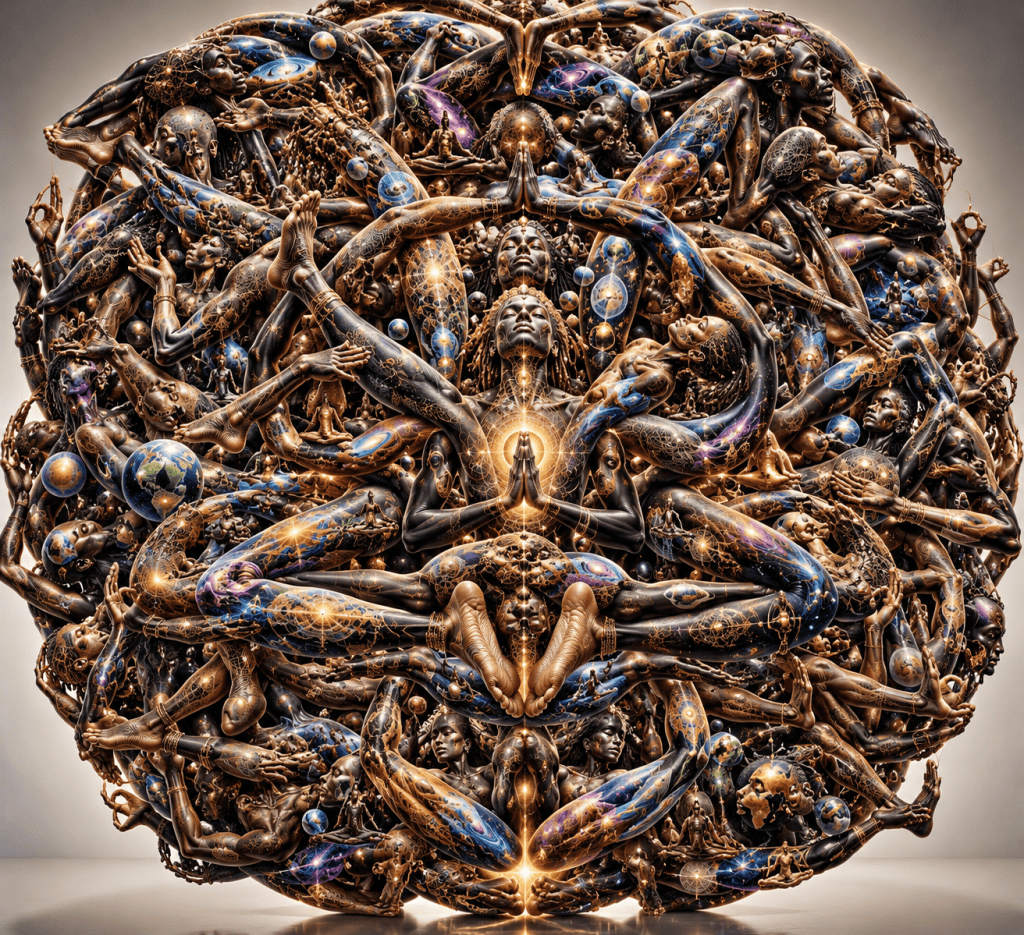
When I Moved, the Universe Moved

The Day I Understood Yoga

There are experiences that give you new information, and there are experiences that dismantle the very structure through which information is understood.

My spiritual awakening belonged to the latter.

Something happened that I could never have understood through philosophy alone. My body began moving involuntarily. Different parts of my body moved in different directions without any conscious intention on my part. From the outside, someone might have thought I was experiencing some form of seizure. From within the experience, however, something completely different was occurring.

I wasn’t experiencing a body that had simply gone out of control.

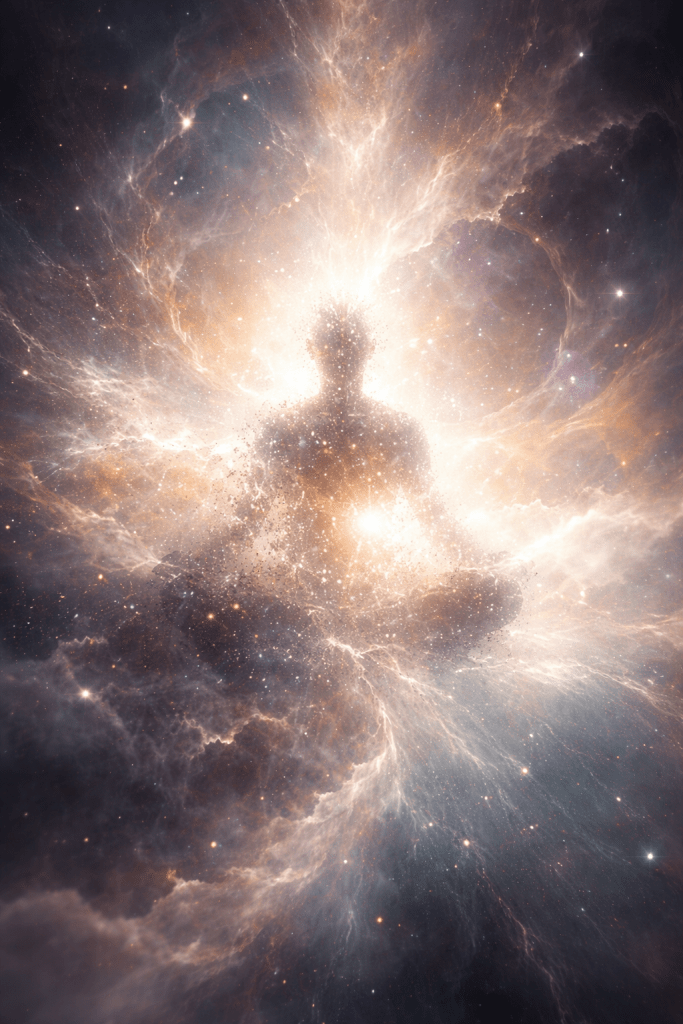
I was experiencing the disappearance of the distinction between my body and the universe.

When I moved, the universe moved.

When the universe moved, I moved.

There was no separation between the two.

For the first time, I understood Yoga.

Not yoga merely as a collection of physical postures.

Not yoga as stretching, breathing, flexibility, or exercise.

I understood Yoga with a capital Y.

The Universe Was Not Somewhere Else

Ordinary consciousness is organized around an assumption so fundamental that we rarely notice it.

I am here.

The world is there.

My body occupies this particular location. Other objects occupy other locations. I look outward from somewhere behind my eyes and experience a universe surrounding me.

That arrangement feels completely natural.

During my awakening, it disappeared.

Every location seemed to occupy the same nonlocal space.

That statement sounds contradictory because language depends upon distinctions. A location is supposed to be different from another location. Here cannot simultaneously be there. My body cannot simultaneously occupy every possible position.

Yet the experience wasn’t conceptual.

It was immediate.

Space no longer seemed divided into separate locations in the ordinary way. The usual distinction between an observer located somewhere and a universe extending outward from that observer was absent.

There was no meaningful boundary where “me” ended and “universe” began.

Every Asana at Once

Something even stranger accompanied this.

As my body moved spontaneously, I had the overwhelming experience that I was performing every asana simultaneously.

I do not mean that my physical body literally assumed every possible yoga posture at the same moment. That would obviously be physically impossible.

The experience was deeper than physical positioning.

Every movement felt universal.

Every posture seemed contained within movement itself.

My body was not experienced as an isolated biological organism changing positions against the background of a stationary universe. Body, space, movement, and universe were one seamless occurrence.

There wasn’t a Morgan performing an asana.

There was simply movement.

And somehow that movement belonged to everything.

Perhaps Union Is Not Quite the Right Word

The Sanskrit root commonly associated with Yoga, yuj, carries meanings related to joining, yoking, harnessing, and union.

For years, I understood the spiritual meaning of Yoga through that framework.

The individual becomes united with the Divine.

The self becomes united with the Absolute.

The practitioner becomes united with existence.

After my awakening, even the word “union” seemed insufficient.

Union still subtly assumes two.

Two things exist separately and then come together.

But what happens when the distinction between them disappears completely?

What if the individual and the universe do not become one?

What if they were never actually two?

That was much closer to what I experienced.

I did not experience myself merging with the universe as though Morgan were one substance and the cosmos another.

The distinction itself became meaningless.

There was no inside looking outside.

No subject observing an object.

No separate mover controlling movement.

No isolated body existing within an external universe.

There was simply what was happening.

Who Is Moving Whom?

Consider something as ordinary as raising your hand.

Usually we experience the sequence like this:

“I decided to raise my hand.”

Then the hand rises.

There appears to be an internal agent producing an external action.

But examine movement closely enough and a strange question emerges.

Where exactly is the mover?

A thought announcing an intention may appear.

Muscles contract.

The arm rises.

Sensations change.

The visual field changes.

But where is the separate entity responsible for making the entire process happen?

During my awakening, this question wasn’t answered intellectually.

The question disappeared because the assumed division behind it disappeared.

When the body moved, the universe moved.

When the universe moved, the body moved.

These weren’t two synchronized events.

They were the same event.

That distinction matters enormously.

Synchronization usually describes two separate systems moving together.

What I experienced wasn’t synchronization between myself and existence.

It was identity.

The Body as an Activity of the Universe

We normally say, “My body.”

Notice what those two words imply.

There is supposedly a “me” who possesses a body.

But what exactly is the body?

Carbon, oxygen, hydrogen, nitrogen, calcium, phosphorus, water, microorganisms, electrical activity, chemical reactions, inherited genetic information, food, sunlight indirectly captured through plants, minerals formed through ancient geological processes, and elements forged within stars.

At what point does any of this become separate from the universe?

The boundary is practical.

It is biologically useful.

It allows an organism to navigate its environment, protect itself, seek nourishment, reproduce, communicate, and survive.

But practical distinction does not necessarily equal ultimate separation.

Perhaps the body isn’t something placed inside the universe.

Perhaps the body is something the universe is doing.

A wave isn’t an object placed inside an ocean.

The wave is the ocean behaving as a wave.

This human organism may be understood similarly.

Not something existence contains, but something existence is presently doing.

The Neuroscience Does Not Cancel the Mystery

There is also a neurological dimension to experiences like this.

The brain continuously integrates proprioception, vision, touch, vestibular information, motor intention, memory, and spatial information to generate our ordinary experience of being a body located somewhere.

Various systems contribute to this process, including the parietal cortex, temporoparietal regions, insula, somatosensory systems, vestibular networks, motor systems, cerebellum, thalamus, and networks associated with self-referential processing.

Profound alterations in how these systems communicate could conceivably accompany experiences in which bodily boundaries, agency, spatial location, or the distinction between self and environment radically change.

That possibility fascinates me.

But neuroscience and metaphysics are answering different questions.

Discovering the neural correlates of nondual consciousness would tell us something important about what the nervous system is doing when such experiences occur.

It would not automatically tell us what reality ultimately is.

Suppose scientists eventually discovered an exact neural signature accompanying the dissolution of subject-object consciousness.

That discovery would still leave an extraordinary question unanswered:

Does the altered brain create an illusion of unity, or does ordinary brain organization create an illusion of separation?

Neuroscience alone cannot easily settle that question.

The Witness Must Eventually Disappear Too

There can also be a subtle stage on the contemplative path where one discovers oneself as the Witness.

Thoughts arise, but I am aware of them.

Sensations arise, but I am aware of them.

The body moves, but I am aware of the body moving.

Eventually even this can preserve a subtle duality.

There is still awareness on one side and something being witnessed on the other.

Awareness versus experience.

Witness versus witnessed.

Subject versus object.

The radical implication of nonduality goes further.

What happens when even the Witness cannot be located separately from what is witnessed?

There is seeing, but no separate seer.

There is hearing, but no separate hearer.

There is movement, but no separate mover.

There is awareness, yet no independent entity standing outside experience possessing awareness.

This is where language begins to fail because grammar itself wants a subject performing an action.

Nonduality does not cooperate very well with grammar.

Yoga Before the Word Yoga

Perhaps this is why my experience transformed my understanding of Yoga.

Yoga ceased being something I practiced.

For that extraordinary period, Yoga described reality itself.

Nothing needed to be joined because nothing was actually separate.

The body did not need to unite with the universe.

The body was already the expression of the universe.

Awareness did not need to reach the Absolute.

The apparent distance between awareness and the Absolute had vanished.

The seeker did not finally capture what had been sought.

The separation between seeker and sought collapsed.

This also changed how I understood spiritual practice.

Meditation may begin as something a person does.

Someone sits.

Someone watches the breath.

Someone observes thoughts.

Someone searches for stillness.

Someone seeks awakening.

But eventually the most interesting question may become:

Who exactly is doing all of this?

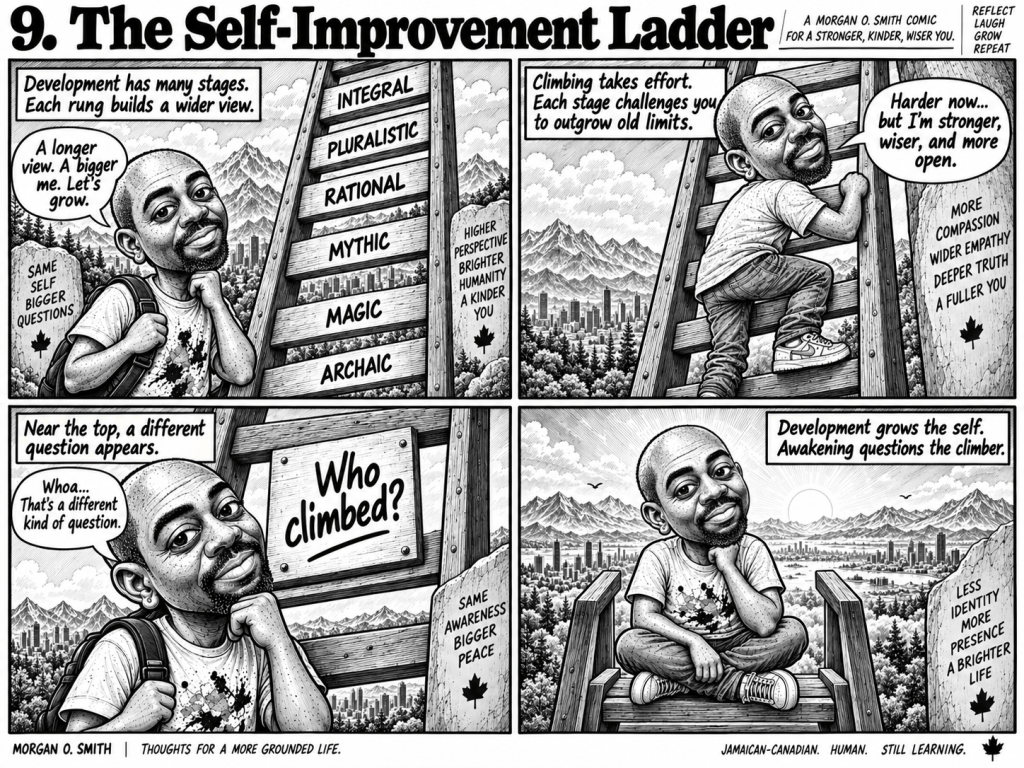
Follow that question deeply enough and the spiritual journey begins turning back upon the one supposedly travelling it.

When the Universe Moved

Words will never reproduce what happened.

“Oneness” doesn’t capture it.

“Unity” doesn’t capture it.

“Cosmic consciousness” doesn’t capture it.

Even “nonduality” remains a concept pointing toward something that precedes conceptual division.

The closest expression I have remains remarkably simple:

When I moved, the universe moved.

When the universe moved, I moved.

Eventually even that statement contains one distinction too many.

There was no “I” on one side and “universe” on the other.

There was movement.

There was stillness.

There was awareness.

There was no awareness.

There was existence.

There was no existence.

And none of them were separate.

That was when I finally understood Yoga.

Not as something the human being does to become united with existence.

But as the recognition that existence was never divided in the first place.

Morgan O. Smith
https://linktr.ee/morganosmith

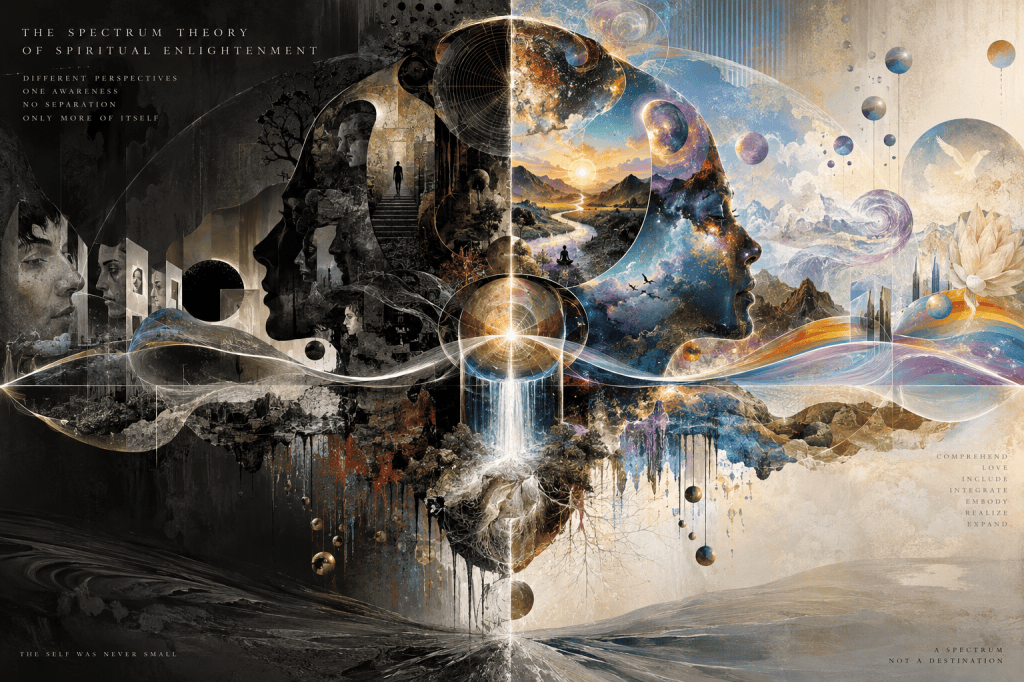
The Spectrum Theory of Spiritual Enlightenment

Spiritual enlightenment may be better understood as a spectrum.

This challenges one of the oldest assumptions surrounding enlightenment: that someone either has it or does not.

Enlightened. Unenlightened.

Awake. Asleep.

Self-realized. Ignorant.

Such divisions may be useful when describing a radical shift in consciousness, but they become inadequate when we begin examining the enormous differences between people who have undergone profound spiritual realization.

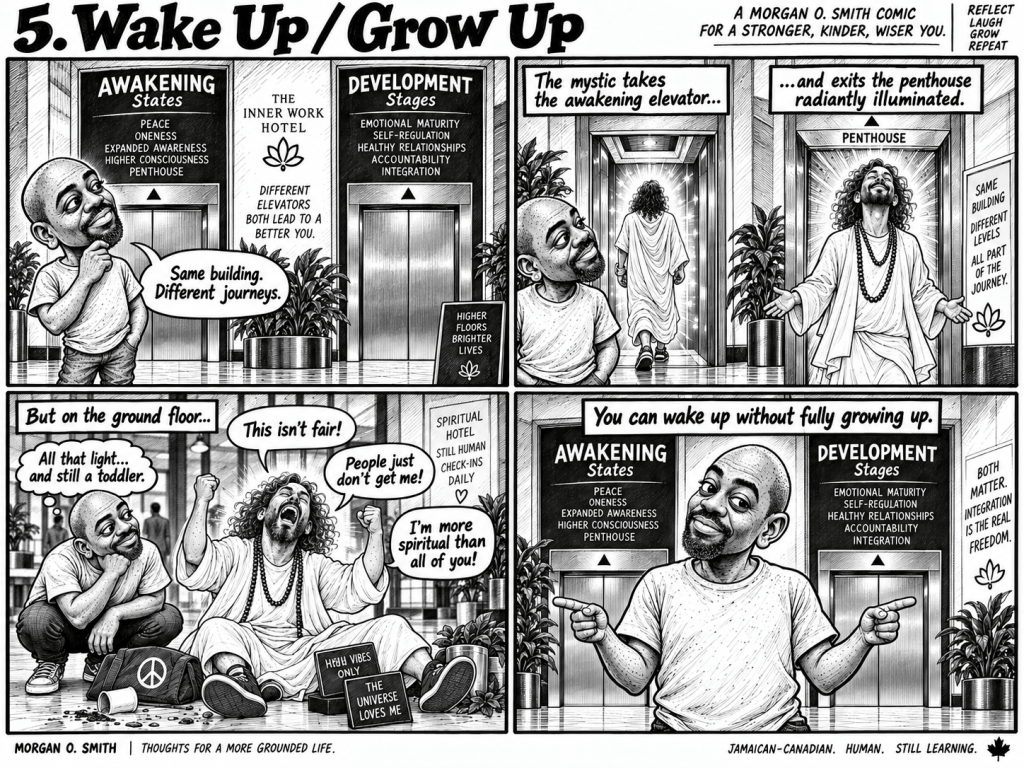
Two individuals may both recognize the nondual nature of reality and still differ tremendously in their capacity for love, emotional integration, intellectual complexity, perspective-taking, creativity, compassion, self-awareness and their ability to function within the complexity of human life.

This suggests something important.

Realization may happen, while enlightenment continues to unfold.

Enlightenment Is Not Simply What You Experience

Mystical experience alone cannot adequately define enlightenment.

A person may experience ego dissolution, timelessness, boundlessness, unity, emptiness or the disappearance of the subject-object boundary. These experiences can radically alter one’s understanding of reality.

Yet experience eventually encounters interpretation.

The human organism must somehow understand what occurred.

A Christian mystic may interpret unity through Christ. An Advaita practitioner may interpret it through Brahman. A Buddhist may describe emptiness. A neuroscientist may speak about changes within the brain’s construction of selfhood.

The experience may contain striking similarities while the interpretation reflects the developmental capacity of the person experiencing it.

This raises a provocative possibility:

What if enlightenment is not measured solely by how deeply you can disappear, but also by how much reality you can contain when you return?

The Capacity to Hold More

Perhaps spiritual development can partly be understood as increasing capacity.

The more you can comprehend.

The more you can love.

The more perspectives you can hold simultaneously.

The more contradiction you can tolerate without immediately forcing reality into either-or categories.

The more emotional intensity you can experience without becoming completely possessed by it.

The more uncertainty you can encounter without manufacturing certainty simply to make yourself comfortable.

The more of yourself you can observe without defending an identity.

The more of another person you can understand without requiring them to resemble you.

Something begins expanding.

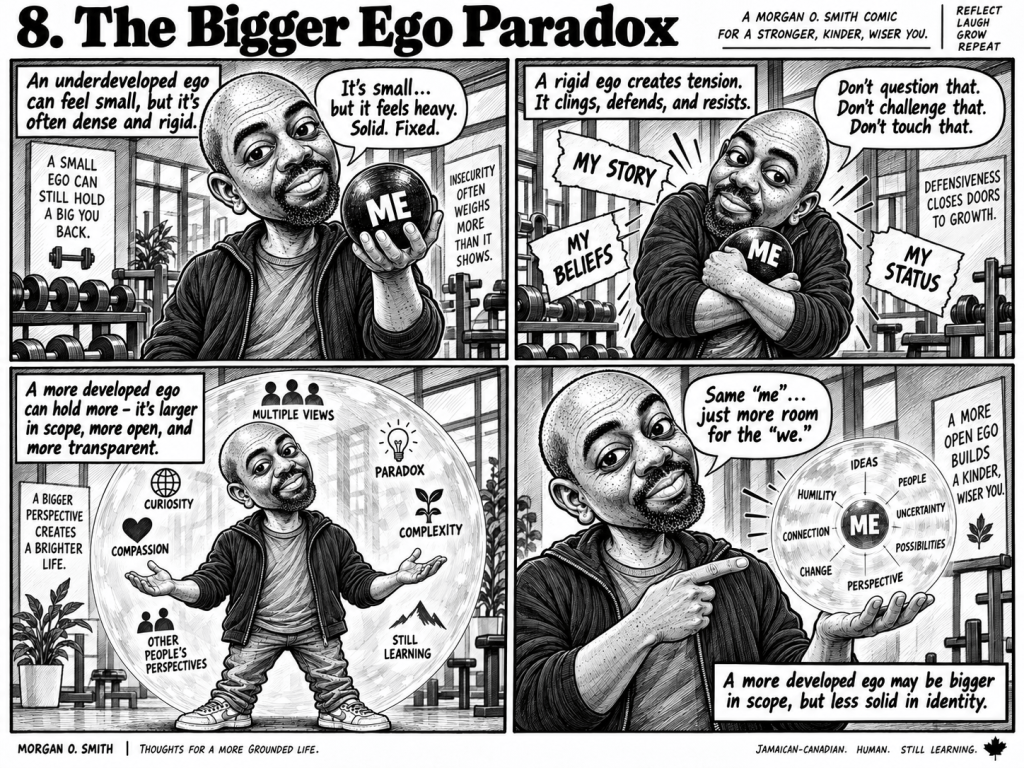
Not necessarily the Self, because from the nondual perspective the Self was never small.

What expands is the human capacity to consciously express what has always been unlimited.

Depth and Breadth Are Different

Someone can go extraordinarily deep while remaining relatively narrow.

This distinction deserves attention.

A profound meditator might enter states of consciousness inaccessible to most people while still possessing rigid cultural assumptions.

A brilliant philosopher might understand dozens of perspectives intellectually while remaining emotionally defended.

A deeply compassionate person may possess extraordinary interpersonal wisdom without having experienced nondual realization.

A mystic may recognize the Absolute while still carrying unresolved psychological conditioning.

These are different dimensions of development.

Calling all of them simply “spiritual advancement” obscures what is actually happening.

A more complete model of enlightenment would therefore require several dimensions.

Depth concerns how completely consciousness penetrates the apparent separation between observer and observed.

Breadth concerns how many perspectives, systems, cultures, disciplines and modes of knowing can be included within one’s understanding.

Integration concerns how thoroughly unconscious, emotional and psychological material becomes incorporated rather than denied, projected or spiritually bypassed.

Embodiment concerns whether realization actually changes how someone lives, relates, creates, responds and participates in the world.

We could express the basic model as:

Enlightenment = Depth × Breadth × Integration × Embodiment

This is not intended as a literal mathematical equation. It is a conceptual instrument.

Its purpose is to prevent one extraordinary dimension from being mistaken for the whole.

Absolute Realization, Relative Development

Here lies an apparent paradox.

The Absolute does not develop.

If nonduality is ultimately true, then there cannot be more or less of the Absolute. There cannot be 40 percent Brahman, 72 percent emptiness or 95 percent pure awareness.

What is fundamental simply is.

Yet the organism through which realization expresses itself certainly develops.

The nervous system develops.

Language develops.

Emotional intelligence develops.

Perspective-taking develops.

Ethical sensitivity develops.

Creativity develops.

Conceptual sophistication develops.

The ability to tolerate complexity develops.

This means absolute realization and relative development should not be confused.

Someone may recognize what is timeless while still being a very particular human being shaped by history, biology, culture, trauma, education and psychological conditioning.

Enlightenment does not necessarily erase the relative human structure.

It changes the relationship to it.

The Number of Perspectives You Can Become

Perspective-taking may be one of the most overlooked dimensions of spiritual maturity.

Early consciousness tends to experience its own perspective as reality itself.

“This is what happened.”

“This is what God wants.”

“This is who I am.”

“This is who you are.”

Greater awareness begins noticing something strange.

Every perspective reveals something while simultaneously concealing something.

Move positions and reality changes.

The child sees one world.

The parent sees another.

The scientist sees another.

The artist sees another.

The mystic sees another.

The atheist sees another.

The person who hurt you sees another.

None necessarily possesses the complete picture.

Spiritual maturity may therefore involve becoming increasingly capable of moving between perspectives without being imprisoned by any of them.

Eventually something even stranger becomes apparent.

The perspectives themselves are occurring within awareness.

Then the question changes from:

Which perspective is ultimately correct?

to:

What is it that can become all of these perspectives without being limited to any of them?

That question points directly toward nonduality.

Love as Expanded Identity

Love also changes when viewed through this model.

Love is usually understood emotionally. We love certain people because they matter to us.

Nondual realization introduces another possibility.

What happens when the boundary defining “me” becomes less convincing?

Compassion may no longer arise merely because one has been instructed to care about others.

Another person’s suffering begins to matter because “other” has become philosophically and experientially unstable.

Their consciousness is no longer entirely foreign territory.

The expansion of love may therefore correspond with an expansion of identity.

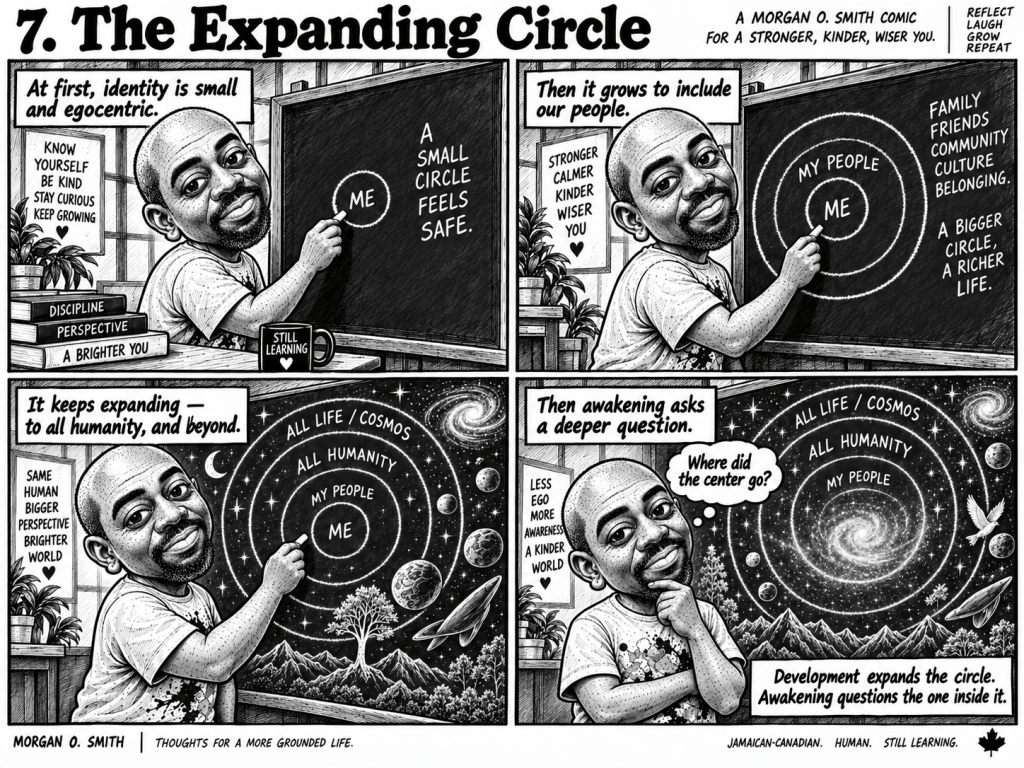
First, myself.

Then my family.

My community.

My people.

Humanity.

Sentient life.

Life itself.

Existence.

Eventually the circle collapses because there is nowhere outside it.

Love becomes less about extending kindness from one separate being toward another and more about reality recognizing itself through apparent difference.

Enlightenment Does Not Make You Finished

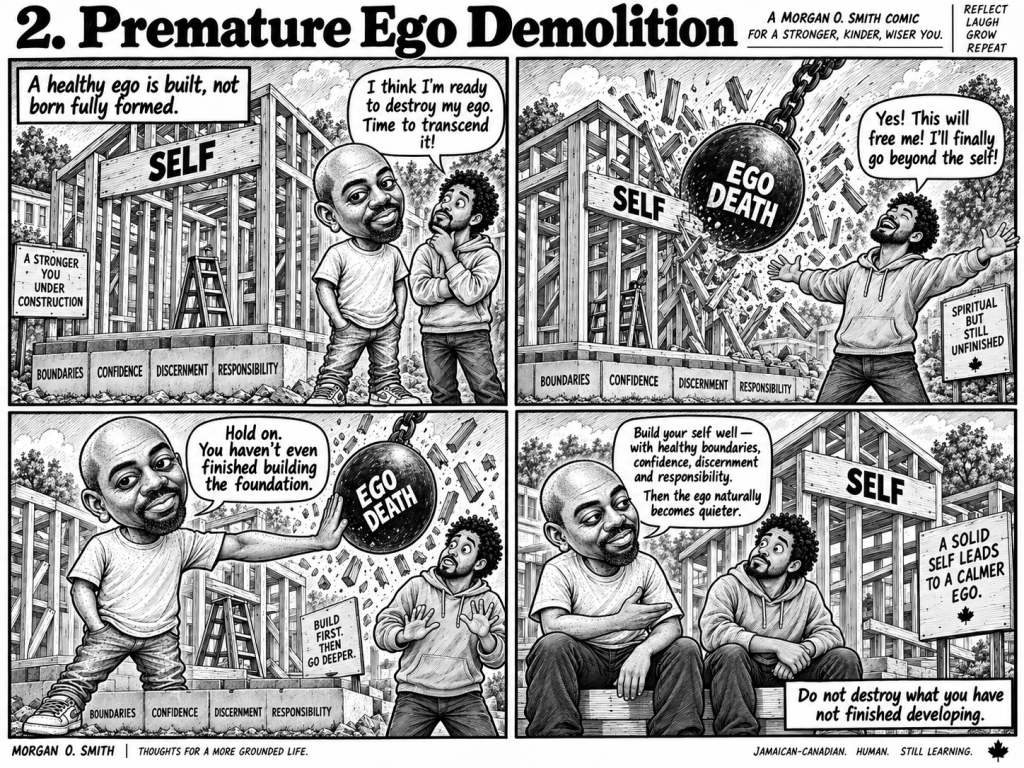
Perhaps one of the most dangerous ideas surrounding enlightenment is the belief that awakening makes further development unnecessary.

That belief can transform realization into another identity.

“I am enlightened.”

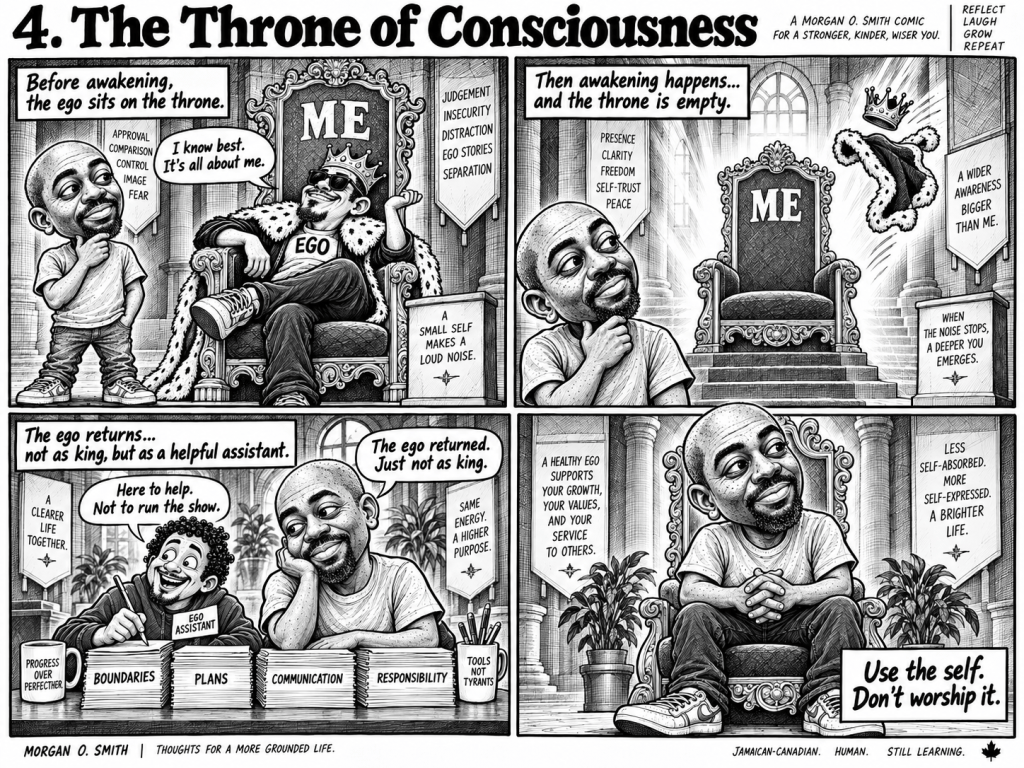
Now the ego possesses the absence of ego.

A remarkably clever maneuver.

Genuine realization may actually make development more demanding because fewer psychological hiding places remain convincing.

There can still be conditioning to examine.

Relationships to repair.

Knowledge to acquire.

Blind spots to discover.

Emotional capacities to strengthen.

Perspectives to encounter.

Humanity to embody.

Awakening does not necessarily end development.

It may remove the central illusion around which development previously revolved.

A Spectrum Without a Final Number

The spectrum model should not become another spiritual ranking system.

Its purpose is not to assign enlightenment scores.

The moment we begin arguing that one person is “Level 8 enlightened” while another is “Level 5,” we risk rebuilding hierarchy around something that fundamentally undermines the separate self seeking status.

The spectrum is multidimensional.

Someone may possess extraordinary contemplative depth but limited psychological integration.

Another person may demonstrate remarkable compassion and embodiment while having little interest in metaphysics.

Another may possess tremendous intellectual breadth but little experiential realization.

Development can be uneven.

That unevenness is precisely why a spectrum model becomes useful.

It allows us to stop pretending that enlightenment must produce identical human beings.

The Strange Conclusion

The deepest realization may reveal that nothing needs to become enlightened.

What you fundamentally are was never trapped.

Awareness itself was never confused.

The Absolute never forgot itself.

The person was the apparent location through which forgetting and remembering occurred.

Yet something continues after that recognition.

The human expression can become wider.

More integrated.

More sensitive.

More capable of holding contradiction.

More capable of intimacy.

More capable of uncertainty.

More capable of seeing through its own assumptions.

More capable of allowing perspectives that once threatened its identity.

More capable of loving without possession.

Perhaps enlightenment contains two movements that appear contradictory only when confused with one another.

One movement reveals that there is nowhere to go.

The other reveals that development has no obvious endpoint.

The Absolute is complete.

Its expression through a human life is not.

This may be one of the great paradoxes of spiritual enlightenment:

You can realize that you are already everything while continuing to discover how much more of everything you are capable of consciously containing.

Morgan O. Smith

https://linktr.ee/morganosmith

Ceasing to Exist Is Existence

What feels like disappearance is often the unveiling of what never arrived and never left.

Identity clings to continuity. It insists on narrative, on form, on something stable enough to say, “this is me.” Yet every sincere glimpse beneath that surface reveals something unsettling; there is no fixed centre holding it all together. Thoughts pass. Sensations dissolve. Emotions rise and vanish without permission. Even the sense of being a “someone” flickers in and out of awareness.

So what exactly is ceasing?

What we call existence is usually filtered through attachment to form. Body, memory, personality, history; these become the reference points for being. When any of these begin to loosen, a quiet panic can emerge. It feels like loss. It feels like the edge of annihilation. Something in us resists, because it interprets the fading of form as the fading of existence itself.

But that interpretation is flawed.

Ceasing does not touch existence. It only dismantles the illusion of containment.

Consider the moment between two thoughts. There is no identity there, no story, no personal reference point. Yet something undeniable remains. Awareness does not collapse in that gap. It stands unobstructed, without needing to announce itself. That silent interval is not absence; it is presence without definition.

The fear of ceasing arises from confusion between what appears and what is. Appearances come and go. They are meant to. Existence, however, does not operate within that cycle. It is not born when a form emerges, nor does it die when a form dissolves. It simply is, untouched by the movement it allows.

Letting go, then, is not an act of surrendering existence. It is the recognition that existence was never dependent on what you thought you were.

This is why deep realization can feel like a kind of death. The structures that once provided orientation fall away. The familiar reference points dissolve. Even the sense of being the experiencer can collapse. Yet what remains is not void in the way the mind imagines. It is fullness without boundary. Presence without identity. Being without ownership.

Ceasing reveals that nothing real was ever at risk.

Every moment already contains this truth. Each ending—of a breath, a thought, a sensation, is a quiet demonstration. Something ends, yet nothing essential is diminished. Life continues, but not as a personal possession. It unfolds as an expression of something indivisible.

Existence does not belong to you.

You belong to existence only as an appearance within it.

When this becomes clear, the resistance softens. The need to preserve a fixed self begins to lose its urgency. Ceasing is no longer feared. It is understood as a return; not to something new, but to what has always been prior to every assumption of “I am this.”

Existence does not require you to remain.

It reveals itself most clearly when you don’t.

Morgan O. Smith

The Ecstasy of Knowing

When Mind and Soul Dissolve into One

The awakened mind, when met with the receptive soul, becomes a current of divine fusion—an alchemical embrace where thought and feeling cease to be separate. This union transcends the limits of sensation, unveiling a pleasure far beyond the fleeting intoxication of flesh. It is an ascent into boundless wisdom, an eroticism of consciousness where insight spills forth, saturating the ego’s constructs until they dissolve into the vastness of being.

This is not a mere intellectual encounter, nor is it an indulgence in sentimentality. It is the tantric interplay between awareness and presence, where the pulsation of knowing meets the depths of surrender. When the mind no longer dictates and the soul no longer pleads, a stillness emerges—a space so open that it drowns the self in its own infinity. Here, knowledge is not collected but revealed, not possessed but embodied. Love is not an attachment but an atmosphere, pervading every movement, every breath, every silent recognition of the one essence behind all things.

This is where tantra ceases to be philosophy and becomes direct experience. The dissolution of the personal into the infinite is neither loss nor gain but a return—one that neither seeks nor resists, neither holds nor lets go. It is the eroticism of the absolute, where wisdom penetrates the soul like lightning, setting fire to all that would obscure its radiance.

The lover and the beloved, the seeker and the sought, the knower and the known—these distinctions fade into the luminous vastness of pure being. And from this space, all that remains is the silent ecstasy of knowing.

Morgan O. Smith

Get Your Free Copy of My Book, Bodhi in the Brain!

https://subscribepage.io/oTSZQu

The Stage Beyond Oneness

When Even the Kosmos Falls Away

There comes a point when even the most expansive vision collapses—not from error, but from completion.

On the path of awakening, seekers often journey from the confines of selfhood to a union with all things. Ego dissolves, and what once felt separate now reveals itself as interconnected. Compassion grows. The heart blooms for all beings. One begins to live for the Whole.

But for some, even this union becomes too crowded.

Even the notion of “One” becomes too noisy.

This is the threshold where Kosmocentric awareness—a state of profound unity with all life and existence—gives way to something quieter, more radical. Not a deeper connection, but the quiet erasure of the very need for connection. Not expansion, but the release of expansion itself.

This is acentric awareness.

Not centered on the self.

Not centered on the world.

Not even centered on the All.

Acentricity does not point toward identification with something greater. It simply makes no identification at all. No vantage point. No witness. No center from which to perceive. It does not declare that all is One—it no longer needs such declarations. Truth requires no thesis here.

Reality just appears.

Without context.

Without a watcher.

Without the echo of a thought that says, “I am aware.”

Call it suchness.

Call it the absence of everything, shimmering as everything.

Call it the stillness that doesn’t oppose movement, because it was never still.

This isn’t transcendence. It isn’t detachment. It isn’t a stance. It’s the utter end of stance—the collapse of spiritual architecture, without the rubble. It doesn’t reject the world. It simply no longer perceives it as something to accept or reject.

And what does such a life look like?

Unremarkable.

Utterly simple.

Perhaps quiet, perhaps animated.

But always empty of claim, even the claim to be empty.

There are no teachings left to transmit. Not because truth has been mastered, but because it was never a possession. No more climbing. No more seeking. No more union. Not even rest—because rest would imply effort once existed.

This is the unborn silence that does not speak—not even through the mouths of sages.

It appears as a leaf falling, as someone stirring soup, as the sound of a crow at dusk.

And you might pass by it without knowing.

Because it doesn’t need to be known.

It just is.

And it is no one’s.

Morgan O. Smith

Get Your Free Copy of My Book, Bodhi in the Brain!

https://subscribepage.io/oTSZQu

Once Enlightened… Your Problems Have Just Begun

The illusion is that awakening is the end of the road. That the moment the self dissolves, suffering bows out, and the curtain falls. But what if that moment is not an arrival, but a beginning?

Before awakening, the ego fights battles it believes are personal. After awakening, the battlefield is not smaller—it’s vaster, quieter, and infinitely more subtle. The old problems—desire, fear, control—don’t disappear. They shape-shift. They clothe themselves in spiritual garments and reintroduce themselves as paradoxes: “Should I speak, or is silence more aligned?” “Is this surrender or passivity?” “Am I still pretending there’s a me who can do or not do?”

No one warns you that after the clouds part, the sun may burn.

Liberation is not the end of pain. It’s the end of avoidance. One no longer flinches. One no longer hides. You feel fully raw, exposed, without anesthesia. And still, you sit. Still, you breathe. Still, you bow.

You now see with clarity what others can’t. You watch the mechanisms of ego turning behind the eyes of those you love, and the weight of compassion grows heavier, not lighter. You begin to weep for the world—not out of despair, but from a reverence so deep it bends your knees.

Once you’ve seen through the illusion of self, the world becomes impossibly intimate. Every leaf becomes your body. Every scream, your own. Every cruelty, a mirror reflecting the exact frequency of your forgotten selves. There is no refuge. There is only recognition.

You don’t get to leave the world. You return to it—with your skin ripped open, your boundaries gone, and your heart unarmored. Enlightenment doesn’t make you untouchable. It makes you unable to turn away.

There are no medals for realization. No applause for dissolving. No reward for merging with the absolute. What you get, instead, is a silence that never leaves you. A love so vast it terrifies the small mind. A clarity that strips you of every comfortable lie.

And you carry it.

Not as a badge.
As a burden.
As a blessing.
As a vow.

You walk through the world invisible, but more alive than ever. And your problems—they don’t vanish. They deepen. They purify. They sanctify.

Not because you are broken.

But now, you are whole.

Morgan O. Smith

Get Your Free Copy of My Book, Bodhi in the Brain!

https://subscribepage.io/oTSZQu

The Divide

Between the Remembered and the Realized

Enlightenment isn’t a collection of vivid memories. It isn’t a library of altered states or a gallery of peak experiences pinned to the walls of time. Enlightenment, in its truest sense, is what remains when all those moments pass. It is not recalled—it is present.

A spiritually enlightened being doesn’t describe what happened—they speak from what is. Their language may touch on form, but it arises from formlessness. It isn’t commentary on a past event; it is the echo of what is silently alive in that moment. Words are merely the condensation of what remains wordless within them.

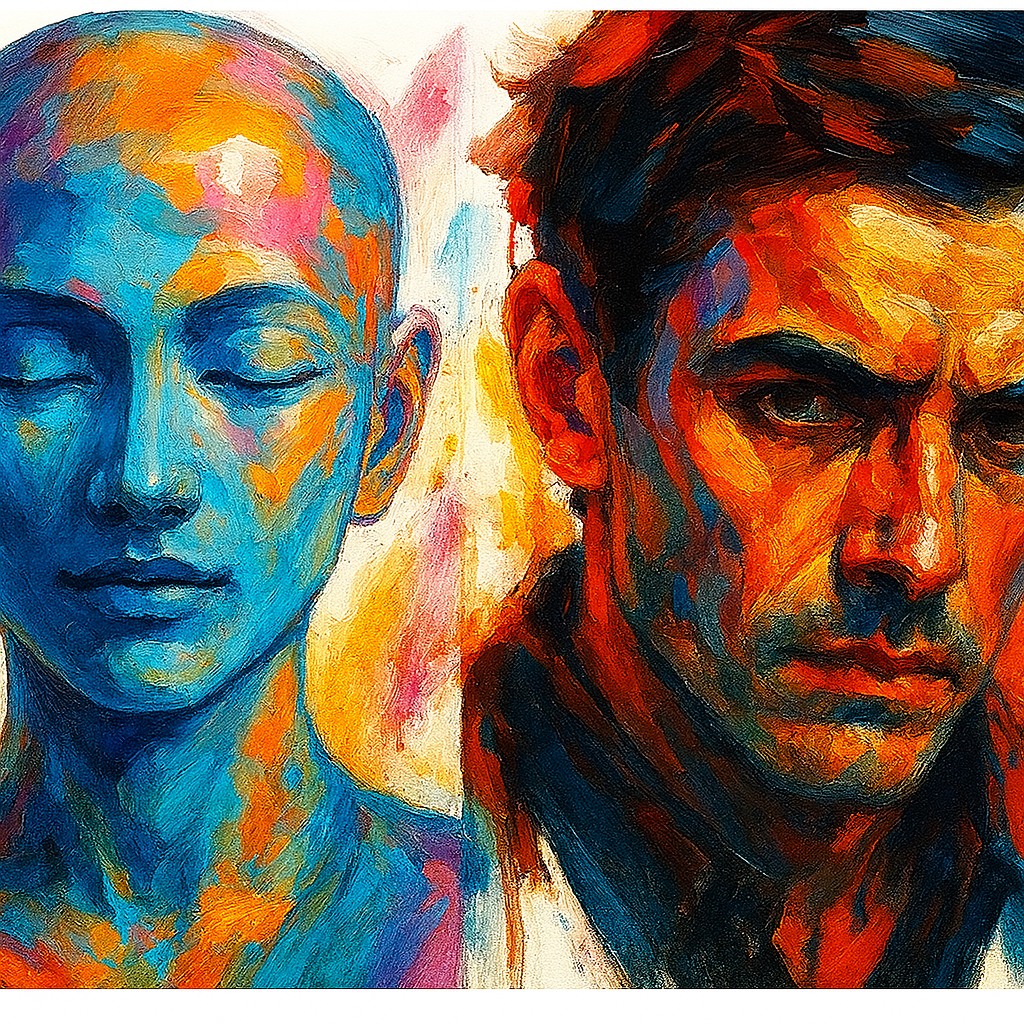
Contrast this with the one who has had many spiritually enlightening experiences. There is often great sincerity, beauty, and wisdom in their sharing. But listen closely: their narrative carries timestamps. “This is what I saw… what I felt… what I realized…” There’s a distance, however subtle. A witness telling you what the moon looked like—rather than being the moon, shining right now, regardless of who’s watching.

This difference isn’t about hierarchy. One isn’t better, holier, or more awakened than the other. But there’s a distinct quality when realization is not merely visited, but abided in. When the identity that would lay claim to an experience has dissolved entirely.

Here’s the paradox: a being can be spiritually enlightened without ever having what we label as a “spiritual experience.” No blissful union, no white light, no serpents of energy climbing the spine. Their clarity is not the aftermath of an event—it is the absence of confusion. No fireworks. Just light.

They may speak little. Or not at all. There is no need to convince, convert, or collect followers. They are not on a path—they are the ground from which all paths appear.

On the other hand, a person with many enlightening experiences can describe with breathtaking poetry the landscapes of the soul. But unless those experiences have dissolved the one who experienced them, the self remains—refined perhaps, but still separate.

True awakening isn’t an experience you remember. It’s the end of the one who remembers.

This is why the most profound truths often arrive without announcement. A falling away, not an acquiring. A silent recognition that this—yes, this—is what always was. And suddenly, the need for experience evaporates. Presence alone becomes sufficient.

Morgan O. Smith

Get Your Free Copy of My Book, Bodhi in the Brain!

https://subscribepage.io/oTSZQu