The Ego Is Not the Enemy

The Ego Is Not the Enemy: What Actually Dies During Spiritual Awakening?

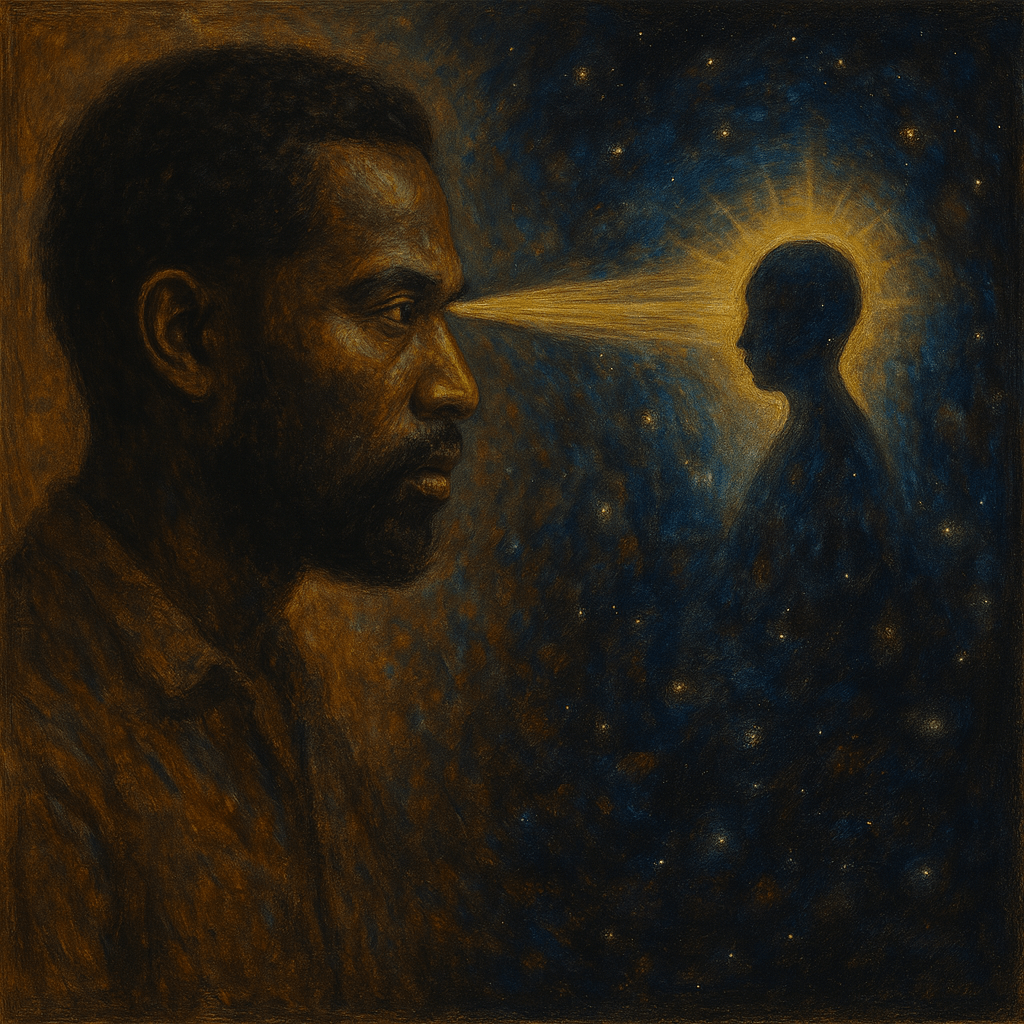
Few concepts in spirituality have been misunderstood as thoroughly as the ego.

We are repeatedly told to transcend the ego, destroy the ego, become egoless, or surrender the self. The implication is that spiritual maturity requires becoming less of a person, less defined, less assertive, and somehow psychologically smaller.

I see it differently.

A profound spiritual awakening does not require a weak ego. It may require an exceptionally developed one.

The problem is not that we have an ego. The problem is what the ego believes itself to be.

Ego Means a Sense of Self

At its most basic level, the ego refers to the sense of self.

It is the psychological structure through which we organize experience around the perception of “I,” “me,” and “mine.” It allows us to establish boundaries, make decisions, assume responsibility, navigate relationships, pursue goals, withstand social pressure, and function as individuals within the world.

When someone says, “He has a big ego,” they are usually not talking about the existence of a strong sense of self. They are describing narcissism, defensiveness, arrogance, grandiosity, insecurity, or excessive self-importance.

Those are qualities that can characterize an ego.

They are not the definition of ego itself.

This distinction matters because spiritual communities sometimes confuse psychological weakness with spiritual transcendence.

A person can be passive, poorly differentiated, unable to establish boundaries, dependent upon approval, easily manipulated, and afraid of confrontation while imagining these characteristics to be signs of egolessness.

They may be nothing of the sort.

Sometimes what appears to be egolessness is simply an ego that has not sufficiently developed.

You Need a Self Before You Can Transcend the Self

A healthy sense of self is necessary for functioning within a difficult world.

This becomes especially important for anyone carrying leadership, spiritual, community, social, or global responsibilities. Without sufficient psychological structure, other people’s expectations, projections, demands, criticisms, and agendas can overwhelm you.

The world can trample over a poorly developed self.

Meditation, when properly integrated, should not merely dissolve psychological structure. It can strengthen our capacity to remain centred while encountering stress, emotional activation, social pressure, uncertainty, and outside influence.

Paradoxically, spiritual practice can make the ego both stronger and more transparent.

Stronger does not necessarily mean louder.

It can mean more stable.

Less reactive.

Less easily manipulated.

Less dependent upon validation.

More capable of holding contradiction.

More capable of surrender.

This produces one of the great paradoxes of awakening:

The ego may need to become strong enough to let go of itself.

Egoic Death Is Not the Same as Ego Death

I make an important distinction between egoic death and ego death.

Egoic death refers to the collapse, surrender, or transformation of defensive ego structures. Identification with certain beliefs, roles, wounds, narratives, attachments, fears, and psychological defenses may loosen dramatically.

Something about “me” dies.

Yet the basic sense that there is still a “me” experiencing reality can remain.

Ego death, as I use the term, is more radical.

During a profound nondual awakening, the sense of being a separate subject can disappear altogether. There is no longer an individual standing apart from experience, observing reality from somewhere behind the eyes.

The subject-object structure collapses.

There is seeing, but no separate seer.

There is awareness, but no independently existing owner of awareness.

There is existence, but the familiar psychological centre claiming, “I am the one to whom existence is happening,” is absent.

That is what I mean by ego death.

The difference is enormous.

A person can undergo an extraordinary emotional, mystical, psychedelic, religious, or psychological transformation without experiencing the complete dissolution of the subject-object boundary.

Not every dramatic spiritual experience is a nondual awakening.

Not every loss of psychological defenses is ego death.

The Ego Dies, Then It Has to Come Back

Permanent inability to function as a self is not the goal.

After a profound awakening, the practical personality returns because life requires it.

Your name returns.

Your responsibilities return.

Your relationships return.

Your preferences return.

Your history remains accessible.

Someone still has to answer the phone, pay the bills, make decisions, protect boundaries, honour commitments, create, teach, lead, and respond when another human being calls your name.

The ego resurrects itself as a functional structure.

But something can be fundamentally different.

Before awakening, the ego can appear to be a solid psychological object at the centre of existence.

After awakening, it can become increasingly transparent.

The self still functions, but its apparent solidity has been penetrated.

You can use the self without completely mistaking yourself for it.

The ego returns, but it does not necessarily return to the throne.

Stages of Development Are Not States of Awakening

This distinction is essential.

Psychological development and spiritual awakening are two different dimensions of a human being.

A person can have profound mystical states while remaining psychologically immature.

Another person can be extraordinarily mature, ethical, rational, compassionate, and psychologically integrated without ever experiencing nondual awakening.

Development does not automatically produce awakening.

Awakening does not automatically produce development.

Psychological stages describe the increasing complexity and capacity of the ego.

One developmental sequence can be described as:

Archaic → Magic → Mythic → Magic/Mythic → Rational → Pluralistic → Integral → Super-Integral

Each movement represents a transformation in how the self organizes reality, interprets experience, understands other people, constructs meaning, and relates to increasingly complex perspectives.

States of consciousness describe something different:

Waking → Dreaming → Dreamless Sleep → Turiya → Turiyatita

Turiya and turiyatita point toward dimensions associated with spiritual realization and enlightenment rather than merely greater psychological complexity.

Development asks:

How mature, complex, inclusive, and perspectivally capable is the self?

Awakening asks:

What is ultimately true about the self?

Those are not the same question.

You Can Wake Up Without Growing Up

This distinction explains something that otherwise seems contradictory.

How can someone have an authentic mystical awakening and still hold immature beliefs?

Because the state that was experienced and the psychological structure interpreting that state are not necessarily at the same level of development.

A person may enter an extraordinary state of consciousness and later interpret it through a Magic worldview.

Another may interpret a similar state Mythically.

Another Rationally.

Another Pluralistically.

Another Integrally.

The awakening may be profound while the interpretation of the awakening remains constrained by the developmental structure available to the person.

This is why spiritual experience alone does not automatically produce psychological maturity.

Someone can experience oneness and still be narcissistic.

Someone can experience emptiness and still lack healthy boundaries.

Someone can experience profound love and still hold ethnocentric beliefs.

Someone can experience the dissolution of the separate self and later reconstruct an identity around being “the awakened one.”

The ego is remarkably capable of claiming ownership of the experience in which its own separate existence temporarily disappeared.

That is one of the great ironies of spiritual awakening.

The Ego Can Grow Beyond Egocentricity

Another common misunderstanding is equating ego with egocentricity.

They are not synonymous.

Egocentricity describes a particular organization of identity in which one’s own needs, interests, desires, fears, and perspective dominate.

Development can progressively widen that identity:

Egocentric → Ethnocentric → Worldcentric → Kosmocentric

The egocentric self says:

I am primarily concerned with me.

The ethnocentric self expands:

I am one of us. My people, culture, religion, nation, group, or community matter.

The worldcentric self expands further:

My concern includes all human beings regardless of race, sex, class, nationality, culture, religion, creed, or social identity.

Kosmocentric identity expands beyond humanity:

My concern includes life, consciousness, the planet, the universe, and existence itself.

Something fascinating happens here.

From one perspective, the ego becomes smaller because self-centredness decreases.

From another perspective, the ego becomes enormous because what the person includes within the meaning of “self” has expanded dramatically.

The boundaries of identity become increasingly porous.

This is why calling a worldcentric or kosmocentric person “egoless” can be misleading.

They still require a functioning ego.

They still need boundaries.

They still need discernment.

They still need the ability to say yes and no.

They still need enough psychological strength to withstand manipulation, criticism, projection, conflict, responsibility, and pressure.

What has changed is the circumference of concern.

The self has expanded beyond its previous boundaries.

The Bigger the Ego Becomes, the More Transparent It Can Become

There is another paradox here.

At lower levels of development, the ego can feel like a small but extremely solid object.

Everything revolves around protecting it.

My status.

My identity.

My beliefs.

My group.

My worldview.

My importance.

My security.

My story.

As development proceeds, the ego can become larger while simultaneously becoming less solid.

More perspectives can be included.

More contradictions can be tolerated.

More identities can be understood.

More complexity can be held without psychological collapse.

Eventually the ego becomes capable of questioning the very structure through which it has been interpreting reality.

This is where psychological development can become extraordinarily important for spiritual realization.

A highly developed ego may possess enough complexity to recognize the limitations of its own perspective.

The self becomes capable of seeing itself as a perspective rather than simply assuming that its perspective is reality itself.

That is a major shift.

What Does a Highly Developed Ego Look Like?

Perhaps the highest development of ego is not an ego that dominates every room.

It is an ego capable of holding many rooms.

A highly developed person can recognize multiple perspectives without immediately collapsing them into their own.

They can understand why another person sees reality differently.

They can distinguish perspective from truth claims.

They can hold paradox without immediately demanding resolution.

They can examine their own assumptions.

They can move between subjective, interpersonal, cultural, systemic, spiritual, global, and kosmic perspectives.

They can possess strong boundaries without becoming rigid.

They can exercise authority without requiring superiority.

They can experience criticism without psychological collapse.

They can surrender without becoming submissive.

They can become transparent without becoming weak.

At increasingly integral and super-integral stages, the ego becomes capable of holding multiple perspectives simultaneously.

This is a very different picture of ego development from the stereotype of the dominant personality.

Perhaps the strongest ego is the one that no longer needs to constantly prove its strength.

Development Expands the Self. Awakening Sees Through It.

This is where psychological development and spiritual awakening finally encounter one another.

Development progressively asks the ego to become larger, more complex, more inclusive, and more capable of perspective-taking.

Awakening eventually asks something completely different:

Who is this “I” that has been developing?

Development can take us from egocentric identity toward ethnocentric, worldcentric, and kosmocentric identity.

The circle becomes larger.

Awakening questions the centre of the circle itself.

Who is standing there?

Who is experiencing?

Who is aware?

Where exactly is the boundary between the observer and the observed?

At the highest psychological stages, the ego may become capable of seeing reality through multiple perspectives simultaneously.

At the deepest levels of awakening, something even more radical can be recognized.

The apparent observer is itself part of what is being observed.

From one nondual perspective, all existence is The Self.

From another, there is No Self anywhere to be found.

These statements appear contradictory only while we assume that Self must mean the individual personality.

The Self of nonduality is not the autobiographical self.

It is not the personality.

It is not your name, history, occupation, nationality, race, sex, religion, ideology, accomplishments, wounds, preferences, or social identity.

The startling recognition is that what you ultimately are cannot be contained within the psychological structure you previously called yourself.

Advaita can express this realization as Self.

Buddhist traditions may approach it through emptiness and no-self.

The language differs.

The ordinary assumption of an independently existing psychological subject is being challenged at its root.

The Ultimate Expansion of Self Becomes No-Self

There is an intriguing convergence between the highest reaches of development and the deepest reaches of awakening.

Development expands identity.

Awakening dissolves the assumption that identity possesses an independently existing centre.

At first:

I am me.

Then:

I am one of us.

Then:

All human beings are within my circle of concern.

Then:

Life, consciousness, the planet, and the cosmos are within my circle of concern.

Nondual awakening can take the inquiry somewhere even stranger:

Where is the boundary separating “me” from existence in the first place?

From the perspective of Self, everything is Myself.

From the perspective of no-self, there is no separate “myself” anywhere.

Absolute inclusion and absolute emptiness begin pointing toward the same mystery from opposite directions.

The ego cannot manufacture this realization simply by becoming more psychologically developed.

But a developed ego may be far better equipped to integrate what happens when its assumed centrality collapses.

Do Not Destroy What You Have Not Finished Developing

This may be one of the most important cautions in serious spiritual work.

Trying to destroy the ego prematurely can become another form of avoidance.

Someone who needs boundaries may try to become egoless.

Someone who needs confidence may practice self-erasure.

Someone who needs psychological integration may pursue transcendence.

Someone who needs to learn how to say no may interpret surrender as saying yes to everyone.

Someone who needs a coherent identity may attempt to dissolve identity altogether.

Someone who needs to develop personal agency may mistake passivity for spiritual surrender.

This can become especially dangerous around spiritual authority.

A poorly developed sense of self may make someone highly susceptible to manipulation while they interpret their inability to resist authority as humility.

That is not necessarily transcendence.

Spiritual awakening should not require becoming incapable of being human.

The work is subtler than that.

Develop the self.

Strengthen it.

Integrate it.

Expand it.

See through it.

Let it become transparent.

And when consciousness finally discovers what exists prior to the distinction between self and other, allow the ego to surrender completely.

Then let it return.

Not necessarily as the ruler of consciousness, but as one of its instruments.

Two Dimensions of Every Human Being

Psychological stages of development and states of awakening are two different facets of every individual.

One concerns the development of the self.

The other concerns awakening beyond the assumed limitations of that self.

One can grow horizontally and vertically through increasingly complex structures of identity, morality, cognition, perspective, and concern.

One can also awaken into increasingly profound states in which the ordinary construction of self and reality becomes transparent or disappears altogether.

Neither dimension should be mistaken for the other.

A sophisticated worldview does not prove enlightenment.

A profound mystical experience does not prove psychological maturity.

The extraordinary possibility is the development of both.

A human being can become psychologically strong without becoming psychologically rigid.

Deeply individual without becoming egocentric.

Worldcentric without losing personal boundaries.

Kosmocentric without abandoning practical responsibilities.

Capable of inhabiting multiple perspectives without losing discernment.

And spiritually awakened without becoming psychologically diminished.

Perhaps the mature spiritual question is therefore no longer:

“How do I get rid of my ego?”

A more interesting question is:

How fully can the self develop before it discovers that it was never the whole of what I am?

Beyond even that lies a question no psychological stage can answer for us:

When the sense of being a separate self disappears completely, what remains?

Morgan O. Smith

https://linktr.ee/morganosmith

Trans-Rational vs. Pre-Rational

The Subtle Distinction of True Spiritual Maturity

Many spiritual paths appear radiant on the surface, filled with symbols, mantras, and promises of transcendence. Yet beneath the surface lies a crucial divide often overlooked: the difference between pre-rational and trans-rational spirituality. Both appear to reach beyond logic, yet one regresses beneath it while the other transcends it entirely. To the untrained eye, they can look identical.

The pre-rational domain is instinctive, emotional, and magical. It belongs to an earlier structure of consciousness that sees reality through myth, projection, and emotional fusion. The pre-rational individual feels connected to life, but that connection is often undifferentiated; there is no clear boundary between the self and the world. Intuition replaces discernment. Myth replaces direct knowing. This is the consciousness of the dreamer who mistakes imagination for revelation. Many who fall into this category speak the language of mysticism but remain bound by emotional dependency and unexamined belief.

The trans-rational individual, on the other hand, has journeyed through the rational mind, not around it. They have integrated logic, science, and self-reflection into their foundation. Their transcendence is not an escape from intellect but a movement beyond its limitations. The mind becomes a servant rather than a master. Awareness expands to include paradox, complexity, and the ineffable without denying the relative truth of reason. Where the pre-rational personality confuses fantasy with insight, the trans-rational sees through both fantasy and logic as partial mirrors of the Real.

Many spiritual communities confuse these two movements, what Ken Wilber calls the pre/trans fallacy. Mystical language, emotional intensity, or devotion can appear “advanced,” when in fact they may mask regression to earlier, unintegrated states. True trans-rational realization does not deny the world; it refines perception until all appearances reveal the same unbroken consciousness. It honours both matter and spirit as dimensions of the same reality, seeing no need to reject one for the other.

The pre-rational seeks comfort in transcendence; the trans-rational finds freedom in presence. The former escapes complexity; the latter embraces it as divine play. One dissolves into illusion; the other dissolves illusion itself. The difference is not about how high one climbs, but how fully one includes.

Morgan O. Smith

Join us for our free virtual Zoom/YouTube group meditation session tonight, Wednesday, November 12th, at 8:00 PM ET. Please have your headphones or earbuds ready for the full experience. Take an hour for yourself to unwind, breathe, and reconnect.

Meeting ID: 859 0097 8411

Passcode: 676036

The Precision of Perception

Why Interpretation Shapes Your Awakening

Reality isn’t hiding. What conceals it is the web of interpretations spun by the mind: assumptions, projections, and inherited beliefs. Yet, paradoxically, it is through interpretation that one begins to peel away those very veils. Every interpretation is a mirror. The question is: what is it reflecting?

Interpretation matters because it reveals where you are on the developmental spiral. Crude, reactive interpretations reflect lower rungs of psychological growth; often rooted in fear, blame, or a need for certainty. As awareness matures, interpretations become more nuanced, inclusive, and paradox-tolerant. They start to echo the underlying unity of things, rather than just categorize them.

Interpretation is not merely a mental activity. It is a soul signal. The more refined it becomes, the closer it gets to silence, the point where no interpretation is needed. That is the paradox. The highest interpretation doesn’t claim to know; it bows. It listens. It dissolves.

Yet such dissolution is not a regression into vagueness. It is the clarity that comes when all interpretations have done their job and exhausted their usefulness. Then what remains is the directness of being—your true nature—not as a conclusion, but as the very absence of conclusion.

This is why interpretation is not to be dismissed but refined. It is a bridge. And the more accurate your interpretation of the world, the closer you walk toward the unconditioned—what no interpretation can contain, but all of them secretly point toward.

What you interpret is what you live. Misinterpret life, and you suffer. Align with it, and you awaken. Accuracy in perception is not about being “right”; it is about being real. Every step you take toward clearer interpretation is a step toward the Real that has no opposite.

Morgan O. Smith

Get Your Free Copy of My Book, Bodhi in the Brain!

https://subscribepage.io/oTSZQu

The Weightlessness of Perspective

How much weight does a point of view actually hold?

None. And yet, it seems to shape entire lives, govern nations, define relationships, and breed conflict. But the more one deepens into the ungraspable expanse of reality, the more all perspectives—including one’s own—become like shadows cast by a flame none can touch.

I do not feel resistance toward those who oppose my view. I feel space—vast, immeasurable space. Not tolerance, not passive indifference, but a kind of cosmic shrug. This universe is too immense, too precise, too paradoxical for me to waste even a flicker of energy defending a perspective I know was born out of a temporary configuration of memory, biology, and environment.

What I see, I see through a filter: race, culture, conditioning, gender, language, trauma, karma, personality, neurochemistry, and a moment’s breath. Someone else sees through a completely different lens. To argue over the differences is like two waves debating who touches the shore more truthfully.

Each wave is made of the same water.

Ultimate Reality does not conform to opinions. It cannot be contained by agreement or disagreement. It isn’t found in right or wrong, winning or losing. It is not trying to prove itself. It simply is, and isness doesn’t care how it’s described.

This is not nihilism. It’s reverence. Reverence for the mystery so wide, so total, that every perspective is valid precisely because none of them are.

The deeper the realization, the more perspectives one can hold. Not juggle, not compare, not rank—but hold. To see from the eyes of the enemy and the beloved, the oppressor and the oppressed, the doubter and the devotee. To feel into each vantage point, not to believe it, but to understand it from within.

Eventually, you don’t just hold perspectives. You become the capacity for perspective itself. You become the silence before thought, the awareness behind all positions.

From there, disagreement becomes theatre.

Opposition becomes dance.

And the only thing that matters is the stillness that allows it all to appear.

Morgan O. Smith

Get Your Free Copy of My Book, Bodhi in the Brain!

https://subscribepage.io/oTSZQu

The Journey of the Mind

Beyond Ego’s Boundaries

Human consciousness, unbound by the constraints of ordinary thought, possesses an intrinsic ability to transcend the familiar territory of the ego. This journey to higher states unfolds as a delicate dance, one where the ego—the personality construct and guardian of perceived separateness—is bypassed, leaving room for profound shifts in awareness.

These elevated states of mind, accessible yet elusive, represent realms where the habitual identity fades into the background. Here, one finds insights that ripple with clarity, and a sense of unity that dissolves the divisions the ego so meticulously maintains. The journey to these states does not require the ego’s consent, nor can it be negotiated through the ego’s language. Instead, it is a surrender, a quiet movement beyond identity, like slipping into a vast ocean where the waves of self-constructed limitations fade.

The ego functions as a structure, defining and separating, fostering individual identity, and distinguishing between ‘self’ and ‘other.’ But, ironically, the very mechanisms that help navigate daily life can often restrict our capacity for profound insight. The ego’s grip can be like a thin film that obscures the brilliance beyond, drawing boundaries around our perceptions and experiences. However, consciousness itself possesses a deeper intelligence—one that intuitively senses these confines and seeks to transcend them.

Through this transcendence, higher states are realized: states where intuition, compassion, and expansive perception prevail. These states are not bound by logic or reason, nor are they controlled by the ego’s protective narratives. Instead, they blossom as expressions of something deeper, a truth beyond the rational mind. In these realms, individuals might experience spontaneous creativity, profound calm, or insights that cannot be traced back to ordinary patterns of thought.

This movement beyond ego can occur in many ways. Moments of silence, stillness, meditation, or even being fully absorbed in creative expression, allow us to slip beyond the ego’s hold. What emerges is a consciousness that witnesses without interference—a state of pure observation, where clarity dawns without the coloration of past experiences, conditioning, or future anxieties.

Ironically, in relinquishing the need to control or grasp, we find a more profound mastery. The mind, left to its natural course, attains heights the ego could never imagine. The ego tries to navigate life by holding on, defining, and categorizing, yet the higher mind finds meaning in spaciousness, in a form of understanding that defies containment.

This journey invites a letting go, not to become less, but to become whole. Every step taken without ego’s agenda becomes an invitation to experience life as it truly is—unfiltered, unfragmented, and undeniably interconnected. What emerges is a state of mind where one feels profoundly connected to all that is, free from the need to prove, to defend, or to possess.

In this light, our consciousness rises naturally to meet the deeper realms of existence, not as something earned or achieved but as something rediscovered—a return to our true nature, unburdened by the masks we have accumulated. The mind knows this path intuitively, flowing into these higher states with grace when we allow it to be free from the ego’s constraints. And in that freedom, a profound sense of peace, insight, and unity emerges, inviting us to live with a renewed sense of purpose, clarity, and wholeness.

Morgan O. Smith

Yinnergy Meditation, Spiritual Life Coaching & My Book, Bodhi in the Brain…Available Now!

https://linktr.ee/morganosmith

The Exponential Unfolding of Consciousness

From the Ego to the Infinite

The sequence 1, 2, 4, 8, 16, 32, 64 etc is known as a geometric progression—a pattern where each term after the first is found by multiplying the previous one by a fixed, non-zero number. Each number is doubled in this case, creating an exponential growth that is not just a mathematical concept but a fundamental principle found throughout nature. This sequence is critical because it represents how small beginnings can lead to vast, expansive outcomes, demonstrating the power of exponential transformation. The same principle that drives population growth, the branching of trees, and the spiralling of shells can also be seen as a metaphor for the process of spiritual awakening. Just as nature uses geometric progression to unfold complexity and beauty, so too might our spiritual experiences expand as the mind transcends from the small “I” or ego into the vastness of collective consciousness, and ultimately into Consciousness itself.

At the outset, the mind identifies with the number 1. It is the small “I,” the ego, the center of an individual’s universe. This singular identity believes itself to be separate, and distinct from the world around it. The self sees itself as the subject in a world of objects, the thinker in a sea of thoughts, and the doer in a realm of actions. The ego stands alone, encapsulated within its boundaries, perceiving the world through a lens of duality.

But, as with the sequence, there comes a moment when the ego perceives something beyond its singular existence. It doubles into 2. This is the first awakening—a recognition that there is more to existence than just the self. The mind begins to sense its connection to others, the threads of interdependence that weave through the fabric of life. This is the initial glimpse into the collective consciousness.

As the mind continues to expand—4, 8—it begins to transcend the confines of the ego. The boundaries that once seemed so solid start to dissolve. The self no longer sees itself as merely an individual but as part of a larger whole, an integral part of the collective consciousness. This is the stage where the mind starts to perceive the unity underlying all diversity, recognizing that the separation it once clung to was an illusion.

The sequence continues—16, 32, 64—each step representing a deeper level of awareness, a more profound surrender to the truth of existence. The mind begins to transcend even the collective consciousness, moving towards the infinite, the realm of pure Consciousness. Here, the small “I” completely dissolves, and what remains is the recognition of being one with the entire universe, with the very essence of life itself.

This final stage of the sequence symbolizes the ultimate spiritual awakening. The mind has moved beyond the personal and the collective, into the boundless expanse of pure Consciousness. It is here that the true nature of reality is revealed—that there is no separation, no division, only the infinite play of Consciousness experiencing itself in myriad forms.

The journey from ego to infinite Consciousness is not just one of linear progression but of exponential transformation. Each doubling in the sequence represents a quantum leap in awareness, a step closer to the ultimate realization of nonduality. And just as the sequence could continue indefinitely, so too does the journey of spiritual awakening, for Consciousness is limitless, ever-expanding, and eternally evolving.

In reflecting upon this natural and spiritual process, we are reminded that the same patterns that govern the physical world may also govern our inner worlds. As nature grows and evolves, so too do we, propelled by the same forces of expansion, ever moving toward greater complexity, unity, and understanding. In this sense, the pattern found in the sequence 1, 2, 4, 8, 16, 32, 64 is not just a mathematical curiosity but a universal truth, guiding us on our journey from the limited self to the infinite.

Morgan O. Smith

Yinnergy Meditation, Spiritual Life Coaching & My Book, Bodhi in the Brain…Available Now!

https://linktr.ee/morganosmith

The Cosmic Joke

Finding Humour Beyond the Ego

In the grand play of the cosmos, a joke exists so profound that it eludes the grasp of our everyday consciousness, veiled beneath the layers of our egoic identity. Imagine momentarily that the essence of your being—the “I” that you refer to so confidently—is the punchline to the most elaborate joke ever conceived. It isn’t a cruel joke, but rather an invitation to step beyond the boundaries of self-imposed seriousness and to laugh with the wisdom of understanding.

The joke begins with the ego, a masterful illusionist, convincing us that we are nothing more than the sum of our thoughts, emotions, and experiences. We invest deeply in this narrative, playing the role scripted by societal norms and personal expectations. Yet, this is the point where the cosmos smiles, for the joke is on the ego. The reality, hidden in plain sight, is that we are far more expansive than this limited self.

To see beyond the ego is to appreciate the cosmic humour. When you realize that what you took so seriously—the angst of being right, the weight of personal grievances, the chains of past and future—was never the essence of who you truly are, a lightness pervades your being. This revelation is akin to an audience realizing the absurdity of a magician’s trick; the spell breaks, and laughter bubbles forth.


This laughter is not derisive or dismissive. It is the laughter of liberation, of seeing the strings that bind the marionette and choosing no longer to dance at their pull. It’s recognizing that the cosmos plays with us, urging us to discover that behind the facade of individuality lies the vast expanse of consciousness, unbounded and magnificent.

As you navigate the perceived trials and tribulations of life, invite this perspective: view each challenge as a scene in this divine comedy. Each struggle, each joy, each moment of confusion or clarity is part of this intricate joke where the punchline is your awakening. When you finally get the joke, you won’t just chuckle; you’ll laugh hysterically, understanding that all along, you were both the audience and the performer in the cosmic spectacle.

This humour is not about negating the reality of pain or struggle; rather, it’s about shifting the perspective from which you view these experiences. When embraced, this humour heals, enlightens, and transforms, offering a transcendent glimpse into the true nature of existence where everything is interconnected, and nothing is as serious as it seems.


So next time you feel weighed down by the persona of who you think you are, pause and listen carefully—perhaps the echoes of cosmic laughter are inviting you to join in, to step beyond the ego, and to experience the freedom that comes with the greatest revelation of all: that you are not merely a part in this cosmic play, but its very essence, endlessly expansive and eternally joyful.

Morgan O. Smith

Yinnergy Meditation, Spiritual Life Coaching & My Book, Bodhi in the Brain…Available Now!

https://linktr.ee/morganosmith

Moksha and Nirvana

Two Sides of the Same Coin in Nondual Suchness

In the realm of spiritual philosophy, the concepts of Moksha and Nirvana often emerge as distinct paths toward spiritual liberation. Moksha, a term deeply rooted in Hindu philosophy, represents liberation from the cycle of birth and rebirth (Samsara), a release from the constraints of worldly existence. On the other hand, Nirvana, central to Buddhist thought, is the state of being free from suffering and the cycle of rebirth, a culmination of enlightenment.

At the surface, these two concepts might appear as separate paths, guiding the individual through distinct spiritual journeys. However, when explored at the ultimate level of nondual suchness, a profound realization emerges: Moksha and Nirvana are, in essence, two sides of the same coin.


Nondual suchness refers to a state of consciousness where dualities and distinctions dissolve. In this state, the separation between self and other, between one spiritual goal and another, ceases to exist. It is here, in this realm of nondual awareness, that Moksha and Nirvana converge, revealing their inherent unity.

This realization transcends the apparent differences imposed by linguistic and cultural contexts. While Moksha speaks a language of liberation from the cycle of rebirth, and Nirvana talks of extinguishing the flames of desire and suffering, at their core, they both aim towards the same ultimate truth – freedom from the limitations of human existence and a reuniting with the absolute, the infinite, or the void.


Understanding Moksha and Nirvana as interconnected aspects of the same spiritual truth offers a more inclusive and comprehensive perspective on the journey toward enlightenment. It encourages a deeper exploration beyond the boundaries of religious doctrines and invites a unifying experience of spiritual awakening.

In this light, the journey towards Moksha or Nirvana is not about choosing one path over the other but about realizing the underlying unity that they both represent. It is about transcending the ego, dissolving the illusions of separation, and embracing the wholeness of existence.

In conclusion, the ultimate level of nondual suchness opens the door to a profound understanding where Moksha and Nirvana are no longer seen as separate goals but as harmonious expressions of the same ultimate reality. This realization is a pivotal moment in the spiritual journey, marking a transition from a path of seeking to a state of being, from a pursuit of liberation to the realization of inherent freedom.

Morgan O. Smith

Yinnergy Meditation & My Book, Bodhi in the Brain…Available Now!

https://linktr.ee/morganosmith

Unveiling My True Self

A Journey Through Enlightenment and Personality

Embarking on a spiritual journey often entails traversing through uncharted territories, and my journey, as shared in my interview with Steve James on Guru Viking, has been a testament to this exploration. My insights into the intertwining realms of enlightenment and personality have not only shaped my spiritual path but also opened a dialogue that is both philosophical and introspective: How does enlightenment manifest through the myriad of personalities?

My experiences, from navigating through the tumultuous waves of childhood trauma to experiencing peaks of spiritual awakenings, have been far from linear. The experiences of nonduality and oneness have been transformative, providing me with insights that challenge the conventional narratives surrounding enlightenment.

One pivotal realization that has emerged through my journey is that enlightenment does not obliterate personality. Rather, it illuminates it, allowing an individual to express their intrinsic personality traits without the constraints of ego or societal expectations. This realization prompts a cascade of questions: How does enlightenment, while navigating through the complexities of individual personalities, express itself authentically through inherent personality traits?

The concept that enlightenment can express itself through various personality types is not only intriguing but also dismantles the monolithic image of enlightened beings. It suggests that enlightenment does not coerce individuals into a singular archetype of serenity and equanimity. Instead, it allows one’s true nature to shine through, free from societal conditioning and self-limitation.

This perspective also fosters a compassionate viewpoint towards understanding and recognizing enlightenment in others. It suggests that enlightened beings may walk amongst us, expressing their spiritual realization through their unique personalities, which may not always conform to the stereotypical image of a serene, detached individual. It implies that an enlightened individual may laugh boisterously, engage passionately with the world, and express a spectrum of emotions, all while residing in a state of nondual awareness.

My insights invite contemplation: Have we encountered enlightened beings in our journey, unrecognized due to our preconceived notions of how they should express their realization? And how does this perspective influence our spiritual journey, knowing that enlightenment does not seek to change who we are, but rather to unveil our true nature in its purest form?

In the realm of spiritual exploration, where experiences often transcend language and conceptual understanding, my insights provide a fresh, inclusive, and deeply humane perspective on enlightenment. It invites us all to explore our spiritual path with authenticity, embracing our unique personalities as vehicles through which the enlightened state can express itself in the world.

 Morgan O.  Smith

Watch The Awakening of Mista Mo:

Ep 176: The Awakening of Mista Mo

Embark on a captivating expedition in Episode 176, “The Awakening of Mista Mo.” Today, we unravel the transformative journey of Mista Mo, a soul who found enlightenment in the most unexpected corners of life. His tale is one of resilience, discovery, and awakening to a higher calling amidst the cacophony of worldly chaos. As we traverse through his life’s chapters, we uncover pearls of wisdom that beckon a deeper understanding of self and the universe. Join us in this stirring narrative that echoes the eternal quest for inner peace and enlightenment.

A friendly reminder for seekers everywhere: Guru Viking continues to unfurl wisdom every Friday on YouTube. Enrich your spiritual palette on Apple, SoundCloud, and Spotify as well. https://www.guruviking.com/

Yinnergy Meditation & My Book, Bodhi in the Brain…Available Now!

https://linktr.ee/morganosmith

The Paradox of Gain

A Journey Beyond the Self

In our dialogue on Guru Viking, the episode “Bodhi in the Brain” unfolds a narrative that delves into the essence of spiritual enlightenment and the realization of oneness. The conversation between host, Steve James, and me explores the paradoxical nature of gain in the spiritual realm, a concept that challenges the conventional paradigms of achievement and acquisition.

The journey towards spiritual enlightenment is often perceived as a quest for something greater, a pursuit of a higher state of being. However, as this dialogue unfolds, it reveals that the essence of spiritual enlightenment lies in the realization that there’s nothing to gain. It’s a journey of unbecoming, a process of shedding the layers of ego and illusion that veil our true nature.

The beauty of spiritual enlightenment is encapsulated in the simplicity of being, in the acceptance of our inherent wholeness. It’s not about acquiring something new, but about recognizing what has always been present. It’s about coming home to the essence of who we truly are, beyond the transient identities and desires that often entangle us.

The narrative further delves into the realization of oneness, a state of consciousness where the illusion of separation dissolves, unveiling the interconnectedness of all existence. In this state of realization, the concept of gain loses its significance. When we recognize ourselves as an integral part of the cosmic tapestry, the desire for personal gain transcends into a desire for collective harmony and well-being.

However, our dialogue also acknowledges the contrasting perspective from the ego standpoint, where the notion of gain is rooted in separation and individual achievement. It’s a realm where the self is perceived as distinct from the rest, and the pursuit of gain is driven by a desire for validation and fulfillment.

Our conversation invites you to reflect on the transient nature of worldly gains and the eternal fulfillment that lies in the realization of oneness. It’s a call to transcend egoic desires and step into a space of boundless love and unity.

This episode “Bodhi in the Brain” is not merely a discussion; it’s a gateway into a realm of higher understanding, a realm where the paradox of gain unveils the profound simplicity of existence. It’s a reminder that in the journey of spiritual enlightenment, the greatest gain is the realization of our inherent oneness with all that is.

Morgan O.  Smith

Watch Bodhi in the Brain, and previous episodes below:

Ep 220: Bodhi in the Brain

Welcome to Episode 220 of our enlightening series, where today we delve into a profound narrative titled “Bodhi in the Brain.” In this episode, we are joined by a spiritual seeker who shares his riveting journey towards higher consciousness. Through a blend of ancient wisdom and modern neuroscience, we explore the realms of mind and spirit, unveiling a path that bridges the tangible with the transcendental. Tune in as we navigate the intricate dance of existence, and uncover the serene space where the mind meets the infinite.


Ep 176: The Awakening of Mista Mo

Embark on a captivating expedition in Episode 176, “The Awakening of Mista Mo.” Today, we unravel the transformative journey of Mista Mo, a soul who found enlightenment in the most unexpected corners of life. His tale is one of resilience, discovery, and awakening to a higher calling amidst the cacophony of worldly chaos. As we traverse through his life’s chapters, we uncover pearls of wisdom that beckon a deeper understanding of self and the universe. Join us in this stirring narrative that echoes the eternal quest for inner peace and enlightenment.


Ep 195: Enlightened Comedian

Laughter is often said to be a divine gift, but can it also be a gateway to a deeper understanding of our existence? In Episode 195, titled “Enlightened Comedian,” we explore the whimsical yet profound journey of a comedian whose quest for laughter led him to the shores of enlightenment. Through a tapestry of humour, insight, and spiritual awakening, we delve into the heart of a narrative that celebrates the confluence of comedy and consciousness. Tune in to this heartwarming episode as we unravel the laughter-laden path to self-realization and the profound wisdom that accompanies it.

🔗 For those yearning for a transformative meditative experience or eager to delve into the philosophical depth of “Bodhi in the Brain”, the gateway awaits https://linktr.ee/morganosmith A friendly reminder for seekers everywhere: Guru Viking continues to unfurl wisdom every Friday on YouTube. Enrich your spiritual palette on Apple, SoundCloud, and Spotify as well. https://www.guruviking.com/

Yinnergy Meditation & My Book, Bodhi in the Brain…Available Now!

https://linktr.ee/morganosmith