The Root of Choice

True Free Will and the Causal Realm

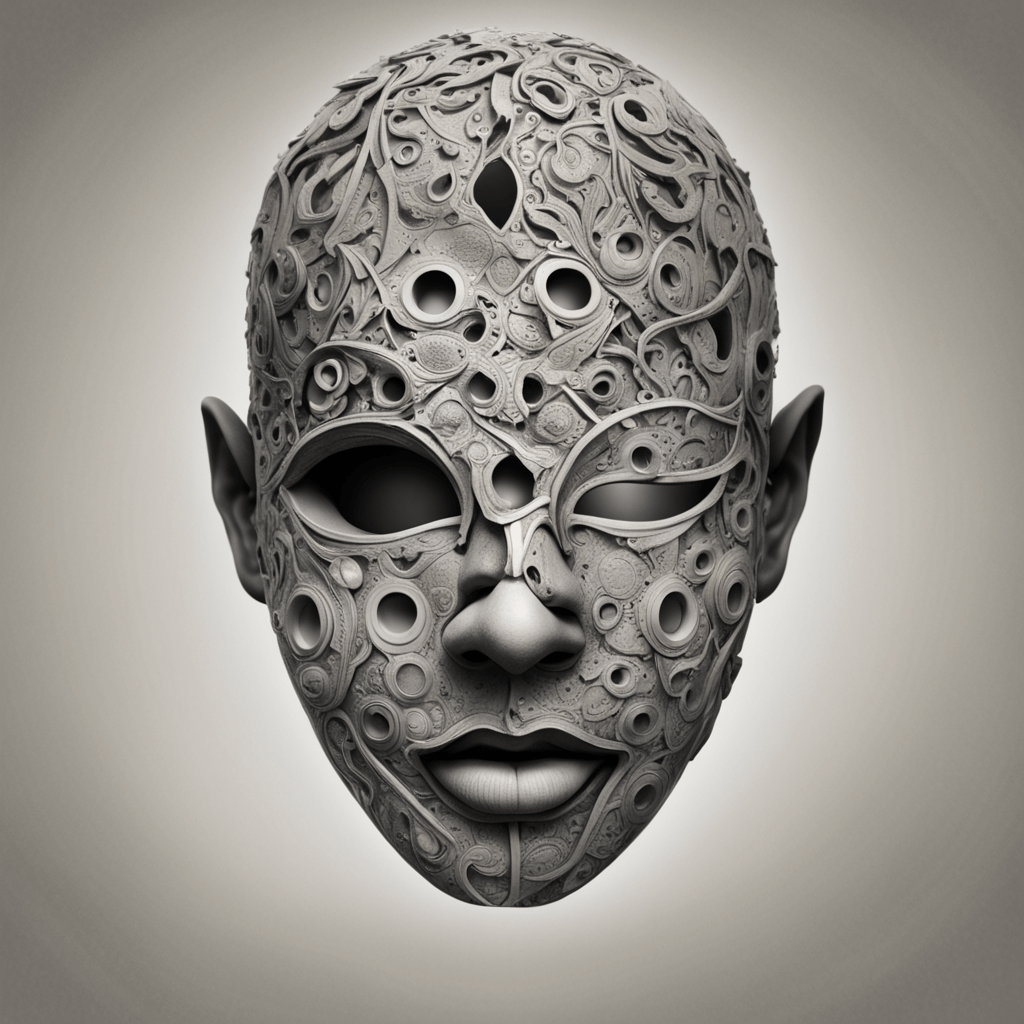
Most speak of choice as if it lives at the surface, where preference, fear, habit, and desire jostle for control. But what if true free will does not arise there at all? What if it exists at the root, before thought forms into options, before “I want” emerges to justify itself?

This root is the causal realm: the source of all motion, where intention is not split from manifestation. It is not personal will in the usual sense—no ego negotiating with life to get what it wants. Instead, it is pure causality aware of itself, setting everything in motion without conflict or division.

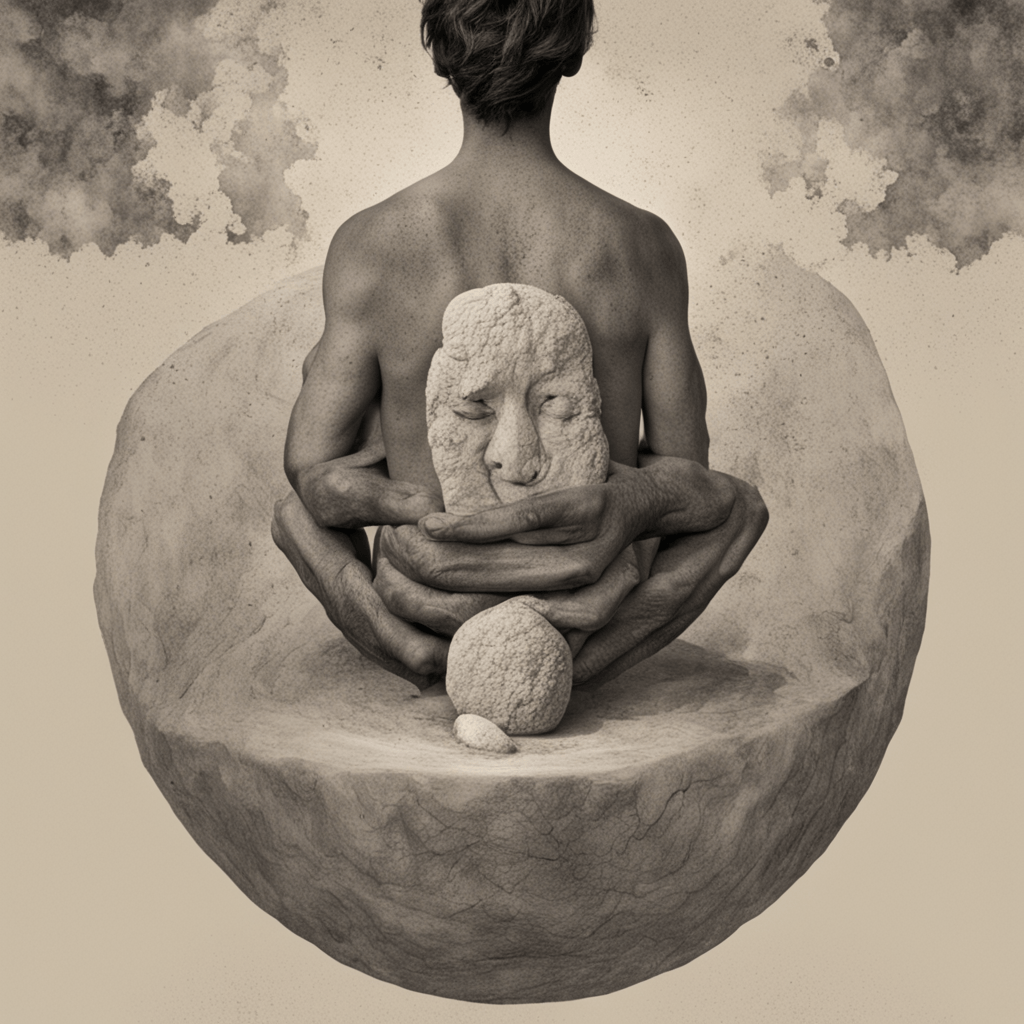
At the surface, people speak of freedom as the power to choose between alternatives. Yet these alternatives are already conditioned. They are branches of a tree whose root has already determined their growth. To speak of freedom at the stem while ignoring the root is to mistake effect for cause.

However, the paradox reveals itself when one sees no real division between root and stem. The freedom to choose at the surface becomes genuine only when it is recognized as the expression of the root itself. Every choice becomes the revelation of causality. There is no separate chooser apart from the choosing.

This is what lies beyond the ego’s belief in control. The ego claims “I choose” without realizing that its very claim is already part of the causality it denies. True free will is not the assertion of control over life but the recognition that you are life itself choosing, moving, unfolding.

To see this is to dissolve the illusion of separation. Responsibility is no longer a burden but realization: the root chooses through you, as you. There is no conflict left. Choice becomes transparent, ego falls away, and causality shines unbroken.

This is freedom—not as license, not as negotiation, but as total alignment with the source of all that arises.

Morgan O. Smith

Get Your Free Copy of My Book, Bodhi in the Brain!

https://subscribepage.io/oTSZQu

The Rapture of Letting Go

Presence is not a prize to be won or a fortress to defend. It is not some static peak upon which the awakened are meant to perch forever, unmoved and untouchable. The pursuit of a “permanent state” of anything—even presence—quietly binds us again to the illusion we sought to transcend. It becomes another mask of the seeker, cloaked in stillness, trembling behind the veil of spiritual ambition.

States rise and dissolve. Rapture comes like a summer breeze and vanishes just as gently. Then irritation, confusion, boredom. Then clarity. Then fog. The parade continues, not because you are failing, but because you are alive.

To lose attention is not to lose awareness. What perceives the loss? What observes the drift and the return? That witnessing is untouched. It is not opposed to distraction, nor does it seek permanence. It simply is, always.

Clinging to peace is no different from clinging to pain. The grasping hand is the same. When rapture becomes an achievement, it quietly rots. But when it is allowed to dance freely—hidden beneath the dishes in the sink, behind the silent gaze on the subway, or in a burst of sudden awe at the sky—then it becomes alive again.

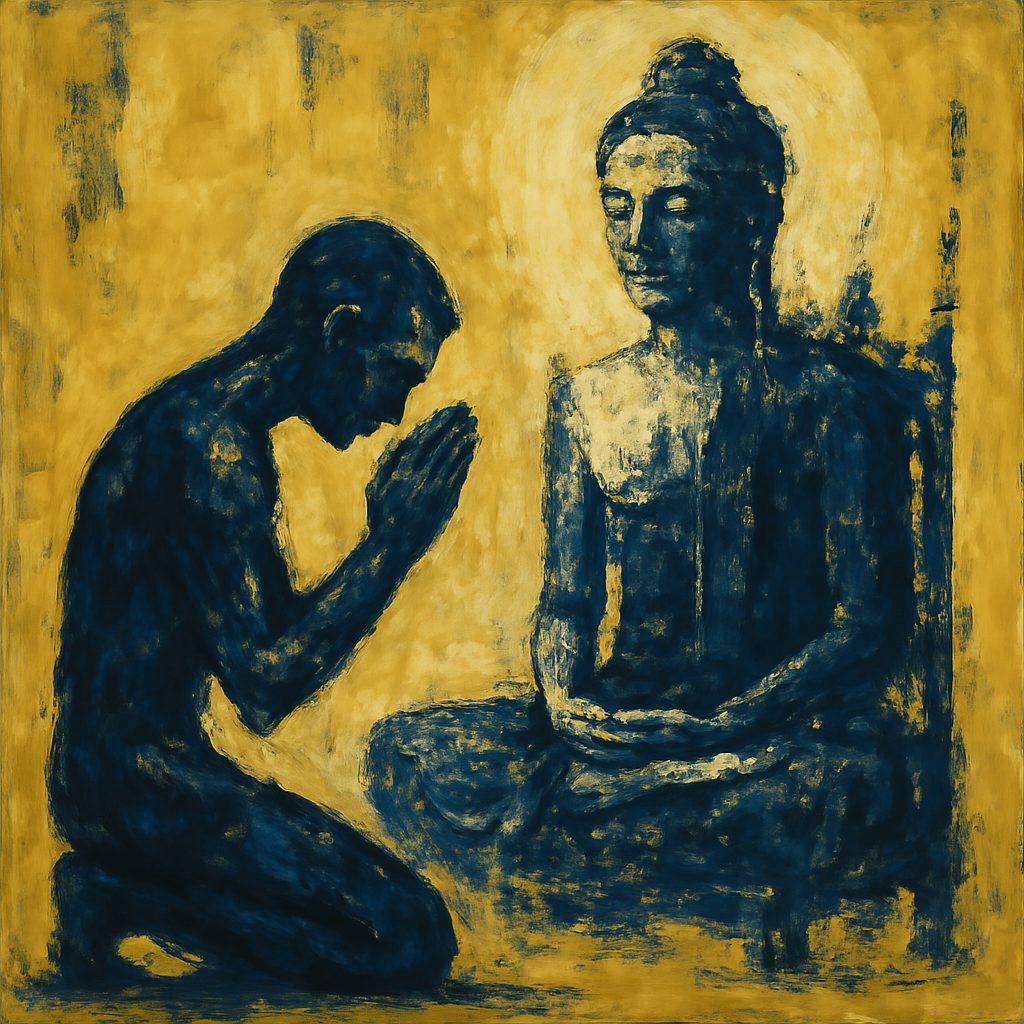
You can continue to practice, to breathe, to cultivate. But do so like a child builds a sandcastle: for the love of it, not to resist the tide. Joy, too, is a practice. But it must remain unhooked from outcome.

There’s a kind of rapture in the background hum of your own awareness—even when the foreground is chaos. That quiet clarity never left. You’re not missing the moment. You are the moment, passing through its own reflections. And if you laugh at the absurdity of forgetting and remembering over and over again, then perhaps that’s the most awakened thing of all.

Morgan O. Smith

Get Your Free Copy of My Book, Bodhi in the Brain!
https://subscribepage.io/oTSZQu

The Throne of Illusions

How the Mind Deifies Itself

The mind constructs its ruler—a sovereign draped in reverence, sculpted from ideals we exalt but refuse to embody. This deity is not an external force but a projection of the highest aspects of ourselves, polished and placed on an altar beyond reach. It is the sum of virtues we admire but disown, an illusionary monarch fashioned by the governing voice of the psyche.

This entity—crafted from moral codes, cultural doctrines, and inherited beliefs—sits enthroned above the nature it was designed to suppress. It governs impulses deemed unruly, desires cast into shadow, and instincts labeled sinful. To tame the wildness within, the mind erects an overseer—one adorned in righteousness, one feared yet adored.

But this sovereign is nothing more than an elaborate mirage, a construct sustained by collective faith. Every attribute labeled “good” is stripped from the individual and projected outward, transformed into a divine presence we serve rather than integrate. This keeps virtue at a distance, shimmering like unreachable jewels in an unseen vault. The self, fragmented by this artificial hierarchy, remains divided—some aspects glorified, others buried in shame.

Like all forms of dominion, this imagined rulership thrives on submission. Fear fuels its reign, whispering myths of punishment and reward. The throne itself is upheld by those who kneel before it, unaware that they are the architects of their captivity. Yet, the power we assign to this fabricated ruler has always belonged to us. The virtues we attribute to it are the very qualities waiting to be reclaimed.

The moment one ceases to externalize greatness, the illusion collapses. No ruler remains—only an undivided self, whole and sovereign.

Morgan O. Smith

Yinnergy Meditation/Neurofeedback, Spiritual Life Coaching & My Book, Bodhi in the Brain…Available Now!

https://linktr.ee/morganosmith

The Hidden Beast

A Reflection of the Disowned Self

A cunning force moves through the unseen corridors of the unconscious, concealed within those who reject the parts of themselves they fear most. It does not wear horns or breathe fire, nor does it announce its presence with grand gestures. Instead, it drapes itself in the illusion of virtue, speaking with the tongue of righteousness while burying its most primal aspects beneath layers of denial.

This force is not the false prophet itself but the unclaimed shadow—the rejected fragment of the psyche that festers in the void of self-neglect. It lingers where awareness falters, whispering through the cracks of pretense, waiting for moments of weakness to make itself known. Some may catch its presence through a subtle unease, a tension within that signals something amiss. The senses pick up on what the eyes cannot see.

The more one denies this silent presence, the more erratic its manifestations become. When left unacknowledged, it erupts in impulsive behaviours, reckless speech, and actions that defy the carefully crafted image of moral certainty. It demands attention, forcing its way into reality through chaos and contradiction.

Yet, those who witness this in others must tread carefully. Casting judgment only strengthens the illusion of separation. The beast is not exclusive to one person, nor is it bound to a single host. Every individual carries a shadow—a hidden reservoir of unprocessed fears, desires, and forgotten aspects of the self. Recognizing it in another is merely an invitation to acknowledge what lies within.

True transformation does not come from condemnation but from confrontation. The journey is not about silencing the beast but understanding its purpose. When met with awareness, the shadow no longer acts out in defiance but instead becomes an ally. It teaches, refines, and reveals the depth of one’s being.

To see this force in another is an opportunity to turn inward. Rather than dismissing the reflection, one must embrace it, integrate it, and walk the path of self-illumination. Through this, judgment dissolves, tolerance deepens, and empathy emerges—not as an act of virtue but as the inevitable result of knowing oneself completely.

Morgan O. Smith

Yinnergy Meditation/Neurofeedback, Spiritual Life Coaching & My Book, Bodhi in the Brain…Available Now!

https://linktr.ee/morganosmith

The Catalyst for the Ego’s Demise

The experience often referred to as “ego death” is not the obliteration of the self, but rather the dissolution of its illusions. The ego, a construct woven from the threads of identity, attachment, and fear, functions as a survival mechanism. It clings to roles, titles, and the narrative of separation to sustain its existence. Yet, this clinging obscures the deeper truth of who we are—a boundless consciousness that cannot be confined by labels or stories.

Ego death is not an event brought about by force, but a consequence of profound surrender. It arises when the conditions are ripe, often catalyzed by deep meditation, spiritual awakening, or transformative life experiences. These moments of clarity reveal the ego for what it is: a temporary construct, a shadow cast by the mind in its attempt to define the undefinable.

The catalyst for this unravelling often comes disguised. It may appear as a crisis—a moment when the identity we have constructed no longer holds up against the weight of reality. It may manifest as awe, where the boundaries of self dissolve in the face of something greater than the mind can grasp. Sometimes, it is the gradual erosion of ego through years of contemplation and self-inquiry, as if the winds of awareness slowly wear away the stone of selfhood.

The process of ego death can feel terrifying. The ego perceives its dissolution as annihilation, a threat to its very existence. Yet, for the one who witnesses this unravelling, it is liberation. What is revealed is not a void, but fullness—an infinite presence, free of the limitations imposed by the ego’s grip.

Paradoxically, the ego’s demise does not result in the loss of individuality, but a clearer expression of it. Freed from the distortions of fear and attachment, the individual becomes a unique channel for universal consciousness. Actions flow not from a sense of lack or separation, but from wholeness and authenticity.

This death of the ego is not a single moment, but an ongoing practice of letting go. It requires vigilance and a willingness to face the shadows that linger in the mind. Each time the ego asserts itself through judgment, resistance, or attachment, it offers an opportunity to recognize its presence and release its hold.

The catalyst for the ego’s demise is ultimately the realization that it was never truly alive. It is a phantom, a mirage that dissolves when illuminated by the light of awareness. In its absence, what remains is not emptiness, but the unshakable truth of being—a truth that was always present, quietly waiting to be revealed.

Morgan O. Smith

Yinnergy Meditation, Spiritual Life Coaching & My Book, Bodhi in the Brain…Available Now!

https://linktr.ee/morganosmith

Who and What Is Wearing the Ego

You Can Fully Know the Ego, or You Can Fully Know Who and What Is Wearing the Ego

The ego is a master of disguise, shaping itself to fit the roles, masks, and identities that define one’s place in the world. It is the voice narrating our experiences, the architect of our self-concept, and the filter through which we perceive reality. Yet, there comes a moment in every profound spiritual inquiry when the ego’s narrative starts to unravel, and a deeper question arises: Who is wearing the ego?

To fully know the ego is to observe its patterns, trace its motivations, and untangle its many threads. It is a deep and necessary work—this excavation of the self—but it often stops short of true liberation. Why? Because while one might understand the mechanisms of the ego, its fears, desires, and attachments, this understanding still operates within the ego’s domain. It is akin to studying a dream while remaining unaware that one is the dreamer.

The greater mystery lies beyond the ego’s web, in the silent witness observing it all. This witness is not a product of thought, nor is it bound by the limitations of identity. It is pure awareness, the unchanging presence in which the ego arises, performs, and dissolves.

To fully know who or what is wearing the ego requires a radical shift in perspective. It is not about fixing or eradicating the ego but seeing through its illusion altogether. The ego is neither enemy nor ally; it is merely a tool, a temporary garment worn by the ineffable essence of who you truly are.

This inquiry demands a willingness to surrender everything you believe about yourself, even the most cherished notions of spirituality and growth. It calls for courage to rest in the unknown, where no concepts or roles can anchor you. From this space, the ego’s dance loses its grip. The masks fall away, not because they were stripped, but because they were never truly real.

What remains is indescribable—a boundless, formless essence that cannot be confined to the limitations of egoic perception. To recognize this is to shift from being caught in the drama of the ego to embracing the freedom of the witness. This is the difference between living as the role and awakening as the wearer of all roles.

Ultimately, the choice is yours. You can spend a lifetime studying the ego, mapping its terrain, and understanding its dynamics. Or, you can turn inward, past the shadows and reflections, and discover the luminous presence wearing the ego—a presence that has been free all along.

Morgan O. Smith

Yinnergy Meditation, Spiritual Life Coaching & My Book, Bodhi in the Brain…Available Now!

https://linktr.ee/morganosmith

The Great I AM

The Great I AM Cannot Be Uttered by the Chattering Tongue

The essence of “I AM” defies articulation. Language, though beautiful, often becomes a noisy river of concepts, attempting to capture something that simply cannot be grasped. The chattering tongue thrives on duality, building walls between subject and object, speaker and listener, self and other. Yet, the Great I AM stands outside this dualistic framework, unbounded, whole, and utterly silent.

“I AM” is not a statement. It is the root of being itself, preceding thought, identity, and all constructs of the mind. To utter it is to already veil its truth. Words can point to the presence of the I AM, but they are shadows trying to explain the light. The moment you speak, it slips through the cracks of description, retreating into the stillness from which it arises.

Why, then, does the tongue chatter? It chatters because it fears the void—the stillness where the mind dissolves, and the self is no more. The ego’s survival depends on noise, distraction, and the endless creation of stories. In silence, it falters, confronted by the stark and undeniable simplicity of being.

To encounter the Great I AM is not to think about it but to dissolve into it. It is to rest in the awareness that observes the thoughts, the feelings, the words, and even the idea of “I.” This awareness has no form, no beginning or end. It is neither here nor there, neither this nor that. It is simply what is—timeless, spaceless, and unchanging.

When the tongue is still, the mind quiets, and the veil of separation thins. There, in that profound stillness, lies the Great I AM. It cannot be possessed, named, or claimed. It is the ground of all existence and yet entirely untouched by it. It is not yours or mine, yet it is undeniably the essence of what we are.

To live in the awareness of the Great I AM is to recognize that all the noise, all the chatter, is simply a dance of form arising within the formless. It is to see that even the ego, with all its stories, is just a fleeting ripple in the infinite ocean of being.

Silence does not mean the absence of sound; it means the absence of resistance. It is the acceptance of all that is, without judgment or clinging. In this silence, the Great I AM reveals itself—not as a word, a concept, or a thought, but as the ever-present reality of existence itself.

The chattering tongue will never grasp this truth, but the silent heart already knows.

Morgan O. Smith

Yinnergy Meditation, Spiritual Life Coaching & My Book, Bodhi in the Brain…Available Now!

https://linktr.ee/morganosmith

The Journey of the Mind

Beyond Ego’s Boundaries

Human consciousness, unbound by the constraints of ordinary thought, possesses an intrinsic ability to transcend the familiar territory of the ego. This journey to higher states unfolds as a delicate dance, one where the ego—the personality construct and guardian of perceived separateness—is bypassed, leaving room for profound shifts in awareness.

These elevated states of mind, accessible yet elusive, represent realms where the habitual identity fades into the background. Here, one finds insights that ripple with clarity, and a sense of unity that dissolves the divisions the ego so meticulously maintains. The journey to these states does not require the ego’s consent, nor can it be negotiated through the ego’s language. Instead, it is a surrender, a quiet movement beyond identity, like slipping into a vast ocean where the waves of self-constructed limitations fade.

The ego functions as a structure, defining and separating, fostering individual identity, and distinguishing between ‘self’ and ‘other.’ But, ironically, the very mechanisms that help navigate daily life can often restrict our capacity for profound insight. The ego’s grip can be like a thin film that obscures the brilliance beyond, drawing boundaries around our perceptions and experiences. However, consciousness itself possesses a deeper intelligence—one that intuitively senses these confines and seeks to transcend them.

Through this transcendence, higher states are realized: states where intuition, compassion, and expansive perception prevail. These states are not bound by logic or reason, nor are they controlled by the ego’s protective narratives. Instead, they blossom as expressions of something deeper, a truth beyond the rational mind. In these realms, individuals might experience spontaneous creativity, profound calm, or insights that cannot be traced back to ordinary patterns of thought.

This movement beyond ego can occur in many ways. Moments of silence, stillness, meditation, or even being fully absorbed in creative expression, allow us to slip beyond the ego’s hold. What emerges is a consciousness that witnesses without interference—a state of pure observation, where clarity dawns without the coloration of past experiences, conditioning, or future anxieties.

Ironically, in relinquishing the need to control or grasp, we find a more profound mastery. The mind, left to its natural course, attains heights the ego could never imagine. The ego tries to navigate life by holding on, defining, and categorizing, yet the higher mind finds meaning in spaciousness, in a form of understanding that defies containment.

This journey invites a letting go, not to become less, but to become whole. Every step taken without ego’s agenda becomes an invitation to experience life as it truly is—unfiltered, unfragmented, and undeniably interconnected. What emerges is a state of mind where one feels profoundly connected to all that is, free from the need to prove, to defend, or to possess.

In this light, our consciousness rises naturally to meet the deeper realms of existence, not as something earned or achieved but as something rediscovered—a return to our true nature, unburdened by the masks we have accumulated. The mind knows this path intuitively, flowing into these higher states with grace when we allow it to be free from the ego’s constraints. And in that freedom, a profound sense of peace, insight, and unity emerges, inviting us to live with a renewed sense of purpose, clarity, and wholeness.

Morgan O. Smith

Yinnergy Meditation, Spiritual Life Coaching & My Book, Bodhi in the Brain…Available Now!

https://linktr.ee/morganosmith

The Shadow Self of the Grandiose

The concept of the shadow self—a term Carl Jung coined—reveals layers of ourselves we often choose to hide, repress, or deny. These shadow aspects are usually relegated to a dark corner of our psyche, only surfacing in fleeting glimpses. Yet, when the shadow self takes on a grandiose form, it ceases to be subtle, becoming instead a dominating force. It blinds us with illusions of superiority, entitlement, or self-importance, distorting our perception and interactions.

In personal growth and spiritual awakening, confronting the shadow self is both inevitable and essential. However, when the shadow becomes grandiose, it can convince us we are immune to error, beyond reproach, or uniquely enlightened. This delusion becomes a veil, preventing authentic growth and genuine self-reflection.

The grandiose shadow is not merely about arrogance. It’s a defence mechanism, an armour forged in the fires of insecurity and fear. By building up the self as untouchable or superior, we attempt to ward off the vulnerability of true introspection. But this shield, rather than protecting us, leads to isolation, as others feel the weight of this projection and distance themselves, sensing the ego’s hunger for validation cloaked in supposed wisdom or enlightenment.

In many spiritual or philosophical circles, grandiosity masquerading as enlightenment can become especially potent. The grandiose shadow asserts itself under the guise of spiritual authority or moral righteousness, leading us to believe we are above others on the path. But this illusion only widens the gap between our authentic self and the mask we’ve constructed.

To navigate this terrain, a key question emerges: Are we genuinely pursuing self-understanding, or are we feeding a need to feel special, above, or untouchable? True growth does not demand recognition or approval; it thrives in humility and quiet awareness.

Recognizing when our shadow has grown too grandiose is challenging but necessary. It requires questioning our motives, embracing vulnerability, and letting go of the need to stand above. Only by shedding the inflated version of ourselves can we step into true authenticity and spiritual liberation.

 Morgan O. Smith

Yinnergy Meditation, Spiritual Life Coaching & My Book, Bodhi in the Brain…Available Now!

https://linktr.ee/morganosmith

Beyond Illusion

Discovering the Space Between

The mind creates identities and builds a sense of self out of thoughts, emotions, and past experiences. These constructs shape beliefs around who you think you are and who you think you aren’t. This entire narrative, though compelling, is merely a distortion. It presents itself as reality but, in truth, is nothing more than an intricate mental creation. We become confined by these polarities, oscillating between two extremes—what we accept and what we reject about ourselves.

These boundaries, however, do not define the core of who you are. The sense of self emerges as a reflection against what we perceive as the ‘other.’ You’re not merely the collection of traits you cherish, nor are you the shadow aspects you struggle to suppress. By engaging with either, you remain caught in a dualistic view that blinds you to your deeper essence.

The challenge, then, is to neither grasp onto one identity nor to strive to become its opposite, but to look at the liminal space between. This uncharted territory holds the key to your True Self. Neither glorified nor condemned, this space is untouched by labels. It eludes all attempts to be defined. When you gaze into that emptiness, you come face-to-face with your origin—the point where being meets non-being, and you witness the dissolution of the false dichotomy between ‘I am this’ and ‘I am not that.’

Finding this space requires surrendering the tendency to categorize. Allow awareness to rest on the edges of thought, where opposites fade into one another. This subtle recognition can shift perception, making you aware of a silent presence that underlies all identifications. It’s a sense of being that defies expression yet is undeniably real. Here, you aren’t bound by limitations, nor are you an idealized version of yourself.

This presence is what mystics have pointed to throughout the ages—a place beyond words and mental constructs. It’s here that the True Self emerges, not as a separate entity, but as the unconditioned awareness that holds both the ‘you’ and the ‘not you.’ Let this realization transform the way you see yourself and others, dissolving barriers until all that remains is a boundless, indivisible field of consciousness.

Morgan O. Smith

Yinnergy Meditation, Spiritual Life Coaching & My Book, Bodhi in the Brain…Available Now!

https://linktr.ee/morganosmith