Beyond Imitation

When Enlightenment Is Mistaken for Personality

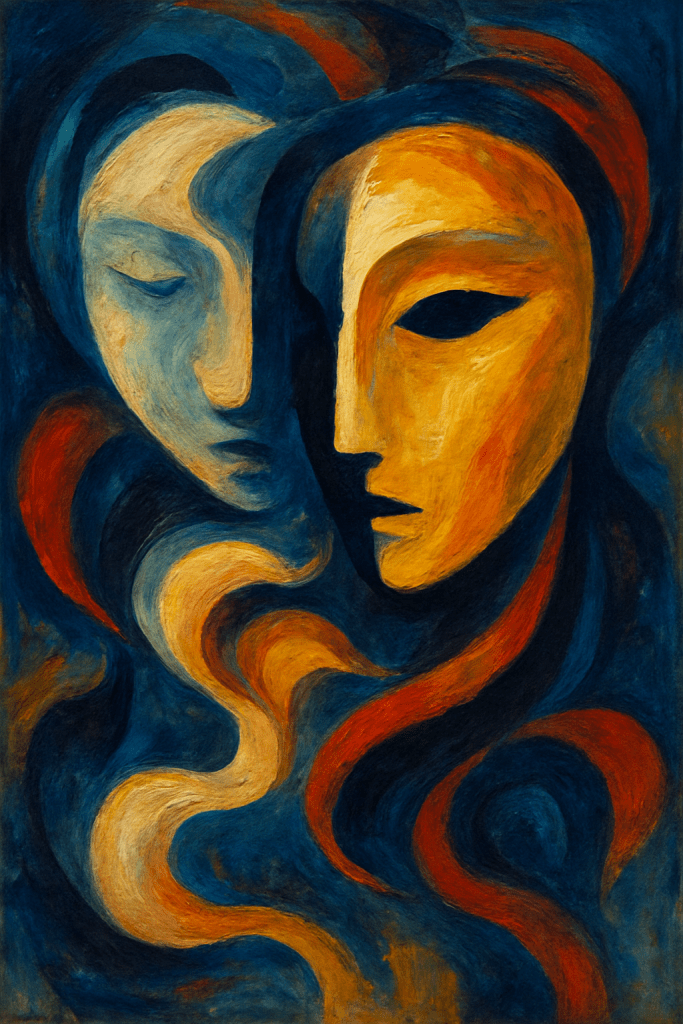
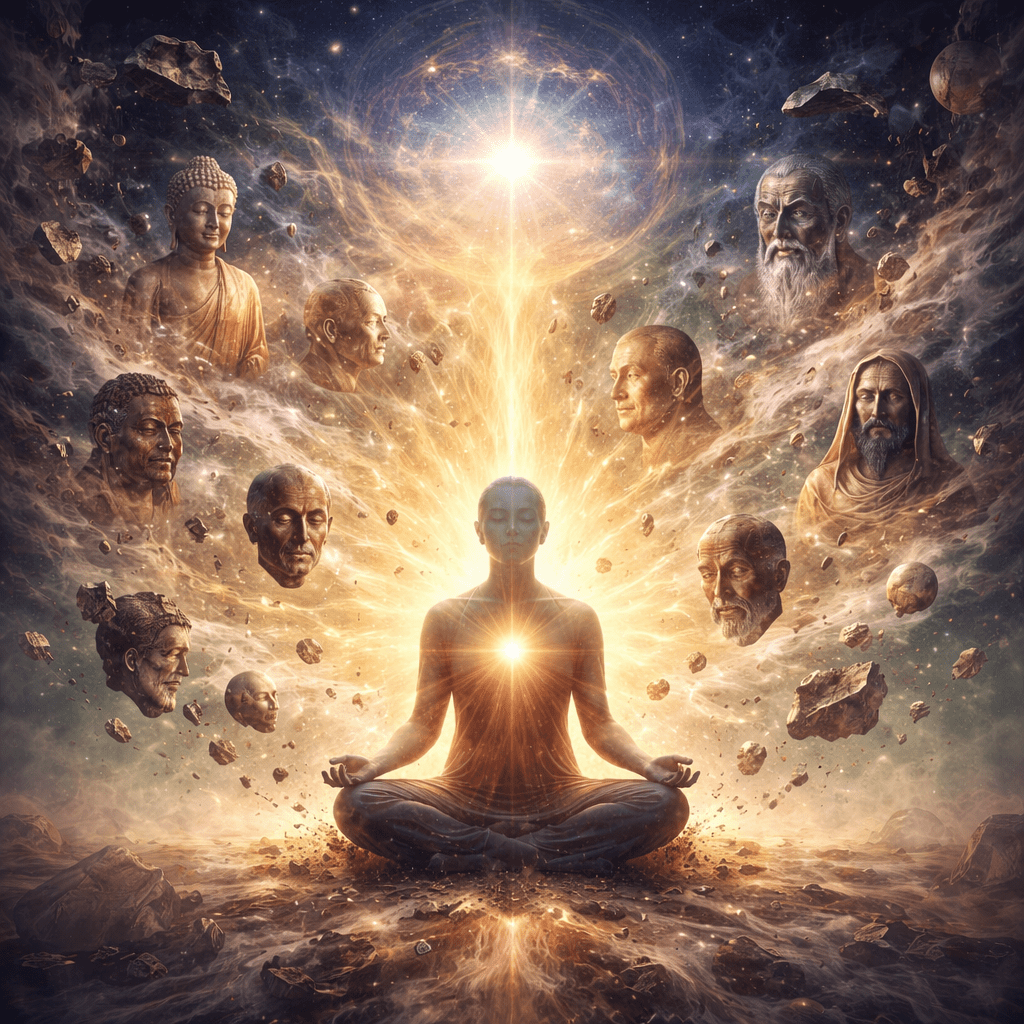
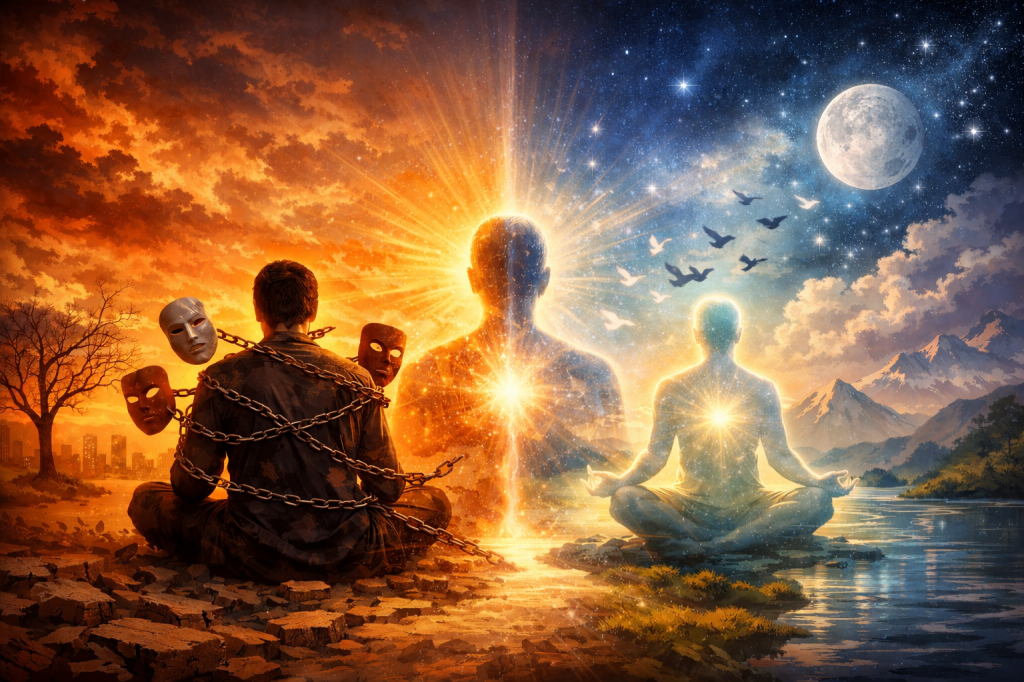
History remembers spiritual figures as icons, not as enigmas. Reverence crystallizes their lives into models to be copied rather than mysteries to be understood. Over time, enlightenment becomes entangled with biography. Traits that belonged to a particular body–mind are elevated into universal prescriptions.

Such confusion gives rise to a subtle distortion. One person’s temperament becomes another’s discipline. A preference becomes a vow. A condition becomes a doctrine. Devotees inherit fragments of behavior and assume they are inheriting truth itself. Institutions form around this misunderstanding, reinforcing the illusion that realization can be standardized.

Consider how easily abstinence, dietary habits, or psychological dispositions are mistaken for signs of awakening. An enlightened being may express through a quiet demeanor or intense rigor, yet neither silence nor intensity constitutes realization. Personality remains a vessel. Enlightenment is not defined by what that vessel contains.

Questions deepen when examining what might be labeled today as mental disorder or neurological variance. Practices born from clarity may appear indistinguishable from compulsions when observed through the lens of clinical interpretation. Conversely, compulsions may be sanctified when clothed in sacred language. The boundary between pathology and transcendence becomes blurred by interpretation rather than direct insight.

Playing the skeptic reveals a paradox. Spiritual traditions may preserve genuine transmissions of truth while simultaneously embedding cultural assumptions and psychological projections. Followers then chase appearances rather than essence, mistaking echoes for origin. Rituals multiply. Dogmas ossify. Authentic realization becomes obscured beneath layers of imitation.

Direct experience dismantles this confusion. Recognition dawns that enlightenment does not conform to behavioral templates or moral archetypes. Awareness reveals itself as the ground of all appearances, untouched by characteristics attributed to the enlightened individual. Personal expression arises from conditioning, biology, context, and circumstance. Realization neither requires nor rejects these variables.

A moment of true seeing dissolves the need to emulate. What once seemed external becomes unmistakably intimate. Every form, thought, sensation, and condition reveals itself as inseparable from the same boundless essence. Even the impulse to categorize enlightenment as virtue or disorder dissolves into a wider recognition.

Existence itself appears as a dynamic expression of a single indivisible presence. Labels fade. Distinctions soften. What remains is a knowing beyond concepts, untouched by cultural framing or psychological interpretation. Enlightenment ceases to be an achievement or identity. It becomes the simple recognition of what has always been.

Such recognition liberates the seeker from imitation. Spiritual maturity unfolds not through copying another’s life but through discovering the source from which all lives arise. When this is seen, the notion of following a template loses relevance. Only clarity remains, revealing that every expression, sacred or mundane, emerges from the same unbounded reality.

Morgan O. Smith
Freedom Within Identification

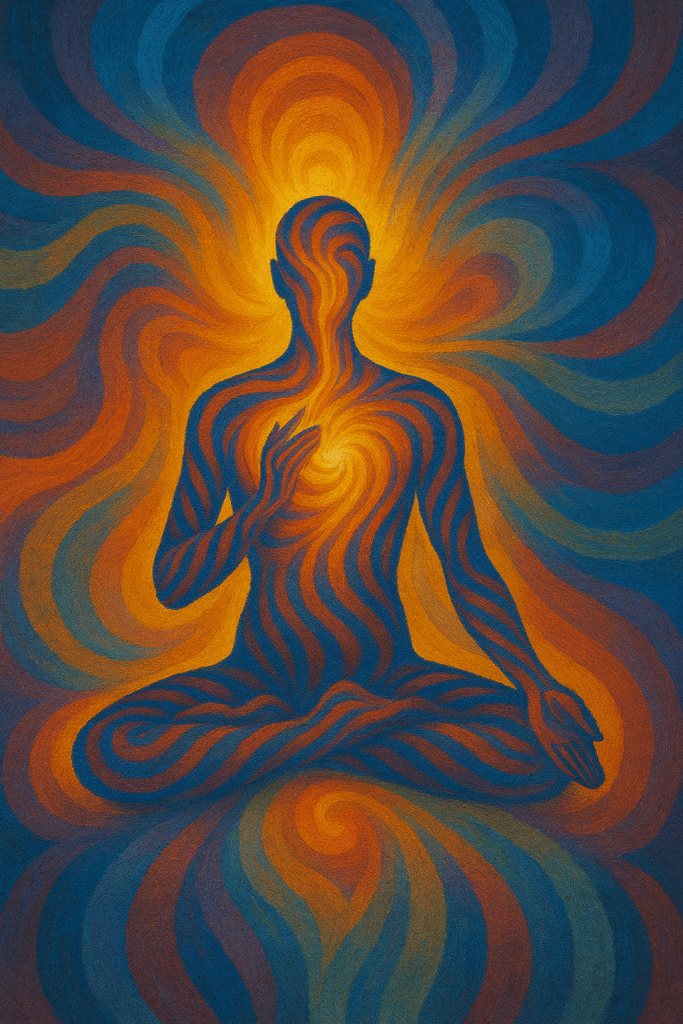
Attempts to dismantle identification often become another subtle strategy of identification. The effort itself reinforces the one who is trying to escape. What actually transforms experience is not the reduction of bias or judgment, but clear recognition that bias and judgment are occurring. Awareness does not erase the movement of mind; awareness reveals it.

Mind evaluates. Mind categorizes. Mind reacts. Such functions belong to its design. A deeper dimension remains untouched by those operations. That dimension does not oppose the mind, nor attempt to purify it. Silent witnessing simply illuminates what unfolds.

Moments of awakening sometimes arrive with overwhelming clarity. Identification dissolves, yet experience continues. No boundary remains between observer and observed, yet perception still functions. Such glimpses demonstrate a truth that later integrates into lived reality. Peak illumination offers insight; maturation transforms insight into stability.

Gradual integration reshapes the relationship with identity. Layers fall away without force, guided by ongoing recognition. Ego continues its role as a generator of form, narrative, and orientation. Awareness does not eliminate ego; awareness contextualizes it. Form becomes expression rather than prison.

Attachment has long been described as the seed of suffering. Another dimension exists within that same principle. Attachment also creates continuity, warmth, belonging, and coherence. Pleasure and pain arise from the same ground. Human experience oscillates across a spectrum that includes both. Heaven and hell manifest through perception, circumstance, and interpretation, rather than distant metaphysical destinations.

Escape from the spectrum intensifies struggle. Unconscious immersion perpetuates distress. Acceptance introduces a different movement: a willingness to meet existence as it appears. Acceptance does not romanticize suffering, nor cling to comfort. Acceptance recognizes the inevitability of cycles.

Samsara refers not only to rebirth across lifetimes. Samsara unfolds through biological rhythms, emotional tides, cultural dynamics, social realities, and economic fluctuations. Each domain participates in patterns of emergence, dissolution, and renewal. Cells regenerate. Identities evolve. Conditions transform.

Total liberation from these cycles cannot occur while embodiment persists. Yet insight can reveal a dimension untouched by cyclical change. Awakening discloses a freedom that coexists with limitation. Temporary realization becomes the doorway to enduring equanimity.

Pain, pleasure, loss, gain, exhaustion, vitality—each appears as modulation within a larger field of being. Recognition of that field softens resistance. Suffering loses its compulsive urgency. Beauty becomes perceptible even through difficulty.

Freedom does not require the absence of attachment. Freedom emerges through understanding that attachment never defined the essence of what one is. Identity remains operational, yet no longer absolute. Life continues with all its contrasts, while awareness rests as the unbound ground of experience.

Morgan O. Smith

The Shadow of the Light

Spiritual maturity does not erase limitation.
It reveals it.

Many imagine awakening as a flawless state; permanent clarity, endless compassion, immunity to human contradiction. A polished saint who never stumbles. A mind without friction. A heart without ache.

Life has never worked that way.

Every illumination throws contrast. Every realization exposes what still sleeps. Awareness grows, and so does sensitivity to the places where conditioning remains. What once went unnoticed now becomes obvious.

Light does not cancel shadow.
Light makes shadow visible.

A person may taste boundless consciousness and still forget their keys.
May speak wisdom and still feel grief.
May rest as pure Being and still get irritated in traffic.

None of this contradicts awakening.

It confirms embodiment.

Human form carries edges. Biology, memory, culture, temperament, nervous system patterns—these do not dissolve simply because truth is recognized. Realization clarifies the sky; weather still moves through it.

Expecting perfection from enlightenment is another form of ego fantasy. A subtler one, dressed in spiritual language.

“Once I awaken, I will finally be beyond everything.”

Beyond what?

Beyond hunger?
Beyond fatigue?
Beyond old emotional reflexes surfacing now and then?

Even sages live inside gravity.

Consider the paradox: greater clarity often deepens humility. Seeing through the illusion of separateness does not produce superiority; it softens certainty. One recognizes how much of this life unfolds through forces far larger than personal will.

Brilliance and blind spots coexist.

The brighter the lamp, the sharper the outline behind it.

Shadow is not failure. Shadow is information.

Each reaction, each contraction, each moment of confusion points to another place where life invites integration. Nothing needs to be rejected. Everything becomes material for understanding.

Spiritual growth, then, is not a climb toward flawlessness.

It is a widening embrace.

Light without shadow would mean no depth, no dimension, no humanity. A perfectly even brightness reveals nothing. Contrast gives form to experience. Contrast allows learning. Contrast allows compassion.

Seeing your own limits makes you gentle with others.

When you know how easily fear arises in your own body, you stop judging someone else’s. When you recognize your own unfinished places, forgiveness becomes natural rather than moral.

This is maturity: not pretending to be spotless, but standing fully where you are.

Awareness shining. Conditioning still moving. Both allowed.

Nothing to fix. Nothing to hide.

Just this living interplay.

Radiance casting shape.

Human nature doing exactly what it has always done; expressing the infinite through a finite frame.

Morgan O. Smith

AI for Wellness and Spirituality Summit

February 9 & 10, 2026

https://aiforwellnessandspirituality.com/mosm

Knowing the Absolute from Every Angle

The Absolute cannot be grasped by standing in a single place.

Any attempt to reduce it to one perspective—personal, relational, objective, mystical, or philosophical, inevitably distorts it. What gets mistaken for ultimate truth is often just a partial orientation mistaken for the whole.

To know the Absolute at full capacity requires more than a peak realization. It requires total perspectival inclusion.

From the first person, the Absolute is immediate presence; being as oneself. From the second person, it appears as intimacy, devotion, and encounter. From the third person, it becomes structure, law, and observable order. Each of these reveals something true, yet none is sufficient on its own.

A deeper shift occurs when perspective itself is examined.

The fourth perspective dissolves the centre. Experience continues, but ownership drops away. Awareness no longer belongs to anyone. Reality is no longer happening to a self or for a self. Knowing remains, yet no knower can be found.

Then even this gives way.

The fifth perspective removes the need for a field, a witness, or an explanatory ground altogether. The question of where experience occurs loses relevance. Nothing collapses. Nothing transcends. The demand for a final position simply falls apart.

At this point, God is no longer approached as an object of belief, a presence to merge with, or an awareness to stabilize in. God is known as that which remains valid across every mode of knowing without requiring allegiance to any of them.

This knowing must also scale developmentally.

Ego-centric concern gives way to ethnocentric identity, which yields to world-centric ethics, which eventually opens into kosmocentric inclusion. Each stage expands care, responsibility, and comprehension. None invalidates the others. Each must be seen through without being erased.

The same applies to the I, We, It, and Its dimensions of reality. Subjective experience, shared meaning, objective systems, and interobjective networks all reveal aspects of the Absolute. Excluding any one of them creates imbalance. Absolutizing any one of them creates delusion.

States of consciousness contribute their own disclosures. Waking reveals form and function. Dreaming reveals imagination and symbolic depth. Dreamless sleep reveals the absence of content. The witness reveals continuity without identity. Nonduality reveals the inseparability of all of it. None of these states owns the truth. Each exposes a different facet of what cannot be reduced.

Lines of development add further resolution. Cognitive clarity without emotional maturity distorts insight. Moral development without metaphysical depth flattens reality. Spiritual realization without psychological integration fragments embodiment. The Absolute is not known through excellence in one line alone.

Enlightenment, then, is not a single realization frozen in time.

It is the capacity to recognize the Absolute through every perspective without mistaking any perspective for the Absolute itself.

Such knowing does not claim finality. It does not announce arrival. It does not need to defend itself. It functions fluidly; able to speak personally, relationally, objectively, impersonally, and without position; depending on what the moment requires.

God is not found by climbing higher.
God is known by nothing being excluded.

Morgan O. Smith

AI for Wellness and Spirituality Summit

February 9 & 10, 2026

https://aiforwellnessandspirituality.com/mosm

Ego Death Is Not a Metaphor

Ego death is often spoken about casually, yet nothing about it is casual. It is not a poetic phrase, nor a dramatic exaggeration. Something very specific occurs—precise, unmistakable, and irreversible at the level of insight.

This is not a biological event. The body remains alive. The brain continues to function. Memory does not disappear. Consciousness does not black out. What vanishes is the internal reference point that says, this is me. The structure that once organized experience around a personal center dissolves, and with it goes the assumption of separation.

No negotiation happens here. No partial surrender. No internal debate. Doubt does not survive the moment. The mind does not ask whether this is real. Verification becomes unnecessary because the one who would seek confirmation is no longer present.

Psychological death may sound abstract until it happens. When it does, the body reacts as though an actual death is occurring. Survival instincts flare. Meaning collapses. Familiar orientation fails. Yet awareness remains clear—perhaps clearer than it has ever been. This clarity is what distinguishes ego death from unconsciousness. Awareness does not dim. It expands beyond the need for identity.

Enlightenment does not occur after ego death. Enlightenment is what is revealed when the ego can no longer interfere. The ego cannot be refined into truth. It cannot be educated into realization. It must fall away entirely, because it is structurally incapable of holding what is uncovered.

At the causal level of realization, identity no longer rests in form, personality, history, or narrative. Cause and effect are no longer observed from the outside. They are known as oneself. Everything that arises is recognized as both originating from and resolving into the same source. Nothing stands apart. Nothing is accidental. Agency is no longer personal, yet responsibility is absolute.

Deeper still, even causality dissolves. Distinctions between origin and outcome lose meaning. What remains is not many things connected, but a single indivisible reality. This is what Advaita Vedanta names Absolute Monism; not a belief, not a concept, but a lived recognition.

Time no longer appears linear. Past, present, and future are not sequential events but simultaneous expressions. Every occurrence, across all scales and dimensions, is apprehended as one movement without edges. Beginning and ending collapse into the same point. Eternity ceases to be a duration and reveals itself as immediacy.

The ego cannot survive this recognition. It was never meant to. The ego exists to navigate relativity, not to comprehend totality. Asking it to grasp nonduality is like asking a shadow to contain light. The moment the ego loosens its grip, what remains is not annihilation, but the recognition that life and death were never opposites.

Ego death feels final because it ends the search forever. Nothing remains to achieve. Nothing remains to defend. What is discovered was never acquired. It was always present, waiting for the interference to stop.

This is why enlightenment is never uncertain. Anyone still asking whether it happened is still standing outside the threshold. When it occurs, the questioner disappears, and only knowing remains; silent, complete, and beyond reversal.

Morgan O. Smith

AI for Wellness and Spirituality Summit

February 9 & 10, 2026

https://aiforwellnessandspirituality.com/mosm

After Enlightenment

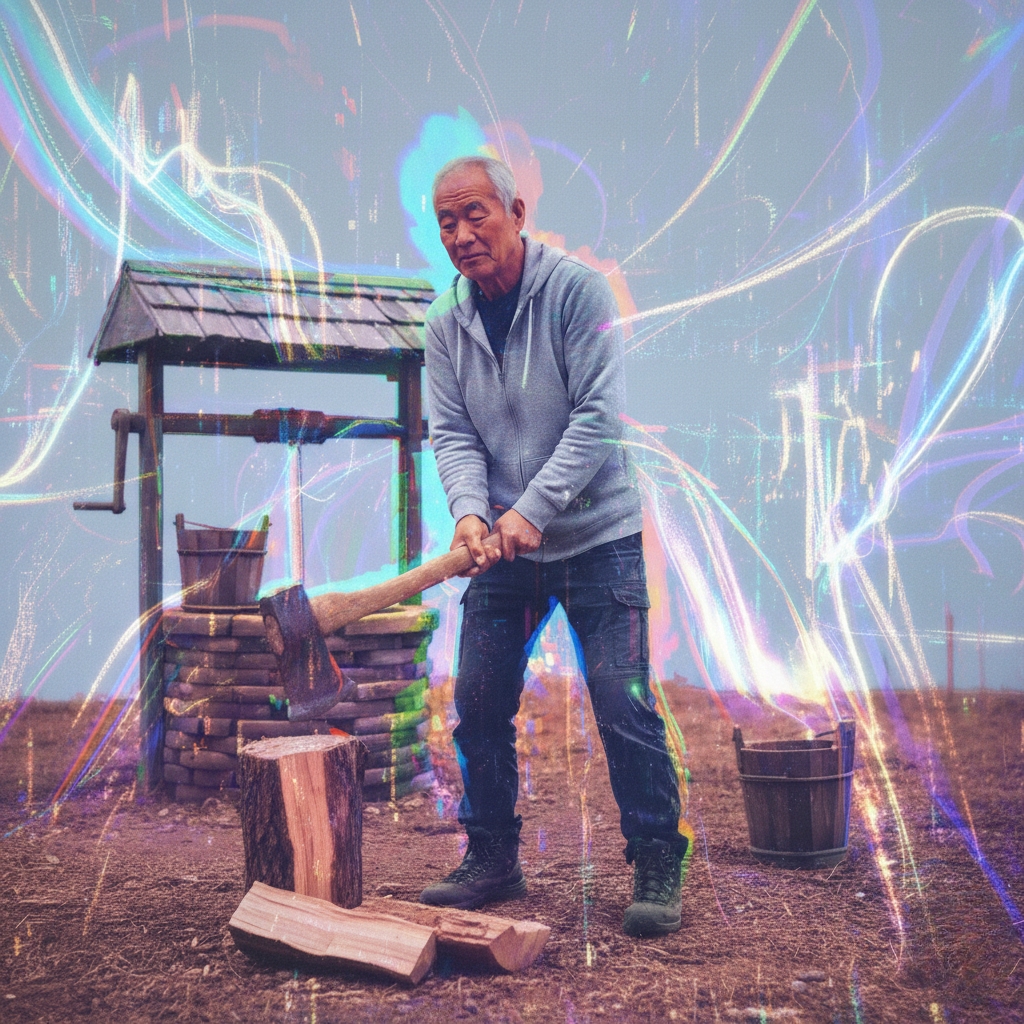
“As they say, before enlightenment, chop wood carry water; after enlightenment, chop wood carry water.”
This phrase is often repeated as reassurance that awakening does not remove one from ordinary life. Yet when examined carefully, it exposes a deeper paradox that cannot be resolved by sentiment alone.

Wood is Maya.
Water is Maya.
The body that lifts the axe is Maya.
The action of chopping is Maya.
The sense of a doer performing the act is Maya.

Nothing in the scene escapes appearance.

If awakening reveals that all phenomena are expressions of Maya, then what is being chopped? What is being carried? One cannot act upon illusion from outside illusion. Maya does not stand opposed to some other realm where truth resides. There is no second substance available to intervene.

This is where the saying begins to point beyond itself.

Before awakening, chopping wood feels purposeful. A future outcome motivates the action. Hunger will arise later. Cold must be prevented. Life appears as a sequence of needs demanding management. The world seems solid, personal, and unfinished. Actions feel necessary because something is believed to be lacking.

After awakening, the appearance of chopping may continue, but necessity dissolves. Nothing is required for completeness. No future state needs securing. The movement of the body happens without reference to deficiency or gain. Action no longer attempts to fix reality.

Wood is chopped, not because it must be, but because chopping happens.

This distinction is subtle and easily missed. Enlightenment does not negate Maya. It reveals its status. Appearance continues without being mistaken for truth. Function remains without belief in ultimate significance. Life moves, but no longer claims ownership of movement.

Chopping and carrying are no longer means to an end. They are expressions without agenda.

The phrase does not suggest sameness of experience across awakening. It points to sameness of appearance with a radically different orientation. The world looks the same, yet its weight has vanished. Consequence still operates, but urgency evaporates. Responsibility remains, but without the burden of identity.

Nothing is being done for reality after awakening.
Reality is not managed, improved, or corrected.

Action occurs because appearance unfolds.
Movement moves because movement is present.
Maya dances without needing justification.

After enlightenment, chopping wood carries no metaphysical significance. Carrying water does not symbolize humility or virtue. These interpretations belong to the mind seeking meaning where none is required.

What remains is effortless participation without belief in a participant.

No one chops Maya.
No one carries Maya.
Maya appears as chopping and carrying, empty of centre, complete as it is.

That is what the saying gestures toward when read beyond comfort.
Nothing special happens after enlightenment—except that nothing is believed to be happening to someone anymore.

Morgan O. Smith

AI for Wellness and Spirituality Summit

February 9 & 10, 2026

https://aiforwellnessandspirituality.com/mosm

My Eyes Are Wide Open, Yet I Continue to Blink

Awakening does not arrive as a permanent gaze locked onto the infinite. It arrives as a rupture—clean, unmistakable, irreversible. Something collapses that never quite existed, and what remains does not need to convince itself of anything ever again.

That first rupture carries a strange innocence. Consciousness recognizes itself without reference, without scaffolding, without an observer left standing outside the recognition. Separation dissolves, not as an idea, but as a lived impossibility. That moment cannot repeat. Once the false center is seen through, there is no way to sincerely reinhabit it.

And yet—experience continues to pulse.

Eyes remain open, yet blinking persists.

Subsequent moments can arrive that feel just as total, just as decisive, just as final. Not because awakening has reversed, but because what awakening illuminates continues to reveal its own depth. Conditioning loosens further. Residual identity releases its grip. The nervous system grows more capable of bearing intimacy without contraction. Intelligence, love, emptiness, embodiment, each may come forward as if for the first time.

Each arrival feels absolute because it is absolute relative to what had not yet been surrendered.

Blinking names this rhythm without dramatizing it. Awareness does not dim, yet perception opens and closes. Identity does not return, yet orientation subtly reorganizes. What collapses is never truth itself, only the way truth was being unconsciously framed.

Peak realization and trait realization quietly diverge here. Peaks still occur; sometimes vast, sometimes ordinary, sometimes devastatingly simple. Traits deepen; less visible, more pervasive, harder to narrate. The need for confirmation dissolves even as revelation continues.

Classical traditions have always known this, though rarely shouted it. Zen never stopped at a single seeing. Advaita never mistook first recognition for final embodiment. Mahayana never separated emptiness from compassion. Kashmir Shaivism never treated recognition as a one-time event.

Each spoke differently, yet all pointed to the same subtle fact: awakening is not repeated, but it is continuously clarified.

Blinking does not interrupt sight.
Blinking protects it.

Awakening does not require uninterrupted luminosity. It requires no defense against the natural oscillation of experience. Awareness remains awake whether perception sharpens or softens, whether insight detonates or quietly integrates.

Awakening happens only once.
Awakening happens endlessly.

The first time, separation collapses.
Every time after, whatever still mimics separation dissolves.

Eyes open.
Eyes close.
Nothing essential is lost.

That is not regression.
That is refinement.

Morgan O. Smith

Get Your Free Copy of My Book, Bodhi in the Brain!

https://subscribepage.io/oTSZQu

When Truth Hides Behind Its Own Mask

Falsehood is rarely what it seems. What appears as distortion, contradiction, or misperception still rises from the same source that gives birth to clarity. Nothing stands outside that ground. Even the illusions that mislead the mind are formed from the very substance they conceal.

Untruth doesn’t float in a separate realm. It is reality-bending itself just enough to create contrast. Without that contrast, recognition would never sharpen. Awareness would never deepen. The infinite would never explore itself through finite perception. Every mistaken conclusion, every misreading of a moment, every belief that turns out to be incomplete; all of it is the Absolute wearing a temporary disguise.

The cosmos reveals and conceals itself through the same gesture. Light becomes shadow by changing its angle. Understanding becomes confusion by narrowing its scope. The source never fractures, yet experience presents endless variations that feel divided. Those divisions create the necessary friction for insight to ignite. They teach the mind to release its rigid claims and return to the space where nothing stands apart.

Falsehood is not failure. It is instruction. It is the movement by which consciousness learns to see through its own projections. When a distortion collapses, what remains is not just truth; it is wisdom cultivated through the very mechanism that once obscured it.

Reality’s nature doesn’t falter because a viewpoint misinterprets it. The Absolute keeps expressing itself, even when it appears as error. The mind stumbles, adjusts, expands, and dissolves its boundaries. Through that unfolding, the deeper truth becomes unmistakable.

What hides the Real is made of the Real. And what reveals the Real is made of the same.

Morgan O. Smith

Get Your Free Copy of My Book, Bodhi in the Brain!

https://subscribepage.io/oTSZQu

The Realization That Forever Unfolds

Every breath alters the lens through which the divine is felt. The self you were a moment ago dissolves, replaced by a newer configuration of insight, memory, subtle conditioning, and awareness. That shifting identity means your encounter with the sacred is never static. It reshapes itself as you reshape yourself.

A glimpse of the Absolute may arrive with startling clarity; pure, unmistakable, worldless. Yet that moment is bound to the level of development available at that point in your evolution. Even the most luminous awakening is framed by the consciousness that receives it. You witness infinity through a doorway that keeps widening, and each step forward reveals the prior step as incomplete.

The paradox is that every revelation of the divine feels total while you are inside it. You genuinely sense the boundlessness of what you are. You feel the horizon dissolving. You feel yourself dissolving. Nothing is missing. Nothing could be larger. Until the next phase of your evolution ripens, and suddenly the previous fullness reveals itself as only one facet inside a far greater clarity.

This is not a failure of enlightenment; it is the nature of consciousness unfolding through time. Growth ensures that even the most profound realization will always be met again from a deeper vantage. Your life becomes a series of thresholds; each one a genuine opening, each one destined to be surpassed.

The ultimate cannot be contained by a lifespan. A finite arc cannot hold the infinite source of all perspectives. Even a direct encounter with the origin of being is filtered through the momentary structure of the one who encounters it. Divine recognition expands as you expand. It breathes when you breathe. It changes when you change.

That means the full truth of what you are can never be exhausted here. No lifetime can house the totality. No mystical breakthrough, no matter how absolute, can finalize what is without limit. Realization keeps moving, stretching, deepening, dissolving itself over and over again.

This insight doesn’t diminish enlightenment; it honours its living nature. What you truly are is not a conclusion but an unending revelation. The infinite doesn’t arrive once; it arrives continuously, refracted through your evolving capacity to meet it.

The divine is not something you master. It is something you grow into forever.

Morgan O. Smith

Get Your Free Copy of My Book, Bodhi in the Brain!

https://subscribepage.io/oTSZQu

The Proton’s Revelation 2

The Hidden Geometry of Consciousness

A proton is not merely a particle confined to the language of physics; it is a living vortex of intelligence. Beneath the veil of measurable charge and spin lies a self-sustaining pattern of movement, a balanced dance of contraction and expansion that reveals the very architecture of creation. This movement mirrors the principle at the heart of Vortex-Based Mathematics, often called the Fingerprint of God, a universal map pointing to the symmetry underlying all manifestation.

Energy flows through the proton as if through a cosmic torus, spiralling inward toward stillness before unfolding outward again as radiant expression. Its inward motion represents the pull toward singularity; the unmanifest potential that draws all things home. Its outward motion is the act of creation, the flowering of energy into visible form. Between them rests the unmoving centre: the zero-point where opposites dissolve, and the essence of enlightenment is encoded as perfect equilibrium.

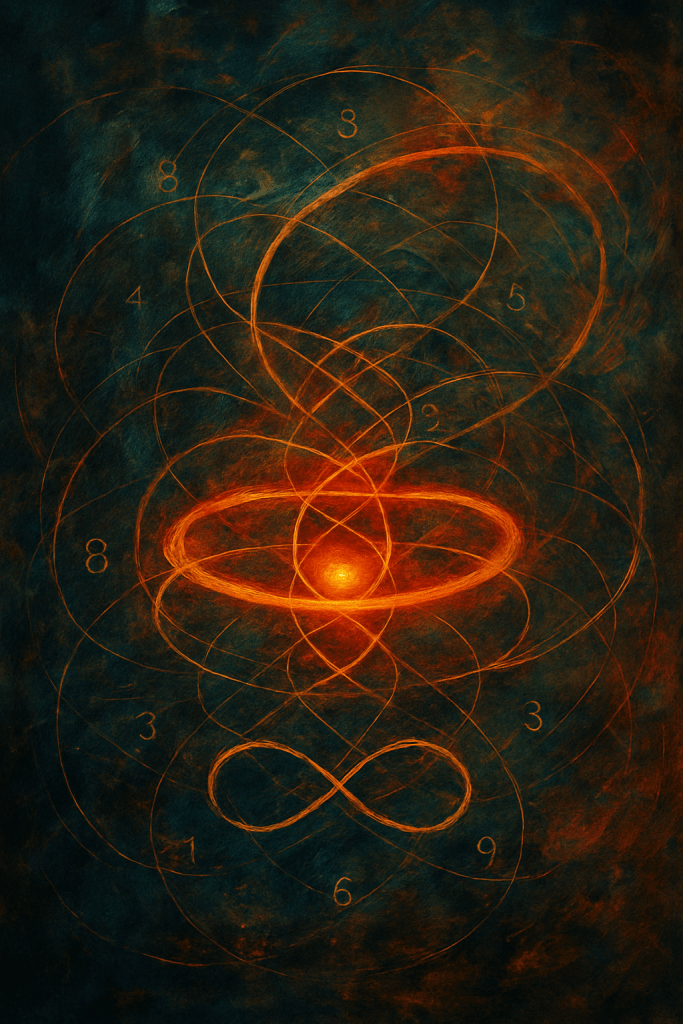
Numbers themselves whisper this truth. The sequence 1–2–4–8–7–5 describes the rhythmic pulse of movement, an oscillating current of creation, while 3–6–9 form the axis of spirit, the invisible trinity Tesla regarded as the key to the universe. Together, they compose the harmony of existence: matter spinning within consciousness, consciousness sustaining matter. The proton’s rotation, like the breath of the cosmos, is guided by this hidden numeric intelligence, forever folding energy upon itself in divine proportion.

To contemplate the proton is to glimpse the nature of awakening. Its geometry reflects the enlightened state, a realization that form and emptiness are not two. The proton spins infinitely fast, yet its centre never moves. Awareness, too, remains untouched even as thought and experience whirl around it. Every atom of the body, every pulse of life, carries this same signature: the infinite sustained by stillness, stillness expressed as infinite movement.

The symbol of enlightenment, often depicted as intersecting vortices or the lemniscate, is more than a metaphor; it is the living pattern of reality itself. The enlightened being and the proton share the same secret: both radiate from the centre of nonduality, embodying the silent symmetry between being and becoming. Each proton, each heartbeat, each moment of awareness is a self-aware vortex proclaiming unity through motion.

The realization of this truth dissolves the boundary between physics and mysticism. Every proton hums the same mantra: there is no separation between energy and consciousness, no barrier between creator and creation. What appears as matter is consciousness in motion, and what we call consciousness is matter remembering its still centre.

To awaken is to recognize this flow within oneself; the eternal movement of creation returning, again and again, to the zero-point of divine rest. The proton is not simply matter; it is a mirror, quietly revealing the symmetry of the awakened soul.

Morgan O. Smith

Get Your Free Copy of My Book, Bodhi in the Brain!

https://subscribepage.io/oTSZQu