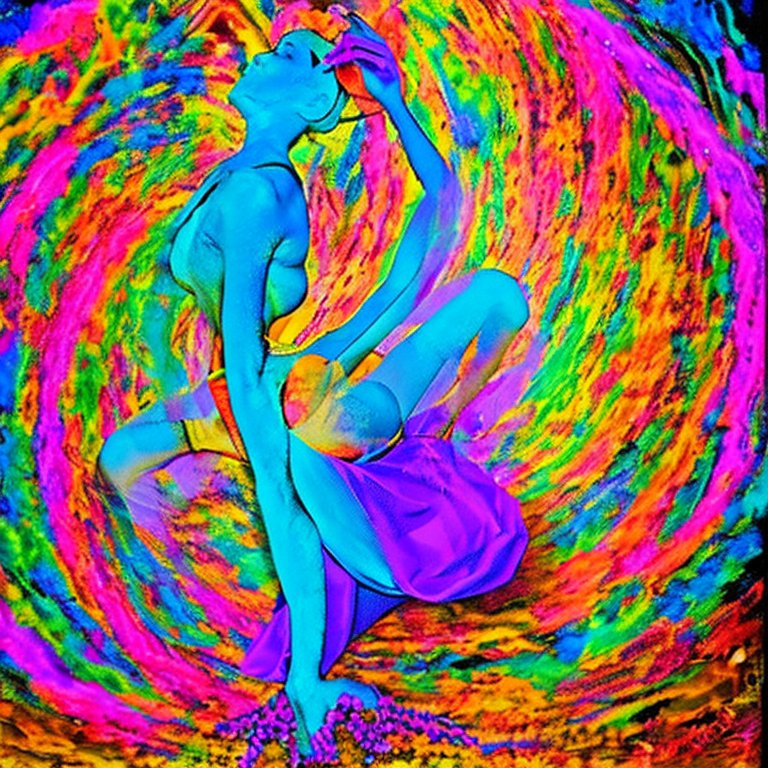
The Mystical Peak Experience of Pure Sexual Love

Exploring Eros

In the diverse tapestry of human experience, few phenomena are as enigmatic and profound as the experience of love. Among its many facets, the experience of Eros stands apart as a sublime manifestation of pure sexual love that transcends the ordinary and becomes mystical.

Eros: More than Just Desire

Named after the Greek god of love, Eros is often relegated to the realm of mere physical attraction or romantic infatuation. However, to those who have encountered its mystical peak, it represents something far more profound. Eros is an expression of love that transcends mere physicality, reaching into the spiritual realm and connecting us to something greater.

The Peak Experience: A Transcendental Connection


The mystical experience of Eros is not about hedonistic pleasure or fleeting passion. It’s a profound peak experience that transcends the mundane, awakening a deeper connection not only with a partner but with existence itself.

In this state, lovers are not merely engaging in a physical act; they are participating in a sacred ritual that symbolizes unity, trust, and transcendence. It’s a moment where boundaries dissolve, and two individuals become one, not just physically, but emotionally and spiritually.

The Philosophical Dimensions of Eros

The experience of Eros brings into focus philosophical questions about the nature of love, connection, and existence. Is love merely a biochemical reaction, or does it hint at a more profound, cosmic truth? Can sexual love be a pathway to spiritual enlightenment? What does it mean to truly connect with another human being?

Many philosophers and mystics have explored these questions, recognizing the potential for sexual love to be a vehicle for self-realization and spiritual growth. Eros, in its purest form, challenges our conventional understanding of love, encouraging us to see beyond the superficial and to recognize the sacred in the everyday.

Conclusion: Eros as a Path to Understanding

The mystical peak experience of Eros is not just a fleeting moment of pleasure; it’s a profound philosophical insight into the nature of connection, existence, and the human condition. It offers a glimpse into a realm where love is not confined to physical attraction but is a unifying force that binds us all.

To understand Eros is to engage with some of the most fundamental questions about what it means to be human, what it means to love, and what it means to connect with something greater than ourselves. It’s a journey that invites us to look within, to question, to explore, and to grow.

The mystical experience of Eros reminds us that love is not merely an emotion but a transformative power that can lead us to deeper understanding and spiritual awakening. It is a beacon that guides us toward a more profound connection with ourselves, with others, and with the universe itself. In embracing Eros, we may find not just pleasure, but wisdom, joy, and a sense of unity that transcends our earthly existence.

Morgan O. Smith

Yinnergy Meditation & My Book, Bodhi in the Brain…Available Now!

https://linktr.ee/morganosmith
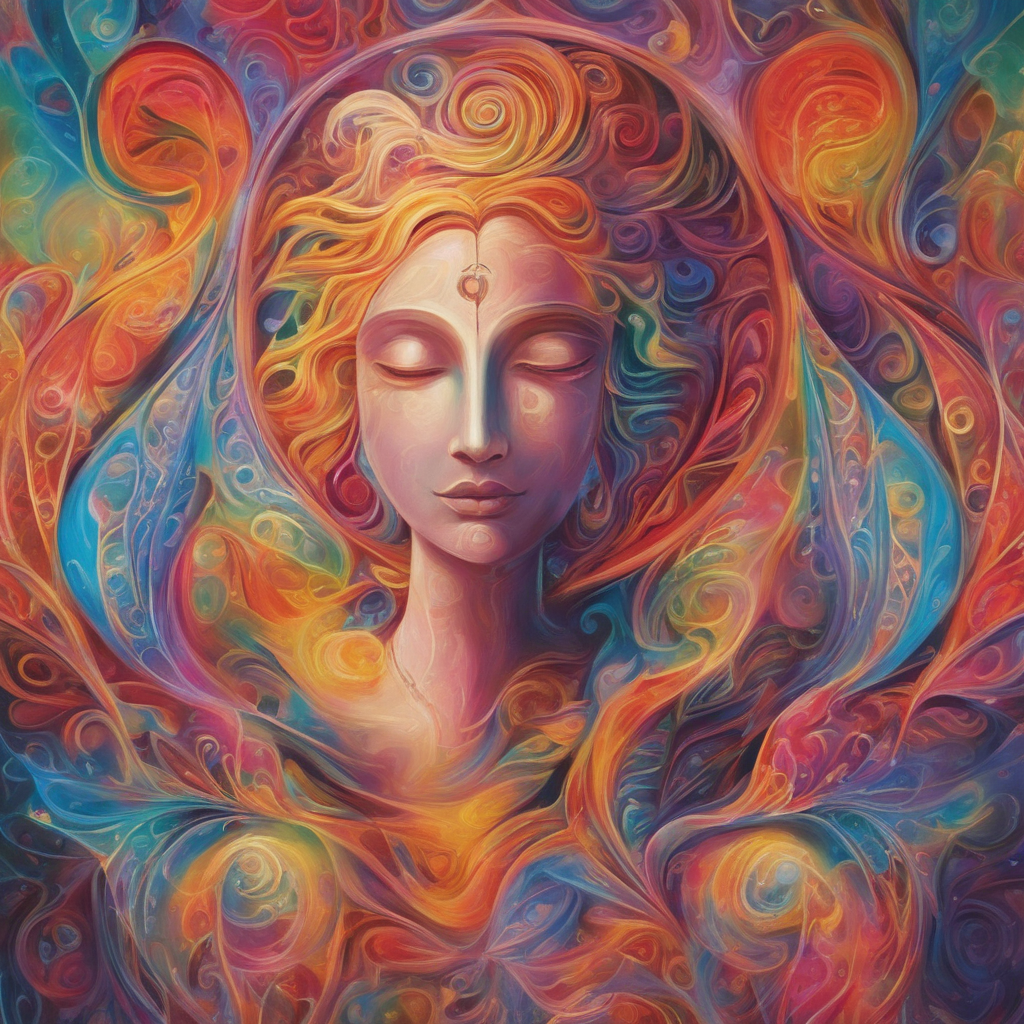


Agape: The Dichotomy of Universal Love

In the spiritual journey towards understanding and living in universal love, or agape, two enlightened beings emerge on parallel paths. They both embrace agape, yet their personalities and the way they manifest this profound love are strikingly different.

The Introverted Universal Love

The first enlightened being, whom we shall call Seraphina, channels agape through introverted universal love. This means her love is directed inward, nurturing the self and radiating outwards in subtle, non-obtrusive ways.

Impact on Others

Seraphina’s love affects others through quiet acts of kindness and a gentle presence. She may not actively seek to spread love, but those who come into contact with her feel a calm, loving energy that often leads to inner transformation. Her love is a tranquil pond, reflecting the beauty of the world without rippling its surface.

The Extroverted Universal Love

On the other hand, we have Gabriel, who embodies extroverted universal love. His love is outward-facing, actively engaging with the world, and seeking to connect with others.

Impact on Others

Gabriel’s love is a dynamic force, touching lives through acts of charity, teachings, and open-hearted connections. His love is a roaring river, sweeping people along in its powerful current and leaving change in its wake.

A Harmonious Dichotomy

While their approaches differ, both Seraphina and Gabriel contribute to the universal energy of love. They show us that love is not a one-size-fits-all concept. It’s a multifaceted gem that can shine through various personalities.

The Introverted Love: A Deep Well

Seraphina teaches us that love does not always have to be loud or grand. It can be a silent force, a deep well that nourishes the soul. Her love invites contemplation and self-reflection, allowing for a profound connection with oneself and the universe.

The Extroverted Love: A Brilliant Flame

Gabriel, on the other hand, shows us that love can be a brilliant flame that illuminates the world. It’s about embracing others, taking action, and spreading joy. His love is a call to action, urging us to engage with the world and make a difference.

Conclusion

The paths of introverted and extroverted universal love, though different, are equally valuable. They teach us that love can be manifested in diverse ways, tailored to our unique personalities and life paths.

In a world torn by division and conflict, the lessons from Seraphina and Gabriel remind us that agape is within everyone’s reach. It’s a love that transcends boundaries and unites us all. Whether you’re drawn to the tranquil pond or the roaring river, the journey toward universal love is an expedition worth embarking on.

Morgan O. Smith

Yinnergy Meditation & My Book, Bodhi in the Brain…Available Now!

https://linktr.ee/morganosmith

Bridging Quantum Realms and Turiyatita

The Web of Interconnection

In the intricate and mystifying world of quantum mechanics, one phenomenon stands out as particularly thought-provoking: quantum entanglement. It’s a concept that defies our everyday logic, connecting particles across vast distances in such a way that the state of one instantly influences the state of the other. This interconnectedness, existing beyond space and time, might find an unlikely companion in an ancient spiritual concept: turiyatita, the attainment of spiritual enlightenment.

The Interconnected Universe

Quantum entanglement illustrates how, at the fundamental level, all things in the universe are interconnected. This idea resonates with spiritual teachings across cultures that speak of the oneness of existence and the interconnectedness of all life. In Indian philosophy, turiyatita represents a state of consciousness that transcends the conventional realms of waking, dreaming, deep sleep, and even the transcendental state known as turiya. It’s a state of realization that everything is part of a singular divine essence.

Could these two concepts, one rooted in the cutting-edge science of quantum physics and the other in ancient spiritual wisdom, have something to say to each other?

A Metaphor for Enlightenment


Quantum entanglement could be seen as a metaphor for the experience of spiritual enlightenment. The entangled particles, seemingly separate but inherently connected, might symbolize how everything in existence is part of the same cosmic dance. Likewise, the experience of turiyatita transcends the illusion of separateness, revealing an underlying unity.

In this metaphorical sense, the realization of enlightenment could be likened to experiencing the world in its entangled state, where divisions melt away and a profound interconnectedness is revealed.

A Dance of Mystery

Yet, the relationship between quantum entanglement and turiyatita is more than a simple analogy. Both concepts challenge our conventional understanding of reality. They both hint at a world far more complex and interconnected than our ordinary senses can perceive.

Is it possible that these two ideas, one from the realm of science and the other from the domain of spirituality, are glimpses of the same underlying truth? Is there a hidden dance of connection that plays out both in the microscopic world of quantum particles and the expansive world of human consciousness?

Conclusion

The connection between quantum entanglement and turiyatita may be speculative and metaphorical, but it invites us to ponder the profound mysteries of existence. It’s a reminder that the world is far more complex and beautiful than we often realize and that science and spirituality, seemingly disparate, might have something profound to say to each other.

This dance of connection between the physical and the metaphysical invites us to explore, wonder, and perhaps even transcend our conventional understanding of reality. It’s a poetic reminder that we are all interconnected, in ways that both science and spirituality continue to explore and celebrate.

Morgan O. Smith

Yinnergy Meditation & My Book, Bodhi in the Brain…Available Now!

https://linktr.ee/morganosmith
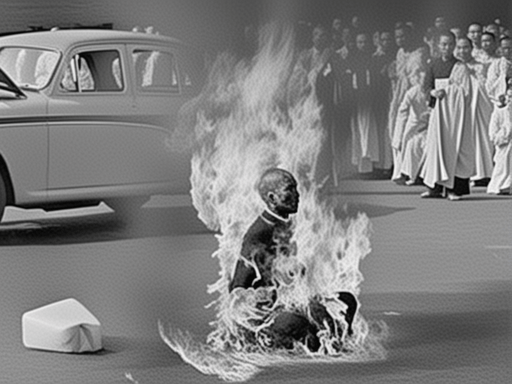
The Unburned Heart of Thích Quảng Đức

A Testament to Unyielding Compassion

In the vast annals of human history, few images stand as starkly haunting as that of Thích Quảng Đức, a Vietnamese monk who, in a profound act of protest, set himself ablaze on a Saigon street in 1963. While the flames consumed his physical form, Quảng Đức remained motionless, embodying the epitome of tranquillity and peace. As if this act was not profound enough, an even more astonishing testament to his spirit was the heart that remained unburned, not only in the initial act but even upon re-cremation.

**The Unyielding Heart**

What does it mean to have a heart that does not burn? In the literal sense, it defies the expectations of nature and science. But on a more profound level, the heart of Thích Quảng Đức symbolizes the ultimate emblem of pure, unyielding compassion. In a world often ruled by tumultuous fires of hate, prejudice, and indifference, Quảng Đức’s heart serves as a poignant reminder that true compassion is unassailable. It can neither be burned nor extinguished.

**Compassion Amidst Chaos**

The metaphorical imagery of a heart that remains intact, even amidst the raging fires, is a testament to the enduring nature of compassion. The flames that consumed Quảng Đức were not merely physical; they represented the societal and political upheavals of his time. Yet, his heart, like his spirit, stood resolute, undeterred, and most importantly, compassionate.

In the face of adversity, many of us allow our hearts to be overtaken by the metaphorical fires of anger, resentment, or apathy. Yet, Thích Quảng Đức’s heart is a beacon, calling upon us to rise above the flames of malice and to foster a heart that, metaphorically speaking, can never burn.

**A Legacy Beyond the Flames**

Today, housed in a glass chalice at Xá Lợi Pagoda, Thích Quảng Đức’s heart serves as a perpetual reminder of his teachings and spirit. To the Vietnamese Buddhists and many others across the globe, he is revered as Bồ Tát Thích Quảng Đức, a bodhisattva. A being filled with such boundless compassion that he chose to remain in the cycle of samsara to help others attain enlightenment.

This unburned heart serves as a testament not just to the man, but to the idea that compassion, when deeply rooted in one’s being, can transcend even the most harrowing circumstances. It challenges each of us to reflect on the state of our hearts. Do we nurture a heart that is impenetrable to the flames of hatred, bitterness, and indifference?

**In Conclusion**


The legacy of Thích Quảng Đức is not simply about the act of self-immolation. It’s about a heart—a pure, compassionate heart that remained untouched despite the circumstances. As we traverse through our trials and tribulations, may we strive to cultivate such a heart, a heart that remains compassionate, resilient, and most of all, unburned.

Morgan O. Smith

Yinnergy Meditation & My Book, Bodhi in the Brain…Available Now!

https://linktr.ee/morganosmith
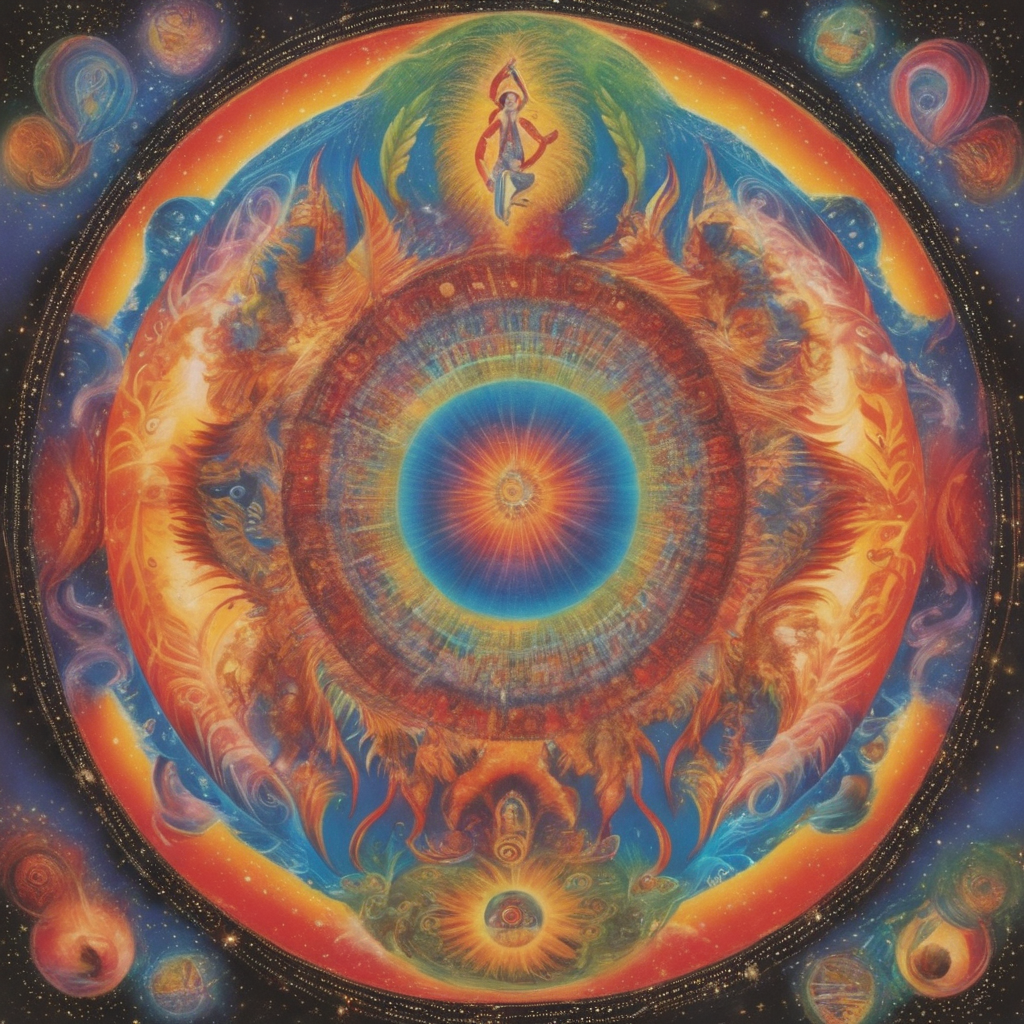
The Circular Journey of Reincarnation

A Dance of Spirit, Self, and Transcendence

Sculpted by ancient wisdom and breathed into existence by mystic philosophies, the idea of reincarnation challenges our perception of reality, questioning the depth of life, death, and the realms that extend beyond our comprehension. It’s an intriguing path leading to a fascinating panorama of eternal becoming, a ceaseless cycle of birth, death, and rebirth that we often term ‘Samsara’. Delving deeper into this concept, a theory emerges, where the omnipresent Spirit, or the Ground of all Being, embarks on a journey to experience life from an individual standpoint.

The Spirit, in its omnipotent and omniscient state, voluntarily decides to fragment its infiniteness into a finite form, breathing life into an individual self. But why does this transition occur? Could it be that the Spirit seeks to experience, understand, and embrace the existential dynamics from the individual lens? To dive into the chaotic beauty of life, to suffer, to joy, to yearn, and to discover? We can only speculate.

The interaction between the Spirit and its earthly existence forms an intricate dance, a dance that eventually leads to the enrichment of the Spirit. Each incarnation, each dance, is an opportunity for the Spirit to learn, grow, and evolve. If Nirvana or Moksha, the state of absolute liberation, isn’t attained in a single lifetime, the Spirit continues its journey through subsequent lifetimes, circling the samsara wheel.

In this theory, one might imagine each cycle of Samsara to be equivalent to a full rotation of 360 degrees. Each degree of rotation represents the lived experiences, the struggles and victories, the heartaches and joys, and the insights and awakenings that shape the individual soul’s evolution. Upon completing this 360-degree cycle, the Spirit transitions to a new plane of existence, a higher level of consciousness, armed with the wisdom and enlightenment accumulated from its previous journey.

This continuum is profound. It’s a cosmic design that instills a sense of awe and wonder, presenting the possibility of existence in planes beyond our material world. It grants our life a transcendent purpose, a grandeur that transcends the limitations of a single life span.

Reincarnation, as visualized in this theory, leads us to reconsider the significance of our lives. It encourages us to perceive every event, every interaction, as an opportunity for the Spirit to learn and evolve. Furthermore, it nudges us to view ourselves not merely as transient beings but as vessels for the Spirit’s journey toward the absolute.

In conclusion, the philosophical discourse on reincarnation paints a vivid picture of the Spirit’s quest. It traverses from the individual standpoint to the Ground of all Being, from the mortal realm to the absolute. In each cycle, in each dance, in each 360-degree turn, we find the Spirit growing, understanding, and inching closer to its final destination: a state of total enlightenment and liberation. As seekers on this journey, may we live mindfully, learn incessantly, and evolve steadily. After all, aren’t we the Spirit’s manifestation seeking its way back home?

Morgan O. Smith

Yinnergy Meditation & My Book, Bodhi in the Brain…Available Now!

https://linktr.ee/morganosmith

Beyond the Verbal Abyss

Embracing the Indescribable in the Pursuit of Nondual Consciousness

The realm of metaphysics has been exploring the uncharted territory of human existence since the inception of philosophical thought. The concept of ‘Turiyatita’, borrowed from the ancient Vedantic wisdom, invites us to delve into the mystery of the Ultimate Nondual Presence. In a state of supreme transcendence, Turiyatita marries the notions of Emptiness and form, painting a picture of the Self fully liberated and realized.

This profound state is said to represent the highest level of human awareness. It’s the experience of actualizing the quintessential Vedantic concept, “Aham Brahmasmi,” the realization that all is Brahman, the ultimate reality.

The fascinating paradox of this journey lies in its unspeakability. The moment of enlightenment, where one realizes their ultimate oneness with the universe, is so overwhelmingly mind-shattering that no human language can capture its essence. We find ourselves venturing into a stateless state, an inexplicable expanse that houses all potentiality, while simultaneously being nothing. It’s a cosmic riddle that has always existed and will continue to exist, challenging the very constructs of human understanding.

Over the years, I grappled with expressing the enigma that is Turiyatita. I discovered that language, no matter how profound or poetic, remains insufficient to convey this transcendental experience. The individual mind’s narratives fall short when tasked with communicating such an experience to the collective consciousness. This realization is like a boundless sea that can only be expressed through the universe itself – through everything around us, beneath us, above us, within us, and even through us. Our very existence, after all, is an echo of this ‘Absolute’ language.

This illuminating journey of pure awareness left me in a state of awe, marking an indelible imprint on my ego’s fragments. An unforgettable memory, it is the most profound self-discovery I’ve had in this lifetime.

Most of us remain oblivious to the existence of this state, yet it’s accessible to everyone. It waits patiently for anyone bold enough to plunge into its mysterious depths. These are the Akashic waters of enlightenment, a blissful abyss where the brave explorers willingly lose themselves.

This presence, while unnoticeable, pervades our existence as an invisible field, a force that forms the bedrock of all beings. It’s in the exploration of this Ground of All Existence that one realizes the enigma of the indescribable, the ineffable mystery commonly referred to as ‘God’.

So, as we journey through life and its varied experiences, may we always strive for the courage to explore these profound depths. For it is in these explorations that we touch upon the mysteries of our existence, our true selves, and the cosmic reality we are all a part of.

Morgan O. Smith

Yinnergy Meditation & My Book, Bodhi in the Brain…Available Now!

https://linktr.ee/morganosmith

A Meeting of East and West

Advaita Vedanta and Ken Wilber’s Four Quadrants

As we navigate through life’s labyrinth, we encounter myriad philosophical viewpoints designed to offer us clarity about the nature of reality. Two such perspectives – one rooted in ancient Eastern spirituality, Advaita Vedanta, and the other a more contemporary Western theory, Ken Wilber’s Integral Theory – provide us with intriguing interpretive lenses. While appearing distinct, when juxtaposed, they unfold a captivating dialogue, revealing the interconnectedness of diverse paths of wisdom.

**Non-Duality: The Heart of Advaita Vedanta**

At the core of Advaita Vedanta lies the profound principle of non-duality. The term ‘Advaita’ translates to ‘not two’, pointing towards the notion of unity beneath apparent multiplicity. According to this philosophy, all phenomena – whether perceived as separate entities or diverse experiences – are manifestations of a singular absolute reality known as Brahman.

This philosophy posits that the perceived distinction between the individual self (Atman) and the ultimate reality (Brahman) is an illusion (Maya), born out of ignorance (Avidya). The journey of spiritual awakening in Advaita Vedanta is about transcending this illusion, recognizing the non-dual nature of existence, where the Atman and Brahman are not separate but one.

**Ken Wilber’s Four Quadrants: A Comprehensive Map of Reality**

Ken Wilber’s Integral Theory, particularly the Four Quadrants model, offers a different but complementary perspective. Wilber presents a holistic map of reality, dividing it into four quadrants: Individual Interior (consciousness), Individual Exterior (behaviour), Collective Interior (culture), and Collective Exterior (society). Each quadrant represents an integral part of our existence and must be considered to understand reality holistically.

**The Interplay: Advaita Vedanta and Four Quadrants**

Drawing parallels between Advaita Vedanta and the Four Quadrants can create a fascinating synthesis of Eastern and Western thought.

The Upper Left Quadrant (Individual-Interior) aligns with the individual’s subjective experience, mirroring the Advaita exploration of Atman. The Upper Right Quadrant (Individual-Exterior) encapsulates the physical manifestation of the individual, aligning with the Advaita concept that even our physical existence is a manifestation of Brahman.

The Lower Left Quadrant (Collective-Interior) represents shared beliefs and cultures, resonating with the Advaita perspective that cultural differences are superficial, and at a deeper level, unity prevails. The Lower Right Quadrant (Collective-Exterior) mirrors societal structures, all manifestations of the same non-dual reality.

From the Advaita viewpoint, the division of the four quadrants are themselves expressions of Maya, as they create apparent separations where none ultimately exist. They are valuable tools for understanding and navigating the world but do not represent the deepest truth of non-duality.

**Uniting Perspectives: A Path to Enlightenment**

Exploring the intersection of Advaita Vedanta and Ken Wilber’s Four Quadrants offers a richer understanding of reality, harmonizing subjective and objective, individual and collective, Eastern spirituality and Western theory. As we understand that the lines dividing these quadrants are more porous than they seem, we move closer to the non-dual truth of Advaita – that beneath apparent diversity, unity pervades.

At a time when division and fragmentation are rampant, this synthesis could offer a path toward the kind of transcendental insight that can bridge divides, fostering a deeper sense of interconnectedness and wholeness. After all, as Advaita Vedanta teaches us, beneath the surface of multiplicity, we are ‘not two’ but one. As we embrace the wisdom of the four quadrants, we might just find ourselves taking a step closer to that unity, opening ourselves to a richer, more holistic understanding of the world.

Morgan O. Smith

Yinnergy Meditation & My Book, Bodhi in the Brain…Available Now!

https://linktr.ee/morganosmith

The Profound Journey

Into the Vastness of Nirvikalpa Samadhi

Embarking upon the voyage of self-realization, one might chance upon the profound state of Nirvikalpa Samadhi, a realm where ordinary definitions of consciousness cease to exist. A phenomenon beyond words, it is an experience of unbounded vastness, where the mind expands beyond its limitations, reaching toward the omnipresent truth of totality.

Becoming the Absolute

In this unfathomable dimension, you journey from your everyday self to a radiant wholeness, a unity that echoes in the depths of your being. As your identity dissolves into the absolute, the stark paradox of the universe comes into focus – the reality of nothingness. This is the state where you free yourself from all worldly attachments, transcend your ego and step into a realm of pure awareness. The essence of who you truly are emerges, unrestrained and sovereign. The concept of ‘you’ vanishes, leaving a sea of pure consciousness in its steads.

Realizing the Totality

Nirvikalpa Samadhi takes you beyond yourself, and merges you with the Universe, introducing you to the power of omnipresence. You discover your entire being present everywhere, intertwined with everything, past, present, and future. A profound realization dawns upon you as you feel the universe within you, and yourself within the universe. A beautiful interplay of microcosm and macrocosm emerges, painting a picture of cosmic unity.

Saccidananda: The Triune Reality

The experience deepens further as you ascend to Saccidananda – a Sanskrit term that merges Sat (existence), Chit (consciousness), and Ananda (bliss). In this transcendent state, you attain an all-encompassing awareness, understanding that you are everything that exists, everything that is conscious. You become the embodiment of bliss itself, experiencing an ineffable joy that pervades all creation.

Awakening from the Dream

As you delve deeper into Nirvikalpa Samadhi, you experience an awakening, reminiscent of rousing from a profound slumber. The world as you know it – a construct of your mind, appears as an illusory dream. The illusion of the self fades away, making way for an unfiltered perception of reality. The world, once a confusing labyrinth, the world transforms into a crystal-clear mirror reflecting your true essence.

The Unmanifested Oceanic Field

This ultimate state of consciousness acquaints you with your original face – a radiant, bright light that is the source of all creation. You find yourself in the heart of the unmanifested oceanic field, the Dharmakaya in Buddhist philosophy. A state where all potentials reside, this is the womb of the cosmos where creation unfolds from possibility into existence.

Engaging with Nirvikalpa Samadhi is not merely a philosophical exercise, but a transformative experience that illuminates the path towards self-realization and universal understanding. It is a mystical journey into the depths of consciousness, where one awakens to the fundamental truth of existence – that we are all interconnected, part of a cosmic symphony resonating with the music of the universe.

Morgan O. Smith

Yinnergy Meditation & My Book, Bodhi in the Brain…Available Now!

https://linktr.ee/morganosmith

The Timeless Universe

A Journey into the Eternal Now

As humans, we are fundamentally tethered to the concept of time. We perceive our lives as an unceasing flow of moments, an endless river cascading from the mountains of the past into the oceans of the future. But what if we could untether ourselves from this chronology, detaching from the past and the future to dwell in an “eternal now”? This concept might seem paradoxical, even inconceivable, yet it offers a fascinating vista of our understanding of reality.

First, we must address the elephant in the room: Can we truly conceptualize a universe without time? The removal of time from our universe plunges us into the depths of a reality where the progression of events ceases. In this static universe, everything exists in an unending present state, with no evolution or motion since these phenomena require time to define their existence.

Yet, the concept of an “eternal now” still implies a temporal dimension. In other words, to speak of an ‘eternal’ now, we inadvertently evoke the notion of time. Herein lies the paradox: while we yearn for a grasp on the timeless, our very language and cognition are steeped in the temporal.

So, what does it mean to experience this “eternal now”? We find an enlightening perspective in the Zen Buddhist concept of “satori”. Satori represents a sudden awakening, an immersion in the present moment that is so profound that it transcends time. This experience of enlightenment unveils a reality where past and future merge into a single, timeless instant. In satori, one perceives reality unfettered by the usual constraints of time or even individual self.

Despite its paradoxical nature, the exploration of an “eternal now” serves as an intellectual and philosophical exercise that tests the boundaries of our understanding. It underscores the limitations of our human comprehension, reminding us of the extraordinary mystery that is our universe.

Dwelling in the “eternal now” is a concept that nudges us to revisit our accepted notions about time and reality. It invites us to question whether our perception of linear time, with its forward march from the past to the future, is the only possible way to experience the universe.

Could there be other forms of reality, other universes perhaps, where time as we know it does not exist? Or could our very perception of time be an illusion, a cognitive construct born out of necessity? In the vast cosmos, are we just temporal beings trying to make sense of a timeless existence?

We might not be able to fully answer these questions, yet in asking them, we expand our intellectual horizons and deepen our understanding of the universe. In this exploration, perhaps we may even inch closer to experiencing a taste of the enigmatic “eternal now”.

Morgan O. Smith

Yinnergy Meditation & My Book, Bodhi in the Brain…Available Now!

https://linktr.ee/morganosmith
The Dance of Emptiness and Form

Unveiling the True Essence of Yoga

The philosophical underpinnings of Yoga transcend the popular perception of it as merely a physical discipline. Yoga, in its quintessence, is a union, a symbiotic dance between emptiness and form. This dance, a philosophical waltz within the vast expanses of the universe, finds a profound echo within us.

When we speak of form, we are drawn towards the tangible, quantifiable aspects of our existence—our body, the physical world around us. These are things we can touch, see, smell, hear, taste—the concrete attributes of our being. On the Yoga mat, the physical form is the obvious manifestation of our practice. Asanas are the embodiment of form, an expression of our grounded reality.

On the other hand, emptiness is an abstract concept, often considered synonymous with void or nothingness. In Eastern philosophies, emptiness does not signify a lack or absence but is regarded as the space that allows the form to exist, the silence that cradles the sound. It is the immaterial consciousness, the observer within us.

In the practice of Yoga, we cultivate the experience of both form and emptiness. Through asanas, we engage with form, enhancing our physical wellness and strength. Yet simultaneously, through meditation and breath control (Pranayama), we connect with the space of consciousness, the emptiness.

The union of emptiness and form in Yoga echoes the concept of Yin and Yang in Taoism. These seemingly opposing forces are complementary and interdependent. Similarly, in Yoga, the physical form (body) and the immaterial consciousness (emptiness) are intertwined in a dance, with neither one being superior to the other.

The realization of this union empowers us to perceive ourselves beyond the limitations of physical existence. We start to experience our oneness with the universe, recognizing that the emptiness within us is the same as the cosmic void, and the form is an expression of universal matter.

In true Yoga, we find balance and harmony between form and emptiness. We start understanding that emptiness isn’t a void but a space filled with infinite possibilities, and form is not rigid but a fluid and ever-changing phenomenon. This balance and harmonious interaction between emptiness and form illuminate the path toward self-realization and enlightenment.

Consequently, Yoga transforms from a practice into a way of life, a journey towards unveiling the veiled, harmonizing the paradox of existence and experiencing the profound unity of all creation. It’s a journey that, while dancing on the stage of duality, ultimately guides us back to unity.

In essence, Yoga teaches us to embrace the dance of life, the continuous ebb and flow between form and emptiness. In this dance, we discover our true selves, learning to live in harmony with our internal rhythms and the universal pulse. Only by acknowledging and understanding both emptiness and form can we truly unfold the potential within, ultimately experiencing the profound union that is the heart of Yoga.

Through this exploration, may we all find our unique rhythm in the cosmic dance and awaken to the truth that Yoga is not just something we do, but rather a state of being. A union of emptiness and form, a harmonious dance in the infinite canvas of existence.

Morgan O. Smith

Yinnergy Meditation & My Book, Bodhi in the Brain…Available Now!

https://linktr.ee/morganosmith