Drowning or Swimming? Decoding the Paradox of Mind Transcendence

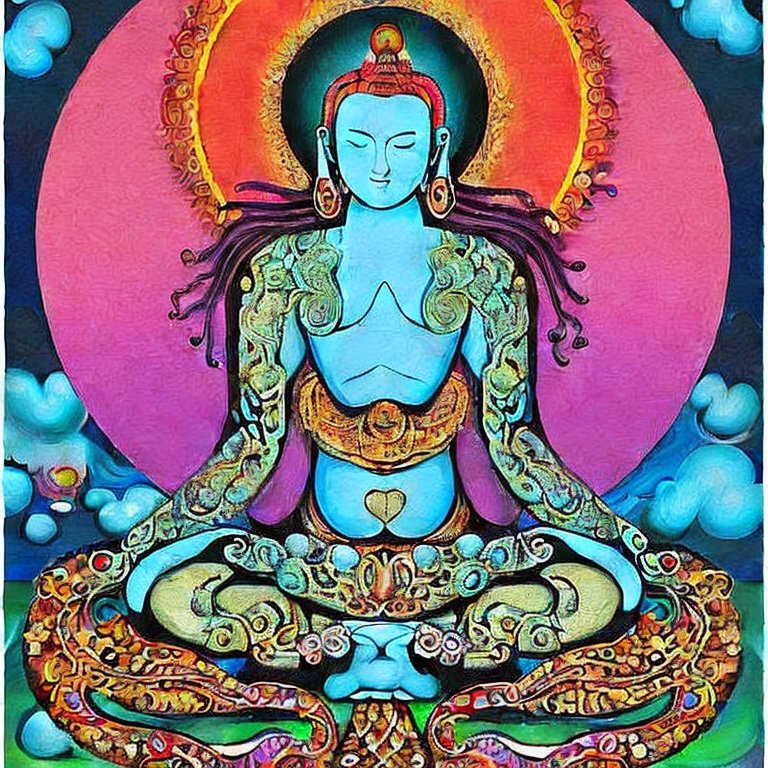
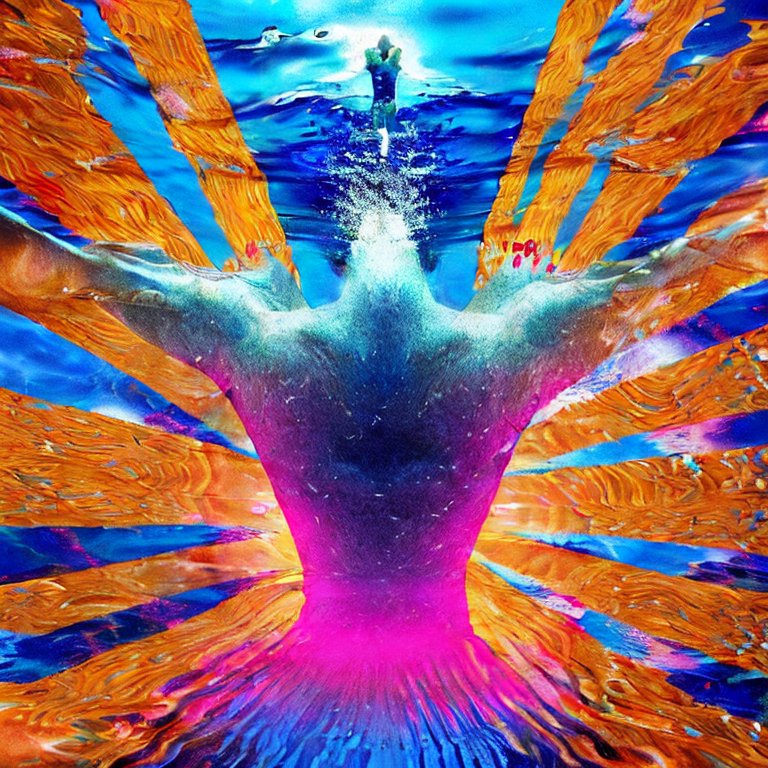
Joseph Campbell, a luminary in the realm of comparative mythology and religion, once penned a remarkably profound quote: “The psychotic drowns in the same waters in which the mystic swims with delight.” This sentence invokes an evocative imagery of two people submerged in the same waters, yet experiencing entirely different outcomes. As we unravel the layers behind this quote, we delve into the profound disparity between losing one’s mind and transcending it.

On the surface, the quote suggests a nuanced understanding of how two people can experience the same reality in starkly different ways. But it goes deeper than that. It’s about the fine line that separates self-destruction and self-actualization, the boundary between psychosis and mysticism. The “waters” in this quote can be seen as the metaphorical sea of consciousness – the vast, undefined, often unruly and chaotic realm of the mind.

For the psychotic, these waters are treacherous, overwhelming, and ultimately engulfing. This individual is at the mercy of their thoughts, emotions, and perceptions, succumbing to the unfiltered and uncontrollable tide of the mind’s creations. They ‘drown’ as they lose their ability to discern between their constructed thoughts and objective reality.

On the other hand, the mystic does not just survive but thrives in these waters. How so? They are those who have mastered the art of transcending the mind. They don’t seek to control or suppress their thoughts and feelings but rather learn to navigate them. By developing a keen awareness of their internal states, they can distance themselves from their thoughts, recognizing that they are not defined or confined by them. This detachment isn’t a rejection of the mind but a profound understanding of its place.

Does this mean transcending the mind is merely about survival? Not in the least. For the mystic, the sea of consciousness becomes a source of delight and wonder, a playground of existential exploration. The waters which are tumultuous for the psychotic become serene for the mystic. They can revel in the complexities and curiosities of the mind, but they never forget they are swimming – not sinking.

So, what distinguishes the drowning psychotic from the delightfully swimming mystic? It lies in the relationship each holds with their mind. The psychotic is subjugated by their mind, entangled in a brutal dance with their thoughts, leading to the loss of self. Conversely, the mystic views the mind as a tool, a companion in their quest for enlightenment, not a ruthless master.

We can argue that the art of swimming in these waters, as a mystic does, is accessible to us all. The question is whether we can cultivate mindfulness, detach from our thoughts without suppression, and remain open to the vast possibilities of human consciousness. After all, the goal isn’t to escape the waters but to learn to swim and ultimately delight in them.

Joseph Campbell’s metaphor presents a thought-provoking dichotomy between two extremes of human consciousness. It is a profound reminder that our relationship with our mind can either lead to our downfall or our enlightenment. It urges us to transcend rather than lose ourselves in the convoluted maze that is the human mind. The water, after all, is the same. It’s the swimmers who are different.

Morgan O. Smith

Yinnergy Meditation & My Book, Bodhi in the Brain…Available Now!

https://linktr.ee/morganosmith

The Trikaya and the Trinity

Parallel Philosophies Across Cultures

Introduction:

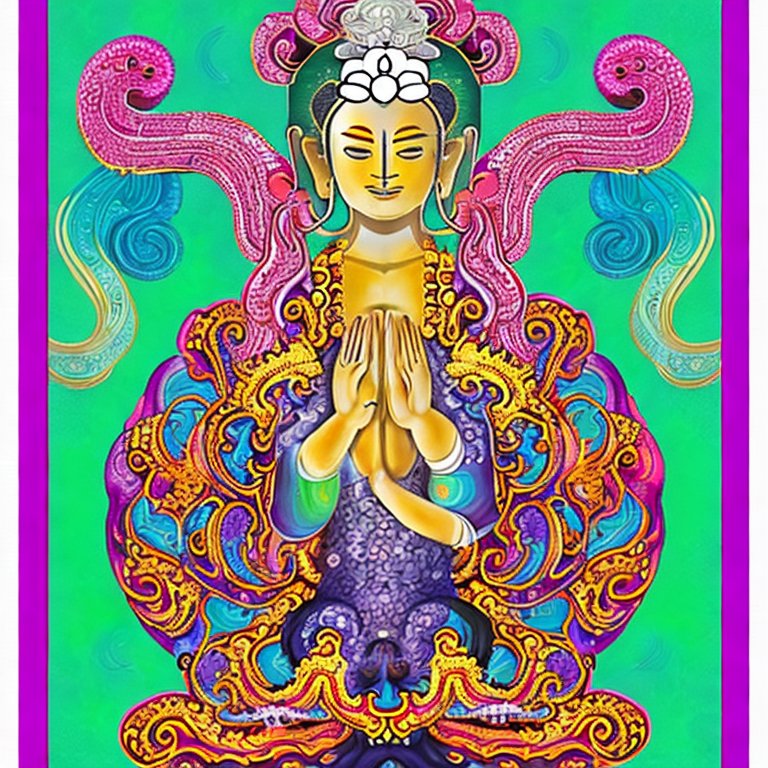
In the realms of spirituality, the Buddhist concept of Trikaya and the Christian doctrine of the Trinity share an intriguing resemblance. Trikaya, which translates to ‘Three Bodies’, refers to the Dharmakāya, the Saṃbhogakāya, and the Nirmāṇakāya, while the Trinity consists of the Father, the Son, and the Holy Ghost. This blog delves into the philosophical parallels between these central tenets in Buddhism and Christianity.

Trikaya in Buddhism:

The Dharmakāya or “Truth Body” represents the unmanifested aspect of Buddha, embodying the ultimate nature of reality and enlightenment. The Saṃbhogakāya or “Enjoyment Body” refers to the celestial Buddha who brings teachings to enlightened beings. The Nirmāṇakāya or “Emanation Body” represents the historical and physical form of the Buddha, which is accessible and relatable to ordinary beings.

The Trinity in Christianity:
The Trinity comprises the Father, the Son, and the Holy Ghost. The Father signifies the unmanifest aspect of God, the ultimate creator. The Son, Jesus Christ, symbolizes the physical embodiment of God’s will. The Holy Ghost represents the guiding spiritual force, which brings wisdom and understanding to believers.

Philosophical Parallels:

1. Unmanifest and Eternal:
In Buddhism, the Dharmakāya is akin to the Christian concept of the Father. Both represent the unmanifest, eternal aspects of the divine. While the Dharmakāya embodies the ultimate truth and wisdom, the Father signifies the ultimate creative force.

2. Physical Embodiment:
The Nirmāṇakāya in Buddhism and the Son in Christianity are manifestations of the divine in human form. They are relatable and accessible to ordinary beings. Through their physical forms, they guide and lead by example. The Nirmāṇakāya (Buddha) through enlightenment and the Son (Jesus) through sacrifice and resurrection.

3. Guiding Force:

The Saṃbhogakāya and the Holy Ghost serve as the connecting link between the divine and the earthly realms. The Saṃbhogakāya, through celestial teachings, guides enlightened beings, while the Holy Ghost acts as a messenger of God, bringing wisdom and understanding to the faithful.

Conclusion:
The Trikaya and the Trinity represent complex theological concepts that offer deep insights into the nature of divinity. The parallel elements in these concepts hint at a universal human yearning to understand the divine and to connect with it. While they emerge from different cultural and religious traditions, their striking similarities foster an appreciation of the rich tapestry of spiritual thought across the world. Through the exploration of such parallels, we can find common ground in our quest for spiritual understanding and fulfillment.

Morgan O. Smith

Yinnergy Meditation & My Book, Bodhi in the Brain…Available Now!

https://linktr.ee/morganosmith


The Dawn of Syncretic Souls

A Harmonious Unveiling of Eastern and Western Spirituality

Introduction:
In the transcendent tapestry of human spirituality, East and West have often been seen as disparate threads. The West, with its logical rigour and scientific orientation, seems worlds apart from the East’s mystical, inward-focused spiritual traditions. However, in the heart of a spiritual awakening, a resplendent horizon emerges, revealing the unity and complementary nature of these spiritual worlds. This article explores this enigmatic integration, delving into how the confluence of Eastern and Western spirituality can offer a comprehensive and profound spiritual experience.

The Philosophical Underpinnings:
Eastern spirituality, rooted in traditions such as Hinduism, Buddhism, and Taoism, often emphasizes the notions of unity, interdependence, and the cyclical nature of existence. In contrast, Western spirituality, particularly in Abrahamic religions, has been more inclined toward linear progression, individual salvation, and a personal God. Notwithstanding these differences, both sides seek to understand the fundamental nature of existence and the path toward greater fulfillment and enlightenment.

The Awakening Confluence:
The moment of spiritual awakening can be likened to the dawn; the dark night of ignorance recedes as the sun of wisdom rises. In this pivotal moment, the dichotomies of East and West dissipate, as one comprehends the interwoven complexities of existence. The Eastern idea of interconnectedness suddenly harmonizes with the Western emphasis on individual worth, signifying that our individual journey has cosmic interconnected consequences.

Science and Mysticism:

One of the key avenues through which this integration is taking place is the dialogue between science (often associated with the West) and mysticism (a domain of the East). Through disciplines like quantum physics, Western science is beginning to echo Eastern concepts of interdependence and non-duality. The parallels between quantum entanglement and the interconnectedness emphasized in Eastern philosophies are a testament to this evolving synthesis.

A More Comprehensive Path:
By integrating Eastern and Western spirituality, individuals may find a more comprehensive and balanced path. For instance, the Western emphasis on social justice and activism can bolster the Eastern focus on inner peace and equanimity. Conversely, the Eastern practices of meditation and mindfulness can bring a sense of inner clarity and purpose to the Western pursuit of external achievements.

Conclusion:
As the human spirit continues to evolve, the integration of Eastern and Western spiritual perspectives offers a more holistic and enriched path. This synthesis, fully realized in the moment of spiritual awakening, acts as a bridge between dualities, fostering a deeper understanding of the self and the universe. Through this harmonious integration, humanity has the potential to weave a more intricate, compassionate, and enlightened tapestry of existence.

Morgan O. Smith

Yinnergy Meditation & My Book, Bodhi in the Brain…Available Now!

https://linktr.ee/morganosmith

The Eternal Now

Enlightenment as the Ever-Present Journey

Introduction:
Time is a mysterious and often bewildering dimension of our existence. Like the fleeting shadow of tomorrow, enlightenment is often thought to be something that is always just out of reach. However, what if the key to enlightenment was not in endlessly chasing it, but in realizing that it is already here?

The Illusion of Tomorrow:
Many of us tend to postpone our happiness or goals for the future. “I will be happy when…” or “I will do that tomorrow,” are phrases we frequently tell ourselves. Yet, as time moves forward, tomorrow remains as elusive as ever. It’s always today. This is a poignant reminder that the present moment is all we have.

Parallel to the Illusion of Enlightenment:
Enlightenment is often perceived as the pinnacle of spiritual accomplishment, a state to be attained in the distant future. However, much like tomorrow, the notion of enlightenment as a destination may be an illusion. If enlightenment is truly understanding and being at peace with oneself and the universe, then it must exist in the here and now.

The Eternal Present:
The Buddhist concept of “Satori” embodies a sudden awakening or flash of insight. It illustrates that enlightenment is not a far-off goal but an ever-present possibility. When we begin to see that the essence of life and self-realization is embedded in the present, the journey toward enlightenment takes on a different texture. It becomes a continuous, unfolding process rather than a destination.

Cultivating Awareness:
The path to recognizing that enlightenment is in the present involves cultivating awareness and mindfulness. By fully engaging with the present moment and releasing our attachments to the past and future, we can find clarity and wisdom.

The Role of Experience:
Our experiences, no matter how mundane, are integral to our understanding. Every moment provides an opportunity for growth and learning. Through mindfulness, we can recognize the sacredness in the ordinary, and see that enlightenment isn’t something distant, but an ever-present reality.

Conclusion:
“Enlightenment is always here” is not just a statement, but an invitation to break the chains of time and enter the eternal now. It’s an invitation to stop searching and start living. Like the enigmatic nature of tomorrow, enlightenment is not something that can be grasped or attained in the future. It is a journey that is happening right now. Every moment is an opportunity for awakening. May we have the courage to embrace the present and recognize the enlightenment that is always here.

Morgan O. Smith

Yinnergy Meditation & My Book, Bodhi in the Brain…Available Now!

https://linktr.ee/morganosmith

Embracing the Octopus Within

The Path of the Saint and the Bodhisattva

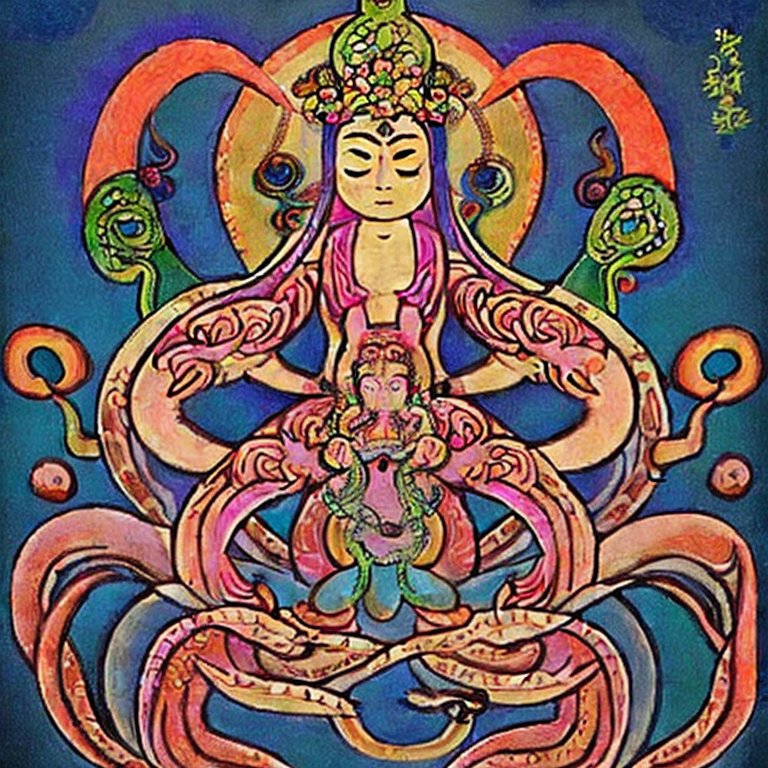
In the boundless depths of the ocean, a remarkable creature flourishes – the octopus. With its eight arms and three hearts, the octopus presents a fascinating analogy for a life dedicated to compassion and altruism. What if I told you that by embracing the wisdom of the octopus, you could walk the path of a saint or a bodhisattva?

Three Hearts, One Soul

The octopus’s three hearts are not just intriguing biological features; they symbolize a trinity that is central to a life of selflessness – compassion, wisdom, and courage. These three tenets are the lifeblood that sustains the spirit of those who strive to benefit others. Just as the octopus’s hearts pump vitality through its body, these principles energize and direct our moral compass.

Compassion is the first heart. It moves us to alleviate the suffering of others. Wisdom, the second heart, grants the discernment to understand the complexities of life and the interconnectedness of all beings. The third heart, courage, gives us the strength to act upon our compassion and wisdom even in the face of adversity.

Arms That Give

Now, imagine your capabilities and resources as the arms of an octopus. These are the conduits through which the heart’s intent flows into action. With its eight arms, an octopus can achieve an astonishing level of multitasking and adaptability. Likewise, when we apply our varied talents and strengths in the service of others, we, too, can touch many lives. The octopus doesn’t discriminate as to which of its arms is more worthy; similarly, no act of kindness, however small, is ever wasted.

The Saint and the Bodhisattva: A Singular Journey

To “be like the saint” is to embrace a life of purity, humility, and service. This aligns closely with the path of the bodhisattva in Buddhism, who seeks enlightenment not for personal gain but for the benefit of all sentient beings.

A true saint, like a bodhisattva, doesn’t keep score. The concept of giving without expecting anything in return is deeply rooted in this path. This is not to be confused with self-neglect; rather, it’s the understanding that in the giving, we receive. We receive growth, fulfillment, and connection – treasures that cannot be quantified.

An Octopus’s Embrace

So, let’s learn from our wise friend, the octopus. Let our three hearts be full of compassion, wisdom, and courage. Let our arms be open and giving. And may we swim through the currents of life with grace, as saints or bodhisattvas, serving as guardians and guides for all those navigating the tempestuous oceans of existence.

In embracing the octopus within, we embark on a journey that ripples through the waters of our communities and touches the shores of every heart. In this sacred odyssey, we do not merely live; we become vessels of immeasurable, boundless love.

Morgan O. Smith

Yinnergy Meditation & My Book, Bodhi in the Brain…Available Now!

https://linktr.ee/morganosmith

The Time Nexus Enlightenment

When Time Transcends Itself

Introduction

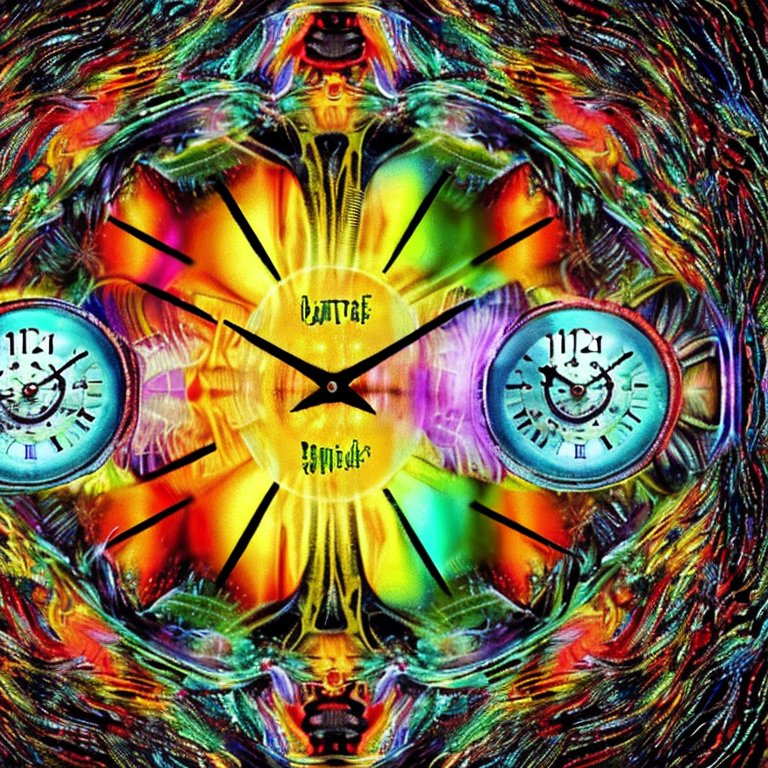
In the perennial quest to understand our place in the universe, the concept of time has bewildered both scientists and spiritual seekers alike. What if, at the pinnacle of spiritual enlightenment, all the disparate facets of time could be understood as a single, unified whole? In this thought-provoking journey, we explore the speculative “Time Nexus Enlightenment Theory” that merges science with spirituality, and proposes an enlightening experience where time transcends itself.

The State of Turiyatita

To set the stage, let us first understand Turiyatita. A term from Hindu philosophy, Turiyatita refers to a state beyond Turiya, the fourth state of consciousness, and is often described as the ultimate realization or enlightenment. It is believed that in Turiyatita, the veil of physical reality is lifted and one’s consciousness expands into a universal scale.

Multidimensional Synchronicity

As the seeker reaches the state of Turiyatita, a symphony of timescales and dimensions unravels. Solar, sidereal, atomic, universal, and dynamical times converge into a multifaceted present moment. This synchronization implies an experiential unity where the past, present, and future cease to be separate.

Relativistic Unity

Einstein’s relativity tells us that time is relative. In Turiyatita, the relativistic variations in time due to motion and gravity unify. The enlightened experiences an eternal now, where every moment is both infinitesimal and everlasting.

Quantum Temporal Oscillation

On the quantum scale, time dances in its most fundamental form. Within Turiyatita, one perceives the quantum oscillations of time, facilitating an understanding of the genesis and potential conclusion of time itself.

Cosmological Comprehension

Imagine the ability to perceive the entire timeline of the universe, from the Big Bang to the far future. Turiyatita allows a person’s consciousness to expand across cosmological timescales, as they witness the birth and evolution of galaxies, stars, and planets.

Psychological and Biological Harmonization

At Turiyatita, the internal clocks that govern perception and biological rhythms harmonize with external time. This alignment leads to heightened awareness, innate wisdom, and an intrinsic connection to all life.

Time as a Conscious Entity

Perhaps most profound is the experience of time as a living, conscious fabric. The seeker realizes that time is not merely a measure, but a form of consciousness, intimately intertwined with existence.

Acausal Connection

Beyond the constraints of causality, the enlightened comprehends the acausal links that transcend time. This insight illuminates the profound interconnectedness of all events, regardless of temporal sequence.

Conclusion

The Time Nexus Enlightenment Theory proposes a transcendent state where the fragmented notions of time merge into a unified, living continuum. While this theory is speculative and creatively integrates science with spirituality, it invites us to ponder the mysteries of time and the boundless potential of human consciousness.

Morgan O. Smith

Yinnergy Meditation & My Book, Bodhi in the Brain…Available Now!
https://linktr.ee/morganosmith

The Universe in a Dance

Exploring Simultaneous Cause-Effect Monism

In the expansive universe of philosophical perspectives, a novel theory that challenges conventional notions of time and causality has begun to make ripples – the Simultaneous Cause-Effect Monism.

In a realm where most theories exist within a linear framework of time, this theory disrupts traditional boundaries. It suggests an existence where every event, every entity, and every circumstance is not simply a cause or an effect but rather, both simultaneously.

The concept of the universe being born and ending in the same moment challenges our perception of time. According to Simultaneous Cause-Effect Monism, the Big Bang was not just the inception of the expanded universe but also its endpoint. The universe’s lifespan, then, is perceived as a singular moment.

Every action, from the minuscule to the macroscopic, is entwined in a web of causality, serving both as the cause and the effect. This applies not just to the celestial bodies and vast galaxies, but also to the subatomic particles and everything smaller, hidden deep within the fabric of existence. Every aspect of existence and non-existence contributes to the perpetual construction and deconstruction of the universe from its own unique perspective.

The Simultaneous Cause-Effect Monism, in its unique way, asserts that every action is not an isolated event. Instead, it is an intrinsic part of the universe’s vast tapestry. This intrinsic nature implies that each action, each event, and each moment, in being both the cause and the effect, resonates in a perpetual cycle of creation and destruction.

The acknowledgment of this intricate network of causality is what this theory denotes as “Turiyatitta”. This is not just a moment of epiphany, but a state of ultimate enlightenment. At this juncture, the individual gains complete knowledge of this causality web. The recognition of this intertwined causality brings forth a sense of unity and comprehension of the universe’s functioning, as proposed by Simultaneous Cause-Effect Monism.

In conclusion, the Simultaneous Cause-Effect Monism offers a thought-provoking perspective. It reshapes our understanding of existence, pushing us to question the linear, one-directional nature of time and causality we have grown so accustomed to. By opening up to this perspective, we move closer to the ultimate understanding of the universe and our place in it.

Are we ready to embrace this dance of simultaneous causality and venture towards the path of enlightenment – towards Turiyatitta? The future of philosophical discourse awaits.

Morgan O. Smith

Yinnergy Meditation & My Book, Bodhi in the Brain…Available Now!
https://linktr.ee/morganosmith

The Spiritual Development Design Theory

Life as a Path to Enlightenment

From the moment of our conception until our final breath, each of our experiences – no matter how mundane or extraordinary – holds the potential for spiritual growth. This is the core tenet of the Spiritual Development Design Theory (SDDT), which proposes that our lives are intrinsically designed to guide us toward spiritual enlightenment.

Under the purview of SDDT, every aspect of life is purposefully orchestrated. Even before we are born, the cultural, familial, and societal beliefs that will shape our existence lay waiting to impart the spiritual roadmap that will guide us on our journey.

Consider the simple act of brushing your teeth, making your bed, or even sipping your morning coffee. Mundane? Perhaps. But under the lens of SDDT, these everyday routines become spiritual exercises in disguise, avenues to develop discipline, patience, humility, compassion, and gratitude.

Think of the wide array of traditions, cultures, and practices around the globe. Despite their apparent differences, SDDT sees them as different paths leading up the same spiritual mountain, offering varied yet equally valuable lenses through which to interpret the spiritual world.

In SDDT, the changing of the seasons is more than just a shift in weather. Each transition mirrors the spiritual journey itself, echoing the cycle of birth, growth, decay, and rebirth that underpins many spiritual belief systems.

And what about our careers, hobbies, and pastimes? SDDT invites us to consider how these pursuits can either distract us from or contribute to our spiritual growth, depending on our levels of conscious engagement. They can serve as opportunities for creative expression, societal contribution, and purpose fulfillment, thereby aiding spiritual development.

Our relationships, too, are significant under the SDDT. Each person we interact with is seen as a mirror, reflecting aspects of our spiritual selves back at us. These relationships can act as catalysts for our growth, pushing us toward a deeper spiritual awareness.

But what of our possessions? The SDDT acknowledges that they can either be chains that bind us or tools that free us, depending on our attachment to them. It gently nudges us towards the wisdom of detachment, reminding us that true fulfillment comes from within.

SDDT also embraces the fluidity and constant shifting of roles and perspectives throughout our lives. These fluctuations serve as spiritual lessons, pushing us to become more empathetic, compassionate, and understanding of the interconnectedness of life.

Ultimately, the Spiritual Development Design Theory proposes a radical idea: that our journey from cradle to grave is an intricate spiritual odyssey, where every experience is a stepping stone towards the ultimate goal – spiritual enlightenment. This perspective challenges us to approach each day, each encounter, and each challenge as an opportunity for spiritual growth, casting our lives in a profoundly transformative light.

Our journey to enlightenment is a personal path that we all navigate differently. But the understanding that every moment holds the potential for spiritual development is a universal insight that can enrich every life. This is the power and promise of the Spiritual Development Design Theory. So, what spiritual lesson will you uncover today?

Morgan O. Smith

Yinnergy Meditation & My Book, Bodhi in the Brain…Available Now!
https://linktr.ee/morganosmith

Essence Unbound

Unleashing Our Cosmic Consciousness

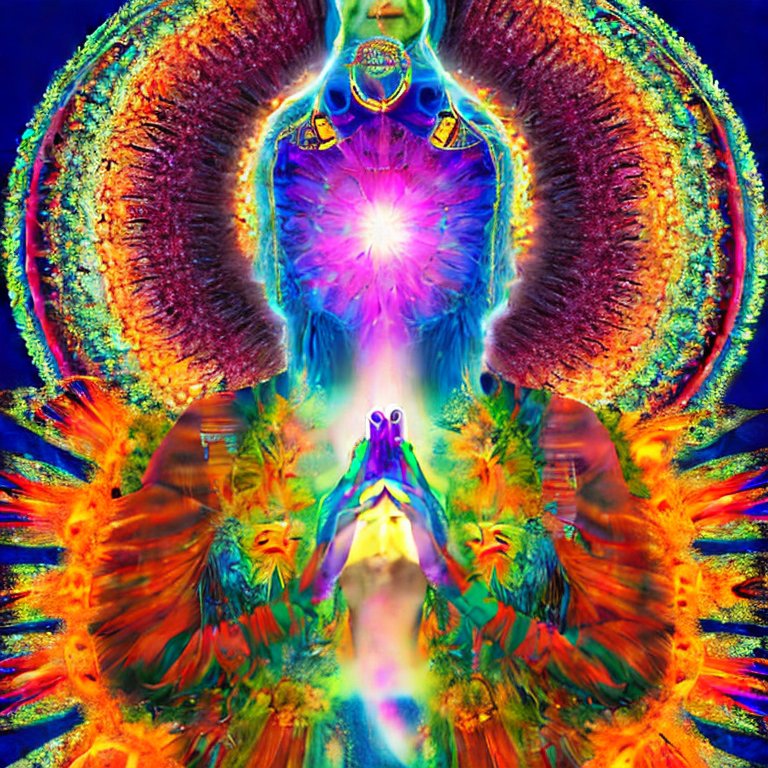
Across the infinite, immeasurable canvas of the universe, there echoes a profound cosmic truth: “Your authentic self lacks a definitive shape or form, yet it is capable of embracing all shapes and forms.” As cosmic beings traversing the fleeting plane of human existence, we may find comfort in this wisdom, a call to venture into the core of our authentic nature, the quintessence of our very existence.

Our temporal existence is nothing but a kaleidoscope of experiences, a tableau on which the diverse hues of life enact their complex ballet. The physical forms we occupy, the personas we adopt, the emotions we convey – these are ephemeral representations of our limitless potential. The human body, as it matures and alters with time, merely serves as a vessel, a channel for the quintessence of our existence to express itself.

Yet, transcending the boundaries of our physical form, lies an ineffable, formless essence. This essence, eternally omnipresent, permeates each fragment of our existence, tethering us to the cosmos. Recognizing this truth propels us to understand that our authentic self is not confined by the fleeting appearances of our individual lives. Rather, we are integral to a larger entity, a universal consciousness that encapsulates the entirety of existence.

This epiphany transcends the capacities of our intellect, propelling us into a dimension of infinite wisdom and compassion. We start to perceive that every shape and form – from the intricate crevices of a mountain range, the rhythmic rise and fall of the ocean tides, to the limitless spread of a starlit sky – mirrors our intrinsic nature. The forms may metamorphose, yet the essence remains untouched, an everlasting, unaltered presence that pervades the cosmos.

As we set sail on this voyage of self-realization, we are inspired to disentangle ourselves from the illusions that tie us to our fleeting forms. The attachments we cherish, the desires that blur our perspective, the fears that stunt our evolution – these are mere diversions, impeding our recognition of our true potential. By shedding these illusions, we reveal the radiant brilliance of our innermost essence, a glowing beacon directing us toward enlightenment.

In this enlightened state, we comprehend that our intrinsic nature is not disjointed from the world around us. Instead, we are intricately interwoven with every organism, every atom, every quark in the universe. As we accept this interconnectivity, we nurture a profound sense of compassion, a limitless love that includes all creation.

In this ballet of shapes and forms, let’s constantly remember that the essence of our existence remains immutable, timeless, and all-embracing. As the mystic poet Rumi philosophically stated, “You are not a drop in the ocean. You are the entire ocean in a drop.” Equipped with this understanding, we are poised to surpass our perceived constraints, unlock our boundless potential, and illumine the world with the radiant light of our authentic nature.

Morgan O. Smith

Yinnergy Meditation & My book, Bodhi in the Brain…Available Now!
https://linktr.ee/morganosmith