Beyond Labels

A Journey Through the Essence of Nonduality

In a world quick to cast judgment and affix labels, my exploration of nonduality has often been met with skepticism and disdain. Accusations of being “crazy,” “insane,” and “delusional” are hurled at me through social media, texts, and even face-to-face encounters. Yet, such reactions prompt me to question the very foundation of belief and perception in our society.

Consider for a moment the myriad of beliefs that have shaped human history and consciousness. How many individuals hold steadfast to the notion that the earth was crafted in seven days? Or that Eve emerged from Adam’s rib? Legends of Moses parting the Red Sea, Elijah ascending to heaven in a chariot of fire, Jonah’s survival within a whale, and the virgin birth and resurrection of Jesus Christ are not merely stories but are cornerstones of faith for countless people. These narratives, alongside the belief in entities like Satan or the practice of praying to an unseen force, might seem irrational or imaginary to some, yet they are deeply ingrained in the spiritual fabric of many cultures.


The juxtaposition of such beliefs against the skepticism faced by nonduality advocates raises a compelling question: Who, indeed, is the “crazy” one? This is not to disparage or belittle any set of beliefs but to highlight the subjective nature of sanity and rationality in the context of spiritual understanding. Nonduality, at its core, transcends the dichotomies of belief and disbelief, inviting a profound engagement with the essence of existence beyond the confines of conventional narratives.

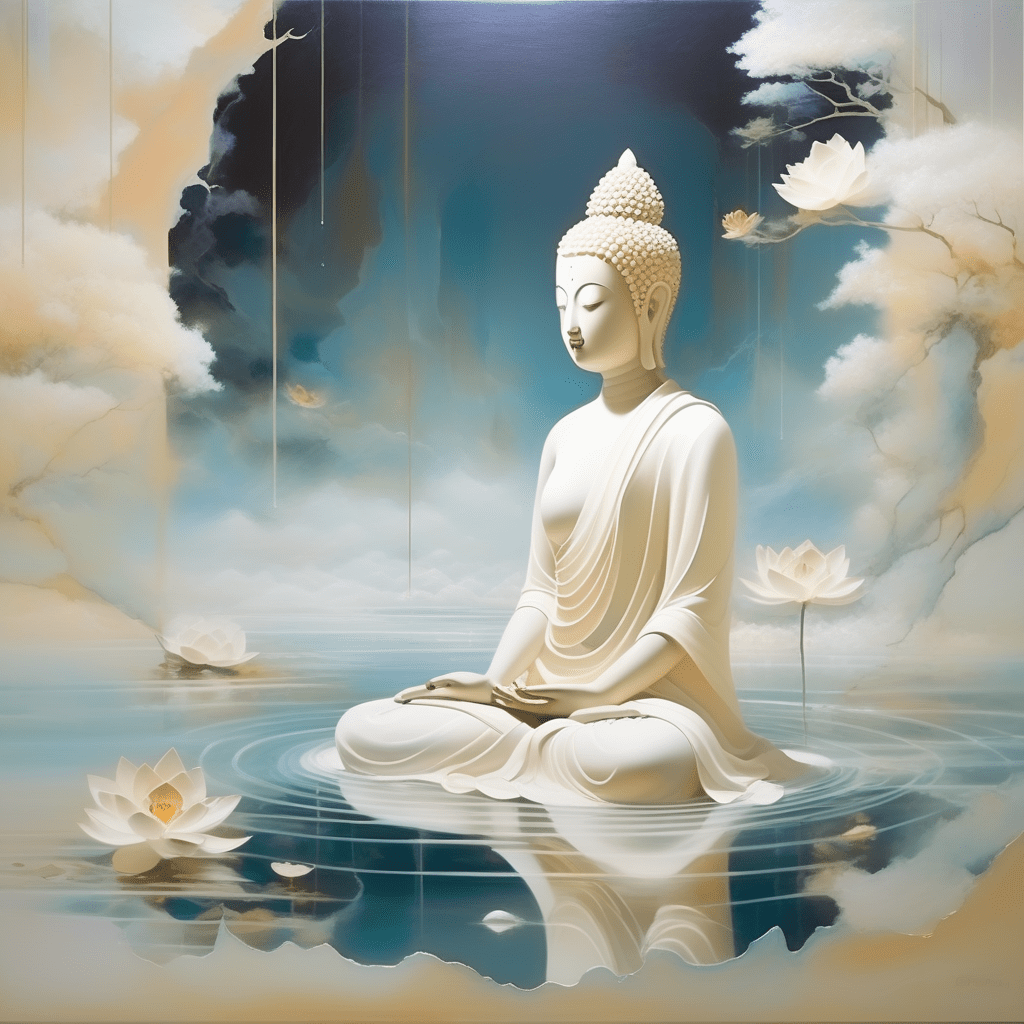
Nonduality does not seek to undermine or replace traditional religious beliefs; instead, it offers a lens through which we might perceive unity in apparent diversity, seeing the interconnectedness of all things beyond the superficial separations imposed by language, culture, and individual perspective. It beckons us to explore the depth of our being, to recognize the intrinsic nature that we share with the universe itself.


The resistance faced by nondual perspectives is not a sign of their invalidity but a testament to their power to challenge and expand our understanding of reality. It is an invitation to dialogue, to introspection, and ultimately, to a more inclusive comprehension of the spiritual journey that encompasses all of humanity.

In embracing nonduality, we are not discarding the richness of diverse spiritual traditions but are deepening our engagement with the mystery that lies at the heart of existence. We are invited to witness the unfolding of life with an openness that transcends labels and judgments, recognizing that the true essence of spirituality cannot be confined to words or concepts.

So, as we navigate the waters of belief and skepticism, let us do so with a sense of curiosity and wonder, acknowledging that the quest for understanding is a path shared by all, regardless of the labels we may encounter along the way.

Morgan O. Smith

Yinnergy Meditation, Spiritual Life Coaching & My Book, Bodhi in the Brain…Available Now!

https://linktr.ee/morganosmith

All Life is Yoga

The Essence of Existence and Awareness
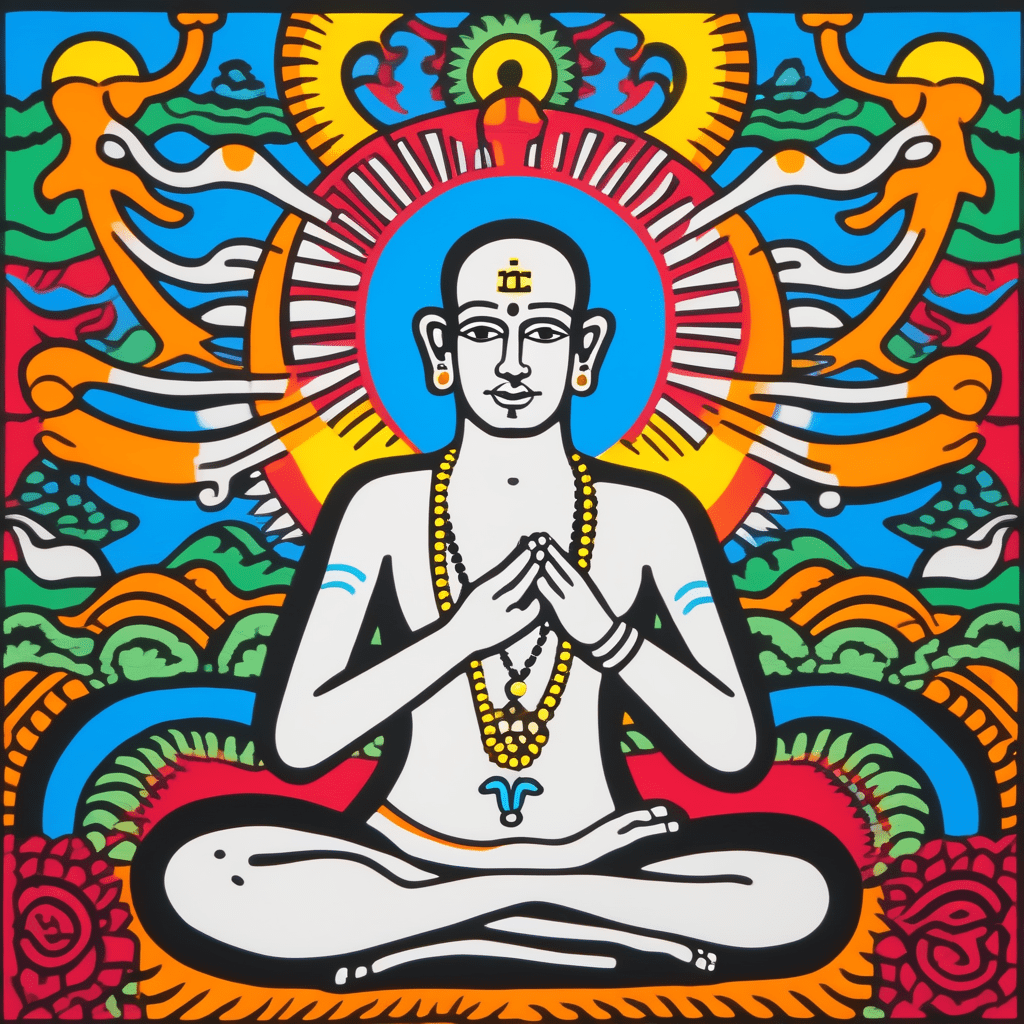
In the grand mosaic of life, the concept of Yoga transcends beyond its commonly perceived boundaries of physical postures and breath control. It is a profound philosophy and a way of living that interweaves through every aspect of our existence. The assertion “All life is Yoga” is not just a statement but a deep realization that unfolds the interconnectedness of everything around us.

Yoga, in its truest sense, is not confined to the mats or the tranquil corners of meditation halls. It is present in every breath, every step, and in the pulsating rhythm of the universe. The situations we encounter, the events that unfold, the actions we undertake, and the interactions we engage in, all embody the essence of Yoga. These elements serve as mirrors, reflecting the principles of unity, balance, and harmony that Yoga espouses.

Moreover, this perspective extends to the wider construct of civilization. Every culture, community, and era holds the essence of Yoga within its core. The way societies operate, the values they cherish, and the progress they pursue are manifestations of Yoga in a collective form. The principles of coexistence, empathy, and understanding that are integral to societal development are, in essence, Yoga in action.

In the broader context, the entire expanse of existence is a form of Yoga. The cosmos, with its infinite galaxies, stars, and planets, follows a celestial dance that echoes the principles of Yoga. The natural world, with its intricate ecosystems and life forms, demonstrates the interdependence and harmony that are central to Yoga.

The practice of Yoga, in its various forms, is a journey towards the full awareness of these truths. It is a path that leads to the recognition of the oneness of all existence, the interconnectivity of life, and the profound wisdom that lies in understanding that “All life is Yoga.”

In embracing this philosophy, we open ourselves to a more mindful, compassionate, and connected way of living. We learn to see Yoga in everything and everyone, realizing that every moment is an opportunity to practice awareness, kindness, and unity. This understanding has the power to transform not only individual lives but also the world at large, steering us toward a more harmonious and enlightened existence.

Morgan O. Smith

Yinnergy Meditation, Spiritual Life Coaching & My Book, Bodhi in the Brain…Available Now!
https://linktr.ee/morganosmith

Where Did God Come From?

The question of where God came from strikes at the core of numerous philosophical, theological, and metaphysical discussions. It’s a question that has fascinated scholars, believers, and skeptics alike for centuries. At the heart of this inquiry lies the paradoxical nature of God’s existence: God is often described as omnipresent and nonlocal, transcending the concepts of space and time that define our physical reality.

To ponder upon where God came from is to delve into the depths of the unknown. It is widely held in many theological beliefs that God is the uncaused cause, the source from which all things emanate. This perspective leads to the intriguing notion that God came from nowhere. Nowhere, in this context, is not a physical location but a metaphorical representation of the absence of space and time – a realm beyond our comprehension.


This idea ties closely with the concept of God being nonlocal. Nonlocality, often discussed in quantum mechanics, suggests that an entity can be present everywhere simultaneously. In spiritual and metaphysical terms, this translates to the omnipresence of God. The omnipresence of God means that God exists beyond physical boundaries, in a state of being that encompasses all existence yet is bound by none.

What makes this concept even more thought-provoking is the idea that the pure essence of God is the absence of everything that exists. This notion posits that God is fundamentally different from everything we perceive in our universe. While our reality is defined by physicality, emotions, thoughts, spirituality, and metaphysical elements, the essence of God is distinct from all these. God, in this sense, is the ultimate reality, a state of pure being that transcends all known dimensions of existence.


Consequently, the physical, emotional, mental, spiritual, and metaphysical presence that we attribute to God are reflections or manifestations of this ultimate reality in forms that are comprehensible to us. They represent how we, as humans, perceive and connect with the divine. Each aspect – whether physical, emotional, mental, spiritual, or metaphysical – offers a different lens through which to understand and relate to the divine mystery that is God.

In conclusion, the question of where God came from leads us not to a definitive answer but to a deeper understanding of the nature of existence itself. It encourages us to explore the boundaries of our understanding and to accept the mystery that lies at the heart of all that is.

Morgan O. Smith

Yinnergy Meditation, Spiritual Life Coaching & My Book, Bodhi in the Brain…Available Now!
https://linktr.ee/morganosmith

The Ground of All Beings vs. The Ground of All Being

In the realm of philosophy, the concepts of “the ground of all beings” and “the ground of all being” often emerge as central themes in discussions about existence, consciousness, and the nature of reality. These concepts, while seemingly similar, offer distinct perspectives on how we understand the universe and our place within it.

**The Ground of All Beings**


“The ground of all beings” refers to the idea that the foundation of reality is the multitude of individual entities that exist. This perspective sees the universe as a collection of distinct beings, each with its essence and characteristics. According to this view, the diversity of objects, organisms, and entities contributes to the fabric of reality. It emphasizes plurality, acknowledging the unique qualities and experiences of each being. This approach often aligns with perspectives that value individuality and the richness that comes from varied existences.

**The Ground of All Being**

On the other hand, “the ground of all being” suggests a more unified view of existence. Here, the focus is on the underlying reality that connects all things, rather than the things themselves. This concept points to a fundamental source or essence that underpins everything. It’s often associated with ideas of oneness or the belief in a universal substance or consciousness that permeates all. This perspective is prominent in various spiritual and metaphysical beliefs, where the unity of existence is emphasized over individual differences.

**Philosophical Implications**


The debate between these two views is significant in philosophy as it shapes our understanding of the world. If we lean towards “the ground of all beings,” we might focus on the differences and separateness of things, leading to a worldview that celebrates diversity and individuality. Conversely, embracing “the ground of all being” could lead to a more holistic view of life, where interconnectedness and unity are fundamental.


**Conclusion**

Ultimately, these concepts are not just abstract philosophical ideas but are also reflective of our everyday experiences and how we perceive our relationship with the world. Whether we see the universe as a tapestry of distinct threads or as a single, interconnected whole, these views shape our beliefs, values, and actions. As such, the exploration of these concepts is not just a philosophical exercise but a journey into understanding the very nature of existence itself.

Morgan O. Smith

Yinnergy Meditation, Spiritual Life Coaching & My Book, Bodhi in the Brain…Available Now!

https://linktr.ee/morganosmith

The Paradox of the Universe

When we gaze into the vast expanse of the universe, a fundamental question arises: What is the universe made of? It seems like a straightforward inquiry, one that science could answer with theories of matter, energy, particles, and forces. However, upon deeper reflection, the answer becomes less about physics and more about philosophy. The universe, in its most enigmatic form, is made of itself, which paradoxically, is nothing.

This concept, while initially sounding absurd, invites us to explore the nature of existence and the fabric of reality. The universe isn’t just a collection of galaxies, stars, and planets; it’s an intricate tapestry of existence, interwoven with the threads of time, space, and consciousness. To say the universe is made of itself is to acknowledge that it is a self-contained entity, not requiring an external creator or an outside source of substance.


Delving deeper, the idea of the universe being ‘nothing’ challenges our understanding of ‘nothingness’. In philosophy, ‘nothing’ is often considered a state of non-existence, an absence of everything. Yet, in the context of the universe, ‘nothing’ transforms into a concept of boundless potential. This ‘nothing’ is not an emptiness (not in the traditional sense) but a source of all creation, a primordial state from which everything emerged.

This perspective aligns with some interpretations of quantum physics, where the vacuum of space is not empty but teeming with energy and potentiality. It’s in this ‘nothingness’ that particles pop in and out of existence, creating the fabric of reality as we perceive it. Therefore, the universe is made of itself and nothing is not a contradiction but a profound insight into the nature of reality.


The implications of this thought are vast and deeply philosophical. It suggests that the universe, and by extension, our existence, is a self-generated, self-sustaining phenomenon. We are not just in the universe; we are of the universe – an integral part of this grand, incomprehensible entity that is both everything and nothing.

In conclusion, the question of what the universe is made of leads us down a path of deep philosophical contemplation. It reveals that the universe, in its essence, is a paradox, defying the conventional understanding of existence and non-existence. It’s a reminder of the mystery and wonder that surrounds us, an invitation to ponder the unfathomable depths of reality.

Morgan O. Smith

Yinnergy Meditation, Spiritual Life Coaching & My Book, Bodhi in the Brain…Available Now!

https://linktr.ee/morganosmith

The Paradox of Understanding

Embracing the Ground of All Being

As we embark on the journey of understanding the essence of our existence, we often find ourselves entangled in a paradoxical quest. The profound pursuit of comprehending the ‘ground of all being’ – the foundational reality that underpins our very existence – is a path treaded by philosophers, mystics, and thinkers alike. Yet, this quest often comes to a halt, not because of a lack of effort, but because of the nature of what we seek to understand.

The ground of all being, by its very definition, transcends the boundaries of human comprehension. It is an entity or a state that exists beyond the limits of our cognitive abilities. We, as beings limited by our perceptions and understanding, often find this concept elusive. It’s akin to asking a fish to describe water; the fish knows it exists within water, but cannot perceive it as something separate from its existence.


However, the journey doesn’t end here. There’s a transformative realization that emerges when we stop trying to intellectually grasp this foundational reality. It’s when we let go of the need to understand and become one with the comprehension itself. This shift in perspective is profound. We move from a state of trying to ‘know’ to a state of ‘being’ in knowledge.

This transformation leads to a profound understanding of ourselves. We are not merely what we appear to be – physical entities navigating through life’s complexities. Instead, we are embodiments of comprehension, part of the vast, interconnected web of existence. We are both the seekers and the embodiment of what is sought.


Upon this realization, the world transforms before our eyes. Everything we perceive becomes imbued with an intrinsic beauty. This beauty is not a superficial aesthetic; it’s a deeper recognition of the interconnectedness and the sacredness of all that is. In comprehending our place in this grand tapestry, we find beauty in the mundane, the ordinary, and even the chaotic.

In conclusion, the quest to comprehend the ground of all being leads us back to ourselves. It’s a journey from seeking understanding outside to finding it within. As we embrace this journey, we find that beauty lies not just in what we see, but in the eyes of the comprehensive – in our newfound ability to perceive the world through the lens of interconnectedness and oneness.

Morgan O. Smith

Yinnergy Meditation, Spiritual Life Coaching & My Book, Bodhi in the Brain…Available Now!

https://linktr.ee/morganosmith

Embracing the Ephemeral

The Paradox of Change and Nothingness

In the realm of existence, the notion that “Nothing is permanent” stands as a profound truth. This phrase, seemingly simple, unravels layers of complexity upon closer inspection. It posits that permanence is an illusion, a transient shadow in the vast continuum of time. The paradox lies in the statement that the only thing permanent is “Nothing.” This “Nothing” is not a void or absence, but a canvas upon which the tapestry of life is constantly being redrawn.

The permanence of “Nothing” implies that change is the only constant. Change, in this context, is both the action and the result of “nothing happening.” It is the dynamic force that propels the universe forward, ensuring that no moment is identical to the last. This constant evolution is what makes life both unpredictable and beautiful. It challenges our understanding of reality, pushing us to accept that what we see as solid and enduring is, in fact, fleeting and malleable.


However, this notion of change does not imply chaos or lack of order. Instead, it suggests a universe governed by the laws of transformation, where each ending is a prelude to a new beginning. In this perpetual cycle, decay gives way to growth, and destruction paves the way for creation. This eternal dance of creation and dissolution is the essence of existence, a reminder that life, in all its forms, is a journey of continuous metamorphosis.

Moreover, the concept of “Nothing” as a permanent state offers a deeper, more philosophical insight. It invites us to ponder the nature of existence and our place within it. Are we, as human beings, mere transient entities caught in the flux of change? Or do we possess an enduring essence that transcends the physical realm? These questions lie at the heart of our search for meaning and purpose in an ever-changing world.


In conclusion, the statement “Nothing is permanent. The only thing that is permanent is Nothing” is more than a mere play on words. It is a profound reflection on the nature of existence, a reminder of the impermanence of the physical world, and an invitation to seek deeper understanding beyond the tangible. It encourages us to embrace change, not as a force of disruption, but as the fundamental essence of life itself.

 Morgan O. Smith

Yinnergy Meditation, Spiritual Life Coaching & My Book, Bodhi in the Brain…Available Now!

https://linktr.ee/morganosmith

Atoms Within Atoms

Contemplating the Cosmic Scale of Existence

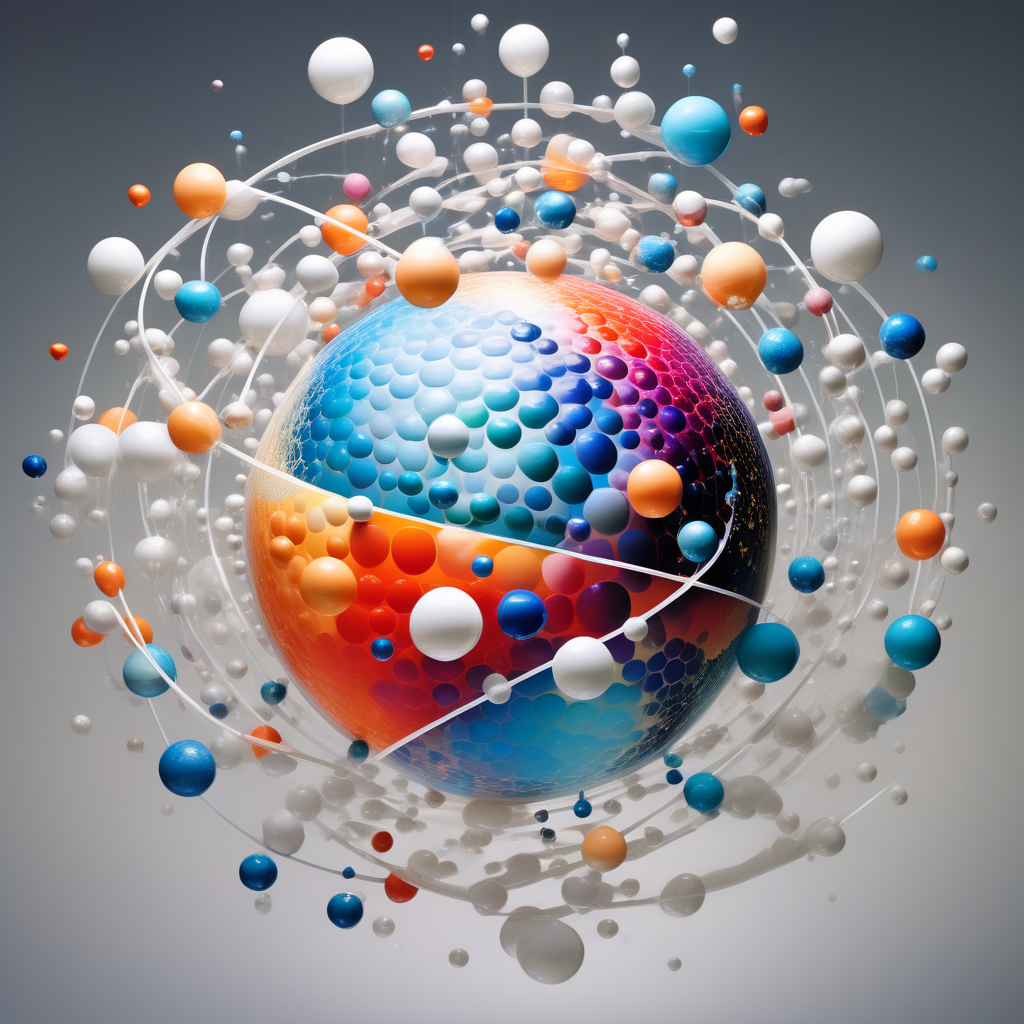
In the grand tapestry of existence, our understanding often finds itself confined within the boundaries of human perception. Yet, when we dare to venture beyond these limits, we encounter a humbling and awe-inspiring perspective. Consider this: each of us is composed of trillions of atoms, minuscule yet intricate components that constitute our very essence. Now, elevate this thought to a cosmic scale. What if our entire universe, with its vast galaxies and nebulae, is but a single atom within the immeasurable body of a higher entity or force, which some may choose to call God?

This analogy invites us to rethink our place in the cosmos. It suggests that just as each atom plays a vital role in the structure and function of our being, so too might our universe contribute to a larger purpose within this colossal entity. This perspective is not to diminish our significance but to expand our understanding of connectivity and purpose. In this cosmic view, every action, thought, and event within our universe could be integral to the workings of a grander scheme, a higher order of existence.

Such a notion also challenges our understanding of God or the ground of all being. Traditionally conceived as an omnipotent and omniscient entity, this view presents God not just as a creator or a distant observer but as a vast, living entity within which universes exist like atoms within a body. This reimagining bridges the gap between the spiritual and the physical, suggesting a universe that is not separate from the divine but intrinsically part of it.

The implications of this perspective are profound. It propels us to consider our actions and their repercussions not just on a worldly scale but as part of a cosmic dance. It encourages a sense of universal responsibility and interconnectedness, urging us to view ourselves not as isolated beings but as integral components of a much larger existence.

In conclusion, the idea that our universe could be akin to an atom within the body of a higher entity redefines our understanding of existence, purpose, and spirituality. It invites us to contemplate our place in the cosmos as inhabitants of a vast universe and as part of a much grander, interconnected whole.

Morgan O. Smith

Yinnergy Meditation, Spiritual Life Coaching & My Book, Bodhi in the Brain…Available Now!
https://linktr.ee/morganosmith

The Paradox of Purpose in the Ground of All Being

In philosophical discourse, few concepts are as intriguing and paradoxical as the nature of the “ground of all being.” This term, often used in metaphysical and theological discussions, refers to the fundamental basis or underlying reality of all that exists. At the heart of this concept lies a profound paradox concerning purpose.

#### Purposelessness at the Core


The ground of all being, by its very definition, transcends all known dimensions, including space and time. The ultimate reality underpins everything, yet it stands outside the boundaries of our physical and temporal world. In this sense, the ground of all being is inherently purposeless. It does not pursue goals or objectives because it exists beyond the constructs where purpose holds meaning. In its neutrality and transcendence, it simply ‘is’, unburdened by the need for purpose that characterizes human existence.


#### The Emergence of Purpose

Yet, curiously, from this purposeless ground emerges all purpose. The universe, with its myriad galaxies, stars, and planets, including our own, sprang from this foundational reality. Every atom, every life form, every human thought and endeavour finds its origin in this ground of all being. The very space and time that it transcends are the platforms upon which purpose is built and realized. In human terms, purpose is inextricably linked to our existence within space and time. Our goals, dreams, and aspirations are rooted in our temporal journey through life.

#### A Flourishing of Purpose within Constraints


It is within the confines of space and time that purpose finds its expression and fulfillment. Human endeavours, whether artistic, scientific, or personal, unfold within the physical world and over time. The space-time continuum is not just a physical reality but a canvas for manifesting purpose. The ground of all being, while itself devoid of purpose, is the source from which all purposes derive and the stage upon which they play out.


#### Conclusion: A Profound Duality

The ground of all being presents us with a profound duality. It is a realm devoid of purpose, yet it is the very source from which all purpose in the universe springs. This paradox is a philosophical quandary and a reflection of the profound mystery at the heart of existence. In understanding this, we gain a deeper appreciation of the complexities and wonders of the universe and our place within it.

Morgan O. Smith

Yinnergy Meditation, Spiritual Life Coaching & My Book, Bodhi in the Brain…Available Now!
https://linktr.ee/morganosmith

Choice as Cosmic Manifestation

In a world often bound by the chains of determinism, where every event is seen as a mere consequence of a prior one, the concept of choice emerges as a beacon of freedom, a testament to the transcendental nature of human consciousness. This perspective offers a radical, yet profound alternative: choices are not just personal expressions or random occurrences; they are, in essence, expressions of the universe itself.

The fabric of our universe is intricately woven with the threads of time, space, and matter. Yet, within this complex tapestry lies a deeper truth, one that transcends the apparent duality of cause and effect. In this view, every choice we make is not simply a product of past influences or future aspirations; it is an immediate and direct expression of the universe’s ever-unfolding narrative.


This notion brings us to the concept of the ‘eternal now.’ Unlike the linear progression of time as we perceive it, the eternal now posits a realm where past, present, and future coalesce into a singular, timeless existence. In this realm, every choice is an act of creation, a moment where the universe expresses itself through our consciousness. It is in these moments that we are not merely individuals making isolated decisions; we are the universe experiencing itself, exploring its infinite possibilities.

The implications of this perspective are both liberating and daunting. It suggests that our choices are far more significant than personal preferences or responses to external stimuli. They are cosmic in scale, contributing to the grand narrative of existence itself. It invites us to view our decisions not just as personal crossroads but as contributions to the ongoing creation of reality.


In conclusion, viewing choice as a cosmic manifestation offers a new dimension to our understanding of free will and determinism. It proposes that our choices are neither predestined nor random, but are integral parts of the universe’s continuous journey through time and existence. It’s an invitation to embrace the profound interconnectedness of all things and to recognize our role as the creator itself in the magnificent tapestry of life.

Morgan O. Smith

Yinnergy Meditation, Spiritual Life Coaching & My Book, Bodhi in the Brain…Available Now!

https://linktr.ee/morganosmith