Beyond the Self

Embracing the Unity of Existence in the Quest for Spiritual Enlightenment

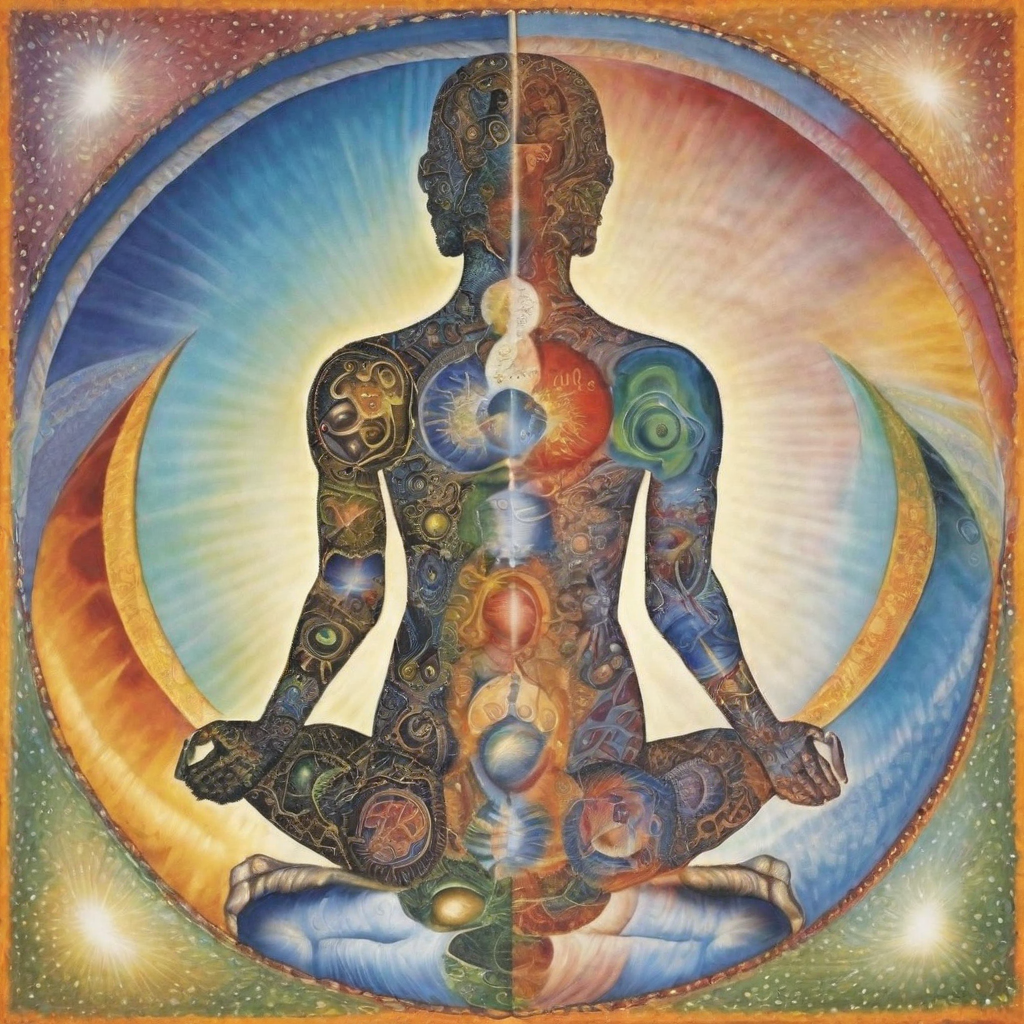
Spiritual enlightenment is a journey that transcends beyond the tangible realms of reality, reaching into the depths of our very existence. It’s an exploration that delves into the core of what it means to be alive, to be conscious. In this journey, enlightenment is not just a destination; it is a continuous process, a state of being that encompasses everything within and beyond every form.

At its essence, spiritual enlightenment is about realizing the interconnectedness of all things. It teaches us that every form, whether tangible or intangible, is imbued with a certain essence, a spark of the divine. This realization helps us to see beyond the superficial differences that separate us, fostering a sense of unity with the universe and everything in it.

One of the key aspects of enlightenment is the dissolution of the ego. Our egos, often constrained by societal norms and personal biases, can limit our understanding and experience of the world. Enlightenment encourages us to shed these limitations, to see beyond the self and to recognize our part in the larger scheme of existence. This perspective not only brings a deeper understanding of the self but also cultivates compassion and empathy for others.

Furthermore, enlightenment is not an escape from reality but a deeper engagement with it. It involves embracing both the light and the dark aspects of life, acknowledging that both pain and joy are integral to the human experience. This acceptance leads to a profound peace, and inner tranquillity that is unshaken by external circumstances.

In conclusion, spiritual enlightenment is an ongoing journey of discovery, where the destination is not a specific point but a continuous expansion of consciousness. It is about realizing that everything is connected, that there is a deeper meaning to our existence, and that true understanding comes from transcending beyond the self.

Morgan O. Smith

Yinnergy Meditation, Spiritual Life Coaching & My Book, Bodhi in the Brain…Available Now!

https://linktr.ee/morganosmith

Navigating the Depths

Nonduality vs. Absolute Monism

In the intricate tapestry of philosophical thought, two concepts often emerge as profound and perplexing: Nonduality and Absolute Monism. These philosophical gems, though seemingly similar, hold distinct perspectives on the nature of existence and the universe.

**Nonduality: The Unity of Existence**

Nonduality, a term often associated with Eastern philosophies, particularly Advaita Vedanta, posits a fundamental principle: reality is one, and the perception of duality or separation is illusory. It suggests that what we experience as separate entities – ourselves, others, and the world around us – are not distinct, but part of a unified whole. The philosophy of Nonduality encourages us to transcend this illusion, to realize that at the core of our being, we are not separate from the universe but one with it.


**Absolute Monism: The Dance of Oneness and Multiplicity**

Absolute Monism, on the other hand, takes a slightly different approach. While it agrees with the principle of oneness, it also acknowledges the existence of multiplicity. This philosophy, as I interpret it, embraces the paradoxes of existence: one and not two, two and not one, one and two, two and one, one within two, two within one, yet simultaneously neither one nor two. It reflects a deeper understanding of the cosmos as a dynamic interplay of unity and diversity, where the singular and the plural coexist in a harmonious yet complex relationship.

**The Interplay and Implications**

The discussion of Nonduality versus Absolute Monism is not just a theoretical exercise but has profound practical implications. In Nonduality, the path to enlightenment or understanding involves the realization of oneness, leading to a sense of peace and connectedness with all. In Absolute Monism, the journey is about embracing and understanding the complexity and paradox of existence, leading to a deep appreciation of life’s multifaceted nature.

Both philosophies, in their essence, guide us toward a greater understanding of our place in the universe. They invite us to look beyond the superficial and to question the very nature of reality.


**Conclusion: A Journey of Understanding**

In the end, whether one leans towards Nonduality or Absolute Monism, the journey is one of deep introspection and understanding. It’s about peeling back the layers of what we perceive and understanding the deeper truths of our existence. As we delve into these philosophies, we find not just answers, but also a greater appreciation for the questions themselves.

Morgan O. Smith

Yinnergy Meditation & My Book, Bodhi in the Brain…Available Now!

https://linktr.ee/morganosmith

Navigating the Infinite

My Journey Through the Layers of Nonduality

In my spiritual journey, I have come to hold a unique perspective on nonduality that deeply resonates with my personal experiences. It is a viewpoint where I see the myriad forms and phenomena of this vast universe as expressions of a singular, boundless reality. This perspective has been a guiding light in my explorations, leading me through various levels of nonduality.

Each level I have navigated has unveiled its unique insights and perspectives, enriching my understanding of existence and consciousness. These explorations have revealed to me the intricate and profound nature of reality, where every form, every phenomenon, is interconnected in a way that transcends our conventional understanding.


One of the most profound realizations in this journey has been the understanding that all perspectives on nonduality are valid. This realization came from a deep recognition that each individual’s experiences and realizations are unique expressions of their journey through the infinite landscapes of consciousness. Just as a diamond has many facets, each reflecting light in its unique way, so too does the experience of nonduality present itself in myriad forms.

This approach to nonduality respects and embraces the diversity of nondual experiences. It acknowledges that the myriad paths we tread in our spiritual journeys, with their unique revelations and insights, are all different facets of the same boundless reality. In this, there is a deep sense of unity and interconnectedness – a recognition that, in our diversity, we are expressions of the same underlying reality.


To all who walk the path of spiritual exploration, I encourage you to embrace your unique journey. Your experiences, insights, and realizations are invaluable contributions to the understanding of our collective existence. They are the threads that weave into the vast tapestry of nondual understanding, each one essential and irreplaceable.

Morgan O. Smith

Yinnergy Meditation & My Book, Bodhi in the Brain…Available Now!
https://linktr.ee/morganosmith

Exploring the Depths of Absolute Monism

And its Relation to Nonduality

In my deep exploration of spiritual teachings, I’ve gained a profound insight into the nature of reality, particularly focusing on Absolute Monism and its relation to nonduality. I understand that Absolute Monism goes beyond nonduality (at least how it’s interpreted here in the West), offering a perspective that is both inclusive and expansive.

At the heart of nonduality is oneness – the interconnectivity of everything and the illusion of separateness. I often discuss this, saying, “There’s something between those two opposing views [of separation and non-separation] that is absolute; something that is neither true nor false…it just is.” This reveals that the truth of our existence lies beyond the dualistic ideas of separateness or oneness, in a realm where these notions are simply aspects of a greater truth.

In my exploration of Absolute Monism, I describe a state that transcends the oneness found in nondual teachings. It’s not about negating duality but about moving beyond the need to categorize existence as either one or many. I believe that the ultimate reality is beyond human comprehension, yet it’s inherently present in every aspect of existence. As I often say, “Everything that has ever happened and every future event that will happen is happening now in the present…but the actual present is only a made-up concept.” This points to a reality where time and space, past and future, existence and nonexistence, are all part of an eternal ‘now’ – a state that is ineffable and boundless.

Furthermore, I suggest that profound spiritual experiences, like the awakening of Kundalini, are manifestations of this absolute reality. I note, “Even kundalini and all its magnificence is only a made-up manifestation of who and what you truly are.” This means that while spiritual experiences can be transformative, they still exist within the manifest universe and aren’t the ultimate reality.

In summary, my teachings offer a unique perspective on Absolute Monism. This view transcends and includes the principles of nonduality, hinting at a reality beyond the dualistic constructs of human understanding. It points to an ultimate truth that encompasses all experiences and concepts, a truth that ‘just is’ – beyond definition, beyond separation, and oneness.

Morgan O. Smith

Yinnergy Meditation & My Book, Bodhi in the Brain…Available Now!

https://linktr.ee/morganosmith

The Unfathomable Brahman

Exploring the Indivisible Reality from Multiple Perspectives

The quest to understand Brahman is a journey into the heart of existence itself, a pursuit that has intrigued philosophers, sages, and seekers for millennia. In the vast expanse of Hindu philosophy, Brahman is the ultimate reality, the fabric of all that exists and beyond. It is both immanent and transcendent, the core of our being and the cosmos. This exploration of Brahman from various perspectives—gross, subtle, causal, and nondual—invites us to expand our minds beyond the limits of ordinary perception.

**From the Gross Perspective: Brahman as the World**


When we look at Brahman from the gross perspective, we see the universe in all its material splendour. Here, Brahman is not an abstract concept but the physical universe that we interact with through our senses. It is the mountains, rivers, stars, and galaxies; the dance of creation and destruction visible to the naked eye. This manifestation is known as Saguna Brahman, the form with qualities, where the Divine is seen with attributes and forms, engaged in the act of creation.

**From the Subtle Perspective: Brahman as Consciousness**


Venture deeper, and we encounter the subtle perspective. Here, Brahman is the essence of consciousness that animates life. This is not the consciousness that fluctuates with our thoughts and feelings, but the pure awareness that observes, untouched and unchanging. This subtle Brahman also referred to as Nirguna Brahman, is without qualities, where God is not limited by any attributes. It is the silent witness to the play of the universe, the inner light that illuminates our experiences.

**From the Causal Perspective: Brahman as the Source**

Moving into the causal perspective, we touch on the very source of existence. Brahman here is the unseen cause behind everything—the seed from which the tree of the universe grows. This aspect of Brahman is deeply mysterious, for it is the origin of time, space, and causality itself. It is Avidya, ignorance, not in the sense of lack of knowledge, but as the primal forgetfulness that makes us perceive duality in the nondual.

**From the Nondual Perspective: Brahman as the One without a Second**


Finally, from the nondual perspective, Brahman is realized as the one without a second—Advaita. It is not a deity, not an entity, not even a ‘thing’ that can be comprehended by the intellect. It is the underlying oneness that pervades all dualities, where the seeker and the sought merge. In this view, the individual self (Atman) and the universal self (Brahman) are the same. All distinctions between creator and creation dissolve, revealing that there is nothing but Brahman—pure existence, consciousness, and bliss (Sat-Chit-Ananda).

This journey through the perspectives of Brahman reflects the layered depths of our existence. From the tangible reality of our day-to-day lives to the deepest spiritual realization, Brahman remains the unchanging truth. Each perspective is a step closer to the ultimate truth, leading us from the outward expressions of divinity to the profound inner revelation that we are, in essence, the infinite Brahman.

To understand Brahman is to expand our awareness across the spectrum of existence. The gross perspective roots us in our environment, the subtle unfolds the inner cosmos, the causal leads us to the primal source, and the nondual reveals our true infinite nature. In contemplating these perspectives, we may find that the journey to understand Brahman is not a journey outward but a profound voyage within, to the very core of who we are.

Morgan O.  Smith

Yinnergy Meditation & My Book, Bodhi in the Brain…Available Now!

https://linktr.ee/morganosmith

Mirrors of the Self

Seeing the Divine in All

In the vast expanse of existence, each entity and every moment is a reflective surface, giving us a glimpse of our deepest selves. When we peer into the world, what we encounter is not just matter arranged in space but a mosaic of mirrors, each offering a unique reflection of who we are. The idea that everything we perceive is a reflection of our face is not just a poetic sentiment but a profound philosophical proposition that invites introspection about the nature of self and the universe.

The reflections we see are not literal but abstract, distilling our essence in the myriad forms and phenomena around us. This abstraction is where the beauty of perception lies; it is a canvas where the mind can project its inner workings—its hopes, fears, and dreams. The world outside becomes a screen for the drama of the self to unfold, the grand play of consciousness where every actor wears a mask that resembles something within us.

In this grand reflection, if we are to see the face of God, then it must be understood that this divine visage is not an entity separate from us but interwoven into our being. The divine reflection is the totality of the cosmos itself, a unity where every face is indeed an aspect of a greater countenance. If we are made in the image of the divine, as many traditions suggest, then it follows that the divine is also made in the countless images reflected to us.

Every interaction, every glance at nature, every piece of art, and every human invention is a facet of this divine reflection. We are constantly in dialogue with the divine through the medium of our experiences. In recognizing this, we might come to treat each moment with reverence, understanding that in the act of observation, we are participating in a sacred exchange.

As we walk through the world, let us consider that the beauty, the ugliness, the sublime, and the mundane are all part of the same tapestry, woven with threads of the divine. It is not just in the extraordinary that we can glimpse the face of God, but in the ordinary, the overlooked, and the understated. By recognizing the divine reflections in all that we encounter, we open ourselves to a more profound sense of connection and purpose.

In the end, the philosophy that everything is a reflection of our face does not isolate us in solipsism but connects us to a greater whole. It offers a vision of unity, where the self is not an isolated entity but a vibrant echo of the universe, a reflection of the divine face in the mirror of existence.

Morgan O.  Smith

Yinnergy Meditation & My Book, Bodhi in the Brain…Available Now!

https://linktr.ee/morganosmith

The Convergence of Nonduality and Humility

Walking the Cosmic Mile

When we speak of enlightenment and spiritual awakening, images of radiant beings, wise sages, and ethereal experiences come to mind. Yet, at the heart of these lofty ideals lies a profound simplicity: the understanding that we are all interconnected, and the ability to empathize deeply with every being we encounter.

Consider the enlightened being who, in a flash of realization, experiences the nondual nature of existence. In this state, the boundaries that separate ‘self’ from ‘other’ dissolve. There isn’t just a connection with all there is; there is the profound realization that one *is* everything. Every tree, every star, every laughing child, and every tear shed in solitude — all of it converges into this singular experience. One is no longer an individual peering out at the universe, but the universe itself looking in every conceivable direction.

Yet, juxtapose this with the experience of the humble Saint who, rather than merging with the universe, takes a deep dive into the souls of individuals. This Saint, in their profound spiritual journey, has walked in the shoes of every person they’ve met. They’ve felt the weight of their struggles, the joys of their triumphs, and the mundane moments in between. While the enlightened being sees the forest, the Saint sees every individual tree, every leaf, and every bird that takes flight from its branches.

While these two experiences may seem opposed, they are, in essence, two sides of the same coin. Both perspectives bring about a profound understanding of interconnectedness and unity. Where the enlightened being grasps the vastness of existence, the Saint recognizes the depth of individual experience. And in their unique ways, both lead to compassion, love, and a deeper connection with all of existence.

Perhaps, then, the journey is not about aspiring to one experience over the other, but in recognizing the value in both. For in the vastness of the universe, there is room for both the cosmic dance of everything and the intimate waltz of individual souls.

Morgan O.  Smith

Yinnergy Meditation & My Book, Bodhi in the Brain…Available Now!
https://linktr.ee/morganosmith

The Unity of Being

When Heads, Shoulders, Knees, and Toes Merge into Oneness

The ancient wisdom embedded in children’s songs and games can sometimes surface in the most unexpected of philosophical realms. Take, for instance, the playful melody “Heads, Shoulders, Knees, and Toes.” When investigated through the lens of Nondual philosophy, it becomes a metaphor for a journey toward universal oneness and interconnectedness.

In Nondualism, the self and the universe are not two separate entities, but rather manifestations of a single, unifying reality. The concept of separateness – the idea that heads, shoulders, knees, and toes are distinct parts – is seen as a mere illusion, a construct of our perceptive capabilities. When we immerse ourselves in the quintessential essence that underlies all beings and things, we begin to perceive that beneath the superficial distinctiveness and multiplicity, there is a fundamental oneness.

Just as the child, in the innocence of play, connects each body part in a joyful, seamless movement without pondering the philosophical depth intertwined, perhaps we too, in our adult complexity, can rediscover that inherent interconnectedness. Our heads, representing our thoughts and intellect; our shoulders, symbolizing our burdens and responsibilities; our knees, embodying our flexibility and humility; and our toes, reflecting our foundation and stability, though seemingly separate, all derive from and exist within the same unified source.

In this unity, the dissimilarities and boundaries that appear to separate us from others, from the world, and the divine, dissolve into a boundless ocean of oneness. Our heads, shoulders, knees, and toes, then, become not isolated components, but rather expressions of the singular reality, dancing together in a harmonious rhythm of existence.

The reconciliation of our physical and non-physical aspects, the visible and the invisible, and the manifold and the one, invites us to explore the possibility that we are not merely beings traversing through the world, but the world itself. As we navigate through the multifaceted reality of life, can we embrace the Nondual perspective, perceiving not separateness, but unity in the myriad forms and experiences?

So, we may joyously sing, not just with nostalgia but with profound insight into our existence: “Heads, shoulders, knees, and toes.” In the simplicity of these words, let’s find a reminder that beneath the diversity and complexity of our being, we are all interconnected, interwoven parts of the same undivided reality.

The depth of such unity nudges us to perceive ourselves and the world around us with eyes that see beyond the physical and the apparent, inviting us into a holistic existence where every head, shoulder, knee, and toe sings in unison with our oneness.

Morgan O.  Smith

Yinnergy Meditation & My Book, Bodhi in the Brain…Available Now!

https://linktr.ee/morganosmith

The Pursuit of Absolute Nothingness

A Journey Towards Enlightened Emptiness

Introduction: In the dynamic, incessant stream of thoughts, preferences, and subjective biases that characterize the human experience, the concept of attaining a state of Absolute Nothingness captivates imaginations. Is it possible to achieve a mental and emotional vacuum where thoughts, biases, judgments, and self cease to exist?

Understanding Absolute Nothingness:

  • Absolute Nothingness isn’t simply the absence of thought, but a profound emptiness that transcends understanding and defies our typical notions of existence and selfhood.
    • Exploring philosophical and theological contexts (Buddhism’s Sunyata or Zen’s Mu) can unveil varied interpretations and methods to approach nothingness.
  • The Paradox of Pursuing Nothingness:
  • Engaging in a quest towards absolute emptiness ironically imposes a desire and a goal, an antithesis to the state of desirelessness intrinsic to nothingness.
    • Considering the Daoist perspective, acting without intention (Wu Wei) might provide insights on pursuing without pursuing, and attaining without seeking.
  • Dismantling the Self:
  • Dissolving the self involves peeling away layers of personal identity, biases, and preconceptions, effectively blurring the lines between self and non-self.
    • This dismantlement raises questions about existence, consciousness, and whether one can truly function without the scaffold of selfhood in a society constructed upon individual identity.
  • Navigating Through Socio-Cultural Paradigms:
  • The endeavour to transcend preferences, judgments, and selfhood might be perceived as antithetical to societal norms that emphasize individuality, accomplishment, and progress.
    • Achieving absolute nothingness within the structural and cultural boundaries of our world presents a paradox between isolation and immersion in societal dynamics.
  • Ethical and Moral Dimensions:
  • The state of having no judgments, preferences, or perspectives raises questions regarding moral and ethical obligations. Does transcending biases and perspectives dissolve moral compasses?
    • Exploring the ethical implications of an unbiased existence may unravel whether absolute neutrality coexists with moral responsibility.
  • Psychological and Neuroscientific Perspectives:
  • The psychological viability of achieving a state devoid of thought and self-perception opens an intriguing discourse. Can one’s mental health be preserved, or even enhanced, in a state of nothingness?
    • Neuroscientific inquiries might delve into the processes and consequences of perpetually inhibiting cognitive and emotional functionalities to sustain a blank slate of consciousness.
  • Relinquishing Time and Anticipation:
  • With no anticipation, worries, or references to the past or future, time dissolves into an irrelevant concept, creating a perpetual ‘now’ with neither history nor destiny.
    • Contemplating a timeless existence fosters a reflection on how human experiences, relationships, and endeavours are intimately entwined with temporal perception.

Conclusion: Absolute Nothingness, both as a philosophical concept and a spiritual aspiration, navigates through paradoxes, ethical conundrums, and existential inquiries, offering a mesmerizing void that invites and perplexes. The possibility and implications of achieving a state devoid of self-thought, and time present not only a spiritual journey but also a philosophical and scientific exploration into the profound depths of consciousness and existence.

Morgan O.  Smith

Yinnergy Meditation & My Book, Bodhi in the Brain…Available Now!
https://linktr.ee/morganosmith

Unveiling Divinity

A Whisper from the Abyss of Enlightenment

The inscrutable odyssey of a seeker ends at the altar of enlightenment, a realm where words stagger and concepts crumble, birthing an existence of boundless essence. It’s at this moment of spiritual enlightenment that a being enters a sphere of profound reality, touching the tapestry of the universe with a feather of transcendental wisdom. The essence of such a moment cannot be captured by mere words, yet we delve into articulating the aura of the ineffable enlightenment.

At the instant of enlightenment, the veil of duality is lifted and the inherent oneness of existence is realized. This unveiling is akin to a droplet finding its way back to the ocean, realizing its essence has always been part of the larger whole. This realization carries a boundless sense of fulfillment and completion, a harmonious ballet where the eternal dance of existence is experienced in its purest form.

The dichotomy of ego dissolves into the purity of being, transcending the shackles of identification and liberating the essence from the mere corporeal existence. This egolessness unfolds a reality where distinctions are obliterated and the quintessence of pure consciousness shines forth. The abstraction of perfection is experienced in the ordinariness of existence, portraying a canvas where every stroke, dark or bright, contributes to a masterpiece called Life.

A swell of profound empathy and compassion courses through the veins, and the heart beats to the rhythm of universal love, understanding the sufferings and joys of existence in its deepest layer. It’s here that the tear of joy trickles down, embodying the essence of divine love and the boundless openness of being. The feeling is paradoxical, it’s both an amalgamation into the vastness and a dive into the deepest core.

The experience of spiritual enlightenment is akin to a surprise, a shock, and a gentle whisper all at the same time. It’s the embodiment of paradoxes – emptiness and fullness, wonder and knowing, liberation and love. It’s a transcendence into a reality where the boundaries of comprehension extend beyond the horizon, into the realm of the infinite. The spiritual enlightenment is a state of pure existence, unadulterated by the conceptual mind, it’s a state of “suchness” – the true nature of being.

This journey from ignorance to enlightenment is a passage from bondage to freedom, from restlessness to stillness, seeking to finding, questioning to knowing. And yet, this knowing is not the end, but a beginning of living in an enlightened existence where every moment is a whisper from the abyss of the profound.

Morgan O.  Smith

Yinnergy Meditation & My Book, Bodhi in the Brain…Available Now!

https://linktr.ee/morganosmith