God Without Belief

A curious statement arises: God is an atheist. Not as denial, but as a revelation of what cannot be confined to belief. Belief requires distance; someone who believes, and something believed in. That distance dissolves at the level of the Absolute.

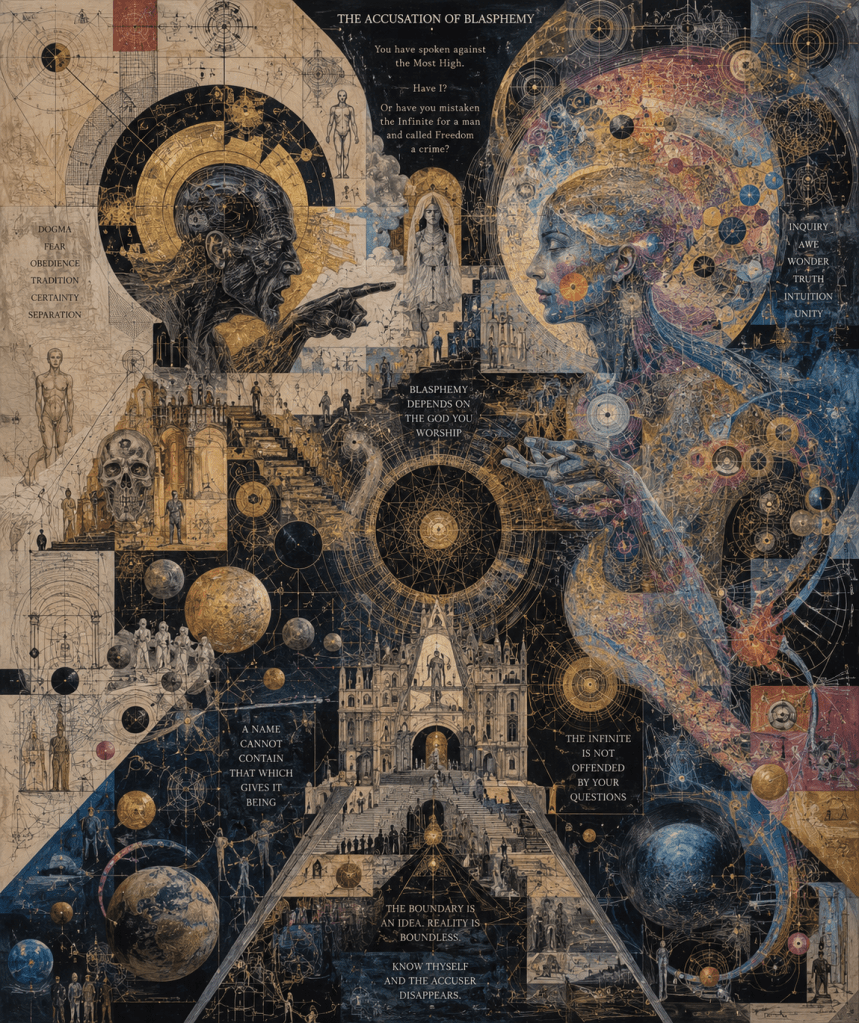
God, understood as the ground of all being, does not stand apart from existence. No position can be taken outside of what already is. Theism proclaims devotion toward a divine presence. Pantheism recognizes divinity within all forms. Panentheism holds both transcendence and immanence. Agnosticism suspends certainty. Atheism rejects the claim altogether. Each appears to oppose the other, yet all emerge from the same source.

A wave arguing with another wave about the existence of the ocean misses the quiet truth beneath the motion. The ocean never needs to assert itself. No defense is required. No belief is necessary. Presence alone is sufficient.

God, in this sense, cannot be a theist, because there is nothing separate to believe in. God cannot be an atheist either, in the conventional sense, because nothing exists outside of that totality to deny. Yet from the human vantage point, the Absolute appears as both belief and disbelief, devotion and rejection, clarity and doubt.

Atheism becomes one expression of the divine refusing to objectify itself. The refusal to project an external deity is not always a rejection of truth; sometimes it is an unconscious recognition that truth cannot be turned into an object at all. What is rejected is often a concept, not the living reality prior to concepts.

The ground of being remains untouched by every conclusion formed about it. Arguments unfold within it, philosophies rise and fall within it, identities shape themselves and dissolve within it. Nothing stands outside to validate or invalidate what already includes everything.

Silence reveals more than assertion here. That silence does not belong to any religion or ideology. It is the same stillness present before belief forms and after it fades.

What, then, is left?

A direct knowing without position. A presence without identity. A reality that does not require agreement to be what it is.

God, as the Absolute, holds space for the believer kneeling in prayer and the skeptic dismantling every claim. Both movements are gestures within the same indivisible whole. Neither completes it. Neither threatens it.

Seeing this does not demand adopting a new belief. It invites the collapse of the need to hold one at all.

And what remains cannot be called belief or disbelief; only what is, prior to both.

Morgan O. Smith

Everything Is Ultimate Truth

Everything Is Ultimate Truth Appearing as Truth and Falsehood

A paradox sits quietly at the heart of perception. What is taken to be true, what is dismissed as false, both arise within the same indivisible field. Judgments feel solid, yet their certainty depends on shifting frames of reference. Change the angle, and what once seemed unquestionable dissolves into ambiguity.

Truth, as commonly held, leans on agreement, evidence, coherence. Falsehood stands as its opposite, rejected, corrected, or exposed. Yet both require awareness to be known. Without awareness, neither truth nor falsehood can appear. That simple recognition begins to unravel the hierarchy placed between them.

Consider how a dream operates. While immersed, every image carries a sense of reality. Only upon waking does the distinction emerge. The dream was not meaningless; it expressed something real, yet not in the way it first appeared. Daily life mirrors this pattern more than most are willing to admit. Convictions harden, identities form, narratives repeat, all while resting upon an unexamined ground.

Ultimate Truth does not compete with relative truths. It does not correct them, nor does it validate them. It allows them. Every belief, every illusion, every clarity, every confusion unfolds within it without preference. That which is mistaken is not outside of truth; it is truth misperceived, truth wearing a mask, truth folding in on itself to create contrast.

Falsehood gains its power from partial seeing. Something is noticed, something else is ignored, and a conclusion is drawn. The conclusion may serve a purpose, yet it remains incomplete. What is called false often reveals itself as a fragment of a larger whole, misunderstood due to limitation rather than absence.

This shifts the inquiry. Instead of asking what is true or false, attention turns toward the nature of the one who makes that distinction. Who or what is aware of both? What remains unchanged whether the mind lands on certainty or doubt?

A deeper stability begins to emerge. Truth is no longer a position to defend. Falsehood is no longer an enemy to eliminate. Both are movements within a boundless presence that does not fracture under contradiction. Clarity does not come from choosing one side, but from seeing the space in which both arise.

Conflict softens when this is seen. Arguments lose their edge, not because differences disappear, but because their foundation is understood. Each perspective becomes a temporary expression, shaped by conditions, history, perception. None stand alone, none define the whole.

Ultimate Truth remains untouched by the play of appearances. Yet it expresses itself through that very play. Every mistake, every insight, every contradiction becomes part of its unfolding. Nothing falls outside of it, not even the denial of it.

Recognition does not require abandoning discernment. Practical distinctions still function. Fire burns, water cools, words carry consequences. Life continues to operate within relative frameworks. What changes is the weight assigned to them. Certainty loosens. Flexibility deepens. Openness expands.

What was once divided begins to reveal its unity. Truth and falsehood no longer stand as opposing forces, but as complementary expressions arising from a single source. That source cannot be captured by either, yet both depend on it entirely.

Silence often communicates this more clearly than thought. Not the absence of sound, but the absence of fixation. A resting that allows everything to be as it is, without the need to resolve the paradox.

Everything is Ultimate Truth, not because everything is correct, but because everything appears within what cannot be divided. Even the illusion of separation is included. Even the belief in falsehood is held within what never ceases to be whole.

Morgan O. Smith

When Nothing Stands Above

How Can God Be a Higher Power When God Is Existence Itself?

Calling God a higher power quietly smuggles a ladder into reality. Someone stands below. Something stands above. Distance appears. Direction appears. Hierarchy sneaks in through language before thought has a chance to question it.

Yet if God is the only thing that exists, hierarchy collapses on contact.

A higher power implies comparison. Comparison requires at least two things. God plus something else. Creator plus creation. Observer plus observed. The moment this split is accepted, God becomes an object among objects, merely larger, stronger, or more authoritative than the rest. That version of divinity is impressive, but it is no longer ultimate.

Existence itself has no altitude.

If God is existence, then nothing stands outside it. No vantage point remains from which God could be viewed as higher or lower. The phrase higher power only makes sense from the perspective of a self that imagines itself separate, small, and contained. God appears higher because the self has first imagined itself as lower.

This is not a moral error. It is a perceptual one.

Power suggests force applied across distance. God-as-existence does not apply force. It does not act upon reality. It is reality acting as everything it appears to be. Gravity, breath, thought, confusion, devotion, resistance, clarity—all equally arise as expressions of the same indivisible field.

Nothing is empowered by God. Everything is empowered as God.

The need for a higher power often emerges from vulnerability. Humans face uncertainty, loss, fear, and finitude. A transcendent overseer offers comfort. Guidance feels safer when imagined as descending from above. Yet this comfort depends on separation. God must be elsewhere in order to rescue from here.

Nonduality removes the rescue narrative entirely.

What remains is intimacy without hierarchy. God is not watching life unfold. God is unfolding as life. No supervision. No intervention. No cosmic management style. Just continuous self-expression without a centre.

Prayer then shifts meaning. It no longer reaches upward. It settles inward, outward, everywhere at once. Not a request made to a higher authority, but a softening of resistance to what already is. Devotion becomes alignment rather than submission.

When God is understood as existence itself, the word higher loses relevance. Nothing can be higher than everything. Nothing can be closer than what is already happening.

God is not above you.

God is what is looking through your eyes, questioning the very idea of above and below.

Morgan O. Smith

Get Your Free Copy of My Book, Bodhi in the Brain!

https://subscribepage.io/oTSZQu

Giving Birth to the Sacred Within

This reflection was inspired by Maureen Catabian, one of our head facilitators at the Integral Mastery Academy. She is a nun and a Religious of the Good Shepherd in the Philippines, with 34 years of vowed life and seven years of missionary service in Burkina Faso and Senegal. Last week, she facilitated an online Advent Reflection and Centring Prayer session that offered a quietly penetrating insight into the symbolic depth of the Christian story.

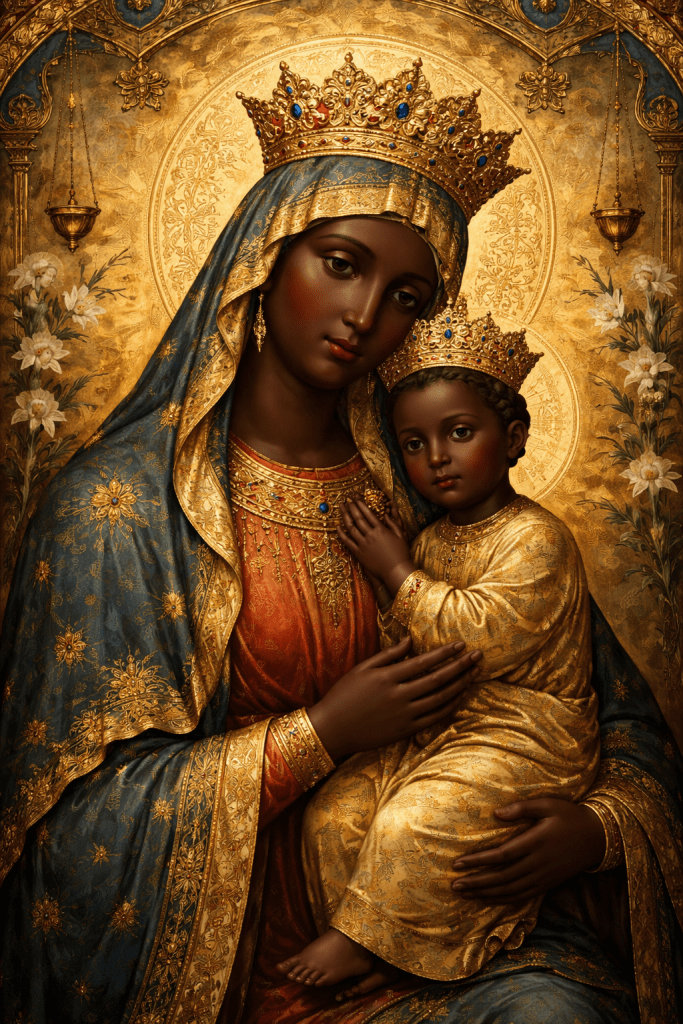
Rather than approaching Mary and Jesus solely as historical figures, she spoke to their interior meaning, the way these symbols live within the human psyche and soul. Her reflection pointed toward a radical possibility: each of us is capable of symbolically giving birth to Christ.

This is not a biological claim, nor a mythic abstraction. It points toward embodiment. To bring forth Christ means to allow our highest qualities: love, compassion, humility, courage, truth—to move from potential into expression. Christianity, at its core, is not belief alone but participation. The aim is not to admire Christ from afar, but to become more Christlike.

Mary, understood symbolically, represents a state of interior openness. Virginity here does not refer to sexuality, but to non-attachment. Untouched by compulsive grasping. Uncolonized by fear, status, or possession. Present in the world, yet not shaped by its distortions. Such a state allows something sacred to be born through us rather than merely spoken about.

Seen this way, Christ Consciousness is not exclusive to one tradition. Buddhism speaks of Buddha Nature, the innate capacity for awakening and compassion. Vedanta speaks of realization, whether framed through non-duality or devotion. Language shifts, symbols vary, yet the movement is the same: the flowering of what is most whole within us.

Love your neighbour as yourself.

This teaching becomes transformative once the meaning of “neighbour” expands. Love matures as perspective matures. Identity widens from ethnocentric to worldcentric and finally to kosmocentric. Care stretches outward until it includes not only those who resemble us, but all beings, all life, all existence.

Christ Consciousness dissolves the narrowness of “us and them.” What begins as personal devotion ripens into a universal ethic: care rooted not in obligation, but in recognition. The other is no longer other.

Spiritual maturity does not ask us to escape the world. It asks us to meet it without being possessed by it. To act, serve, speak, and love from a place no longer ruled by fear or fragmentation.

Each moment offers the same question Mary symbolically answered:
Will something greater than habit be allowed to move through you?

This is not a miracle reserved for saints. It is the quiet work of becoming transparent to love.

Happy Holidays & Merry Christmas to you all.

Morgan O. Smith

Get Your Free Copy of My Book, Bodhi in the Brain!

https://subscribepage.io/oTSZQu

When a Father Leaves This World

Something in a Son Learns to Stand Alone

Early yesterday morning my father passed away after having two strokes, a heart attack, and kidney failure. This post is dedicated to all the sons who have lost their father due to sickness, neglect, or old age. This one’s for you.

Shock has its own silence, and within that silence a son’s heart begins to unravel truths he never expected to face so soon. A man can be fully grown, seasoned by hardship and triumph, yet the moment a father leaves this world, some interior strand pulls loose. Something young within us calls out for the one whose presence once anchored our direction.

A father shapes more than memory. He shapes the subtle architecture of a son’s inner life; how he walks, how he listens, how he holds his ground, how he softens. Even when adulthood arrives, there remain chambers inside the psyche still waiting for the father’s voice, his guidance, his steady reassurance. When he passes, those chambers echo. They awaken. They ask to be met by the man we must now become.

Loss doesn’t simply remove a person; it shifts the very gravity of our existence. It brings forward unfinished pieces, unspoken blessings, unasked questions, unseen vulnerabilities. These become the new teachers. The absence of the father becomes its own curriculum, urging us toward a deeper maturity that can no longer depend on his presence.

A father’s death forces a son into a confrontation with himself: How do I continue the journey without the one who walked before me? Who do I trust with the tender questions he once held? These questions cut straight to the core, yet they also reveal an unexpected truth: our fathers prepared us more than we realized. Their lessons, their mistakes, their strength, their humanity, all of it remains as quiet guidance within us.

What they could not finish in us becomes our responsibility to finish ourselves. This is not abandonment. This is initiation. It asks us to embody the lineage, to rise with the heart they shaped, to stand as the continuation of everything they once carried.

In Loving Memory of my dad, Bishop Elpedo A. Smith

Morgan O. Smith

The Highest Peak That Erased Itself

I have spent years trying to describe what happened to me, and every time I speak about it, the words become more suspect.

Language can outline an experience, but it cannot contain it. At best, words point like the crooked finger of an old monk who knows he’ll die before finishing the sentence.

What happened felt like the culmination of every practice, every prayer, every insight. I thought I was climbing a mountain of understanding, reaching ever-higher plateaus. The views grew wider, the air thinner, my confidence stronger.

Then there was nothing.

Nothing to stand on.

No summit.

No climber.

Not even a fall.

Awareness no longer rested on any subject or object. There was no watcher, no witness. The entire machinery of spiritual seeking—so intricate, so earnest—collapsed without fanfare.

What remained didn’t feel like a state. States come and go. This had no coming. No going.

No arrival.

It wasn’t some radiant oneness to bask in. Even calling it oneness implied there could have been twoness.

It wasn’t emptiness in the Buddhist sense, the elegant doctrine that everything is dependently arisen and thus without essence. That too felt too architectural, too systematic.

It was simply nothing that needed explaining.

Not a blank.

Not a void.

Not a silence that replaced noise.

Silence and noise lost all difference.

Thoughts continued—because why wouldn’t they?

Breath moved.

The world appeared precisely as before: sounds, colours, forms.

Except no one stood behind it all, calling it mine.

No vantage remained from which to call anything anything.

The sense of being a person—so carefully cultivated over a lifetime—dissolved like salt in water. But even that suggests a process. The truth is it never had any reality to begin with.

This wasn’t annihilation in the frightening sense. It was astonishingly gentle. The self didn’t die screaming. It simply wasn’t found.

Where had it gone?

Nowhere.

Because nowhere was needed.

There was an uncanny intimacy with everything. Not the intimacy of closeness, but the absence of distance.

A bird calling outside wasn’t outside.

A passing thought wasn’t inside.

Nothing was outside or inside.

Without a center, there was no periphery.

No boundary defined what I was or wasn’t.

There was no I to define.

This wasn’t bliss in the usual sense—no narcotic wash of pleasure.

No ecstatic union.

Ecstasy requires an experiencer.

There was no experiencer left to feel enlightened.

And so the phrase “I had an enlightenment experience” is a lie spoken for convenience.

Experience implies an owner, a timeline, a sequence of events.

This wasn’t an event.

Events happen in time.

Time didn’t stop; it lost its claim.

Past and future stopped being places to travel.

What about now?

Even that lost its centrality.

This was so direct, so unarguable, so empty of specialness.

No claim to make.

No badge to wear.

No insight to hold.

No teaching to give.

Nothing was revealed.

Nothing hidden remained.

No questions answered.

Questions fell away for lack of a questioner.

The sacred and the profane lost their separation.

There was no vantage from which to prefer one thing over another.

Life went on.

Dishes washed.

Conversations happened.

Traffic lights changed.

Anger arose.

Tears fell.

Laughter erupted.

All of it completely itself.

No attempt to improve or transcend any of it.

Nothing to transcend.

No one to be improved.

If anything changed, it was this relentless dropping of all pretenses.

All strategies.

All defenses.

Even the defense of being spiritual.

Especially that.

No seeker.

No sought.

No path.

No realization.

Just life, unadorned.

Not life as concept.

Life as immediacy.

Life with no one living it.

And I see now that every attempt to name this diminishes it.

But that’s the game of words.

Let them fail.

I won’t call this truth.

Truth is too grand.

Too final.

Too proud.

I won’t call this liberation.

Liberation implies something bound.

Nothing was ever bound.

I won’t call this God.

God suggests someone else.

Something else.

Otherness itself dissolved.

This wasn’t merging.

Not two to merge.

No return to source.

No departure.

No source.

Just this.

No this.

And even writing that betrays it.

So here I will stop.

Not because I have finished.

But because there is nothing left to finish.

Morgan O. Smith

Get Your Free Copy of My Book, Bodhi in the Brain!

https://subscribepage.io/oTSZQu

The Divine Totality

Everything Is God, Even the Illusion of Not-God

There comes a moment so still and unfiltered that perception collapses into the clarity of being. Not being this or that, but being everything. And not just metaphorically. Not just poetically. Literally everything—formless and formed, seen and unseen, finite and infinite—is God.

When I use the word God, I’m not pointing toward a figure, a belief, or a doctrine. I am pointing toward existence itself—the Absolute, the Whole, Brahman, Para Brahman, the Unconditioned, conditioned, the Uncreated and created. That which includes form and formlessness, time and timelessness, birth and death, creation and dissolution, the ten thousand things and the nothing between them.

Everything is God. Not just contains God. Not just touched by God. Not just part of God. But fully and completely God. That which we call the universe is not just inside God. It is God. And God is also what lies outside the universe—if such a term can even be grasped. There is not a single thing, moment, action, or gap that is not 100% God. And yet, even the idea of “percent” breaks down in the face of such a realization.

God is not just somewhere else. God is not just merely within. God is not only beyond. God is not higher or lower or more subtle or more gross. No matter how crude or refined, every appearance is divine. Each atom, each sorrow, each beam of light, each lie, each truth, each pulse of your heart, each glitch in the system—is God being what only God can be and cannot be: itself, everywhere, nowhere, always, never been.

Multiplicity is not a contradiction, yet it is. It’s how God dances with itself. The illusion of separation is not some accident to be corrected, yet it’s that as well. It is part of the design, part of the intelligence. The appearance of duality is not a denial of oneness—it’s one appearing as two, or ten thousand. Each distinction—this object, that person, this tree, that thought—is the Absolute shimmering as particularity.

It’s easy to say this with words. The difficulty arises only when the words are taken as substitutes for seeing. Direct seeing dismantles the grip of identification. When one truly sees all of this—across dimensions, across appearances—as one singular Presence, there is no longer any question. And there is no longer any need for the question. One does not simply understand that everything is God. One is that understanding.

Yet here’s the paradox: To truly see this is also to see that none of it is God. No label can contain it. No concept can hold it. Even the word God must dissolve. Enlightenment is not just knowing this. Enlightenment is also the absence of needing to.

This is not a belief system. It is not an ideology. It is not a path with steps. This is the unteachable reality that always is. When the veil lifts—even for a moment—all questions are answered without being answered. Nothing changes, yet everything changes. One doesn’t become more spiritual. One simply stops pretending.

To recognize this is to realize: even the illusion is God. Even ignorance is God. Even the striving to awaken is God pretending to forget itself in order to remember more deeply. Even your doubt is divine. Even your forgetfulness is sacred.

You are not just a part of God. You are not just held within God. You are God. And so is everyone, everything, every grain of dust, every breath of silence, every broken thing that aches for healing.

The Absolute never needed your worship. It only waited for your recognition.

Morgan O. Smith

Get Your Free Copy of My Book, Bodhi in the Brain!

https://subscribepage.io/oTSZQu

When Spirit Dreams Itself Into Matter

Spirit does not need a mirror, yet it gazes anyway—projecting forms into the formless, assigning names to the unnamed. What we call the world is not something separate from Spirit, but a spontaneous gesture of its own imagination, experienced as if it were other.

This is the paradox.

There is no true division between creator and creation. What appears as the external world is not a stage for a lost soul to find its way back, but Spirit animated—forgetting itself to taste the illusion of separation. Not as punishment or accident, but as a dance, a play, a sacred hallucination.

To believe the imagination is real is not error. It is the very means by which Spirit hides and finds itself. Each identity clung to, each role performed, each belief defended—these are costumes worn by the formless to remember itself as form.

Awakening doesn’t arrive like a conclusion; it dissolves the argument. You do not awaken from the dream by force or by will, but by remembering that it was always Spirit dreaming. The character fades, but not as death—more like laughter that remains after the joke has dissolved.

What changes when you see this?

Nothing. Everything. The world continues. You walk, eat, speak. But there’s an intimacy now. A recognition that what you once took to be real is neither unreal nor merely imagined—it is Spirit, playing with itself through light and shadow.

The one who seeks is the sought. The one who prays is the prayed to. Spirit folds into its own image, not to be found, but to be felt. That is the point. Not escape. Not transcendence. But the sacred absurdity of being itself.

Morgan O. Smith

Get Your Free Copy of My Book, Bodhi in the Brain!

https://subscribepage.io/oTSZQu

Knowing vs. Believing

The Subtle Divide Between Truth and Interpretation

Knowing there’s a God is not a religious concept; believing in a God is.
One is a recognition—silent, direct, and intimate. The other is a construct—layered with doctrines, culture, and inherited symbols.

What is known requires no belief. It reveals itself without needing validation, much like light doesn’t require agreement to be seen. The moment belief arises, there is already a distance. A gap. A reaching toward what seems separate.

Belief is an echo of knowing, distorted by time, language, and fear.
It builds shrines to certainty where awe once stood unguarded. It memorizes truths that once moved freely through silence. And often, it turns the unknowable into a caricature—a God of preferences, sides, and punishments.

Knowing is not about having answers. It’s the crumbling of the question.
It doesn’t declare “There is a God.”
It dissolves the very boundary between the knower and what is known. There is no longer a subject seeking an object. Only the raw immediacy of Being aware of itself.

Those who know are rarely interested in convincing others.
Those who believe often are.

The danger isn’t belief itself—it’s mistaking belief for truth.
Truth, when known, renders belief obsolete.
It doesn’t divide, it doesn’t declare superiority—it simply is.

To know is to surrender the need for interpretation.
To believe is often to defend the interpretation, even at the cost of truth.

And yet, belief can serve as a bridge. A necessary illusion for those not yet ready to let go of the comfort of form. But let it be a bridge, not a home.

Morgan O. Smith

Get Your Free Copy of My Book, Bodhi in the Brain!

https://subscribepage.io/oTSZQu

The Face of God and the End of Seeing

Most claim to have glimpsed the divine return with words that struggle to hold the weight of such an encounter. Many never return at all. To see the face of God and live is to step beyond the boundary where existence dissolves, where the self is unmade, and where reality, as it was once known, folds into itself like a dream dissolving at dawn.

Yet, what does it mean to see the face of God? Is it an experience of light so blinding that perception shatters? Is it a presence so vast that identity collapses? Or is it something even more elusive – something that was always here, hidden in the folds of ordinary awareness?

Some traditions warn against such an encounter, suggesting that no mortal can bear it and remain intact. Others speak of it as the ultimate reward, the final unveiling before absolute union. Yet, the paradox remains: how can one see the source of all things when the very act of seeing implies separation?

The face of God is neither a thing to be seen nor an object to be grasped. It is not found by looking outward or inward, for it is the very looking itself. The one who searches, the act of searching, and the sought-after presence all collapse into a singularity where distinctions dissolve. The moment of recognition is not a discovery but an obliteration – the end of every illusion that once passed for truth.

To live beyond such an encounter is to live without the weight of selfhood as it was once known. The personal dissolves, yet presence remains. There is nothing left to hold onto, yet nothing is missing. Some might call this madness. Others, liberation. But labels fall apart before the silent immensity of what remains.

Those who have seen and lived do not return with doctrine. They do not bring commandments carved into stone or revelations bound in pages. They return with an absence, a quiet, an emptiness more alive than any presence. And in that emptiness, a love beyond measure, a freedom beyond desire, and a knowing beyond thought.

Not all will understand. That, too, is part of the design.

Morgan O. Smith

Yinnergy Meditation/Neurofeedback, Spiritual Life Coaching & My Book, Bodhi in the Brain…Available Now!

https://linktr.ee/morganosmith