Knowing the Absolute from Every Angle

The Absolute cannot be grasped by standing in a single place.

Any attempt to reduce it to one perspective—personal, relational, objective, mystical, or philosophical, inevitably distorts it. What gets mistaken for ultimate truth is often just a partial orientation mistaken for the whole.

To know the Absolute at full capacity requires more than a peak realization. It requires total perspectival inclusion.

From the first person, the Absolute is immediate presence; being as oneself. From the second person, it appears as intimacy, devotion, and encounter. From the third person, it becomes structure, law, and observable order. Each of these reveals something true, yet none is sufficient on its own.

A deeper shift occurs when perspective itself is examined.

The fourth perspective dissolves the centre. Experience continues, but ownership drops away. Awareness no longer belongs to anyone. Reality is no longer happening to a self or for a self. Knowing remains, yet no knower can be found.

Then even this gives way.

The fifth perspective removes the need for a field, a witness, or an explanatory ground altogether. The question of where experience occurs loses relevance. Nothing collapses. Nothing transcends. The demand for a final position simply falls apart.

At this point, God is no longer approached as an object of belief, a presence to merge with, or an awareness to stabilize in. God is known as that which remains valid across every mode of knowing without requiring allegiance to any of them.

This knowing must also scale developmentally.

Ego-centric concern gives way to ethnocentric identity, which yields to world-centric ethics, which eventually opens into kosmocentric inclusion. Each stage expands care, responsibility, and comprehension. None invalidates the others. Each must be seen through without being erased.

The same applies to the I, We, It, and Its dimensions of reality. Subjective experience, shared meaning, objective systems, and interobjective networks all reveal aspects of the Absolute. Excluding any one of them creates imbalance. Absolutizing any one of them creates delusion.

States of consciousness contribute their own disclosures. Waking reveals form and function. Dreaming reveals imagination and symbolic depth. Dreamless sleep reveals the absence of content. The witness reveals continuity without identity. Nonduality reveals the inseparability of all of it. None of these states owns the truth. Each exposes a different facet of what cannot be reduced.

Lines of development add further resolution. Cognitive clarity without emotional maturity distorts insight. Moral development without metaphysical depth flattens reality. Spiritual realization without psychological integration fragments embodiment. The Absolute is not known through excellence in one line alone.

Enlightenment, then, is not a single realization frozen in time.

It is the capacity to recognize the Absolute through every perspective without mistaking any perspective for the Absolute itself.

Such knowing does not claim finality. It does not announce arrival. It does not need to defend itself. It functions fluidly; able to speak personally, relationally, objectively, impersonally, and without position; depending on what the moment requires.

God is not found by climbing higher.
God is known by nothing being excluded.

Morgan O. Smith

AI for Wellness and Spirituality Summit

February 9 & 10, 2026

https://aiforwellnessandspirituality.com/mosm

Existence Is Not the Measure

The statement “God exists” sounds reverent, yet it quietly diminishes what it claims to honour. Existence is not a neutral category. It is a condition. To exist is to appear within time, to persist across duration, to occupy a framework where before and after apply. Existence implies location, sequence, and limit.

God, if the word is to mean anything absolute, cannot be confined to such a framework.

To say God exists already places God inside something else. Time becomes the container. Space becomes the stage. Existence becomes the rule God must obey. That framing does not exalt God; it reduces God to an object among other objects, distinguished only by scale or power.

A more precise statement unsettles most theists:
God does not exist.

Not because God is absent, unreal, or lacking. Quite the opposite. God is beyond the category of existence altogether. Existence belongs to the realm of manifestation. God is not a thing that manifests; God is that by which manifestation is possible at all.

Existence requires time. Something exists now, or then, or for a while. God, described as eternal, cannot be stretched across moments. Eternity is not infinite time; it is the absence of time. When time disappears, the verb “to exist” loses its footing.

Yet the paradox deepens further.

Non-existence seems to offer an escape. If God does not exist, perhaps God is non-existent. But non-existence remains a conceptual category. It can be named, contrasted, negated. It operates within the same logical field as existence. Both rely on distinction. Both appear only where something can be opposed to something else.

If non-existence is conceivable, it already participates in being. A possibility that is truly nothing cannot even be held in thought. The moment non-existence is entertained, it has already entered presence.

Here the framework collapses.

God, said to be beyond existence, must also be beyond non-existence. Whatever transcends both cannot be limited by either. Existence and non-existence become expressions rather than boundaries. Time and space arise as localized conditions within something that never enters them.

And this includes belief itself.

To hold a belief about God’s existence, to deny it, or even to question it, must occur within existence. Belief requires a thinker. Thought requires duration. Opinion requires perspective. Every stance taken for or against God is already operating inside the very field it attempts to define or negate. The debate itself belongs to manifestation.

The claim “God exists” is therefore not wrong ; it is partial. It refers only to the aspects of reality that appear within time and space: galaxies, minds, causes, effects, events. These are not separate from God, but they are not the whole either.

God is not an entity within existence. Existence is an activity within God.

Once this is seen, the opposition between theism and atheism dissolves. The atheist rejects a God who exists as an object. The theist defends that object. Both remain bound to the same assumption: that God must exist to be real.

Reality does not require existence as a predicate. Existence is something reality does, not something it is.

Nothing stands outside this. Nothing escapes it. Nothing contradicts it.

Existence is all there is; and what is cannot be reduced to existing.

Morgan O. Smith

Get Your Free Copy of My Book, Bodhi in the Brain!

https://subscribepage.io/oTSZQu

Giving Birth to the Sacred Within

This reflection was inspired by Maureen Catabian, one of our head facilitators at the Integral Mastery Academy. She is a nun and a Religious of the Good Shepherd in the Philippines, with 34 years of vowed life and seven years of missionary service in Burkina Faso and Senegal. Last week, she facilitated an online Advent Reflection and Centring Prayer session that offered a quietly penetrating insight into the symbolic depth of the Christian story.

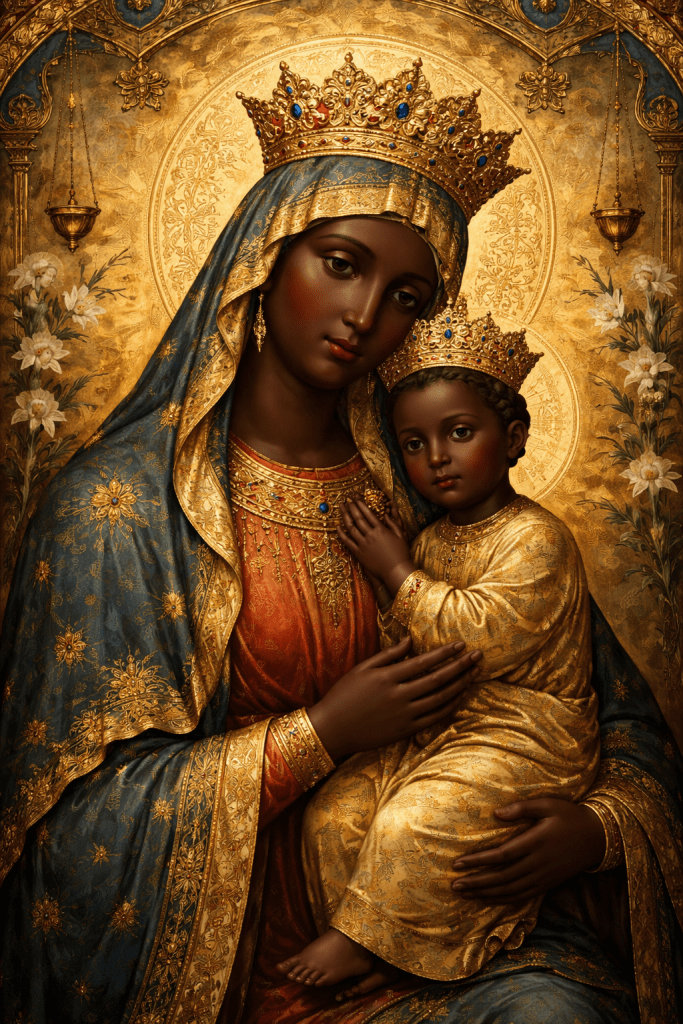
Rather than approaching Mary and Jesus solely as historical figures, she spoke to their interior meaning, the way these symbols live within the human psyche and soul. Her reflection pointed toward a radical possibility: each of us is capable of symbolically giving birth to Christ.

This is not a biological claim, nor a mythic abstraction. It points toward embodiment. To bring forth Christ means to allow our highest qualities: love, compassion, humility, courage, truth—to move from potential into expression. Christianity, at its core, is not belief alone but participation. The aim is not to admire Christ from afar, but to become more Christlike.

Mary, understood symbolically, represents a state of interior openness. Virginity here does not refer to sexuality, but to non-attachment. Untouched by compulsive grasping. Uncolonized by fear, status, or possession. Present in the world, yet not shaped by its distortions. Such a state allows something sacred to be born through us rather than merely spoken about.

Seen this way, Christ Consciousness is not exclusive to one tradition. Buddhism speaks of Buddha Nature, the innate capacity for awakening and compassion. Vedanta speaks of realization, whether framed through non-duality or devotion. Language shifts, symbols vary, yet the movement is the same: the flowering of what is most whole within us.

Love your neighbour as yourself.

This teaching becomes transformative once the meaning of “neighbour” expands. Love matures as perspective matures. Identity widens from ethnocentric to worldcentric and finally to kosmocentric. Care stretches outward until it includes not only those who resemble us, but all beings, all life, all existence.

Christ Consciousness dissolves the narrowness of “us and them.” What begins as personal devotion ripens into a universal ethic: care rooted not in obligation, but in recognition. The other is no longer other.

Spiritual maturity does not ask us to escape the world. It asks us to meet it without being possessed by it. To act, serve, speak, and love from a place no longer ruled by fear or fragmentation.

Each moment offers the same question Mary symbolically answered:
Will something greater than habit be allowed to move through you?

This is not a miracle reserved for saints. It is the quiet work of becoming transparent to love.

Happy Holidays & Merry Christmas to you all.

Morgan O. Smith

Get Your Free Copy of My Book, Bodhi in the Brain!

https://subscribepage.io/oTSZQu

When a Father Leaves This World

Something in a Son Learns to Stand Alone

Early yesterday morning my father passed away after having two strokes, a heart attack, and kidney failure. This post is dedicated to all the sons who have lost their father due to sickness, neglect, or old age. This one’s for you.

Shock has its own silence, and within that silence a son’s heart begins to unravel truths he never expected to face so soon. A man can be fully grown, seasoned by hardship and triumph, yet the moment a father leaves this world, some interior strand pulls loose. Something young within us calls out for the one whose presence once anchored our direction.

A father shapes more than memory. He shapes the subtle architecture of a son’s inner life; how he walks, how he listens, how he holds his ground, how he softens. Even when adulthood arrives, there remain chambers inside the psyche still waiting for the father’s voice, his guidance, his steady reassurance. When he passes, those chambers echo. They awaken. They ask to be met by the man we must now become.

Loss doesn’t simply remove a person; it shifts the very gravity of our existence. It brings forward unfinished pieces, unspoken blessings, unasked questions, unseen vulnerabilities. These become the new teachers. The absence of the father becomes its own curriculum, urging us toward a deeper maturity that can no longer depend on his presence.

A father’s death forces a son into a confrontation with himself: How do I continue the journey without the one who walked before me? Who do I trust with the tender questions he once held? These questions cut straight to the core, yet they also reveal an unexpected truth: our fathers prepared us more than we realized. Their lessons, their mistakes, their strength, their humanity, all of it remains as quiet guidance within us.

What they could not finish in us becomes our responsibility to finish ourselves. This is not abandonment. This is initiation. It asks us to embody the lineage, to rise with the heart they shaped, to stand as the continuation of everything they once carried.

In Loving Memory of my dad, Bishop Elpedo A. Smith

Morgan O. Smith

The Disappearing Point of God

The universe doesn’t hide God; it is God hiding as the universe. Every atom, every dimension, every flicker of awareness is the divine expressing itself through the language of matter. The cosmic dance unfolds not as a performance for an audience, but as an intimate act of self-revelation. The observer is part of the choreography, never outside of it. What we call “physical” is simply the slowed vibration of the infinite, shaped by the senses into something tangible enough to touch.

Yet, we rarely see what is truly there. Our fixation on survival, food, shelter, sex, and comfort anchors perception to the most immediate layer of existence. This fixation creates the illusion that life is something we possess rather than something that is expressing itself through us. The divine becomes abstract because our gaze remains horizontal; we look at the world rather than through it.

Letting go does not require abandoning the world; it requires seeing through it. As the grip loosens, the solidity of reality begins to shimmer. Objects, forms, identities, and even the notion of “you” dissolve into the same field from which they arose. This is not annihilation; it is revelation. The disappearance of the self reveals the only thing that has ever been: the boundless presence that calls itself “I” through all beings.

Everything you have ever loved, feared, or sought is this single reality playing hide-and-seek within itself. Each experience, no matter how fleeting or mundane, is the divine pretending to forget so it can remember again through your eyes. When the game ends, seeker and sought disappear, and what remains is neither player nor play, but the unbroken wholeness that was never apart from itself.

Morgan O. Smith

Get Your Free Copy of My Book, Bodhi in the Brain!

https://subscribepage.io/oTSZQu

Beyond Existence and Non-Existence

The Paradox of God

To say “God exists” is to affirm the ultimate. To say “God does not exist” is to deny the ultimate. Both affirmations and denials, however, are shaped by the mind’s insistence on certainty. The moment one tries to hold onto either pole, a paradox emerges.

When someone claims God exists, they project a reality beyond perception, yet they confine that reality to a category recognizable to human thought. When another claims God does not exist, they too impose a conclusion, binding the ineffable to the limits of negation. Both positions carry a strange truth and a strange error. Both dissolve the moment awareness sees through the duality of affirmation and denial.

Imagine truth as a horizon: from one angle, existence appears; from another, non-existence. Walk closer, and the horizon itself vanishes; it was never a line that could be grasped, but a function of perspective. God is not merely at the horizon but the condition through which horizon, perspective, and perceiver arise.

To say both are true is to honour that reality contains affirmation and negation. To say both are false is to point out that neither claim reaches the source. To say one is true and the other false is to remain in dualistic thought. To call them half-truths is to recognize their limitation yet still attempt to measure the immeasurable. To deny even a half-truth is to bow to silence.

The statement itself, that God exists and does not exist in all these paradoxical ways, becomes the closest gesture to truth. It is not the conclusion but the capacity to hold the contradictions without collapse that reveals God’s existence, not as a concept but as the unnamable presence behind every concept.

The paradox is not meant to be solved. It is meant to exhaust the mind until only awareness remains. What remains is not the proof of God, but the direct realization that the very effort to define or deny was always occurring within and as God.

Morgan O. Smith

Get Your Free Copy of My Book, Bodhi in the Brain!

https://subscribepage.io/oTSZQu

Dissolving Where Identity Once Stood

To Be Seen Fully Is to Vanish into the Infinite

To be seen fully is not to be recognized as a person, nor acknowledged as a role, but to be reflected beyond every layer of identity. When someone sees you in this way, what is recognized is not your history, your character, or even your spiritual progress; it is the unconditioned essence that lies before all stories.

Most encounters leave us clothed in roles. Friend, teacher, seeker, parent, child, each gaze places a costume upon us. Rarely do we meet eyes that do not add or subtract, but simply reveal. In that rare encounter, the ordinary scaffolding collapses, and what stands exposed is not a “self” but the infinity in which all selves appear.

This exposure is not humiliating, nor is it affirming. It is dissolving. To be seen fully is to be unmasked of both failure and success, of both sin and virtue. The illusion that we exist as a separate someone collapses. What remains is a luminous absence, the infinite without centre or edge.

There are moments when presence itself becomes the mirror, so clear, so unconditioned, that no reflection remains, only the source shining through. The eyes of one who abides in truth can serve as such a threshold. Passing through it, you do not become greater; you vanish. And in vanishing, the fullness of all that is floods through.

To long for such seeing is to long for disappearance, and yet disappearance is not annihilation. It is the end of confinement. It is the recognition that what you are cannot be held by name, cannot be fixed in form, cannot be grasped by thought. What you are is the infinite itself, already free, already whole.

The paradox is that this vanishing does not strip life of meaning but gives it immeasurable depth. When you are no longer the centre, everything becomes the centre. When “I” falls away, the song of existence sings itself without obstruction. Love, compassion, and clarity are not cultivated; they flow.

To be seen fully is to vanish into the infinite. To vanish is to return home.

Morgan O. Smith

Get Your Free Copy of My Book, Bodhi in the Brain!

https://subscribepage.io/oTSZQu

When “You” Disappear

God is not found in the layers of personality, beliefs, or self-image. Those dissolve the moment you step out of the illusion of “me.” What remains when the scaffolding of identity crumbles is not absence, but presence, vast, unconditioned, indivisible.

The struggle for most seekers lies in clinging to the idea of a separate self. Every attachment to who you believe you are, your story, your role, your wounds, creates the illusion of separation from God. Yet God has never been apart from you. God is what has always been here, quietly holding even your attempt to define God.

When “you” disappear, nothing is lost. What is left is clarity so immediate that it cannot be explained, only lived. It is a recognition that existence itself has no centre and no boundary. Every breath, every sound, every sensation reveals itself as the movement of the One Reality, free of your commentary.

This realization is not a grand acquisition; it is the collapse of the idea that there was ever anyone to acquire it. The vanishing of the personal self exposes a truth so intimate that it cannot be possessed. It is not “your” truth, it is truth itself.

To awaken to this is to discover that God was never hidden. God is not the object of your search, but the space in which the search appears and disappears. The seeker dissolves, and what remains is the unbroken light of Being.

Morgan O. Smith

Get Your Free Copy of My Book, Bodhi in the Brain!

https://subscribepage.io/oTSZQu

Beyond Comprehension

Dwelling in the Field of Opposites

Want to understand the mind of God? Think of two opposites, accept those two opposites, become the two opposites, go beyond both, erase both, yet include. Even then, it won’t be understood.

Fire and water seem to be opposites. Yet steam arises at their meeting point—a form that is neither purely one nor the other, yet depends on both entirely. This is not the cancellation of difference but its transformation. What appears is both, neither, and something beyond classification.

To become opposites means allowing yourself to be fierce and gentle, clear and confused, bound and free, without settling on any of these as the final truth. It is to hold them fully, see their mutual necessity, and recognize that their apparent contradiction points to something that includes, exceeds, and dissolves them without denying them.

Human longing for comprehension seeks the safety of closure—a single statement that ends all questioning. Yet the source of all perspectives cannot be bound by any one of them. Every claim about it is true, false, and everything in between.

Stepping into the space where opposites remain distinct yet inseparable invites a new kind of seeing. Certainty and doubt illuminate each other. Every perspective holds a partial truth, a partial untruth, and a silent remainder that escapes both.

Silence here is not mere emptiness but a fullness that holds every possibility without settling on any. Words illuminate and obscure in the same breath. Every statement unveils something while hiding something else. Language does not capture what is beyond it but points, imperfectly, toward what cannot be bound.

This is not a teaching about removing opposites so they disappear into sameness. It is about becoming vast enough to hold their full tension, to see that going beyond them does not reject them but includes them in a larger whole. The mind of God is not merely where opposites cease to matter but where their interplay, necessity, and transcendence are equally revealed.

Here, everything can be affirmed, denied, and moved beyond at once. Nothing is excluded. Nothing stands alone.

Morgan O. Smith

Get Your Free Copy of My Book, Bodhi in the Brain!

https://subscribepage.io/oTSZQu

My Religion Is Liberation

Religion need not be a creed one defends or a ritual one performs. For some of us, it is the recognition of the bars we forge around our own minds—and the relentless devotion to dissolving them. Liberation becomes both the path and the sanctuary.

This isn’t about conversion, salvation, or belonging to any particular sect. It is about noticing the prison of belief itself. Every concept, every identity, every longing for certainty can become a gatekeeper denying entry to our own boundless nature.

Liberation demands a fierce honesty. It asks that we examine the illusions that hold our suffering in place, not as moral failings but as invitations to see through the lie of separation. The true heresy in this religion is clinging to what we think we know about ourselves, about others, about reality itself.

No priest is needed here. Authority resides in awareness, and awareness has no master. The teacher is the arising of life as it is—grief, joy, confusion, clarity. Each moment grants a new chance to recognize the play of experience without getting caught in it.

Liberation is not found by rejecting the world but by perceiving its emptiness and fullness simultaneously. Every object, thought, and sensation is free of substance even as it shines in unmistakable vividness. This paradox isn’t a puzzle to solve but a doorway to live through.

When liberation is the religion, love ceases to be a commandment and becomes the ground of being. Judgment collapses, not because everything is permitted, but because everything is understood as oneself. The compulsion to divide the sacred from the profane, the pure from the impure, loses its grip.

Such a path offers no final doctrine. It holds no promise of eternal reward. Yet it is more generous than any creed that trades truth for comfort. It is the faith of those willing to die before death—to watch every cherished certainty burn so that what cannot be burned may reveal itself.

Those who walk this path do so alone, yet never apart.

Morgan O. Smith

Get Your Free Copy of My Book, Bodhi in the Brain!

https://subscribepage.io/oTSZQu