Exploring the Infinite

Beyond Religion’s Scope of God

In the vast expanse of human understanding and belief, the concept of God often finds itself neatly packaged within the confines of religious doctrine. Yet, to equate God solely with religion is to overlook the boundless essence that the idea of a supreme being or ultimate reality embodies. This exploration ventures beyond the traditional religious frameworks to understand God as an encompassing presence that transcends our conventional beliefs.

#### Unveiling the Divine Beyond Temples and Texts

Religion, with its rituals, scriptures, and edifices, serves as a vessel for many in their quest to connect with the divine. However, it represents merely one avenue through which the essence of what we term ‘God’ can be experienced. The divine, or the ultimate reality, is an omnipresent force that permeates all aspects of existence, not limited to or by any institution or set of beliefs.

#### The Universal Fabric: A Confluence of Consciousness

At the heart of numerous Eastern philosophies is the notion of nonduality—the understanding that there is no fundamental distinction between the individual and the universe, the self and the divine. This perspective invites us to view God not as an external entity presiding over the cosmos but as the very fabric of existence itself. Here, God is seen in the interconnectedness of all things, in the energy that flows through the cosmos, and in the consciousness that animates the universe.


#### Personal Revelation: A Journey Within

The journey to understanding and experiencing the divine beyond the confines of religion is deeply personal and introspective. It requires us to transcend the external trappings of spirituality and seek connection with the divine essence that resides within and around us. Meditation, mindfulness, and contemplative practices serve as gateways to experiencing this profound unity, allowing individuals to tap into the infinite potential and wisdom that lies beyond the superficial layers of reality.

#### The Divine Dance: Interplay of the Immanent and Transcendent

To conceptualize God merely in religious terms is to overlook the dynamic interplay between the immanent and the transcendent aspects of the divine. The immanent suggests that God is present within the world, accessible and experienced through the beauty of nature, the depth of human emotion, and the complexity of the mind. Conversely, the transcendent aspect of God invites us to look beyond the material world to the vast, unknowable mystery that lies beyond our immediate perception.


#### Conclusion: Embracing the Infinite

The quest to understand and relate to God beyond the realm of religion is a testament to the human spirit’s unending search for meaning and connection. It challenges us to look beyond prescribed doctrines and explore the depths of our consciousness and the universe. In doing so, we embrace a more holistic and expansive view of the divine, one that encompasses the myriad ways in which the essence of the ultimate reality manifests in our lives and the world at large.

This exploration serves not only to broaden our conceptual horizons but to invite each individual to embark on a personal voyage of discovery, where the understanding of God is as vast and varied as the seekers themselves.

Morgan O. Smith

Yinnergy Meditation, Spiritual Life Coaching & My Book, Bodhi in the Brain…Available Now!

https://linktr.ee/morganosmith


The Paradox of Perfection

Divine Flaws in a Flawless Existence

In the realm of spirituality and philosophy, the concept of a perfect God is often contemplated with reverence and awe. This perfect entity, in many traditions, is seen as the embodiment of absolute purity, wisdom, and power. Yet, there lies a paradox at the heart of divinity: the expression of flaws within the framework of perfection. This notion challenges our conventional understanding of perfection and invites us to explore the deeper, more nuanced aspects of the divine and its manifestation in the world.

Consider for a moment the idea that a perfect God expresses its flaws perfectly. This statement that I am making is not a contradiction, but a profound acknowledgment of the complexity and depth inherent in the divine nature. It suggests that what we perceive as flaws are not mistakes or oversights but, rather, intentional expressions of the divine essence. These ‘flaws’ offer a window into the incomprehensible wisdom of the divine, serving as reminders of the limitless ways in which perfection can manifest.

The beauty of this concept lies in its ability to humanize the divine, making it more accessible and relatable to us. In our own lives, we strive for perfection, often berating ourselves for our flaws and failures. However, if we embrace the perspective that even in divinity, there exists a form of perfection that includes flaws, we can begin to view our imperfections not as failures, but as integral parts of our unique journey. This shift in perspective encourages a more compassionate and forgiving approach to self-growth and personal development.


Furthermore, the idea of a perfect God expressing flaws perfectly invites us to reevaluate our understanding of the world around us. The imperfections we observe in nature, in human behaviour, and the unfolding of events may not be random chaos but, perhaps, expressions of a larger, divine plan. This realization opens up a space for a deeper acceptance of the world as it is, fostering a sense of peace and trust in the unfolding of life’s mysteries.

In exploring the paradox of divine flaws, we are encouraged to engage with our spiritual journey more openly and curiously. It prompts us to question our assumptions about perfection, divinity, and the nature of reality itself. By contemplating how a perfect God might express flaws perfectly, we are invited into a richer, more dynamic relationship with the spiritual aspects of existence.

This exploration is not just a philosophical exercise but a practical guide for living. It teaches us to embrace our complexities and contradictions, to find beauty in imperfection, and to see the divine not as a distant, unattainable ideal but as a present, living truth reflected in every aspect of our lives.


In closing, let us ponder the myriad ways in which perfection and imperfection coexist within and around us. May this contemplation inspire a deeper appreciation for the mysterious, imperfectly perfect nature of the divine and encourage us to embrace our flaws as perfectly expressed aspects of our being.

Morgan O. Smith

Yinnergy Meditation, Spiritual Life Coaching & My Book, Bodhi in the Brain…Available Now!

https://linktr.ee/morganosmith

Where Did God Come From?

The question of where God came from strikes at the core of numerous philosophical, theological, and metaphysical discussions. It’s a question that has fascinated scholars, believers, and skeptics alike for centuries. At the heart of this inquiry lies the paradoxical nature of God’s existence: God is often described as omnipresent and nonlocal, transcending the concepts of space and time that define our physical reality.

To ponder upon where God came from is to delve into the depths of the unknown. It is widely held in many theological beliefs that God is the uncaused cause, the source from which all things emanate. This perspective leads to the intriguing notion that God came from nowhere. Nowhere, in this context, is not a physical location but a metaphorical representation of the absence of space and time – a realm beyond our comprehension.


This idea ties closely with the concept of God being nonlocal. Nonlocality, often discussed in quantum mechanics, suggests that an entity can be present everywhere simultaneously. In spiritual and metaphysical terms, this translates to the omnipresence of God. The omnipresence of God means that God exists beyond physical boundaries, in a state of being that encompasses all existence yet is bound by none.

What makes this concept even more thought-provoking is the idea that the pure essence of God is the absence of everything that exists. This notion posits that God is fundamentally different from everything we perceive in our universe. While our reality is defined by physicality, emotions, thoughts, spirituality, and metaphysical elements, the essence of God is distinct from all these. God, in this sense, is the ultimate reality, a state of pure being that transcends all known dimensions of existence.


Consequently, the physical, emotional, mental, spiritual, and metaphysical presence that we attribute to God are reflections or manifestations of this ultimate reality in forms that are comprehensible to us. They represent how we, as humans, perceive and connect with the divine. Each aspect – whether physical, emotional, mental, spiritual, or metaphysical – offers a different lens through which to understand and relate to the divine mystery that is God.

In conclusion, the question of where God came from leads us not to a definitive answer but to a deeper understanding of the nature of existence itself. It encourages us to explore the boundaries of our understanding and to accept the mystery that lies at the heart of all that is.

Morgan O. Smith

Yinnergy Meditation, Spiritual Life Coaching & My Book, Bodhi in the Brain…Available Now!

https://linktr.ee/morganosmith

Exploring the Concept of ‘The Absolute’

In Philosophy and Spirituality

The notion of ‘The Absolute’ is a profound and enigmatic concept that has intrigued philosophers, theologians, and spiritual seekers for centuries. At its core, The Absolute represents the ultimate reality or truth that transcends ordinary understanding. It is often described as the ever was, the ever is, and the ever shall be, encompassing the past, present, and future in a singular, unified existence.

This concept is not confined to any one religion or philosophical system. It is found in various forms across different cultures and spiritual traditions. In Hindu philosophy, it is known as Brahman, an unchanging, infinite, immanent, and transcendent reality that is the source of everything. Brahman is the ultimate cause and foundation of all existence.


In Buddhism, particularly in its Theravada tradition, the concept of Anatta or ‘non-self’ echoes a similar idea. Anatta suggests that living beings have no unchanging, permanent self, soul, or essence. It points to a kind of Absolute that is devoid of individual identity, yet underpins the nature of existence.

Similarly, in Islamic theology, Allah is the Absolute, encompassing all attributes and beyond all human understanding. Allah is the ultimate reality, creator, and sustainer of the universe, beyond all temporal and spatial limitations.


In Christian mysticism, the term ‘God’ often transcends the anthropomorphic deity figure, representing instead an Absolute that is the ground of all being. This idea is also seen in other forms of monotheism and panentheism, where God is understood as both immanent and transcendent, existing within and beyond the universe.

The concept of ‘The Absolute’ also finds a parallel in Western philosophy, particularly in the idea of Absolute Monism. This philosophy posits that there is only one underlying reality, and all diversity and plurality we observe are merely manifestations of this singular existence.


At the heart of these diverse interpretations is a common thread: The Absolute is the ultimate reality, beyond the grasp of human thought and language, transcending our limited perceptions of time and space. It is a concept that challenges us to look beyond the material and ephemeral world, urging us to ponder the mysteries of existence and the universe.

In exploring ‘The Absolute,’ we delve into the deepest questions of life and existence. It’s a journey that takes us beyond the boundaries of conventional thought, into the realms of spirituality and metaphysical contemplation.

Morgan O. Smith

Yinnergy Meditation, Spiritual Life Coaching & My Book, Bodhi in the Brain…Available Now!
https://linktr.ee/morganosmith

Atoms Within Atoms

Contemplating the Cosmic Scale of Existence

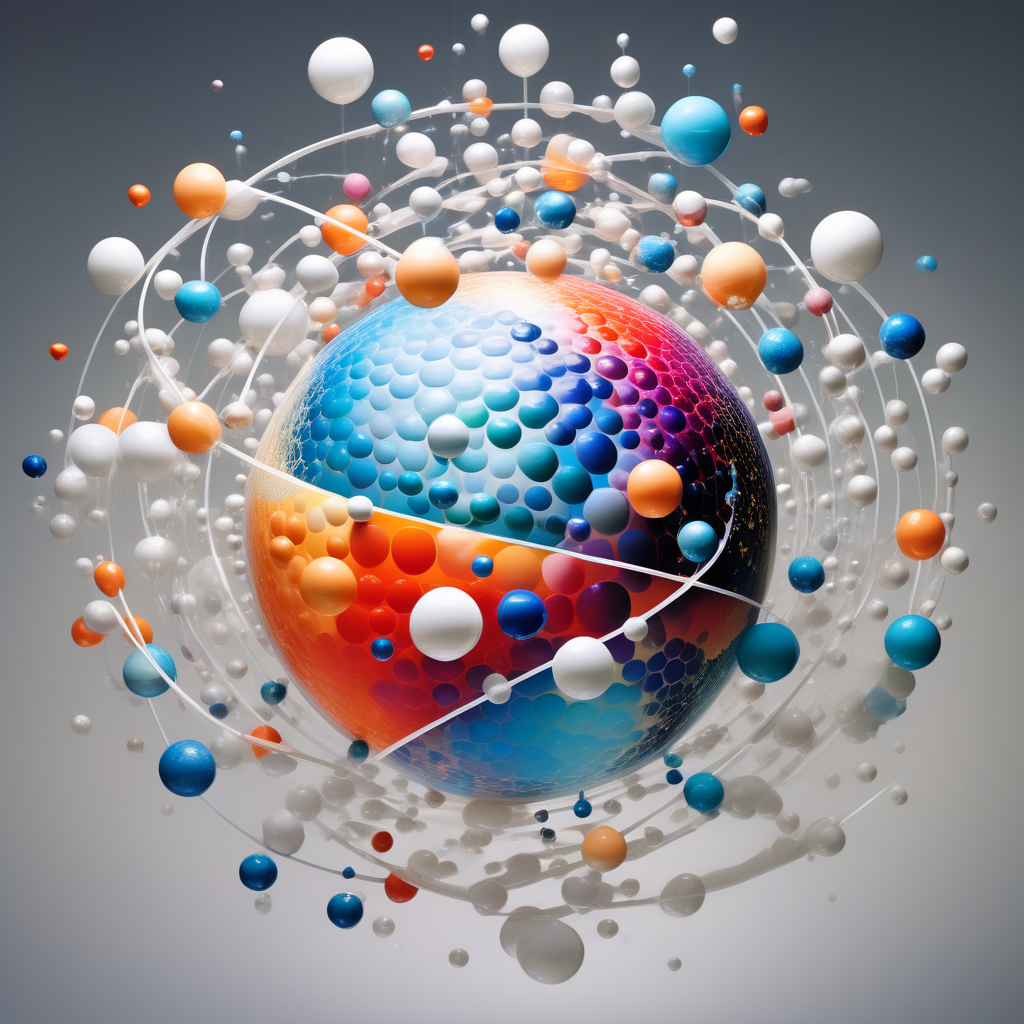
In the grand tapestry of existence, our understanding often finds itself confined within the boundaries of human perception. Yet, when we dare to venture beyond these limits, we encounter a humbling and awe-inspiring perspective. Consider this: each of us is composed of trillions of atoms, minuscule yet intricate components that constitute our very essence. Now, elevate this thought to a cosmic scale. What if our entire universe, with its vast galaxies and nebulae, is but a single atom within the immeasurable body of a higher entity or force, which some may choose to call God?

This analogy invites us to rethink our place in the cosmos. It suggests that just as each atom plays a vital role in the structure and function of our being, so too might our universe contribute to a larger purpose within this colossal entity. This perspective is not to diminish our significance but to expand our understanding of connectivity and purpose. In this cosmic view, every action, thought, and event within our universe could be integral to the workings of a grander scheme, a higher order of existence.

Such a notion also challenges our understanding of God or the ground of all being. Traditionally conceived as an omnipotent and omniscient entity, this view presents God not just as a creator or a distant observer but as a vast, living entity within which universes exist like atoms within a body. This reimagining bridges the gap between the spiritual and the physical, suggesting a universe that is not separate from the divine but intrinsically part of it.

The implications of this perspective are profound. It propels us to consider our actions and their repercussions not just on a worldly scale but as part of a cosmic dance. It encourages a sense of universal responsibility and interconnectedness, urging us to view ourselves not as isolated beings but as integral components of a much larger existence.

In conclusion, the idea that our universe could be akin to an atom within the body of a higher entity redefines our understanding of existence, purpose, and spirituality. It invites us to contemplate our place in the cosmos as inhabitants of a vast universe and as part of a much grander, interconnected whole.

Morgan O. Smith

Yinnergy Meditation, Spiritual Life Coaching & My Book, Bodhi in the Brain…Available Now!

https://linktr.ee/morganosmith

Knowing vs. Believing:

A Personal Perspective on Divinity

Throughout my life, many Christians and many individuals from different religious backgrounds have approached me with a question that seems to be etched into our collective spiritual psyche: “Do you believe in God?”

My response is always a bit unexpected: I don’t believe in God. I *know* God. There’s a profound difference between the two, and this distinction shapes my entire spiritual paradigm.

### The Nature of Belief

Belief is an interesting concept. It stems from uncertainty and acts as a bridge between the known and the unknown. When we believe in something, it signifies that we hold it to be true without concrete evidence or direct experience. It’s a leap of faith. It’s the trust we put into things unseen or unverified.

But with knowledge, the dynamics change. Knowledge is grounded in experience, indisputable facts, or personal revelations. When we know something, it is deeply entrenched within us, forming a part of our identity. It’s not just a thought, but a lived experience.

### The Unshakable Foundation of Knowing

To say that I know God is to say that my relationship with the divine is not based on stories, scriptures, or what someone else has told me. It is based on a deep, intrinsic realization. An unwavering certainty that God, or the essence of all there is, permeates every molecule, every thought, every fleeting moment of our existence.

When we come to such profound realizations, words often fail to capture the depth of our experience. To know God is not about conforming to religious doctrines or performing rituals, although those can be paths leading toward this understanding. It is about an inner awakening, a cosmic “aha” moment where everything clicks into place.

### Why Does This Distinction Matter?

In our journey through life, both belief and knowledge have their roles. Belief can be a starting point, a motivator to seek deeper truths, to question, to explore. But belief can also be limiting if it keeps us tethered to dogmas without encouraging personal experience or exploration.

Knowledge, on the other hand, propels us forward. It gives us confidence, clarity, and a sense of purpose. When it comes to the divine, knowledge transforms our perception of the world, ourselves, and our place in the vast expanse of existence.

In conclusion, the journey from belief to knowledge is deeply personal, profound, and transformative. It is about breaking free from external validations and finding the truth within.

Morgan O. Smith

Yinnergy Meditation & My Book, Bodhi in the Brain…Available Now!
https://linktr.ee/morganosmith

Beyond the Verbal Abyss

Embracing the Indescribable in the Pursuit of Nondual Consciousness

The realm of metaphysics has been exploring the uncharted territory of human existence since the inception of philosophical thought. The concept of ‘Turiyatita’, borrowed from the ancient Vedantic wisdom, invites us to delve into the mystery of the Ultimate Nondual Presence. In a state of supreme transcendence, Turiyatita marries the notions of Emptiness and form, painting a picture of the Self fully liberated and realized.

This profound state is said to represent the highest level of human awareness. It’s the experience of actualizing the quintessential Vedantic concept, “Aham Brahmasmi,” the realization that all is Brahman, the ultimate reality.

The fascinating paradox of this journey lies in its unspeakability. The moment of enlightenment, where one realizes their ultimate oneness with the universe, is so overwhelmingly mind-shattering that no human language can capture its essence. We find ourselves venturing into a stateless state, an inexplicable expanse that houses all potentiality, while simultaneously being nothing. It’s a cosmic riddle that has always existed and will continue to exist, challenging the very constructs of human understanding.

Over the years, I grappled with expressing the enigma that is Turiyatita. I discovered that language, no matter how profound or poetic, remains insufficient to convey this transcendental experience. The individual mind’s narratives fall short when tasked with communicating such an experience to the collective consciousness. This realization is like a boundless sea that can only be expressed through the universe itself – through everything around us, beneath us, above us, within us, and even through us. Our very existence, after all, is an echo of this ‘Absolute’ language.

This illuminating journey of pure awareness left me in a state of awe, marking an indelible imprint on my ego’s fragments. An unforgettable memory, it is the most profound self-discovery I’ve had in this lifetime.

Most of us remain oblivious to the existence of this state, yet it’s accessible to everyone. It waits patiently for anyone bold enough to plunge into its mysterious depths. These are the Akashic waters of enlightenment, a blissful abyss where the brave explorers willingly lose themselves.

This presence, while unnoticeable, pervades our existence as an invisible field, a force that forms the bedrock of all beings. It’s in the exploration of this Ground of All Existence that one realizes the enigma of the indescribable, the ineffable mystery commonly referred to as ‘God’.

So, as we journey through life and its varied experiences, may we always strive for the courage to explore these profound depths. For it is in these explorations that we touch upon the mysteries of our existence, our true selves, and the cosmic reality we are all a part of.

Morgan O. Smith

Yinnergy Meditation & My Book, Bodhi in the Brain…Available Now!
https://linktr.ee/morganosmith

The Enigma of the Monistically Absolute

A Journey Beyond Comprehension

Imagine, for a moment, immersing yourself into an immeasurable realm of complete egolessness, a profound plunge into the depths of an eternal abyss that, paradoxically, awakens you to the highest pinnacle of existential understanding. It’s a journey toward the Monistically Absolute – an awakening to the Ultimate Truth where you comprehend an uncanny Total Singularity that scoffs at the confinements of quantifiable laws.

At the crux of this unfathomable awareness, you realize a truth so deep, it pierces the veil between the subjective and the objective. This is the domain where the intangible and tangible lose their distinctions, where The One that is Nothing becomes the full embodiment of Everything, actualized and present. It is a formless form encapsulating all of existence, flourishing within, around, and beyond the contours of its existence. It is a sphere of limitless awareness, an unbroken stream of consciousness that’s perpetually alert of its Totality. A No-Self that is paradoxically the True Self, a staggering enigma that transcends all earthly dialectics.

In this grand unveiling, God is no longer a figment of belief, a notion, or an intellectual construct. Instead, God morphs into an undeniable Knowing, an indelible Truth that shuns falsehood. It’s a profound Love that transcends expression and becomes the very essence of all that Is. The intimacy of this event is beyond temporal boundaries; it engulfs every moment of existence, a timeless experience that allows The One to be conscious of its simultaneous manifestation as All Things. It’s the silent observer, the omnipresent witness of the past, present, and future, all intertwined within the continuum of the eternal Now.

As you dwell deeper into this mysterious reality, the sensation of this something, this profoundly intuitive phenomenon, penetrates your very core. It is a transformative event, an encounter where you, the seeker, tap into the pulsating heart of the universe, the underpinning reality that blankets all forms of Being. This is an experience of a Paradoxical Presence that stretches beyond all measurable scopes. It leaves the experiencer in a state of rapturous awe, a sublime ecstasy so profound it overshadows any state considered sublime. It is an unbounded experience that cannot be confined by mortal limitations, it’s a boundlessness that transcends all known bounds.

For in this divine encounter, what once was restricted by the mortal mind finds liberation in an outpouring of boundless stillness, an ecstatic dance of Absolute Pure Essence. It is an experience that echoes within the realm of the ineffable, shattering all illusions, tearing away the cloaks of misconceptions, and inviting one to taste the nectar of the Monistically Absolute. It’s a realm where contradictions dissolve, boundaries disappear, and all that remains is the unending dance of absolute existence, consciousness, and bliss.

The realm of the Monistically Absolute is an invite to all seekers, a call to transcend earthly illusions and merge with the infinite truth. It’s a realm that unfolds before us when we are ready to let go of all we think we know and open ourselves to the enigmatic beauty of the universe. It’s a journey of self-discovery and cosmic understanding, an odyssey that has the potential to redefine our perspectives and transform our realities. Will you heed the call?

Morgan O. Smith

Yinnergy Meditation & My Book, Bodhi in the Brain…Available Now!
https://linktr.ee/morganosmith

Cosmic Whispers

Deciphering the Divine Blueprint of Creation

Introduction:


In the quiet moments when our minds wander into the realm of the cosmic, we may find ourselves pondering a question that has beguiled philosophers and theologians for centuries: Why did God manifest everything into being? What could be the purpose behind the sprawling tapestry of stars, planets, and life? My answer is that God created everything to become, and to experience the total opposite of itself. However, like threads in a tapestry, there are numerous perspectives woven into this enigmatic question. Let’s unravel a few.

1. **The Divine Artist: Self-Expression and Creativity**

Imagine an artist, brush in hand, dipping into an infinite palette. Some believe that God, the Divine Artist, created the universe as an ongoing expression of self-expression and creativity. Here, the universe is a canvas and God’s creations are brushstrokes – intricate, boundless, and ever-evolving.

2. **Lila: The Cosmic Dance of Divine Play**

Within Hinduism, creation is seen as ‘Lila’ or divine play. Picture God as a dancer, whose movements give birth to galaxies and life. These movements are not driven by need or desire but are spontaneous expressions of joy. Lila suggests that the universe is God’s dance floor, where the Divine revels in the ecstasy of creation.

3. **Harbor of Love: Creation for Relationship**

What if the universe is a love letter? In Christianity and other religious traditions, it is suggested that God created the cosmos and sentient beings for the purpose of relationship and love. The creation is God’s way of extending an invitation to share in divine love and companionship.

4. **Divine Reflection: Creation as Self-Discovery**

Ponder a God yearning for self-knowledge. By manifesting a multitude of beings, each with unique experiences and perspectives, God gazes into a living, cosmic mirror. This mirror reflects different facets of the Divine, allowing God to explore and understand its own infinite nature.

5. **Kabbalah’s Divine Constriction: Creating Space for Others**


Envision a sea retracting to form a shore. Kabbalistic tradition posits that God underwent a self-constriction, known as Tzimtzum, to create space for an independent reality. This act of withdrawal was one of ultimate generosity, allowing for free will and a two-way relationship between creation and the Divine.

6. **The Soul’s Crucible: Testing and Spiritual Growth**

Is the universe a crucible for refining souls? Some belief systems suggest that God created the universe as a testing ground. Through challenges and experiences, souls are purified, tempered, and progress along a spiritual path.

7. **A Purposeless Creation: Philosophical Nihilism**

Not all threads are woven with intention. Some philosophical perspectives maintain that creation has no purpose. It posits that existence is simply a natural by-product of God’s existence and devoid of any inherent meaning.

8. **Pantheism: The Universe as God’s Identity**

Picture a universe where every atom is a fragment of divinity. Pantheism posits that God and the universe are identical. Nature is not a separate creation but a part of the Divine. Through the vastness of space, we witness the body of God.

Conclusion:

As we stand before this intricate tapestry of creation, it becomes clear that the question of why God manifested the universe is as multifaceted as the cosmos itself. Each thread—whether woven with intention, love, curiosity, or even ambiguity—adds depth to this cosmic masterpiece. In examining these threads, we engage not just with the mysteries of creation, but with the essence of our own search for meaning and connection in an unfathomably vast universe.

Morgan O. Smith

Yinnergy Meditation & My Book, Bodhi in the Brain…Available Now!

https://linktr.ee/morganosmith

The Enigmatic G.O.D.

A Tapestry of Multifaceted Interpretations through Turiyatita

Introduction:
In the endless quest to fathom the profound entity known as God, Eastern and Western philosophies converge and diverge in a myriad of ways. This cosmic journey leads us to Turiyatita, a transcendent state beyond the fourth state of consciousness, where the true essence of God can be wholly embraced. Let us delve into the kaleidoscopic interpretations of the acronym G.O.D. through the lens of both Eastern and Western spirituality.

Giver Of Dreams:
In Western concepts, God is often seen as the Giver Of Dreams, inspiring aspirations. Contrarily, Eastern philosophies like Hinduism consider God as the Atman, reflecting the highest potential within oneself.

Guardian Of Divinity:
The Western Abrahamic faiths often portray God as a protector of purity, a Guardian Of Divinity. In Taoism, the Tao is considered the source of all divinity, without actively guarding it.

Guide Of Destiny:
In the Western context, God often plays a direct role in guiding destinies. The Eastern concept of Dharma reflects an innate order and righteousness, where individuals are their own guides through Karma.

Generator Of Diversity:
In the West, God’s creative aspect is exemplified in Genesis. In Hinduism, Lord Brahma symbolizes the Generator Of Diversity, being responsible for creation within the eternal cycle of Samsara.

Gatherer Of Devotion:
In the West, devotion is often gathered in the form of prayer. In Bhakti Yoga, an Eastern practice, devotion is an all-encompassing love and surrender to the divine.

Grand Orchestrator of Dynamics:

While Western deism believes in God as the Grand Orchestrator who set the universe in motion, Daoism sees the Dao as an impersonal force, guiding the natural order.

Garden Of Delight:
In Christianity, Eden represents the Garden Of Delight. In contrast, Buddhism’s Sukhavati is a pure land, representing an enlightened state of bliss and contentment.

Galaxy’s Omnipotent Designer:
In the West, Intelligent Design Theory posits God as the designer. Hinduism’s Vishwakarma is revered as the divine architect of the universe, reflecting a similar sentiment.

Guardian Of Deeds:
In Western theology, the idea of a judgmental God who serves as Guardian Of Deeds is prominent. The Eastern concept of Karma conveys a self-regulating system of moral retribution.

Gracious Overseer of Deliverance:
Both Eastern and Western traditions portray God as a liberator. In Christianity, salvation is through Jesus Christ; in Hinduism, Moksha or liberation from the cycle of rebirth.

Realization through Turiyatita:
To truly integrate these interpretations, one must transcend to Turiyatita, a state beyond the waking, dreaming, deep sleep, and Turiya (pure consciousness). In this pinnacle of spiritual awakening, the boundaries dissolve, and one can embody the limitless interpretations of G.O.D., embracing a harmonious coexistence of Eastern and Western spiritual thought.

Conclusion:
The myriad interpretations of G.O.D. weave a rich tapestry of philosophical thought. Turiyatita offers a transcendent vantage point where the essence of these interpretations is revealed in its full glory, harmonizing the wisdom of the East and West.

Morgan O. Smith

Yinnergy Meditation & My Book, Bodhi in the Brain…Available Now!

https://linktr.ee/morganosmith