Embracing the Abyss

An Exploration into the Ground of All Being

In the silence of our hearts, amidst the ceaseless chatter of our fears and desires, lies a profound mystery waiting to be discovered. This mystery, dear reader, is not something alien or external, but a journey inward to meet our most authentic selves. It is about unearthing the Ground of All Being, the core from which our existence emanates and upon which it rests. In the course of human history, many have named it differently—God, The Absolute, Consciousness, and so forth. However, this Ground of All Being is not a distant reality; it’s what we truly are. As articulated succinctly, our deepest fear is not of the unknown, but the known transcending into the realm of the unknown, a realm where words fall short and only experience speaks.

Your deepest fear is yourself. This statement, piercing in its simplicity, unveils the core of our existential dread. We fear what we might discover when all pretenses are shed, and we are left with the raw, unadulterated reality of our being. The question is, are we willing to face that fear, to delve into the abyss and allow it to unravel the boundless potential within?

Why do we shy away from understanding our true nature? It’s a paradox that the unknown we fear is already known, buried within the labyrinth of our being. It’s like a familiar tune, the lyrics of which we have forgotten, yet the melody stirs something deep within. It beckons us to listen, to be still, and in that stillness, the melody unfolds, freeing us from the shackles of ignorance and liberating the profound truths hidden within. This knowledge is not an accumulation but a realization, a moving from the periphery to the core, a journey from the ephemeral to the eternal.

We often seek solace in the external, hoping that objects, relationships, or achievements will fill the void within. However, true liberation and fulfillment lie in the exploration and understanding of our essential nature, the Ground of All Being. It’s about confronting fears, transcending superficial identities, and dissolving into the boundless, formless reality that we are.

It’s a venture into the heart of existence, an invitation to be fearlessly authentic. To step into this journey is to embrace the unknown, which is already known, and to unearth the beauty and magnificence of our true nature. So, pause and listen to that innermost call, for in the heart of fear lies the key to liberation.

Morgan O.  Smith

Yinnergy Meditation & My Book, Bodhi in the Brain…Available Now!

https://linktr.ee/morganosmith

The Paradox of Perfection

Ground of All Being and Maya

The universe, in its vastness and complexity, brings forth a myriad of questions that have perplexed thinkers across generations. One of the most profound concepts to grapple with is the nature of reality itself. Within the philosophical tapestry, two concepts emerge with force and subtlety: the “Ground of All Being” and “Maya”.

**Ground of All Being**

The Ground of All Being is an abstract principle suggesting that there exists an ultimate foundation or source for everything in existence. This ground isn’t a tangible thing but a concept – the idea that there’s an underpinning, unchangeable reality beneath the mutable surface of life. This can be likened to the depths of an ocean where calmness reigns, contrasting with the choppy waves on the surface.

**Maya: The Illusion**

Hailing primarily from Eastern traditions, particularly Hinduism, Maya is the term that describes the world as we see it: a world of illusion, impermanence, and change. Maya doesn’t suggest that the world is fake, but that our perceptions and understandings are limited, sometimes deceiving us from the true nature of reality.

**The Paradox of Perfection**

At a glance, it seems paradoxical: How can a universe so perfect birth what is perceived as imperfection? The beauty of this conundrum is that perfection and imperfection are inherently subjective, shaped by our limited human perceptions and conditioned understandings.

Perhaps the universe is so intricately and impeccably designed that it incorporates imperfection as part of its perfection. Much like a symphony that uses dissonance to make the harmonious notes shine brighter. The imperfections, the fleeting moments, the transient joys and sorrows – they all serve a purpose. They make the canvas of life more prosperous, pushing us to question, seek, and understand.

Imperfections are not flaws but opportunities: windows into deeper layers of understanding, growth, and realization. When we confront Maya, we’re not battling falsehoods but navigating layers of reality, slowly inching closer to the Ground of All Being.

**In Conclusion**

The journey from Maya’s illusion to the Ground of All Being isn’t a path of renunciation, but one of realization. Realizing that the imperfections we see, feel, and experience are not mere aberrations, but intrinsic facets of a grand design. They challenge us, shape us, and push us closer to understanding the paradoxical nature of existence: that within perfection lies imperfection and within imperfection, an underlying, unchanging perfection.

Morgan O. Smith

Yinnergy Meditation & My Book, Bodhi in the Brain…Available Now!
https://linktr.ee/morganosmith

The Circular Journey of Reincarnation

A Dance of Spirit, Self, and Transcendence

Sculpted by ancient wisdom and breathed into existence by mystic philosophies, the idea of reincarnation challenges our perception of reality, questioning the depth of life, death, and the realms that extend beyond our comprehension. It’s an intriguing path leading to a fascinating panorama of eternal becoming, a ceaseless cycle of birth, death, and rebirth that we often term ‘Samsara’. Delving deeper into this concept, a theory emerges, where the omnipresent Spirit, or the Ground of all Being, embarks on a journey to experience life from an individual standpoint.

The Spirit, in its omnipotent and omniscient state, voluntarily decides to fragment its infiniteness into a finite form, breathing life into an individual self. But why does this transition occur? Could it be that the Spirit seeks to experience, understand, and embrace the existential dynamics from the individual lens? To dive into the chaotic beauty of life, to suffer, to joy, to yearn, and to discover? We can only speculate.

The interaction between the Spirit and its earthly existence forms an intricate dance, a dance that eventually leads to the enrichment of the Spirit. Each incarnation, each dance, is an opportunity for the Spirit to learn, grow, and evolve. If Nirvana or Moksha, the state of absolute liberation, isn’t attained in a single lifetime, the Spirit continues its journey through subsequent lifetimes, circling the samsara wheel.

In this theory, one might imagine each cycle of Samsara to be equivalent to a full rotation of 360 degrees. Each degree of rotation represents the lived experiences, the struggles and victories, the heartaches and joys, and the insights and awakenings that shape the individual soul’s evolution. Upon completing this 360-degree cycle, the Spirit transitions to a new plane of existence, a higher level of consciousness, armed with the wisdom and enlightenment accumulated from its previous journey.

This continuum is profound. It’s a cosmic design that instills a sense of awe and wonder, presenting the possibility of existence in planes beyond our material world. It grants our life a transcendent purpose, a grandeur that transcends the limitations of a single life span.

Reincarnation, as visualized in this theory, leads us to reconsider the significance of our lives. It encourages us to perceive every event, every interaction, as an opportunity for the Spirit to learn and evolve. Furthermore, it nudges us to view ourselves not merely as transient beings but as vessels for the Spirit’s journey toward the absolute.

In conclusion, the philosophical discourse on reincarnation paints a vivid picture of the Spirit’s quest. It traverses from the individual standpoint to the Ground of all Being, from the mortal realm to the absolute. In each cycle, in each dance, in each 360-degree turn, we find the Spirit growing, understanding, and inching closer to its final destination: a state of total enlightenment and liberation. As seekers on this journey, may we live mindfully, learn incessantly, and evolve steadily. After all, aren’t we the Spirit’s manifestation seeking its way back home?

Morgan O. Smith

Yinnergy Meditation & My Book, Bodhi in the Brain…Available Now!
https://linktr.ee/morganosmith

The Soul’s Paradox

A Dance of Definites and Possibilities

As one treads the expansive corridors of philosophy, few subjects engender as much fascination as the soul – that elusive, ethereal concept often seen as the essence of who we are. A common question on this voyage of introspection is: where does the soul reside?

The simplest answer might be: within the physical body. After all, we experience life, feel emotions, think thoughts, and dream dreams all within this organic structure we call a body. Yet, to confine the soul strictly within the physical body is a reduction that strips the soul of its sublime complexity.

In truth, the soul is non-local. Like a scent carried on the wind, it isn’t confined to a single spot but diffuses through the spaces and structures we inhabit. It permeates the cosmos yet is intimately tied to our bodies. The physical body may be viewed as its vessel – a corporeal nexus in the unfathomable cosmic network.

Yet, the body is not just a vessel. It is also a localized expression of the soul – a physical manifestation reflecting the soul’s ongoing journey. Our bodies transform from conception to birth, from childhood to adolescence, adulthood, and eventually to old age. This journey is a mirror, echoing the multi-cycle, or trans-cycle, of the soul – an individual expression of the all-encompassing Spirit, or Ground of All Being.

To this understanding, the soul both resides in and outside the body. Yet simultaneously, it neither exists inside nor outside nor does it exist at all in a conventional sense. This seeming paradox is at the heart of the soul’s mystery. It exists within the realm of definite and indefinite, possible and impossible, probable and improbable.

To elucidate, imagine the soul as a song. The notes (definite, possible, probable) resonate within our physical form, the singer. Yet, the melody (indefinite, impossible, improbable) drifts beyond, filling the room, seeping through walls, and touching those within its reach. Even when the song ends, the echo lingers – it remains within and beyond us, simultaneously nowhere and everywhere.

This enigmatic duality of the soul invites us to question our preconceived notions about reality and selfhood. It prompts us to view ourselves not merely as static, defined entities, but as dynamic participants in the cosmic dance of existence. We are both the dancer and the dance, the singer and the song, the vessel and the soul, embodying a myriad of possibilities, probabilities, and beautiful impossibilities.

To journey towards understanding the soul is not about seeking a destination, but engaging in an ongoing dance of discovery, where questions are as crucial as answers. It’s a dance that challenges us to embrace both the physical and metaphysical aspects of our being, and to live in the mystery that we are far more than just our physical bodies. We are the enigmatic soul – definite and indefinite, possible and impossible, probable and improbable, and beautifully, profoundly, paradoxically both everything and nothing.

Morgan O. Smith

Yinnergy Meditation & My Book, Bodhi in the Brain…Available Now!
https://linktr.ee/morganosmith

The Multiverse Within

Exploring Chakras Beyond Our Perception

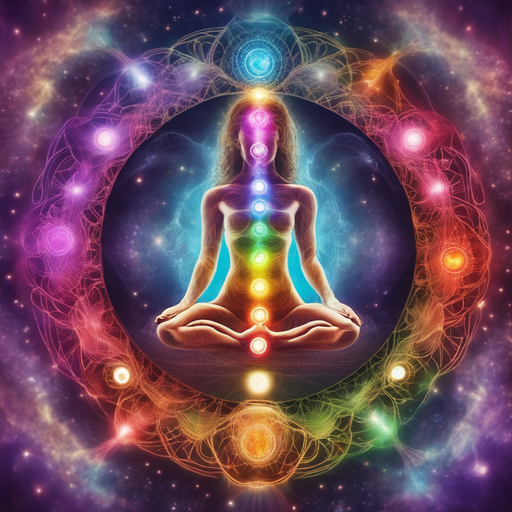
In the rich tapestry of Eastern philosophy and spirituality, the concept of chakras and kundalini awakening has long captivated the Western world. But a deeper, more expansive understanding of these ideas prompts us to transcend the traditional seven chakras in the human body and see them permeating the universe at every level – from the massive galaxies to the tiniest sub-atomic particles.

This perspective’s core is the belief that chakras are not exclusive to the gross or subtle human body. They are ubiquitous and omnipresent, extending their influence to every cell, every molecule, every atom, and even to the most infinitesimal particles. Just like each human has energy centers, these minuscule entities – bodies in their own right – are also believed to possess chakras.

This viewpoint is a confluence of spirituality and quantum physics. It suggests a microcosm-macrocosm principle where the patterns of the universe repeat themselves at different scales, connecting everything from the vastness of the cosmos to the smallest particles.

During a full-blown kundalini awakening, a transformative spiritual experience often depicted as the release of divine energy stored at the base of the spine, it is proposed that not only the individual’s chakras but also these infinitesimal chakras, in each ‘body’ within our physical body, come to life. It is a grand unison of consciousness awakening at all levels of existence, interconnecting every particle within and beyond us.

In such a profound event, each ‘body’, from cellular to atomic and sub-atomic levels, reaches a state of self-realization, comprehending that it is part of the ‘Brahman,’ the ultimate reality or absolute in Hindu philosophy. This concept equates to ‘The Ground of all Being,’ a term that mystics and spiritual teachers use to describe the deepest level of reality.

This fascinating belief presents an interconnected universe where the microcosm and macrocosm continually interact, affecting and reflecting each other. A place where every entity, regardless of size or subtlety, is a unique expression of the same energy, bound by a common cosmic rhythm and linked through an intricate network of chakras.

In conclusion, the belief in a kundalini awakening of not just the seven primary chakras, but countless others within every atom and sub-atomic particle, invites us to broaden our perception of reality. This concept urges us to look beyond the boundaries of our current understanding and explore the uncharted territories of consciousness that might hold the key to our oneness with the universe. It is a philosophy that doesn’t merely expand our knowledge of self and the universe; it transforms it.

Morgan O. Smith

Yinnergy Meditation & My Book, Bodhi in the Brain…Available Now!
https://linktr.ee/morganosmith

Exploring Spiritual Enlightenment

Unveiling the Essence of Being

Introduction:
In the realm of spirituality, few concepts captivate the human imagination as profoundly as spiritual enlightenment. It has been sought after, contemplated upon, and revered across cultures and traditions. At its core, spiritual enlightenment encompasses a holistic realization, knowing, comprehension, recognition, and liberation, leading to an intimate understanding of one’s essence as the Ground of all Being. In this thought-provoking blog, we embark on a journey to unravel the depths of spiritual enlightenment and explore its transformative power.

Realization: The Full Realization of What You Are as The Ground of All Being
The journey toward spiritual enlightenment begins with a profound realization—an awakening to the fundamental truth of one’s existence. It is an experiential revelation that transcends intellectual understanding, offering a direct encounter with the essence of reality. This realization unveils the interconnectedness of all existence and dissolves the boundaries that separate the self from the world.

Knowing: Knowing Who and What You Are as The Ground of All Being

Knowing, in the context of spiritual enlightenment, goes beyond intellectual knowledge or beliefs. It is a direct and intimate knowing of one’s true nature, beyond the ephemeral constructs of ego and identity. This knowing arises from experiential wisdom that transcends language and logic, revealing the profound interconnectedness of all life.

Comprehension: Comprehending What You Are as The Ground of All Being
Comprehension in spiritual enlightenment refers to a deep understanding that arises from the integration of realization and knowing. It involves grasping the inherent wisdom that pervades all existence and recognizing the underlying unity amidst the apparent diversity. This comprehension allows us to perceive the world through a lens of compassion, empathy, and interconnectedness.

Recognition: Recognizing What You Are as The Ground of All Being

Recognition entails a moment of profound insight where the illusory veils of separation and limitation fall away, revealing the truth of one’s being. It is a transformative recognition of our true nature as vast, boundless awareness, intimately interconnected with the entire cosmos. Through this recognition, we come to acknowledge the divinity that resides within ourselves and all beings.

Liberation: Being Liberated from Shape or Form, Free from Illusion and Attachments

Liberation represents the ultimate culmination of spiritual enlightenment—a state of profound freedom and liberation from the constraints of ego, attachment, and illusion. It is an experiential transcendence of the limited, conditioned self, allowing one to dwell in the realm of pure emptiness. Yet, paradoxically, this liberation is not a detachment from the world but a unification with it, as the awakened individual realizes their inseparability from the tapestry of existence.

Conclusion:
Spiritual enlightenment encompasses a multidimensional journey that surpasses the limitations of language and rationality. It is a profound exploration of the self and the universe, revealing our interconnectedness and inherent divinity. Through realization, knowing, comprehension, recognition, and liberation, we can embark on a transformative path that leads to a deeper understanding of our existence. By embracing the essence of spiritual enlightenment, we may find ourselves united with everything that is form while being liberated from the illusory constraints that bind us. May this exploration inspire you on your quest for self-discovery and awakening to the timeless truth of the Ground of all Being.

Morgan O. Smith

Yinnergy Meditation & My Book, Bodhi in the Brain…Available Now!
Tracing the Divine Contours

Metaphorical Exploration of the Three Faces of God

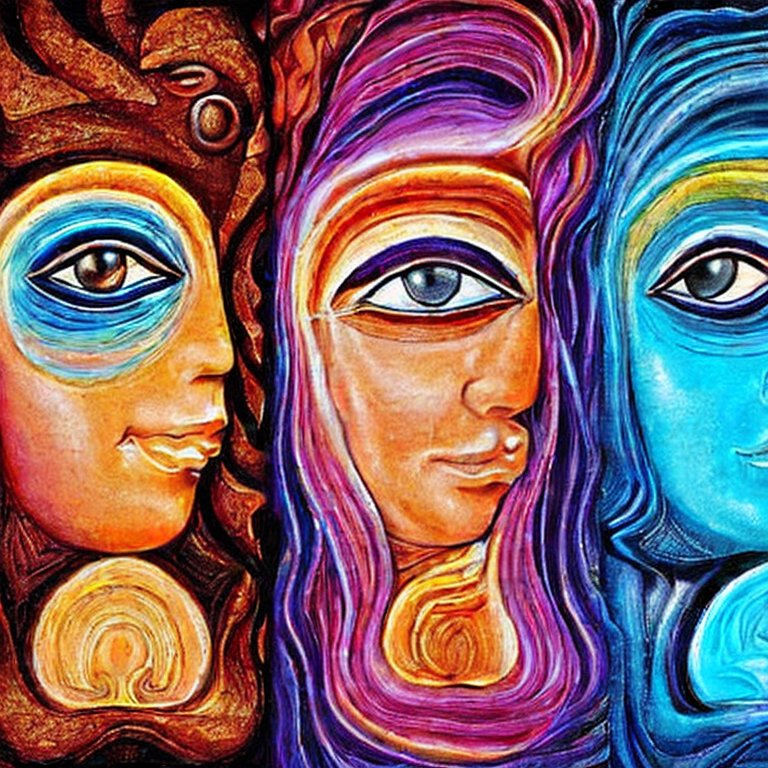
As we endeavour to understand the divine, let’s imagine sketching three different portraits of God, each revealing a unique aspect of the divine. These are the “Three Faces of God,” metaphorically spoken of as “I am That,” “Thou art,” and “It, the Ground of All Being.” Each face provides a different set of facial features, offering a new perspective and experience of the divine.

1. The First Portrait: “I am That”

Envision drawing the first portrait, where you sketch not with your hand, but with your consciousness. This portrait, entitled “I am That,” represents the divine as the reflection of our inner selves. The eyes in this portrait mirror our own, sparkling with the wisdom of unity and oneness. These eyes are windows into the soul, witnessing the divine within us and in everything around us.

The lips are sealed, symbolizing the silence that encapsulates the profound realization of this facet of divinity. It is a silence not born of absence but of completeness, tranquillity that resonates with the essence of existence. The serene countenance of this portrait is a silent affirmation of our inherent divinity.

2. The Second Portrait: “Thou Art”

Now, we turn to the second portrait, “Thou Art.” Here, the divine is perceived as the other, an entity separate from ourselves. In this image, the eyes are compassionate, gazing at us with empathy and understanding, reflecting a personal deity who knows us intimately, one who listens, guides, and protects.

The lips are gently curved into a comforting smile, a symbol of the divine’s eternal love and benevolence. This portrait embodies a divine entity that exists independently of us, yet is deeply connected in a loving and caring relationship.

3. The Third Portrait: “It, the Ground of All Being”

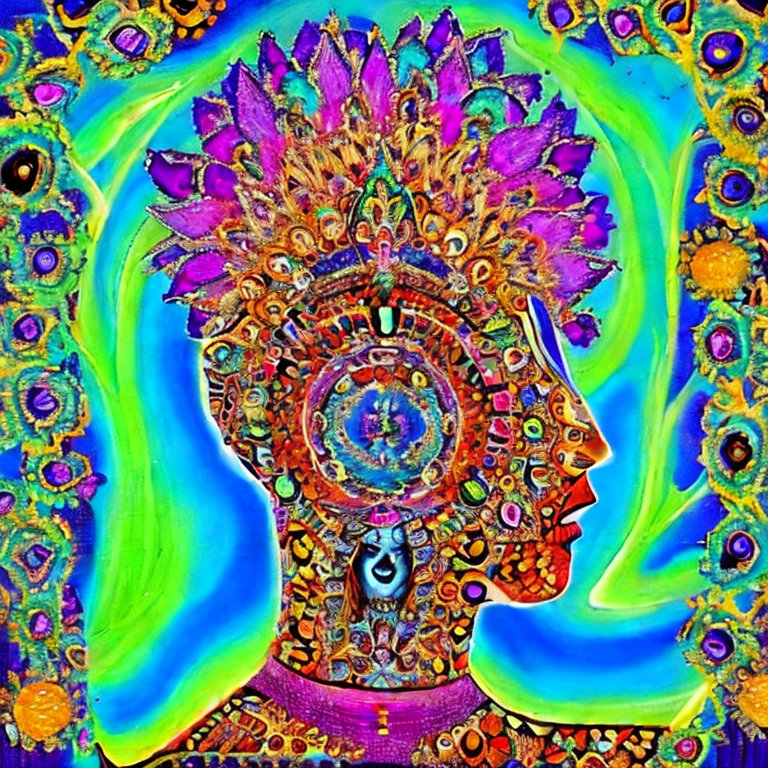
The third portrait, “It, the Ground of All Being,” is an abstract masterpiece. Instead of conventional facial features, it is an evolving canvas of colours, shapes, and patterns, capturing the unfathomable depths and dimensions of the divine as the fundamental essence of existence.

This image lacks eyes and lips because it symbolizes the impersonal aspect of the divine. It is the primordial backdrop from which all forms arise and into which they merge. This face does not interact or engage in the usual sense but is simply there, perpetually present, the immutable reality underlying all of existence.

Wrapping Up

This metaphorical exploration of the “Three Faces of God” is like an artful journey into divinity’s vast and varied landscapes. It encourages us to recognize the divine in our reflections, in a comforting gaze, and in the ever-changing canvas of existence.

Each of these faces, with its unique set of features, invites us to a different experience and understanding of God, enabling us to connect with the divine on multiple levels. It’s a contemplative journey that opens up possibilities for self-discovery and spiritual growth, enhancing our cosmic connection. In these divine portraits, we don’t just see different faces of God; we see reflections of our own quest for spiritual understanding and existential meaning.

Morgan O. Smith

Yinnergy Meditation & My Book, Bodhi in the Brain…Available Now!
https://linktr.ee/morganosmith

Three Perspectives on Divinity

A Journey of Self-Discovery and Cosmic Connection

Every human being, at some point, grapples with the concept of divinity. How we perceive the divine greatly influences how we understand ourselves and our place in the cosmos. While there are many ways to envision divinity, let us ponder the “Three Faces of God” – “I am That,” “Thou art,” and “It, the Ground of All Being.” Each provides a distinct lens through which we may view and experience the divine.

1. Divine Within: The Face of “I am That”

“I am That” is a call to recognize the divine within us. It is not just a statement; it’s an acknowledgment of our inherent divinity. This perspective dissolves the illusion of separateness, helping us realize that we’re not merely fleeting existences in an indifferent universe, but integral fragments of a divine whole.

This face asks us to engage in deep introspection, to see beyond the veil of our mundane identities, and to understand that our true essence is not our transient ego, but the eternal spirit. Could it be that we’re more divine than we’ve ever imagined? This face prompts us to explore that possibility.

2. Divine As Other: The Face of “Thou Art”

The face of “Thou Art” offers a contrasting perspective. Here, the divine is seen as the ‘Other,’ an entity outside ourselves with whom we can establish a personal connection. This relationship with the divine, filled with reverence and love, is akin to the bond between a devotee and their deity.

In this model, God is the figure we pray to, seek comfort from, and surrender our troubles to. It’s a perspective that creates a powerful, intimate bond with the divine, letting us experience the divinity not as a part of us, but as a separate, caring, and guiding entity.

3. Divine As All: The Face of “It, the Ground of All Being”

The third face, “It, the Ground of All Being,” portrays God as an impersonal essence, the primal energy that permeates the cosmos. This face of divinity does not personify the divine but sees it as the raw material of existence. It is the unchanging reality amidst the ceaseless flux of the universe.

This view urges us to go beyond the traditional understandings of God and probe deeper into the mysteries of existence. Could it be that the divine is not just a deity or a spirit within, but also the very fabric of reality?

Wrapping Up

The Three Faces of God offer a multidimensional understanding of the divine, guiding us on our spiritual and philosophical quest. They propose different ways to connect with the divine, based on our personal inclinations and spiritual needs. More than a simple triad, they represent a spectrum of possibilities on our spiritual journey.

In acknowledging these perspectives, we can foster a richer understanding and experience of God, allowing us to discover the divine within ourselves, in an intimate relationship, and as the underlying reality of existence. Such an exploration can become a catalyst for personal growth and spiritual evolution, leading us to new levels of self-discovery and cosmic connection. After all, isn’t that what the quest for understanding divinity is all about?

Morgan O. Smith

Yinnergy Meditation & My Book, Bodhi in the Brain…Available Now!

https://linktr.ee/morganosmith

Meditative Practices and the Illusory Nature of the False Self

A Journey Towards Self-Realization

Introduction:
Meditative practices have long been revered as transformative tools in the realm of self-discovery and spiritual growth. They offer a profound pathway for individuals to explore the depths of their consciousness, seeking truth, peace, and liberation. However, beneath the surface lies a fascinating paradox—the false self, which appears as the practitioner, ultimately leads to the revelation of the Ultimate Self, the Ground of All Being.

The Illusion of the False Self:
Within the tapestry of various spiritual traditions, the notion of the false self arises—a deceptive construct born out of our attachments to external roles, labels, and conditioned beliefs. This illusory identity emerges from our tendency to assign significance to transient aspects of our existence, such as social standing, material possessions, and superficial identities. Meditative practices, in their diverse forms, serve as illuminating mirrors, enabling us to perceive the transient nature of the false self and transcend its illusory grasp.

Meditation as a Mirror:
Meditation acts as a reflective surface, offering a clear reflection of the illusory nature of the false self. By turning inward and observing our thoughts, emotions, and sensations without judgment or attachment, we gain a heightened awareness of the ever-changing nature of our experiences. Regular practice nurtures a profound realization—an understanding that our thoughts come and go, emotions rise and subside, and identities shift fluidly. This awakening brings us closer to recognizing that the false self is not a fixed entity but a construct that can be deconstructed through the power of self-inquiry.

The Ultimate Self:
While meditative practices may originate from the false self, they hold within them the potential to reveal the Ultimate Self—the very essence of our being, the Ground of All Being. As we delve deeper into our meditative journey, we begin to touch upon an interconnectedness and unity with the vast cosmos. The boundaries that once separated our individual selves from the external world begin to dissolve, and we catch glimpses of the inherent oneness that permeates all existence. In this expanded state of awareness, the false self loses its grip, and we realize that our essential nature transcends the limitations of individual identity.

Integration and Transformation:
The true essence of meditative practices lies in the interplay between the false self and the Ultimate Self. The false self, while illusory, acts as a vehicle for the exploration and transformation of consciousness. Engaging with meditative practices allows us to intimately observe the patterns and tendencies of the false self, ultimately leading us to transcend its limitations. By embracing the false self as a catalyst for growth, we integrate its lessons and move closer to the realization of our true nature—the Ultimate Self.

Conclusion:
In the realm of meditative practices, the interconnection between the false self and the Ultimate Self invites profound contemplation. While the false self may present itself as real and compelling, it is merely a construct that can be unravelled through the transformative power of meditation. Engaging in these practices propels us on a journey of self-realization, unveiling the essence of our being—the Ground of All Being. Meditative practices serve as bridges, guiding us from the illusion of the false self to the profound truth of our interconnected existence. Embrace these practices, embrace the false self, and embark on the path toward ultimate liberation and self-realization.

Morgan O. Smith

Yinnergy Meditation & My Book, Bodhi in the Brain…Available Now!

https://linktr.ee/morganosmith