The Illusion of Enlightenment

Beyond Appearances

In the world of spiritual seekers, the image of enlightenment is often cloaked in stereotypes. We imagine the enlightened as wise sages with serene expressions, adorned in simple yet vibrant robes, often with a flowing beard symbolizing wisdom and age. These images, while compelling, can distract us from the true essence of spiritual awakening.

The Fallacy of External Symbols


Consider the figure of a guru, resplendent in flamboyant orange attire and a long beard. At first glance, these external symbols seem to exude a profound spirituality. They speak of dedication, discipline, and a life devoted to higher truths. However, these symbols are but surface-level adornments. They are, in essence, a part of the cultural performance of spirituality. The real question is: does the essence of enlightenment reside within these outward displays?


The Deeper Reality

Enlightenment, in its truest form, transcends appearances. It is not about how one dresses, speaks, or the rituals one performs. True enlightenment is the realization of nonduality, the deep understanding that all distinctions are ultimately illusory. It is a state of being where one recognizes the interconnectedness of all existence and lives in harmony with this profound truth.

A guru’s flamboyant attire and serene demeanour may buy time and may hold the disciples’ awe, but eventually, true discernment must prevail. Spiritual seekers must learn to look beyond the external and discern the depth of true wisdom.

Beyond the Mask

This brings us to the core of spiritual discernment. The journey towards enlightenment is deeply personal and internal. It requires a relentless commitment to self-inquiry, a willingness to confront and dissolve one’s ego, and an openness to the vast, unfathomable mystery of existence.

A true guru, one who is genuinely enlightened, may or may not conform to the stereotypical image. They might appear as an ordinary person, unremarkable in many ways. The true measure of their enlightenment lies in their ability to guide others toward their inner light, not through the allure of external symbols, but through the profound simplicity and authenticity of their being.


The Inner Path

As seekers on the path, we must cultivate the ability to see beyond appearances. The guru’s external symbols can be helpful signposts, but they are not the destination. Our journey is about inner transformation, about peeling away the layers of illusion to reveal the radiant core of our true nature.

Enlightenment is not a spectacle; it is a quiet, profound shift in consciousness. It is the realization that the true guru resides within each of us, waiting to be discovered in the stillness of our hearts.

Conclusion

In a world where appearances often deceive, the challenge for spiritual seekers is to cultivate true discernment. Let us not be swayed by the external trappings of spirituality but seek the deeper, inner essence of enlightenment. For it is in the quiet, unassuming moments of profound realization that the true nature of our being is revealed.

Morgan O. Smith

Yinnergy Meditation, Spiritual Life Coaching & My Book, Bodhi in the Brain…Available Now!

https://linktr.ee/morganosmith

The Paradox of Enlightenment

The Journey Beyond Awakening

In the realm of spiritual awakening, there exists a profound paradox that challenges the very essence of enlightenment. This enigma revolves around the transformation of spiritually awakened individuals into spiritual gurus. At the heart of this transformation lies a pursuit, a quest not just for the dissemination of wisdom, but for an embodiment of an ideal that, by its nature, remains ever elusive.

Why, then, do some individuals, upon touching the profound depths of spiritual awakening, choose to step into the role of a guru? It’s a question that invites us to explore the intricate dynamics of enlightenment and the human condition.

The Unattainable Ideal

At the core of every spiritual journey lies the pursuit of enlightenment—a state of being that transcends the ordinary confines of human perception and experience. Yet, when this state is conceptualized as an ‘ideal’ to be achieved, it becomes inherently unattainable. The very essence of enlightenment eludes definition or confinement within the boundaries of human ambition. It is not a peak to be scaled but an endless horizon that expands as we journey toward it.

The Guru’s Dilemma

For those who have experienced a profound spiritual awakening, the impulse to share this newfound understanding with others can be overwhelming. In their hearts burns a desire to guide others towards the light they have glimpsed. Yet, herein lies the dilemma: the act of becoming a guru—a spiritual teacher—often entails embodying an idealized version of enlightenment that is, in essence, unattainable.

This paradoxical situation places the guru in a position of navigating the fine line between guiding others on their spiritual journeys and being placed upon a pedestal as an epitome of spiritual perfection. It is a role fraught with challenges, as it demands a continuous dance with the unattainable, a constant striving to live up to an ideal that is both inspiring and impossible.

The Authentic Journey

The true essence of being a guru lies not in achieving or embodying perfection but in embracing one’s humanity, with all its flaws and imperfections. It is about being a beacon of light, not by being flawless, but by being genuine and authentic. The most profound teachings often come not from a place of having reached a destination but from the journey itself, with all its trials, tribulations, and moments of grace.

A genuine spiritual guide understands that enlightenment is not a static state of being but a dynamic process of becoming. They recognize that their role is not to live up to an unattainable ideal but to walk alongside others on the path, sharing insights and wisdom gleaned from their journey, without the pretense of having ‘arrived.’

Conclusion

The transformation of spiritually awakened individuals into spiritual gurus is a reflection of a deeper yearning—a yearning not just to share wisdom but to embody an ideal that, while inspiring, remains fundamentally unattainable. This paradox does not diminish the value of the guru’s role but rather highlights the profound complexity of the spiritual journey. It is a journey that calls for humility, authenticity, and the courage to embrace the endless unfolding of enlightenment.

In stepping into the role of a spiritual guide, one embraces the paradox of striving towards the unattainable, recognizing that the true essence of enlightenment lies not in reaching a destination but in the endless journey of awakening.

Morgan O. Smith

Yinnergy Meditation, Spiritual Life Coaching & My Book, Bodhi in the Brain…Available Now!
https://linktr.ee/morganosmith

The Luminous Path

Shaktipat and Darshan in the Quest for Enlightenment

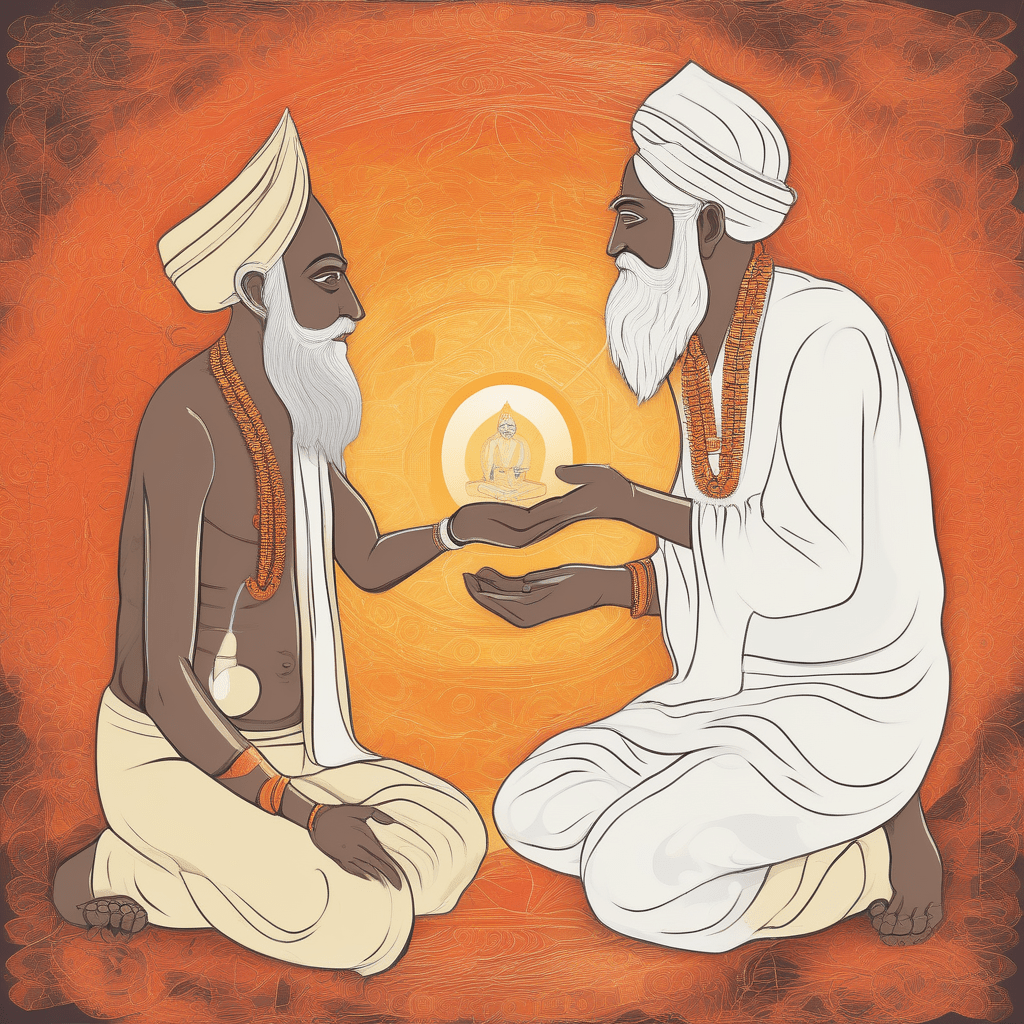
In the rich tapestry of spiritual traditions, the concepts of Shaktipat and Darshan emerge as profound mechanisms of grace, each offering a unique conduit to the divine. These terms are often encountered in the lexicon of Indian spirituality, particularly within the paths of yoga and tantra, where the pursuit of enlightenment takes a form as varied as the seekers themselves.

Shaktipat, often translated as the “descent of grace,” is a spiritual act where a guru or enlightened master transmits spiritual energy to a seeker. This transmission can catalyze a profound transformation, initiating or deepening the spiritual awakening process. It is an act of unlocking, a key turned in the lock of latent spiritual potential, often without the necessity of the seeker’s understanding or effort. It is said to be a direct intervention by the divine through the guru, whereby the seeker’s energy is awakened and the journey towards self-realization is accelerated.

Conversely, Darshan translates to “sight” or “a glimpse” in Sanskrit. It refers to the auspicious seeing or beholding of a holy person, deity, or sacred object. Darshan is not merely a passive observation; it is an active engagement, a reciprocal act where the seer is seen, where the act of viewing is saturated with spiritual significance. In darshan, the barriers between the divine and the devotee dissolve in the act of sacred viewing, and it is in this mutual encounter that blessings are believed to flow.

While Shaktipat can be considered an active transmission of spiritual energy, Darshan is a more passive receipt of divine presence. Yet, both hold the common thread of divine grace as central to their efficacy. They differ not in their ultimate aim—liberation and enlightenment—but in their operation. Shaktipat is akin to the wind that stirs the still waters of a lake, while Darshan is like the sun that is reflected upon it.

In contemplating Shaktipat and Darshan, one realizes that they are not mere practices but experiences that lie at the heart of the mystical relationship between the individual and the absolute. They embody the dual aspects of the spiritual journey: Shaktipat represents the inner transformation through direct intervention, and Darshan symbolizes the outer reflection of the divine in the world.

Ultimately, both Shaktipat and Darshan remind us that enlightenment is not a solitary pursuit; it involves a profound interconnectedness with the divine and the world. They encourage the seeker to remain open to the myriad ways grace manifests and recognize that each moment holds the potential for a deeper awakening.

In the spiritual odyssey, Shaktipat and Darshan are not merely destinations or methods; they are living dialogues with the divine, where each seeker is both a witness and a participant in the eternal dance of consciousness. As we embrace the mystery and beauty of these encounters, we find ourselves woven into the very fabric of spiritual unfolding, a journey that is as unique as it is universal.

Morgan O.  Smith

Yinnergy Meditation & My Book, Bodhi in the Brain…Available Now!

https://linktr.ee/morganosmith