Agape: The Dichotomy of Universal Love

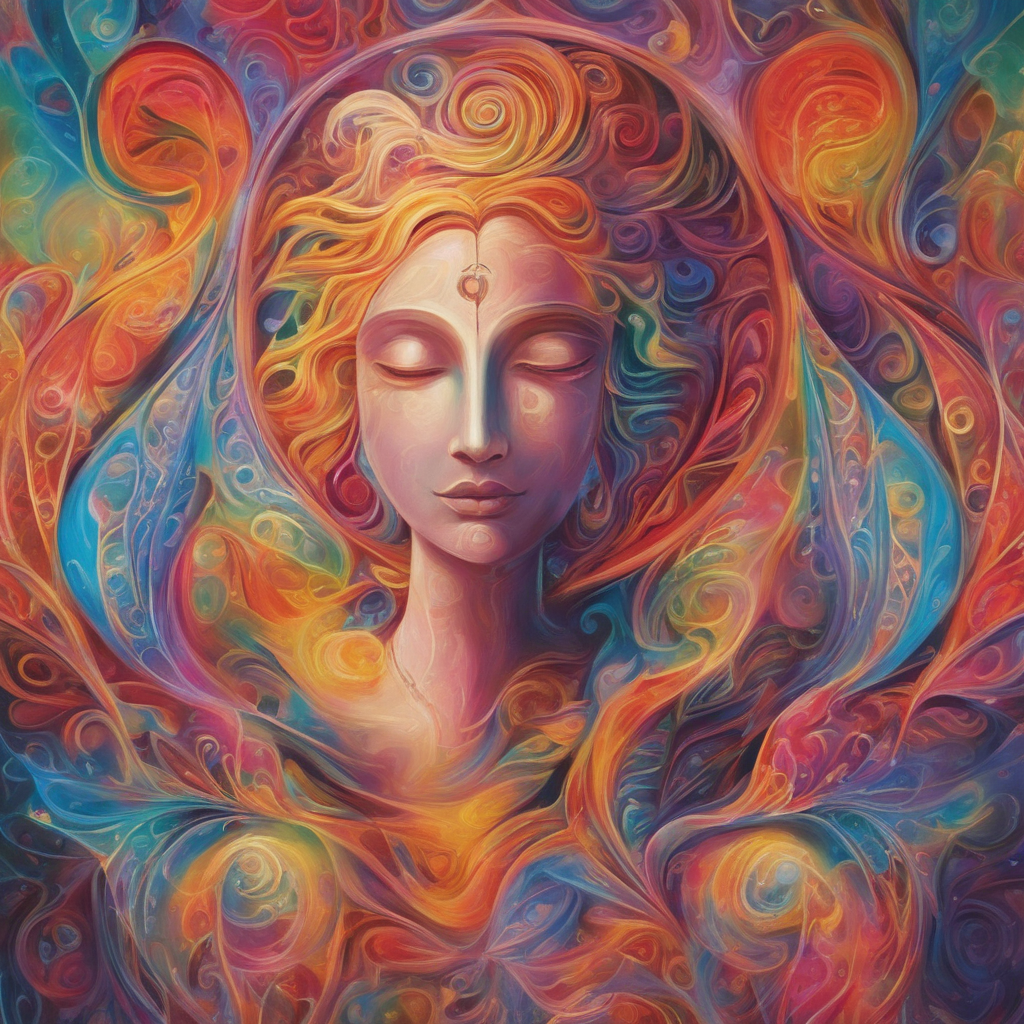
In the spiritual journey towards understanding and living in universal love, or agape, two enlightened beings emerge on parallel paths. They both embrace agape, yet their personalities and the way they manifest this profound love are strikingly different.

The Introverted Universal Love

The first enlightened being, whom we shall call Seraphina, channels agape through introverted universal love. This means her love is directed inward, nurturing the self and radiating outwards in subtle, non-obtrusive ways.

Impact on Others

Seraphina’s love affects others through quiet acts of kindness and a gentle presence. She may not actively seek to spread love, but those who come into contact with her feel a calm, loving energy that often leads to inner transformation. Her love is a tranquil pond, reflecting the beauty of the world without rippling its surface.

The Extroverted Universal Love

On the other hand, we have Gabriel, who embodies extroverted universal love. His love is outward-facing, actively engaging with the world, and seeking to connect with others.

Impact on Others

Gabriel’s love is a dynamic force, touching lives through acts of charity, teachings, and open-hearted connections. His love is a roaring river, sweeping people along in its powerful current and leaving change in its wake.

A Harmonious Dichotomy

While their approaches differ, both Seraphina and Gabriel contribute to the universal energy of love. They show us that love is not a one-size-fits-all concept. It’s a multifaceted gem that can shine through various personalities.

The Introverted Love: A Deep Well

Seraphina teaches us that love does not always have to be loud or grand. It can be a silent force, a deep well that nourishes the soul. Her love invites contemplation and self-reflection, allowing for a profound connection with oneself and the universe.

The Extroverted Love: A Brilliant Flame

Gabriel, on the other hand, shows us that love can be a brilliant flame that illuminates the world. It’s about embracing others, taking action, and spreading joy. His love is a call to action, urging us to engage with the world and make a difference.

Conclusion

The paths of introverted and extroverted universal love, though different, are equally valuable. They teach us that love can be manifested in diverse ways, tailored to our unique personalities and life paths.

In a world torn by division and conflict, the lessons from Seraphina and Gabriel remind us that agape is within everyone’s reach. It’s a love that transcends boundaries and unites us all. Whether you’re drawn to the tranquil pond or the roaring river, the journey toward universal love is an expedition worth embarking on.

Morgan O. Smith

Yinnergy Meditation & My Book, Bodhi in the Brain…Available Now!
https://linktr.ee/morganosmith

Embracing Anatta and Sunyata

A Buddhist Exploration of Spiritual Enlightenment

In the rich and intricate fabric of Buddhist philosophy, two profound concepts stand out: anatta, or the principle of no-self, and sunyata, or the notion of emptiness. These ideas challenge our conventional understanding of self and reality, offering a transformative path to spiritual enlightenment.

This blog post delves into the fascinating journey of embracing anatta and sunyata and what changes might occur in a person as a result.

Anatta: The Principle of No-Self

Anatta challenges the notion of a fixed and permanent self, a radical idea that has profound implications on how we perceive ourselves and the world. Upon realizing anatta, an individual may undergo the following transformations:

– **Loss of Attachment to Self-Identity**: Labels, roles, and personal narratives lose their grip, allowing for a more fluid and adaptable understanding of self.
– **Decrease in Ego-Driven Desires**: The pursuit of personal gain or recognition may fade, replaced by selfless compassion and loving-kindness.
– **Deepened Interconnectedness with Others**: Seeing beyond the illusion of separate selves fosters a profound connection with all beings.

Sunyata: Embracing the Emptiness

Sunyata refers to the empty nature of all phenomena, a state where things are devoid of inherent existence. The realization of sunyata leads to:

– **Transcending Dualities**: Ordinary distinctions such as good and bad, self and other, become irrelevant, replaced by an all-encompassing view of reality.
– **Detachment from Material Pursuits**: Recognizing the empty nature of material things may lead to a detachment from worldly desires and a more mindful way of living.
– **Harmony with the Present Moment**: Seeing things as they are, empty of inherent existence, nurtures a profound connection with the present moment.

The Journey Toward Enlightenment


Understanding anatta and sunyata is not an intellectual exercise but a profound experiential realization. The individual may engage in various practices such as meditation, mindfulness, and ethical living to cultivate this understanding.

The Impact on Relationships and Society

Embracing these principles fosters compassion, empathy, and altruism, reshaping relationships and offering a model of social harmony. It moves us towards a society rooted in wisdom and compassion, rather than division and selfishness.

Conclusion

The realization of anatta and sunyata is a transformative and enlightening experience that shifts our perception of self and reality. It dissolves the barriers that separate us and leads to a more compassionate and interconnected way of living.

In a world filled with complexity and conflict, these age-old Buddhist principles offer timeless wisdom and a path to inner peace. They invite us to let go of rigid self-identities and material pursuits, to see beyond the surface, and to embrace a more profound and holistic view of existence.

May the teachings of Anatta and Sunyata guide us towards a more awakened and compassionate life, where we recognize the interconnectedness of all beings and live in harmony with ourselves and the world.

Morgan O. Smith

Yinnergy Meditation & My Book, Bodhi in the Brain…Available Now!
https://linktr.ee/morganosmith

The Dance of Emptiness and Form

Unveiling the True Essence of Yoga

The philosophical underpinnings of Yoga transcend the popular perception of it as merely a physical discipline. Yoga, in its quintessence, is a union, a symbiotic dance between emptiness and form. This dance, a philosophical waltz within the vast expanses of the universe, finds a profound echo within us.

When we speak of form, we are drawn towards the tangible, quantifiable aspects of our existence—our body, the physical world around us. These are things we can touch, see, smell, hear, taste—the concrete attributes of our being. On the Yoga mat, the physical form is the obvious manifestation of our practice. Asanas are the embodiment of form, an expression of our grounded reality.

On the other hand, emptiness is an abstract concept, often considered synonymous with void or nothingness. In Eastern philosophies, emptiness does not signify a lack or absence but is regarded as the space that allows the form to exist, the silence that cradles the sound. It is the immaterial consciousness, the observer within us.

In the practice of Yoga, we cultivate the experience of both form and emptiness. Through asanas, we engage with form, enhancing our physical wellness and strength. Yet simultaneously, through meditation and breath control (Pranayama), we connect with the space of consciousness, the emptiness.

The union of emptiness and form in Yoga echoes the concept of Yin and Yang in Taoism. These seemingly opposing forces are complementary and interdependent. Similarly, in Yoga, the physical form (body) and the immaterial consciousness (emptiness) are intertwined in a dance, with neither one being superior to the other.

The realization of this union empowers us to perceive ourselves beyond the limitations of physical existence. We start to experience our oneness with the universe, recognizing that the emptiness within us is the same as the cosmic void, and the form is an expression of universal matter.

In true Yoga, we find balance and harmony between form and emptiness. We start understanding that emptiness isn’t a void but a space filled with infinite possibilities, and form is not rigid but a fluid and ever-changing phenomenon. This balance and harmonious interaction between emptiness and form illuminate the path toward self-realization and enlightenment.

Consequently, Yoga transforms from a practice into a way of life, a journey towards unveiling the veiled, harmonizing the paradox of existence and experiencing the profound unity of all creation. It’s a journey that, while dancing on the stage of duality, ultimately guides us back to unity.

In essence, Yoga teaches us to embrace the dance of life, the continuous ebb and flow between form and emptiness. In this dance, we discover our true selves, learning to live in harmony with our internal rhythms and the universal pulse. Only by acknowledging and understanding both emptiness and form can we truly unfold the potential within, ultimately experiencing the profound union that is the heart of Yoga.

Through this exploration, may we all find our unique rhythm in the cosmic dance and awaken to the truth that Yoga is not just something we do, but rather a state of being. A union of emptiness and form, a harmonious dance in the infinite canvas of existence.

Morgan O. Smith

Yinnergy Meditation & My Book, Bodhi in the Brain…Available Now!

https://linktr.ee/morganosmith

The Dawn of Syncretic Souls

A Harmonious Unveiling of Eastern and Western Spirituality

Introduction:
In the transcendent tapestry of human spirituality, East and West have often been seen as disparate threads. The West, with its logical rigour and scientific orientation, seems worlds apart from the East’s mystical, inward-focused spiritual traditions. However, in the heart of a spiritual awakening, a resplendent horizon emerges, revealing the unity and complementary nature of these spiritual worlds. This article explores this enigmatic integration, delving into how the confluence of Eastern and Western spirituality can offer a comprehensive and profound spiritual experience.

The Philosophical Underpinnings:
Eastern spirituality, rooted in traditions such as Hinduism, Buddhism, and Taoism, often emphasizes the notions of unity, interdependence, and the cyclical nature of existence. In contrast, Western spirituality, particularly in Abrahamic religions, has been more inclined toward linear progression, individual salvation, and a personal God. Notwithstanding these differences, both sides seek to understand the fundamental nature of existence and the path toward greater fulfillment and enlightenment.

The Awakening Confluence:
The moment of spiritual awakening can be likened to the dawn; the dark night of ignorance recedes as the sun of wisdom rises. In this pivotal moment, the dichotomies of East and West dissipate, as one comprehends the interwoven complexities of existence. The Eastern idea of interconnectedness suddenly harmonizes with the Western emphasis on individual worth, signifying that our individual journey has cosmic interconnected consequences.

Science and Mysticism:

One of the key avenues through which this integration is taking place is the dialogue between science (often associated with the West) and mysticism (a domain of the East). Through disciplines like quantum physics, Western science is beginning to echo Eastern concepts of interdependence and non-duality. The parallels between quantum entanglement and the interconnectedness emphasized in Eastern philosophies are a testament to this evolving synthesis.

A More Comprehensive Path:
By integrating Eastern and Western spirituality, individuals may find a more comprehensive and balanced path. For instance, the Western emphasis on social justice and activism can bolster the Eastern focus on inner peace and equanimity. Conversely, the Eastern practices of meditation and mindfulness can bring a sense of inner clarity and purpose to the Western pursuit of external achievements.

Conclusion:
As the human spirit continues to evolve, the integration of Eastern and Western spiritual perspectives offers a more holistic and enriched path. This synthesis, fully realized in the moment of spiritual awakening, acts as a bridge between dualities, fostering a deeper understanding of the self and the universe. Through this harmonious integration, humanity has the potential to weave a more intricate, compassionate, and enlightened tapestry of existence.

Morgan O. Smith

Yinnergy Meditation & My Book, Bodhi in the Brain…Available Now!
https://linktr.ee/morganosmith

The Quest for Wholeness

Nirvana, Moksha, and Sahaja Samadhi

Introduction:

In the frantic, cacophonous world we inhabit, the pursuit of true peace of mind has become more essential than ever. Many of us harbour a longing, often unarticulated, for a state of being that transcends the mundanity of our daily routines. This is not just about calming the mind; it’s about an all-encompassing peace that permeates every fibre of our being – peace of the mind, heart, and gut. This form of liberation, known in different cultures as Nirvana, Moksha, or Sahaja Samadhi, is the ultimate aspiration.

Body:

I. Understanding the Concepts
Nirvana, a term originating from Buddhism, literally means ‘to extinguish’. It is the extinguishing of desires, ignorance, and the sense of self. Moksha, rooted in Hinduism, signifies liberation from the cycle of birth and rebirth, and the realization of one’s unity with the ultimate reality or Brahman. Sahaja Samadhi is an effortless state of deep spiritual absorption, where one is simultaneously aware of the inner Self and the external world. These three concepts, while having different origins, converge on the notion of liberation and inner peace.

II. The Nature of True Peace
True peace is not merely the absence of conflict; it is a profound sense of unity and harmony within oneself and with the universe. It’s a sense of completeness and fulfillment that is not contingent on external circumstances. It is in this state that the heart finds contentment, the mind is unshaken, and even the gut, often referred to as the ‘second brain’, is at ease.

III. The Journey Within
The quest for true peace demands a deep, inward journey. This is a path of self-discovery, contemplation, and inner transformation. Through meditation, self-reflection, and sometimes through guidance from spiritual traditions, one begins to detach from the illusions and constraints of the material world.

IV. The Liberation of the Self

In reaching Nirvana, Moksha, or Sahaja Samadhi, the self is liberated. This liberation is an awakening to the true nature of reality. It’s the realization that our essential self is not separate from the universe. This sense of oneness alleviates the turmoil of the heart, the restlessness of the mind, and the tension within the gut.

V. The Role of Compassion and Mindfulness
Compassion towards oneself and others is a vital component of this journey. It is through a compassionate heart that one can embrace the imperfections of human existence. Additionally, mindfulness helps in cultivating an awareness of the present moment, which is fundamental in the pursuit of inner peace.

Conclusion:

The pursuit of true peace, as epitomized in Nirvana, Moksha, or Sahaja Samadhi, is a deeply enriching and transformative journey. It’s not just an intellectual exercise but an all-encompassing spiritual endeavour that engages the mind, heart, and gut. This form of liberation is the pinnacle of human aspiration and a goal that can guide us toward a more harmonious and fulfilling existence.

Morgan O. Smith

Yinnergy Meditation & My Book, Bodhi in the Brain…Available Now!
https://linktr.ee/morganosmith