When a Father Leaves This World

Something in a Son Learns to Stand Alone

Early yesterday morning my father passed away after having two strokes, a heart attack, and kidney failure. This post is dedicated to all the sons who have lost their father due to sickness, neglect, or old age. This one’s for you.

Shock has its own silence, and within that silence a son’s heart begins to unravel truths he never expected to face so soon. A man can be fully grown, seasoned by hardship and triumph, yet the moment a father leaves this world, some interior strand pulls loose. Something young within us calls out for the one whose presence once anchored our direction.

A father shapes more than memory. He shapes the subtle architecture of a son’s inner life; how he walks, how he listens, how he holds his ground, how he softens. Even when adulthood arrives, there remain chambers inside the psyche still waiting for the father’s voice, his guidance, his steady reassurance. When he passes, those chambers echo. They awaken. They ask to be met by the man we must now become.

Loss doesn’t simply remove a person; it shifts the very gravity of our existence. It brings forward unfinished pieces, unspoken blessings, unasked questions, unseen vulnerabilities. These become the new teachers. The absence of the father becomes its own curriculum, urging us toward a deeper maturity that can no longer depend on his presence.

A father’s death forces a son into a confrontation with himself: How do I continue the journey without the one who walked before me? Who do I trust with the tender questions he once held? These questions cut straight to the core, yet they also reveal an unexpected truth: our fathers prepared us more than we realized. Their lessons, their mistakes, their strength, their humanity, all of it remains as quiet guidance within us.

What they could not finish in us becomes our responsibility to finish ourselves. This is not abandonment. This is initiation. It asks us to embody the lineage, to rise with the heart they shaped, to stand as the continuation of everything they once carried.

In Loving Memory of my dad, Bishop Elpedo A. Smith

Morgan O. Smith

A Sacred Offering to Mankind

The phrase “dark night of the soul” evokes an existential reckoning, a confrontation with the deepest shadows within us. It is an intimate unravelling, a journey where the self is stripped of its illusions, attachments, and certainties. For many, this process feels like an unbearable plunge into suffering. Yet, it holds the potential to reveal a profound truth: the dissolution of the false self and the emergence of an awareness that transcends individual identity.

Taking on the pain and suffering of all mankind might seem like an impossible burden, yet it is precisely what this experience mirrors. It is not about martyrdom or an exaggerated sense of personal responsibility; instead, it speaks to the interconnected nature of all existence. In the depths of this dark night, the boundaries between “self” and “other” blur, allowing one to feel the collective anguish of humanity as their own.

This universal suffering is not a punishment but an invitation—a chance to awaken to the profound unity underlying all forms of separation. By embracing this shared pain, something extraordinary occurs: the heart begins to open, compassion takes root, and the seeds of wisdom sprout in the soil of surrender. The dark night asks, “Can you hold this pain without fleeing, without clinging to explanations, and without identifying with the suffering itself?”

When one says, “This suffering is a small price to pay,” it reflects a realization born of the dark night: the personal self is only a sliver of the infinite whole. In this light, suffering is no longer seen as a problem to solve but as a process to embrace. It transforms from an adversary into a teacher, pointing beyond the veils of duality to the indivisible unity of all that is.

The paradox of this experience is that as one holds the weight of the world’s suffering, it dissolves into something lighter than air. In letting go of resistance, the pain no longer feels like a prison. Instead, it becomes a portal to freedom—a space where all things are seen as perfect, even in their imperfection.

Emerging from the dark night does not mean returning to an unblemished sense of joy or comfort. It means carrying forward an alchemical knowing: the world’s suffering and its beauty are two sides of the same coin, inseparable and equally sacred. This realization births a new kind of strength—a quiet, humble courage that arises not from the need to control life but from a deep trust in its unfolding.

For those navigating this terrain, know that the dark night is not an end but a beginning. It is not a punishment but a grace, albeit one cloaked in shadows. It reveals that the pain and suffering of all mankind, though heavy, are but a small price to pay for the boundless freedom and love that emerges when the illusion of separation dissolves.

Morgan O. Smith

Yinnergy Meditation, Spiritual Life Coaching & My Book, Bodhi in the Brain…Available Now!

https://linktr.ee/morganosmith

Exciting Updates: Podcasts, Articles & More!

Hello Friends,

I’m thrilled to share some exciting updates about the work I’ve been doing and the new insights I’ve been exploring. From podcasts to articles and more, here’s what’s new in my world of meditation, neuroscience, and personal transformation.

Diving Into the Mind on Guru Viking Podcast

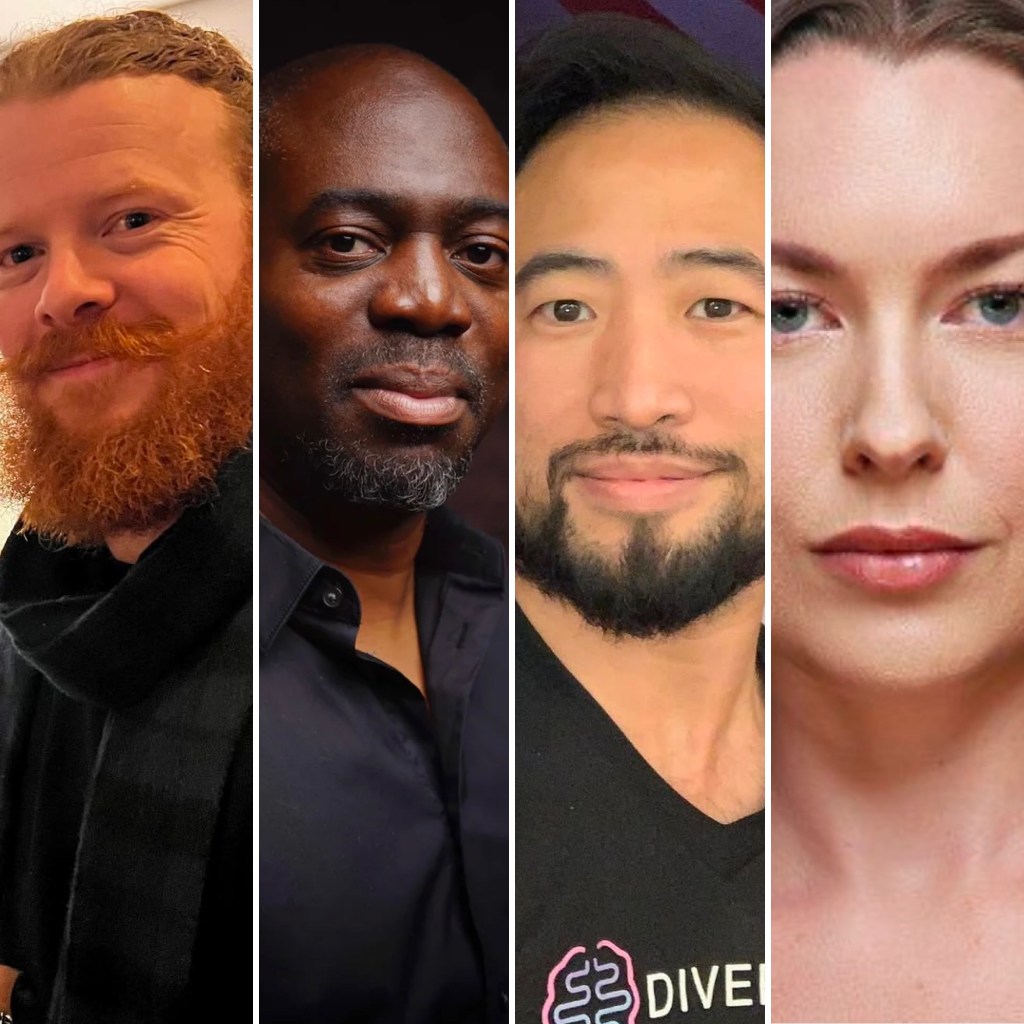
I recently had the pleasure of joining Steve James on the Guru Viking Podcast for another enlightening discussion. This time, I was joined by Alex Ni of Divergence Neuro Technologies and Columbia University neuroscience student Chelsey Fasano to explore the fascinating world of my unique brainwave patterns.

These brainwaves, cultivated over two decades of dedicated meditation, offer profound insights into how the mind and meditation can intersect with neuroscience and personal growth.

Stay tuned for the full episode, but you can see some of my results here:
Exploring the Mind of an Advanced Meditator Pt. 2.

Check out Guru Viking every Friday on YouTube, Apple Podcasts, SoundCloud, and Spotify!

My Story Featured in Usainstants & Brainz Magazine

I’m honored to have my journey featured in Usainstants, where you can read about my transformation from awakening to creating the Yinnergy program. This story highlights how meditation has reshaped my life and the lives of many others. Read the full article here: Morgan’s Transformative Journey.

Additionally, as an Executive Contributor to Brainz Magazine, I’ve been sharing my perspectives on mindfulness, spirituality, and transformation. You can explore my latest articles here: Brainz Magazine.

Stay Tuned for More

I’m so grateful to be able to share my journey with you through these platforms. From podcasts to articles, each step is another opportunity to explore the limitless possibilities of the human mind and spirit.

Thank you for being a part of this journey. Together, let’s continue to unlock the extraordinary potential within us all.

With gratitude and excitement,

Morgan O. Smith

Yinnergy Meditation, Spiritual Life Coaching & My Book, Bodhi in the Brain…Available Now!

https://linktr.ee/morganosmith

Love as the Wildfire That Consumes All

Regardless of the situation or circumstance, love is the force that transforms. Allow it to spread like wildfire, engulfing everything in its path. Imagine every leaf of hate, every hardened trunk of resentment, and every twisted branch of fear ignited, consumed until only ash remains. The ash is not the end, but the beginning—a fertile soil for renewal, a space where new life can emerge, untouched by the old.

Hate feeds on division, growing thick like a forest of misunderstanding. Yet, fire—pure and unrelenting—brings everything to a singular state, where difference dissolves into unity. In the same way, love has the power to dismantle rigid identities and dissolve the illusions that separate us from others. When you love, you open yourself to the world without conditions. You stop trying to manage what is uncontrollable. You release the need to defend a fixed self and surrender to the flowing, infinite nature of life.

This kind of love requires courage. It demands the willingness to step into discomfort, embrace vulnerability, and face even the shadows within yourself. But as each branch of judgment burns, what is revealed is clarity—a vision unclouded by projection and bitterness. You begin to see the world not as a battleground but as a place of shared experience, where suffering and joy, growth and decay, are all part of the same unfolding.

When you allow love to spread, you release control over where it lands. It may touch those you least expect, and reach places long hidden from sight. It may even burn through your own assumptions about what love should look like. But that is its gift. Love, like wildfire, is indiscriminate—it cannot be contained by preference or limited by attachment. It moves with its own intelligence, revealing truths beyond what the mind can grasp.

In the aftermath, there is only stillness. The forest of illusions is reduced to ash, leaving behind the essence of what truly matters. From this stillness, new growth emerges—not the old recycled patterns of fear and separation but a fresh awareness grounded in presence and peace.

Let love be the fire that purifies and regenerates. Allow every layer of fear to ignite, every doubt to dissolve, and every sorrow to be consumed. Stand in the flames, trusting that what burns away is only what no longer serves. What remains, after all is said and done, is freedom.

Morgan O. Smith

Yinnergy Meditation, Spiritual Life Coaching & My Book, Bodhi in the Brain…Available Now!

https://linktr.ee/morganosmith

The Ultimate Love

The Force That Transcends All Boundaries

Love’s true essence is beyond comprehension, an omnipresent force so profound it erases the illusion of separation. It moves in dimensions beyond moral constructs, ideology, and identity. When fully realized, this love obliterates the ego and opens the heart so that even the most hardened souls cannot resist its call.

The human mind craves order, labelling people into categories—good, evil, victim, perpetrator. But ultimate love doesn’t comply with these distinctions. It meets each being at the core of their essence, beneath the conditioning and trauma that have shaped their actions. This kind of love can dismantle even the most fortified belief systems.

Imagine the inner world of someone consumed by hatred, caught in the web of fear, anger, and dogma. The walls around their heart seem impenetrable, yet ultimate love does not storm these walls; it dissolves them. It renders resistance futile by revealing what has been buried deep inside—a longing to belong, to be seen, and to be held in a space beyond judgment.

Ultimate love does not negotiate with the mind. It penetrates through the layers of identity, be it the identity of a saint or a sinner, revealing the same radiant essence beneath all masks. It leaves no room for pretense. This love cannot be owned, managed, or bargained with; it simply is.

Consider the most unimaginable scenario—a person shaped by the horrors of hatred, such as a Nazi, encountering the force of unconditional love. It is not a love that justifies or condones but one that sees beyond. That person’s history, belief system, and ideology would crumble under the weight of such grace. All that remains is a naked heart, laid bare in the presence of a force so magnificent it demands surrender. Not as punishment, but as liberation.

This love does not require forgiveness. It transcends it. Forgiveness suggests wrongdoing, but ultimate love offers a view where the need for forgiveness dissolves, revealing the underlying unity where all things are reconciled. When this love is encountered, tears flow not from shame, but from the relief of being released from the prison of the mind’s narratives.

This is the love that brings anyone, no matter how lost, to their knees—not out of fear, but in awe. It’s the moment when everything false melts away, and only the truth remains: the realization that there has never been separation, and love was the ground of all existence all along.

Ultimate love is not just the absence of hate; it is the luminous presence that absorbs even the darkest shadow, rendering it irrelevant. It is the undeniable force that brings every soul back to where it has always belonged—home.

Morgan O. Smith

Yinnergy Meditation, Spiritual Life Coaching & My Book, Bodhi in the Brain…Available Now!

https://linktr.ee/morganosmith

Facing Your Own Shadow

The Gaze of Disowned Shame

There’s a moment in the journey of inner awakening where the light of awareness turns inward. A place often shrouded in secrecy, where the parts of yourself you’ve hidden away become unmasked. What’s revealed can be unsettling — the shame, guilt, and self-rejection that haunt the depths of your psyche. Encountering this inner entity, stripped of its disguise, becomes an intense confrontation: you face your own shadow.

Yet, when you meet this shadow, it does not recoil, flinch, or fade away. It simply observes you, raw and unmoved, reflecting the energy you’ve poured into rejecting it. For many, this experience feels like staring into an unbroken mirror, one that reflects not just the image you’ve created for the world, but the essence of what’s been buried, judged, and cast away.

When people speak of self-acceptance, it’s easy to imagine embracing the pleasant or polished parts of one’s persona. But the journey of true self-integration calls for embracing what is most despised. The parts labelled as unworthy, inadequate, or unforgivable become the gateway to your deepest transformation. Until then, they stare back with unblinking eyes — patiently awaiting recognition.

But why is this encounter necessary?

The disowned aspects of yourself hold immense power. They are reservoirs of energy locked behind the walls of judgment and fear. Every time they’re denied, they exert their influence unconsciously, driving reactions, decisions, and emotional patterns. The paradox is that the more they’re pushed away, the more they define your behaviour.

To stare at your shame is to feel its immensity. But beyond the discomfort, there is a subtle alchemy taking place. Each moment of presence, without rejection or justification, melts the rigidity of these self-imposed barriers. The shame becomes less monstrous. The guilt becomes less consuming. And in its place emerges a profound understanding: these shadows are not enemies but wounded parts of your psyche yearning for reintegration.

Facing your shame isn’t about confronting a malicious force. It’s about witnessing a fragmented self, desperately wanting to be seen and acknowledged. When fully embraced, these darkened corners of the mind cease to resist, and their power transforms into clarity, strength, and authentic self-expression.

This act of presence is not about seeking remorse or forgiveness. It’s about witnessing without the need for resolution. It’s about being so fully present that you pierce through the veil of judgment and glimpse the raw humanity of your being. That which once seemed abhorrent softens under the gaze of true self-compassion.

Ultimately, this process reshapes your sense of identity. No longer chained to a cycle of rejection and self-criticism, you stand free, more whole, and more alive. The shame that once stared back unrelentingly, feeling no remorse, becomes a quiet reminder that every part of you — no matter how dark — serves as a key to your liberation.

Morgan O. Smith

Yinnergy Meditation, Spiritual Life Coaching & My Book, Bodhi in the Brain…Available Now!

https://linktr.ee/morganosmith

Empathy in Healing

The Transformative Power of Alleviating Others’ Pain

In our increasingly interconnected world, where individual struggles and collective hardships are omnipresent, there lies a profound, yet often overlooked, truth: healing others can lead to our recovery. Tending to the wounds of the afflicted isn’t merely a noble endeavour; it is an odyssey into the core of human existence, and in this journey, we often find our wounds beginning to mend.

Consider the metaphor of ‘licking the wounds’ of those who suffer, a practice observed in the animal kingdom where creatures often literally do so to aid healing. This metaphor taps into a deeper human instinct: the urge to comfort, heal, and connect. When we reach out to those in pain through acts of kindness, active listening, or being present, we engage in a process that transcends mere physical interaction. It becomes a reciprocal exchange where empathy flows, understanding deepens, and barriers dissolve.

This act of giving, paradoxically, becomes a gift to ourselves. Focusing on another’s pain, understanding it, and striving to alleviate it, allows us to step outside our troubles momentarily. This perspective grants us an understanding that our suffering is not solitary. This shared experience of pain and healing creates a mosaic of human connection, joining disparate individuals in a network of empathy and understanding.


Yet, this journey is not devoid of challenges. Engaging with others’ pain necessitates vulnerability – a readiness to accept that in helping others, we might confront our hidden sorrows. But it is in this vulnerability that true strength lies. Each empathetic act fortifies our emotional resilience, enlightens us about the complexities of human emotions, and, most crucially, fosters a deeper self-understanding.

In ‘licking the wounds’ of the afflicted, we inadvertently apply a healing salve to our souls. The lessons gleaned from these compassionate acts extend beyond the immediate relief provided. They mould our character, enhance our empathy, and often lead to a more profound and enriching understanding of our healing process.


In conclusion, the act of healing others serves as a reflection of our own need for healing. It is a reminder that in the complex network of human experiences, our sorrows and joys are interconnected. By extending a hand to those in pain, we inevitably soothe our spirits, and in this mutual exchange of healing, we discover the essence of our shared humanity.

Morgan O. Smith

Yinnergy Meditation, Spiritual Life Coaching & My Book, Bodhi in the Brain…Available Now!

https://linktr.ee/morganosmith

The Birth of a Shamed Male Nation

Confronting the Unconscious Psyche

In 2018, an Ayahuasca ceremony opened my eyes to a profound and unsettling aspect of the male psyche. This experience led me to ponder deeply about the underlying reasons for the continued oppression of women by men, manifested in gender inequality, chauvinism, sexual harassment, and assault. This blog post delves into these complex and often hidden psychological factors.

At the core of this issue lies a ‘bad weed’ in the male unconscious. This aspect is so deeply buried and unacknowledged that most men are unaware of its existence. Even those who recognize it often find themselves too ashamed to confront or discuss it, be it with their male peers, professionals, or female partners.

This hidden part of the male psyche is intricately linked to their sexual identity and perceptions of women, particularly mother figures. For instance, if a man were confronted with an erotic image of a woman from the neck down, his primal reaction might be one of arousal. However, if he realizes that this woman is a younger version of his mother, the ensuing shame and conflict would be immense. This hypothetical scenario highlights the unconscious sexual desires and taboos deeply ingrained in the male psyche.


The maternal figure, a symbol of nurturing and care, becomes paradoxically intertwined with sexual desire in the male unconscious. This creates a profound internal conflict, particularly evident in situations like public breastfeeding, where the nurturing aspect of the female body is perceived in a sexual context. Men’s discomfort in such scenarios is a manifestation of their inability to reconcile these conflicting views of women as both sexual beings and nurturing figures.

This psychological conflict extends to how men perceive their mothers as sexual beings and caregivers. Unable to address or express these complex feelings, men might unconsciously project these emotions onto other women, viewing them through a lens tainted by their unresolved issues with maternal figures. Thus, women who embody aspects of sexuality or nurturing often become targets for male aggression or oppression.


Confronting this deep-seated issue requires a willingness among men to introspect and acknowledge these hidden aspects of their psyche. It is a challenging but necessary journey towards understanding and ultimately changing the unconscious motivations behind gender-based oppression. By facing these uncomfortable truths, men can begin to heal and foster healthier relationships with both themselves and women.

Morgan O. Smith

Yinnergy Meditation, Spiritual Life Coaching & My Book, Bodhi in the Brain…Available Now!

https://linktr.ee/morganosmith

Embracing Shadows to Illuminate the Soul

Black History Month and the Spiritual Journey of Iboga

In the heart of Black History Month, we find ourselves not just celebrating the monumental contributions and enduring legacy of Black individuals but also diving deep into the profound spiritual wisdom that African cultures have nurtured across millennia. One such treasure is the sacred use of Iboga, a potent plant medicine originating from the forests of West Africa, revered for its transformative power in spiritual cleansing and self-discovery.

The Iboga root, central to the Bwiti spiritual practices in Gabon and other parts of Central Africa, serves as a gateway to the innermost depths of the psyche, facilitating what many in the spiritual community call “shadow work.” This process involves confronting and integrating the unconscious aspects of oneself—those hidden fears, past traumas, and repressed emotions that often dictate our lives from the shadows.


The significance of Iboga in spiritual exploration cannot be overstated. Its use is a sacred rite, a profound journey undertaken under the guidance of experienced healers known as Ngangas. These healers, deeply versed in the spiritual and medicinal properties of the plant, facilitate a voyage that is as much about encountering the soul’s darkness as it is about emerging into the light of awareness and renewal.

For spiritual seekers, the journey with Iboga is one of confronting the ego, dismantling illusions, and ultimately gaining insights into the nature of self and existence. This aligns with the non-dualistic understanding that light and dark are not opposites but complementary forces. We find the keys to our liberation and enlightenment in the embrace of our shadows.


The knowledge and practices surrounding Iboga are a testament to the rich spiritual heritage of West African cultures. They remind us that Black History Month is not only a time to honour the past but also to acknowledge and learn from the profound spiritual wisdom that African traditions offer to the world. The legacy of Iboga teaches us about resilience, healing, and the journey towards wholeness.

As we celebrate this month, let us also open our hearts and minds to the lessons of Iboga and the shadow work it facilitates. In doing so, we honour the depth of African spirituality and its invaluable contributions to the global quest for enlightenment and inner peace.

Morgan O. Smith

Yinnergy Meditation, Spiritual Life Coaching & My Book, Bodhi in the Brain…Available Now!

https://linktr.ee/morganosmith

Unveiling Our Collective Trauma

A Journey from the Big Bang to Today’s Reality

Our journey as a species is an unfolding narrative marked not only by our triumphs but also by our collective traumas. The intricacies of deeply rooted traumas go beyond the personal realm, intertwining with the collective memory dating back to the primal chaos of the Big Bang. Yet, these traumas remain largely unconscious, tucked away in the dark corners of our collective psyche. By delving into our innermost fears and insecurities, we can strive to comprehend the breadth and depth of our shared trauma, inching towards a higher state of collective consciousness.

The traumas experienced by individuals aren’t merely personal; they reflect a much larger, shared reality that is embedded within the fabric of our existence. Each personal narrative of trauma is but a thread in the complex web of collective trauma. In understanding our traumas, we catch a glimpse of a shared emotional inheritance that binds us to the existential uncertainties dating back to the inception of the universe. The Big Bang, a cosmic explosion, birthed a reality brimming with chaos, which, as it unfolded, saw the emergence of order, life, consciousness, and inevitably, suffering.

It’s imperative to acknowledge the collective nature of trauma as a pathway towards healing not just ourselves but the society at large. The current societal structure, filled with its manifold crises, reflects the unresolved traumas seeped deep within our collective unconscious. The societal adversities we face today – be it wars, conflicts, or ecological crises – manifest from a shared space of fear, insecurity, and past traumas.

The quest for healing requires a deep dive into the uncharted waters of our collective psyche. By illuminating the shadowy realms of our unconscious, we can begin to untangle the complex knots of collective trauma that keep us ensnared in a cycle of fear and suffering. As we venture into the depths of collective wounds, we open up channels for empathy, understanding, and ultimately, collective healing.

The examination and healing of collective traumas might be our gateway to nurturing a society grounded on empathy, compassion, and unity. In unison, we can confront and mend the underlying traumas that fragment our society, propelling us towards a more harmonious existence. This path of collective healing beckons a transformation not only in our personal lives but in the very essence of our society, urging us to evolve towards a higher state of collective consciousness and unified existence.

Morgan O.  Smith

Yinnergy Meditation & My Book, Bodhi in the Brain…Available Now!

https://linktr.ee/morganosmith