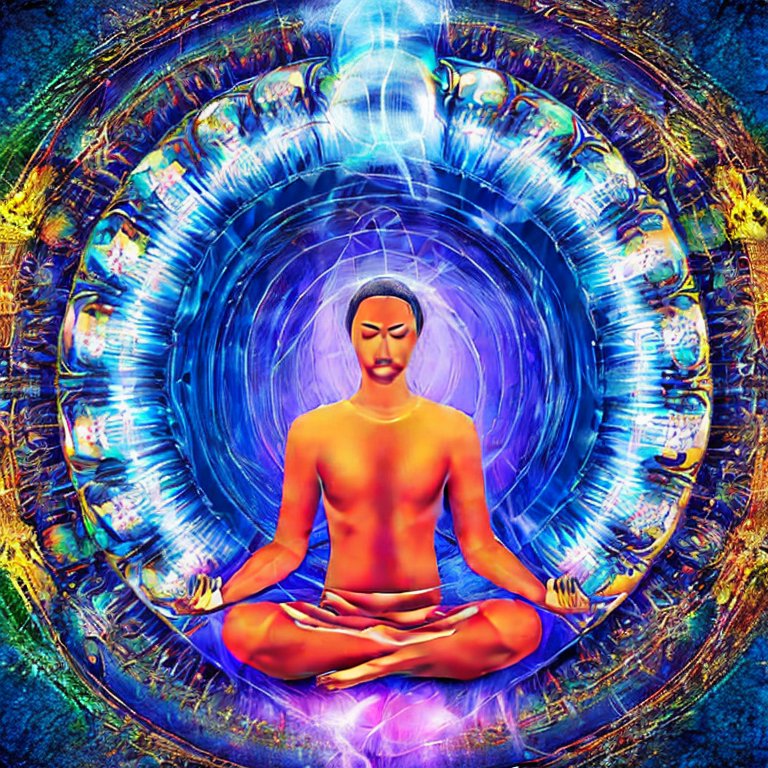
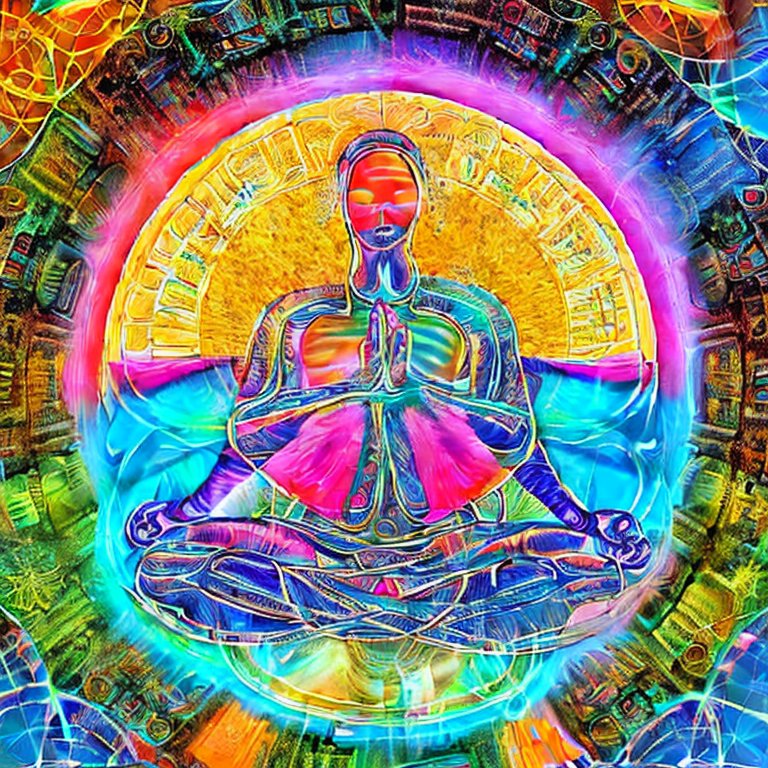
Darshan and the Living Water

Darshan is a mystery that cannot be easily captured in language. Some dismiss it as myth, others reduce it to a placebo, and still others romanticize it into doctrine. Yet none of these explanations touch what truly happens when presence itself meets you so deeply that the idea of a separate “you” begins to dissolve.

I first received darshan from Paramahamsa Vishwananda in 2019. At the time, I could not fully comprehend what had been given. The experience did not instantly transform me. It was months later, as if a seed had been quietly germinating, that a profound awakening broke open—an unshakable, full-blown realization of Parabrahman. Everything I once considered a spiritual awakening before that year became eclipsed, revealed as only stepping stones toward a wholeness beyond description.

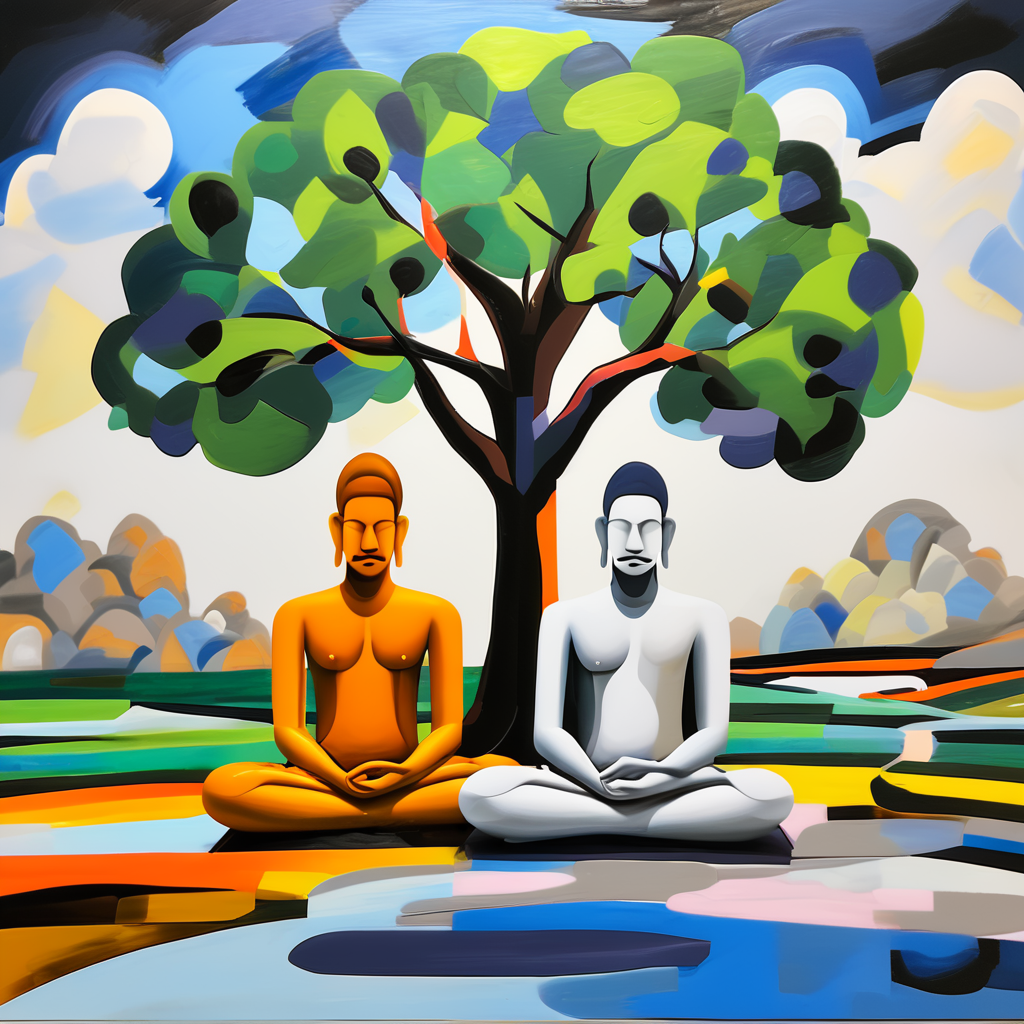
The encounter planted something that only ripened with time. No technique, no meditation, no psychedelic journey, no years of entrainment could compare to what unfolded in those months after darshan. The practices prepared me—polished the vessel, so to speak. But Darshan was the living water that finally filled it.

On August 30, 2025, I met Paramahamsa Vishwananda in person for the fifth time. The following day, as I began to write these words, tears streamed down my face unprovoked. The intensity of the remembrance, the simple act of reflecting on what darshan has meant in my life, undid me. Not during the encounter itself, but in the quiet aftermath, when the depth of it could no longer remain unspoken.

If one insists that darshan is “only” a placebo, I embrace the word. Placebo, after all, is proof of the mind’s openness to healing, its willingness to cross thresholds it once denied. What does it matter if the mechanism is mysterious when the outcome is undeniable? The very attempt to reduce it already misses the essence: darshan is not an explanation. It is an encounter that leaves explanation behind.

My friend, comedian Marc Trinidad, has a saying: You can’t pour clean water into a dirty cup. Thousands of hours of meditation may have cleansed that vessel, yet darshan was not merely clean water—it was sparkling, living, flowing with a vitality of its own. Preparation mattered, but preparation alone never gave me the fullness that flowed after meeting his gaze.

Darshan dismantles the scaffolding of the spiritual search. Years of practice may feel like climbing a mountain, but one glance can place you at the summit. That does not make the climb unnecessary—it makes clear that the climb itself was a preparation for the recognition that you were always already there.

This is not about worshiping a figure or elevating a personality. Darshan reveals the infinite within by reflecting it so purely through one who has dissolved into that truth. In being seen, the boundaries of self blur, and what shines forth is nothing less than the source of all seeing.

Darshan cannot be mythologized away, nor can it be reduced to a placebo. It is living water—clear, inexhaustible, flowing freely into those ready to drink. And sometimes, its effects bloom long after the moment has passed, as seeds planted in silence burst open in their own time.

Morgan O. Smith

Get Your Free Copy of My Book, Bodhi in the Brain!

https://subscribepage.io/oTSZQu

The Divine Soil of Atman

Understanding the Unity of Existence

Atman is identical to Brahman, fundamentally the same. While Atman is often viewed as the individualized aspect of Brahman, it retains its essence as Brahman. Brahman is the ground of all being, and Atman is but a speck of this divine soil. This soil, sharing the same substance as the ground, emphasizes their intrinsic unity.

Atman itself has no location, shape, or form, yet the physical body—the gross body—does. This physical body is also Atman but has shape and form, making it localized and subject to polarity. The physical body, dense and tangible, includes everything that constitutes it: vibrating strings, subatomic particles, atoms, molecules, and cells. Each of these elements, in their individual form, is Atman.


All the subtle bodies are also Atman, spanning from the most subtle to the gross physical body. When the physical body dies, the soul doesn’t leave the body because it is non-local. The soul, as Atman, remains ever-present. Atman offers a more sophisticated explanation of the soul. Remember, Atman doesn’t leave the body because there’s nothing there to leave. This nothing or nothingness is Atman, the empty witness.

The opposite of all shapes and form is indeed all shape and form. Nothingness is non-local, omnipresent, and ubiquitous. In its absolute state, nothingness manifests as everything. This empty witness manifests its individual reality. Every event that occurs from its individual perspective is Atman. Everything that happens, from all perspectives, is Brahman. Atman and Brahman are the same, transcending the ego and the sense of self.


Transcending the ego is an act, part of the cosmic play that Atman/Brahman engages in. The same Atman/Brahman that doesn’t exist yet does. Everything and nothing are the same, merely imagined from two different perspectives.

Morgan O. Smith

Yinnergy Meditation, Spiritual Life Coaching & My Book, Bodhi in the Brain…Available Now!

https://linktr.ee/morganosmith

Beyond Belief

Embracing Enlightenment Beyond Philosophical Boundaries

Philosophies, at their core, are a tapestry of beliefs and principles that guide our understanding of the world and our place in it. They offer frameworks for interpreting life’s complexities, from the ancient wisdom of Hinduism and Buddhism to the foundational teachings of Christianity and beyond. Each philosophy, with its unique perspectives and teachings, resonates differently with individuals, often aligning with their inherent values and worldviews.

However, a profound transformation occurs when one experiences a spiritual awakening. This awakening transcends the conventional realm of beliefs and ideologies. It’s a profound realization that our true essence lies beyond the constructs of any philosophy. In this enlightened state, the distinctions between different philosophies blur, as the awakened individual perceives a universal truth that underlies all teachings.

Spiritual awakening brings about a shift in consciousness where the ego, once the center of our universe, becomes an enlightened ego. This enlightened ego no longer clings to rigid belief systems; instead, it navigates the world with a newfound understanding and flexibility. It acknowledges that while philosophies can provide guidance and insight, they are not absolute truths but rather tools that help us make sense of our journey.


In this light, philosophies are not rendered obsolete, but their role in our lives is significantly altered. They become references rather than doctrines, offering insights that complement the inner wisdom gained through spiritual awakening. The enlightened ego uses these philosophies not as definitive answers but as aids in its continuous journey of growth and understanding.

In essence, spiritual awakening marks a transition from seeking truth in external philosophies to discovering it within. It’s an invitation to view the world and its myriad philosophies not as definitive guides but as mirrors, reflecting parts of the universal truth that resides within each of us.


Morgan O. Smith

Yinnergy Meditation & My Book, Bodhi in the Brain…Available Now!

https://linktr.ee/morganosmith

Illumination of the Soul

Spiritual Enlightenment and Moksha

As seekers on the path of inner wisdom, we often encounter the concepts of spiritual enlightenment and moksha. Both are beacons that promise to guide us out of the darkness of ignorance, yet they are not the same.

Spiritual Enlightenment is a term that has found its roots in the West, heavily influenced by the philosophies and meditative practices of the East. It implies an awakening to a reality that transcends our ordinary experience of self and the universe. The enlightened being sees the interconnectivity of all life, perceives the illusion of the ego, and often experiences profound peace and understanding of the present moment. It’s an expansive realization of consciousness, often accompanied by a deep compassion for all beings.

Moksha, on the other hand, is a Sanskrit word that originates from ancient Indian philosophy and is integral to spiritual traditions like Hinduism, Buddhism, and Jainism. Moksha goes beyond the realization of interconnectedness; it represents the ultimate release from the cycle of birth, death, and rebirth — the wheel of samsara. It is not merely an enlightenment of the mind but a liberation of the soul from the karmic ties that bind it to the physical plane.

The distinction lies in their ultimate goals and the pathways to reach them. Spiritual enlightenment is often seen as a milestone, a significant spiritual awakening that may happen time and again, deepening one’s insight and wisdom. Moksha, however, is the final destination — a state of eternal bliss and cessation of all suffering.

To consider enlightenment and moksha is to dance with the profound mysteries of existence. Are they two different peaks or simply different paths up the same mountain? Perhaps the journey is less about the distinctions and more about the profound transformation each individual undergoes in their quest for the ultimate truth.

In our modern age, where the material often overshadows the spiritual, revisiting these ancient concepts might offer a lens to reevaluate our lives purpose. Whether we seek enlightenment or moksha, the essence of our search is a testament to the human spirit’s unyielding quest for the absolute.

And so, we continue to explore, meditate, and live virtuously, with the hope that whether through enlightenment or moksha, we may all find our way to that which we most deeply yearn for — peace, understanding, and liberation.

Morgan O.  Smith

Yinnergy Meditation & My Book, Bodhi in the Brain…Available Now!

https://linktr.ee/morganosmith

The Paradox of Perfection

Ground of All Being and Maya

The universe, in its vastness and complexity, brings forth a myriad of questions that have perplexed thinkers across generations. One of the most profound concepts to grapple with is the nature of reality itself. Within the philosophical tapestry, two concepts emerge with force and subtlety: the “Ground of All Being” and “Maya”.

**Ground of All Being**

The Ground of All Being is an abstract principle suggesting that there exists an ultimate foundation or source for everything in existence. This ground isn’t a tangible thing but a concept – the idea that there’s an underpinning, unchangeable reality beneath the mutable surface of life. This can be likened to the depths of an ocean where calmness reigns, contrasting with the choppy waves on the surface.

**Maya: The Illusion**

Hailing primarily from Eastern traditions, particularly Hinduism, Maya is the term that describes the world as we see it: a world of illusion, impermanence, and change. Maya doesn’t suggest that the world is fake, but that our perceptions and understandings are limited, sometimes deceiving us from the true nature of reality.

**The Paradox of Perfection**

At a glance, it seems paradoxical: How can a universe so perfect birth what is perceived as imperfection? The beauty of this conundrum is that perfection and imperfection are inherently subjective, shaped by our limited human perceptions and conditioned understandings.

Perhaps the universe is so intricately and impeccably designed that it incorporates imperfection as part of its perfection. Much like a symphony that uses dissonance to make the harmonious notes shine brighter. The imperfections, the fleeting moments, the transient joys and sorrows – they all serve a purpose. They make the canvas of life more prosperous, pushing us to question, seek, and understand.

Imperfections are not flaws but opportunities: windows into deeper layers of understanding, growth, and realization. When we confront Maya, we’re not battling falsehoods but navigating layers of reality, slowly inching closer to the Ground of All Being.

**In Conclusion**

The journey from Maya’s illusion to the Ground of All Being isn’t a path of renunciation, but one of realization. Realizing that the imperfections we see, feel, and experience are not mere aberrations, but intrinsic facets of a grand design. They challenge us, shape us, and push us closer to understanding the paradoxical nature of existence: that within perfection lies imperfection and within imperfection, an underlying, unchanging perfection.

Morgan O. Smith

Yinnergy Meditation & My Book, Bodhi in the Brain…Available Now!

https://linktr.ee/morganosmith

The Ego

Many Faces of the “I”

In our quest to understand ourselves, few concepts are as debated, dissected, and deliberated as the ego. Spanning from ancient spiritual scriptures to the modern therapist’s couch, the ego stands as a reflection of our sense of self and our relation to the world. Yet, its definitions vary, painting a multifaceted picture of this central aspect of human existence.

### **1. Ego in Psychoanalysis: The Mediator**

Freud’s tripartite model of the psyche introduced us to the ego as the balancing force between the primal urges of the id and the moral compass of the superego. Here, the ego isn’t an adversary but a necessary mediator, guiding our actions in a world of societal norms. It poses the question: Is our ego the voice of reason amidst internal chaos?

### **2. Ego in General Psychology: The Self’s Mirror**

When we talk about self-esteem or self-worth, we’re often referring to the ego. This definition paints the ego as a mirror reflecting our perceived value and place in the world. Yet, this raises a thought-provoking inquiry: If our ego is a mirror, who or what determines its reflection?

### **3. Ego in Philosophy: The Conscious Observer**
Descartes’ famous dictum “Cogito, ergo sum” (I think, therefore I am) encapsulates the philosophical perspective of the ego as the conscious thinking subject. If our ego is the conscious observer of our experiences, it invites us to ponder: Without this observer, do experiences lose their significance?

### **4. Ego in Spirituality: The Illusory Self**
Many spiritual traditions view the ego as a barrier to enlightenment. It’s the illusory sense of separateness that binds us to suffering. The spiritual perspective urges us to ask: If the ego is an illusion, then who indeed are we beneath this veneer?

### **5. Ego in Pop Culture: The Mask of Pride**
Everyday parlance often equates a “big ego” with arrogance. It’s seen as a mask, sometimes shielding insecurities, other times amplifying genuine pride. This usage compels us to consider: Is the ego merely a façade, and what lies behind it?

### **6. Ego in Eastern Philosophies: The Creator of “I-ness”**

Hindu philosophy introduces Ahamkara, the aspect of us that births the sense of “I.” This ego is neither good nor bad but a natural facet of being human. Reflecting on this, we might wonder: Is the ego, not an enemy but an inevitable companion on our human journey?

**In Conclusion: The Infinite Layers of “I”**

The ego, regardless of its definition, remains at the core of human introspection. Its multifaceted interpretations offer not just explanations but a myriad of questions. As we navigate our understanding of the ego, we’re not just uncovering the layers of this concept but also the layers of our very existence.

In exploring the ego, we’re invited to embark on a profound journey inward, to question, understand, and perhaps even transcend the confines of the “I.” For as varied as its definitions might be, the ego’s ultimate gift is the invitation to self-reflection.

Morgan O. Smith

Yinnergy Meditation & My Book, Bodhi in the Brain…Available Now!

https://linktr.ee/morganosmith

Exploring the Emotional Spectrum

A Journey Through Plutchik’s Wheel and the Hindu Subtle Body

Introduction

The exploration of human emotion transcends disciplines, cultures, and time. From psychological models such as Plutchik’s Wheel of Emotions to the spiritual teachings within Hinduism concerning the subtle body, the pursuit to understand our emotional selves is as complex as it is enriching. This blog post takes a deep dive into these seemingly disparate concepts, examining the intersection of emotion, spirituality, and subtle awakening.

Plutchik’s Wheel of Emotions

Plutchik’s model identifies eight basic emotions:

1. **Joy** – A sense of happiness and fulfillment.
2. **Trust** – Confidence in something or someone.
3. **Fear** – A response to perceived danger or threat.
4. **Surprise** – A reaction to the unexpected.
5. **Sadness** – A feeling of loss or despair.
6. **Disgust** – A strong aversion or repulsion.
7. **Anger** – A reaction to perceived wrong or injustice.
8. **Anticipation** – Expectation or excitement for what’s to come.

These primary emotions combine to form complex emotions and are mapped in a way that each emotion has an opposite.

The Emotional Subtle Body in Hinduism

Hindu philosophy introduces the concept of the subtle body, an intricate and vital part of our spiritual being, separate from the physical body. Comprised of the mind (Manas), intellect (Buddhi), ego (Ahamkara), and conditioned consciousness (Chitta), the subtle body is responsible for our thoughts, emotions, and consciousness.

Connecting the Dots: Emotions and the Subtle Body

The profound connection between Plutchik’s emotional spectrum and the emotional subtle body within Hinduism lies in the universality of emotions and the depth of human experience. Here’s a breakdown:

– **Joy & Trust**: These positive emotions align with spiritual awakening and the cultivation of inner peace and compassion, reflecting a higher level of consciousness.

– **Fear & Anger**: These emotions can be linked to spiritual blocks or ignorance (Avidya) within Hinduism, which hampers spiritual growth.

– **Surprise & Anticipation**: These emotions speak to our deep connection with the universe and the ever-changing nature of life, echoing the Hindu belief in the transient nature of our physical existence.

– **Sadness & Disgust**: Often seen as negative emotions, they can be channels for growth and understanding of the self, mirroring the Hindu concept of Dharma or righteous living.

Conclusion: Emotions as Pathways to Spiritual Awakening


The emotional spectrum is not merely a psychological construct but a spiritual pathway. By understanding emotions through the lens of both Plutchik’s model and Hindu philosophy, we can embark on a journey toward subtle spiritual awakening.

The nuances of emotions, their combinations, and their reflections within the emotional subtle body offer us tools to navigate our spiritual paths. The profound connection between these concepts suggests that our emotions are not transient or superficial but deeply entwined with our very essence.

This exploration encourages us to recognize emotions as more than reactions to the world around us. They are signposts guiding us toward self-realization and a deeper connection with the divine within.

Morgan O. Smith

Yinnergy Meditation & My Book, Bodhi in the Brain…Available Now!

https://linktr.ee/morganosmith

Sand Castles of Consciousness

Discovering the Essence Within

Introduction:


In the tranquil tapestry of Eastern philosophy, where contemplation converges with existence, there lies a profound revelation – Everything in existence is composed of Pure Consciousness. Here, Consciousness is not merely an attribute; it is capitalized, symbolizing its omnipresence as the very fabric that weaves through the cosmos. It is akin to an ancient tale of a castle crafted from sand, reflecting that though it may don the guise of a majestic structure, it remains, in essence, sand.

The Sand and the Castle:

Visualize a child meticulously building a sand castle on the shore. The grains of sand, amassed and sculpted, assume the shape of a castle. Does the sand cease to be sand when shaped into a castle? Certainly not. This allegory mirrors the realization that while the myriad forms around us may appear different, they are all permutations of the same unyielding Consciousness.

The Essence of Consciousness:

Consciousness is akin to Brahman in Hinduism or the Tao in Taoism in the Eastern philosophical context. The unchanging, infinite, immanent, and transcendent reality is the Divine Ground of all matter, energy, time, space, being, and everything beyond. Our ephemeral existence is a mere reflection, a ripple in the vast ocean of Consciousness.

Flow of Forms:


Just as a sand castle is subjected to the whims of waves and winds, forms in the material world are in a constant state of flux. The ancient Hindu text, the Bhagavad Gita, illustrates this with the concept of ‘Lila’, depicting the world as a divine play of forms. The Taoist philosophy also reverberates with this thought through the Tao, which flows through and is the inherent nature of all things.

The Inner Alchemy:

One might inquire, how does this realization benefit our daily lives? Understanding that we are not just isolated entities, but integral threads woven into the fabric of Consciousness, can be transformative. It helps us transcend the illusion of separateness and cultivates compassion, humility, and interconnectedness with all beings and the natural world.

Conclusion:


As we embrace the wisdom of Eastern philosophy, let us be mindful of the sand castles we build and the sands that shape them. Let us embark on a spiritual odyssey to unearth the Consciousness within and around us, recognizing that the essence is unchanging, infinite and all-encompassing. Like the sand castles by the sea, our forms are transient, but the Consciousness that shapes us is eternal.

Morgan O. Smith

Yinnergy Meditation & My Book, Bodhi in the Brain…Available Now!

https://linktr.ee/morganosmith

Cosmic Whispers

Deciphering the Divine Blueprint of Creation

Introduction:


In the quiet moments when our minds wander into the realm of the cosmic, we may find ourselves pondering a question that has beguiled philosophers and theologians for centuries: Why did God manifest everything into being? What could be the purpose behind the sprawling tapestry of stars, planets, and life? My answer is that God created everything to become, and to experience the total opposite of itself. However, like threads in a tapestry, there are numerous perspectives woven into this enigmatic question. Let’s unravel a few.

1. **The Divine Artist: Self-Expression and Creativity**

Imagine an artist, brush in hand, dipping into an infinite palette. Some believe that God, the Divine Artist, created the universe as an ongoing expression of self-expression and creativity. Here, the universe is a canvas and God’s creations are brushstrokes – intricate, boundless, and ever-evolving.

2. **Lila: The Cosmic Dance of Divine Play**

Within Hinduism, creation is seen as ‘Lila’ or divine play. Picture God as a dancer, whose movements give birth to galaxies and life. These movements are not driven by need or desire but are spontaneous expressions of joy. Lila suggests that the universe is God’s dance floor, where the Divine revels in the ecstasy of creation.

3. **Harbor of Love: Creation for Relationship**

What if the universe is a love letter? In Christianity and other religious traditions, it is suggested that God created the cosmos and sentient beings for the purpose of relationship and love. The creation is God’s way of extending an invitation to share in divine love and companionship.

4. **Divine Reflection: Creation as Self-Discovery**

Ponder a God yearning for self-knowledge. By manifesting a multitude of beings, each with unique experiences and perspectives, God gazes into a living, cosmic mirror. This mirror reflects different facets of the Divine, allowing God to explore and understand its own infinite nature.

5. **Kabbalah’s Divine Constriction: Creating Space for Others**


Envision a sea retracting to form a shore. Kabbalistic tradition posits that God underwent a self-constriction, known as Tzimtzum, to create space for an independent reality. This act of withdrawal was one of ultimate generosity, allowing for free will and a two-way relationship between creation and the Divine.

6. **The Soul’s Crucible: Testing and Spiritual Growth**

Is the universe a crucible for refining souls? Some belief systems suggest that God created the universe as a testing ground. Through challenges and experiences, souls are purified, tempered, and progress along a spiritual path.

7. **A Purposeless Creation: Philosophical Nihilism**

Not all threads are woven with intention. Some philosophical perspectives maintain that creation has no purpose. It posits that existence is simply a natural by-product of God’s existence and devoid of any inherent meaning.

8. **Pantheism: The Universe as God’s Identity**

Picture a universe where every atom is a fragment of divinity. Pantheism posits that God and the universe are identical. Nature is not a separate creation but a part of the Divine. Through the vastness of space, we witness the body of God.

Conclusion:

As we stand before this intricate tapestry of creation, it becomes clear that the question of why God manifested the universe is as multifaceted as the cosmos itself. Each thread—whether woven with intention, love, curiosity, or even ambiguity—adds depth to this cosmic masterpiece. In examining these threads, we engage not just with the mysteries of creation, but with the essence of our own search for meaning and connection in an unfathomably vast universe.

Morgan O. Smith

Yinnergy Meditation & My Book, Bodhi in the Brain…Available Now!

https://linktr.ee/morganosmith

The Enigmatic G.O.D.

A Tapestry of Multifaceted Interpretations through Turiyatita

Introduction:
In the endless quest to fathom the profound entity known as God, Eastern and Western philosophies converge and diverge in a myriad of ways. This cosmic journey leads us to Turiyatita, a transcendent state beyond the fourth state of consciousness, where the true essence of God can be wholly embraced. Let us delve into the kaleidoscopic interpretations of the acronym G.O.D. through the lens of both Eastern and Western spirituality.

Giver Of Dreams:
In Western concepts, God is often seen as the Giver Of Dreams, inspiring aspirations. Contrarily, Eastern philosophies like Hinduism consider God as the Atman, reflecting the highest potential within oneself.

Guardian Of Divinity:
The Western Abrahamic faiths often portray God as a protector of purity, a Guardian Of Divinity. In Taoism, the Tao is considered the source of all divinity, without actively guarding it.

Guide Of Destiny:
In the Western context, God often plays a direct role in guiding destinies. The Eastern concept of Dharma reflects an innate order and righteousness, where individuals are their own guides through Karma.

Generator Of Diversity:
In the West, God’s creative aspect is exemplified in Genesis. In Hinduism, Lord Brahma symbolizes the Generator Of Diversity, being responsible for creation within the eternal cycle of Samsara.

Gatherer Of Devotion:
In the West, devotion is often gathered in the form of prayer. In Bhakti Yoga, an Eastern practice, devotion is an all-encompassing love and surrender to the divine.

Grand Orchestrator of Dynamics:

While Western deism believes in God as the Grand Orchestrator who set the universe in motion, Daoism sees the Dao as an impersonal force, guiding the natural order.

Garden Of Delight:
In Christianity, Eden represents the Garden Of Delight. In contrast, Buddhism’s Sukhavati is a pure land, representing an enlightened state of bliss and contentment.

Galaxy’s Omnipotent Designer:
In the West, Intelligent Design Theory posits God as the designer. Hinduism’s Vishwakarma is revered as the divine architect of the universe, reflecting a similar sentiment.

Guardian Of Deeds:
In Western theology, the idea of a judgmental God who serves as Guardian Of Deeds is prominent. The Eastern concept of Karma conveys a self-regulating system of moral retribution.

Gracious Overseer of Deliverance:
Both Eastern and Western traditions portray God as a liberator. In Christianity, salvation is through Jesus Christ; in Hinduism, Moksha or liberation from the cycle of rebirth.

Realization through Turiyatita:
To truly integrate these interpretations, one must transcend to Turiyatita, a state beyond the waking, dreaming, deep sleep, and Turiya (pure consciousness). In this pinnacle of spiritual awakening, the boundaries dissolve, and one can embody the limitless interpretations of G.O.D., embracing a harmonious coexistence of Eastern and Western spiritual thought.

Conclusion:
The myriad interpretations of G.O.D. weave a rich tapestry of philosophical thought. Turiyatita offers a transcendent vantage point where the essence of these interpretations is revealed in its full glory, harmonizing the wisdom of the East and West.

Morgan O. Smith

Yinnergy Meditation & My Book, Bodhi in the Brain…Available Now!

https://linktr.ee/morganosmith