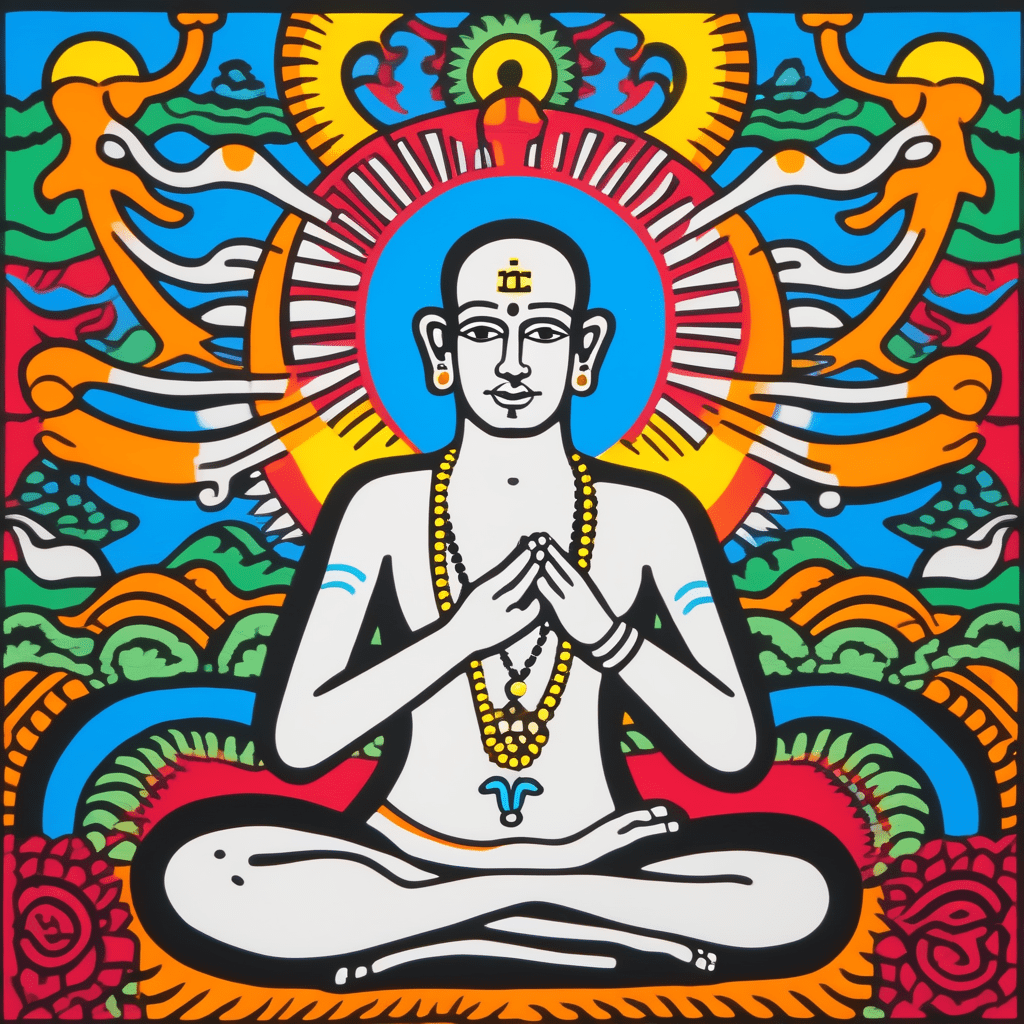
The Paradox of Purpose in the Ground of All Being

In philosophical discourse, few concepts are as intriguing and paradoxical as the nature of the “ground of all being.” This term, often used in metaphysical and theological discussions, refers to the fundamental basis or underlying reality of all that exists. At the heart of this concept lies a profound paradox concerning purpose.

#### Purposelessness at the Core


The ground of all being, by its very definition, transcends all known dimensions, including space and time. The ultimate reality underpins everything, yet it stands outside the boundaries of our physical and temporal world. In this sense, the ground of all being is inherently purposeless. It does not pursue goals or objectives because it exists beyond the constructs where purpose holds meaning. In its neutrality and transcendence, it simply ‘is’, unburdened by the need for purpose that characterizes human existence.


#### The Emergence of Purpose

Yet, curiously, from this purposeless ground emerges all purpose. The universe, with its myriad galaxies, stars, and planets, including our own, sprang from this foundational reality. Every atom, every life form, every human thought and endeavour finds its origin in this ground of all being. The very space and time that it transcends are the platforms upon which purpose is built and realized. In human terms, purpose is inextricably linked to our existence within space and time. Our goals, dreams, and aspirations are rooted in our temporal journey through life.

#### A Flourishing of Purpose within Constraints


It is within the confines of space and time that purpose finds its expression and fulfillment. Human endeavours, whether artistic, scientific, or personal, unfold within the physical world and over time. The space-time continuum is not just a physical reality but a canvas for manifesting purpose. The ground of all being, while itself devoid of purpose, is the source from which all purposes derive and the stage upon which they play out.


#### Conclusion: A Profound Duality

The ground of all being presents us with a profound duality. It is a realm devoid of purpose, yet it is the very source from which all purpose in the universe springs. This paradox is a philosophical quandary and a reflection of the profound mystery at the heart of existence. In understanding this, we gain a deeper appreciation of the complexities and wonders of the universe and our place within it.

Morgan O. Smith

Yinnergy Meditation, Spiritual Life Coaching & My Book, Bodhi in the Brain…Available Now!

https://linktr.ee/morganosmith

The Theist’s Agnostic Dilemma

On the Quest for Nondual Spiritual Awakening

For as long as humans have looked up to the skies and pondered upon the nature of existence, the question of God’s existence has been a prominent query. Some vehemently assert the presence of divine power, some deny it with equal vigour, while others remain in a state of uncertainty. What’s interesting, however, is the subtle paradox that emerges when one deeply contemplates the nature of belief and knowledge concerning God.

At its core, to be a theist is to believe in the existence of God or gods. This belief often stems from religious teachings, personal experiences, or intuitive convictions. Yet, if we pause and dissect this ‘belief’, we can identify an underlying layer of agnosticism. Agnosticism, in essence, is the state of not being sure about the existence or non-existence of God. While it might seem counterintuitive, the argument can be made that every theist, at some level, is an agnostic.

The reason is simple: to believe is not the same as to know.

Belief is a conviction, a deeply held trust in something, often without empirical evidence. Knowledge, on the other hand, suggests a certainty, a definitive understanding. So, while a theist believes in God, can they truly say they know God exists, in the same way, they know the sun rises in the east?

This uncertainty, this inability to ‘know’ for sure, brings us to the concept of the Nondual spiritual awakening. Nonduality, as a spiritual tenet, postulates that there is no separation between the self and the universe, between man and God. In this awakened state, one doesn’t just believe in God; one realizes or experiences God’s presence in everything. It’s akin to a veil being lifted, revealing a world where the divine isn’t an external entity but is immanent and present in every facet of existence.

Until one reaches this state of Nondual realization, the existence of God remains a matter of faith and belief. The journey from belief to knowledge, in the spiritual sense, is what many spiritual seekers aim for. It’s a transformation from the intellectual to the experiential, from conceptual understanding to living realization.

In conclusion, the theist’s journey, while rooted in belief, inherently contains a quest for certain knowledge. It’s a paradox that every believer grapples with, consciously or unconsciously. While some are content with their faith, others embark on spiritual voyages to seek that elusive Nondual awakening. Whether you’re a believer, an atheist, or an agnostic, the quest for understanding the nature of God and our place in the cosmos is a deeply human endeavour, one that transcends labels and challenges us to think beyond the confines of our current understanding.

Morgan O. Smith

Yinnergy Meditation & My Book, Bodhi in the Brain…Available Now!

https://linktr.ee/morganosmith