The Sacred Act of Creation

Beyond Enlightenment

In the realm of spiritual exploration, we often revere the state of enlightenment as the ultimate achievement. However, there lies a profound gift that transcends even this pinnacle of spiritual awakening: the act of giving birth.

The capacity to bring forth life is a divine endowment bestowed upon women. This sacred act is not merely a biological function but a profound spiritual event. Each woman who gives birth carries within her the potential to bring enlightened beings into the world. The act of childbirth is a testament to the unbroken lineage of human existence, a continuum that makes the emergence of enlightened souls possible. Without the mothers who nurture and bring forth life, the very fabric of enlightenment would remain incomplete.

Men, too, share in this sacred responsibility. The ability to sow the seed of life means contributing to the infinite possibilities of creation. Every act of conception holds the potential to shape the future, to influence the tapestry of existence in ways that are both seen and unseen. Each contribution to the cycle of life is a silent affirmation of the interconnectedness of all beings, a recognition that enlightenment is not an isolated event but a collective journey.


Enlightenment itself, while transcendent and all-encompassing, is deeply rooted in the human experience. It is a state that emerges not in isolation but in the context of our shared existence. The enlightened beings of today stand on the shoulders of those who came before them, those who brought them into the world, nurtured them and set them on their path. The journey to spiritual awakening is a collective endeavor, woven through generations and interconnected lives.

In recognizing the sacredness of creation, we honour the unsung heroes of the spiritual journey: the mothers and fathers who contribute to the continuity of life. Their roles are not secondary to enlightenment but are integral to it. The potential for enlightenment exists because of the gift of life, which is perpetuated through the act of creation.
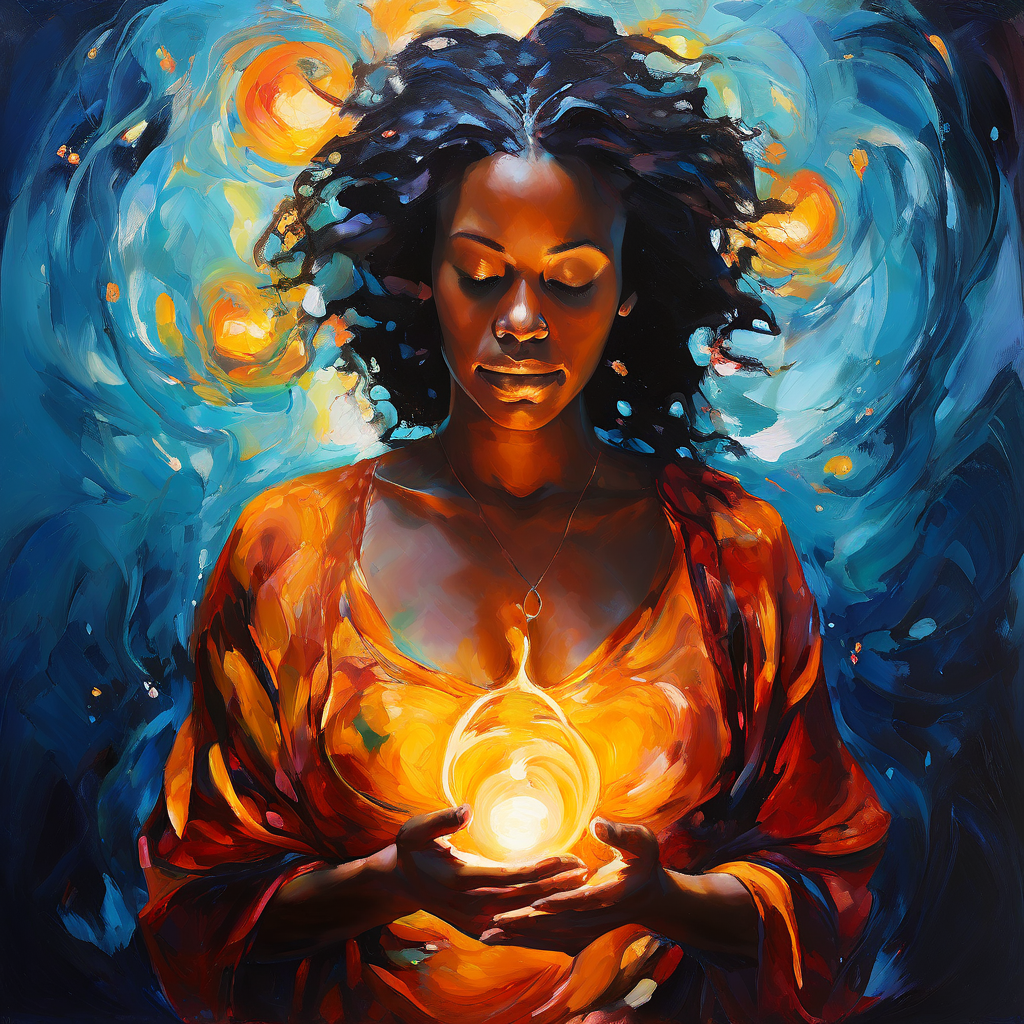

Thus, as we seek spiritual enlightenment, let us also revere the profound power of creation. Let us acknowledge that the journey to enlightenment begins with the simple, yet profound, act of giving life. In this recognition, we find a deeper appreciation for the interconnectedness of all existence, a recognition that every birth is a potential awakening, every new life a testament to the infinite possibilities of enlightenment.

Morgan O. Smith

Yinnergy Meditation, Spiritual Life Coaching & My Book, Bodhi in the Brain…Available Now!

https://linktr.ee/morganosmith

The Profound Transformation of Realizing Oneself as Brahman

A Journey Beyond the Self

In the boundless tapestry of human existence, few ideas are as profound and transformative as the realization of oneself as Brahman. A central concept in Hindu philosophy, Brahman refers to the ultimate reality or cosmic spirit, a principle that transcends the individual self and unites all living beings.

This blog post explores the many changes an individual might experience upon this realization, a journey that transcends mundane existence and awakens a new consciousness.

### The Loss of Ego and the Embrace of Unity

Perhaps the most radical shift in consciousness comes from losing the individual ego. Recognizing oneself as part of the universal oneness leads to a dissolution of the self, allowing the individual to see beyond the superficial distinctions that often characterize human perception. This leads to a profound sense of unity, empathy, and compassion, transcending barriers like race, nationality, and religion.

### A Shift in Values and Desire

The realization of Brahman changes the very fabric of desire and ambition. Material possessions, social status, and even relationships may lose their significance, replaced by spiritual growth and a deepened understanding of the cosmic order. The individual might pursue selfless service, finding fulfillment in contributing to the well-being of all.

### The Embrace of Paradox and the Transcendent Nature of Existence

This profound awakening allows for a comfortable acceptance of paradoxes and contradictions. Time becomes more fluid, creativity blossoms, and the person might develop an ability to recognize synchronicities, meaningful coincidences that reveal the interconnected web of existence.

### Living in Harmony and Transcending Social Constructs


Living in harmony with nature, respecting all life, and transcending conventional gender roles and social constructs, the enlightened individual moves through life with grace, mindfulness, and effortless action. Their actions are unforced, carried out with a sense of reverence and alignment with universal ethics.

### The Physical and Emotional Manifestations

The journey to realizing oneself as Brahman does not merely affect the mind but also resonates through the body and emotions. The individual may find improved physical well-being, experience deeper states of meditation, and become almost entirely devoid of internal and external conflict.

### The Inspiration to Others

Through this transformation, the individual becomes a living example of peace, love, and wisdom, inspiring others simply through their presence and way of being. They embody a philosophy that sees beyond the limitations of material existence and offers a path to spiritual awakening.

### Conclusion

The realization of oneself as Brahman is a profound spiritual concept that encompasses every aspect of being—mental, physical, emotional, and spiritual. It offers a glimpse into a state of consciousness that transcends the mundane and awakens a new way of perceiving reality.

In a world often driven by material pursuits and divisive ideologies, the teachings surrounding Brahman provide a timeless wisdom that calls for unity, compassion, and a life centred on spiritual truth. Whether viewed as a philosophical concept, a religious belief, or a spiritual experience, the realization of Brahman invites us to look beyond the self and embrace a vision of existence that is all-encompassing, transcendent, and profoundly transformational.

As we navigate the complexities of modern life, may we find inspiration in the ancient wisdom that teaches us to see ourselves not as isolated beings but as part of a grand, interconnected cosmos, guided by a principle that is at once beyond us and within us. It is a journey of discovery, a path to enlightenment, and a call to a deeper, more meaningful existence.

Morgan O. Smith

Yinnergy Meditation & My Book, Bodhi in the Brain…Available Now!

https://linktr.ee/morganosmith

The Harmony Within

Exploring Integral Theory’s Perspectives on Nature vs. Nurture

Introduction:
In the quest to unravel the essence of human existence, the age-old debate of Nature vs. Nurture finds itself intertwined in the heart of discourse. The Integral Theory, founded by philosopher Ken Wilber, offers a unique lens to dissect this debate through its Four Quadrants. This thought-provoking analysis aims to delve into how the Integral Theory’s Four Quadrants elucidate the interplay between nature and nurture.

The Four Quadrants:
For context, Integral Theory’s Four Quadrants are a framework to understand reality. They are: Interior-Individual (Upper-Left), Exterior-Individual (Upper-Right), Interior-Collective (Lower-Left), and Exterior-Collective (Lower-Right). These quadrants reflect the inner and outer, as well as the individual and collective dimensions of existence.

1. Interior-Individual (Upper-Left) – The Subjective Self:
Here, nature manifests as the innate essence, such as genetic predispositions and temperament. Nurture, on the other hand, shapes our consciousness through personal experiences and emotions. The harmony or dissonance between one’s nature and the nurturing influences could define their subjective reality.

2. Exterior-Individual (Upper-Right) – The Observable Self:

In this quadrant, nature is viewed through the lens of biology – our brain structure, hormones, and genetic makeup. Nurture is the external stimuli that alter our biology. Understanding how the external environment (nurture) impacts our physiological being (nature) helps in comprehending the fluidity of human behaviour.

3. Interior-Collective (Lower-Left) – Shared Cultural Values:
This quadrant takes into account the collective consciousness, where nature represents the innate human desire to belong and socialize. Nurture is the culture we imbibe. It is critical to examine how societal norms and values (nurture) can either support or conflict with our innate tendencies (nature).

4. Exterior-Collective (Lower-Right) – Social Structures:

The Lower-Right quadrant emphasizes the social systems and structures. Here, nature is the evolution of societies, while nurture represents the societal systems such as education, law, and governance. The structures that societies create (nurture) can either facilitate or hinder the natural progression of human evolution.

Finding Balance:

The Integral Theory’s Four Quadrants reveal the intricate tapestry woven by the threads of nature and nurture. Recognizing the dialogues between these dimensions empowers us to find balance. Are we honoring our innate essence while being responsive to external influences? How are our societal structures and shared values nurturing our natural propensities or thwarting them?

Conclusion:
As we navigate through the currents of existence, the Integral Theory’s Four Quadrants provide us with the compass to explore the depths of Nature vs. Nurture. By seeking harmony between our inherent nature and the nurturing environments, we create a symphony that resonates with the very core of human existence. It is through this understanding that we can work towards a more holistic, compassionate, and evolved society.

Morgan O. Smith

Yinnergy Meditation & My Book, Bodhi in the Brain…Available Now!
https://linktr.ee/morganosmith