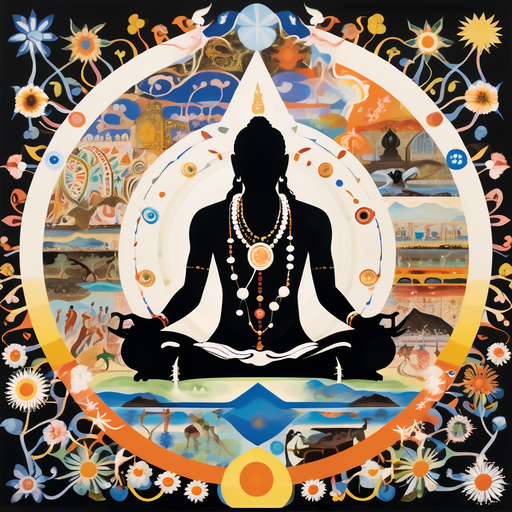
The Rapture of Letting Go

Presence is not a prize to be won or a fortress to defend. It is not some static peak upon which the awakened are meant to perch forever, unmoved and untouchable. The pursuit of a “permanent state” of anything—even presence—quietly binds us again to the illusion we sought to transcend. It becomes another mask of the seeker, cloaked in stillness, trembling behind the veil of spiritual ambition.

States rise and dissolve. Rapture comes like a summer breeze and vanishes just as gently. Then irritation, confusion, boredom. Then clarity. Then fog. The parade continues, not because you are failing, but because you are alive.

To lose attention is not to lose awareness. What perceives the loss? What observes the drift and the return? That witnessing is untouched. It is not opposed to distraction, nor does it seek permanence. It simply is, always.

Clinging to peace is no different from clinging to pain. The grasping hand is the same. When rapture becomes an achievement, it quietly rots. But when it is allowed to dance freely—hidden beneath the dishes in the sink, behind the silent gaze on the subway, or in a burst of sudden awe at the sky—then it becomes alive again.

You can continue to practice, to breathe, to cultivate. But do so like a child builds a sandcastle: for the love of it, not to resist the tide. Joy, too, is a practice. But it must remain unhooked from outcome.

There’s a kind of rapture in the background hum of your own awareness—even when the foreground is chaos. That quiet clarity never left. You’re not missing the moment. You are the moment, passing through its own reflections. And if you laugh at the absurdity of forgetting and remembering over and over again, then perhaps that’s the most awakened thing of all.

Morgan O. Smith

Get Your Free Copy of My Book, Bodhi in the Brain!

https://subscribepage.io/oTSZQu

The Full Realization of Divine Grandeur

The human experience often feels like a journey through shifting sands, where clarity and certainty seem elusive. Yet, beneath the surface lies a profound truth—one so vast that it escapes the bounds of the intellect. This truth is the realization of divine grandeur, an unshakable awareness of the infinite essence that we are and have always been.

This grandeur is not something acquired; it is unveiled. It is the silent, unchanging awareness behind all fleeting moments of life. To recognize it is not to add something new to oneself but to peel back the illusions of limitation. Divine grandeur does not belong to a distant deity or a select few; it is the source and substance of all existence.

To fully realize this truth, one must transcend the conditioned mind, which is mired in stories of separation, lack, and striving. Every moment of suffering, every perceived obstacle, serves as an invitation to remember the wholeness that already is. Challenges dissolve in the light of this realization, not because they disappear, but because they are seen for what they truly are—manifestations of the same boundless essence.

This recognition does not negate the human experience; it enhances it. When the divine is seen in every face, every leaf, and every breath, life transforms into an expression of sacredness. There is no need to seek meaning, for meaning is inherent in all that is. This understanding is not an escape from the world but an embrace of it. It is to know that the divine is not found outside but radiates through all of existence.

Realizing divine grandeur does not require renouncing life. It requires living fully, and engaging with the world while remaining rooted in the unshakable awareness of one’s true nature. This balance, where the eternal meets the temporal, reveals a beauty beyond words.

The grandeur of the divine is not an object to be attained but the very essence of being. It is realized in stillness and silence, yet its echoes resound in every act of kindness, every expression of love, every moment of presence. When this truth is known—not as a concept but as an undeniable reality—life becomes a dance of infinite grace.

Morgan O. Smith

Yinnergy Meditation, Spiritual Life Coaching & My Book, Bodhi in the Brain…Available Now!

https://linktr.ee/morganosmith

Navigating the Shades of Morality

Embracing Our Humanity Through Spiritual Evolution

In the labyrinth of human experience, we often find ourselves at a crossroads between contrasting moral landscapes. This journey, fraught with myriad complexities, guides us through a transformative process—a shift from seeing the world in stark contrasts to embracing the nuanced shades of morality that define our existence. It’s a journey that doesn’t just challenge our perceptions but also enriches our understanding of what it means to be inherently human.

The Evolution of Perception

As we embark on this spiritual and psychological evolution, our initial encounters with morality are often painted in broad strokes of black and white. This dichotomy, while offering clarity, is also a testament to our nascent understanding of the moral universe. However, as we delve deeper into our journey of self-discovery and spiritual awakening, we begin to notice the emergence of grey areas. These are not mere anomalies but signposts of our evolving consciousness.

The Tug of War Within

This recognition ushers in a period of internal conflict—a tug-of-war between the polarities of good and evil, right and wrong. It’s a battle that rages within, pulling us in opposing directions. Yet, it’s through this struggle that we learn the invaluable lesson of acceptance. By integrating these disparate aspects of our being, we unlock a more profound comprehension of our nature and the world around us.


Standing Firm in the Middle

The ultimate aim of this journey is not to choose a side but to find equilibrium amidst the chaos. To stand firm in the middle is to acknowledge our capacity for both the divine and the diabolical. It is in this space that we discover true empathy and compassion, unburdened by bias and judgment. This balanced stance does not signify indifference but a deeper connection to the vast spectrum of human experiences and emotions.

The Gift of Empathy and Compassion

By embracing the grey areas of morality, we cultivate a more empathetic and compassionate perspective. This transformation is not just personal but collective, as our increased understanding and acceptance ripple outwards, influencing our interactions and relationships. In recognizing our complexities, we become more forgiving of others, bridging divides and fostering a sense of shared humanity.


Conclusion: Embracing Our Humanity

The journey through the shades of morality is an integral part of our spiritual evolution. It challenges us to confront and reconcile the complexities within ourselves, leading to a more empathetic, compassionate, and balanced existence. By standing in the middle of our moral landscape, we embrace the full spectrum of our humanity, finding peace in the acceptance of our multifaceted nature.

Morgan O. Smith

Yinnergy Meditation, Spiritual Life Coaching & My Book, Bodhi in the Brain…Available Now!

https://linktr.ee/morganosmith

The Paradox of Enlightenment Amidst Adversity

In the profound journey toward enlightenment, there exists a nuanced understanding of the interplay between our spiritual essence and the tangible world. This exploration delves into the realm where the ultimate truths of nonduality meet the undeniable realities of our human experience. It’s a contemplation of how one navigates the vicissitudes of life, even when perched at the pinnacle of spiritual awakening.

#### The Unshakable Core vs. The Vulnerable Shell


At the heart of spiritual enlightenment lies the realization of the self’s immutable nature. This understanding, deeply rooted in Eastern philosophy, reveals that at the ultimate level, the true self transcends the fluctuations of the physical, emotional, and psychological realms. Yet, this does not render us impervious to the tangible forces that pervade our existence. The enlightened being, while recognizing the indestructible nature of their essence, also acknowledges the fragility of their human condition.

#### The Duality Within Nonduality

The path of spiritual awakening brings to light the coexistence of seemingly contradictory truths. On one hand, the enlightened individual perceives the illusionary nature of Maya, the cosmic dance of creation and destruction that engulfs the material world. On the other hand, they remain anchored in the reality of their human experience, susceptible to the myriad forms of harm that life can present.

This duality within nonduality underscores vital wisdom: enlightenment does not detach one from the human experience but deepens the engagement with it, fostering a profound understanding of the interconnectedness of all existence. The enlightened being moves through the world with a heightened awareness of the impermanence of the physical form and the eternal nature of the self.

#### The Paradox of Perception

Consider the hypothetical scenario of an individual attaining Nirvana amidst the turmoil of a war zone. At the moment of achieving this transcendent state, the exterior chaos becomes inconsequential, and yet, the spectrum of human experience is felt more deeply than ever. The house may collapse, and the physical body may perish, but the essence of the being remains untouched, observing the unfolding drama with equanimity.

This paradox of perception challenges us to reevaluate our understanding of harm and safety, pleasure and pain, and life and death. It invites us to see beyond the surface level of existence and recognize the deeper currents that shape our journey through the world.

#### Embracing the Wholeness of Experience

The essence of this exploration is not to advocate for a denial of the physical or emotional challenges we face but to illuminate the potential for profound growth and understanding within these experiences. The spiritual journey encompasses the entirety of our being, inviting us to embrace the wholeness of our experience, with all its contradictions and complexities.

In recognizing the vulnerabilities of our human existence while holding firm to the knowledge of our ultimate nature, we find a path that is rich with meaning, resilience, and an unshakeable peace.

As we navigate the complexities of life, let us remember the profound wisdom that lies in the balance between our spiritual essence and our human experience, guiding us toward a deeper understanding of the true nature of existence.

Morgan O. Smith

Yinnergy Meditation, Spiritual Life Coaching & My Book, Bodhi in the Brain…Available Now!

https://linktr.ee/morganosmith

Voicing the Vastness

The Paradox of Expressing the Inexpressible

In the realm of human experience, the concept of expressing the totality of existence, often referred to as “The All That Is,” presents a fascinating paradox. While our minds and souls may feel intimately connected to this infinite expanse, our means of communication, especially spoken language, often fall short of capturing its essence. This dichotomy between our internal understanding and external expression is a profound aspect of the human condition.

At the core of this paradox is the limitation of language. Words, for all their power, are mere symbols, not the things they represent. They are the map, not the territory. When we attempt to articulate our deepest understandings or most profound experiences, we often find that words do not suffice. This inadequacy is especially apparent when we try to convey the boundless nature of “The All That Is.” How can finite symbols encapsulate something so vast and limitless?

Despite this, the endeavour to express these experiences is not in vain. The very act of trying to articulate the inarticulable is a testament to the human spirit’s ceaseless quest for understanding and connection. Each attempt, whether it falls short or touches upon something true, adds to our collective understanding and experience. Through these efforts, we find new ways to relate to each other and the world around us.


Moreover, the inability of language to fully capture these experiences invites us to explore other forms of expression. Art, music, and dance become languages in their own right, often communicating what words cannot. They allow us to experience a glimpse of the infinite, transcending the barriers of spoken language.

This journey of expression also reflects a deeper truth about our nature. Just as “The All That Is” is vast and multifaceted, so too are we. Our thoughts, feelings, and experiences are complex and often contradictory. We are beings of immense depth, and our attempts to express ourselves are reflections of this depth. In trying to articulate the inexpressible, we come to understand ourselves better.


In conclusion, while our spoken words may seem inadequate in expressing the totality of existence, they are valuable in their attempt. They represent our unending quest to understand and connect with the infinite, and in this quest, we find the beauty of our human experience. The paradox of expressing the inexpressible is not a barrier, but a bridge, inviting us to explore and embrace the depth of our existence.

 Morgan O. Smith

Yinnergy Meditation, Spiritual Life Coaching & My Book, Bodhi in the Brain…Available Now!

https://linktr.ee/morganosmith

The Paradox of Suffering

A Perspective on Compassion’s Existence

In a world untouched by suffering and misfortune, one might ponder compassion’s existence or even the necessity. This philosophical contemplation leads us to a profound question: If there were no suffering, would the concept of compassion still hold any significance?

Central to this debate is the idea of the Absolute at the causal stage, a concept that suggests a higher power or universal force responsible for orchestrating the cause and effect in our lives. This notion posits that events and situations are not merely random occurrences but deliberate creations intended to foster specific outcomes or experiences.

Within this framework, suffering and misfortune are seen not as unfortunate byproducts of existence but as essential elements in a grander scheme. They are the variables that necessitate and give birth to compassion. It’s as if the universe, or the Absolute, constructs scenarios to evoke and observe the act of compassion.

This perspective suggests a universe where compassion is a response to suffering and a desired outcome, a necessary expression in the cosmic play. It implies that our experiences of pain and grief are not just happenstances but are integral parts of a larger, perhaps even cosmic, narrative. This narrative is about enduring hardships and the opportunity these hardships present for compassion to arise and flourish. In this view, suffering is not meaningless; rather, it catalyzes the expression of compassion, which could be argued as one of the purest forms of human connection and empathy.

But this viewpoint is not without its controversies. It raises questions about the nature of the Absolute and its role in human affairs. Is suffering deliberately inflicted by a higher power for its amusement or purpose? Does this make the act of compassion a mere tool in a larger, possibly indifferent cosmic game? These questions challenge our understanding of morality and the nature of existence itself.

Furthermore, this perspective can be seen as a double-edged sword. On one hand, it gives a deeper meaning to our struggles, suggesting that our pain and the compassion it invokes are part of a grand, meaningful process. On the other, it might lead to a fatalistic or passive acceptance of suffering, undermining efforts to alleviate it.

In conclusion, the idea that suffering is necessary for compassion presents a challenging yet thought-provoking viewpoint. It forces us to examine the deeper implications of our experiences and the potential purpose behind them. Whether one sees this as a comforting thought or a disturbing implication, it undoubtedly opens up a rich field for philosophical and ethical exploration.

Morgan O. Smith

Yinnergy Meditation, Spiritual Life Coaching & My Book, Bodhi in the Brain…Available Now!

https://linktr.ee/morganosmith

Embracing the Full Spectrum

A Deeper Understanding of Enlightenment

In our quest to understand enlightenment, we often envision it as perpetual positivity, a beacon of good virtues and admirable qualities. However, this view might be a simplistic interpretation of a concept far more profound and encompassing. To grasp the true essence of enlightenment, we must recognize it as the embodiment of nature in its entirety, not just its appealing aspects.

Enlightenment, in its deepest sense, is not limited to the display of positive attributes; it also encompasses the darker, less admired facets of nature. Nature, in its raw form, is an amalgamation of contrasts—beauty and destruction, calm and chaos. Similarly, an enlightened being embodies all these facets, including those we view negatively.

We often celebrate the sunlit parts of nature while disdaining its storms and upheavals. In parallel, enlightened beings, often idealized for their virtues, might also manifest traits or behaviours we consider negative. This doesn’t necessarily diminish their state of enlightenment; rather, it highlights that enlightenment transcends conventional moral dichotomies. It encompasses a full spectrum of qualities, mirroring the complexity and diversity of nature itself.

Perhaps, when an enlightened individual exhibits behaviours we perceive as negative, it’s not a regression to lower psychological states, but an expression of the entire range of human experience. This concept can be challenging to grasp, especially when viewed from the traditional perspective of enlightenment being a state of flawless virtue.

In essence, true enlightenment is beyond the dualities of good and bad, positive and negative. It is a comprehensive expression of nature in all its forms—the gentle breeze and the raging storm. Recognizing this holistic view of enlightenment invites us to expand our understanding and accept the full spectrum of experiences and traits that constitute the enlightened state.

In this light, enlightenment becomes a journey of embracing all aspects of existence, a voyage that transcends conventional wisdom and invites us to witness the universe in its full, unfiltered majesty.

Morgan O. Smith

Yinnergy Meditation, Spiritual Life Coaching & My Book, Bodhi in the Brain…Available Now!

https://linktr.ee/morganosmith

Turiyatitta

Exploring the Vast Mosaic of Life’s Perspectives

The concept of Turiyatitta, deeply embedded in spiritual philosophy, suggests a state where one can momentarily comprehend the perspectives of trillions of different life forms. This transcendent state goes beyond regular consciousness to a domain where the line between the individual and the collective blurs. Imagine perceiving the world not only from a human viewpoint but also through the experiences of animals, insects, microorganisms, fungi, and plants. This idea, daunting yet enlightening, pushes the boundaries of our understanding of consciousness and interconnectedness.

Consider the human perspective first, with its vast diversity, including various cultures, beliefs, and life experiences. Now, add to this the animal kingdom, each species with its unique way of engaging with the world. For instance, a bat navigates its environment using echolocation, a sensory experience vastly different from human perception.

Then there are insects, whose world of pheromones and ultraviolet vision offers a radically different understanding of existence. Microorganisms, invisible to our eyes, play a critical role in sustaining life, offering a perspective that could reveal the intricate workings of cellular life and the basics of existence.


Fungi, straddling the realms of the known and unknown, challenge our perceptions of individuality and community. Their networks, akin to a natural internet, show a level of connectivity that human technology aspires to reach.

Finally, contemplate the plant perspective. Recent research suggests that plants not only react to their surroundings but also communicate and remember. Imagine the view of the world from a centuries-old tree, silently observing the gradual flow of time.


Turiyatitta is more than a concept; it’s an invitation to broaden our consciousness and empathy. It reminds us that every form of life, no matter its size or perceived insignificance, plays a part in the grand scheme of things. This understanding could be crucial in fostering a more compassionate, empathetic, and connected world.

By embracing Turiyatitta, we recognize our role not as mere onlookers but as integral components of the universe’s vast mosaic. Each life form, each perspective, contributes to this mosaic, making it more vibrant and dynamic. This realization is humbling and empowering, urging us towards greater responsibility and deeper insight.


To experience Turiyatitta is to briefly touch the infinite, to connect with the essence of life itself. It’s a journey that involves not just the mind but also the heart and soul, moving us towards a deeper bond with all forms of life.

Morgan O. Smith

Yinnergy Meditation, Spiritual Life Coaching & My Book, Bodhi in the Brain…Available Now!

https://linktr.ee/morganosmith

Embracing Fear in the Journey to God-Realization

Finding Harmony in Human and Divine Experiences

Fear, often perceived as a negative emotion, does not simply vanish upon reaching a state of God-realization or profound spiritual awakening. This insight sheds light on a profound truth about our human experience: we are here to embrace the full spectrum of life, including emotions and experiences that seem to contradict our divine nature.

The essence of being human lies in experiencing contrast. We understand light because of darkness, joy due to sorrow, and similarly, the divine by experiencing the non-divine. In this journey of life, fear is just as essential as love or joy. It’s not an obstacle to spiritual growth but a facet of it.


When fear arises, the approach shouldn’t be to suppress or eliminate it but to observe it with neutrality. Watching fear without judgment or bias is a practice of mindfulness. It allows us to understand fear, not as an enemy, but as a part of our human experience. This observation leads to acceptance – accepting fear as it is, not as we wish it to be.

The ultimate goal of spiritual or God-realized living is not about eradicating emotions like fear. It’s about embracing and accepting them. It’s about realizing that our spiritual nature coexists with our human emotions. Acceptance doesn’t mean passive resignation; it means understanding the nature of reality and our reactions to it. It’s about finding peace amid all experiences – both divine and human.


As we embark on this journey, let’s remind ourselves: whatever happens, let it be okay. This acceptance is not a defeat but a victory of understanding over resistance, of peace over turmoil. Embrace your humanity, embrace your divinity, and in the dance of these opposites, find the harmony of existence.

Morgan O. Smith

Yinnergy Meditation, Spiritual Life Coaching & My Book, Bodhi in the Brain…Available Now!

https://linktr.ee/morganosmith

The Peak Experience

Mount Olympus and Mysticism

To ascend a mountain and stand at its zenith is a profound experience. But to stand atop Mount Olympus, the legendary home of the gods, is to touch a space where the divine meets the mortal. Unlike any other, this mountaintop symbolizes an intersection between the world as we know it and a realm beyond comprehension. What does it mean to attain such an experience? How does this metaphorical journey relate to the mystical peak experiences described by the world’s spiritual seekers?

**1. A Realm Beyond the Senses**

In many religious traditions, mysticism represents an encounter with the Divine, the Ultimate Reality, or the Absolute. These encounters are said to be ineffable, transcending words, and profoundly transformative. Similarly, the summit of Mount Olympus shrouded in myth and legend, exists as a space beyond the ordinary. Both represent realms beyond our senses, places where our ordinary conceptions of reality are challenged.

**2. The Ascent**

The path to mysticism, like the climb to a mountain’s summit, is not without challenges. Doubt, hardship, and uncertainty plague the seeker, testing their commitment and resolve. Yet, it’s through these adversities that transformation occurs. The ascent shapes the soul, refines the spirit, and prepares one for the profound revelations that await at the peak.

**3. Transient Yet Timeless**

Mystical experiences, though often fleeting, leave an indelible mark on the soul. The same can be said about reaching the summit of a great mountain. In that brief moment atop Mount Olympus, one is both part of ancient mythology and the present moment. Time seems to both stand still and move rapidly, offering a glimpse into eternity.

**4. The Return**

Mystical experiences often come with a mandate to return to the ordinary world, bearing the fruits of spiritual insight. Similarly, after reaching the peak, the climber must descend and integrate their experience into their everyday life. They bring back with them a new perspective, a deeper understanding, and a sense of connectedness that enriches their existence.

**5. The Universal Quest**

The legends of Mount Olympus and the experiences of mystics from diverse traditions remind us of a universal human quest: the pursuit of meaning, connection, and a deeper understanding of existence. Whether through meditation, ritual, or scaling a mythical mountain, the journey toward the peak is a timeless endeavour that inspires and challenges us.

In conclusion, with its rich tapestry of legends, Mount Olympus serves as a poignant metaphor for the peak experiences in mysticism. Both offer a transformative journey, a meeting with the transcendent, and a glimpse into realms beyond the ordinary. And in both, the seeker is reminded of the beauty, mystery, and depth of existence.

Morgan O.  Smith

Yinnergy Meditation & My Book, Bodhi in the Brain…Available Now!

https://linktr.ee/morganosmith