Designed for Longing

The Gift of Dissatisfaction

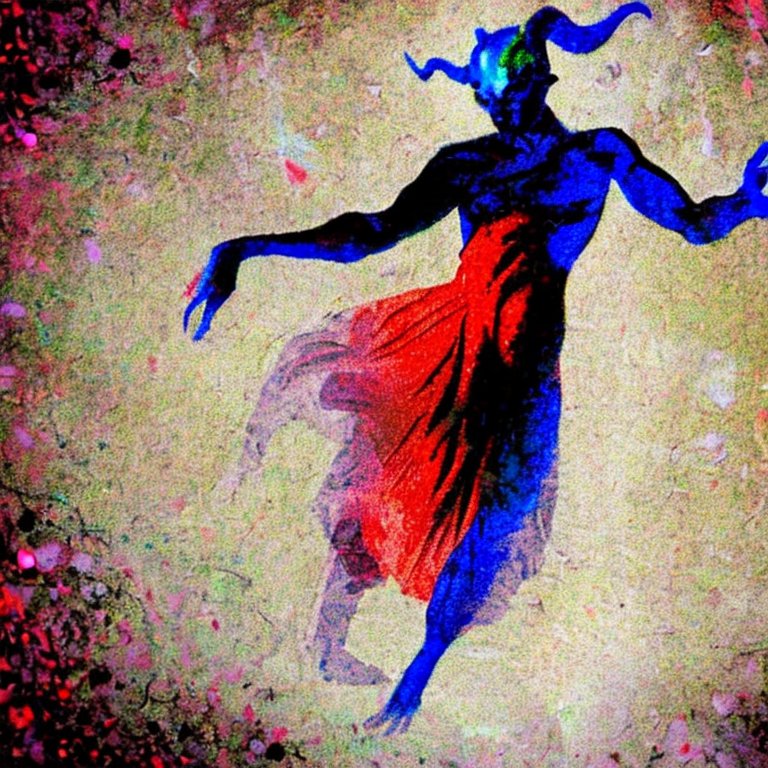
Satisfaction often appears as a destination, something to be reached, secured, and held onto. Yet the moment one grasps it, a subtle hunger begins to stir again. The new job, the relationship, the recognition, the spiritual experience—all of it, no matter how profound or fulfilling, eventually reveals its transience.

What if this is not a flaw in human nature, but the very design of it? To never be fully satisfied is not a curse but a compass. It pushes us forward, beckoning us into deeper terrains of discovery, love, and creativity. The ache of incompletion is what keeps us alive to possibility. Without it, our spirit would stagnate.

Satisfaction is not the absence of desire but the willingness to engage with desire without being enslaved by it. To live in peace with dissatisfaction is to realize that fullness and emptiness coexist. The longing itself becomes a teacher, whispering that no object, achievement, or moment will ever be enough, because “enough” is not an endpoint, but an ongoing movement.

To accept this is to loosen the grip on perfection. You no longer demand that life provide a final fix, a permanent conclusion. Instead, you walk with the paradox: satisfaction arises from embracing dissatisfaction. The search for completion unveils the truth that nothing was missing in the first place.

The wisdom here is subtle. Contentment does not mean settling. It means seeing the beauty of being forever unfinished, of being shaped by desire but not consumed by it. Your very dissatisfaction becomes evidence that you are part of an unfolding reality, one that will never exhaust its depth.

Satisfaction lies not at the end of longing, but in the freedom to let longing remain.

Morgan O. Smith

Get Your Free Copy of My Book, Bodhi in the Brain!

https://subscribepage.io/oTSZQu

The Echo of You

How Others Shape the Illusion of Self

Every mind that encounters you constructs a version of who you are—one that exists only within their perception. These projections are not reflections of an objective truth but rather interpretations woven from personal history, emotions, and unconscious biases. The self you recognize as you dissolves into a multiplicity of shifting impressions, each molded by the observer’s lens.

A single glance, a brief interaction, a conversation—these moments serve as the brushstrokes that paint an image of you in another’s mind. That rendering is not built from the essence of your being but from their expectations, fears, desires, and past experiences. You become a mirror reflecting not your own face but the fragmented archetypes stored within them.

Eight billion people could know of your existence, and within those eight billion minds, eight billion versions of you would reside—each unique, each tethered to the individual’s understanding of reality. Some may see wisdom where others see arrogance, kindness where others perceive naivety, or detachment where others sense depth. Each impression, though deeply felt by the observer, is nothing more than a personal myth—an illusion shaped by the inner world of the one perceiving.

This ongoing act of creation is not limited to how others see you; it extends to how you see them. The individuals encountered are rarely experienced as they are but instead as projections of our own conditioning. An idea of them forms, colored by past wounds, cultural imprints, and unconscious expectations. Thus, every relationship becomes a dance of illusions, where two constructs interact rather than two beings truly seen for what they are.

If these imagined versions of one another are so deeply ingrained, what remains when they fall away? What is left when perception no longer dictates existence? The formless, nameless presence that remains is not confined by labels or interpretations—it simply is. And in that space, where no definitions persist, the need to be seen, understood, or accepted dissolves into something far greater than any construct a mind could create.

Morgan O. Smith

Get Your Free Copy of My Book, Bodhi in the Brain!

https://subscribepage.io/oTSZQu

Unveiling the True Father of Lies

The Misconception of Satan as an External Entity

In the labyrinth of human belief systems, the concept of Satan stands as one of the most controversial and misunderstood. Traditionally depicted as the epitome of evil and temptation, an external entity battling against the forces of good, I challenge that notion, proposing a radical interpretation: Satan is not an actual being, but a personification of the darker aspects within ourselves.

The idea that Satan is a separate, external entity who tempts and deceives humanity is a narrative deeply ingrained in various cultures and religions. However, this perspective shifts the responsibility of our actions, impulses, urges, temptations, sins, and ill wills, onto an external ‘Father of Lies’. But what if the true ‘Father of Lies’ is not an external force but resides within each of us?

This provocative viewpoint suggests that we are the architects of our deceit. We lie to ourselves, craft facades, and believe them to be our true selves. In doing so, we create a scapegoat in the form of Satan, an external devil responsible for our temptations and wrongdoings. This externalization serves as a convenient excuse, absolving us of our responsibility for the choices we make.


The concept of personification is not new to human understanding. We personify nature as Mother Nature, time as Father Time, and similarly, our darker instincts as Satan. These are not actual entities but representations of phenomena or aspects of our psyche. The id, a term from psychoanalytic theory, representing our primal instincts, can be seen as what the concept of Satan embodies. But over time, we have distorted this metaphor, externalizing it and giving it a form and identity separate from us.

By acknowledging that the essence of what we call ‘Satan’ lies within us, we confront the uncomfortable truth of our nature. It’s a call to introspection, to recognize and take responsibility for our darker aspects. It’s an invitation to stop deceiving ourselves and to transcend beyond our limitations.

The act of blaming an external Satan for our actions is not only a limitation but a hindrance to our growth and understanding. It prevents us from reaching our true potential, and from evolving into more self-aware, responsible beings. When we shed this externalized blame and look within, we empower ourselves to make conscious choices and understand the true nature of our actions.


In conclusion, the figure of Satan, traditionally seen as the external ‘Father of Lies’, is a reflection of our inner selves. By embracing this perspective, we can embark on a journey of self-discovery and accountability, leading to a higher state of consciousness and being.

Morgan O. Smith

Yinnergy Meditation, Spiritual Life Coaching & My Book, Bodhi in the Brain…Available Now!

https://linktr.ee/morganosmith

The Sacred Within the Flawed

A Paradox of Divine Texts

In an intricate dance between the divine and human, sacred texts from various religious and philosophical traditions find themselves at the nexus of reverence and scrutiny. These texts, while venerated as conduits of divine wisdom and moral guidance, are not immune to critique nor the acknowledgment of their inherent flaws.

When we unravel the threads of any sacred text, we find them woven with not just divine insights but also the human elements of error, contradiction, and historical context. Many perceive the imperfections found within these texts as reasons for critique and skepticism. Yet, there is a compelling perspective to be explored – the idea that the very flaws embedded within sacred texts render them genuinely sacred.

In dwelling within the flawed, we find a reflection of our imperfect nature. Sacred texts do not present an unattainable moral and existential utopia but rather provide a mirror through which we can perceive and engage with our own imperfections and moral dilemmas. The contradictions and ambiguities are not simply obstacles to faith but rather essential elements that provoke deeper questioning, reflection, and ultimately, a more profound understanding of our place within the cosmic order.

The perfection of the divine, if it were to be communicated through a medium devoid of error or contradiction, may remain eternally aloof and incomprehensible to our flawed human nature. Therefore, perhaps it is within the inconsistencies and paradoxes of sacred texts that we find an accessible pathway toward divine wisdom – a bridge crafted from the very imperfections that define our humanity.

By acknowledging and engaging with the flaws within these revered writings, believers do not denounce their faith but rather deepen it, embracing a spiritual journey that accepts the entwinement of the divine and the human, the perfect and the imperfect. It becomes a spiritual practice wherein the belief is not despite the flaws but is enriched and deepened by them.

In this juxtaposition, an opportunity for an intimate and authentic spiritual journey is birthed. The flaws compel believers to wrestle with their understanding, to question, and to seek, rather than passively accept a prescribed truth. This active engagement fosters a spirituality that is not static but dynamically interwoven with the realities of human experience, constantly evolving and adapting to the nuances of our understanding and experience.

As we traverse through the passages of sacred writings, embracing both divine wisdom and human error, we embark upon a journey that is both inward and outward, exploring the realms of the divine and our soul. In this sacred exploration, the flaws do not deter us but rather beckon us into a deeper, more authentic engagement with the divine, where faith is not a blind acceptance but a perpetual quest, rich with inquiry, reflection, and spiritual growth.

Perhaps then, the sacredness of these texts is not diminished by their flaws but is instead, beautifully and mysteriously, illuminated by them.

Morgan O.  Smith

Yinnergy Meditation & My Book, Bodhi in the Brain…Available Now!

https://linktr.ee/morganosmith

Even the Sun Has Its Dark Spots

Embracing Human Imperfection

We’ve often looked up to the sun as a source of life, light, and unyielding energy. Its brilliance is unparalleled, illuminating our world, making life possible, and inspiring countless civilizations throughout history. Yet, if we examine this celestial body more closely, we find that even the sun has its dark spots—areas of lower temperatures and intense magnetic activity. This observation serves as a profound metaphor for human nature: even the most enlightened among us have their flaws.

### **The Illusion of Perfection**

In today’s age of social media and carefully curated online personas, it’s easy to assume that those we admire lead impeccable lives, free of mistakes or misjudgments. We observe the highlights, the victories, and the triumphant moments, rarely bearing witness to the challenges, doubts, or imperfections that punctuate the human experience.

Just as we might be oblivious to the sun’s dark spots when basking in its warmth, we may overlook the shortcomings of those we deem as enlightened or flawless. This perception creates unrealistic standards, and the pressure to attain perfection becomes a burden too heavy to bear.

### **Enlightenment and Flaws Coexist**

If we recognize that even the sun, with all its might and brilliance, possesses dark spots, then why do we find it hard to accept that our heroes, mentors, and idols can also have their moments of darkness?

True enlightenment is not the absence of flaws but rather the recognition and acceptance of them. It’s about understanding that imperfection is an intrinsic part of the human experience. Those who are genuinely enlightened are not free from mistakes; they are simply more attuned to their humanity and the humanity of others.

### **Embracing Our Dark Spots**

Instead of shunning our flaws or those of others, let’s consider embracing them as essential aspects of our narratives. These imperfections provide texture, depth, and dimension to our stories, making them unique and relatable.

By accepting our dark spots, we free ourselves from the chains of unrealistic expectations and open the door to genuine growth. After all, it is often in our moments of vulnerability and acknowledgment of our flaws that we find the strength and motivation to evolve.

### **In Conclusion**

The sun, with its dark spots, remains our primary source of light and life. Likewise, our flaws do not diminish our value or potential. Instead, they remind us that perfection is not a prerequisite for greatness or enlightenment.

Let’s celebrate our dark spots, for they are a testament to our humanity, our growth, and our ever-evolving journey toward enlightenment. Even in imperfection, there is beauty, wisdom, and an undeniable spark of divinity.

Morgan O. Smith

Yinnergy Meditation & My Book, Bodhi in the Brain…Available Now!

https://linktr.ee/morganosmith

Dancing with Shadows

The Devil as Society’s Dark Projection

Intro:

As we sail through the oceans of human consciousness, we often encounter tempests that unveil the darker facets of our nature. If the divine represents society’s golden shadow, virtues, and aspirations, could the devil figure embody society’s dark shadow, a reflection of our collective id and repressed instincts? This article plunges into the depths of this unsettling yet captivating hypothesis.

Understanding the Dark Shadow:

Carl Jung posited the existence of the shadow as a component of the unconscious, housing both positive and negative elements that are not integrated into the conscious self. The dark shadow encompasses the negative aspects – our fears, impulses, and darker instincts.

The Devil as Society’s Dark Shadow:

Across cultures, the devil often symbolizes the epitome of evil, temptation, and the darker aspects of human nature. By projecting these qualities onto a devil figure, society externalizes its inner darkness, creating a ‘scapegoat’ onto which it can cast its sins and unwanted characteristics.

The Collective Unconscious and the Id:

Sigmund Freud’s concept of the id complements Jung’s shadow. The id is the instinctual part of the mind that contains sexual and aggressive drives and desires. Society’s projection of the id onto the devil may represent a form of collective defence mechanism, an attempt to deal with the disconcerting aspects of our nature.

The Devil as an Archetype:

In Jungian terms, the devil can be seen as an archetype, a universal symbol that dwells in the collective unconscious of mankind. This archetype manifests in various forms in different cultures, but its core characteristics usually represent the antithesis of societal norms and moral values.

Facing Our Demons:

Recognizing the devil as a projection of society’s dark shadow calls for the courageous endeavour to face our inner demons. Individuals and societies can work towards a more balanced and authentic existence by accepting and integrating these shadow aspects.

Conclusion:

The notion of the devil as society’s dark shadow casts a new light on the traditional narratives of good and evil. It invites us to reflect upon how the figures of deities and demons are not only external entities but also potent symbols of the complexities of human nature. Through understanding these shadows, society stands on the precipice of deeper self-awareness and a more holistic grasp of the human condition.

Morgan O. Smith

Yinnergy Meditation & My Book, Bodhi in the Brain…Available Now!

https://linktr.ee/morganosmith

The Illusive Dawn

Spiritual Enlightenment and the Story We Live

Introduction:

Each day, as the earth rotates, the sun appears to rise over the horizon, casting its golden rays upon the world. Just like the sun, spiritual enlightenment is an ever-present force in our lives, though it is often perceived as something to be attained. This misconception, draped in the language of our stories, masks the true nature of spiritual enlightenment.

The Mirage of Attainment:
One of the intriguing elements of human nature is the relentless pursuit of something more. In the context of spiritual enlightenment, the journey is often portrayed as a path leading to a destination. However, by framing enlightenment as an end goal, we may be missing its inherent presence in our lives. Like the sun that’s always shining even when it’s out of our sight, enlightenment is not something we acquire but rather realize and tune into.

The Stories We Weave:

Our narratives shape our perceptions and, often unknowingly, our realities. Through stories, ancient wisdom has been passed down, guiding us toward spiritual growth. Yet, these stories can be double-edged swords. As they often depict characters attaining enlightenment, they inadvertently suggest that it is a finite state, achievable through certain actions or thoughts.

Unravelling The Eternal Now:
What if spiritual enlightenment is not something we reach at the end of a strenuous journey but rather an inherent quality of our being that we simply need to recognize? This recognition can be thought of as tuning into a frequency that has always been there. By peeling away the layers of ego, desires, and social constructs, we become more receptive to the eternal now – the ever-present light of consciousness that never wanes.

Practical Steps Towards Recognition:
1. Mindfulness: Engage in practices such as meditation or mindful breathing to bring awareness to the present moment.
2. Detachment: Learn to detach from material desires and social expectations that cloud the true essence of our being.
3. Compassion: Embrace a compassionate lifestyle, recognizing the interconnectedness of all life.
4. Continuous Learning: Engage with philosophical and spiritual texts that challenge and expand your understanding.

Conclusion:
Much like the illusory sunrise, the concept of attaining spiritual enlightenment may be a misinterpretation through the lens of our narratives. Rather than seeking to attain, let us recognize and embody the ever-present light within. By focusing on the present moment, detaching from the material world, and embracing compassion, we can tune into the unceasing glow of our inner sun.

Morgan O. Smith

Yinnergy Meditation & My Book, Bodhi in the Brain…Available Now!

https://linktr.ee/morganosmith

The Harmony Within

Exploring Integral Theory’s Perspectives on Nature vs. Nurture

Introduction:
In the quest to unravel the essence of human existence, the age-old debate of Nature vs. Nurture finds itself intertwined in the heart of discourse. The Integral Theory, founded by philosopher Ken Wilber, offers a unique lens to dissect this debate through its Four Quadrants. This thought-provoking analysis aims to delve into how the Integral Theory’s Four Quadrants elucidate the interplay between nature and nurture.

The Four Quadrants:
For context, Integral Theory’s Four Quadrants are a framework to understand reality. They are: Interior-Individual (Upper-Left), Exterior-Individual (Upper-Right), Interior-Collective (Lower-Left), and Exterior-Collective (Lower-Right). These quadrants reflect the inner and outer, as well as the individual and collective dimensions of existence.

1. Interior-Individual (Upper-Left) – The Subjective Self:
Here, nature manifests as the innate essence, such as genetic predispositions and temperament. Nurture, on the other hand, shapes our consciousness through personal experiences and emotions. The harmony or dissonance between one’s nature and the nurturing influences could define their subjective reality.

2. Exterior-Individual (Upper-Right) – The Observable Self:

In this quadrant, nature is viewed through the lens of biology – our brain structure, hormones, and genetic makeup. Nurture is the external stimuli that alter our biology. Understanding how the external environment (nurture) impacts our physiological being (nature) helps in comprehending the fluidity of human behaviour.

3. Interior-Collective (Lower-Left) – Shared Cultural Values:
This quadrant takes into account the collective consciousness, where nature represents the innate human desire to belong and socialize. Nurture is the culture we imbibe. It is critical to examine how societal norms and values (nurture) can either support or conflict with our innate tendencies (nature).

4. Exterior-Collective (Lower-Right) – Social Structures:

The Lower-Right quadrant emphasizes the social systems and structures. Here, nature is the evolution of societies, while nurture represents the societal systems such as education, law, and governance. The structures that societies create (nurture) can either facilitate or hinder the natural progression of human evolution.

Finding Balance:

The Integral Theory’s Four Quadrants reveal the intricate tapestry woven by the threads of nature and nurture. Recognizing the dialogues between these dimensions empowers us to find balance. Are we honoring our innate essence while being responsive to external influences? How are our societal structures and shared values nurturing our natural propensities or thwarting them?

Conclusion:
As we navigate through the currents of existence, the Integral Theory’s Four Quadrants provide us with the compass to explore the depths of Nature vs. Nurture. By seeking harmony between our inherent nature and the nurturing environments, we create a symphony that resonates with the very core of human existence. It is through this understanding that we can work towards a more holistic, compassionate, and evolved society.

Morgan O. Smith

Yinnergy Meditation & My Book, Bodhi in the Brain…Available Now!

https://linktr.ee/morganosmith