The Architecture of the Ideal

Why the Myth Matters More Than the Man

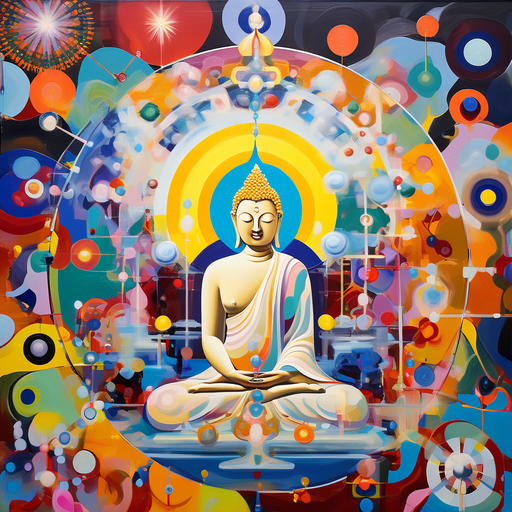
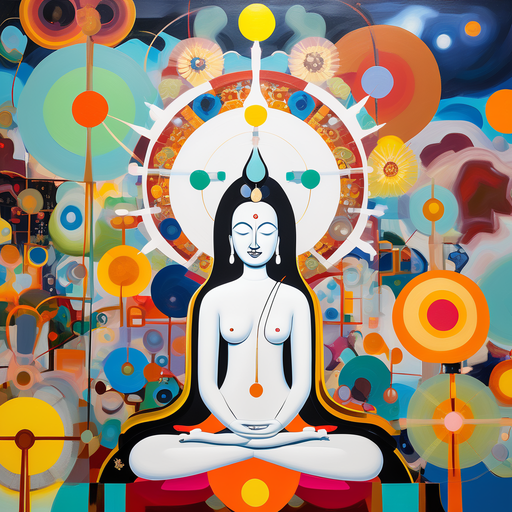
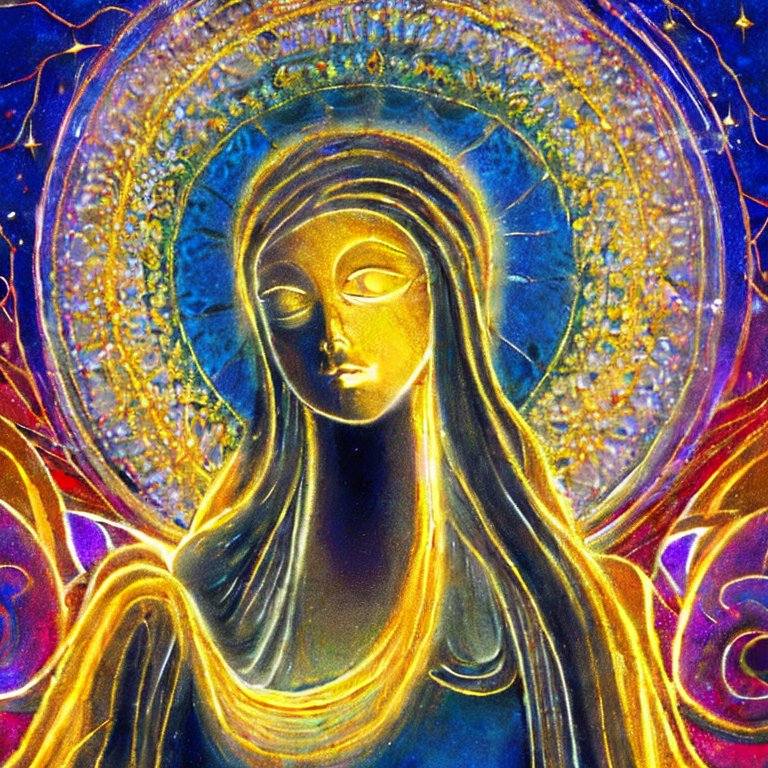
Whether Jesus walked the earth or not is irrelevant to me. I am less concerned with the historicity of a man than I am with the utility of what he represents. Jesus is a technology. So is the Buddha. So is Krishna. These aren’t merely personalities from the past; they are structured mechanisms—living blueprints—for the cultivation of inner transformation and the evolution of civilization.

They function like algorithms for awakening, coded into the myths and memories of culture, waiting to be activated. Each offers a symbol-set, a behavioral protocol, an ethical framework, and a psychological mirror. Whether or not they existed, they exist. Their presence in the collective psyche is undeniable, and their effect, observable.

Civilizations have risen around these templates. Wars have been fought in their names, yes—but so have peace movements been born, arts been inspired, and lives reoriented toward compassion, surrender, and truth. These are not minor outcomes. These are pivotal shifts in the trajectory of human consciousness.

When a society lacks mythic technologies, it spirals. When the sacred is reduced to opinion or dismissed entirely, a vacuum forms. And into that vacuum pours the lesser gods of the day—greed, algorithmic manipulation, ego-as-brand. The sacred figures stand not because they are flawless historical beings, but because they point beyond history. They are fingers, pointing not to the past, but to what is possible—personally, collectively, cosmically.

To see Jesus as a technology is to acknowledge the architecture of possibility. To understand the Buddha as a psychological operating system is to awaken to what it means to be truly sane. Whether temporary or permanent, these peak states—compassion without condition, awareness without center, love without lack—are doorways we are meant to pass through, again and again, until their impermanence no longer discourages us, but refines us.

Maybe they were fictionalized. Maybe they were real. Doesn’t matter. They were necessary. They remain necessary. Because without the fiction of perfection, how would we recognize the direction of our ascent?

Morgan O. Smith

Get Your Free Copy of My Book, Bodhi in the Brain!

https://subscribepage.io/oTSZQu

The Child and the Keeper of Walls

Awakening Beyond Belief

Many have longed to grasp the mystery of existence, to touch the essence of something vast, limitless, and wholly beyond the conditioned intellect. Some wander outward, chasing knowledge across lifetimes, while others, weary of the chase, turn inward and dissolve into the revelation that the answer was never elsewhere.

There is a being who awakens, eyes once sealed now open, untethered from the weight of what was once mistaken for reality. This one recognizes that what they sought as God was never separate from themselves. Not a distant deity reigning above, nor a dogmatic construct built to cage the mind, but a living essence radiating through all things. They once believed this ideal self was an unreachable mirage, an aspiration always slipping beyond the grasp of physicality. But upon awakening, they no longer chase it—they become it.

What is this awakening? It is nothing more and nothing less than remembering how to imagine with the boundless wonder of a child. And not imagination as the mind toys with, but an intelligence so refined that it gives birth to worlds, perceives the invisible, and dances in the paradox of what is and what is not. The one who awakens does not strive to merge with God, for they see that this very merging is the illusion. There was never a separation to begin with.

Yet, alongside them walks another—one who clings tightly to a framework set in place long before their arrival. They follow the lines drawn by those who feared their depths, mistaking doctrine for truth and control for salvation. Their mind, fortified with walls of certainty, rejects the fluidity of growth. Anything that threatens their inherited beliefs is cast aside as danger, as corruption, as false prophecy.

The awakened one embraces their shadows, understanding that transformation does not come by denying the full range of human experience but by walking through the fire of it, unafraid to be burned. Shame is not an enemy to be conquered, nor is desire a force to be chained. They do not rush to crucify what it means to be fully human. Instead, they enter the chaos willingly, knowing that only by standing at the center of their own storm can they emerge as the calm itself.

Something miraculous happens in that surrender. The one who awakens watches their unfolding with wonder, like an artist witnessing a masterpiece take form in real time. Each step is both the path and the arrival, a self-created adventure where the destination remains unimportant. The act of movement itself—the curiosity, the play, the willingness to jump without knowing where they will land—is the divine act. The shimmering glow of their being is not a thing to be achieved but something they always were, now recognized at last.

Meanwhile, the fundamentalist stands still, mistaking their immobility for stability. Their beliefs, rigid and unyielding, have encased them in a fortress. To them, water is dangerous—too unpredictable, too wild. The awakened one drinks deeply from this same stream, intoxicated by its endlessness, while the fundamentalist sees it as a force of destruction, something to be feared and avoided at all costs.

Yet, both are children of the same source, actors within the same unfolding story. Neither is greater than the other, for both play their roles in the grand theater of existence. But only one of them has chosen to create the map of their becoming. Only one has dared to build a bridge where others have built walls.

So, the question arises: who would you rather be? The keeper of walls, or the architect of the infinite?

Morgan O. Smith

Yinnergy Meditation/Neurofeedback, Spiritual Life Coaching & My Book, Bodhi in the Brain…Available Now!

https://linktr.ee/morganosmith

A Mind Fully Expressed

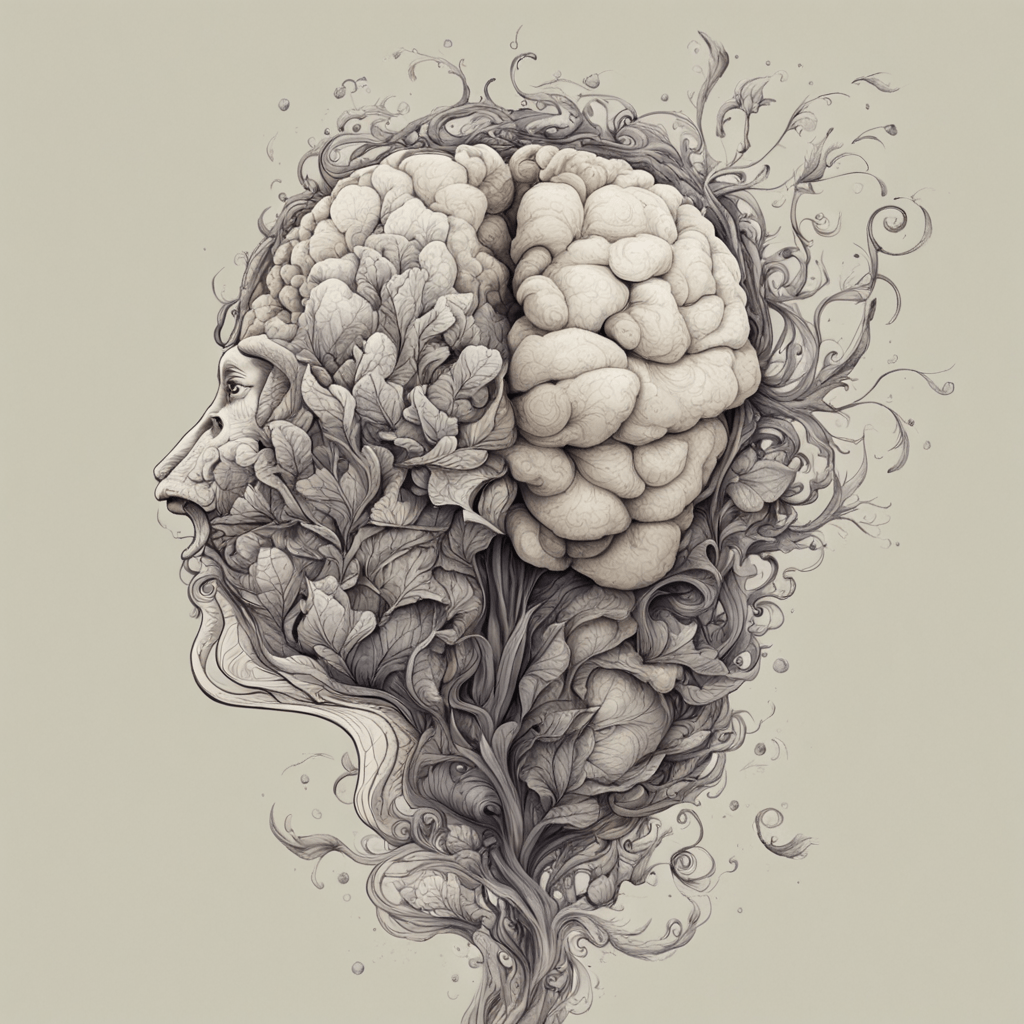
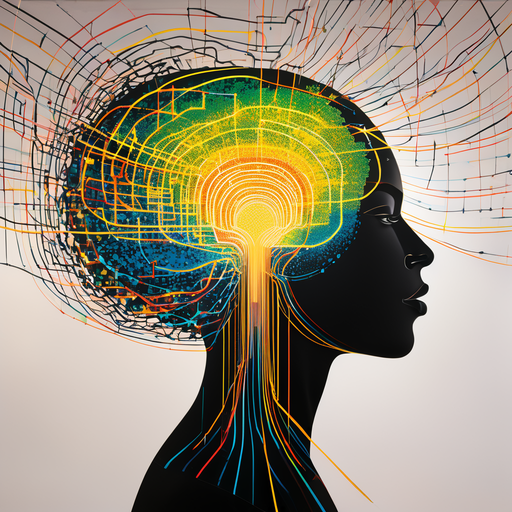
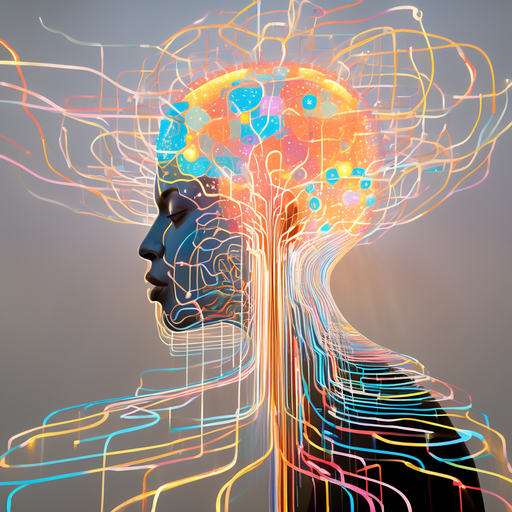
The human brain holds untapped dimensions of potential, yet most individuals navigate life using only fragments of its capability. This limitation is not due to biology but to patterns of thinking and perception shaped by societal conditioning, habitual behaviours, and resistance to change. The question arises: What does it mean to fully activate the brain? And how can this lead to a fully expressed mind?

A fully activated brain does not signify busyness or overstimulation. Instead, it represents a harmonious integration of logic, creativity, intuition, and awareness. When these dimensions align, the mind ceases to operate in fragmented dualities—right versus wrong, success versus failure—and begins to function as an instrument of boundless expression.

Achieving this state requires more than intellectual stimulation or the accumulation of knowledge. Practices such as meditation, neuroplastic exercises, and deep creative play open pathways to dormant brain regions. These practices cultivate a unified consciousness where clarity replaces confusion, and insight transcends limitation.

Activation begins by challenging the mind’s default settings. Unlearn the need for control, question the narratives you’ve inherited, and observe the interplay between thought and emotion without attachment. By dissolving mental rigidity, space emerges for new possibilities to take root.

A fully expressed mind doesn’t simply solve problems; it creates realities. When the brain functions as an integrated whole, life transforms into a canvas for profound exploration, innovation, and growth. Every action, from the simplest interaction to the grandest creation, becomes a reflection of an awakened state of being.

This level of brain activation is not reserved for the mystics, the prodigies, or the geniuses. It is the birthright of every human being willing to dismantle the barriers within and embrace the unknown. The fully expressed mind is a testament to the infinite nature of consciousness, a reminder that the boundaries we perceive are self-imposed illusions.

Are you ready to unlock this potential? The journey requires courage, but the reward is a life that radiates authenticity, creativity, and boundless freedom.

Morgan O. Smith

Yinnergy Meditation, Spiritual Life Coaching & My Book, Bodhi in the Brain…Available Now!

https://linktr.ee/morganosmith

Unlocking the Mind’s Full Potential

A Journey Beyond the Ordinary

In a world where our thoughts often run on autopilot, dictated by routine and societal norms, the true potential of the human mind remains largely untapped. It’s akin to a vast, unexplored landscape, brimming with possibilities that transcend the mundane. But how do we navigate this inner wilderness and fully express the capabilities of our minds?

The first step is awareness. We must become conscious observers of our thought processes. This goes beyond mere introspection; it involves a deep, almost meditative attention to the way we think, feel, and perceive the world. Only then can we identify the habitual patterns that confine our mental agility.


Next is the cultivation of curiosity. A curious mind is an active mind, always seeking, always questioning. It does not accept the world at face value but looks for the layers and connections that lie beneath the surface. This relentless quest for understanding and meaning propels our thoughts to new heights.

Creativity is the third key element. It’s not just about artistic endeavours; creativity is a way of thinking, a means of viewing the world through a lens of possibility and innovation. When we embrace our creative impulses, we give ourselves permission to think outside the conventional frameworks and explore new territories of thought.

Finally, there is the aspect of connection. Our minds are not isolated entities; they thrive on the exchange of ideas and experiences with others. Engaging in thoughtful dialogue, embracing diverse perspectives, and seeking collaborative ventures enrich our mental processes and broaden our understanding.


As we embark on this journey of mental exploration and expression, we discover that the human mind is not just a tool for navigating life’s practicalities. It is a dynamic, ever-evolving entity, capable of extraordinary insights and profound understanding. The journey to fully activate our brains is, in essence, the journey to a more fulfilled and enlightened existence.

Morgan O. Smith

Yinnergy Meditation, Spiritual Life Coaching & My Book, Bodhi in the Brain…Available Now!

https://linktr.ee/morganosmith

In the Mirror of Divinity

A Journey of Self-Realization

In my spiritual odyssey, I have tirelessly sought the face of God in various places: in the serene sanctuaries of nature, within the hallowed walls of churches, and in the sacred texts brimming with ancient wisdom. Yet, as I ventured deeper into this quest, a startling revelation unfolded – the face of God that I was so fervently seeking was, in fact, a reflection of my own.

This epiphany was not an end but a new beginning, an invitation to explore the divine within the human experience. It compelled me to ask: What does it mean to see the divine in oneself? Is it an echo of ancient philosophies proclaiming that the human and the divine are inseparable? Or is it a testament to the boundless potential within each of us?


The realization that we are mirrors of the divine reshapes our understanding of spirituality. It suggests that the sacred is not solely external, but also internal. It speaks to the potential for transcendence and transformation inherent in human nature. This perspective doesn’t diminish the significance of a higher power; instead, it offers a profound understanding that divinity can also be a deeply personal experience, emanating from within.

Embracing this view unlocks a powerful form of self-realization. It encourages us to look within for guidance, strength, and wisdom. It empowers us to trust in our inner voice and intuition, recognizing them as conduits to the divine. This realization also fosters a deeper sense of responsibility towards ourselves and others, understanding that if the divine is in us, it is also in everyone else.


This journey of self-discovery is not without challenges. It requires us to confront our deepest fears, insecurities, and flaws. It asks us to be introspective, to examine the aspects of ourselves that we might not be proud of. But in doing so, it also offers the opportunity for profound personal growth, healing, and enlightenment.

In conclusion, the discovery that the face of God is akin to our own is not a conclusion but an invitation to a lifelong journey. It’s an exploration of the deepest truths about ourselves and our place in the universe. As we continue on this path, we may find that the distinction between the seeker and the sought becomes ever more blurred, revealing a unity that has existed all along.

Morgan O. Smith

Yinnergy Meditation, Spiritual Life Coaching & My Book, Bodhi in the Brain…Available Now!

https://linktr.ee/morganosmith

The Awakening to Oneness

A Journey from Individual to Collective Consciousness

In a world brimming with over eight billion unique stories, perspectives, and lives, it’s easy to feel like just another fleeting existence. But what if our true power lies in an ancient, yet often overlooked, truth? The moment you transition from seeing yourself as “one of eight billion” to “one with eight billion,” a profound shift happens.

This is more than a play on words; it’s a paradigm shift in how we perceive our existence and connection with the world. We often navigate life perceiving ourselves as solitary islands in a vast ocean of humanity. Yet, this perspective is limiting, preventing us from realizing our collective potential.


The realization of oneness doesn’t mean losing your individuality. Rather, it’s an awakening to the interconnectedness of all beings. Imagine the impact of eight billion unique individuals, each with their dreams, struggles, and triumphs, coming together in shared consciousness. This unity doesn’t erase our differences but celebrates them, weaving a tapestry of diversity that is our collective strength.

This journey to oneness starts within. It begins with the recognition that every thought, every action, and every word has the power to affect the collective consciousness. When you act with kindness, compassion, and understanding, you aren’t just uplifting yourself; you’re contributing to the elevation of the global consciousness.


The challenges facing our world today – from climate change to social injustice – require more than individual efforts. They demand a collective awakening to the power of oneness. When we start seeing the world’s problems as our own, we mobilize a force of eight billion strong, capable of enacting monumental change.

As you navigate your journey, remember that the realization of oneness isn’t a destination but a continuous process. It’s a daily practice of empathy, understanding, and connection. You are one of eight billion until you become one with eight billion. Embrace this truth, and watch as the world transforms around you.

Morgan O. Smith

Yinnergy Meditation, Spiritual Life Coaching & My Book, Bodhi in the Brain…Available Now!

https://linktr.ee/morganosmith

When the Golden Shadow Presents Itself as a Spiritual Peak Experience

Throughout our lives, we often come across moments of profound clarity, moments when the essence of the universe seems to touch our very souls. These experiences, often termed ‘peak experiences’, can be transformative. But when these encounters emerge from our ‘golden shadow’, the exploration takes on an added dimension.

The ‘golden shadow’, a term rooted in Jungian psychology, represents the unacknowledged positive aspects of oneself. It is not just the dark shadow that contains repressed desires and fears; the golden shadow holds our unrealized strengths and potential. When it manifests in our conscious experiences, it showcases what we could be, what we haven’t yet embraced about our greatness.

A spiritual peak experience arising from the golden shadow is not just a fleeting moment of enlightenment, but a glimpse into the vast reservoir of our untapped potential. It is the universe’s way of saying, “This is you. This is what you’re capable of.” Such moments aren’t just spiritual highs; they are profound realizations of the grandeur within us that’s waiting to be unveiled.

However, there’s a challenge. The nature of the golden shadow is that it’s often elusive. We may feel overwhelmed by the brilliance of our potential, believing that it’s too grand, too beautiful, too powerful to belong to us. But that’s the illusion. It’s imperative to remember that the golden shadow is as much a part of us as our flaws and insecurities.

Embracing these spiritual peak experiences means recognizing that the brilliance we witness during such moments is our own. It’s a call to action, an invitation to integrate this vast potential into our everyday lives. By doing so, we’re not only elevating our consciousness but also contributing to the collective evolution of humankind.

In the end, when the golden shadow presents itself as a spiritual peak experience, it’s a reminder of our intrinsic connection with the universe and our rightful place within it. We are each one of us, magnificent galaxies of potential, waiting for the right moment to shine.

Morgan O. Smith

Yinnergy Meditation & My Book, Bodhi in the Brain…Available Now!

https://linktr.ee/morganosmith

In Divine Light

Society’s Golden Shadow 

Intro:

In a world where the quest for meaning continues to stir the human soul, spirituality and reverence for the divine emerge as quintessential human experiences. But what if the collective admiration and worship of God are manifestations of society’s golden shadow – the unexplored, positive aspects of our shared unconscious? This post delves into the notion that the sacred spaces we turn towards in times of despair or joy are indeed reflections of the inherent greatness within ourselves.

Understanding the Golden Shadow:

Drawing from Carl Jung’s concepts, the golden shadow encompasses the positive attributes within our unconscious minds that we might not recognize. When these attributes are exemplified by an external entity, such as a deity, we project our golden shadow upon it.

God as the Epitome of Society’s Golden Shadow:

The divine figures across cultures are often epitomes of virtues – love, compassion, wisdom, and more. Society’s adoration for these figures could be interpreted as an admiration for the virtues themselves. The deities become mirrors, reflecting what individuals and societies aspire to embody.

Religion as a Path to Self-Realization:

One could argue that the rituals, prayers, and moral teachings of religion serve as vehicles for cultivating the qualities represented by the divine within ourselves. In essence, by worshipping or admiring God, individuals are also venerating and nurturing their own latent potential.

The Challenges:

This perspective might not sit well with everyone, especially those who believe in the transcendental nature of God. Moreover, using religious practices solely as tools for self-improvement might seem reductive. It’s essential to approach this hypothesis with respect for the diversity of beliefs and experiences.

Conclusion:

The notion that society’s worship and admiration for God is a projection of its golden shadow is thought-provoking. It offers a lens through which we can perceive religious and spiritual practices as not just pathways to the divine, but also as avenues to recognize and cultivate the virtues within ourselves. Whether or not one subscribes to this idea, it invites reflection on the profound interconnectedness between the human spirit and the sacred.

Morgan O. Smith

Yinnergy Meditation & My Book, Bodhi in the Brain…Available Now!

https://linktr.ee/morganosmith