The Echo of You

How Others Shape the Illusion of Self

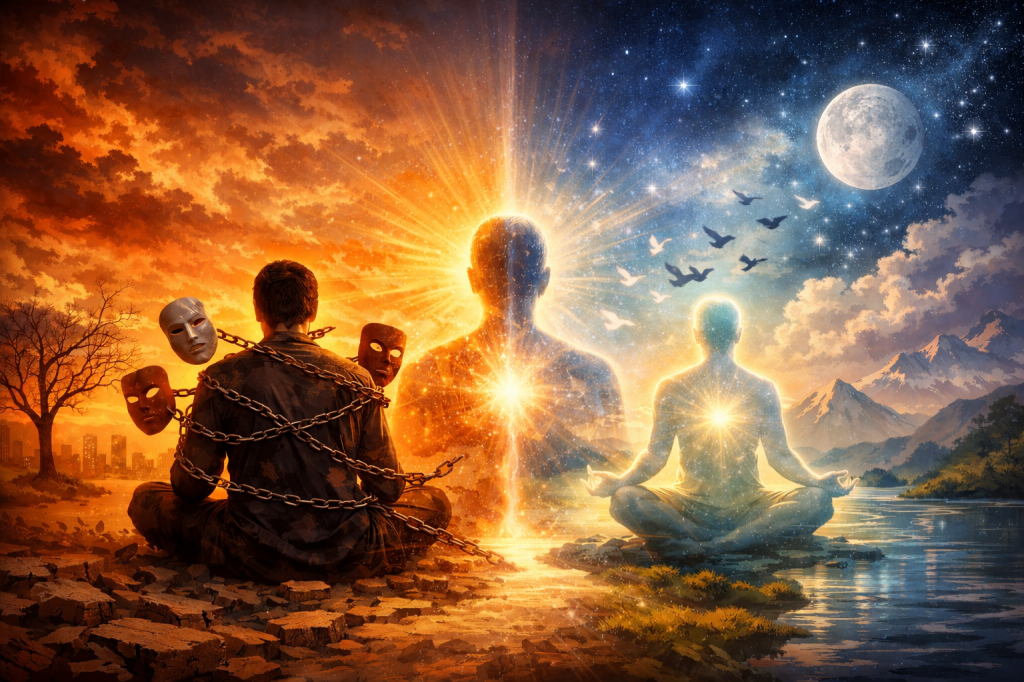
Every mind that encounters you constructs a version of who you are—one that exists only within their perception. These projections are not reflections of an objective truth but rather interpretations woven from personal history, emotions, and unconscious biases. The self you recognize as you dissolves into a multiplicity of shifting impressions, each molded by the observer’s lens.

A single glance, a brief interaction, a conversation—these moments serve as the brushstrokes that paint an image of you in another’s mind. That rendering is not built from the essence of your being but from their expectations, fears, desires, and past experiences. You become a mirror reflecting not your own face but the fragmented archetypes stored within them.

Eight billion people could know of your existence, and within those eight billion minds, eight billion versions of you would reside—each unique, each tethered to the individual’s understanding of reality. Some may see wisdom where others see arrogance, kindness where others perceive naivety, or detachment where others sense depth. Each impression, though deeply felt by the observer, is nothing more than a personal myth—an illusion shaped by the inner world of the one perceiving.

This ongoing act of creation is not limited to how others see you; it extends to how you see them. The individuals encountered are rarely experienced as they are but instead as projections of our own conditioning. An idea of them forms, colored by past wounds, cultural imprints, and unconscious expectations. Thus, every relationship becomes a dance of illusions, where two constructs interact rather than two beings truly seen for what they are.

If these imagined versions of one another are so deeply ingrained, what remains when they fall away? What is left when perception no longer dictates existence? The formless, nameless presence that remains is not confined by labels or interpretations—it simply is. And in that space, where no definitions persist, the need to be seen, understood, or accepted dissolves into something far greater than any construct a mind could create.

Morgan O. Smith

Get Your Free Copy of My Book, Bodhi in the Brain!

https://subscribepage.io/oTSZQu

The Ultimate Love

The Force That Transcends All Boundaries

Love’s true essence is beyond comprehension, an omnipresent force so profound it erases the illusion of separation. It moves in dimensions beyond moral constructs, ideology, and identity. When fully realized, this love obliterates the ego and opens the heart so that even the most hardened souls cannot resist its call.

The human mind craves order, labelling people into categories—good, evil, victim, perpetrator. But ultimate love doesn’t comply with these distinctions. It meets each being at the core of their essence, beneath the conditioning and trauma that have shaped their actions. This kind of love can dismantle even the most fortified belief systems.

Imagine the inner world of someone consumed by hatred, caught in the web of fear, anger, and dogma. The walls around their heart seem impenetrable, yet ultimate love does not storm these walls; it dissolves them. It renders resistance futile by revealing what has been buried deep inside—a longing to belong, to be seen, and to be held in a space beyond judgment.

Ultimate love does not negotiate with the mind. It penetrates through the layers of identity, be it the identity of a saint or a sinner, revealing the same radiant essence beneath all masks. It leaves no room for pretense. This love cannot be owned, managed, or bargained with; it simply is.

Consider the most unimaginable scenario—a person shaped by the horrors of hatred, such as a Nazi, encountering the force of unconditional love. It is not a love that justifies or condones but one that sees beyond. That person’s history, belief system, and ideology would crumble under the weight of such grace. All that remains is a naked heart, laid bare in the presence of a force so magnificent it demands surrender. Not as punishment, but as liberation.

This love does not require forgiveness. It transcends it. Forgiveness suggests wrongdoing, but ultimate love offers a view where the need for forgiveness dissolves, revealing the underlying unity where all things are reconciled. When this love is encountered, tears flow not from shame, but from the relief of being released from the prison of the mind’s narratives.

This is the love that brings anyone, no matter how lost, to their knees—not out of fear, but in awe. It’s the moment when everything false melts away, and only the truth remains: the realization that there has never been separation, and love was the ground of all existence all along.

Ultimate love is not just the absence of hate; it is the luminous presence that absorbs even the darkest shadow, rendering it irrelevant. It is the undeniable force that brings every soul back to where it has always belonged—home.

Morgan O. Smith

Yinnergy Meditation, Spiritual Life Coaching & My Book, Bodhi in the Brain…Available Now!

https://linktr.ee/morganosmith

Beyond Illusion

Discovering the Space Between

The mind creates identities and builds a sense of self out of thoughts, emotions, and past experiences. These constructs shape beliefs around who you think you are and who you think you aren’t. This entire narrative, though compelling, is merely a distortion. It presents itself as reality but, in truth, is nothing more than an intricate mental creation. We become confined by these polarities, oscillating between two extremes—what we accept and what we reject about ourselves.

These boundaries, however, do not define the core of who you are. The sense of self emerges as a reflection against what we perceive as the ‘other.’ You’re not merely the collection of traits you cherish, nor are you the shadow aspects you struggle to suppress. By engaging with either, you remain caught in a dualistic view that blinds you to your deeper essence.

The challenge, then, is to neither grasp onto one identity nor to strive to become its opposite, but to look at the liminal space between. This uncharted territory holds the key to your True Self. Neither glorified nor condemned, this space is untouched by labels. It eludes all attempts to be defined. When you gaze into that emptiness, you come face-to-face with your origin—the point where being meets non-being, and you witness the dissolution of the false dichotomy between ‘I am this’ and ‘I am not that.’

Finding this space requires surrendering the tendency to categorize. Allow awareness to rest on the edges of thought, where opposites fade into one another. This subtle recognition can shift perception, making you aware of a silent presence that underlies all identifications. It’s a sense of being that defies expression yet is undeniably real. Here, you aren’t bound by limitations, nor are you an idealized version of yourself.

This presence is what mystics have pointed to throughout the ages—a place beyond words and mental constructs. It’s here that the True Self emerges, not as a separate entity, but as the unconditioned awareness that holds both the ‘you’ and the ‘not you.’ Let this realization transform the way you see yourself and others, dissolving barriers until all that remains is a boundless, indivisible field of consciousness.

Morgan O. Smith

Yinnergy Meditation, Spiritual Life Coaching & My Book, Bodhi in the Brain…Available Now!

https://linktr.ee/morganosmith

The Multilayered Journey of Ego Dissolution

In the intricate dance of spiritual awakening, the ego stands as both a necessary companion and a formidable obstacle. Our journey to self-realization often involves peeling away the layers of this multifaceted construct, each layer representing a different aspect of our perceived identity.

The ego, much like an onion, is composed of multiple layers. These layers symbolize the various roles, beliefs, and attachments we accumulate throughout our lives. Initially, shedding these layers can be a liberating experience. We feel lighter, more connected to our true selves, and less bound by societal expectations and personal fears. Each removed layer brings us closer to a state of purity and clarity.

However, the concept of ego death transcends the gradual shedding of these layers. Ego death is not merely about peeling back the onion to its core; it is about transcending the very existence of the onion itself. It is the profound realization that the core was an illusion all along, a construct of the mind designed to give us a sense of separateness and control.

Imagine reaching a point where even the scent of the onion no longer lingers. This metaphor captures the essence of true ego death—a state where not only the layers but the very notion of an individual self dissolve into the infinite. It is the ultimate surrender, where the boundaries between the self and the cosmos blur into non-existence, revealing the underlying oneness of all.


This experience can be both terrifying and liberating. The fear of losing our identity is a natural response, as the ego is deeply ingrained in our sense of self-preservation. Yet, the liberation that follows is unparalleled. Without the confines of the ego, we experience reality in its purest form, untainted by personal biases or desires. We become conduits for the divine flow of life, embracing the totality of existence with an open heart and mind.

Ego death is not a one-time event but an ongoing process of dissolution and rebirth. Each moment of awareness, each act of surrender, contributes to the gradual dismantling of the ego’s hold. In this continuous journey, we learn to embrace the paradox of being both nothing and everything simultaneously. We recognize that our true essence is not defined by our identity but by our intrinsic connection to the universal consciousness.

As we navigate this path, it is essential to cultivate compassion and patience for ourselves. The layers of the ego are intricate and deeply rooted, and their dissolution requires gentle persistence. By embracing the journey with humility and openness, we allow the process to unfold naturally, guided by the inner wisdom that transcends the ego’s limitations.


In conclusion, the journey of ego dissolution is a profound exploration of our true nature. It invites us to move beyond the superficial layers of identity and experience the boundless reality of our interconnected existence. Through this journey, we discover that true freedom lies not in the absence of identity but in the realization of our inherent oneness with all that is.

Morgan O. Smith

Yinnergy Meditation, Spiritual Life Coaching & My Book, Bodhi in the Brain…Available Now!

https://linktr.ee/morganosmith

The Paradox of Enlightenment

Embracing the Limitless Self

In the quest for enlightenment, a paradox often emerges. We strive to reach a state of higher understanding, yet the moment we claim to have achieved enlightenment, we inadvertently confine ourselves within the very boundaries we sought to transcend. This pursuit reveals a fundamental truth about our nature and existence: what we truly are is inherently free from all limitations.

When we label ourselves as ‘enlightened,’ we inadvertently create a new identity, another cage for our boundless spirit. This declaration is a subtle form of ego, a self-imposed limitation that contradicts the essence of enlightenment itself. True enlightenment is not about attaining a label or reaching a destination; it’s an ongoing journey of self-discovery and liberation from all forms of identification.

Consider the concepts of ‘The Self’ and ‘No Self.’ These are often seen as opposing philosophies in spiritual and philosophical discourse. ‘The Self’ suggests a profound connection with a universal, eternal essence, while ‘No Self’ leans towards the idea of emptiness, the absence of a permanent, unchanging self. However, to define oneself as either is to miss the point entirely.


The essence of our being transcends these concepts. It’s not about being one or the other but encompassing and moving beyond both. We are neither solely ‘The Self’ nor ‘No Self.’ Instead, we exist in a state that includes both yet is not limited by either. This state is not a static endpoint but a dynamic, ever-evolving understanding of our true nature.

In this space, we recognize that labels, identities, and even the concept of enlightenment itself are mere tools for understanding, not the ultimate truth. Our true essence is like the sky—vast, boundless, and untouched by the clouds that drift through it. We are the silent observers, the consciousness that witnesses thoughts, emotions, and sensations without becoming them.

To truly embrace this state of being, one must continuously practice letting go of all attachments, identities, and beliefs. It’s a journey of unbecoming, peeling away layers of conditioned thought and societal constructs to reveal the pure, unadulterated essence of our being.


In conclusion, the journey to understanding what we truly are is not about acquiring a new label or reaching a definitive state of being. It’s about the continuous process of freeing ourselves from all limitations, labels, and identities. It’s about recognizing and embracing the boundless nature of our existence, which includes and transcends all dualities.

Morgan O. Smith

Yinnergy Meditation, Spiritual Life Coaching & My Book, Bodhi in the Brain…Available Now!

https://linktr.ee/morganosmith

The Transcendental Journey

Beyond Self and Society in Pursuit of Enlightenment

The quest for spiritual enlightenment is a profound journey that goes far beyond the realms of the individual self. It is a path that demands transcendence in its truest form – a journey that calls for us to rise above not just our identity, but also the collective constructs that define our existence. This process of transcending encompasses various aspects of life: ego, behaviour, traits, race, gender, community, religion, tradition, culture, species, opposition, and even the environment.

Transcending individuality means moving beyond the ego and the superficial traits that define personal identity. It’s about realizing that at the core, we are more than our personalities, habits, or physical attributes. This realization opens up a new way of experiencing the world, where personal biases and limitations no longer bind us.


Moreover, transcending race, gender, community, and religion involves recognizing the unity and interconnectedness of all beings. It’s about understanding that these social constructs, while significant in our worldly interactions, are not the ultimate truths of our existence. By moving past these distinctions, we embrace a more inclusive and compassionate view of the world.

Transcending tradition and culture is equally critical. It means acknowledging the value and beauty in all cultural expressions while not being limited by any single worldview. This broadens our understanding and appreciation of the diverse tapestry of human experience.


Furthermore, transcending species signifies acknowledging and respecting the interconnectedness and interdependence of all life forms. It’s an acknowledgment that human life is just a part of the vast web of existence, not separate or superior to it.

Transcending opposition and the environment involves realizing that conflict and the perception of separation from nature are illusions. True enlightenment recognizes the harmony and balance inherent in all things and seeks to foster it.

In essence, to attain spiritual enlightenment is to transcend the myriad divisions and categories that fragment our perception of reality. It’s a journey towards seeing and experiencing the underlying unity and interconnectedness of all existence. This path leads not only to personal transformation but also to a more profound understanding and relationship with the world around us.

Morgan O.  Smith

Yinnergy Meditation & My Book, Bodhi in the Brain…Available Now!

https://linktr.ee/morganosmith

The Liberation in Letting Go

Emptiness, Ignorance, and Identity

In a world incessantly clamouring with the din of possession, certainty, and self-promotion, the mantra “Embracing emptiness, cherishing ignorance, surrendering identity” arrives like a whisper from another realm. It calls on us to consider the counterintuitive notion that there is profound freedom and wisdom to be found in the very things we are conditioned to avoid.

**Embracing Emptiness**

Emptiness often conjures a sense of lack, yet in many Eastern philosophies, it is a profound concept, pregnant with possibilities. To embrace emptiness is not to fall into the void, but rather to make space for the new, the unforeseen, the life-affirming. It is the fertile ground of being from which all things spring and to which they return. In the spaciousness of emptiness, we find the flexibility and resilience to move with life’s undulating rhythms.

**Cherishing Ignorance**

Cherishing ignorance may seem antithetical in our knowledge-driven society. However, this is not an advocacy for willful naivete, but a reverence for the acknowledgment of our limitations. Socrates’ declaration of wisdom beginning with the admission of one’s ignorance holds here. Cherishing our not-knowing is an invitation to perennial learning, to the humility that keeps the mind supple, and the heart open to the mystery that is existence.

**Surrendering Identity**

Our identities, the personas we cultivate and present to the world, are often elaborate constructs grounded in who we think we should be or who we want others to believe we are. To surrender this identity is to strip away the superfluous and encounter the authentic self, the self not defined by accolades or attributes, but existing in simple beingness. This surrender is not a loss but a homecoming, a release from the exhausting endeavour of upholding our masks.

In combining these three tenets—emptiness, ignorance, and identity—we approach a way of living that is at once liberating and grounding. It invites a life lived with open hands, where attachment is a choice rather than a compulsion, and authenticity guides our interactions.

As we contemplate this mantra, we might find ourselves stepping into a flow of existence that is less about accumulation and more about experience, less about certainty and more about exploration, less about being someone and more about being part of something greater.

The journey toward embracing this wisdom is counter-cultural. It moves against the grain of our societal norms, urging us to let go of what we cling to most tightly. Yet, the promise it holds is nothing short of transformational—freedom from the self-imposed prisons of material excess, intellectual rigidity, and egoic constraint.

In this space, we find that emptiness is fullness, ignorance is wisdom, and surrender is power. And so, we continue to explore, with hearts wide open to the vastness of the unknown.

Morgan O.  Smith

Yinnergy Meditation & My Book, Bodhi in the Brain…Available Now!

https://linktr.ee/morganosmith

Walking in Their Shoes with Our Heads in the Clouds

The human experience is a delicate dance between the tangible and the ethereal, between the ground we walk upon and the vast expanse of the skies. Each of us carves our path based on experiences, dreams, and our unique worldview. The quest to understand others while seeking enlightenment is our shared journey’s essence.

To walk in another’s shoes is not merely an act of empathy; it is an act of profound courage. This simple metaphor, often used to encourage understanding and compassion, requires us to momentarily abandon our deeply entrenched perspectives to wholly embrace another’s. Such a leap challenges the core of our identity and nudges us closer to universal truths.

On the other hand, having our heads in the clouds doesn’t just allude to daydreaming or being out of touch with reality. Instead, it signifies our innate yearning for transcendence and enlightenment. In the clouds, we find inspiration, creativity, and even the answers to life’s most perplexing questions.

Merging these two ideas, we are asked to ground ourselves in the realities of others while also seeking a higher truth. This beautiful interplay ensures that while we strive for ideals and wisdom, we never lose touch with the human stories unfolding around us.

In our endeavour to walk in another’s shoes, we may realize that the ground beneath our feet, though different in texture and terrain, feels strikingly similar in emotion and experience. And as we reach skyward, we understand that the same clouds of aspiration, doubt, joy, and sorrow float above us all.

So, the next time you find yourself firmly rooted in your beliefs and perspectives, remember to look up and dream but also to look across and truly see the person next to you. For in the balance between grounded reality and lofty dreams lies the essence of a life richly lived.

Morgan O.  Smith

Yinnergy Meditation & My Book, Bodhi in the Brain…Available Now!

https://linktr.ee/morganosmith

The Illusion of Spiritual Identity

Beyond Stories We Tell Ourselves

Spirituality, at its core, is a profound journey toward understanding one’s place in the vast expanse of existence. However, in our attempt to grasp this elusive understanding, we often pigeonhole ourselves into labels: spiritual, materialistic, moral, and the like. But what if I were to suggest that these labels, these stories, are mere illusions? And that by clinging to them, we might be limiting our true potential.

#### **The Stories We Tell Ourselves**

Every culture, every religion, and every individual has a narrative. These narratives shape our beliefs, our actions, and the way we perceive the world. They are the tapestries upon which our identities are woven. But what happens when we deconstruct these tapestries? Beneath the intricate designs and patterns, what remains?

The reality is that these stories are our creations, shaped by societal norms, personal experiences, and myriad other factors. To say one is ‘spiritual’ or ‘materialistic’ is to adopt a particular perspective, a specific lens through which we view the world.

#### **The Ground of All Being**

But let’s delve deeper. Beneath these self-imposed labels and narratives, there lies a fundamental essence – often referred to as the ‘ground of all being’. This essence is the raw, unfiltered state of existence. It is what you are before the stories, before the labels, and before the definitions. It is the canvas upon which all our narratives are painted.

This ground of being is paradoxical. While it exists beyond all descriptors, it simultaneously encompasses them. Think of it as an ocean. The waves, currents, and whirlpools may differ in their nature and intensity, but they all arise from and subside back into the same vast expanse of water.

#### **Embracing the Beyond**

Realizing this fundamental truth can be liberating. When we understand that our spiritual or materialistic labels are mere waves upon the ocean of existence, we can learn to see beyond them. We can experience the world without the confines of our self-imposed narratives.

This doesn’t mean that one should abandon their spiritual practices or beliefs. Rather, it’s about recognizing them for what they are – beautiful expressions of the infinite variations of existence.

#### **Conclusion**

In the end, whether you consider yourself spiritual, materialistic, or anything in between, it’s crucial to remember that these are just facets of the grander jewel that is existence. By stepping back and seeing beyond our self-crafted stories, we can come closer to experiencing the profound depth of what we truly are.

Morgan O. Smith

Yinnergy Meditation & My Book, Bodhi in the Brain…Available Now!

https://linktr.ee/morganosmith

The Ego

Many Faces of the “I”

In our quest to understand ourselves, few concepts are as debated, dissected, and deliberated as the ego. Spanning from ancient spiritual scriptures to the modern therapist’s couch, the ego stands as a reflection of our sense of self and our relation to the world. Yet, its definitions vary, painting a multifaceted picture of this central aspect of human existence.

### **1. Ego in Psychoanalysis: The Mediator**

Freud’s tripartite model of the psyche introduced us to the ego as the balancing force between the primal urges of the id and the moral compass of the superego. Here, the ego isn’t an adversary but a necessary mediator, guiding our actions in a world of societal norms. It poses the question: Is our ego the voice of reason amidst internal chaos?

### **2. Ego in General Psychology: The Self’s Mirror**

When we talk about self-esteem or self-worth, we’re often referring to the ego. This definition paints the ego as a mirror reflecting our perceived value and place in the world. Yet, this raises a thought-provoking inquiry: If our ego is a mirror, who or what determines its reflection?

### **3. Ego in Philosophy: The Conscious Observer**
Descartes’ famous dictum “Cogito, ergo sum” (I think, therefore I am) encapsulates the philosophical perspective of the ego as the conscious thinking subject. If our ego is the conscious observer of our experiences, it invites us to ponder: Without this observer, do experiences lose their significance?

### **4. Ego in Spirituality: The Illusory Self**
Many spiritual traditions view the ego as a barrier to enlightenment. It’s the illusory sense of separateness that binds us to suffering. The spiritual perspective urges us to ask: If the ego is an illusion, then who indeed are we beneath this veneer?

### **5. Ego in Pop Culture: The Mask of Pride**
Everyday parlance often equates a “big ego” with arrogance. It’s seen as a mask, sometimes shielding insecurities, other times amplifying genuine pride. This usage compels us to consider: Is the ego merely a façade, and what lies behind it?

### **6. Ego in Eastern Philosophies: The Creator of “I-ness”**

Hindu philosophy introduces Ahamkara, the aspect of us that births the sense of “I.” This ego is neither good nor bad but a natural facet of being human. Reflecting on this, we might wonder: Is the ego, not an enemy but an inevitable companion on our human journey?

**In Conclusion: The Infinite Layers of “I”**

The ego, regardless of its definition, remains at the core of human introspection. Its multifaceted interpretations offer not just explanations but a myriad of questions. As we navigate our understanding of the ego, we’re not just uncovering the layers of this concept but also the layers of our very existence.

In exploring the ego, we’re invited to embark on a profound journey inward, to question, understand, and perhaps even transcend the confines of the “I.” For as varied as its definitions might be, the ego’s ultimate gift is the invitation to self-reflection.

Morgan O. Smith

Yinnergy Meditation & My Book, Bodhi in the Brain…Available Now!

https://linktr.ee/morganosmith