When Maya Has Nothing Left to Wear

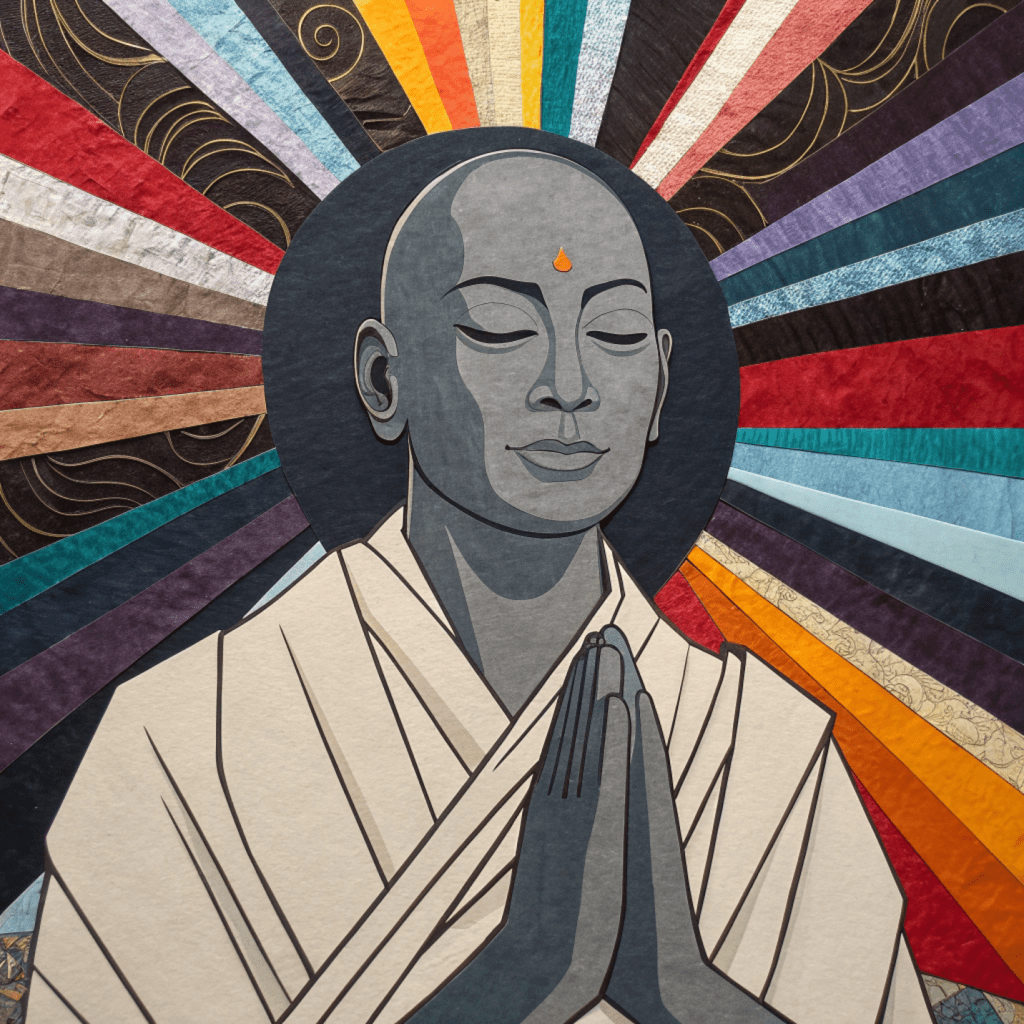
Maya survives by costume.
Names, stories, identities, and roles, each layer persuades awareness that something solid is happening. The spell works because the layers are convincing, not because they are true.

Removing them is not an act of destruction.
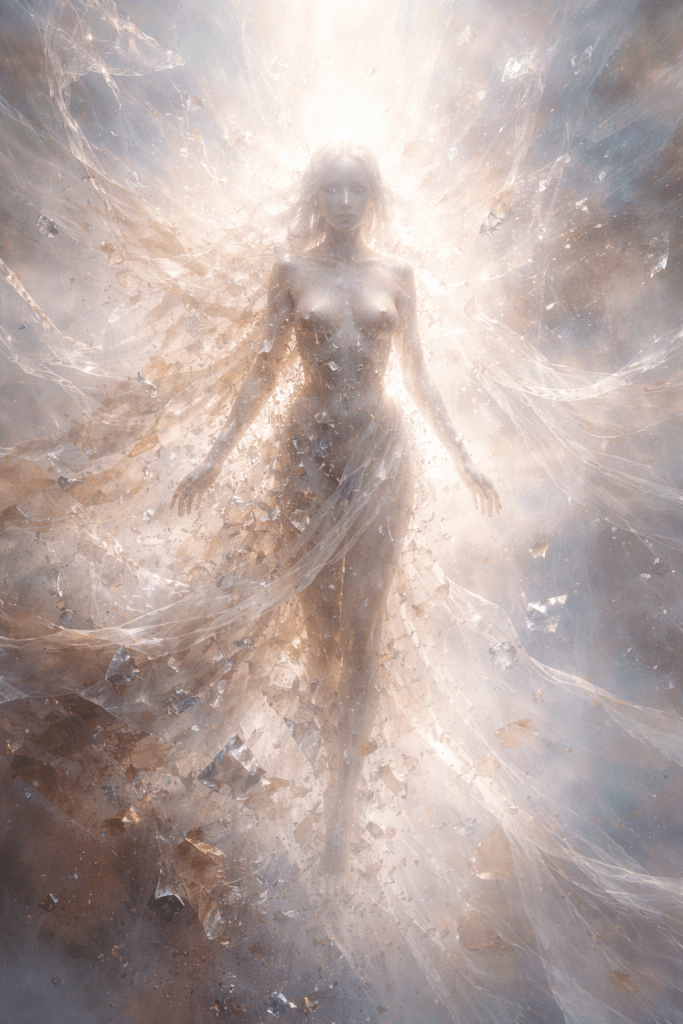
Nothing is torn away. Nothing is violated. What falls off was never stitched to reality in the first place.

Belief drops first.
Then interpretation.
Then the quiet assumption that experience belongs to someone.

What remains cannot be described without borrowing from the very illusion that has just dissolved. Language reaches for shape, but shape no longer holds. Meaning loosens its grip. Time forgets how to move forward. Causation loses its authority.

No hidden essence appears.
No final revelation arrives.
No sacred object waits beneath the last veil.

Maya does not conceal truth.
She is the activity of concealment.

When nothing is left to remove, there is no witness standing apart, no awareness peering at emptiness. Seeing collapses into what is seen. Knowing continues without a knower. Function carries on without ownership.

This is not transcendence.
This is intimacy without distance.

The world resumes exactly as before; faces, traffic, obligations, joy, grief, but the spell has lost its teeth. Appearances no longer demand belief. Forms no longer claim authority. Experience is free to arise without needing to justify itself.

Maya, stripped of every disguise, reveals no secret.
Her final gesture is silence.

And silence does not explain itself.

Morgan O. Smith

AI for Wellness and Spirituality Summit

February 9 & 10, 2026
https://aiforwellnessandspirituality.com/mosm

After Enlightenment

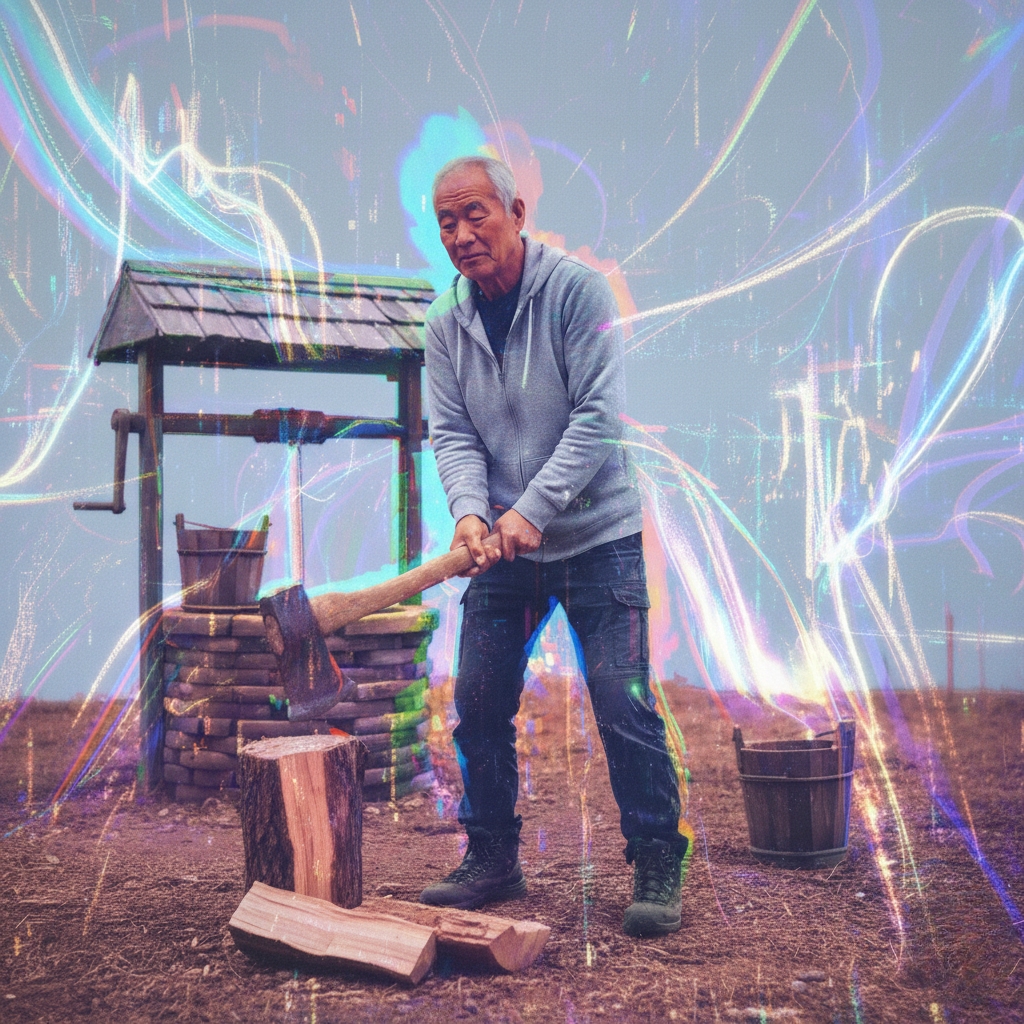
“As they say, before enlightenment, chop wood carry water; after enlightenment, chop wood carry water.”
This phrase is often repeated as reassurance that awakening does not remove one from ordinary life. Yet when examined carefully, it exposes a deeper paradox that cannot be resolved by sentiment alone.

Wood is Maya.
Water is Maya.
The body that lifts the axe is Maya.
The action of chopping is Maya.
The sense of a doer performing the act is Maya.

Nothing in the scene escapes appearance.

If awakening reveals that all phenomena are expressions of Maya, then what is being chopped? What is being carried? One cannot act upon illusion from outside illusion. Maya does not stand opposed to some other realm where truth resides. There is no second substance available to intervene.

This is where the saying begins to point beyond itself.

Before awakening, chopping wood feels purposeful. A future outcome motivates the action. Hunger will arise later. Cold must be prevented. Life appears as a sequence of needs demanding management. The world seems solid, personal, and unfinished. Actions feel necessary because something is believed to be lacking.

After awakening, the appearance of chopping may continue, but necessity dissolves. Nothing is required for completeness. No future state needs securing. The movement of the body happens without reference to deficiency or gain. Action no longer attempts to fix reality.

Wood is chopped, not because it must be, but because chopping happens.

This distinction is subtle and easily missed. Enlightenment does not negate Maya. It reveals its status. Appearance continues without being mistaken for truth. Function remains without belief in ultimate significance. Life moves, but no longer claims ownership of movement.

Chopping and carrying are no longer means to an end. They are expressions without agenda.

The phrase does not suggest sameness of experience across awakening. It points to sameness of appearance with a radically different orientation. The world looks the same, yet its weight has vanished. Consequence still operates, but urgency evaporates. Responsibility remains, but without the burden of identity.

Nothing is being done for reality after awakening.
Reality is not managed, improved, or corrected.

Action occurs because appearance unfolds.
Movement moves because movement is present.
Maya dances without needing justification.

After enlightenment, chopping wood carries no metaphysical significance. Carrying water does not symbolize humility or virtue. These interpretations belong to the mind seeking meaning where none is required.

What remains is effortless participation without belief in a participant.

No one chops Maya.
No one carries Maya.
Maya appears as chopping and carrying, empty of centre, complete as it is.

That is what the saying gestures toward when read beyond comfort.
Nothing special happens after enlightenment—except that nothing is believed to be happening to someone anymore.

Morgan O. Smith

AI for Wellness and Spirituality Summit

February 9 & 10, 2026
https://aiforwellnessandspirituality.com/mosm

When Truth Hides Behind Its Own Mask

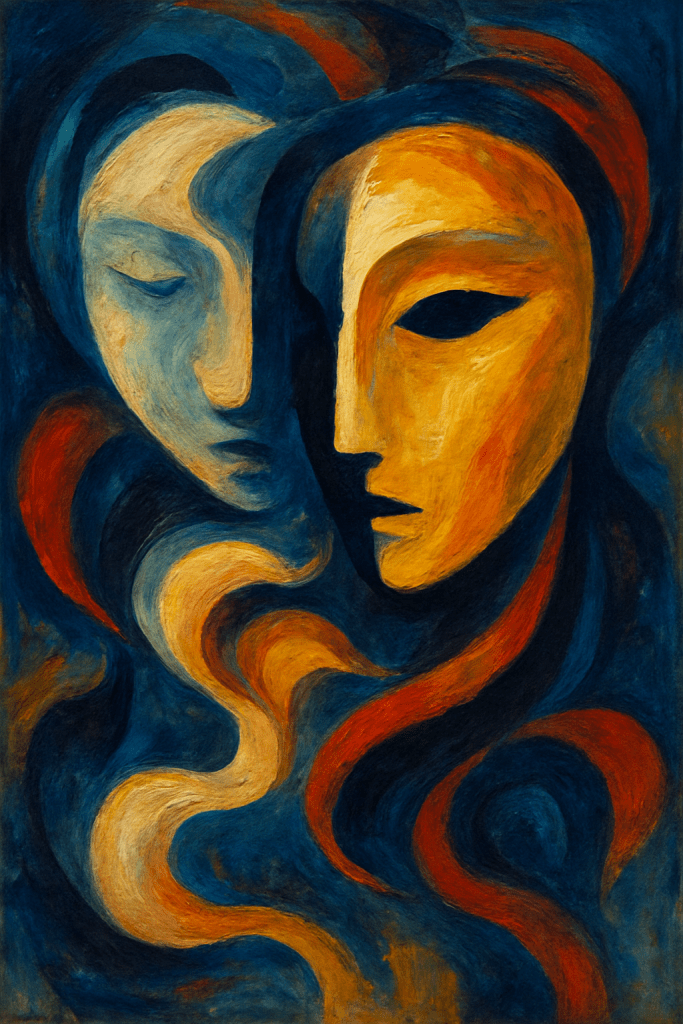
Falsehood is rarely what it seems. What appears as distortion, contradiction, or misperception still rises from the same source that gives birth to clarity. Nothing stands outside that ground. Even the illusions that mislead the mind are formed from the very substance they conceal.

Untruth doesn’t float in a separate realm. It is reality-bending itself just enough to create contrast. Without that contrast, recognition would never sharpen. Awareness would never deepen. The infinite would never explore itself through finite perception. Every mistaken conclusion, every misreading of a moment, every belief that turns out to be incomplete; all of it is the Absolute wearing a temporary disguise.

The cosmos reveals and conceals itself through the same gesture. Light becomes shadow by changing its angle. Understanding becomes confusion by narrowing its scope. The source never fractures, yet experience presents endless variations that feel divided. Those divisions create the necessary friction for insight to ignite. They teach the mind to release its rigid claims and return to the space where nothing stands apart.

Falsehood is not failure. It is instruction. It is the movement by which consciousness learns to see through its own projections. When a distortion collapses, what remains is not just truth; it is wisdom cultivated through the very mechanism that once obscured it.

Reality’s nature doesn’t falter because a viewpoint misinterprets it. The Absolute keeps expressing itself, even when it appears as error. The mind stumbles, adjusts, expands, and dissolves its boundaries. Through that unfolding, the deeper truth becomes unmistakable.

What hides the Real is made of the Real. And what reveals the Real is made of the same.

Morgan O. Smith

Get Your Free Copy of My Book, Bodhi in the Brain!

https://subscribepage.io/oTSZQu

The Untranslatable Truth

Every attempt to describe ultimate reality begins from within limitation. Even the most awakened consciousness cannot hold the whole of what is; it can only reflect fragments of an infinite field through the prism of its own development. The absolute may be directly experienced, yet interpretation remains tethered to the mind’s evolution. Awareness can pierce the veil, but the translation of that piercing, the language, the symbols, the meaning, unfolds through the structures of human understanding.

At the highest stages of psychological and spiritual growth, perception becomes increasingly transparent to the Real. Layers of distortion thin, and the boundaries between observer and observed soften into mutual recognition. The self no longer interprets reality as something external; it feels itself as the very movement of interpretation itself. Yet even here, beyond dualistic knowing, the infinite continues to exceed all possible comprehension. To see truth is one thing; to speak it is another. The moment it is spoken, the ineffable has already been reduced.

Every level of consciousness constructs a version of the world consistent with its own depth of awareness. Mythic minds imagine gods shaping destiny; rational minds uncover laws of physics; integral minds perceive interwoven systems of meaning. Each reveals something essential, yet none are complete. Reality is not a single revelation but the total field that contains all revelations; each illusion, each breakthrough, each mistaken certainty. Maya is not an obstacle but a necessary expression of what is. To awaken does not mean to destroy illusion, but to recognize that illusion itself is included in the real.

The absolute is not somewhere beyond the dream; it is the dream and the dreamer, the veil and what shines through it. Every stage, every interpretation, every attempt to name the nameless belongs to it. Truth remains forever ungraspable, yet it breathes through every grasp. To live this is to rest in a humility that knows: the closer one moves toward reality as it is, the more radiant its mystery becomes.

Morgan O. Smith

Get Your Free Copy of My Book, Bodhi in the Brain!

https://subscribepage.io/oTSZQu

When Reality Lets Go of Itself

Ultimate Reality doesn’t struggle to be known. It is not bound by time, thought, or perception, yet it plays with the illusion of being hidden. The one truth pretends to be many, and the One Self feigns division to taste reunion. But there comes a point—not always through effort, not always through grace—when even the illusion can no longer hold itself together.

It is not that Reality finds something new. It is that it no longer clings to the story of separation. The hand once clutching the dream loosens, not because it was forced open, but because the dream exhausted itself.

Falsehood requires maintenance. It must be believed, repeated, and reinforced. It relies on memory, identity, and the fragile continuity of thought. But what happens when the source of all this no longer cooperates? What happens when Reality drops the illusion of control?

There is no dramatic shattering. No cosmic trumpet. Only a quiet falling away of the effort to be something. What remains is neither void nor fullness—it is prior to both. Unnamable. Undeniable. You were never on a journey to find it. It was what you were before the seeker appeared.

To witness this unraveling is not an achievement. It is a disappearance. The one who thought it could hold Reality in its grasp is seen for what it was: a ripple mistaken for the ocean.

And when the ocean stops pretending to be a ripple, nothing changes—except everything.

Morgan O. Smith

Get Your Free Copy of My Book, Bodhi in the Brain!

https://subscribepage.io/oTSZQu

The Uninvited Companion

How We Cling to Chaos

Suffering is rarely an accident. More often than not, it is a story we tell ourselves, a rhythm we move to, unaware that we are both the dancer and the drum. There is a peculiar comfort in chaos—a familiarity that keeps it tethered to us like an old friend who never truly leaves.

The mind, ever seeking stimulation, crafts elaborate illusions of hardship and unrest, convincing itself that turmoil is necessary. It fabricates conflicts, fuels attachments, and calls it all a search for meaning. This internal theatre of suffering is neither fate nor misfortune; it is the work of our own hands.

Why do we let it persist? Perhaps because it gives us something to hold onto. Something that, despite its weight, feels more certain than the unknown silence beyond it. We surrender to the turbulence, believing it will resolve itself, unaware that it thrives only because we continue to feed it.

Yet, beneath the noise, another possibility waits. A reality untouched by the chaos we’ve grown so accustomed to. To step into it requires nothing but the willingness to recognize that suffering is not a necessary companion—it is a guest we’ve entertained for far too long.

Morgan O. Smith

Yinnergy Meditation/Neurofeedback, Spiritual Life Coaching & My Book, Bodhi in the Brain…Available Now!

https://linktr.ee/morganosmith

The Illusion of Liberation

Phenomena arise, unfold, and dissolve, yet the mind grasps at them, seeking meaning through the lens of interpretation. This act of interpretation is inevitable, but the depth at which one engages with it determines whether understanding remains bound to illusion or expands into realization.

The mythical-magical stage of consciousness perceives reality through archetypes of power, divine will, and cosmic law. This stage gives birth to beliefs about cycles, reincarnation, and karmic loops—explanations that serve as scaffolding for those navigating the existential unknown. There is some truth to these interpretations, just as there is truth in every story we tell ourselves about existence. But truth is not confined to a single stage of development. It unfolds, revealing deeper nuances as perception matures.

Samsara—the wheel of birth, death, and rebirth—has been described as a prison. The path to liberation, as outlined in various traditions, involves transcending this cycle, attaining nirvana or moksha, where rebirth ceases. But even this is an interpretation, one that arises from a more advanced vantage point. The paradox is that what appears as bondage and liberation are not separate realities. Samsara and nirvana are not two. They are the same movement seen through different eyes.

No one is bound, and no one is freed. The concept of liberation implies that something was ever trapped. Yet, what is there to escape when there has never been confinement? The idea of imprisonment is a mind construct, just as freedom is. They depend on one another, forming a duality that collapses upon close inspection.

You are creation itself. Yet, nothing is truly being created. It only appears so. The dance of form and emptiness continues, yet nothing moves. This is the great paradox. The illusion is not that samsara exists—it does, just as dreams exist while sleeping. The illusion is believing that it is something to escape.

Awakening is not an arrival but the recognition that there was never a journey. The cycle persists for those who perceive cycles. Freedom exists for those who perceive bondage. But beyond perception, beyond conceptual grasping, there is only this—eternal, unchanging, and free, regardless of whether one calls it samsara or nirvana.

Morgan O. Smith

Yinnergy Meditation/Neurofeedback, Spiritual Life Coaching & My Book, Bodhi in the Brain…Available Now!

https://linktr.ee/morganosmith

The Unveiling of the One Who Sees

A mystic is not one who merely seeks, but one who has dissolved the veil between seeking and knowing. With eyes closed, they perceive what the open eye distorts. The world no longer appears as separate fragments, but as a singular, boundless presence—an endless unveiling of what has always been. The mystic does not arrive at truth; they awaken as it.

To walk this path is to pierce the illusion of division. No longer trapped in the dialectic of belief and doubt, the mystic abides by indirect knowledge. God is neither a concept nor an external force to be worshipped from a distance; the mystic recognizes divinity as the unbroken continuity of self. There is no subject bowing before an object—only the indivisible One playing within itself, as itself, for itself.

To wear the title of mystic is meaningless to the one who has become it. They no longer search for the divine in symbols or rituals but perceive the singular hand that animates all gestures. The faces of the many dissolve into the singular essence that has never ceased to be. Every mask, every name, every form is an expression of the unnamable, the silent witness of all that is.

The mystic stands at the threshold of paradox, no longer tethered to linear thought. They see themselves reflected in all things and all things reflected in them. The river that flows is not separate from the one who watches. The breath inhaled by the body is the same breath exhaled by the stars. Time itself is unmasked as a trick of perception, revealing the eternal now as the only reality that has ever been.

The greatest revelation is not in the solving of mysteries but in surrendering to them. The mystic does not dissect existence to understand it; they dissolve into it, allowing truth to unfold as it will. Certainty is discarded, yet in its place arises an unwavering knowing—the kind that neither wavers nor seeks validation.

And then, in a final paradox, the mystic steps beyond even this understanding. They see that the one who longed for enlightenment was but a role played by the vastness that was already free. No longer bound by labels or identities, they laugh at the cosmic joke—the realization that the seeker was never separate from the sought. The game of self-discovery continues, but the mystic is no longer bound by it. They are both the player and the stage, the dance and the stillness, the illusion and the truth.

Morgan O. Smith

Yinnergy Meditation/Neurofeedback, Spiritual Life Coaching & My Book, Bodhi in the Brain…Available Now!

https://linktr.ee/morganosmith

The Illusion of Maya

Seeing Beyond the Show

Everything we perceive—the people, places, and events around us—is, at its core, a show. This is not a dismissal of life’s value but an invitation to explore its deeper essence. What we call “reality” is Maya, a veil of illusion that covers the truth. Maya is the great play of forms, the endless dance of opposites, and the theatre of duality where all things appear separate.

Yet, behind the scenes of this elaborate show lies something far more profound. Maya is the stage, but consciousness is the ever-present witness. The mind, with all its perceptions, attachments, and desires, keeps us captivated by the performance. We become so engrossed in the unfolding drama of our lives that we forget we are not the characters, but the awareness watching it all unfold.

Understanding Maya isn’t about rejecting the world or treating life as insignificant. Rather, it’s about seeing through the illusion. The key is not to escape Maya but to recognize it for what it is—a fleeting projection of the eternal. Once the illusion is seen for what it truly is, everything shifts. Life no longer feels like a weight to carry or a puzzle to solve. It becomes a dance, a cosmic play where each movement, no matter how dramatic, is infused with a deeper stillness.

Consider the waves of the ocean. They rise and fall, each one unique, yet they are never separate from the ocean itself. The wave may take shape, crash, and disappear, but the ocean remains constant. So, too, with Maya—forms come and go, experiences rise and fall, but consciousness remains unchanging, ever-present, and infinite.

To see beyond the illusion of Maya is to live with a lightness of being, recognizing that while everything is part of the grand show, none of it defines the true self. The self that watches, silently aware, is the only constant. When this is realized, life becomes a paradoxical blend of deep engagement and effortless detachment. You play your role in the world, knowing full well that it is all a divine drama, yet you remain untouched by its outcomes.

Maya invites us to enjoy the show while remembering we are not bound by it. Behind every illusion lies the vastness of truth, waiting to be uncovered by the silent observer within.

Morgan O. Smith

Yinnergy Meditation, Spiritual Life Coaching & My Book, Bodhi in the Brain…Available Now!

https://linktr.ee/morganosmith

The Paradox of a Spiritually Enlightened Peak Experience

Imagine being pushed from a plane mid-flight, without a parachute. There’s no time to think, no time to brace yourself for impact. You are hurtling through the sky, weightless, untethered, and completely vulnerable. Fear may grip you momentarily, but something unexpected happens. You hit the ground—yet not only do you survive, but you rise and walk away unscathed, untouched by the experience as if the fall was merely an illusion.

This analogy comes close to capturing the essence of a fully spiritually enlightened peak experience. It is both terrifying and liberating, a moment where everything you thought you knew is shattered, yet something deeper emerges untouched. It’s not the kind of experience that fits neatly into the confines of logic or the safety of intellectual understanding. It pulls you beyond those limits, forcing you to confront the raw truth of existence in ways you hadn’t anticipated.

During such an experience, there’s no parachute to cushion the ego’s fall. The self—the constructed identity you’ve held onto for so long—dissolves, leaving nothing to cling to. Everything you believe about who you are, what reality is, and how life works evaporates in a moment of pure awareness. But instead of devastation, there is a strange sense of freedom. You realize the ground you thought you were plummeting toward was never real, to begin with.

What’s remarkable about this peak state is how it feels after. There’s a profound sense of survival, not in the physical sense, but at the level of awareness. You walk away from the experience unscathed because the true self, the part of you that is beyond mind and body, was never at risk. The fall, the impact, and the survival all exist within the realm of the illusion, but the awareness that experiences it all remains whole and untouched.

This awakening doesn’t come gently; it forces a reckoning with reality. But through that reckoning, you realize that what is truly real cannot be harmed. The body, the ego, the mind—all of these can be torn apart by life’s challenges and transformations. But the awareness that witnesses the fall? That remains pure and intact.

Living after such an experience brings with it a lightness, a profound sense of detachment that doesn’t arise from apathy but from clarity. You’ve seen through the illusion of the fall, and now, you move through life knowing that no matter what happens, the essence of who you are remains untouched. There’s nothing left to fear, no more clinging to the safety of the mind’s constructions.

This is the gift of spiritual enlightenment: not just the revelation that you can survive the fall, but the deeper realization that there was never anything to fall from in the first place.

Morgan O. Smith

Yinnergy Meditation, Spiritual Life Coaching & My Book, Bodhi in the Brain…Available Now!

https://linktr.ee/morganosmith