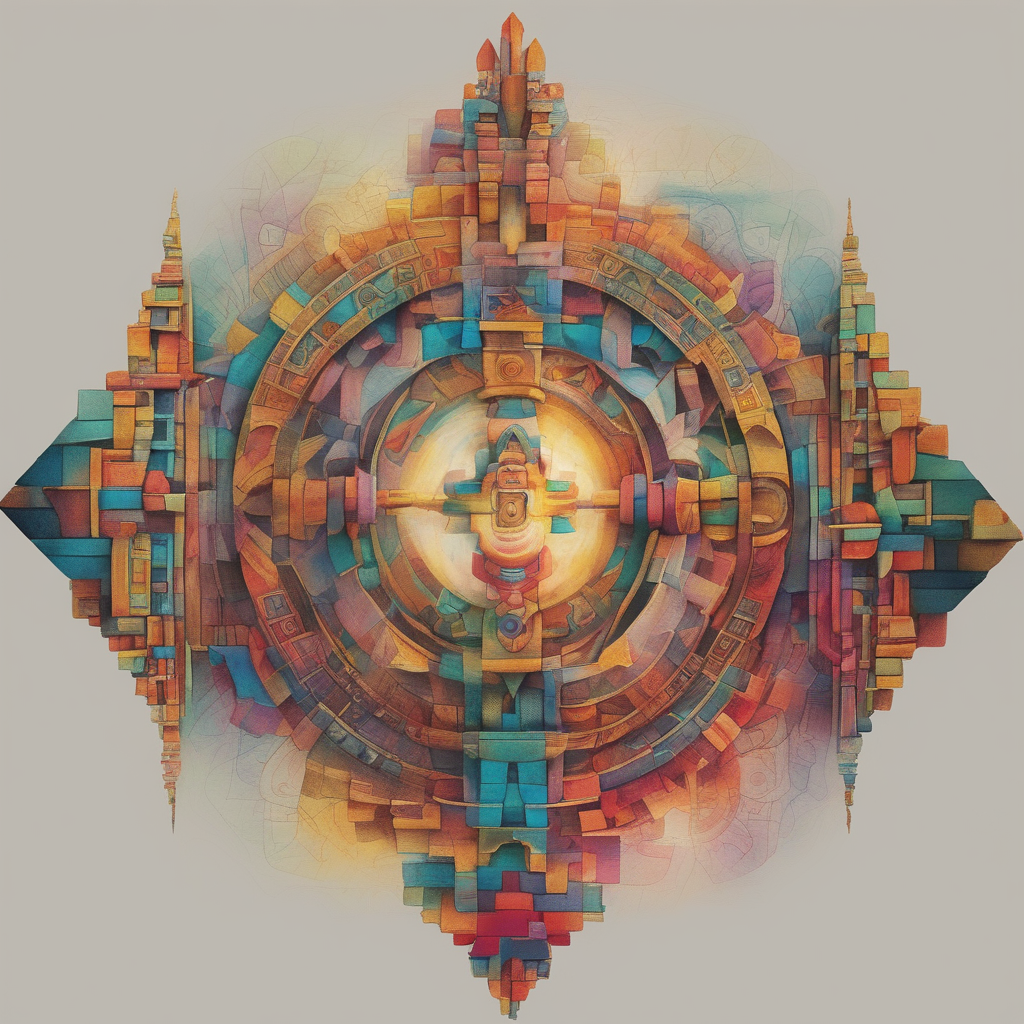
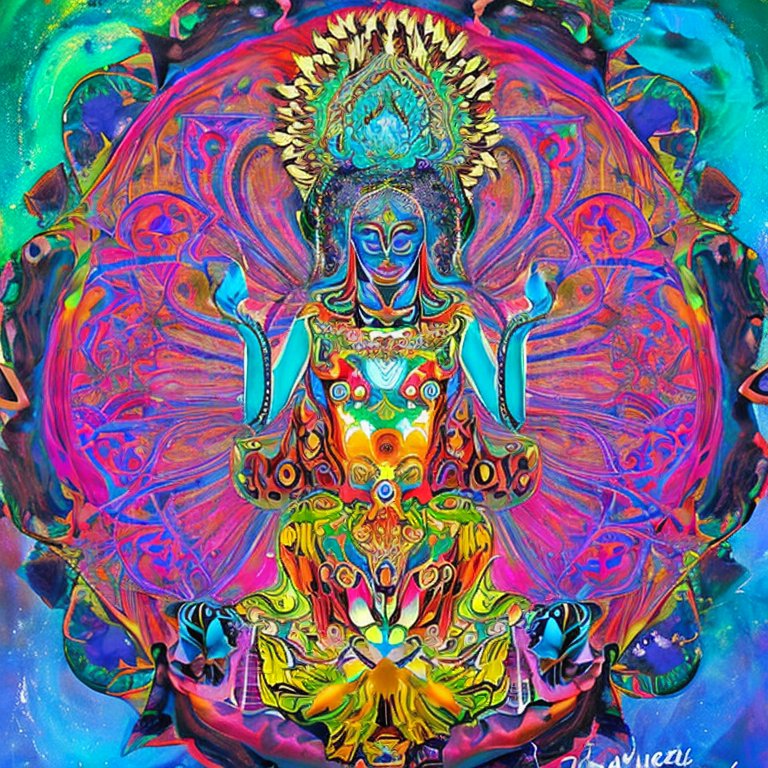
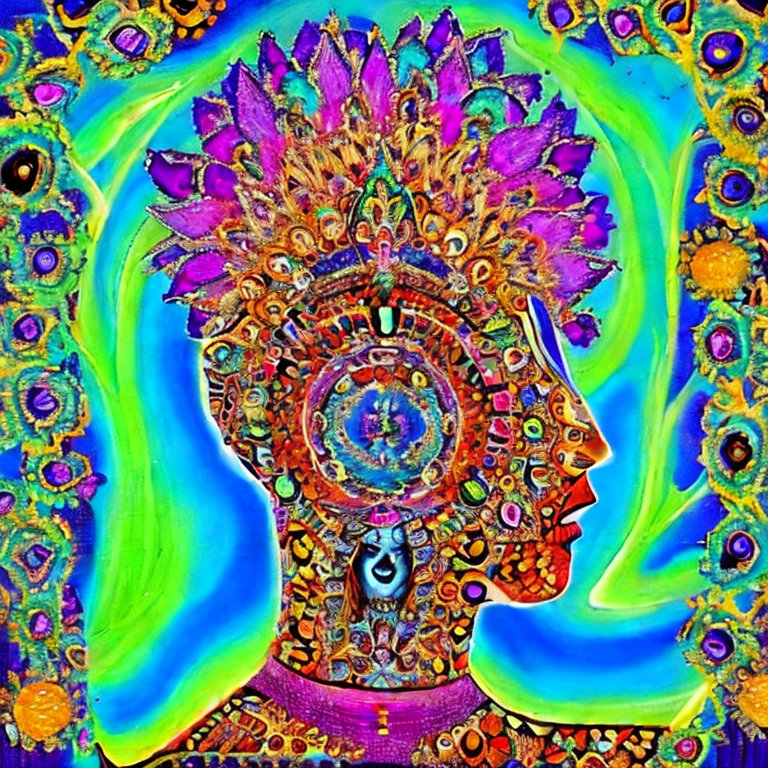
Maya Unveiled

Understanding the Illusion in Every Gaze

In the intricate dance of life, where perceptions and reality often intertwine, lies the ancient concept of Maya. Rooted deeply in Eastern philosophy, Maya is an idea and an expansive realm of understanding. It invites us to question: What is the true essence of what we perceive? How does the veil of illusion colour our view of the world?

**The Mirage of Perception**

Each moment, we are surrounded by a myriad of stimuli. As interpreters, our senses craft a version of reality that we accept as truth. But this truth is subjective, filtered through the lens of personal experiences, beliefs, and biases. In this way, the world we perceive is not an absolute, but a personal construct. Just as a painter brings forth a landscape from his imagination onto the canvas, we too paint our realities, often unaware that the brush is in our hands.

**The Nature of Maya in Daily Life**

Maya is omnipresent, influencing every aspect of our existence. It shapes our relationships, our joys, and our sorrows. Even our self-identity is a product of this illusion, a constructed narrative we cling to. The roles we play, the labels we adopt, are but temporary garments worn by the eternal self.


**Transcending the Illusion**

In the pursuit of spiritual awakening, recognizing the presence of Maya is a pivotal step. It is in understanding that what we perceive as concrete may indeed be ephemeral. Meditation and mindfulness practices serve as gateways to this realization. As we dive deeper into the realms of introspection, we begin to distinguish the impermanent from the eternal, the illusory from the real.

**Integrating Maya into Enlightenment**

Embracing Maya does not mean rejecting the world. Instead, it involves seeing through the veil, and acknowledging the illusion while engaging with the world. It is about finding harmony between the spiritual and the material, understanding that even in illusion, there is a purpose and a lesson.

**A Journey Beyond the Visual**

Our journey of enlightenment is not about negating our experiences but about transcending their limitations. It involves expanding our consciousness beyond the confines of personal perception, into a space where unity and diversity coexist, where the duality of self and other dissolves.


**Conclusion**

Maya, often misunderstood, is not a barrier but a bridge. A bridge that leads us to question, to seek, and ultimately to understand the profound nature of existence. In every distorted view lies a hidden truth, waiting to be uncovered by the earnest seeker.

Morgan O. Smith

Yinnergy Meditation, Spiritual Life Coaching & My Book, Bodhi in the Brain…Available Now!

https://linktr.ee/morganosmith

Burn Bodhi Tree Burn

Dispelling Illusions in the Quest for Enlightenment

In a provocative turn of thought, the recent symbolic burning of the Bodhi tree, a revered figure in Buddhist lore as the tree under which Buddha attained enlightenment, stirs a profound metaphysical debate. This act, far from being a mere iconoclastic gesture, serves as a powerful metaphor for a deeper philosophical introspection into the nature of enlightenment and reality.

The Bodhi tree, in this context, is not just a physical entity but a symbol of the very concept of enlightenment. Its burning signifies the rejection of material and conceptual attachments, even those as sacred as the Bodhi tree and the Buddha himself. This metaphorical act challenges the adherents of Buddhism and spiritual seekers to question the very foundation of their beliefs.


The argument posits that both the Bodhi tree and the Buddha are manifestations within ‘Maya’, the illusory world as described in various Eastern philosophies. According to this view, the physical and the conceptual are mere distractions from the true nature of reality. The burning of the Bodhi tree symbolizes the destruction of these illusions, urging individuals to look beyond physical symbols and established doctrines in their spiritual journey.

The concept of enlightenment, as traditionally understood, is also questioned. This perspective argues that any preconceived notion of enlightenment is not enlightenment itself. True enlightenment, as per this radical view, is beyond concepts and intellectual constructs. It is a state of being that transcends the conventional understanding of spiritual attainment.


Thus, the metaphor of burning the Bodhi tree and the figure beneath it calls for a complete relinquishment of all notions and concepts related to enlightenment. In doing so, it suggests that a state of ‘true enlightenment’ can be realized. This state is described as the only reality, achievable only when one abandons all preconceived ideas and embarks on a journey devoid of attachment to any symbol or doctrine.

The provocative nature of this idea lies in its challenge to established beliefs and practices. It invites a reevaluation of what constitutes the path to enlightenment, urging a detachment from even the most sacred of symbols and figures. This perspective is not a call to physical action but a metaphorical invitation to burn down the internal ‘Bodhi trees’ – the deeply ingrained beliefs and concepts that might hinder the realization of true enlightenment.

Morgan O. Smith

Yinnergy Meditation, Spiritual Life Coaching & My Book, Bodhi in the Brain…Available Now!

https://linktr.ee/morganosmith


Unveiling Reality

The Journey from Illusion to Truth

In our journey through life, we often come across what we call “illusions.” These are perceptions or beliefs that appear to be real but are not. However, the most profound realization is that these illusions are not mere deceptions; they are, in fact, Truth in disguise.

### The Nature of Illusion

An illusion, by its very nature, is something that deceives the senses or mind. It’s like a mirage in the desert – you see water, but as you approach, it vanishes, leaving you in the stark reality of the desert heat. Similarly, in life, we encounter situations that seem to be one thing but turn out to be another.

But here’s where it gets interesting. These illusions are not just errors or misperceptions. They are gateways to a deeper understanding of reality. When we delve into the nature of an illusion, we begin to uncover the layers of truth that it conceals.

### The Grand Illusion

The concept of the “Grand Illusion” takes this idea a step further. It suggests that our entire perception of reality might be an illusion. This is a theme explored in various philosophical and spiritual traditions. In Hinduism, for instance, Maya is the illusion that veils the true nature of the universe. In Western philosophy, Plato’s allegory of the cave talks about shadows on a wall that we take for reality.

The Grand Illusion is not just a deception; it is a representation of the ultimate truth, albeit in a form that we can’t immediately recognize. This truth is not something that can be easily explained or understood through conventional means. It is something that must be experienced and felt.

### Unveiling the Truth

So, how do we unveil the truth hidden behind these illusions? It begins with questioning our perceptions and beliefs. We need to look beyond what is immediately visible and ask ourselves what lies beneath. This process of inquiry and introspection leads us to a more profound understanding of ourselves and the world around us.

As we peel back the layers of illusion, we start to see the truth in its purest form. This truth might not be comfortable or easy to accept, but it is liberating. It frees us from the confines of our limited perceptions and opens us up to a universe of possibilities.


### Conclusion

The journey from illusion to truth is not a straightforward path. It’s a winding road filled with challenges and revelations. But it is a journey worth taking. For in understanding the Grand Illusion, we come closer to understanding the true nature of our existence and the universe we inhabit.

Morgan O. Smith

Yinnergy Meditation, Spiritual Life Coaching & My Book, Bodhi in the Brain…Available Now!

https://linktr.ee/morganosmith

Beyond Maya

A Profound Exploration of Reality

In the vast tapestry of Hindu philosophy, the concept of ‘Maya’ often emerges as an enigma, enveloping our perception of reality. But what if we were to assert that * everything*, both within and beyond our comprehension, is shrouded in Maya? How would such a revelation change our understanding of the universe and our place within it?

### The Essence of Maya

At its core, Maya is frequently understood as “illusion” or “unreality.” It’s the veil that obscures our true nature and the eternal truth of the universe. The things we perceive, the emotions we feel, and the thoughts that cloud our minds, all dance within the confines of this illusion. Maya convinces us that the temporal is eternal, that the superficial is profound, and that the ephemeral is everlasting.

### Expanding the Bounds

When we claim that everything, in and out of existence, is Maya, we’re delving deeper into an intriguing thought. This suggests that even our most profound realizations, spiritual epiphanies, and the concepts we use to grasp the ineffable are still part of the illusion. It’s not just the tangible, but the intangible; not just the known, but the unknown.

### The Paradox of Understanding

If everything is Maya, then the realization of this truth is also Maya. This presents a paradox: how can one truly transcend the illusion when the very tools and insights we use are part of the illusion itself? This enigmatic thought prompts us to question the very nature of enlightenment and the path to transcendence.

### Embracing the Illusion

Rather than feeling disheartened by the all-encompassing nature of Maya, one can instead embrace it as a transformative understanding. Recognizing that even our loftiest thoughts are touched by Maya can lead to a profound humility. It’s a call to constant introspection, a reminder that there’s always a deeper layer of understanding awaiting us.

### Beyond the Beyond

Perhaps, beyond the layers of Maya, there’s a state of pure consciousness, untouched and unblemished. It’s a state where distinctions fade, where the observer and the observed merge into one. While our journey is fraught with illusions, every step, every realization, brings us closer to this ultimate truth.

In conclusion, the assertion that everything is Maya isn’t a nihilistic statement but a profound recognition of the intricacies of existence. It invites us to look beyond the apparent, challenge our convictions, and seek a deeper, more encompassing truth. It’s a call to journey inward, where the real voyage begins.

Morgan O.  Smith

Yinnergy Meditation & My Book, Bodhi in the Brain…Available Now!

https://linktr.ee/morganosmith

Absolute Monism

Unraveling the Tapestry of Oneness

The vast universe, with its manifold entities and infinite complexities, often bewilders human minds. Philosophers and thinkers from time immemorial have grappled with questions about the nature of existence and the ultimate reality. One profound idea that surfaces recurrently is that of Absolute Monism: the belief that beneath the apparent multiplicity, there is but one undivided reality. Let’s take a deeper look into this captivating worldview.

### A Universe from One Thread


At the heart of Absolute Monism lies the assertion that all differences and diversities we perceive are mere illusions. This assertion may seem contradictory to our daily experiences. After all, isn’t the world teeming with diversity?

Yet, this is where Eastern and Western philosophies converge. Ancient Hindu scriptures speak of *Brahman* as the ultimate, undifferentiated reality. The Hindu philosophy of Advaita Vedanta encapsulates this belief by stating that the world’s multiplicity, driven by *Maya*, is an illusion. Meanwhile, in the West, the philosopher Spinoza proposed that God and Nature are two names for the same reality, implying a singular, infinite substance. These ideas, separated by continents, come together to champion a singular reality beneath the apparent diversity.

### Seeing Beyond the Illusion

The concept of illusion is integral to understanding monism. In life, appearances can often be deceiving. A mirage in the desert, a rainbow after the rain, and even our reflection in the water are all illusions. If such simple things can deceive our senses, might it be possible that our entire perception of diverse reality is similarly mistaken?

*Mysticism* has been one avenue through which individuals across cultures have described experiences consistent with Absolute Monism. The interconnectedness of all things, a theme found in the tapestry of monism, speaks to the heart, nudging us to see beyond divisions and differences.

### Implications for Modern Times

If Absolute Monism holds that all is one, then what does this mean for us in the present age, surrounded by divisive forces and fragmented views?

Firstly, on an ethical plane, it implies that harm inflicted upon one is harm to the entirety. This perspective could drastically alter how we approach interpersonal relationships, environmental concerns, and global crises. If we truly internalize this philosophy, then every act of kindness and harm has far-reaching consequences.

Secondly, it brings to the fore the importance of self-realization. In many monistic traditions, the realization of this singular truth is the end goal, bringing about an end to suffering.

Lastly, it sparks curiosity about the nature of our universe. With advancements in modern physics and cosmology, we find theories that echo monistic thoughts. The Big Bang, for instance, suggests that everything we see, touch, and experience emerges from a singular point.

### Embracing Diversity within Unity

Absolute Monism does not negate the value of diversity. Rather, it calls for a deeper understanding. Imagine a tapestry. Up close, one can see the myriad of colours, textures, and patterns. But from a distance, it’s one cohesive artwork. Similarly, monism asks us to appreciate the individual threads while recognizing the grand design.

In an age teeming with division, perhaps the idea of Absolute Monism can be the bridge that reminds us of our interconnectedness. As we stand at the cusp of profound global challenges, this ancient philosophy might just hold the key to a unified, harmonious future.


Embracing the ideas of Absolute Monism requires introspection and openness. Whether you fully resonate with its tenets or not, it undoubtedly serves as a beacon, guiding us toward unity, understanding, and profound interconnectedness.

Morgan O. Smith

Yinnergy Meditation & My Book, Bodhi in the Brain…Available Now!

https://linktr.ee/morganosmith

The Illusion of Spiritual Identity

Beyond Stories We Tell Ourselves

Spirituality, at its core, is a profound journey toward understanding one’s place in the vast expanse of existence. However, in our attempt to grasp this elusive understanding, we often pigeonhole ourselves into labels: spiritual, materialistic, moral, and the like. But what if I were to suggest that these labels, these stories, are mere illusions? And that by clinging to them, we might be limiting our true potential.

#### **The Stories We Tell Ourselves**

Every culture, every religion, and every individual has a narrative. These narratives shape our beliefs, our actions, and the way we perceive the world. They are the tapestries upon which our identities are woven. But what happens when we deconstruct these tapestries? Beneath the intricate designs and patterns, what remains?

The reality is that these stories are our creations, shaped by societal norms, personal experiences, and myriad other factors. To say one is ‘spiritual’ or ‘materialistic’ is to adopt a particular perspective, a specific lens through which we view the world.

#### **The Ground of All Being**

But let’s delve deeper. Beneath these self-imposed labels and narratives, there lies a fundamental essence – often referred to as the ‘ground of all being’. This essence is the raw, unfiltered state of existence. It is what you are before the stories, before the labels, and before the definitions. It is the canvas upon which all our narratives are painted.

This ground of being is paradoxical. While it exists beyond all descriptors, it simultaneously encompasses them. Think of it as an ocean. The waves, currents, and whirlpools may differ in their nature and intensity, but they all arise from and subside back into the same vast expanse of water.

#### **Embracing the Beyond**

Realizing this fundamental truth can be liberating. When we understand that our spiritual or materialistic labels are mere waves upon the ocean of existence, we can learn to see beyond them. We can experience the world without the confines of our self-imposed narratives.

This doesn’t mean that one should abandon their spiritual practices or beliefs. Rather, it’s about recognizing them for what they are – beautiful expressions of the infinite variations of existence.

#### **Conclusion**

In the end, whether you consider yourself spiritual, materialistic, or anything in between, it’s crucial to remember that these are just facets of the grander jewel that is existence. By stepping back and seeing beyond our self-crafted stories, we can come closer to experiencing the profound depth of what we truly are.

Morgan O. Smith

Yinnergy Meditation & My Book, Bodhi in the Brain…Available Now!

https://linktr.ee/morganosmith

The Paradox of Perfection

Ground of All Being and Maya

The universe, in its vastness and complexity, brings forth a myriad of questions that have perplexed thinkers across generations. One of the most profound concepts to grapple with is the nature of reality itself. Within the philosophical tapestry, two concepts emerge with force and subtlety: the “Ground of All Being” and “Maya”.

**Ground of All Being**

The Ground of All Being is an abstract principle suggesting that there exists an ultimate foundation or source for everything in existence. This ground isn’t a tangible thing but a concept – the idea that there’s an underpinning, unchangeable reality beneath the mutable surface of life. This can be likened to the depths of an ocean where calmness reigns, contrasting with the choppy waves on the surface.

**Maya: The Illusion**

Hailing primarily from Eastern traditions, particularly Hinduism, Maya is the term that describes the world as we see it: a world of illusion, impermanence, and change. Maya doesn’t suggest that the world is fake, but that our perceptions and understandings are limited, sometimes deceiving us from the true nature of reality.

**The Paradox of Perfection**

At a glance, it seems paradoxical: How can a universe so perfect birth what is perceived as imperfection? The beauty of this conundrum is that perfection and imperfection are inherently subjective, shaped by our limited human perceptions and conditioned understandings.

Perhaps the universe is so intricately and impeccably designed that it incorporates imperfection as part of its perfection. Much like a symphony that uses dissonance to make the harmonious notes shine brighter. The imperfections, the fleeting moments, the transient joys and sorrows – they all serve a purpose. They make the canvas of life more prosperous, pushing us to question, seek, and understand.

Imperfections are not flaws but opportunities: windows into deeper layers of understanding, growth, and realization. When we confront Maya, we’re not battling falsehoods but navigating layers of reality, slowly inching closer to the Ground of All Being.

**In Conclusion**

The journey from Maya’s illusion to the Ground of All Being isn’t a path of renunciation, but one of realization. Realizing that the imperfections we see, feel, and experience are not mere aberrations, but intrinsic facets of a grand design. They challenge us, shape us, and push us closer to understanding the paradoxical nature of existence: that within perfection lies imperfection and within imperfection, an underlying, unchanging perfection.

Morgan O. Smith

Yinnergy Meditation & My Book, Bodhi in the Brain…Available Now!
https://linktr.ee/morganosmith

The Ego

Many Faces of the “I”

In our quest to understand ourselves, few concepts are as debated, dissected, and deliberated as the ego. Spanning from ancient spiritual scriptures to the modern therapist’s couch, the ego stands as a reflection of our sense of self and our relation to the world. Yet, its definitions vary, painting a multifaceted picture of this central aspect of human existence.

### **1. Ego in Psychoanalysis: The Mediator**

Freud’s tripartite model of the psyche introduced us to the ego as the balancing force between the primal urges of the id and the moral compass of the superego. Here, the ego isn’t an adversary but a necessary mediator, guiding our actions in a world of societal norms. It poses the question: Is our ego the voice of reason amidst internal chaos?

### **2. Ego in General Psychology: The Self’s Mirror**

When we talk about self-esteem or self-worth, we’re often referring to the ego. This definition paints the ego as a mirror reflecting our perceived value and place in the world. Yet, this raises a thought-provoking inquiry: If our ego is a mirror, who or what determines its reflection?

### **3. Ego in Philosophy: The Conscious Observer**
Descartes’ famous dictum “Cogito, ergo sum” (I think, therefore I am) encapsulates the philosophical perspective of the ego as the conscious thinking subject. If our ego is the conscious observer of our experiences, it invites us to ponder: Without this observer, do experiences lose their significance?

### **4. Ego in Spirituality: The Illusory Self**
Many spiritual traditions view the ego as a barrier to enlightenment. It’s the illusory sense of separateness that binds us to suffering. The spiritual perspective urges us to ask: If the ego is an illusion, then who indeed are we beneath this veneer?

### **5. Ego in Pop Culture: The Mask of Pride**
Everyday parlance often equates a “big ego” with arrogance. It’s seen as a mask, sometimes shielding insecurities, other times amplifying genuine pride. This usage compels us to consider: Is the ego merely a façade, and what lies behind it?

### **6. Ego in Eastern Philosophies: The Creator of “I-ness”**

Hindu philosophy introduces Ahamkara, the aspect of us that births the sense of “I.” This ego is neither good nor bad but a natural facet of being human. Reflecting on this, we might wonder: Is the ego, not an enemy but an inevitable companion on our human journey?

**In Conclusion: The Infinite Layers of “I”**

The ego, regardless of its definition, remains at the core of human introspection. Its multifaceted interpretations offer not just explanations but a myriad of questions. As we navigate our understanding of the ego, we’re not just uncovering the layers of this concept but also the layers of our very existence.

In exploring the ego, we’re invited to embark on a profound journey inward, to question, understand, and perhaps even transcend the confines of the “I.” For as varied as its definitions might be, the ego’s ultimate gift is the invitation to self-reflection.

Morgan O. Smith

Yinnergy Meditation & My Book, Bodhi in the Brain…Available Now!

https://linktr.ee/morganosmith

The Veils of Maya

Navigating Illusion in the Quest for Truth

The labyrinthine nature of existence, adorned with its pleasures and pitfalls, has been a subject of deep contemplation for ages. At the heart of many philosophical inquiries in Hinduism lies the enigmatic concept of ‘Maya’. Far from being a mere illusion, Maya reveals layers of truth, each pointing towards an understanding of the universe and our place in it.

**The Cosmic Dance of Prakriti and the Three Gunas**


Imagine the universe as a grand stage, with Prakriti, the primal nature, as the backdrop. From this vast expanse springs forth everything we see, feel, and experience. Yet, what gives rhythm to this cosmic dance?

Enter the Three Gunas – Sattva, Rajas, and Tamas. These are not just passive qualities but dynamic forces shaping our experiences. The serenity of a tranquil lake embodies Sattva, the turbulence of a storm epitomizes Rajas, and the still darkness of the night echoes Tamas. Together, they create a spectrum of experiences in our lives.

**The Individual’s Tryst with Ignorance**


Closer to our personal experience is Avidya, the fog of ignorance clouding our perception. Under its influence, we misidentify with our transient selves, overlooking the eternal essence within. It’s like mistaking the waves for the vast ocean.

In this state, we are ensnared by Karma, the ever-entwining web of action and consequence. The Kleshas, those tormenting afflictions, further deepen our entanglement. Desires and aversions play tug-of-war, with the ego stoking the flames.

**The Divine Masquerade**

But is Maya merely a cosmic error or a deceptive trap? Not necessarily. Maya, when seen as the divine power or Shakti, becomes the grand choreographer of the universe’s dance. It’s a divine play, a Leela, where the One chooses to manifest as many, experiencing itself through myriad forms.

**Beyond Duality: The Advaita Perspective**


The school of Advaita Vedanta offers a profound insight. It suggests that beneath the multiplicity lies a singular truth, the Brahman. Maya, in this view, is the sublime artist crafting the many from the one, making the undivided appear divided.

**Conclusion: The Play and Beyond**

Maya, far from being a mere illusion to discard, becomes a lens to navigate our existence. It offers lessons, challenges, and experiences, pushing us to question, understand, and ultimately transcend.

In the dance of Maya, we are both the dancer and the audience. The key lies in recognizing the play, enjoying its beauty, and seeking the truth beyond the performance. In this quest, we don’t just find answers about the universe, but also about ourselves.

Morgan O. Smith

Yinnergy Meditation & My Book, Bodhi in the Brain…Available Now!

https://linktr.ee/morganosmith

Exploring Spiritual Enlightenment

Unveiling the Essence of Being

Introduction:
In the realm of spirituality, few concepts captivate the human imagination as profoundly as spiritual enlightenment. It has been sought after, contemplated upon, and revered across cultures and traditions. At its core, spiritual enlightenment encompasses a holistic realization, knowing, comprehension, recognition, and liberation, leading to an intimate understanding of one’s essence as the Ground of all Being. In this thought-provoking blog, we embark on a journey to unravel the depths of spiritual enlightenment and explore its transformative power.

Realization: The Full Realization of What You Are as The Ground of All Being
The journey toward spiritual enlightenment begins with a profound realization—an awakening to the fundamental truth of one’s existence. It is an experiential revelation that transcends intellectual understanding, offering a direct encounter with the essence of reality. This realization unveils the interconnectedness of all existence and dissolves the boundaries that separate the self from the world.

Knowing: Knowing Who and What You Are as The Ground of All Being

Knowing, in the context of spiritual enlightenment, goes beyond intellectual knowledge or beliefs. It is a direct and intimate knowing of one’s true nature, beyond the ephemeral constructs of ego and identity. This knowing arises from experiential wisdom that transcends language and logic, revealing the profound interconnectedness of all life.

Comprehension: Comprehending What You Are as The Ground of All Being
Comprehension in spiritual enlightenment refers to a deep understanding that arises from the integration of realization and knowing. It involves grasping the inherent wisdom that pervades all existence and recognizing the underlying unity amidst the apparent diversity. This comprehension allows us to perceive the world through a lens of compassion, empathy, and interconnectedness.

Recognition: Recognizing What You Are as The Ground of All Being

Recognition entails a moment of profound insight where the illusory veils of separation and limitation fall away, revealing the truth of one’s being. It is a transformative recognition of our true nature as vast, boundless awareness, intimately interconnected with the entire cosmos. Through this recognition, we come to acknowledge the divinity that resides within ourselves and all beings.

Liberation: Being Liberated from Shape or Form, Free from Illusion and Attachments

Liberation represents the ultimate culmination of spiritual enlightenment—a state of profound freedom and liberation from the constraints of ego, attachment, and illusion. It is an experiential transcendence of the limited, conditioned self, allowing one to dwell in the realm of pure emptiness. Yet, paradoxically, this liberation is not a detachment from the world but a unification with it, as the awakened individual realizes their inseparability from the tapestry of existence.

Conclusion:
Spiritual enlightenment encompasses a multidimensional journey that surpasses the limitations of language and rationality. It is a profound exploration of the self and the universe, revealing our interconnectedness and inherent divinity. Through realization, knowing, comprehension, recognition, and liberation, we can embark on a transformative path that leads to a deeper understanding of our existence. By embracing the essence of spiritual enlightenment, we may find ourselves united with everything that is form while being liberated from the illusory constraints that bind us. May this exploration inspire you on your quest for self-discovery and awakening to the timeless truth of the Ground of all Being.

Morgan O. Smith

Yinnergy Meditation & My Book, Bodhi in the Brain…Available Now!