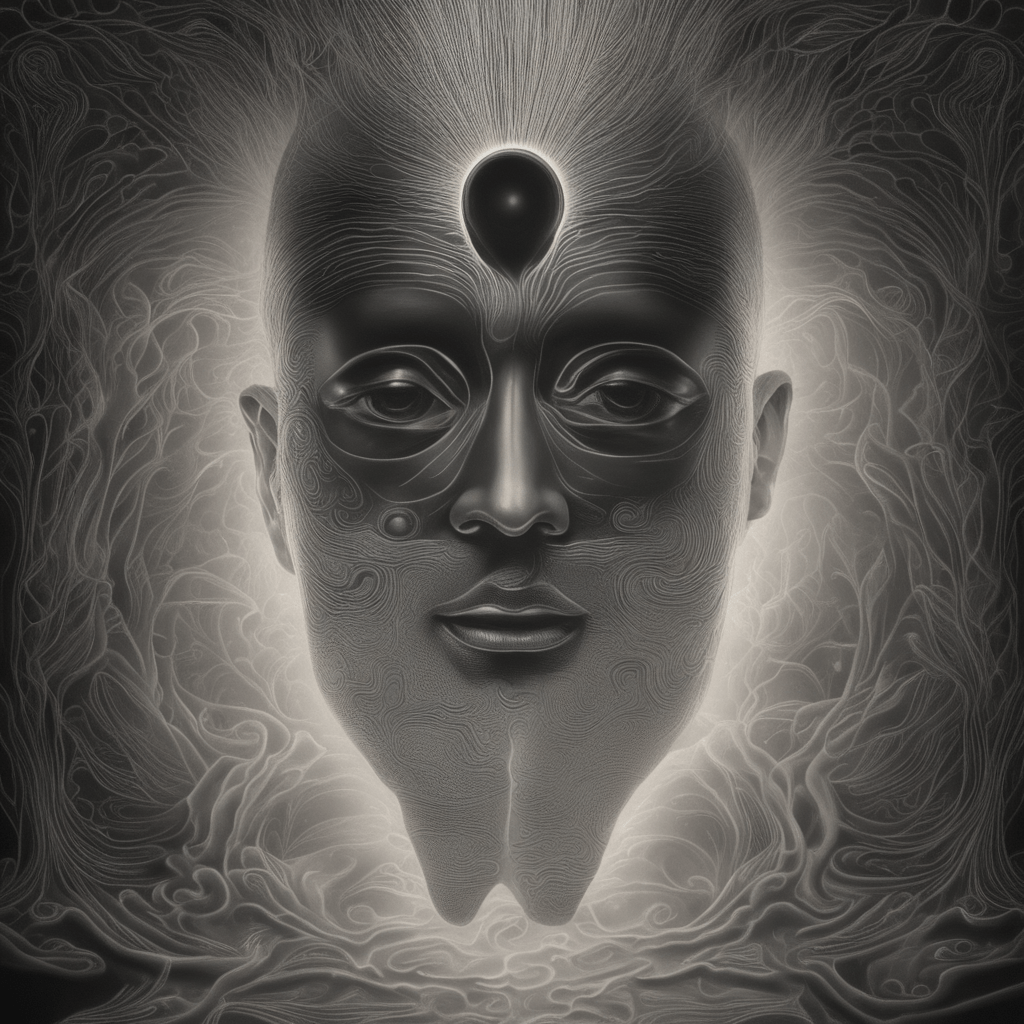
The Paradox of Perfection

Divine Flaws in a Flawless Existence

In the realm of spirituality and philosophy, the concept of a perfect God is often contemplated with reverence and awe. This perfect entity, in many traditions, is seen as the embodiment of absolute purity, wisdom, and power. Yet, there lies a paradox at the heart of divinity: the expression of flaws within the framework of perfection. This notion challenges our conventional understanding of perfection and invites us to explore the deeper, more nuanced aspects of the divine and its manifestation in the world.

Consider for a moment the idea that a perfect God expresses its flaws perfectly. This statement that I am making is not a contradiction, but a profound acknowledgment of the complexity and depth inherent in the divine nature. It suggests that what we perceive as flaws are not mistakes or oversights but, rather, intentional expressions of the divine essence. These ‘flaws’ offer a window into the incomprehensible wisdom of the divine, serving as reminders of the limitless ways in which perfection can manifest.

The beauty of this concept lies in its ability to humanize the divine, making it more accessible and relatable to us. In our own lives, we strive for perfection, often berating ourselves for our flaws and failures. However, if we embrace the perspective that even in divinity, there exists a form of perfection that includes flaws, we can begin to view our imperfections not as failures, but as integral parts of our unique journey. This shift in perspective encourages a more compassionate and forgiving approach to self-growth and personal development.


Furthermore, the idea of a perfect God expressing flaws perfectly invites us to reevaluate our understanding of the world around us. The imperfections we observe in nature, in human behaviour, and the unfolding of events may not be random chaos but, perhaps, expressions of a larger, divine plan. This realization opens up a space for a deeper acceptance of the world as it is, fostering a sense of peace and trust in the unfolding of life’s mysteries.

In exploring the paradox of divine flaws, we are encouraged to engage with our spiritual journey more openly and curiously. It prompts us to question our assumptions about perfection, divinity, and the nature of reality itself. By contemplating how a perfect God might express flaws perfectly, we are invited into a richer, more dynamic relationship with the spiritual aspects of existence.

This exploration is not just a philosophical exercise but a practical guide for living. It teaches us to embrace our complexities and contradictions, to find beauty in imperfection, and to see the divine not as a distant, unattainable ideal but as a present, living truth reflected in every aspect of our lives.


In closing, let us ponder the myriad ways in which perfection and imperfection coexist within and around us. May this contemplation inspire a deeper appreciation for the mysterious, imperfectly perfect nature of the divine and encourage us to embrace our flaws as perfectly expressed aspects of our being.

Morgan O. Smith

Yinnergy Meditation, Spiritual Life Coaching & My Book, Bodhi in the Brain…Available Now!

https://linktr.ee/morganosmith

The Beauty Within the Flaws of Enlightened Beings

In a world striving for perfection, it’s easy to overlook the profound beauty that resides in imperfection, especially among those we deem as enlightened beings. These individuals, often placed on pedestals, are expected to embody an ideal state of existence, free from the common foibles and faults that characterize the human condition. However, it is precisely within their flaws and vulnerabilities that a deeper, more relatable beauty emerges, one that resonates with the core of our shared humanity.

The journey of an enlightened being is not marked by an absence of flaw or error but is instead enriched by these very elements. Their path to enlightenment doesn’t eradicate their human quirks and shortcomings; rather, it illuminates them in a way that is both humbling and empowering. It reminds us that enlightenment is not about reaching a state of perfection, but about embracing and transcending our imperfections.


In recognizing and accepting the flaws of enlightened beings, we are given a gift: the permission to be imperfect ourselves. This perspective fosters a sense of compassion and empathy, both for ourselves and for others. It allows us to see that our flaws are not obstacles to our growth but are integral parts of our unique journey toward enlightenment.

Furthermore, the flaws of enlightened beings serve as powerful teaching tools. They demonstrate that mistakes and missteps are not only inevitable but also invaluable in our quest for understanding and growth. Each flaw, each error, becomes a lesson in humility, patience, and perseverance.


In conclusion, the true beauty of enlightened beings lies not in their flawlessness, but in their ability to embrace and transcend their imperfections. This perspective invites us all to rethink our understanding of enlightenment and to recognize the beauty and wisdom that can be found in our flaws and vulnerabilities.

Morgan O. Smith

Yinnergy Meditation, Spiritual Life Coaching & My Book, Bodhi in the Brain…Available Now!

https://linktr.ee/morganosmith

The Imperfection of Spiritual Gurus

Embracing Humanity in the Pursuit of Enlightenment

In the realm of spiritual enlightenment, the figure of the guru often looms large – a beacon of wisdom, a guide towards self-realization. Yet, amidst the reverence and idealization, a fundamental truth often remains unacknowledged: no spiritual guru is perfect. This paradox lies at the heart of a deeper understanding of spiritual growth, where perfection is not a destination, but a journey of constant evolution and self-awareness.

The Dual Nature of the Guru


The guru, in their essence, embodies a unique dualism. On one hand, they are perceived as having attained a state of union with the Self – a transcendental consciousness that surpasses ordinary human experience. This aspect of the guru resonates with a realm beyond the physical, where notions of perfection are redefined in the context of spiritual wholeness.

Conversely, the psychological aspect of the guru is firmly anchored in the human experience. It is a constant reminder that they, too, are subject to the trials and tribulations of the human condition. The guru’s journey is not marked by an escape from humanity but by a deeper immersion into it, embracing its imperfections as part of the broader tapestry of existence.


Perfection is a Process, Not a State

The pursuit of perfection, especially in the spiritual context, is often misconstrued as the attainment of a flawless state. However, this pursuit is more accurately seen as a process – a continual striving for betterment and understanding. The guru, aware of their imperfections, does not seek to eliminate them but to understand and integrate them into their larger spiritual narrative.

This approach demystifies the journey towards enlightenment. It is not about transcending humanity but embracing it in its entirety – with its flaws, contradictions, and challenges. The psychological striving of the guru serves as a powerful reminder that spiritual growth is not about reaching a plateau of perfection but about engaging in an ongoing dialogue with both the self and the universe.

The Metaphor of the Guru

There is something I occasionally mention in my teachings. The saying is that if you hang out with the guru long enough, eventually, the guru will fart. This metaphor, as humorous as it is, holds profound philosophical significance. It symbolizes the inescapable humanity of the spiritual teacher – a reminder that they, too, are bound by the natural laws of existence.

This metaphor serves as a levelling force, bridging the gap between the guru and the seeker. It’s a reminder that spiritual leaders are not infallible deities but fellow travellers on the path of enlightenment. Their wisdom does not stem from their distance from humanity but from their deep engagement with it, warts and all.


Conclusion

In embracing the imperfection of spiritual gurus, we are invited to a more authentic engagement with spirituality. It’s an understanding that enlightenment is not about the erasure of flaws but the acceptance and integration of them into our journey. This perspective fosters a more compassionate and realistic approach to spiritual growth, one that acknowledges the beauty in imperfection and the humanity in the divine.

Morgan O. Smith

Yinnergy Meditation, Spiritual Life Coaching & My Book, Bodhi in the Brain…Available Now!

https://linktr.ee/morganosmith

The Dark Shadow of Consciousness

Pondering Existence

In the vast realm of philosophical inquiry, there is perhaps no question more enduring than that of existence. It is the heart and soul of human curiosity, the root from which all other questions spring forth. But what if the very existence we so ardently seek to understand is nothing more than a shadow cast by Consciousness? A mere reflection, imperfect and dark, of something greater and beyond our grasp?

**Consciousness as the Light**

Consider the sun. It casts both light and shadow and in doing so, defines our reality. In much the same way, Consciousness—our innate awareness, the very essence of our being—could be imagined as the radiant source, illuminating the world we know. But with every light, there inevitably comes a shadow.

**The World as Consciousness’ Shadow**

If our world is the byproduct or reflection of Consciousness, then perhaps it is the imperfect representation—the elements of Consciousness that didn’t fit, the pieces it rejected. Our struggles, our sufferings, and our insatiable quest for understanding might all stem from this inherent imperfection.

Think of the Jungian concept of the “Shadow Self.” Carl Jung, the Swiss psychiatrist, suggested that we all have a part of our personality that we do not consciously acknowledge—a darker, less understood side. This shadow self contains our deepest fears, repressed ideas, desires, and general chaos. Could it be that our entire reality is Consciousness’ own “Shadow Self”?

**Finding Perfection in Imperfection**

It’s easy to view the idea of our world being a “shadow” as negative, but there’s beauty to be found in imperfection. It’s in the cracks, the flaws, where we find character, uniqueness, and growth. Perhaps, by existing within Consciousness’ shadow, we’re given a unique opportunity to explore, question, and evolve.

**Conclusion**

We may never truly know the nature of existence, whether it’s a shadow or something else entirely. But by pondering such questions, by seeking to understand the greater forces at play, we embark on a journey of self-discovery, of understanding the universe, and our place within it.

Morgan O. Smith

Yinnergy Meditation & My Book, Bodhi in the Brain…Available Now!

https://linktr.ee/morganosmith

Even the Sun Has Its Dark Spots

Embracing Human Imperfection

We’ve often looked up to the sun as a source of life, light, and unyielding energy. Its brilliance is unparalleled, illuminating our world, making life possible, and inspiring countless civilizations throughout history. Yet, if we examine this celestial body more closely, we find that even the sun has its dark spots—areas of lower temperatures and intense magnetic activity. This observation serves as a profound metaphor for human nature: even the most enlightened among us have their flaws.

### **The Illusion of Perfection**

In today’s age of social media and carefully curated online personas, it’s easy to assume that those we admire lead impeccable lives, free of mistakes or misjudgments. We observe the highlights, the victories, and the triumphant moments, rarely bearing witness to the challenges, doubts, or imperfections that punctuate the human experience.

Just as we might be oblivious to the sun’s dark spots when basking in its warmth, we may overlook the shortcomings of those we deem as enlightened or flawless. This perception creates unrealistic standards, and the pressure to attain perfection becomes a burden too heavy to bear.

### **Enlightenment and Flaws Coexist**

If we recognize that even the sun, with all its might and brilliance, possesses dark spots, then why do we find it hard to accept that our heroes, mentors, and idols can also have their moments of darkness?

True enlightenment is not the absence of flaws but rather the recognition and acceptance of them. It’s about understanding that imperfection is an intrinsic part of the human experience. Those who are genuinely enlightened are not free from mistakes; they are simply more attuned to their humanity and the humanity of others.

### **Embracing Our Dark Spots**

Instead of shunning our flaws or those of others, let’s consider embracing them as essential aspects of our narratives. These imperfections provide texture, depth, and dimension to our stories, making them unique and relatable.

By accepting our dark spots, we free ourselves from the chains of unrealistic expectations and open the door to genuine growth. After all, it is often in our moments of vulnerability and acknowledgment of our flaws that we find the strength and motivation to evolve.

### **In Conclusion**

The sun, with its dark spots, remains our primary source of light and life. Likewise, our flaws do not diminish our value or potential. Instead, they remind us that perfection is not a prerequisite for greatness or enlightenment.

Let’s celebrate our dark spots, for they are a testament to our humanity, our growth, and our ever-evolving journey toward enlightenment. Even in imperfection, there is beauty, wisdom, and an undeniable spark of divinity.

Morgan O. Smith

Yinnergy Meditation & My Book, Bodhi in the Brain…Available Now!

https://linktr.ee/morganosmith

The Paradox of Perfection

Ground of All Being and Maya

The universe, in its vastness and complexity, brings forth a myriad of questions that have perplexed thinkers across generations. One of the most profound concepts to grapple with is the nature of reality itself. Within the philosophical tapestry, two concepts emerge with force and subtlety: the “Ground of All Being” and “Maya”.

**Ground of All Being**

The Ground of All Being is an abstract principle suggesting that there exists an ultimate foundation or source for everything in existence. This ground isn’t a tangible thing but a concept – the idea that there’s an underpinning, unchangeable reality beneath the mutable surface of life. This can be likened to the depths of an ocean where calmness reigns, contrasting with the choppy waves on the surface.

**Maya: The Illusion**

Hailing primarily from Eastern traditions, particularly Hinduism, Maya is the term that describes the world as we see it: a world of illusion, impermanence, and change. Maya doesn’t suggest that the world is fake, but that our perceptions and understandings are limited, sometimes deceiving us from the true nature of reality.

**The Paradox of Perfection**

At a glance, it seems paradoxical: How can a universe so perfect birth what is perceived as imperfection? The beauty of this conundrum is that perfection and imperfection are inherently subjective, shaped by our limited human perceptions and conditioned understandings.

Perhaps the universe is so intricately and impeccably designed that it incorporates imperfection as part of its perfection. Much like a symphony that uses dissonance to make the harmonious notes shine brighter. The imperfections, the fleeting moments, the transient joys and sorrows – they all serve a purpose. They make the canvas of life more prosperous, pushing us to question, seek, and understand.

Imperfections are not flaws but opportunities: windows into deeper layers of understanding, growth, and realization. When we confront Maya, we’re not battling falsehoods but navigating layers of reality, slowly inching closer to the Ground of All Being.

**In Conclusion**

The journey from Maya’s illusion to the Ground of All Being isn’t a path of renunciation, but one of realization. Realizing that the imperfections we see, feel, and experience are not mere aberrations, but intrinsic facets of a grand design. They challenge us, shape us, and push us closer to understanding the paradoxical nature of existence: that within perfection lies imperfection and within imperfection, an underlying, unchanging perfection.

Morgan O. Smith

Yinnergy Meditation & My Book, Bodhi in the Brain…Available Now!

https://linktr.ee/morganosmith