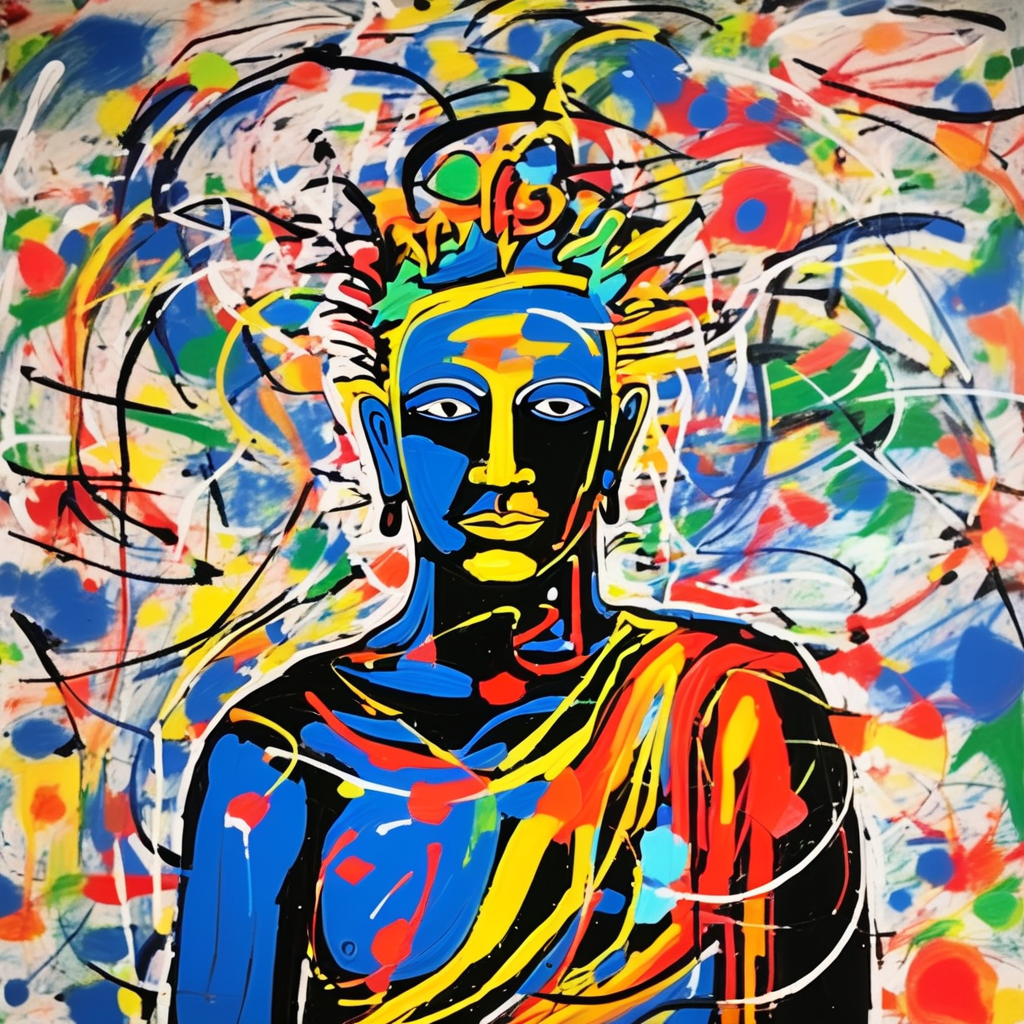
The Neutrality of Being

Beyond Preference and Bias

Human experience revolves around preferences—good versus bad, desirable versus undesirable. From a young age, we are conditioned to label moments, objects, and relationships based on our likes or dislikes, shaping a world of duality. Yet, something remarkable may begin to unfold for those who experience a profound spiritual awakening. The intensity of preferences softens, and the once-compelling narratives around right and wrong, beautiful and ugly, start to lose their grip.

This shift isn’t forced or rehearsed; it arises organically as consciousness deepens. It’s not about suppressing preferences or pretending they don’t exist. Rather, it’s about witnessing them without attachment. You might still notice that one meal tastes better than another, or that one kind of weather feels more comfortable, but the emotional charge—the bias for or against—diminishes.

This state of neutrality doesn’t negate the ability to express feelings about situations or objects. Joy, sadness, appreciation, or aversion may still arise naturally. However, the inner dialogue changes. An object once deemed essential for happiness may now appear as just an object. A situation that would have previously elicited anger or frustration may no longer hold the same power.

Neutrality is not numbness or indifference; it is the ultimate expression of freedom. When bias fades, life’s experiences are not judged as lacking or sufficient—they simply are. This perspective offers a profound sense of peace. When preferences no longer dominate the mind, the heart is free to engage with reality exactly as it unfolds.

This state isn’t something that needs to be chased or consciously cultivated. It arises as a natural byproduct of deep inner awakening. The realization that all phenomena are transient allows one to meet life with equanimity. Dualities are not eradicated but are seen for what they are—part of the play of existence, neither to be clung to nor rejected.

If you’re on the path of spiritual exploration, allow yourself to relax into the flow of awareness. Don’t try to force neutrality; simply observe the moments when it arises. Over time, you may notice that this spacious, bias-free perspective becomes less of an exception and more of your default state of being.

Morgan O. Smith

Yinnergy Meditation, Spiritual Life Coaching & My Book, Bodhi in the Brain…Available Now!

https://linktr.ee/morganosmith

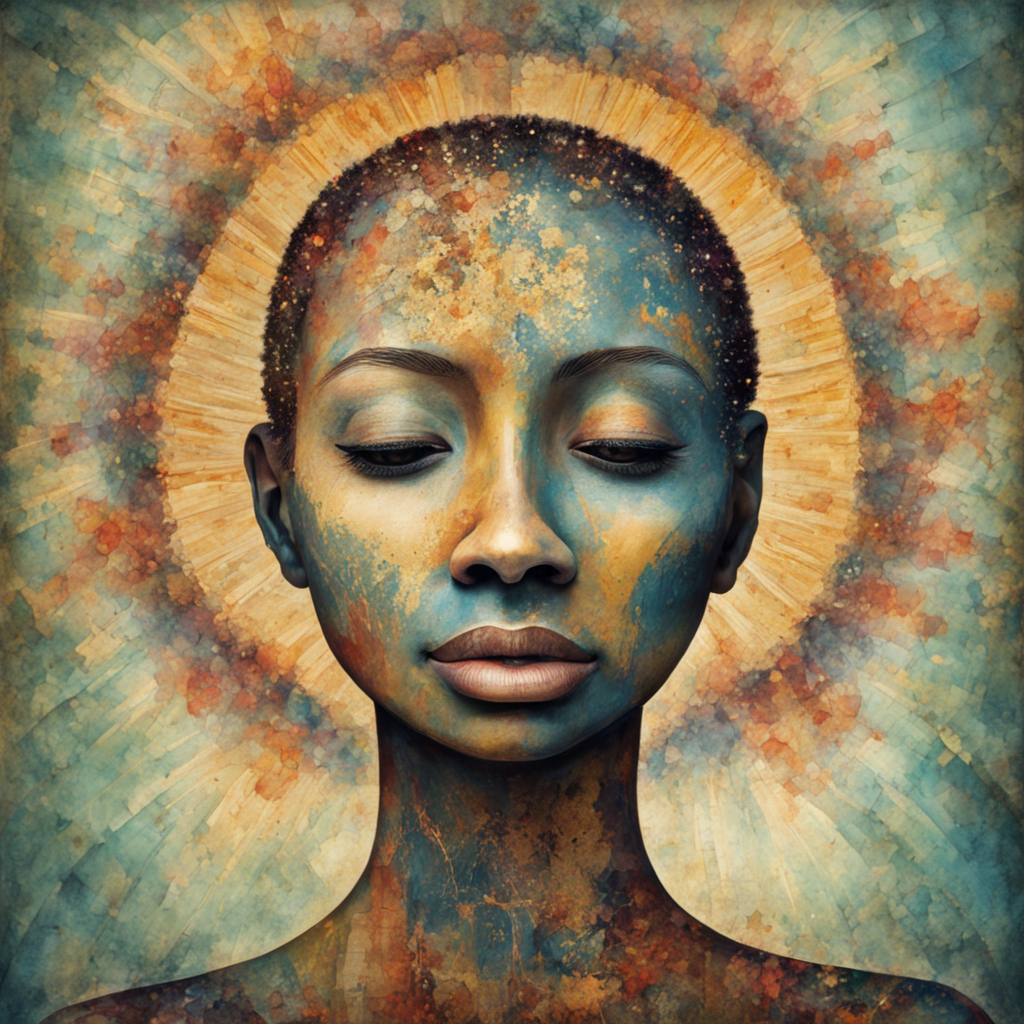
The Mirage of Paradise

Why Many Turn Away From the Path

Paradise often appears as a shimmering promise on the horizon—a space of unbroken peace, eternal joy, and infinite understanding. Yet, when the steps to reach it feel many, slow, or arduous, even the most sincere seekers may find themselves questioning the journey. Why does the promise lose its lustre when effort is required? Why do we often choose comfort over truth or familiarity over freedom?

The answer lies not in paradise but in our relationship with it.

The Illusion of Arrival

The mind, conditioned by a lifetime of instant gratification and linear progress, believes paradise must be attainable within a predictable framework. When the path to enlightenment stretches beyond its comfort zone, the mind rebels. It whispers doubts, offers shortcuts, or fabricates reasons to abandon the pursuit altogether.

Yet, true awakening does not follow a predictable roadmap. It cannot be squeezed into the limited constructs of time or effort. Enlightenment is not about arriving somewhere—it is about dissolving the illusion of the one who seeks. This is the paradox that discourages many: the realization that the paradise sought is not something to be reached but something to be uncovered within.

The Fear of Letting Go

Another reason many step away from the path is the fear of surrender. Enlightenment demands more than perseverance; it requires the complete letting go of the self we believe ourselves to be. For those deeply identified with their roles, beliefs, or desires, this can feel like annihilation. What lies beyond the familiar can seem less appealing than the comfort of staying as we are.

But surrender is not a loss; it is an opening. It is stepping into the unknown with trust and willingness, allowing paradise to reveal itself not as a destination but as the ever-present reality beneath all appearances.

Walking Without Steps

Paradise cannot be reached because it is not elsewhere. It is not at the end of many steps or behind layers of effort. Those who walk away often believe the steps are external—practices, rituals, or milestones to achieve. The truth is, that the steps are inward, subtle, and immediate. They require no distance travelled, only the courage to turn within and meet the present moment fully.

Each step dissolves the illusion that there is somewhere else to go. Each step reveals that paradise was never absent. The question is not whether enlightenment is too far but whether we are willing to abandon the belief that it lies anywhere but here.

Remaining Open to the Journey

For those who feel the pull to turn back, perhaps the greatest teaching is this: paradise is not reserved for those who walk a perfect path. It embraces even the wanderer, the doubter, and the one who stumbles. The journey is not about reaching paradise but about waking up to its presence at every turn.

Instead of asking how far we have to go, ask this: What illusions am I willing to release today? What layers of resistance, fear, or expectation can I dissolve now? Every step, no matter how small, is a step into paradise itself.

Morgan O. Smith

Yinnergy Meditation, Spiritual Life Coaching & My Book, Bodhi in the Brain…Available Now!
https://linktr.ee/morganosmith

Finding True Happiness

Embracing the Wholeness of Emotions

Happiness, as it is often pursued, can feel like a fleeting dream—a constant chase for experiences that promise joy while running away from anything that feels uncomfortable. Yet, this pursuit can leave us fragmented, perpetually seeking and never arriving. The paradox of true happiness lies in the radical act of embracing all feelings, not just the pleasant ones.

Contentment is not the absence of discomfort; it is the presence of wholeness. Life offers a vast spectrum of emotions, each carrying its wisdom and significance. Joy and sorrow, hope and despair, love and fear—none exist in isolation. To deny one is to diminish the richness of the other. True happiness begins not when we suppress pain but fully meet it without resistance.

Imagine standing during a thunderstorm. Most would run for shelter, seeking safety from the discomfort of the rain. But what if, instead, you stood still, feeling the rain on your skin, hearing the rhythm of its fall, and witnessing its cleansing power? Embracing emotions is like this: a willingness to be with what is, not wishing it away but seeing its beauty and necessity.

When joy arises, celebrate it without clinging. When sadness visits, honour its presence without judgment. Anger, fear, excitement, and serenity all have their place in the dance of existence. Each emotion becomes a teacher, guiding us to deeper self-awareness and authenticity.

The secret is to observe emotions without becoming consumed by them. Like waves in the ocean, they rise and fall, but the essence of who we are—vast, still, and unshaken—remains constant. This shift in perspective transforms the way we experience life. Happiness is no longer a fleeting feeling tied to circumstances but an enduring sense of contentment rooted in presence.

When we no longer resist the full range of our humanity, happiness is no longer conditional. It becomes a state of being that arises from accepting life as it is—unfiltered, raw, and real. In this acceptance, a profound peace unfolds, transcending temporary highs and lows.

The journey to true happiness begins by welcoming all parts of ourselves. In every moment, every feeling, and every breath, there is an invitation to return to wholeness.

Morgan O. Smith

Yinnergy Meditation, Spiritual Life Coaching & My Book, Bodhi in the Brain…Available Now!

https://linktr.ee/morganosmith

The Journey of the Mind

Beyond Ego’s Boundaries

Human consciousness, unbound by the constraints of ordinary thought, possesses an intrinsic ability to transcend the familiar territory of the ego. This journey to higher states unfolds as a delicate dance, one where the ego—the personality construct and guardian of perceived separateness—is bypassed, leaving room for profound shifts in awareness.

These elevated states of mind, accessible yet elusive, represent realms where the habitual identity fades into the background. Here, one finds insights that ripple with clarity, and a sense of unity that dissolves the divisions the ego so meticulously maintains. The journey to these states does not require the ego’s consent, nor can it be negotiated through the ego’s language. Instead, it is a surrender, a quiet movement beyond identity, like slipping into a vast ocean where the waves of self-constructed limitations fade.

The ego functions as a structure, defining and separating, fostering individual identity, and distinguishing between ‘self’ and ‘other.’ But, ironically, the very mechanisms that help navigate daily life can often restrict our capacity for profound insight. The ego’s grip can be like a thin film that obscures the brilliance beyond, drawing boundaries around our perceptions and experiences. However, consciousness itself possesses a deeper intelligence—one that intuitively senses these confines and seeks to transcend them.

Through this transcendence, higher states are realized: states where intuition, compassion, and expansive perception prevail. These states are not bound by logic or reason, nor are they controlled by the ego’s protective narratives. Instead, they blossom as expressions of something deeper, a truth beyond the rational mind. In these realms, individuals might experience spontaneous creativity, profound calm, or insights that cannot be traced back to ordinary patterns of thought.

This movement beyond ego can occur in many ways. Moments of silence, stillness, meditation, or even being fully absorbed in creative expression, allow us to slip beyond the ego’s hold. What emerges is a consciousness that witnesses without interference—a state of pure observation, where clarity dawns without the coloration of past experiences, conditioning, or future anxieties.

Ironically, in relinquishing the need to control or grasp, we find a more profound mastery. The mind, left to its natural course, attains heights the ego could never imagine. The ego tries to navigate life by holding on, defining, and categorizing, yet the higher mind finds meaning in spaciousness, in a form of understanding that defies containment.

This journey invites a letting go, not to become less, but to become whole. Every step taken without ego’s agenda becomes an invitation to experience life as it truly is—unfiltered, unfragmented, and undeniably interconnected. What emerges is a state of mind where one feels profoundly connected to all that is, free from the need to prove, to defend, or to possess.

In this light, our consciousness rises naturally to meet the deeper realms of existence, not as something earned or achieved but as something rediscovered—a return to our true nature, unburdened by the masks we have accumulated. The mind knows this path intuitively, flowing into these higher states with grace when we allow it to be free from the ego’s constraints. And in that freedom, a profound sense of peace, insight, and unity emerges, inviting us to live with a renewed sense of purpose, clarity, and wholeness.

Morgan O. Smith

Yinnergy Meditation, Spiritual Life Coaching & My Book, Bodhi in the Brain…Available Now!

https://linktr.ee/morganosmith

Morgan O. Smith’s Awakening Journey

A Featured Story in Brainz Magazine & Insights on Spiritual Awakening

I am honoured and thrilled to share that I’m on the cover of Brainz Magazine this week! In my exclusive interview, titled “Morgan O. Smith’s Awakening Journey – How Yinnergy Meditation Was Born”, I discuss the personal path that led me to create Yinnergy Meditation. This journey has been transformative, from my own awakening experiences to the development of Yinnergy, a meditation program designed to help others experience powerful shifts in awareness, resilience, and self-discovery. You can read the full interview here: Morgan O. Smith’s Awakening Journey – How Yinnergy Meditation Was Born.

Try Yinnergy Meditation Now!

For 15% off, use the link: https://yinnergy.gumroad.com/l/trnyi/8rw6hem

I also recently joined Gareth Duignam on The Endless Possibilities Podcast for Part 2 of our conversation on spiritual awakening. In this episode, we dive into the stages of spiritual awakening and what each stage entails, from initial glimpses of higher awareness to the profound transformations that occur as one integrates these experiences. We also discuss how Yinnergy’s unique brainwave technology is designed to support these stages, helping individuals move through each phase with stability and clarity.

Exploring Nonduality: My Latest Brainz Magazine Article

In addition to my cover feature, I’m excited to share that my second article with Brainz Magazine, titled “What Is Nonduality and Why Is It So Misunderstood?”, is now live. Nonduality is a concept that resonates deeply within spiritual traditions and personal awakening journeys. However, it’s often misunderstood as simply a philosophical idea or something intangible. In this article, I explore nonduality as an experiential truth—one that reveals the fundamental unity underlying all things.

Morgan O. Smith

Yinnergy Meditation, Spiritual Life Coaching & My Book, Bodhi in the Brain…Available Now!
https://linktr.ee/morganosmith

The Myth of Perfection

A Reflection on Human Nature and Spirituality

Perfection is a concept that many aspire to, yet one that remains fundamentally unattainable. The allure of becoming flawless is often reinforced by societal expectations, self-help narratives, and spiritual teachings that promise transcendence over our shortcomings. We yearn for mastery, imagining a state where all undesirable traits have been eradicated and every behaviour aligns with some ideal of human perfection. But is that ever truly possible?

No one is perfect. Not even the most enlightened being on the planet. Let’s use pest control as an example.

No matter how meticulously we maintain our homes or how many pest-control methods we employ, insects will inevitably appear. Some will be caught and eliminated, others will hide and multiply. This relentless cycle mirrors our inner world. Despite all efforts—through therapy, shadow work, psychedelics, or spiritual awakening—no one has found a way to remove every negative tendency permanently. As insects are part of the natural ecosystem, our imperfections are part of being human. Attempts to eliminate all flaws are as futile as trying to rid the entire world of pests.

Each trait or behaviour can be seen as a metaphorical bug. Selling a bug-killing spray or device is like an enlightened teacher selling a pathway to liberation or a self-actualized individual motivating others to reach their highest potential. The promise is not false, but the misconception lies in the belief that the bugs—the flaws—will be eradicated forever. The truth is more nuanced. Much like we can control insects to a certain extent, we can address negative traits, but total elimination is beyond reach.

If you’ve ever been to a home that had one visible roach, you likely made a snap judgment about cleanliness, even if the house was otherwise spotless. Contrast that with spotting an ant, and your reaction might be more forgiving. This response isn’t based on logic but on deeply ingrained conditioning. The same holds for how we judge others. One visible flaw can overshadow countless positive qualities, not because the flaw is inherently worse, but because of how we’ve been conditioned to perceive it.

A self-actualized person can be compared to a meticulous homeowner who manages to keep most of the pests at bay. Their house is mostly clean, orderly, and free of unwanted visitors. Yet, even they know that complete eradication is impossible. An enlightened being, on the other hand, goes beyond this mindset. They see every bug as a part of themselves—each flaw, each undesirable trait, is not separate but an expression of the whole. This broader understanding fosters a deeper acceptance. While they might occasionally choose to kill a bug, it’s done without aversion or judgment. There’s no inner conflict because they see that every bug, every flaw, serves a purpose.

Now the enlightened individual sees everything as perfection. Everything that is considered imperfect is happening perfectly. Everything is divine. Even the most imperfect individual or situation or circumstance. The enlightened recognize that what appears as chaos or dysfunction from a limited perspective is simply the perfect unfolding of a greater, unseen order. A roach-infested home, a seemingly flawed person, or an unwelcome circumstance—all are expressions of a divine play. There is no distinction between beauty and ugliness, perfection and imperfection because all dualities dissolve into the same oneness.

So, when an enlightened being enters a home overrun with insects, they do not recoil or judge. They recognize that their own home could, at any moment, be similarly overtaken. There is no attachment to a pristine space or the opinions of others regarding their environment. By accepting that bugs will always be present, the enlightened suffer less—not because their world is free of pests, but because they are no longer bothered by their existence.

The true wisdom here lies in shifting the focus away from trying to perfect oneself and toward seeing all parts of life—including the messiness, the flaws, and the unwanted bugs—as expressions of the same wholeness. The journey is not about eradicating; it’s about embracing. When we see all that is seemingly imperfect as perfectly divine, we move beyond the struggle and enter a space of true inner peace and freedom.

Morgan O. Smith

Yinnergy Meditation, Spiritual Life Coaching & My Book, Bodhi in the Brain…Available Now!

https://linktr.ee/morganosmith

Embracing the Stillness

The Space Between Extremes

In the quiet of existence, where dualities converge and distinctions fade, lies a profound stillness. This is not a void of absence but a vibrant presence, where the very essence of being unfolds beyond the boundaries of self. In this space, there is a deep, unwavering serenity, a stillness that remains untouched by the oscillations of life’s extremes.

To truly understand this stillness, one must transcend the conventional notion of self. It is not about fortifying the ego or creating a resilient identity; rather, it is the realization that the ‘me’ we cling to is an illusion. The self, as we know it, is but a construct of the mind, shaped by experiences, memories, and societal influences. When we see through this illusion, we discover that there is nothing that can be broken or shaken.

Imagine the ocean. The surface may be turbulent, whipped by winds and storms, but the depths remain calm, undisturbed by the chaos above. Similarly, when we identify with the deeper currents of our being, the surface disturbances lose their power. This is not a passive state of detachment but an active engagement with life from a place of profound inner peace.

This realization is the crux of many spiritual traditions. In nonduality, the self is seen as an expression of the universal consciousness, not separate from it. The dissolution of the individual ego leads to a direct experience of unity with all that is. It is a state where the observer and the observed merge, where the boundaries of ‘me’ and ‘not me’ dissolve.


Such a perspective transforms how we navigate life’s challenges. Without the burden of a fragile ego to protect, we can face adversity with equanimity. The fear of failure, rejection, or loss diminishes because there is no ‘self’ to defend. Instead, we move through life with grace and acceptance, recognizing that every experience is a manifestation of the same underlying reality.

In practical terms, this understanding invites us to cultivate mindfulness and presence. By observing our thoughts and emotions without attachment, we begin to see them for what they are—fleeting phenomena passing through the vastness of our true nature. Meditation and contemplative practices can help us deepen this awareness, guiding us back to the stillness that lies at the heart of our being.

This journey is not about achieving a state of perfection but embracing the wholeness of our existence. It is about recognizing that the stillness we seek is already within us, always accessible, always present. By resting in this space between extremes, we find a source of strength and peace that transcends all conditions.


In the end, the realization that there is no ‘me’ to break or shake is profoundly liberating. It allows us to engage with life fully, without fear or resistance. We become like the still point in the turning world, unmovable and unbreakable because we have transcended the very notion of a separate self.

Morgan O. Smith

Yinnergy Meditation, Spiritual Life Coaching & My Book, Bodhi in the Brain…Available Now!

https://linktr.ee/morganosmith

The Breath

A Gateway to Inner Tranquility

“The comfort you seek is only one breath away.”

In the realm of our bustling existence, where the cacophony of the outer world often drowns out our inner peace, there lies a simple, yet profoundly powerful tool for returning to a state of serenity: our breath. This elemental act, so often taken for granted, holds the key to unlocking a wellspring of comfort and tranquillity within us.

Consider the breath more than just a biological necessity; envision it as a bridge connecting the seen with the unseen, the material with the spiritual. Each inhalation invites us to draw in the world around us, not just the air, but the very essence of life itself. With every exhalation, we release more than just carbon dioxide; we let go of the stress, the worries, and the relentless speed of life that keeps us from our deeper selves.

The ancient practice of mindful breathing, deeply rooted in Eastern philosophies, offers us a pathway to rediscover the peace that resides within. This is not a peace that must be sought in the external world or through the attainment of material possessions. Rather, it is a peace that is always present, patiently waiting just beneath the surface of our frenetic minds. It is a peace that can be accessed at any moment, with each conscious breath we take.


Engaging in this practice does not require us to abandon our responsibilities or retreat from the world. On the contrary, it empowers us to face life’s challenges with a renewed sense of calm and clarity. By centring ourselves in the breath, we cultivate an inner sanctuary that remains undisturbed by the ever-changing circumstances of our lives.

This understanding invites us to embark on a journey of self-discovery, where the simple act of breathing becomes a profound act of self-empowerment. As we learn to navigate our existence with the breath as our compass, we uncover the boundless potential for personal growth and spiritual awakening.

In this space of breathing and being, we find that the comfort we seek is indeed only one breath away. It is a comfort that does not depend on external validation or fleeting pleasures. It is a comfort that springs from the deep well of our being, offering solace and strength that is both timeless and universal.


Let us then embrace the breath as our most faithful guide on this journey toward inner tranquillity. With each breath, we are reminded of our connection to something greater than ourselves, a reminder that in the simplicity of being, we find the profound answers to the complexities of living.

Morgan O. Smith

Yinnergy Meditation, Spiritual Life Coaching & My Book, Bodhi in the Brain…Available Now!

https://linktr.ee/morganosmith

Beyond the Illusion of Knowing

A Journey into Absolute Awareness

In the vast expanse of our existence, the quest for knowledge often becomes the cornerstone of our identity. Yet, what if the very foundation upon which we build our understanding of reality is itself an illusion? This exploration delves into the profound realization that true awareness transcends the confines of conventional knowing, inviting us into a realm where the essence of wisdom lies in embracing the unknown.

The human mind, a marvel of evolution, is innately driven by an insatiable thirst for knowledge. We categorize, analyze, and store information, believing that the accumulation of facts leads us closer to the truth. However, this pursuit, albeit noble, may inadvertently tether us to a mirage. The belief in a definitive understanding of the universe and our place within it is a construct, a byproduct of the mind’s inherent need to grasp, define, and control.

Absolute awareness unfolds when we step beyond this illusion when we release the need to know and instead embrace the vastness of not knowing. This state of consciousness is not a void or absence of knowledge but a profound acknowledgment of the limitations of our conceptual frameworks. It is an acceptance that the essence of reality, in its infinite complexity, cannot be fully contained or comprehended by the constructs of human thought.


In this space of absolute awareness, we encounter the true essence of being. It is here, in the silence beyond thoughts and the duality of known and unknown, that we experience the pure state of consciousness. This experience transcends the intellectual understanding of nonduality; it is a direct encounter with the indivisible wholeness of existence. The realization that the observer and the observed are not separate entities but manifestations of the same underlying reality dismantles the illusion of separation, leading us to a state of unity with all that is.

Embracing this perspective shifts the way we engage with the world. When we recognize that our conventional knowledge is a drop in the ocean of existence, we approach life with humility and openness. This shift does not devalue the pursuit of knowledge but places it in a broader context where the mystery of existence is acknowledged and revered. It encourages a mode of being where every moment is an opportunity for awe and wonder, free from the constraints of needing to know and understand everything.

This journey into absolute awareness invites us to live in a state of perpetual discovery, where the acceptance of not knowing becomes a source of freedom and liberation. It challenges us to find comfort in the uncertainty, to find peace in the unanswerable questions, and to find enlightenment in the realization that in the grand scheme of existence, we are both everything and nothing.


As we navigate this path, we understand that the essence of wisdom lies not in the accumulation of knowledge but in the profound acceptance of the unknown. This realization is not the end but the beginning of a truly enlightened existence, where every breath is an invitation to experience the infinite depth of the present moment.

Morgan O. Smith

Yinnergy Meditation, Spiritual Life Coaching & My Book, Bodhi in the Brain…Available Now!

https://linktr.ee/morganosmith