Author, Philosopher, Spiritual Teacher, A Lead Facilitator at Sacred Media's Integral Mastery Academy, Founder of Yinnergy Meditation/Neurofeedback, Bodhi Mental Care & Wellness, Co-founder of KeMor Centre for Innovative Development
Between the cracks of a hardened exterior, something untamed begins to grow. What appears rigid, guarded, and impenetrable often hides the very pulse of life yearning to break through. Beneath the layers we construct to survive—defense mechanisms, cultivated personas, rehearsed identities—there exists a terrain untouched by conditioning. A wildness that remembers.
This is not the chaos of recklessness, but the primal intelligence of what is unfiltered and true. A force that doesn’t ask permission to bloom, yet waits patiently for silence, for softness, for the moment the surface begins to fracture. Then, without warning, the wild arrives.
Those fractures are not failures. They are doorways. Every heartbreak, every moment of doubt, every dismantling of certainty is a thinning of the veil—a soft opening. And what comes through is not ruin but rebirth.
What is wild has always been whole. The mind may resist it—accustomed to order, craving control—but the heart knows its rhythm. The body remembers its language. And once touched by it, you no longer strive to be “put together.” You begin to trust the spaces where things fall apart.
Growth doesn’t require perfection. It demands honesty. And the most fertile soil is often found not in polished appearances, but in the broken places where the untamed is allowed to root.
Let the wild speak. Let it stretch through the fractures of who you thought you had to be. That’s where life gets real. That’s where healing begins.
Morgan O. Smith
Get Your Free Copy of My Book, Bodhi in the Brain!
In the labyrinthine corridors of the soul, there lies a path seldom tread, shadowed by mystery and often enveloped by fear. It is a path that leads to a place known as the “dark night of the soul,” a phase of spiritual desolation that has baffled seekers across generations. Yet, within the enigmatic darkness, emerges an unexpected companion – the “dark knight of the soul.”
The Dark Night: A Crisis of Faith
The “dark night of the soul,” a term coined by St. John of the Cross, represents a profound spiritual crisis, a period where the familiar becomes strange, and the divine seems distant. It is a time of purging, where doubts, fears, and the hidden shadows of the soul rise to the surface. The comfort of belief evaporates, replaced by a void that challenges the very core of spiritual identity.
In the “dark night,” one is forced to confront the most profound existential questions. What is the nature of divinity? Why does it seem so elusive? What is the purpose of suffering? The answers are not easily found, and the path becomes obscured.
The Dark Knight: The Warrior Within
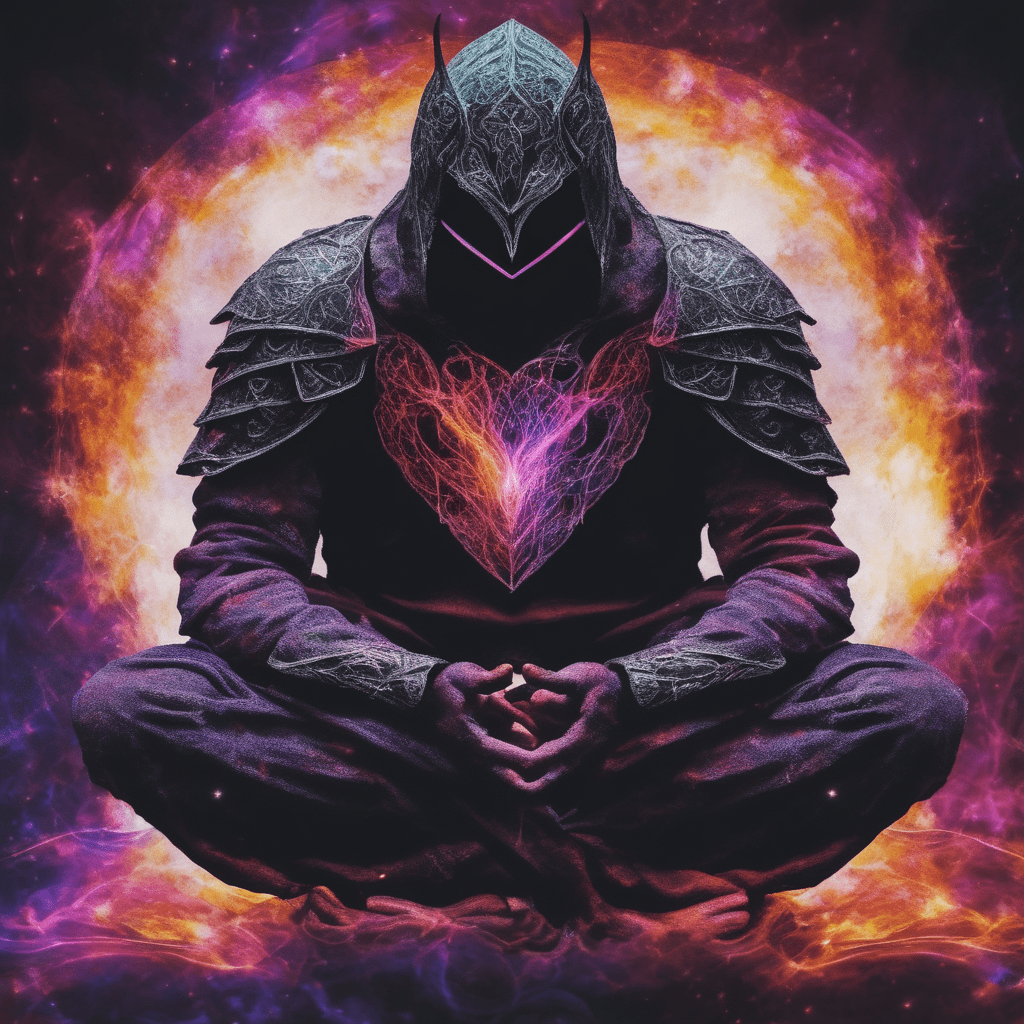
In contrast to the disorienting emptiness of the “dark night,” the concept of the “dark knight of the soul” represents a heroic inner archetype. It is the spiritual warrior within, forged not in battles against external foes but in the internal struggles against one’s demons.
The “dark knight” is not a saviour but a guide, a symbol of the courage, resilience, and wisdom needed to navigate through the night. It embodies the willingness to face the darkness, wrestle with doubt, challenge fears, and integrate the shadows rather than shunning them.
The “dark knight” does not vanquish the night but learns to dance with it, finding grace in struggle and meaning in confusion.
The Dance of Darkness and Light
The interplay between the “dark night” and the “dark knight” is a profound spiritual odyssey. One cannot exist without the other. The “dark night” provides the terrain, the challenge, and the abyss that must be crossed. The “dark knight” offers the tools, the strength, and the inner fire that illuminates the way.
In this spiritual dance, the darkness is not something to be feared but embraced. It is a crucible where the false self is burned away, leaving only the authentic soul, raw and unburdened.
The path through the “dark night” is not a path of despair but a journey toward enlightenment. The “dark knight” is not a symbol of battle but a metaphor for inner harmony.
Conclusion
The journey through the “dark night of the soul” and the guidance of the “dark knight of the soul” offers a rich tapestry of spiritual exploration. It reminds us that darkness is not an end but a beginning, a transformation that leads to a deeper connection with the self and the divine.
In embracing both the “dark night” and the “dark knight,” we find a roadmap to authenticity, wisdom, and a spirituality that transcends superficial understanding. The darkness and the knight are not foes but partners, leading us toward a horizon where the soul’s true radiance shines.
The odyssey through the dark night is an invitation, a calling to all who seek. The dark knight awaits, a silent companion ready to guide us through the shadows into the embrace of our luminous essence.
Morgan O. Smith
Yinnergy Meditation & My Book, Bodhi in the Brain…Available Now!
In the boundless depths of the ocean, a remarkable creature flourishes – the octopus. With its eight arms and three hearts, the octopus presents a fascinating analogy for a life dedicated to compassion and altruism. What if I told you that by embracing the wisdom of the octopus, you could walk the path of a saint or a bodhisattva?
Three Hearts, One Soul
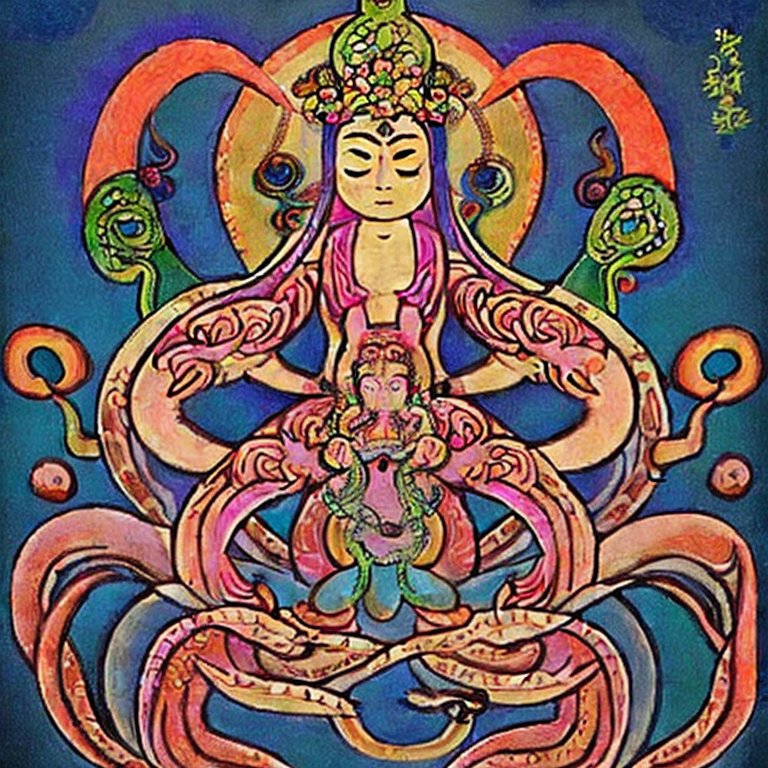
The octopus’s three hearts are not just intriguing biological features; they symbolize a trinity that is central to a life of selflessness – compassion, wisdom, and courage. These three tenets are the lifeblood that sustains the spirit of those who strive to benefit others. Just as the octopus’s hearts pump vitality through its body, these principles energize and direct our moral compass.
Compassion is the first heart. It moves us to alleviate the suffering of others. Wisdom, the second heart, grants the discernment to understand the complexities of life and the interconnectedness of all beings. The third heart, courage, gives us the strength to act upon our compassion and wisdom even in the face of adversity.
Arms That Give
Now, imagine your capabilities and resources as the arms of an octopus. These are the conduits through which the heart’s intent flows into action. With its eight arms, an octopus can achieve an astonishing level of multitasking and adaptability. Likewise, when we apply our varied talents and strengths in the service of others, we, too, can touch many lives. The octopus doesn’t discriminate as to which of its arms is more worthy; similarly, no act of kindness, however small, is ever wasted.
The Saint and the Bodhisattva: A Singular Journey
To “be like the saint” is to embrace a life of purity, humility, and service. This aligns closely with the path of the bodhisattva in Buddhism, who seeks enlightenment not for personal gain but for the benefit of all sentient beings.
A true saint, like a bodhisattva, doesn’t keep score. The concept of giving without expecting anything in return is deeply rooted in this path. This is not to be confused with self-neglect; rather, it’s the understanding that in the giving, we receive. We receive growth, fulfillment, and connection – treasures that cannot be quantified.
An Octopus’s Embrace
So, let’s learn from our wise friend, the octopus. Let our three hearts be full of compassion, wisdom, and courage. Let our arms be open and giving. And may we swim through the currents of life with grace, as saints or bodhisattvas, serving as guardians and guides for all those navigating the tempestuous oceans of existence.
In embracing the octopus within, we embark on a journey that ripples through the waters of our communities and touches the shores of every heart. In this sacred odyssey, we do not merely live; we become vessels of immeasurable, boundless love.
Morgan O. Smith
Yinnergy Meditation & My Book, Bodhi in the Brain…Available Now!




 Morgan O. Smith