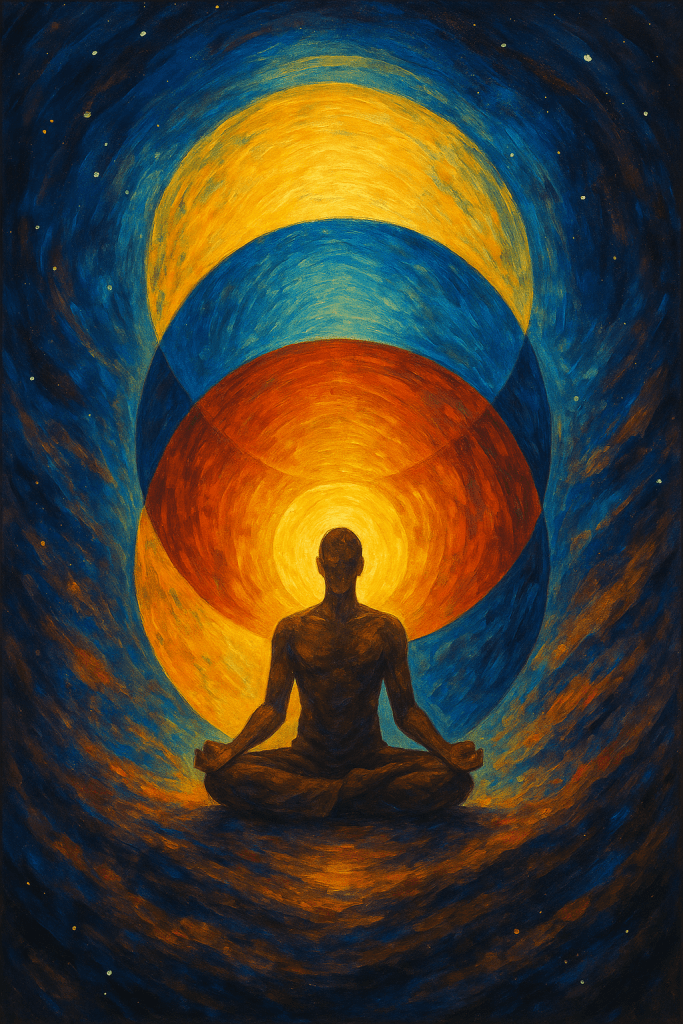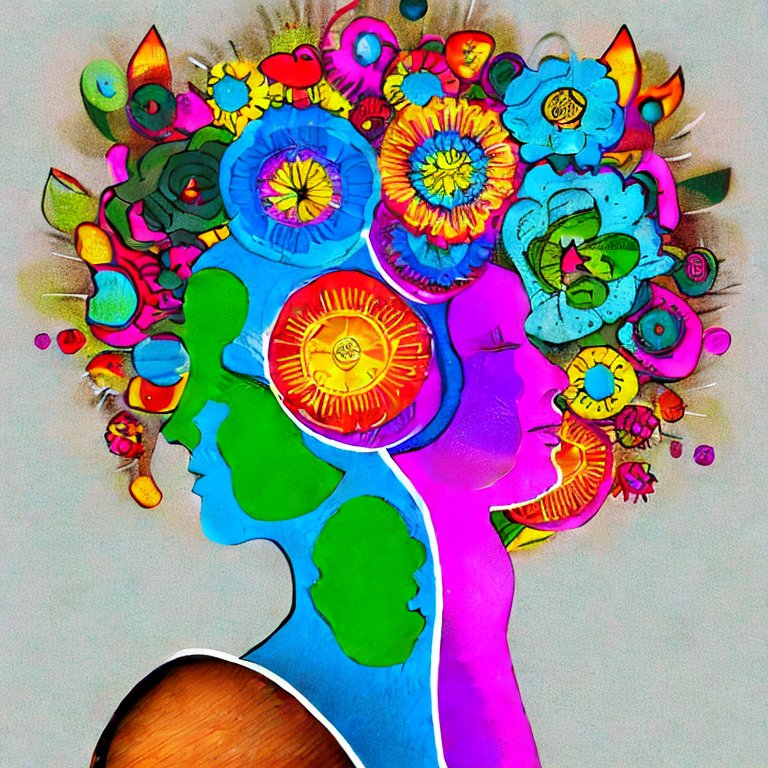
The Shadow of the Light

Spiritual maturity does not erase limitation.
It reveals it.

Many imagine awakening as a flawless state; permanent clarity, endless compassion, immunity to human contradiction. A polished saint who never stumbles. A mind without friction. A heart without ache.

Life has never worked that way.

Every illumination throws contrast. Every realization exposes what still sleeps. Awareness grows, and so does sensitivity to the places where conditioning remains. What once went unnoticed now becomes obvious.

Light does not cancel shadow.
Light makes shadow visible.

A person may taste boundless consciousness and still forget their keys.
May speak wisdom and still feel grief.
May rest as pure Being and still get irritated in traffic.

None of this contradicts awakening.

It confirms embodiment.

Human form carries edges. Biology, memory, culture, temperament, nervous system patterns—these do not dissolve simply because truth is recognized. Realization clarifies the sky; weather still moves through it.

Expecting perfection from enlightenment is another form of ego fantasy. A subtler one, dressed in spiritual language.

“Once I awaken, I will finally be beyond everything.”

Beyond what?

Beyond hunger?
Beyond fatigue?
Beyond old emotional reflexes surfacing now and then?

Even sages live inside gravity.

Consider the paradox: greater clarity often deepens humility. Seeing through the illusion of separateness does not produce superiority; it softens certainty. One recognizes how much of this life unfolds through forces far larger than personal will.

Brilliance and blind spots coexist.

The brighter the lamp, the sharper the outline behind it.

Shadow is not failure. Shadow is information.

Each reaction, each contraction, each moment of confusion points to another place where life invites integration. Nothing needs to be rejected. Everything becomes material for understanding.

Spiritual growth, then, is not a climb toward flawlessness.

It is a widening embrace.

Light without shadow would mean no depth, no dimension, no humanity. A perfectly even brightness reveals nothing. Contrast gives form to experience. Contrast allows learning. Contrast allows compassion.

Seeing your own limits makes you gentle with others.

When you know how easily fear arises in your own body, you stop judging someone else’s. When you recognize your own unfinished places, forgiveness becomes natural rather than moral.

This is maturity: not pretending to be spotless, but standing fully where you are.

Awareness shining. Conditioning still moving. Both allowed.

Nothing to fix. Nothing to hide.

Just this living interplay.

Radiance casting shape.

Human nature doing exactly what it has always done; expressing the infinite through a finite frame.

Morgan O. Smith

AI for Wellness and Spirituality Summit

February 9 & 10, 2026

https://aiforwellnessandspirituality.com/mosm

The Golden Shadow

Shows Where You Are Already Free

Freedom often reveals itself long before we notice it. Most people search for liberation by examining what is wounded, suppressed, or unresolved. Yet there is another doorway; quiet, luminous, and often overlooked; the qualities you effortlessly embody without trying. These are not achievements. They are signals. They point toward the portions of your being that have never been bound.

The golden shadow forms where consciousness remains untouched by contraction. It appears in the moments when you respond with clarity instead of reactivity, when your presence deepens without effort, when your intuition moves ahead of your thinking mind. These flashes are not accidents. They are expressions of your unconditioned nature shining through your personality structure. They show where you are already living beyond fear, shame, and fragmentation.

Most of your gifts announce themselves this way. A natural ability to calm others. A capacity to sense underlying patterns. A rhythm of creativity that feels as though it arrives from somewhere deeper than your history. These are not random traits; they are evidence of the deeper self that has always been awake. The golden shadow is your own freedom reflected back to you through the aspects of your life that require no striving.

Shadow work usually focuses on what is rejected, repressed, or denied. Yet exploring the golden side is equally essential because it reveals the openings that already exist. These openings function like hidden pathways; subtle but powerful channels where your awakened nature flows without obstruction. They remind you that the journey toward wholeness is not only about healing the contracted places but recognizing the liberated ones.

Follow the areas where ease, clarity, and generosity arise naturally. Those movements reveal the contours of your true nature. They show the direction consciousness wants to expand. They illuminate the parts of your being that do not need to be fixed; only recognized.

The golden shadow invites you to trust the regions of your inner world that already know how to move without fear. These regions are not simply potentials; they are lived realities quietly shaping your path. When you honour them, your life begins to organize around freedom rather than struggle, around clarity rather than confusion.

Your liberation is not a future accomplishment.
It is already echoing through the parts of you that never forgot who you are.

Morgan O. Smith

Get Your Free Copy of My Book, Bodhi in the Brain!

https://subscribepage.io/oTSZQu

Thresholds of the Infinite

The Absolute cannot be received by a vessel unprepared for its voltage. Consciousness, like circuitry, must be refined to hold the charge. The higher the threshold across the physical, emotional, and mental domains, the more precisely reality can transmit its undiluted essence through one’s being.

The body is not a hindrance to transcendence; it is the grounding rod. A nervous system conditioned through presence, breath, and embodiment becomes the bridge between the finite and the boundless. Without such refinement, the encounter with higher states risks distortion, overwhelm, or fragmentation. The Absolute demands structure, not as rigidity, but as integrity strong enough to remain open while containing the immeasurable.

Emotionally, the heart must learn to remain unguarded even in the storm. The capacity to feel everything without collapse is what allows compassion to expand beyond sentiment into universality. Each emotional breakthrough increases the voltage of love one can sustain without defence. To feel deeply without drowning is the silent mastery of awakened sensitivity.

Mentally, clarity becomes the crucible. The mind must learn to dissolve without disintegrating; to rest in stillness without forsaking discernment. Thought, when purified of obsession and identification, becomes transparent to the Real. Then language no longer imprisons truth but becomes its faint echo.

Those who cultivate balance across all thresholds do not chase transcendence; they embody it. They become the conduit through which the Absolute interprets itself, wordlessly, endlessly, with precision born of surrender.

Morgan O. Smith

Get Your Free Copy of My Book, Bodhi in the Brain!

https://subscribepage.io/oTSZQu

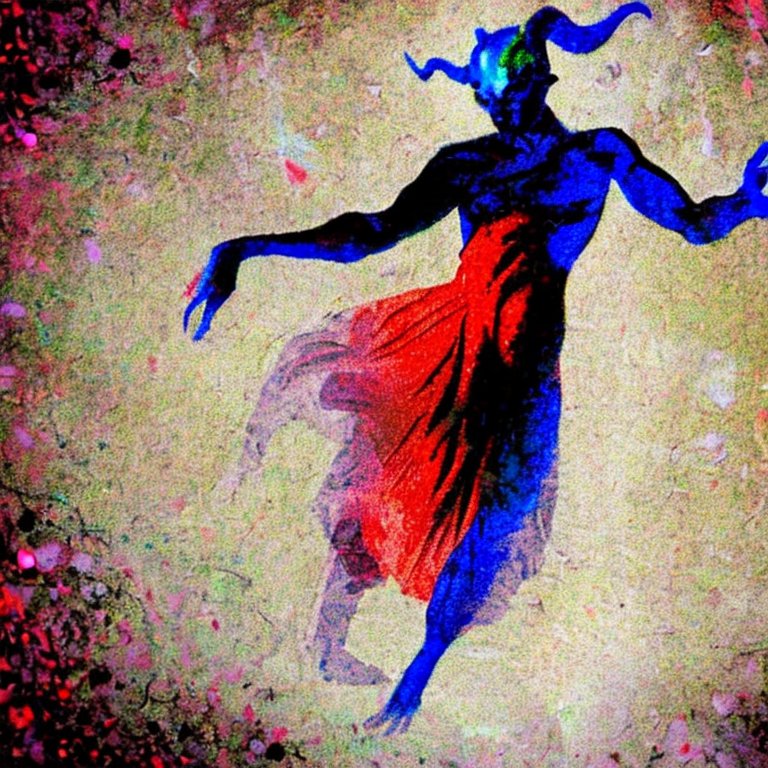
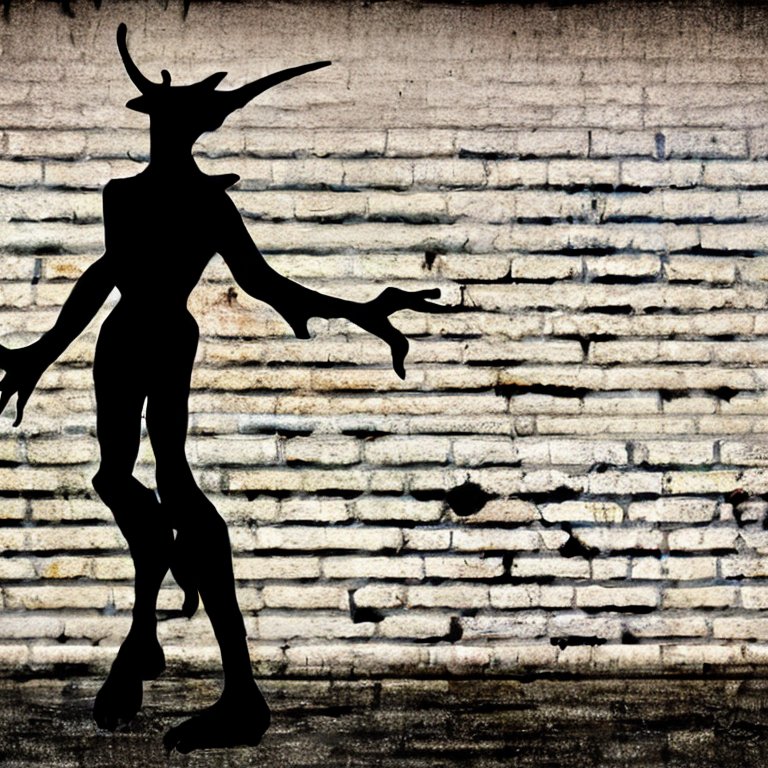
Dancing with Shadows

The Devil as Society’s Dark Projection

Intro:

As we sail through the oceans of human consciousness, we often encounter tempests that unveil the darker facets of our nature. If the divine represents society’s golden shadow, virtues, and aspirations, could the devil figure embody society’s dark shadow, a reflection of our collective id and repressed instincts? This article plunges into the depths of this unsettling yet captivating hypothesis.

Understanding the Dark Shadow:

Carl Jung posited the existence of the shadow as a component of the unconscious, housing both positive and negative elements that are not integrated into the conscious self. The dark shadow encompasses the negative aspects – our fears, impulses, and darker instincts.

The Devil as Society’s Dark Shadow:

Across cultures, the devil often symbolizes the epitome of evil, temptation, and the darker aspects of human nature. By projecting these qualities onto a devil figure, society externalizes its inner darkness, creating a ‘scapegoat’ onto which it can cast its sins and unwanted characteristics.

The Collective Unconscious and the Id:

Sigmund Freud’s concept of the id complements Jung’s shadow. The id is the instinctual part of the mind that contains sexual and aggressive drives and desires. Society’s projection of the id onto the devil may represent a form of collective defence mechanism, an attempt to deal with the disconcerting aspects of our nature.

The Devil as an Archetype:

In Jungian terms, the devil can be seen as an archetype, a universal symbol that dwells in the collective unconscious of mankind. This archetype manifests in various forms in different cultures, but its core characteristics usually represent the antithesis of societal norms and moral values.

Facing Our Demons:

Recognizing the devil as a projection of society’s dark shadow calls for the courageous endeavour to face our inner demons. Individuals and societies can work towards a more balanced and authentic existence by accepting and integrating these shadow aspects.

Conclusion:

The notion of the devil as society’s dark shadow casts a new light on the traditional narratives of good and evil. It invites us to reflect upon how the figures of deities and demons are not only external entities but also potent symbols of the complexities of human nature. Through understanding these shadows, society stands on the precipice of deeper self-awareness and a more holistic grasp of the human condition.

Morgan O. Smith

Yinnergy Meditation & My Book, Bodhi in the Brain…Available Now!

https://linktr.ee/morganosmith

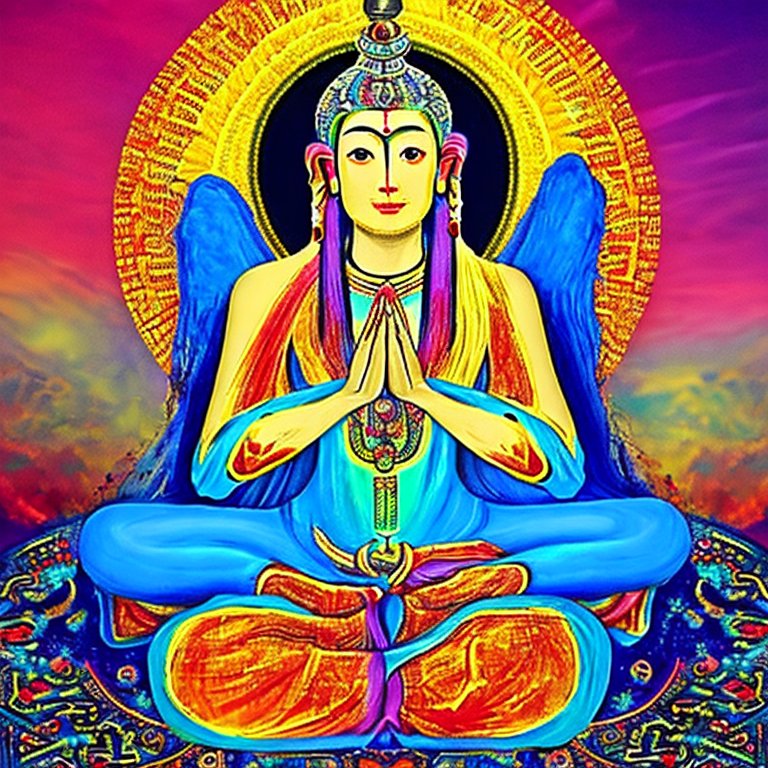
The Dawn of Syncretic Souls

A Harmonious Unveiling of Eastern and Western Spirituality

Introduction:
In the transcendent tapestry of human spirituality, East and West have often been seen as disparate threads. The West, with its logical rigour and scientific orientation, seems worlds apart from the East’s mystical, inward-focused spiritual traditions. However, in the heart of a spiritual awakening, a resplendent horizon emerges, revealing the unity and complementary nature of these spiritual worlds. This article explores this enigmatic integration, delving into how the confluence of Eastern and Western spirituality can offer a comprehensive and profound spiritual experience.

The Philosophical Underpinnings:
Eastern spirituality, rooted in traditions such as Hinduism, Buddhism, and Taoism, often emphasizes the notions of unity, interdependence, and the cyclical nature of existence. In contrast, Western spirituality, particularly in Abrahamic religions, has been more inclined toward linear progression, individual salvation, and a personal God. Notwithstanding these differences, both sides seek to understand the fundamental nature of existence and the path toward greater fulfillment and enlightenment.

The Awakening Confluence:
The moment of spiritual awakening can be likened to the dawn; the dark night of ignorance recedes as the sun of wisdom rises. In this pivotal moment, the dichotomies of East and West dissipate, as one comprehends the interwoven complexities of existence. The Eastern idea of interconnectedness suddenly harmonizes with the Western emphasis on individual worth, signifying that our individual journey has cosmic interconnected consequences.

Science and Mysticism:

One of the key avenues through which this integration is taking place is the dialogue between science (often associated with the West) and mysticism (a domain of the East). Through disciplines like quantum physics, Western science is beginning to echo Eastern concepts of interdependence and non-duality. The parallels between quantum entanglement and the interconnectedness emphasized in Eastern philosophies are a testament to this evolving synthesis.

A More Comprehensive Path:
By integrating Eastern and Western spirituality, individuals may find a more comprehensive and balanced path. For instance, the Western emphasis on social justice and activism can bolster the Eastern focus on inner peace and equanimity. Conversely, the Eastern practices of meditation and mindfulness can bring a sense of inner clarity and purpose to the Western pursuit of external achievements.

Conclusion:
As the human spirit continues to evolve, the integration of Eastern and Western spiritual perspectives offers a more holistic and enriched path. This synthesis, fully realized in the moment of spiritual awakening, acts as a bridge between dualities, fostering a deeper understanding of the self and the universe. Through this harmonious integration, humanity has the potential to weave a more intricate, compassionate, and enlightened tapestry of existence.

Morgan O. Smith

Yinnergy Meditation & My Book, Bodhi in the Brain…Available Now!

https://linktr.ee/morganosmith

Meditative Practices and the Illusory Nature of the False Self

A Journey Towards Self-Realization

Introduction:
Meditative practices have long been revered as transformative tools in the realm of self-discovery and spiritual growth. They offer a profound pathway for individuals to explore the depths of their consciousness, seeking truth, peace, and liberation. However, beneath the surface lies a fascinating paradox—the false self, which appears as the practitioner, ultimately leads to the revelation of the Ultimate Self, the Ground of All Being.

The Illusion of the False Self:
Within the tapestry of various spiritual traditions, the notion of the false self arises—a deceptive construct born out of our attachments to external roles, labels, and conditioned beliefs. This illusory identity emerges from our tendency to assign significance to transient aspects of our existence, such as social standing, material possessions, and superficial identities. Meditative practices, in their diverse forms, serve as illuminating mirrors, enabling us to perceive the transient nature of the false self and transcend its illusory grasp.

Meditation as a Mirror:
Meditation acts as a reflective surface, offering a clear reflection of the illusory nature of the false self. By turning inward and observing our thoughts, emotions, and sensations without judgment or attachment, we gain a heightened awareness of the ever-changing nature of our experiences. Regular practice nurtures a profound realization—an understanding that our thoughts come and go, emotions rise and subside, and identities shift fluidly. This awakening brings us closer to recognizing that the false self is not a fixed entity but a construct that can be deconstructed through the power of self-inquiry.

The Ultimate Self:
While meditative practices may originate from the false self, they hold within them the potential to reveal the Ultimate Self—the very essence of our being, the Ground of All Being. As we delve deeper into our meditative journey, we begin to touch upon an interconnectedness and unity with the vast cosmos. The boundaries that once separated our individual selves from the external world begin to dissolve, and we catch glimpses of the inherent oneness that permeates all existence. In this expanded state of awareness, the false self loses its grip, and we realize that our essential nature transcends the limitations of individual identity.

Integration and Transformation:
The true essence of meditative practices lies in the interplay between the false self and the Ultimate Self. The false self, while illusory, acts as a vehicle for the exploration and transformation of consciousness. Engaging with meditative practices allows us to intimately observe the patterns and tendencies of the false self, ultimately leading us to transcend its limitations. By embracing the false self as a catalyst for growth, we integrate its lessons and move closer to the realization of our true nature—the Ultimate Self.

Conclusion:
In the realm of meditative practices, the interconnection between the false self and the Ultimate Self invites profound contemplation. While the false self may present itself as real and compelling, it is merely a construct that can be unravelled through the transformative power of meditation. Engaging in these practices propels us on a journey of self-realization, unveiling the essence of our being—the Ground of All Being. Meditative practices serve as bridges, guiding us from the illusion of the false self to the profound truth of our interconnected existence. Embrace these practices, embrace the false self, and embark on the path toward ultimate liberation and self-realization.

Morgan O. Smith

Yinnergy Meditation & My Book, Bodhi in the Brain…Available Now!

https://linktr.ee/morganosmith

The Integral Journey

Growing Up, Waking Up, Cleaning Up, and Showing Up – A Holistic Approach to Personal Development

Introduction:
In the pursuit of personal growth and self-improvement, it is essential to adopt a holistic approach that encompasses various dimensions of our being. Drawing inspiration from Integral Theory, which offers a comprehensive framework for understanding human development, we explore the significance of four interconnected aspects: growing up, waking up, cleaning up, and showing up. Just as focusing solely on arm development in bodybuilding would lead to an imbalanced physique, neglecting any of these dimensions can leave us lopsided, imbalanced, or incomplete in our personal evolution.

1. Growing Up: Strengthening the Foundation
Growing up refers to the process of psychological and emotional maturation, moving from egocentric to ethnocentric and ultimately to world-centric perspectives. Just as a solid foundation is crucial for a balanced physique, growing up establishes the groundwork for our personal growth. It involves developing self-awareness, emotional intelligence, and social skills. Without this dimension, we may struggle to navigate relationships and fail to comprehend the broader context in which our lives unfold.

2. Waking Up: Expanding Consciousness

Waking up signifies the transcendence of limited egoic identification and the realization of our true nature. It involves cultivating mindfulness, spiritual awareness, and insight into the nature of reality. In bodybuilding terms, waking up is akin to expanding the mind-muscle connection, allowing us to tap into hidden potential and experience a heightened sense of being. Neglecting this dimension can result in a lack of purpose, spiritual disconnect, or a failure to appreciate the interconnectedness of all things.

3. Cleaning Up: Healing and Integration

Cleaning up involves acknowledging and addressing our personal shadow, unresolved traumas, and subconscious patterns. It entails embarking on a journey of self-reflection, therapy, or other healing modalities to integrate fragmented aspects of ourselves. In bodybuilding, cleaning up corresponds to maintaining overall bodily health, addressing muscle imbalances, and preventing injuries. Ignoring this aspect can lead to recurring emotional challenges, self-sabotage, or a sense of being held back by unresolved issues.

4. Showing Up: Authentic Action in the World
Showing up refers to actively participating and contributing to the world around us, aligned with our values and purpose. It involves expressing our unique gifts, making a difference, and living a life of authenticity. In bodybuilding, showing up corresponds to showcasing our developed muscles on stage, embodying the results of our efforts. Neglecting this aspect may result in a lack of fulfillment, a sense of disconnection from our true passions, or a failure to make a meaningful impact.

Conclusion:
Just as a bodybuilder strives for a balanced physique by developing all muscle groups, a comprehensive approach to personal development is vital for a holistic and fulfilling life. By embracing the principles of growing up, waking up, cleaning up, and showing up, as outlined by Integral Theory, we invite a transformative journey that nurtures our physical, mental, emotional, and spiritual dimensions. Only by cultivating these interconnected aspects can we achieve true harmony, fulfillment, and a well-rounded evolution toward our highest potential.

Morgan O. Smith

Yinnergy Meditation & My Book, Bodhi in the Brain…Available Now!

https://linktr.ee/morganosmith

The Evolution of Communication

Drawing Parallels between Integral Theory and Telephony

Integral Theory, developed by philosopher Ken Wilber, is a comprehensive framework that seeks to reconcile the diverse theories and philosophies concerning reality and human experience. It encapsulates every field of human inquiry, from art and science to morality and spirituality, drawing on multiple perspectives to provide a holistic understanding. Integral Theory presents a model of human development that outlines a series of stages, each more complex and encompassing than the last, from the basic “Archaic” to the highly evolved “Super-Integral” stage.

Now, imagine drawing parallels between this theory and something as commonplace as a telephone. Have you ever wondered about the connections between seemingly unrelated aspects of life? This blog will explore an interesting correlation between the evolution of the telephone and Ken Wilber’s Integral Theory, from the “Archaic” to the “Super-Integral” stage. The trajectory of both illustrates the ongoing transcending and including of previous stages, manifesting new, emergent qualities. Top of Form

**Archaic Stage and the Telephone’s Birth**

The “Archaic” stage of Integral Theory focuses on basic survival needs. This parallels the advent of the telephone by Alexander Graham Bell. This rudimentary device served the basic need of communication, carrying sound across distances, a technological marvel of its time, akin to the struggle for survival in the archaic stage of human development.

**The Magical Mystery of Telephones**

Next, in the “Magic” stage, life is influenced by mythic belief systems and superstitions. When the telephone was initially introduced, it was seen as a ‘magical’ or mystical object. The ability to convey voices over long distances was mysterious, and to many, unexplainable. The enchantment associated with this new invention was reminiscent of the enchantment found in the magical stage of human consciousness.

**Mythic Stage and Societal Norms**

Moving into the “Mythic” stage, life is governed by rules and cultural norms. As telephones became common household items, societal norms formed around their usage. There were specific protocols to adhere to while talking on the phone, hours during which calls were acceptable, and even areas designated for phone use. This stage was a reflection of the normative rules associated with the mythic stage of Integral Theory.

**Rational Stage and the Age of Landlines**

As we move into the “Rational” stage, logic and scientific reasoning become dominant. Analogously, this corresponds with the era of landlines and the systematic network of telephone lines. Improvements and expansions were driven by scientific advancements and logical problem-solving, reflecting the rational thinking associated with this stage of human consciousness.

**Pluralistic Stage and the Advent of Mobile Phones**

The “Pluralistic” stage of Integral Theory values multiple perspectives. In telephony, this could be likened to the birth of mobile phones and the internet, initiating a new era of communication diversity. The introduction of different communication modes (text, voice, video, etc.), and a plethora of apps and platforms catered to various needs, mirroring the pluralistic appreciation of different viewpoints.

**Smartphones and the Integral Stage**

The “Integral” stage of Integral Theory recognizes the importance of all previous stages and values continuous development. This is best represented by the advent of smartphones, which integrated all previous modes of communication, along with additional features. The smartphone, a single device capable of myriad functionalities, symbolizes the integral stage, acknowledging and valuing the entire evolutionary journey of the phone.

**Super-Integral Stage and the Future of Phones**

Finally, the “Super-Integral” stage entails the ongoing transcending and including of previous levels, leading to the emergence of new qualities. In the context of phones, this could be seen as future technologies like holographic communication or brain-computer interfaces. Such technologies, by integrating and transcending all previous stages, would create a form of communication that’s currently unimaginable, reflecting the emergent potential of the super-integral stage.

In conclusion, the progression of Integral Theory and the evolution of the telephone showcase the fascinating dynamics of growth, integration, and transcendence. As we look forward to what the future holds, let’s appreciate how far we’ve come, with an integral perspective on the marvels of technology and consciousness alike. This exploration encourages us to appreciate the past, navigate the present, and shape the future with an inclusive, forward-thinking approach. It also serves as a reminder that progress is not about abandoning old stages for new ones. Instead, it’s about integrating the lessons, strengths, and wisdom of each stage to form a more holistic and effective approach.

As we peer into the future of telephony and human development alike, we stand on the brink of a Super-Integral era—a time of unforeseen innovation and progression. The future of phones might include features like holographic communication or brain-computer interfaces, with advancements integrating and transcending all previous stages. In the same vein, as we evolve in our collective consciousness, we’re creating a world that is unimaginable from the perspective of earlier stages.

In essence, our evolution—whether technologically or consciously—reflects the unending dance of integration and transcendence, each stage building upon and encompassing the last. As we recognize this, we can approach every new stage, every leap forward, every breakthrough with a sense of awe and gratitude, understanding that it stands on the shoulders of the countless transformations that came before.

In both the evolution of the telephone and human consciousness, there is one constant: change. As we navigate this ever-evolving landscape, let’s remember to appreciate the journey as much as the destination, and to value every stage as an integral step toward an exciting, emergent future. The path ahead is not just about reaching new heights, but also about deepening our understanding of the intricate, beautiful tapestry of our shared evolution.

Our journey toward the Super-Integral stage, much like the future of telephony, promises to be a fascinating voyage of discovery and growth. Here’s to celebrating each milestone along the way, and looking forward to the incredible possibilities that await.

Morgan O. Smith

Yinnergy Meditation & My Book, Bodhi in the Brain…Available Now!

https://linktr.ee/morganosmith