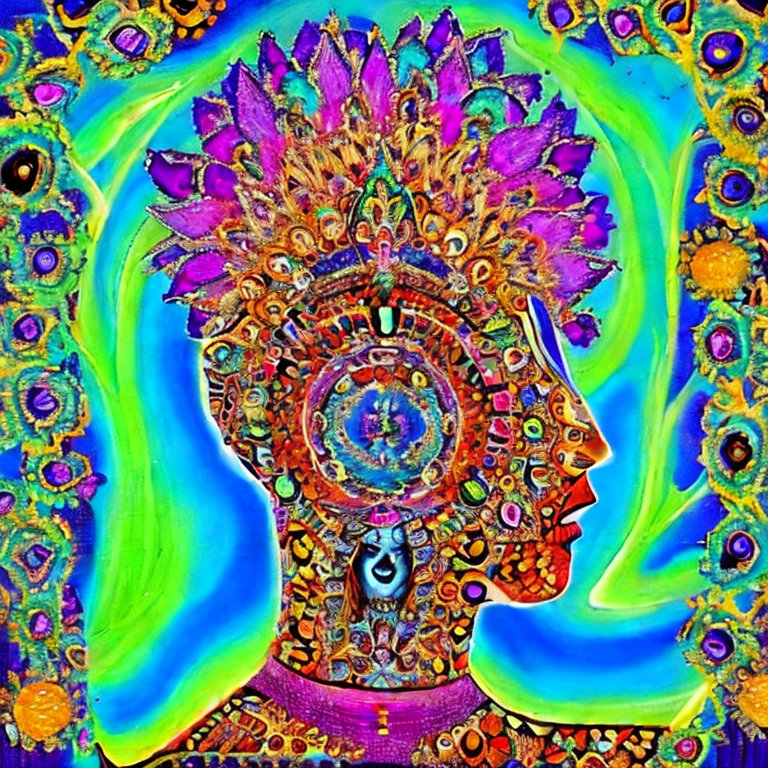
Bridging Quantum Realms and Turiyatita

The Web of Interconnection

In the intricate and mystifying world of quantum mechanics, one phenomenon stands out as particularly thought-provoking: quantum entanglement. It’s a concept that defies our everyday logic, connecting particles across vast distances in such a way that the state of one instantly influences the state of the other. This interconnectedness, existing beyond space and time, might find an unlikely companion in an ancient spiritual concept: turiyatita, the attainment of spiritual enlightenment.

The Interconnected Universe

Quantum entanglement illustrates how, at the fundamental level, all things in the universe are interconnected. This idea resonates with spiritual teachings across cultures that speak of the oneness of existence and the interconnectedness of all life. In Indian philosophy, turiyatita represents a state of consciousness that transcends the conventional realms of waking, dreaming, deep sleep, and even the transcendental state known as turiya. It’s a state of realization that everything is part of a singular divine essence.

Could these two concepts, one rooted in the cutting-edge science of quantum physics and the other in ancient spiritual wisdom, have something to say to each other?

A Metaphor for Enlightenment


Quantum entanglement could be seen as a metaphor for the experience of spiritual enlightenment. The entangled particles, seemingly separate but inherently connected, might symbolize how everything in existence is part of the same cosmic dance. Likewise, the experience of turiyatita transcends the illusion of separateness, revealing an underlying unity.

In this metaphorical sense, the realization of enlightenment could be likened to experiencing the world in its entangled state, where divisions melt away and a profound interconnectedness is revealed.

A Dance of Mystery

Yet, the relationship between quantum entanglement and turiyatita is more than a simple analogy. Both concepts challenge our conventional understanding of reality. They both hint at a world far more complex and interconnected than our ordinary senses can perceive.

Is it possible that these two ideas, one from the realm of science and the other from the domain of spirituality, are glimpses of the same underlying truth? Is there a hidden dance of connection that plays out both in the microscopic world of quantum particles and the expansive world of human consciousness?

Conclusion

The connection between quantum entanglement and turiyatita may be speculative and metaphorical, but it invites us to ponder the profound mysteries of existence. It’s a reminder that the world is far more complex and beautiful than we often realize and that science and spirituality, seemingly disparate, might have something profound to say to each other.

This dance of connection between the physical and the metaphysical invites us to explore, wonder, and perhaps even transcend our conventional understanding of reality. It’s a poetic reminder that we are all interconnected, in ways that both science and spirituality continue to explore and celebrate.

Morgan O. Smith

Yinnergy Meditation & My Book, Bodhi in the Brain…Available Now!
https://linktr.ee/morganosmith

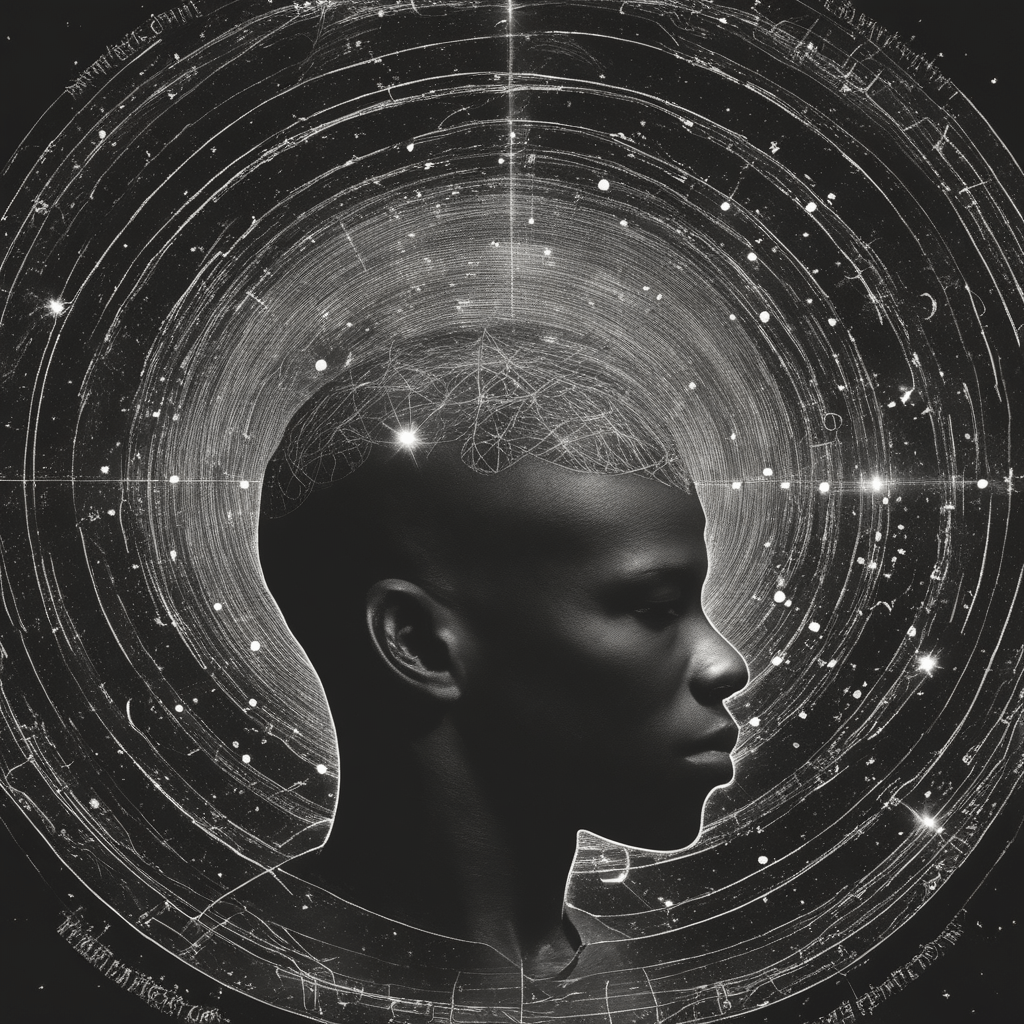
The Cosmic Symphony

Rethinking the Chain of Events

In the realm of philosophy, we often view the universe as a logical sequence of events where causes lead to effects, neatly arranging our reality into an orderly timeline. This classical cause-and-effect paradigm has long governed the way we think about the nature of existence. But what if we looked at this differently? What if cause and effect were more than just a linear progression from past to present to future?

## A Symphony of Causation

Imagine a universe where everything is in a constant state of becoming and dissolving, a universe where all causes are effects and all effects are causes. In this intricate web, each cause is simultaneously an effect, and each effect is a cause. A seemingly inconsequential event could trigger a chain reaction of unforeseeable consequences, while a major event could ripple back through time, shaping the past.

## The Non-Linear Universe

The idea that the future affects the present, and the present affects the past, is a profound shift from our linear understanding. It challenges our perception of time and the very nature of existence. This philosophical perspective acknowledges that the universe is not a static entity but a dynamic and ever-changing process, where creation and destruction happen at every moment.

### Creation and Destruction at Every Moment

In this paradigm, the universe is in a continuous process of creation and destruction, breathing life into every possibility and then allowing it to dissolve back into the cosmic fabric. This perspective invites us to consider our individual lives and events not as isolated occurrences but as part of an interconnected dance that shapes the whole universe.

Imagine a world where our actions are not merely consequences of past decisions but active participants in creating the future and reshaping the past. How would we act if we knew that every choice, every action, and every thought is both a cause and an effect in a never-ending cycle?

## Conclusion: An Invitation to a Deeper Understanding

By embracing this novel perspective of cause and effect, we can begin to see ourselves not as separate entities but as integral parts of a grand cosmic dance. This view challenges our conventional understanding, urging us to contemplate the dynamic, interconnected nature of existence.

As we ponder the nature of cause and effect, recognizing the interconnectedness of all things, we might find new insights into our place in the universe, our responsibility for our actions, and our potential to shape reality in ways we never thought possible.

The universe is not something that merely happens to us; we are active participants in its unfolding. As we move, so does the universe, and in that dance, we find our existence intertwined with everything else. It is a thought-provoking view that invites us to see ourselves and the universe in a new and profound light.

Morgan O. Smith

Yinnergy Meditation & My Book, Bodhi in the Brain…Available Now!

https://linktr.ee/morganosmith

The Profound Transformation of Realizing Oneself as Brahman

A Journey Beyond the Self

In the boundless tapestry of human existence, few ideas are as profound and transformative as the realization of oneself as Brahman. A central concept in Hindu philosophy, Brahman refers to the ultimate reality or cosmic spirit, a principle that transcends the individual self and unites all living beings.

This blog post explores the many changes an individual might experience upon this realization, a journey that transcends mundane existence and awakens a new consciousness.

### The Loss of Ego and the Embrace of Unity

Perhaps the most radical shift in consciousness comes from losing the individual ego. Recognizing oneself as part of the universal oneness leads to a dissolution of the self, allowing the individual to see beyond the superficial distinctions that often characterize human perception. This leads to a profound sense of unity, empathy, and compassion, transcending barriers like race, nationality, and religion.

### A Shift in Values and Desire

The realization of Brahman changes the very fabric of desire and ambition. Material possessions, social status, and even relationships may lose their significance, replaced by spiritual growth and a deepened understanding of the cosmic order. The individual might pursue selfless service, finding fulfillment in contributing to the well-being of all.

### The Embrace of Paradox and the Transcendent Nature of Existence

This profound awakening allows for a comfortable acceptance of paradoxes and contradictions. Time becomes more fluid, creativity blossoms, and the person might develop an ability to recognize synchronicities, meaningful coincidences that reveal the interconnected web of existence.

### Living in Harmony and Transcending Social Constructs


Living in harmony with nature, respecting all life, and transcending conventional gender roles and social constructs, the enlightened individual moves through life with grace, mindfulness, and effortless action. Their actions are unforced, carried out with a sense of reverence and alignment with universal ethics.

### The Physical and Emotional Manifestations

The journey to realizing oneself as Brahman does not merely affect the mind but also resonates through the body and emotions. The individual may find improved physical well-being, experience deeper states of meditation, and become almost entirely devoid of internal and external conflict.

### The Inspiration to Others

Through this transformation, the individual becomes a living example of peace, love, and wisdom, inspiring others simply through their presence and way of being. They embody a philosophy that sees beyond the limitations of material existence and offers a path to spiritual awakening.

### Conclusion

The realization of oneself as Brahman is a profound spiritual concept that encompasses every aspect of being—mental, physical, emotional, and spiritual. It offers a glimpse into a state of consciousness that transcends the mundane and awakens a new way of perceiving reality.

In a world often driven by material pursuits and divisive ideologies, the teachings surrounding Brahman provide a timeless wisdom that calls for unity, compassion, and a life centred on spiritual truth. Whether viewed as a philosophical concept, a religious belief, or a spiritual experience, the realization of Brahman invites us to look beyond the self and embrace a vision of existence that is all-encompassing, transcendent, and profoundly transformational.

As we navigate the complexities of modern life, may we find inspiration in the ancient wisdom that teaches us to see ourselves not as isolated beings but as part of a grand, interconnected cosmos, guided by a principle that is at once beyond us and within us. It is a journey of discovery, a path to enlightenment, and a call to a deeper, more meaningful existence.

Morgan O. Smith

Yinnergy Meditation & My Book, Bodhi in the Brain…Available Now!

https://linktr.ee/morganosmith

The Facets of Ego and Transcendent Experiences: Part Two

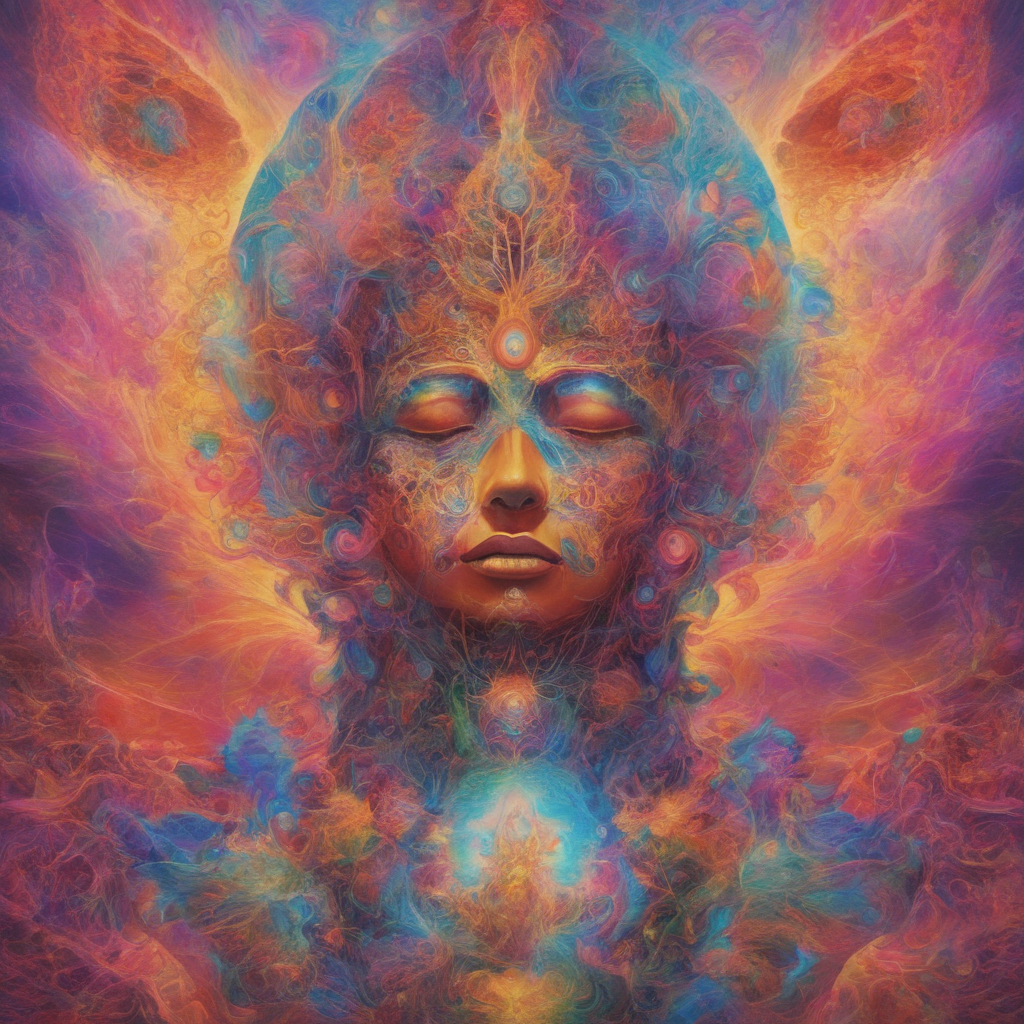
As we proceed from Part One, a profound realization dawns. During moments of complete ego death, the individual facets cease to exist, yet paradoxically, they all exist, blending into a unified consciousness. The boundaries of ‘I’, ‘you’, ‘us’, and ‘them’ dissolve, making room for an all-encompassing ‘we’.

Our ego transforms and integrates into the collective consciousness, interconnecting with the egos of all beings, and indeed, the universe itself. Every trait, every star in our constellation, becomes part of this grand cosmic tapestry.

This realization isn’t merely intellectual, but experiential. Our individual identities meld into the collective, signifying an interconnectedness that transcends our singular perspective. In the dance of the facets of ego and the mystical experiences, we uncover our deepest potential to be interconnected, to share in the collective consciousness of all beings, and to participate consciously in the magnificent orchestration of the universe.

Through this journey, we don’t lose ourselves; instead, we find our place in the cosmos, gaining a newfound appreciation for the diversity and unity that life offers. We witness our traits, without labelling them as positive or negative, as part of a unified whole. Our ego ceases to be an entity isolated from the universe and becomes a fundamental part of the cosmic consciousness.

This exploration of the ego and its many facets is not just an intellectual exercise, but a call for introspection and self-awareness. It encourages us to embrace our full spectrum of experiences, from the depths of our struggles to the heights of our joys, all the while seeking that profound connection with the universe and our place within it.

Morgan O. Smith

Yinnergy Meditation & My Book, Bodhi in the Brain…Available Now!
https://linktr.ee/morganosmith

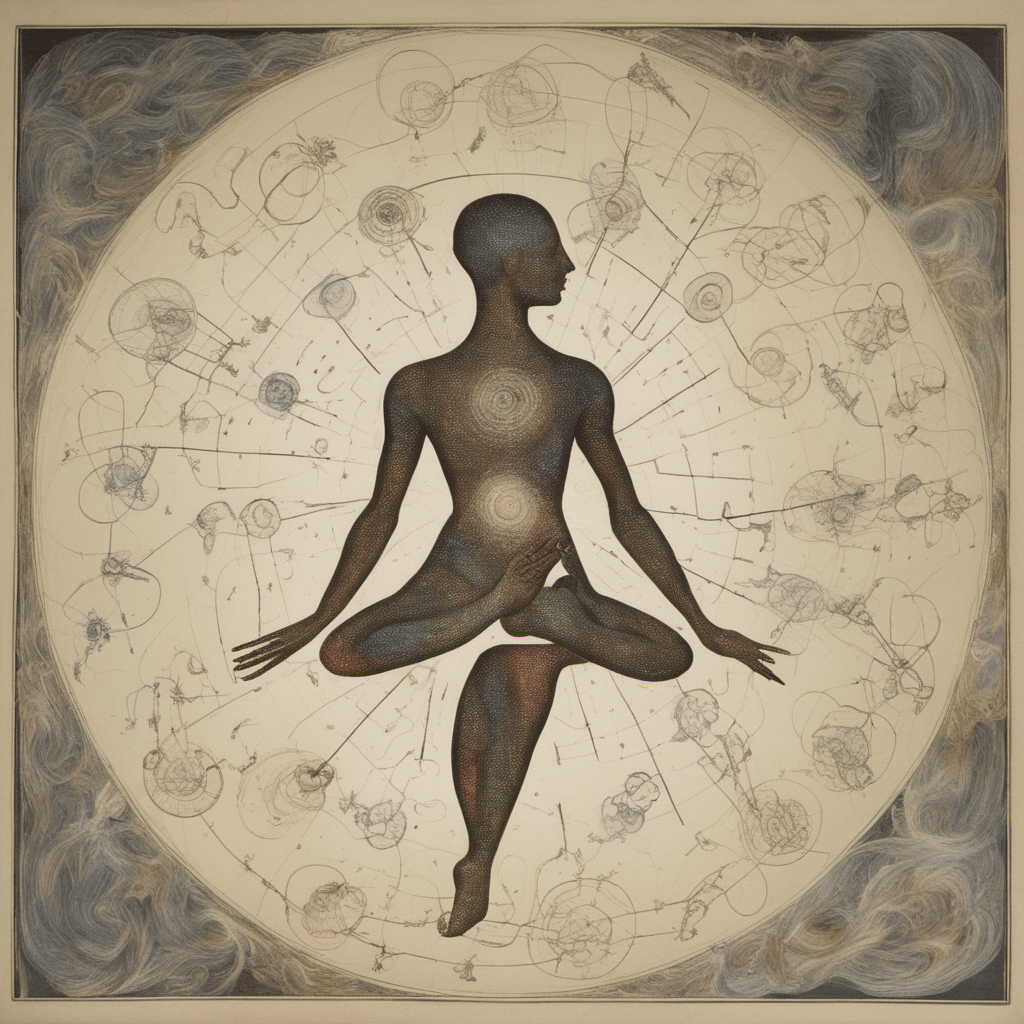
Ego Death

A Symphony of Sense and Surrender into the Nondual Existence

The ego, a fortress of our individuality, a custodian of our senses, crumbles during a profound psychological event termed ego death. This process, which is akin to crossing the Rubicon of our minds, signifies the temporary dissolution of our self-identity, the fading of our senses, and the surfacing of a cosmic oneness often linked to deep meditative states, transcendental experiences, or psychedelic journeys.

Neurologically, ego death presents an intriguing event. Our brain’s default mode network (DMN), which curates our self-narrative and sets us apart from others, shows a marked decrease in activity. We can compare it to a maestro leaving the stage, silencing the orchestra of our everyday consciousness that incessantly plays symphonies of thoughts, memories, and future projections.

In the ensuing stillness, our senses embark on an incredible transformation. The self-nonself dichotomy wavers, and feelings of oneness and interconnectedness seep in.

The conventional five senses, along with lesser-known ones such as proprioception (spatial orientation of our body parts), and thermoception (sense of temperature), recede, rendering the self imperceptible. Even the sense of agency – the consciousness of controlling one’s actions – seems to dissolve.

In place of the sensory absence comes the phenomena of nonduality – the essence of existence, unblemished by ego-driven distortions. Here, the biological reality of our senses converges with an intense metaphysical experience.

Kundalini rising – a sensation akin to a large serpent ascending the spine, activating each energy center or ‘chakra’ – might manifest in this transformative journey. Biologically, it could be perceived as a surge in nervous energy influencing neural circuits, engendering a radical alteration in perception.

The dissolution of our sense of time – chronoception – engulfs us in a timeless realm. Our sense of spatial orientation capitulates, inducing a feeling of non-locality, a state where one’s existence feels omnipresent.

This whole process might seem like an experiential validation of ‘absolute monism’ – a philosophical school of thought propounding the universe’s oneness, discrediting any duality between the individual and the world.

Yet, ego death is not an end; it’s a transformative beginning. The insights gleaned about the interconnectedness of all life forms and the illusory separateness sculpted by our ego can significantly reshape our lives.

From a wider perspective, ego death can be seen as a philosophical odyssey leading to an experiential understanding of consciousness, the essence of selfhood, and the nature of reality. The unravelling of our senses and ego sheds light on our inherent unity, nurturing a profound sense of compassion that percolates into every aspect of our existence.

Ego death’s exploration and its impact on our senses offer an avenue to challenge our conventional ways of perceiving, question our established sense of being, and dive deeper into the mysteries of our inner and outer universe. It’s not merely a psychological event but a spiritual expedition and a philosophical exploration that propels us toward a truer understanding of existence.

Morgan O. Smith

Yinnergy Meditation & My Book, Bodhi in the Brain…Available Now!
https://linktr.ee/morganosmith

The Dance of Consciousness

How Traits and States Influence Each Other

Introduction:
In the realm of philosophy and neuroscience, the nature of consciousness has long been a subject of intense scrutiny. As we delve into the complex interplay between traits of consciousness and states of consciousness, we embark on a thought-provoking journey that explores how these facets of our mind shape and are shaped by each other.

Part I: The Essence of Traits of Consciousness
Traits of consciousness refer to the enduring qualities and patterns that define an individual’s cognitive, emotional, and behavioural makeup. These traits form the bedrock of one’s personality, shaping how they perceive the world, process information, and interact with others. From introversion to openness, resilience to empathy, traits of consciousness provide a unique lens through which individuals experience their existence.

Part II: Unraveling States of Consciousness
States of consciousness, on the other hand, are transient and ever-changing mental conditions. These states can range from heightened awareness during moments of meditation or creative inspiration to altered states induced by substances or intense emotional experiences. States of consciousness are like ripples on the surface of a vast ocean, reflecting our immediate perceptions and inner states.

Part III: The Bidirectional Influence

At first glance, it might appear that traits and states of consciousness operate independently. However, upon closer examination, we discover the profound bidirectional influence they exert on each other.

1. Traits Shaping States:

Our enduring traits of consciousness lay the foundation for how we perceive and react to various states. For instance, a highly empathetic individual might experience deeper connections with others during states of heightened compassion or love. Similarly, a person with a predisposition to anxiety may be more prone to states of distress during challenging situations.

2. States Shaping Traits:

The fluidity of consciousness states can leave lasting imprints on our traits. Profound transformative experiences, such as spiritual awakenings or near-death encounters, can lead to significant shifts in an individual’s personality and worldview. Moreover, states like mindfulness and meditation can foster positive traits like patience and self-awareness.

Part IV: The Dance of Consciousness
As the dance unfolds, we realize that consciousness is not static but rather a dynamic process, constantly in flux. Traits and states intertwine, shaping and reshaping one another in an intricate and evolving dance.

Conclusion:
The relationship between traits and states of consciousness is a fascinating exploration of the human mind’s complexity. Acknowledging this interconnectedness can empower us to cultivate positive traits while embracing the ebb and flow of transient states. As we embrace the intricacies of our consciousness, we embark on a journey of self-discovery, leading us to a deeper understanding of ourselves and the world around us. Remember, we are not merely passive observers of our consciousness; we are active participants in its unfolding story.

Morgan O. Smith

Yinnergy Meditation & My Book, Bodhi in the Brain…Available Now!

https://linktr.ee/morganosmith

A Meeting of East and West

Advaita Vedanta and Ken Wilber’s Four Quadrants

As we navigate through life’s labyrinth, we encounter myriad philosophical viewpoints designed to offer us clarity about the nature of reality. Two such perspectives – one rooted in ancient Eastern spirituality, Advaita Vedanta, and the other a more contemporary Western theory, Ken Wilber’s Integral Theory – provide us with intriguing interpretive lenses. While appearing distinct, when juxtaposed, they unfold a captivating dialogue, revealing the interconnectedness of diverse paths of wisdom.

**Non-Duality: The Heart of Advaita Vedanta**

At the core of Advaita Vedanta lies the profound principle of non-duality. The term ‘Advaita’ translates to ‘not two’, pointing towards the notion of unity beneath apparent multiplicity. According to this philosophy, all phenomena – whether perceived as separate entities or diverse experiences – are manifestations of a singular absolute reality known as Brahman.

This philosophy posits that the perceived distinction between the individual self (Atman) and the ultimate reality (Brahman) is an illusion (Maya), born out of ignorance (Avidya). The journey of spiritual awakening in Advaita Vedanta is about transcending this illusion, recognizing the non-dual nature of existence, where the Atman and Brahman are not separate but one.

**Ken Wilber’s Four Quadrants: A Comprehensive Map of Reality**

Ken Wilber’s Integral Theory, particularly the Four Quadrants model, offers a different but complementary perspective. Wilber presents a holistic map of reality, dividing it into four quadrants: Individual Interior (consciousness), Individual Exterior (behaviour), Collective Interior (culture), and Collective Exterior (society). Each quadrant represents an integral part of our existence and must be considered to understand reality holistically.

**The Interplay: Advaita Vedanta and Four Quadrants**

Drawing parallels between Advaita Vedanta and the Four Quadrants can create a fascinating synthesis of Eastern and Western thought.

The Upper Left Quadrant (Individual-Interior) aligns with the individual’s subjective experience, mirroring the Advaita exploration of Atman. The Upper Right Quadrant (Individual-Exterior) encapsulates the physical manifestation of the individual, aligning with the Advaita concept that even our physical existence is a manifestation of Brahman.

The Lower Left Quadrant (Collective-Interior) represents shared beliefs and cultures, resonating with the Advaita perspective that cultural differences are superficial, and at a deeper level, unity prevails. The Lower Right Quadrant (Collective-Exterior) mirrors societal structures, all manifestations of the same non-dual reality.

From the Advaita viewpoint, the division of the four quadrants are themselves expressions of Maya, as they create apparent separations where none ultimately exist. They are valuable tools for understanding and navigating the world but do not represent the deepest truth of non-duality.

**Uniting Perspectives: A Path to Enlightenment**

Exploring the intersection of Advaita Vedanta and Ken Wilber’s Four Quadrants offers a richer understanding of reality, harmonizing subjective and objective, individual and collective, Eastern spirituality and Western theory. As we understand that the lines dividing these quadrants are more porous than they seem, we move closer to the non-dual truth of Advaita – that beneath apparent diversity, unity pervades.

At a time when division and fragmentation are rampant, this synthesis could offer a path toward the kind of transcendental insight that can bridge divides, fostering a deeper sense of interconnectedness and wholeness. After all, as Advaita Vedanta teaches us, beneath the surface of multiplicity, we are ‘not two’ but one. As we embrace the wisdom of the four quadrants, we might just find ourselves taking a step closer to that unity, opening ourselves to a richer, more holistic understanding of the world.

Morgan O. Smith

Yinnergy Meditation & My Book, Bodhi in the Brain…Available Now!

https://linktr.ee/morganosmith

The Profound Journey

Into the Vastness of Nirvikalpa Samadhi

Embarking upon the voyage of self-realization, one might chance upon the profound state of Nirvikalpa Samadhi, a realm where ordinary definitions of consciousness cease to exist. A phenomenon beyond words, it is an experience of unbounded vastness, where the mind expands beyond its limitations, reaching toward the omnipresent truth of totality.

Becoming the Absolute

In this unfathomable dimension, you journey from your everyday self to a radiant wholeness, a unity that echoes in the depths of your being. As your identity dissolves into the absolute, the stark paradox of the universe comes into focus – the reality of nothingness. This is the state where you free yourself from all worldly attachments, transcend your ego and step into a realm of pure awareness. The essence of who you truly are emerges, unrestrained and sovereign. The concept of ‘you’ vanishes, leaving a sea of pure consciousness in its steads.

Realizing the Totality

Nirvikalpa Samadhi takes you beyond yourself, and merges you with the Universe, introducing you to the power of omnipresence. You discover your entire being present everywhere, intertwined with everything, past, present, and future. A profound realization dawns upon you as you feel the universe within you, and yourself within the universe. A beautiful interplay of microcosm and macrocosm emerges, painting a picture of cosmic unity.

Saccidananda: The Triune Reality

The experience deepens further as you ascend to Saccidananda – a Sanskrit term that merges Sat (existence), Chit (consciousness), and Ananda (bliss). In this transcendent state, you attain an all-encompassing awareness, understanding that you are everything that exists, everything that is conscious. You become the embodiment of bliss itself, experiencing an ineffable joy that pervades all creation.

Awakening from the Dream

As you delve deeper into Nirvikalpa Samadhi, you experience an awakening, reminiscent of rousing from a profound slumber. The world as you know it – a construct of your mind, appears as an illusory dream. The illusion of the self fades away, making way for an unfiltered perception of reality. The world, once a confusing labyrinth, the world transforms into a crystal-clear mirror reflecting your true essence.

The Unmanifested Oceanic Field

This ultimate state of consciousness acquaints you with your original face – a radiant, bright light that is the source of all creation. You find yourself in the heart of the unmanifested oceanic field, the Dharmakaya in Buddhist philosophy. A state where all potentials reside, this is the womb of the cosmos where creation unfolds from possibility into existence.

Engaging with Nirvikalpa Samadhi is not merely a philosophical exercise, but a transformative experience that illuminates the path towards self-realization and universal understanding. It is a mystical journey into the depths of consciousness, where one awakens to the fundamental truth of existence – that we are all interconnected, part of a cosmic symphony resonating with the music of the universe.

Morgan O. Smith

Yinnergy Meditation & My Book, Bodhi in the Brain…Available Now!
https://linktr.ee/morganosmith

The Cosmic Dance

An Exploration of the Universe’s Nondual Governance

Introduction:
In the vast expanse of existence, we find the Universe – an intricate tapestry woven from the finest threads of the cosmos. From the gross body, encompassing galaxies and stars, to the ethereal nondual body, this blog delves into the profound interplay between the Universe and its creation. Join me on a philosophical journey as we contemplate the mysterious dance that governs both the Universe and everything within it.

The Gross Body – Galaxies, Stars, and Celestial Rhythms

At the foundational level, the Universe reveals its grandeur through galaxies, stars, and celestial bodies. The intricate movements and cosmic rhythms within this gross body shape the fabric of space and time. We ponder how the Universe’s gravitational embrace guides celestial objects, orchestrating a symphony of celestial phenomena.

The Subtle Body – Energy and Consciousness

Beyond the tangible cosmos lies the subtle body of the Universe, where energy and consciousness intermingle. Here, we explore the profound nature of dark matter and dark energy, contemplating their role in the Universe’s governance. Moreover, we delve into the captivating relationship between consciousness and creation, questioning whether the Universe itself possesses a form of cosmic awareness.

The Causal Body – The Laws of Nature
At the causal level, the Universe operates through the laws of nature, elegant principles that govern every aspect of existence. We contemplate the harmony and precision of these laws, reflecting on how they have shaped the Universe from its inception and continue to influence its evolution.

The Nondual Body – Embracing Unity and Oneness
At the highest level of existence, the nondual body transcends duality and embraces oneness. We dive into the concept of nonduality and its profound implications for our understanding of the Universe. Is there an inherent unity that underlies all creation, where the Universe and its inhabitants are inextricably connected?

The Dance of Reciprocity – Mutual Governance
Here, we explore the fascinating concept of mutual governance. We contemplate how every action within the Universe sets off a chain of reactions that echo throughout existence. This reciprocity prompts us to consider the profound responsibility we hold as conscious beings within this cosmic symphony.

Conclusion:
The journey through the various levels of the Universe’s governance has led us to ponder the interwoven relationship between creation and creator. As we contemplate the dance of the Universe, we discover that we are not merely passive observers but active participants in this cosmic drama. From the gross to the nondual body, we are interconnected in a profound and symbiotic relationship, where each action ripples through the fabric of existence. Embracing this understanding, we find ourselves invited to co-create the symphony of the Universe with awareness, reverence, and love.

Morgan O. Smith

Yinnergy Meditation & My Book, Bodhi in the Brain…Available Now!
https://linktr.ee/morganosmith

Exploring Spiritual Enlightenment

Unveiling the Essence of Being

Introduction:
In the realm of spirituality, few concepts captivate the human imagination as profoundly as spiritual enlightenment. It has been sought after, contemplated upon, and revered across cultures and traditions. At its core, spiritual enlightenment encompasses a holistic realization, knowing, comprehension, recognition, and liberation, leading to an intimate understanding of one’s essence as the Ground of all Being. In this thought-provoking blog, we embark on a journey to unravel the depths of spiritual enlightenment and explore its transformative power.

Realization: The Full Realization of What You Are as The Ground of All Being
The journey toward spiritual enlightenment begins with a profound realization—an awakening to the fundamental truth of one’s existence. It is an experiential revelation that transcends intellectual understanding, offering a direct encounter with the essence of reality. This realization unveils the interconnectedness of all existence and dissolves the boundaries that separate the self from the world.

Knowing: Knowing Who and What You Are as The Ground of All Being

Knowing, in the context of spiritual enlightenment, goes beyond intellectual knowledge or beliefs. It is a direct and intimate knowing of one’s true nature, beyond the ephemeral constructs of ego and identity. This knowing arises from experiential wisdom that transcends language and logic, revealing the profound interconnectedness of all life.

Comprehension: Comprehending What You Are as The Ground of All Being
Comprehension in spiritual enlightenment refers to a deep understanding that arises from the integration of realization and knowing. It involves grasping the inherent wisdom that pervades all existence and recognizing the underlying unity amidst the apparent diversity. This comprehension allows us to perceive the world through a lens of compassion, empathy, and interconnectedness.

Recognition: Recognizing What You Are as The Ground of All Being

Recognition entails a moment of profound insight where the illusory veils of separation and limitation fall away, revealing the truth of one’s being. It is a transformative recognition of our true nature as vast, boundless awareness, intimately interconnected with the entire cosmos. Through this recognition, we come to acknowledge the divinity that resides within ourselves and all beings.

Liberation: Being Liberated from Shape or Form, Free from Illusion and Attachments

Liberation represents the ultimate culmination of spiritual enlightenment—a state of profound freedom and liberation from the constraints of ego, attachment, and illusion. It is an experiential transcendence of the limited, conditioned self, allowing one to dwell in the realm of pure emptiness. Yet, paradoxically, this liberation is not a detachment from the world but a unification with it, as the awakened individual realizes their inseparability from the tapestry of existence.

Conclusion:
Spiritual enlightenment encompasses a multidimensional journey that surpasses the limitations of language and rationality. It is a profound exploration of the self and the universe, revealing our interconnectedness and inherent divinity. Through realization, knowing, comprehension, recognition, and liberation, we can embark on a transformative path that leads to a deeper understanding of our existence. By embracing the essence of spiritual enlightenment, we may find ourselves united with everything that is form while being liberated from the illusory constraints that bind us. May this exploration inspire you on your quest for self-discovery and awakening to the timeless truth of the Ground of all Being.

Morgan O. Smith

Yinnergy Meditation & My Book, Bodhi in the Brain…Available Now!