When a Father Leaves This World

Something in a Son Learns to Stand Alone

Early yesterday morning my father passed away after having two strokes, a heart attack, and kidney failure. This post is dedicated to all the sons who have lost their father due to sickness, neglect, or old age. This one’s for you.

Shock has its own silence, and within that silence a son’s heart begins to unravel truths he never expected to face so soon. A man can be fully grown, seasoned by hardship and triumph, yet the moment a father leaves this world, some interior strand pulls loose. Something young within us calls out for the one whose presence once anchored our direction.

A father shapes more than memory. He shapes the subtle architecture of a son’s inner life; how he walks, how he listens, how he holds his ground, how he softens. Even when adulthood arrives, there remain chambers inside the psyche still waiting for the father’s voice, his guidance, his steady reassurance. When he passes, those chambers echo. They awaken. They ask to be met by the man we must now become.

Loss doesn’t simply remove a person; it shifts the very gravity of our existence. It brings forward unfinished pieces, unspoken blessings, unasked questions, unseen vulnerabilities. These become the new teachers. The absence of the father becomes its own curriculum, urging us toward a deeper maturity that can no longer depend on his presence.

A father’s death forces a son into a confrontation with himself: How do I continue the journey without the one who walked before me? Who do I trust with the tender questions he once held? These questions cut straight to the core, yet they also reveal an unexpected truth: our fathers prepared us more than we realized. Their lessons, their mistakes, their strength, their humanity, all of it remains as quiet guidance within us.

What they could not finish in us becomes our responsibility to finish ourselves. This is not abandonment. This is initiation. It asks us to embody the lineage, to rise with the heart they shaped, to stand as the continuation of everything they once carried.

In Loving Memory of my dad, Bishop Elpedo A. Smith

Morgan O. Smith

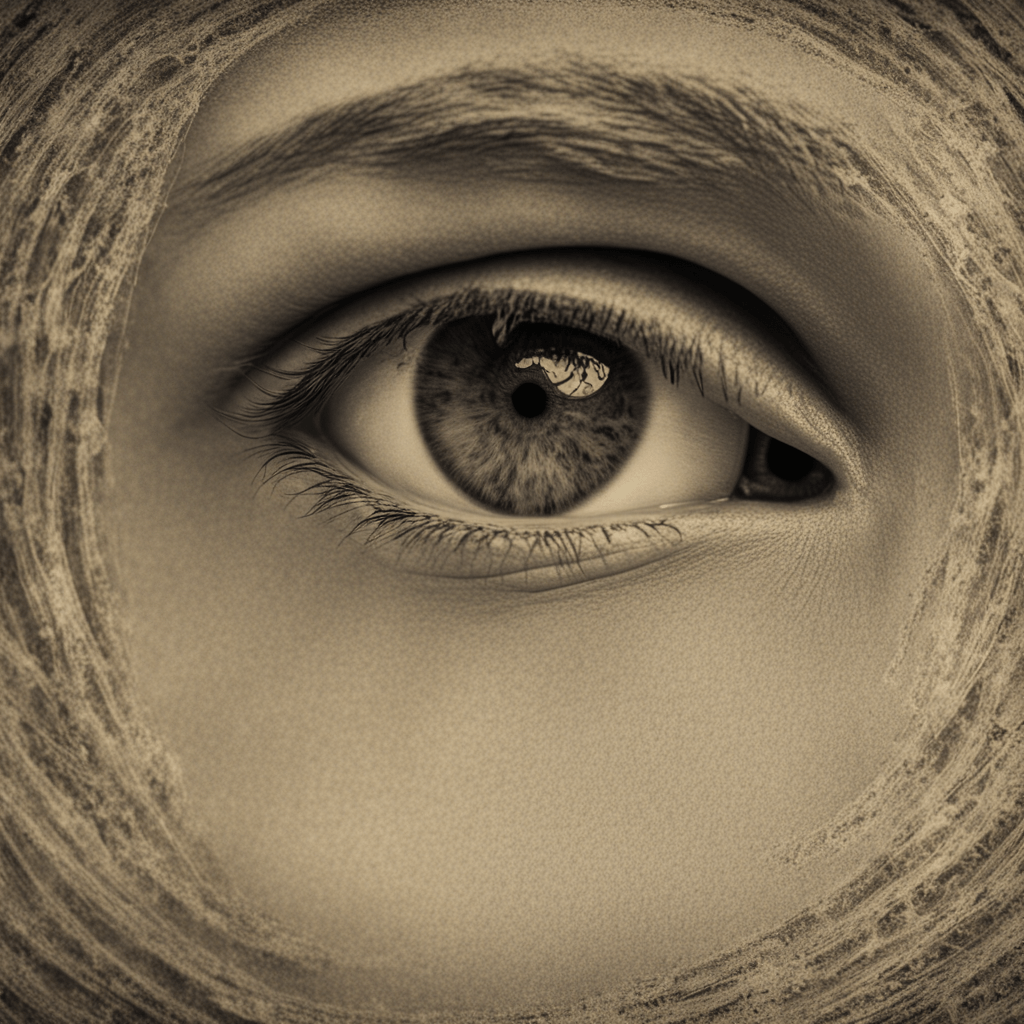
The Face of God and the End of Seeing

Most claim to have glimpsed the divine return with words that struggle to hold the weight of such an encounter. Many never return at all. To see the face of God and live is to step beyond the boundary where existence dissolves, where the self is unmade, and where reality, as it was once known, folds into itself like a dream dissolving at dawn.

Yet, what does it mean to see the face of God? Is it an experience of light so blinding that perception shatters? Is it a presence so vast that identity collapses? Or is it something even more elusive – something that was always here, hidden in the folds of ordinary awareness?

Some traditions warn against such an encounter, suggesting that no mortal can bear it and remain intact. Others speak of it as the ultimate reward, the final unveiling before absolute union. Yet, the paradox remains: how can one see the source of all things when the very act of seeing implies separation?

The face of God is neither a thing to be seen nor an object to be grasped. It is not found by looking outward or inward, for it is the very looking itself. The one who searches, the act of searching, and the sought-after presence all collapse into a singularity where distinctions dissolve. The moment of recognition is not a discovery but an obliteration – the end of every illusion that once passed for truth.

To live beyond such an encounter is to live without the weight of selfhood as it was once known. The personal dissolves, yet presence remains. There is nothing left to hold onto, yet nothing is missing. Some might call this madness. Others, liberation. But labels fall apart before the silent immensity of what remains.

Those who have seen and lived do not return with doctrine. They do not bring commandments carved into stone or revelations bound in pages. They return with an absence, a quiet, an emptiness more alive than any presence. And in that emptiness, a love beyond measure, a freedom beyond desire, and a knowing beyond thought.

Not all will understand. That, too, is part of the design.

Morgan O. Smith

Yinnergy Meditation/Neurofeedback, Spiritual Life Coaching & My Book, Bodhi in the Brain…Available Now!

https://linktr.ee/morganosmith

To See God’s Face

A Glimpse Beyond the Veil

The desire to see the face of God is often spoken of in spiritual traditions, symbolizing the quest to grasp the ultimate truth, touch the divine essence, and witness the Source from which all arises. Yet, many seekers find that the face of God remains elusive. This is not because God hides but because the totality of His expressions cannot be grasped by the human mind until one reaches a state of enlightenment.

What does it mean to see God’s face? Is it a literal vision, or does it represent the merging of self with the Divine? To catch a glimpse of God’s face is to touch the Infinite, even if momentarily. However, the expressions of God—the vastness of His being, the unfolding of all possibilities and manifestations—are incomprehensible to a mind still bound by duality. These expressions are ever-changing, reflecting the dynamic play of creation, destruction, and renewal. Only upon reaching enlightenment, where distinctions dissolve and all is seen as one, does the seeker begin to witness these myriad expressions in their fullness.

Until then, we stand at the threshold, experiencing occasional moments of clarity and divine presence. These glimpses pull us toward deeper understanding, but the full vision, the entire spectrum of God’s expressions, remains veiled. Enlightenment is not simply a state where we “see” more clearly; it is where the very notion of seer and seen dissolves. Only then do we realize that every expression, every nuance of the Divine face, is also our own. The act of witnessing merges into being and all of existence is recognized as the radiant outpouring of the One.

What does this mean for the seeker? The yearning to see the face of God should not be dismissed as a futile chase. It is a sacred impulse. It is the soul’s longing for its source. Yet, one must realize that enlightenment is not an end but a process of continuous unveiling. Until we become still enough, free from the limitations of ego and mind, the Divine will remain a distant and ever-moving horizon. And even upon that horizon, we will see not a singular expression but an infinite number of faces, each revealing another aspect of the cosmic dance.

In the face of God, we encounter not just creation but the unfathomable mystery behind all forms. Enlightenment is the point at which the seeking ends, not because we have seen all there is to see, but because we have become the very essence we sought.

Morgan O. Smith

Yinnergy Meditation, Spiritual Life Coaching & My Book, Bodhi in the Brain…Available Now!

https://linktr.ee/morganosmith

The Ultimate Love

The Force That Transcends All Boundaries

Love’s true essence is beyond comprehension, an omnipresent force so profound it erases the illusion of separation. It moves in dimensions beyond moral constructs, ideology, and identity. When fully realized, this love obliterates the ego and opens the heart so that even the most hardened souls cannot resist its call.

The human mind craves order, labelling people into categories—good, evil, victim, perpetrator. But ultimate love doesn’t comply with these distinctions. It meets each being at the core of their essence, beneath the conditioning and trauma that have shaped their actions. This kind of love can dismantle even the most fortified belief systems.

Imagine the inner world of someone consumed by hatred, caught in the web of fear, anger, and dogma. The walls around their heart seem impenetrable, yet ultimate love does not storm these walls; it dissolves them. It renders resistance futile by revealing what has been buried deep inside—a longing to belong, to be seen, and to be held in a space beyond judgment.

Ultimate love does not negotiate with the mind. It penetrates through the layers of identity, be it the identity of a saint or a sinner, revealing the same radiant essence beneath all masks. It leaves no room for pretense. This love cannot be owned, managed, or bargained with; it simply is.

Consider the most unimaginable scenario—a person shaped by the horrors of hatred, such as a Nazi, encountering the force of unconditional love. It is not a love that justifies or condones but one that sees beyond. That person’s history, belief system, and ideology would crumble under the weight of such grace. All that remains is a naked heart, laid bare in the presence of a force so magnificent it demands surrender. Not as punishment, but as liberation.

This love does not require forgiveness. It transcends it. Forgiveness suggests wrongdoing, but ultimate love offers a view where the need for forgiveness dissolves, revealing the underlying unity where all things are reconciled. When this love is encountered, tears flow not from shame, but from the relief of being released from the prison of the mind’s narratives.

This is the love that brings anyone, no matter how lost, to their knees—not out of fear, but in awe. It’s the moment when everything false melts away, and only the truth remains: the realization that there has never been separation, and love was the ground of all existence all along.

Ultimate love is not just the absence of hate; it is the luminous presence that absorbs even the darkest shadow, rendering it irrelevant. It is the undeniable force that brings every soul back to where it has always belonged—home.

Morgan O. Smith

Yinnergy Meditation, Spiritual Life Coaching & My Book, Bodhi in the Brain…Available Now!

https://linktr.ee/morganosmith

The God Beyond God

Transcending the Boundaries of Love

When speaking of God, we often resort to the most powerful language: love. We say, “God is love,” encapsulating the divine in a universally comprehensible and deeply comforting concept. But what if this notion, as profound as it seems, is merely a stepping stone to a deeper understanding? What if the God we believe to be love is but a veil, and beyond it lies a transcendence so vast and incomprehensible that it defies our very definitions?

In nonduality, we explore the essence of reality that transcends dualistic distinctions. Love, as we perceive it, is bound by duality—there is the lover and the beloved, the giver and the receiver. It is an experience of connection, an interplay between entities. But the ultimate reality, the God behind the God, dissolves these boundaries. It is an all-encompassing presence where subject and object merge, where the dance of love and beloved dissolves into pure being.

This transcendence challenges our deepest convictions. We find comfort in attributing qualities to God—love, mercy, justice—because it makes the divine relatable. Yet, these qualities are expressions within the realm of form. They are the waves on the surface of the ocean, while the God beyond God is the ocean itself, formless and infinite, embodying all potential yet transcending all manifestation.

To approach this understanding requires a journey beyond concepts, beyond the comforting boundaries of language and thought. It calls for a surrender to the unknown, a willingness to dissolve into the mystery. It is here, in the heart of this mystery, that we encounter the essence of nonduality. This is the ground of all being, where the distinctions between creator and creation, lover and beloved, God and self dissolve into a singular, ineffable presence.

In this state of transcendence, what we once called love is seen as a mere reflection of the boundless reality that underlies all existence. It is not a negation of love, but an expansion beyond it. It is an invitation to experience the divine not as an attribute, but as the groundless ground of all attributes. Here, we are not merely loved by God; we are immersed in the divine, where every breath, every heartbeat, every moment is a manifestation of the infinite.

To truly know God, then, is to venture beyond the familiar and the comforting. It is to embrace the paradox that the God we seek, the God we attribute with love, is but a shadow of the ultimate reality that transcends all attributes. This journey is not for the faint of heart; it demands the courage to let go of cherished beliefs and the humility to accept the limits of our understanding. But in this surrender, we find a freedom and a peace that surpasses all understanding, a union with the divine that is as boundless as it is profound.

Morgan O. Smith

Yinnergy Meditation, Spiritual Life Coaching & My Book, Bodhi in the Brain…Available Now!

https://linktr.ee/morganosmith

The Eternal Cycle of Sacrifice

Reflections on Life, Death, and Nourishment

In the vast, intricate dance of existence, every being participates in a cycle of giving and receiving that transcends mere survival. This process, a profound expression of the universe’s inherent generosity, manifests as a continuous flow of sacrifice. This concept is not about the literal intention of flora and fauna but rather illustrates the universe’s fundamental principle: to sustain life through a cycle of nurturing and rebirth.

The symbolism of Jesus as the sacrificial lamb embodies this universal truth, presenting a parable of ultimate love and self-offering. Jesus’ life and teachings exemplify the act of self-sacrifice for the greater good, mirroring the natural world’s cycles where every element plays a crucial role in nurturing another. Similarly, almonds and other natural entities embody this spirit of sacrifice; each seed, fruit, and offering itself to nourish others, perpetuating the cycle of life.


This perspective invites us to contemplate the interconnectedness of life and death, recognizing them not as opposites but as complementary forces. In this cycle, death is not an end but a transformation, a necessary passage for the continuation of life. We, too, are part of this eternal cycle, nourished by beings that came before us and, in turn, will nourish others.

Understanding this cycle encourages a profound respect for all forms of life and a recognition of our place within this grand scheme. It invites us to live with awareness and gratitude, acknowledging the sacrifices that sustain us and committing ourselves to live in a way that honours this sacred exchange.


This reflection on the cyclical nature of sacrifice and sustenance opens a pathway to deeper spiritual insights, reminding us of the interconnectedness of all things and the importance of living in harmony with this universal principle.

Morgan O. Smith

Yinnergy Meditation, Spiritual Life Coaching & My Book, Bodhi in the Brain…Available Now!

https://linktr.ee/morganosmith

Embracing the Essence of Humanity

A Reflection on Jesus’ Enlightenment

In a world often clouded by turmoil and uncertainty, the figure of Jesus stands as a beacon of what humanity can aspire to become. Regardless of one’s religious beliefs or lack thereof, there is an undeniable power in the ideals that Jesus represents. It’s not about the historical accuracy or the debates surrounding his existence; it’s about the essence of the individual he symbolizes – an essence that showcases humanity at its finest.

Jesus’ teachings, rooted in love, compassion, and empathy, are more than religious doctrines; they are universal values that transcend cultural and temporal boundaries. In these teachings, we find a guide to better ourselves and, by extension, the world around us. The message is simple yet profound: to cultivate an inner garden of love and understanding that spreads its seeds in every interaction.

The act of giving, as epitomized by Jesus, is not just a physical act of charity but a spiritual and emotional offering. To give up a piece of ourselves means to share our time, our understanding, and our compassion with others. This selflessness does not diminish us; instead, it enriches our lives, fills our hearts, and strengthens our communities.


In aspiring to be like Jesus or any figure that embodies the best of humanity, we challenge ourselves to grow beyond our limitations. It’s about striving to be the kind of person who acts with kindness, not for recognition or reward, but because it is inherently the right thing to do. It is about recognizing the interconnectedness of our lives and the impact of our actions on others.

In times of hardship, we often look for heroes and role models to guide us. Jesus’ enlightenment offers a path, not through miraculous feats, but through everyday acts of kindness and understanding. It’s in the small moments – a helping hand to a stranger, a listening ear to a friend in distress, a word of encouragement to someone losing hope – that the essence of what Jesus represents shines brightest.

As we reflect on the values epitomized by Jesus, let us commit to embodying these ideals in our daily lives. Let our actions be guided by love, our decisions by compassion, and our words by empathy. Let us be the ones who give, not just in material terms, but in the ways that truly matter – in understanding, in support, and love.


In doing so, we not only honour the legacy of figures like Jesus but also contribute to a world that is kinder, more compassionate, and more empathetic. It is in this effort that we find our greatest fulfillment and the true essence of what it means to be human.

Morgan O. Smith

Yinnergy Meditation, Spiritual Life Coaching & My Book, Bodhi in the Brain…Available Now!

https://linktr.ee/morganosmith