
I’ve been asked on occasion if I believe in the existence of Satan. My response is layered and nuanced. Philosophically, metaphorically, and symbolically, I acknowledge the concept of Satan, but I don’t subscribe to the personified version of Satan or a devil that is meant to be taken literally. To me, such a belief is irrational. Instead, Satan symbolizes everything evil or negative within the human experience.
Now, one might ask if I believe in God. My answer, while seemingly at the opposite extreme, follows a similar logic. From a literal standpoint, I don’t believe in God as a distinct entity. Rather, I assert that everything in existence is God, including myself, you, everyone, and everything else. This understanding stems from my awakening, which I claim to be a profound truth (though my interpretation of this truth is limited). In essence, God is the absolute—everything in and out of existence.
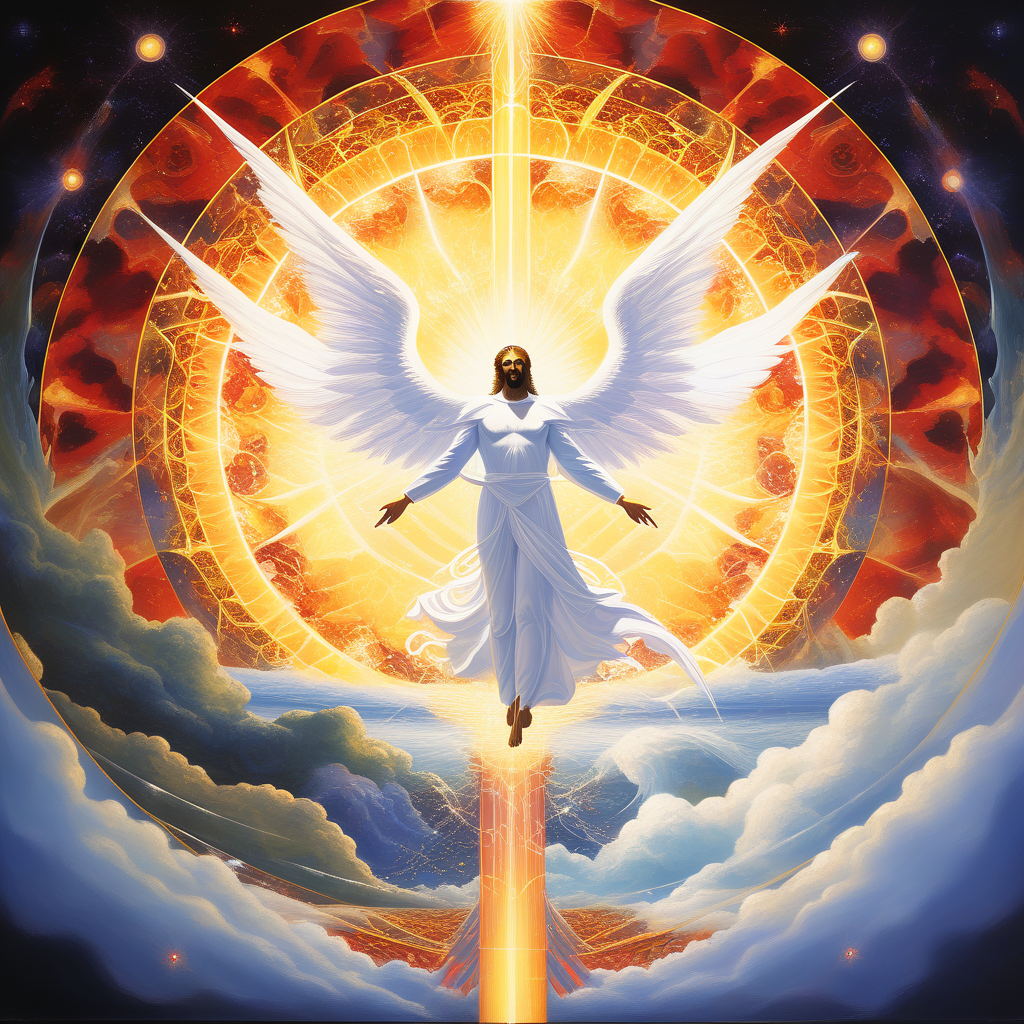
Religions like Christianity often refer to God as the alpha and the omega, the beginning and the end. If everything is God, then does this include Satan? My answer is unequivocally yes. According to certain texts, God created Satan, formerly known as Lucifer, who was God’s perfect angel. Some might argue that God created Lucifer, but Lucifer isn’t God. To this, I pose a series of questions.
If God created Lucifer, what did God make Lucifer out of? You might say pure light. But what is light made of? Oscillating electric and magnetic fields. Are these fields the alpha and the omega? No. So, what are oscillating electric and magnetic fields made of? Electromagnetic waves. Are electromagnetic waves the alpha and the omega? Again, no. What are electromagnetic waves made from? We can trace this down to the concept of emergent space-time.
Is emergent space-time the alpha and the omega, the beginning and the end? If we consider God as the absolute, then it must be. If emergent space-time is equivalent to God, then at its essence, Lucifer is made out of God. Even if you adhere to the idea that God made Lucifer ex nihilo (out of nothing), and if God is absolute, then this must include nothing (preceding emergent space-time itself). Thus, God encompasses both everything and nothing.
In this holistic view, the existence of Satan and the nature of God merge into a singular, all-encompassing reality. This perspective encourages us to transcend literal interpretations and embrace a deeper, more integrated understanding of existence, where all dichotomies dissolve into the absolute.
Morgan O. Smith
Yinnergy Meditation, Spiritual Life Coaching & My Book, Bodhi in the Brain…Available Now!


 Morgan O. Smith