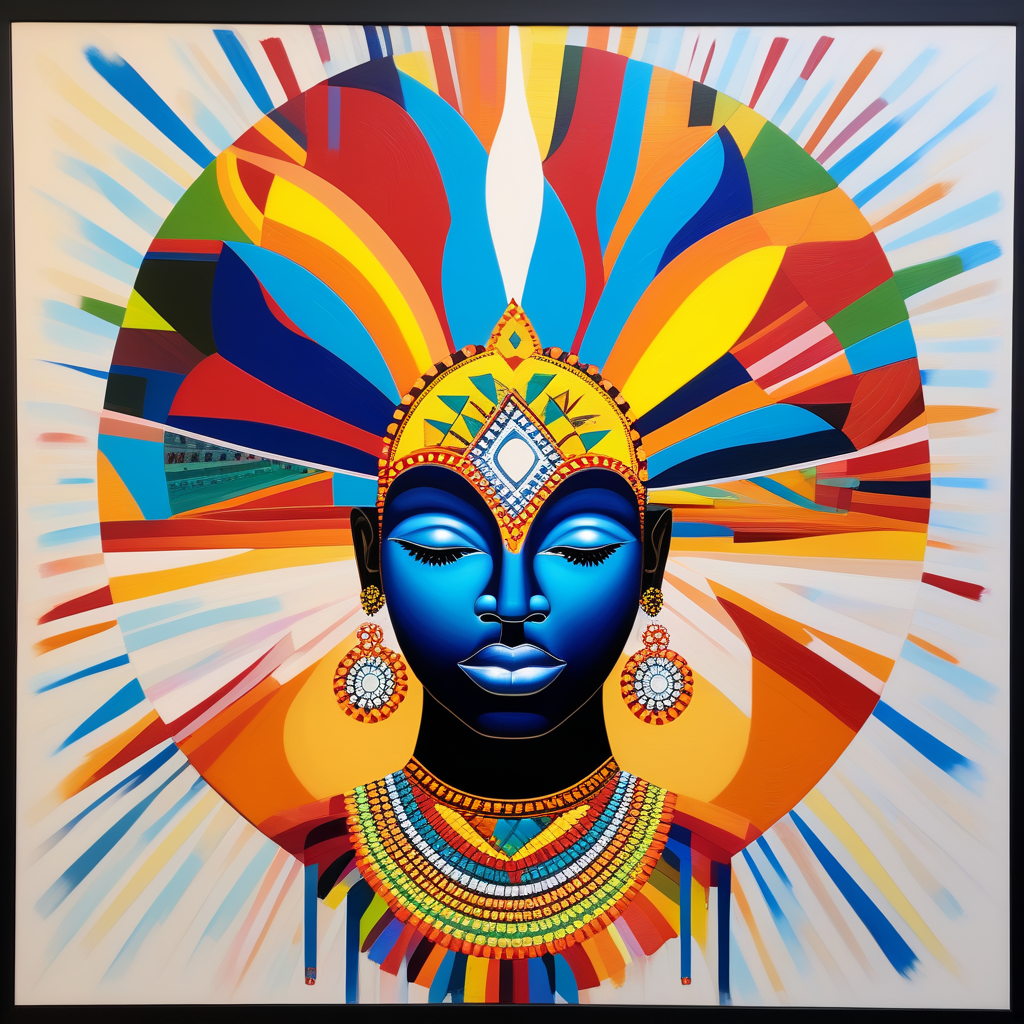
The Untranslatable Truth

Every attempt to describe ultimate reality begins from within limitation. Even the most awakened consciousness cannot hold the whole of what is; it can only reflect fragments of an infinite field through the prism of its own development. The absolute may be directly experienced, yet interpretation remains tethered to the mind’s evolution. Awareness can pierce the veil, but the translation of that piercing, the language, the symbols, the meaning, unfolds through the structures of human understanding.

At the highest stages of psychological and spiritual growth, perception becomes increasingly transparent to the Real. Layers of distortion thin, and the boundaries between observer and observed soften into mutual recognition. The self no longer interprets reality as something external; it feels itself as the very movement of interpretation itself. Yet even here, beyond dualistic knowing, the infinite continues to exceed all possible comprehension. To see truth is one thing; to speak it is another. The moment it is spoken, the ineffable has already been reduced.

Every level of consciousness constructs a version of the world consistent with its own depth of awareness. Mythic minds imagine gods shaping destiny; rational minds uncover laws of physics; integral minds perceive interwoven systems of meaning. Each reveals something essential, yet none are complete. Reality is not a single revelation but the total field that contains all revelations; each illusion, each breakthrough, each mistaken certainty. Maya is not an obstacle but a necessary expression of what is. To awaken does not mean to destroy illusion, but to recognize that illusion itself is included in the real.

The absolute is not somewhere beyond the dream; it is the dream and the dreamer, the veil and what shines through it. Every stage, every interpretation, every attempt to name the nameless belongs to it. Truth remains forever ungraspable, yet it breathes through every grasp. To live this is to rest in a humility that knows: the closer one moves toward reality as it is, the more radiant its mystery becomes.

Morgan O. Smith

Get Your Free Copy of My Book, Bodhi in the Brain!

https://subscribepage.io/oTSZQu

The Illusion of Maya

Seeing Beyond the Show

Everything we perceive—the people, places, and events around us—is, at its core, a show. This is not a dismissal of life’s value but an invitation to explore its deeper essence. What we call “reality” is Maya, a veil of illusion that covers the truth. Maya is the great play of forms, the endless dance of opposites, and the theatre of duality where all things appear separate.

Yet, behind the scenes of this elaborate show lies something far more profound. Maya is the stage, but consciousness is the ever-present witness. The mind, with all its perceptions, attachments, and desires, keeps us captivated by the performance. We become so engrossed in the unfolding drama of our lives that we forget we are not the characters, but the awareness watching it all unfold.

Understanding Maya isn’t about rejecting the world or treating life as insignificant. Rather, it’s about seeing through the illusion. The key is not to escape Maya but to recognize it for what it is—a fleeting projection of the eternal. Once the illusion is seen for what it truly is, everything shifts. Life no longer feels like a weight to carry or a puzzle to solve. It becomes a dance, a cosmic play where each movement, no matter how dramatic, is infused with a deeper stillness.

Consider the waves of the ocean. They rise and fall, each one unique, yet they are never separate from the ocean itself. The wave may take shape, crash, and disappear, but the ocean remains constant. So, too, with Maya—forms come and go, experiences rise and fall, but consciousness remains unchanging, ever-present, and infinite.

To see beyond the illusion of Maya is to live with a lightness of being, recognizing that while everything is part of the grand show, none of it defines the true self. The self that watches, silently aware, is the only constant. When this is realized, life becomes a paradoxical blend of deep engagement and effortless detachment. You play your role in the world, knowing full well that it is all a divine drama, yet you remain untouched by its outcomes.

Maya invites us to enjoy the show while remembering we are not bound by it. Behind every illusion lies the vastness of truth, waiting to be uncovered by the silent observer within.

Morgan O. Smith

Yinnergy Meditation, Spiritual Life Coaching & My Book, Bodhi in the Brain…Available Now!

https://linktr.ee/morganosmith

The Paradox of Enlightenment Amidst Adversity

In the profound journey toward enlightenment, there exists a nuanced understanding of the interplay between our spiritual essence and the tangible world. This exploration delves into the realm where the ultimate truths of nonduality meet the undeniable realities of our human experience. It’s a contemplation of how one navigates the vicissitudes of life, even when perched at the pinnacle of spiritual awakening.

#### The Unshakable Core vs. The Vulnerable Shell


At the heart of spiritual enlightenment lies the realization of the self’s immutable nature. This understanding, deeply rooted in Eastern philosophy, reveals that at the ultimate level, the true self transcends the fluctuations of the physical, emotional, and psychological realms. Yet, this does not render us impervious to the tangible forces that pervade our existence. The enlightened being, while recognizing the indestructible nature of their essence, also acknowledges the fragility of their human condition.

#### The Duality Within Nonduality

The path of spiritual awakening brings to light the coexistence of seemingly contradictory truths. On one hand, the enlightened individual perceives the illusionary nature of Maya, the cosmic dance of creation and destruction that engulfs the material world. On the other hand, they remain anchored in the reality of their human experience, susceptible to the myriad forms of harm that life can present.

This duality within nonduality underscores vital wisdom: enlightenment does not detach one from the human experience but deepens the engagement with it, fostering a profound understanding of the interconnectedness of all existence. The enlightened being moves through the world with a heightened awareness of the impermanence of the physical form and the eternal nature of the self.

#### The Paradox of Perception

Consider the hypothetical scenario of an individual attaining Nirvana amidst the turmoil of a war zone. At the moment of achieving this transcendent state, the exterior chaos becomes inconsequential, and yet, the spectrum of human experience is felt more deeply than ever. The house may collapse, and the physical body may perish, but the essence of the being remains untouched, observing the unfolding drama with equanimity.

This paradox of perception challenges us to reevaluate our understanding of harm and safety, pleasure and pain, and life and death. It invites us to see beyond the surface level of existence and recognize the deeper currents that shape our journey through the world.

#### Embracing the Wholeness of Experience

The essence of this exploration is not to advocate for a denial of the physical or emotional challenges we face but to illuminate the potential for profound growth and understanding within these experiences. The spiritual journey encompasses the entirety of our being, inviting us to embrace the wholeness of our experience, with all its contradictions and complexities.

In recognizing the vulnerabilities of our human existence while holding firm to the knowledge of our ultimate nature, we find a path that is rich with meaning, resilience, and an unshakeable peace.

As we navigate the complexities of life, let us remember the profound wisdom that lies in the balance between our spiritual essence and our human experience, guiding us toward a deeper understanding of the true nature of existence.

Morgan O. Smith

Yinnergy Meditation, Spiritual Life Coaching & My Book, Bodhi in the Brain…Available Now!

https://linktr.ee/morganosmith

Maya Unveiled

Understanding the Illusion in Every Gaze

In the intricate dance of life, where perceptions and reality often intertwine, lies the ancient concept of Maya. Rooted deeply in Eastern philosophy, Maya is an idea and an expansive realm of understanding. It invites us to question: What is the true essence of what we perceive? How does the veil of illusion colour our view of the world?

**The Mirage of Perception**

Each moment, we are surrounded by a myriad of stimuli. As interpreters, our senses craft a version of reality that we accept as truth. But this truth is subjective, filtered through the lens of personal experiences, beliefs, and biases. In this way, the world we perceive is not an absolute, but a personal construct. Just as a painter brings forth a landscape from his imagination onto the canvas, we too paint our realities, often unaware that the brush is in our hands.

**The Nature of Maya in Daily Life**

Maya is omnipresent, influencing every aspect of our existence. It shapes our relationships, our joys, and our sorrows. Even our self-identity is a product of this illusion, a constructed narrative we cling to. The roles we play, the labels we adopt, are but temporary garments worn by the eternal self.


**Transcending the Illusion**

In the pursuit of spiritual awakening, recognizing the presence of Maya is a pivotal step. It is in understanding that what we perceive as concrete may indeed be ephemeral. Meditation and mindfulness practices serve as gateways to this realization. As we dive deeper into the realms of introspection, we begin to distinguish the impermanent from the eternal, the illusory from the real.

**Integrating Maya into Enlightenment**

Embracing Maya does not mean rejecting the world. Instead, it involves seeing through the veil, and acknowledging the illusion while engaging with the world. It is about finding harmony between the spiritual and the material, understanding that even in illusion, there is a purpose and a lesson.

**A Journey Beyond the Visual**

Our journey of enlightenment is not about negating our experiences but about transcending their limitations. It involves expanding our consciousness beyond the confines of personal perception, into a space where unity and diversity coexist, where the duality of self and other dissolves.


**Conclusion**

Maya, often misunderstood, is not a barrier but a bridge. A bridge that leads us to question, to seek, and ultimately to understand the profound nature of existence. In every distorted view lies a hidden truth, waiting to be uncovered by the earnest seeker.

Morgan O. Smith

Yinnergy Meditation, Spiritual Life Coaching & My Book, Bodhi in the Brain…Available Now!

https://linktr.ee/morganosmith

Burn Bodhi Tree Burn

Dispelling Illusions in the Quest for Enlightenment

In a provocative turn of thought, the recent symbolic burning of the Bodhi tree, a revered figure in Buddhist lore as the tree under which Buddha attained enlightenment, stirs a profound metaphysical debate. This act, far from being a mere iconoclastic gesture, serves as a powerful metaphor for a deeper philosophical introspection into the nature of enlightenment and reality.

The Bodhi tree, in this context, is not just a physical entity but a symbol of the very concept of enlightenment. Its burning signifies the rejection of material and conceptual attachments, even those as sacred as the Bodhi tree and the Buddha himself. This metaphorical act challenges the adherents of Buddhism and spiritual seekers to question the very foundation of their beliefs.


The argument posits that both the Bodhi tree and the Buddha are manifestations within ‘Maya’, the illusory world as described in various Eastern philosophies. According to this view, the physical and the conceptual are mere distractions from the true nature of reality. The burning of the Bodhi tree symbolizes the destruction of these illusions, urging individuals to look beyond physical symbols and established doctrines in their spiritual journey.

The concept of enlightenment, as traditionally understood, is also questioned. This perspective argues that any preconceived notion of enlightenment is not enlightenment itself. True enlightenment, as per this radical view, is beyond concepts and intellectual constructs. It is a state of being that transcends the conventional understanding of spiritual attainment.


Thus, the metaphor of burning the Bodhi tree and the figure beneath it calls for a complete relinquishment of all notions and concepts related to enlightenment. In doing so, it suggests that a state of ‘true enlightenment’ can be realized. This state is described as the only reality, achievable only when one abandons all preconceived ideas and embarks on a journey devoid of attachment to any symbol or doctrine.

The provocative nature of this idea lies in its challenge to established beliefs and practices. It invites a reevaluation of what constitutes the path to enlightenment, urging a detachment from even the most sacred of symbols and figures. This perspective is not a call to physical action but a metaphorical invitation to burn down the internal ‘Bodhi trees’ – the deeply ingrained beliefs and concepts that might hinder the realization of true enlightenment.

Morgan O. Smith

Yinnergy Meditation, Spiritual Life Coaching & My Book, Bodhi in the Brain…Available Now!

https://linktr.ee/morganosmith


Unveiling Reality

The Journey from Illusion to Truth

In our journey through life, we often come across what we call “illusions.” These are perceptions or beliefs that appear to be real but are not. However, the most profound realization is that these illusions are not mere deceptions; they are, in fact, Truth in disguise.

### The Nature of Illusion

An illusion, by its very nature, is something that deceives the senses or mind. It’s like a mirage in the desert – you see water, but as you approach, it vanishes, leaving you in the stark reality of the desert heat. Similarly, in life, we encounter situations that seem to be one thing but turn out to be another.

But here’s where it gets interesting. These illusions are not just errors or misperceptions. They are gateways to a deeper understanding of reality. When we delve into the nature of an illusion, we begin to uncover the layers of truth that it conceals.

### The Grand Illusion

The concept of the “Grand Illusion” takes this idea a step further. It suggests that our entire perception of reality might be an illusion. This is a theme explored in various philosophical and spiritual traditions. In Hinduism, for instance, Maya is the illusion that veils the true nature of the universe. In Western philosophy, Plato’s allegory of the cave talks about shadows on a wall that we take for reality.

The Grand Illusion is not just a deception; it is a representation of the ultimate truth, albeit in a form that we can’t immediately recognize. This truth is not something that can be easily explained or understood through conventional means. It is something that must be experienced and felt.

### Unveiling the Truth

So, how do we unveil the truth hidden behind these illusions? It begins with questioning our perceptions and beliefs. We need to look beyond what is immediately visible and ask ourselves what lies beneath. This process of inquiry and introspection leads us to a more profound understanding of ourselves and the world around us.

As we peel back the layers of illusion, we start to see the truth in its purest form. This truth might not be comfortable or easy to accept, but it is liberating. It frees us from the confines of our limited perceptions and opens us up to a universe of possibilities.


### Conclusion

The journey from illusion to truth is not a straightforward path. It’s a winding road filled with challenges and revelations. But it is a journey worth taking. For in understanding the Grand Illusion, we come closer to understanding the true nature of our existence and the universe we inhabit.

Morgan O. Smith

Yinnergy Meditation, Spiritual Life Coaching & My Book, Bodhi in the Brain…Available Now!

https://linktr.ee/morganosmith

Brahman as the Ultimate Reality

In the realm of philosophical and spiritual inquiry, the concept of Brahman stands as a profound cornerstone, especially within the nondual traditions of Eastern philosophy. Brahman, as perceived through this lens, is not just an abstract concept but the very essence of reality itself—a reality that transcends the ordinary experiences of separation and duality which dominate our everyday lives.

At the heart of this understanding is the recognition that there is a fundamental oneness underlying all existence. This oneness, Brahman, is the eternal, unchanging truth that pervades every aspect of the universe. It’s an understanding that challenges the notion of individuality, as it posits that the deepest essence of our being, the Atman, is not separate from Brahman. In this view, the individual self and the universal self are not two but one.


This realization brings us to the experience of Sat-Chit-Ananda. These Sanskrit words translate to ‘existence, consciousness, and bliss.’ When one recognizes that their true nature is Brahman, they experience an unshakeable existence that is beyond birth and death, a consciousness that is vast and all-encompassing, and a bliss that transcends all worldly pleasures and pains.

The journey to this realization is deeply personal and transformative. It involves peeling away the layers of illusion or Maya that cause us to see ourselves as separate from the rest of existence. Through various practices such as meditation, self-inquiry, and devotion, one can gradually come to the direct experience of this truth.


The implications of this realization are vast. In seeing all beings and things as expressions of the same ultimate reality, our approach to life, our values, and our interactions with others undergo a profound shift. Compassion, empathy, and a sense of connectedness naturally arise when one sees themselves in others and others in themselves.

In conclusion, the concept of Brahman as the ultimate reality invites us to look beyond the surface of our experiences and question the very nature of existence. It’s a journey that leads us not only to deep philosophical understanding but also to a transformation of our entire being.

Morgan O. Smith

Yinnergy Meditation, Spiritual Life Coaching & My Book, Bodhi in the Brain…Available Now!

https://linktr.ee/morganosmith


The Tapestry of Reality

Synchronicity and the Illusion of Separateness

In the dance of existence, our perceptions often lead us to believe in the solidity and separateness of things. The term “Maya,” derived from ancient philosophical traditions, refers to the illusory nature of the world. It’s a veil that covers the true essence of reality, suggesting that what we experience is not exactly what it seems.

The concept of “Atman,” on the other hand, points to a deeper truth. It is the individual soul, the pure, unchanging self within each person that is part of a universal soul, Brahman. The realization of Atman within oneself is to acknowledge that one is not just a passive observer of reality but an active creator of it. The synchronicities we encounter, those meaningful coincidences that seem to defy mere chance, are glimpses into this profound interconnectedness of all things.

Meditation serves as a pathway to peel back the layers of Maya, to expand our consciousness from the narrow confines of the ego and to experience the oneness with Brahman. Enlightenment, the pinnacle of spiritual realization, is the recognition that one is not separate from the universe but is the universe, participating in its unfolding as both creator and creation.

In this state, everything occurs simultaneously, and the distinctions between actor, action, and acted upon blur. You are the painter and the canvas, the dancer and the dance, the dreamer and the dream. Your everyday reality is a play of consciousness, a symphony where the whole orchestrates every part.

But the ego is not equipped to handle the enormity of this realization; hence, we experience reality in fragments, in synchronicities that hint at a larger, more intricate design. These moments are invitations to look deeper, to question, and to ultimately discover that you are, in essence, everything you perceive—boundless and infinite.

In the end, perhaps all of existence is an elaborate tapestry woven from the threads of nothingness, and in every stitch, there’s a story of creation and the creator, entwined in an eternal dance.

Morgan O.  Smith

Yinnergy Meditation & My Book, Bodhi in the Brain…Available Now!

https://linktr.ee/morganosmith

Beyond Maya

A Profound Exploration of Reality

In the vast tapestry of Hindu philosophy, the concept of ‘Maya’ often emerges as an enigma, enveloping our perception of reality. But what if we were to assert that * everything*, both within and beyond our comprehension, is shrouded in Maya? How would such a revelation change our understanding of the universe and our place within it?

### The Essence of Maya

At its core, Maya is frequently understood as “illusion” or “unreality.” It’s the veil that obscures our true nature and the eternal truth of the universe. The things we perceive, the emotions we feel, and the thoughts that cloud our minds, all dance within the confines of this illusion. Maya convinces us that the temporal is eternal, that the superficial is profound, and that the ephemeral is everlasting.

### Expanding the Bounds

When we claim that everything, in and out of existence, is Maya, we’re delving deeper into an intriguing thought. This suggests that even our most profound realizations, spiritual epiphanies, and the concepts we use to grasp the ineffable are still part of the illusion. It’s not just the tangible, but the intangible; not just the known, but the unknown.

### The Paradox of Understanding

If everything is Maya, then the realization of this truth is also Maya. This presents a paradox: how can one truly transcend the illusion when the very tools and insights we use are part of the illusion itself? This enigmatic thought prompts us to question the very nature of enlightenment and the path to transcendence.

### Embracing the Illusion

Rather than feeling disheartened by the all-encompassing nature of Maya, one can instead embrace it as a transformative understanding. Recognizing that even our loftiest thoughts are touched by Maya can lead to a profound humility. It’s a call to constant introspection, a reminder that there’s always a deeper layer of understanding awaiting us.

### Beyond the Beyond

Perhaps, beyond the layers of Maya, there’s a state of pure consciousness, untouched and unblemished. It’s a state where distinctions fade, where the observer and the observed merge into one. While our journey is fraught with illusions, every step, every realization, brings us closer to this ultimate truth.

In conclusion, the assertion that everything is Maya isn’t a nihilistic statement but a profound recognition of the intricacies of existence. It invites us to look beyond the apparent, challenge our convictions, and seek a deeper, more encompassing truth. It’s a call to journey inward, where the real voyage begins.

Morgan O.  Smith

Yinnergy Meditation & My Book, Bodhi in the Brain…Available Now!

https://linktr.ee/morganosmith

Absolute Monism

Unraveling the Tapestry of Oneness

The vast universe, with its manifold entities and infinite complexities, often bewilders human minds. Philosophers and thinkers from time immemorial have grappled with questions about the nature of existence and the ultimate reality. One profound idea that surfaces recurrently is that of Absolute Monism: the belief that beneath the apparent multiplicity, there is but one undivided reality. Let’s take a deeper look into this captivating worldview.

### A Universe from One Thread


At the heart of Absolute Monism lies the assertion that all differences and diversities we perceive are mere illusions. This assertion may seem contradictory to our daily experiences. After all, isn’t the world teeming with diversity?

Yet, this is where Eastern and Western philosophies converge. Ancient Hindu scriptures speak of *Brahman* as the ultimate, undifferentiated reality. The Hindu philosophy of Advaita Vedanta encapsulates this belief by stating that the world’s multiplicity, driven by *Maya*, is an illusion. Meanwhile, in the West, the philosopher Spinoza proposed that God and Nature are two names for the same reality, implying a singular, infinite substance. These ideas, separated by continents, come together to champion a singular reality beneath the apparent diversity.

### Seeing Beyond the Illusion

The concept of illusion is integral to understanding monism. In life, appearances can often be deceiving. A mirage in the desert, a rainbow after the rain, and even our reflection in the water are all illusions. If such simple things can deceive our senses, might it be possible that our entire perception of diverse reality is similarly mistaken?

*Mysticism* has been one avenue through which individuals across cultures have described experiences consistent with Absolute Monism. The interconnectedness of all things, a theme found in the tapestry of monism, speaks to the heart, nudging us to see beyond divisions and differences.

### Implications for Modern Times

If Absolute Monism holds that all is one, then what does this mean for us in the present age, surrounded by divisive forces and fragmented views?

Firstly, on an ethical plane, it implies that harm inflicted upon one is harm to the entirety. This perspective could drastically alter how we approach interpersonal relationships, environmental concerns, and global crises. If we truly internalize this philosophy, then every act of kindness and harm has far-reaching consequences.

Secondly, it brings to the fore the importance of self-realization. In many monistic traditions, the realization of this singular truth is the end goal, bringing about an end to suffering.

Lastly, it sparks curiosity about the nature of our universe. With advancements in modern physics and cosmology, we find theories that echo monistic thoughts. The Big Bang, for instance, suggests that everything we see, touch, and experience emerges from a singular point.

### Embracing Diversity within Unity

Absolute Monism does not negate the value of diversity. Rather, it calls for a deeper understanding. Imagine a tapestry. Up close, one can see the myriad of colours, textures, and patterns. But from a distance, it’s one cohesive artwork. Similarly, monism asks us to appreciate the individual threads while recognizing the grand design.

In an age teeming with division, perhaps the idea of Absolute Monism can be the bridge that reminds us of our interconnectedness. As we stand at the cusp of profound global challenges, this ancient philosophy might just hold the key to a unified, harmonious future.


Embracing the ideas of Absolute Monism requires introspection and openness. Whether you fully resonate with its tenets or not, it undoubtedly serves as a beacon, guiding us toward unity, understanding, and profound interconnectedness.

Morgan O. Smith

Yinnergy Meditation & My Book, Bodhi in the Brain…Available Now!

https://linktr.ee/morganosmith