
In the realm of philosophical thought, there exists a profound paradox that has puzzled thinkers for centuries: the concept that the ground of all being is, in fact, groundless. This idea challenges our fundamental understanding of existence, suggesting that the foundation upon which reality is built is devoid of any intrinsic substance or essence.
At first glance, this notion appears contradictory. How can the ground of all being, the fundamental basis of everything that exists, be groundless? To unravel this enigma, we must delve into the philosophical and metaphysical discussions that surround the nature of existence and reality.
The idea of a ‘groundless ground’ originates from existential and metaphysical debates. Philosophers like Heidegger and Sartre pondered the absence of an inherent essence in existence. This absence implies that existence precedes essence, meaning things exist first and their meanings or purposes are secondary, shaped by external factors rather than intrinsic qualities.
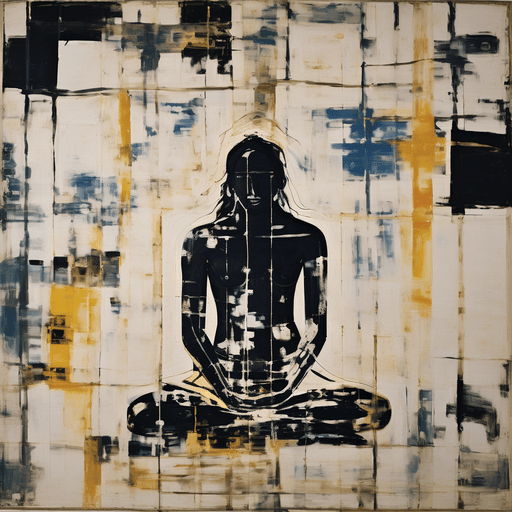
This perspective shifts the way we perceive reality. Instead of viewing the universe and everything in it as having a predetermined purpose or essence, we begin to see existence as a blank canvas. Our perceptions, experiences, and the meanings we assign to things shape this canvas. In this sense, the ‘ground’ of all being is not a pre-established foundation but a dynamic, ever-changing tapestry of experiences and interpretations.
Moreover, this idea resonates with quantum physics, where the most fundamental levels of matter behave in ways that defy traditional laws of physics. Particles exist in states of potentiality, their positions and velocities are determined only when observed. This uncertainty at the heart of matter echoes the philosophical concept of a groundless ground, suggesting that at the most fundamental level, the universe itself may not rest on any fixed foundation.
The implications of a groundless ground are both liberating and daunting. It frees us from the constraints of preordained meanings and purposes, allowing us to shape our existence. However, it also places the responsibility of finding or creating meaning squarely on our shoulders.
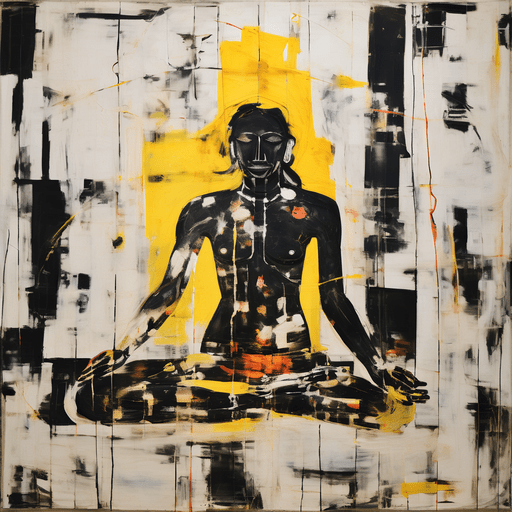
In conclusion, the concept that the ground of all being is groundless invites us to explore the depths of our existence. It challenges us to seek meaning and purpose not in some inherent essence but in the experiences and interpretations that shape our reality. This exploration is not just a philosophical exercise; it is a journey into the heart of what it means to be.
Morgan O. Smith
Yinnergy Meditation, Spiritual Life Coaching & My Book, Bodhi in the Brain…Available Now!

 Morgan O. Smith