Author, Philosopher, Spiritual Teacher, A Lead Facilitator at Sacred Media's Integral Mastery Academy, Founder of Yinnergy Meditation/Neurofeedback, Bodhi Mental Care & Wellness, Co-founder of KeMor Centre for Innovative Development
A Featured Story in Brainz Magazine & Insights on Spiritual Awakening
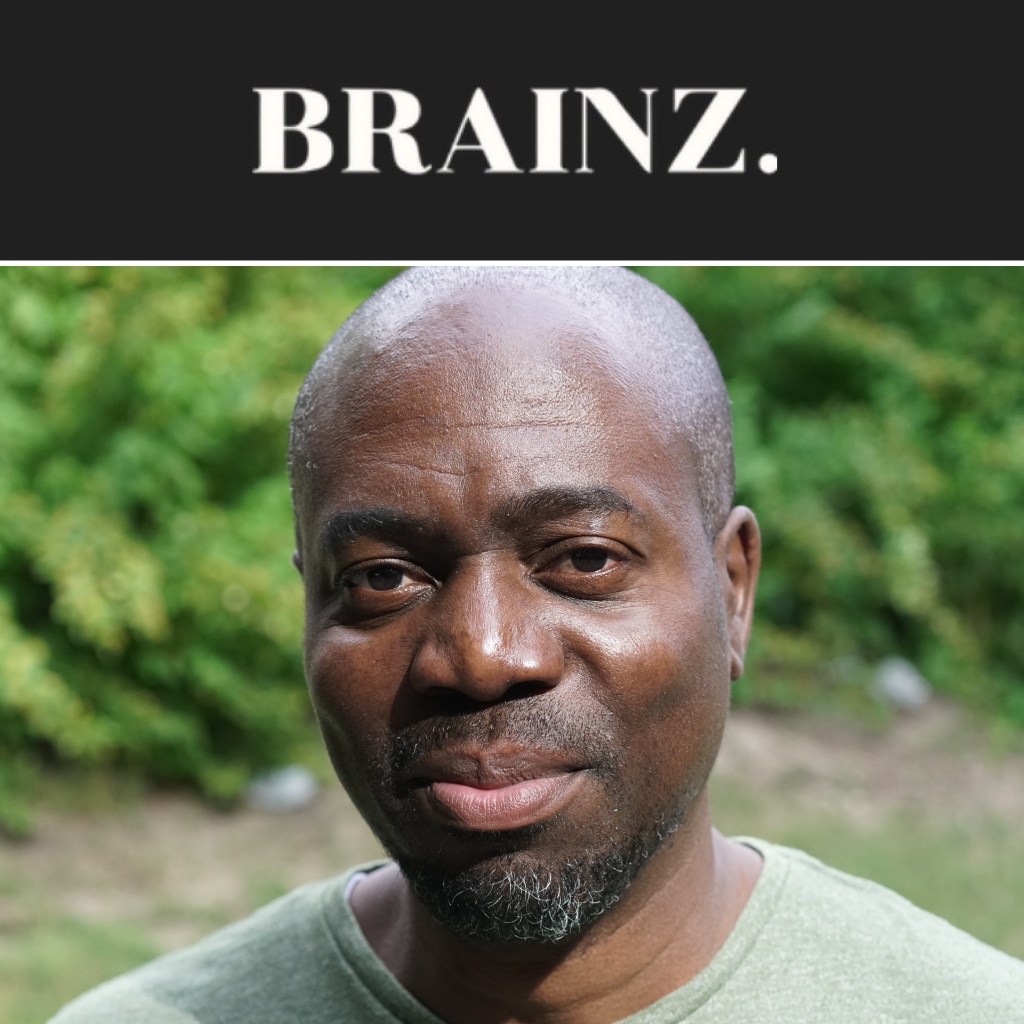
I am honoured and thrilled to share that I’m on the cover of Brainz Magazine this week! In my exclusive interview, titled “Morgan O. Smith’s Awakening Journey – How Yinnergy Meditation Was Born”, I discuss the personal path that led me to create Yinnergy Meditation. This journey has been transformative, from my own awakening experiences to the development of Yinnergy, a meditation program designed to help others experience powerful shifts in awareness, resilience, and self-discovery. You can read the full interview here: Morgan O. Smith’s Awakening Journey – How Yinnergy Meditation Was Born.
I also recently joined Gareth Duignam on The Endless Possibilities Podcast for Part 2 of our conversation on spiritual awakening. In this episode, we dive into the stages of spiritual awakening and what each stage entails, from initial glimpses of higher awareness to the profound transformations that occur as one integrates these experiences. We also discuss how Yinnergy’s unique brainwave technology is designed to support these stages, helping individuals move through each phase with stability and clarity.
Exploring Nonduality: My Latest Brainz Magazine Article
In addition to my cover feature, I’m excited to share that my second article with Brainz Magazine, titled “What Is Nonduality and Why Is It So Misunderstood?”, is now live. Nonduality is a concept that resonates deeply within spiritual traditions and personal awakening journeys. However, it’s often misunderstood as simply a philosophical idea or something intangible. In this article, I explore nonduality as an experiential truth—one that reveals the fundamental unity underlying all things.
Morgan O. Smith
Yinnergy Meditation, Spiritual Life Coaching & My Book, Bodhi in the Brain…Available Now!
Becoming an Executive Contributor for Brainz Magazine!
Hello everyone,
I’m thrilled to share some exciting news! This month, I officially joined Brainz Magazine as an Executive Contributor. Over the coming year, I’ll be exploring some of my most cherished topics: spiritual awakening, nonduality, meditation, and much more. This is an incredible opportunity to expand our reach, and I’m grateful to have each of you with me on this journey.
My first article with Brainz Magazine, “7 Key Signs You’re Going Through a Spiritual Awakening”, is now live! In this piece, I dive into the profound transformations that come when consciousness begins to expand. Whether you’re at the start of your spiritual journey or well along the path, this article offers reflections that might resonate with your own experiences.
Some signs explored include:
– A deepened connection to everything around you
– Shifts in personal beliefs and values
– Heightened sensitivity to energy and emotions
– And more…
Take a look at the article to see if these signs align with your journey. Sharing these insights is a dream come true, and I’m grateful for your support in making it possible.
Also, Check Out My Guest Appearance on the Endless Possibilities Podcast!
I’m also excited to share my recent guest appearance on the Endless Possibilities Podcast with host Gareth Duignam! We dive deep into spirituality, consciousness, and much more. You can watch it now on YouTube and join us in exploring the boundless realms of possibility.
Thank You for Your Support
Thank you for your presence on this journey. Your feedback and commitment inspire me daily, and I’m excited to bring new perspectives to a broader audience through Brainz Magazine.
Stay tuned for more updates as I continue to share insights on spiritual growth, self-discovery, and the path to awakening.
With gratitude,
Morgan O. Smith
Yinnergy Meditation, Spiritual Life Coaching & My Book, Bodhi in the Brain…Available Now!
Consider the heartbeat: a steady, rhythmic pulse that carries the force of life through every cell of your being. Within each beat lies an unseen multitude, a vast array of thoughts—fleeting, overlapping, and often unnoticed. This single moment, this solitary beat contains within it the energy of a thousand thoughts, each connected to the next, creating the internal world we navigate daily.
Thoughts rush like a river, surging with desires, fears, memories, and plans. Yet, they are barely registered before the next wave crashes. The heartbeat, however, remains a constant companion, reminding us that a profound stillness exists beneath the surface of our scattered minds.
It is within this space—the pause between heartbeats—that clarity can emerge. As our awareness deepens, we recognize that the mind’s racing thoughts are but ripples on the ocean of our being. We are not the thoughts themselves but the consciousness that observes them. By aligning with the heartbeat rather than the noise of the mind, we begin to see beyond the clutter of mental activity, into the spacious awareness where thoughts dissolve and presence shines.
A single heartbeat holds the potential for transformation, for within that beat is the opportunity to disengage from the frantic movement of thought and return to the grounded essence of who we are. Thought is not the enemy, but its sheer volume often drowns out the wisdom that whispers between the beats.
This shift, from identifying with thought to residing in awareness, is subtle but profound. It reveals that while a thousand thoughts may pass through our minds, they are transient. The heartbeat, however, is the rhythm of life itself, a steady pulse guiding us toward presence. Here lies a truth often overlooked: life happens not in the storm of thoughts, but in the quiet between them.
The next time your mind feels overwhelmed, listen to your heartbeat. Allow yourself to rest in the awareness that arises in its rhythm. Watch as the thousand thoughts lose their hold, and the simplicity of being takes centre stage. This is the essence of spiritual awakening—a return to the heart, where a thousand thoughts collapse into one still, eternal presence.
Morgan O. Smith
Yinnergy Meditation, Spiritual Life Coaching & My Book, Bodhi in the Brain…Available Now!
Imagine the possibility that at the peak of a nondual spiritual awakening, one isn’t just transcending ego or dissolving into pure awareness, but rather experiencing reality through the lens of something far more fundamental—protons. At the atomic level, protons form the foundation of matter, existing in ways vastly different from the neurons in our brains that craft our everyday subjective experience. Could it be that, during these rare moments of deep spiritual clarity, we temporarily shift from a neuron-based perception of reality to a protonic one?
The shift in perspective would bring forth a different kind of existence, where individuality dissolves, time collapses, and the illusion of separateness vanishes.
The Dissolution of “I”
Neurons construct a coherent sense of identity by organizing sensory inputs into patterns, creating a central “I.” Through this mechanism, the brain establishes continuity and the illusion of a permanent self. But a proton does not know identity or individuality. It exists as part of an immense, interconnected field. From the proton’s perspective, there is no self, no sense of “me” in opposition to “you.” Instead, it exists as a singular element within the cosmic whole. In a nondual peak experience, this dissolution of the self may reflect this protonic existence—a seamless, boundaryless flow of being, where the concept of a separate identity loses all relevance.
Timeless Existence
Neurons are bound to time. They record memories, anticipate the future, and interpret the present. Protons, however, operate under quantum principles that defy conventional time. From their perspective, time doesn’t unfold linearly; it is a single, unified field. During a moment of spiritual awakening, this same timeless awareness emerges—a deep sense that past, present, and future collapse into one singular “now.” Time stops being a narrative. Instead, reality feels like an eternal, ever-present moment that holds all existence within it.
Pure Potentiality
Neurons interpret and categorize, giving rise to the stories we tell about the world. But protons, existing at the subatomic level, represent pure potential, the very foundation of existence. They hold the energy that gives rise to all forms. The stories that neurons build—about self, others, and the world—are absent in this state. What remains is the raw potential of existence, unfiltered and unshaped by thought. In the height of nondual awareness, this experience of pure potential may become apparent, where all matter and form dissolve into pure energy, existing as potential rather than fixed entities.
No Hierarchies, No Differentiation
The brain categorizes experiences and assigns them different values. Pain is distinguished from pleasure, joy from sorrow, and a hierarchy is built between different experiences. Protons, on the other hand, do not differentiate. Whether part of a planet, a star, or a human being, a proton participates equally in the existence of all things. This sense of non-hierarchical experience might reflect the nondual understanding that all things are one, equal in their existence. No experience is better or worse, no being more or less valuable.
Infinite Connectivity
Neurons require specific pathways to communicate; their connections are complex but ultimately limited. Protons, on the other hand, participate in the quantum field where everything is connected instantaneously. Boundaries blur. In a nondual spiritual experience, this sense of oneness, where the boundaries between self and other, subject and object, dissolve into an infinite web of interconnectedness, may arise. You might no longer feel separate from the universe but instead intimately connected to all things, an undivided expression of a single, infinite whole.
Formless Awareness
Neurons are structured, creating thoughts, patterns, and concepts. Protons, however, represent formless awareness—a raw, energetic existence that doesn’t interpret, categorize, or judge. During a nondual awakening, the mind may quiet down, and this formless awareness emerges. It is an experience of pure being, where thought, form, and identity are absent. You simply exist, boundlessly aware, free from the structures that typically govern perception.
The Dance of Creation
To experience life from the perspective of protons would be to witness the ceaseless dance of energy, where form and formlessness, potential and manifestation, are in constant interplay. The cosmic drama plays out, not as a set of discrete events, but as a unified process, where creation and dissolution are happening simultaneously. There would be no clinging to experiences or stories, no attachment to the idea of a permanent self or rigid boundaries. Reality itself would be perceived as a seamless unfolding—a symphony of being, where everything exists as one, moving in perfect harmony.
Such a shift in perception, from neurons to protons, might just offer us a glimpse into the true nature of reality—an infinite, undivided whole, timeless, and filled with limitless potential.
Morgan O. Smith
Yinnergy Meditation, Spiritual Life Coaching & My Book, Bodhi in the Brain…Available Now!
How do we reconcile the existence of human atrocities and natural disasters within a spiritual framework that emphasizes oneness and unity? This question often challenges those who begin exploring nondual perspectives, where all phenomena, no matter how destructive or painful, are viewed as interconnected expressions of the same singular source. The nondual approach offers a radical shift in perception, one that dissolves the illusion of separation between events that we label as “good” or “bad” and invites us to see these occurrences as part of the grand play of existence.
Violent actions and harmful behaviours in the world, when viewed from a dualistic standpoint, can easily be categorized as manifestations of evil or wrongdoing. However, nonduality reveals that such acts emerge not from some inherent brokenness or malevolence, but from ignorance—a misunderstanding of our shared unity. This ignorance fosters the illusion of separateness, leading to behaviours rooted in fear, hatred, or selfishness. But when we awaken to the truth that there is no real division between self and other, the impulse to harm dissolves. The violence that once seemed so senseless is recognized as a consequence of an illusion. Healing, therefore, does not come through retribution but through awakening to the truth of our interconnectedness.
Natural disasters, often seen as chaotic or punishing forces, are similarly reframed. Rather than being viewed as random or cruel acts of nature, these events reflect the cyclical nature of the cosmos, expressions of impermanence and transformation. The suffering caused by such disasters, while profound, stems from attachment to the belief in permanence, the illusion that we can hold onto fixed forms in a world of constant flux. Through the nondual lens, even the most devastating natural occurrences are understood as part of the rhythmic dance of life, reminders of the ephemeral nature of all things.
What arises from this perspective is a deep acceptance of life’s paradoxes. The seeming contradiction of living in a world filled with both beauty and devastation, joy and suffering, dissolves when we recognize that all such experiences are expressions of a singular, undivided reality. From this space of understanding, we cultivate compassion, not through an emotional reaction to suffering, but from the profound realization that all beings and events arise from the same source. Suffering, then, becomes not an ultimate truth, but a temporary appearance within the endless ocean of consciousness.
Embracing nonduality allows us to witness both atrocities and natural disasters with equanimity, to understand them not as aberrations or misfortunes, but as fleeting expressions of a larger cosmic unfolding. This does not imply passivity or indifference. Instead, it cultivates a deeper capacity for compassionate action, arising from the knowledge that we are not separate from the suffering we seek to alleviate. In this space, we move beyond the limited notions of blame or punishment, and towards a profound embrace of the totality of existence, where all things are seen as interconnected, transient waves within the boundless ocean of being.
Morgan O. Smith
Yinnergy Meditation, Spiritual Life Coaching & My Book, Bodhi in the Brain…Available Now!
In the vast expanse of spiritual philosophy, the concept of ultimate reality often emerges as a profound focal point of contemplation. At its core, ultimate reality is a paradox: an emptiness encompassing all that takes form. This paradox invites us to explore the intricate dance between the seen and the unseen, the manifest and the unmanifest, and the ever-present flow between these states of being.
Emptiness, in its essence, is not a void in the conventional sense. It is a fertile ground, a boundless potential from which all phenomena arise. This emptiness is not devoid of life; rather, it is the very source of existence, the womb of creation. It is in this emptiness that the seed of every form, every thought, and every experience is planted and nourished.
When we speak of “everything that takes form,” we refer to the myriad expressions of life—mountains and rivers, thoughts and emotions, stars and galaxies. These forms are the manifestations of the underlying emptiness, brought into being through the dance of energy and consciousness. They are transient, ever-changing, yet intimately connected to the unchanging, formless essence from which they emerge.
This understanding challenges us to look beyond the superficial appearances of the world. It encourages us to see the impermanent nature of forms, not as a cause for despair, but as an invitation to connect with the timeless reality that underlies all existence. This connection fosters a deep sense of peace and acceptance, as we recognize that everything, in its transient nature, is a part of a greater whole.
To truly grasp the nature of this ultimate reality, one must move beyond intellectual understanding and into direct experience. This requires a quieting of the mind, a stilling of the incessant chatter that often distracts us from the subtle truths of existence. In moments of deep meditation or profound insight, we may glimpse this ultimate reality—a state where the distinction between emptiness and form dissolves, and we perceive the unity that lies at the heart of all things.
In this state of awareness, we see that emptiness is not a lack, but a fullness—a fullness that contains all possibilities, all potentialities. It is a space of infinite creativity, where the play of consciousness unfolds without limit. This realization transforms our perception, allowing us to live with a sense of wonder and reverence for the mystery of existence.
As we navigate the challenges and joys of life, this understanding can be a guiding light. It reminds us that, at our core, we are not separate from the world around us, but deeply connected to it. In embracing the paradox of emptiness and form, we find a deeper meaning in our experiences and a greater compassion for all beings.
The journey to this understanding is a lifelong one, filled with moments of clarity and confusion, insight and doubt. Yet, each step on this path brings us closer to the heart of the mystery, where we may find a profound sense of peace and a recognition of the sacredness of all life.
Morgan O. Smith
Yinnergy Meditation, Spiritual Life Coaching & My Book, Bodhi in the Brain…Available Now!
We all share the same beating heart at the core of all existence, a profound unity that transcends individuality. This shared essence connects us deeply, fostering empathy and compassion, and reminding us of our interconnectedness and inherent oneness with all life.
Recognizing Our Shared Essence
Beyond the layers of identity and personal history, the core of our being lies a shared essence that binds us together. This recognition shifts our perception from separation to unity, allowing us to see each other as reflections of the same source. When we understand that we are all connected by this common heart, we begin to treat each other with more kindness and respect.
The Power of Empathy and Compassion
This awareness of our shared essence naturally fosters empathy and compassion. When we see ourselves in others, their joys become our joys, and their sorrows become our sorrows. This deep sense of empathy breaks down barriers and opens the way for genuine connections and supportive relationships. Compassion becomes not just an ideal but a natural expression of our shared humanity.
Embracing Interconnectedness
Understanding that we all share the same beating heart helps us embrace our interconnectedness with all forms of life. This perspective extends beyond human relationships to include animals, plants, and the environment. Recognizing our place within the web of life encourages us to live more harmoniously and sustainably, honouring the interconnected fabric of existence.
Living with Oneness
Living with the awareness of our shared heart transforms our approach to life. It inspires us to move beyond self-centred pursuits and to contribute to the well-being of the whole. Acts of kindness, service, and love become expressions of our recognition of oneness. This shift enriches our personal lives and contributes to a more compassionate and united world.
By remembering that we all share the same beating heart at the core of all existence, we align ourselves with a deeper truth. This truth fosters empathy, compassion, and a profound sense of interconnectedness, guiding us toward a life of unity and harmony with all.
Morgan O. Smith
Yinnergy Meditation, Spiritual Life Coaching & My Book, Bodhi in the Brain…Available Now!
In the vast expanse of human experience and scientific inquiry, there are moments when disparate realms converge, revealing profound insights into the nature of reality. One such convergence is the spiritually enlightened peak experience of absolute monism and the quantum phenomenon of superposition. This intersection invites us to explore a deeper, more integrated understanding of existence.
The Experience of Absolute Monism
Imagine a moment of profound stillness, where the boundaries that define you dissolve, and the illusion of separation fades away. In this state, you experience a boundless unity, a seamless oneness with all that is. This is the essence of absolute monism—a direct, transformative experience that reveals the interconnectedness of all existence. It is a realization that transcends intellectual understanding, touching the core of being and altering one’s perception of reality.
Superposition in Quantum Physics
Quantum physics, the realm of the very small, offers a striking parallel to this mystical experience. Superposition is a principle where a quantum system exists in multiple states simultaneously until it is observed. This phenomenon challenges our classical notions of a fixed, definite reality, suggesting instead a universe that is inherently probabilistic and interconnected. The act of observation plays a crucial role in collapsing these multiple possibilities into a single, observable state.
Bridging the Spiritual and the Scientific
At first glance, the realms of spiritual enlightenment and quantum physics might seem worlds apart. Yet, they both point toward a deeper, underlying unity. In absolute monism, the dissolution of duality reveals an undivided reality. Similarly, in quantum physics, superposition reflects a state of potentiality where all possibilities coexist.
The Role of Observation
In the spiritual journey, the realization of absolute monism often emerges through deep meditation or transformative experiences. This form of “observation” collapses the illusion of separateness, unveiling the unity of existence. In quantum mechanics, it is the act of measurement that collapses a superposition into a definite state. Both suggest that consciousness or awareness plays a pivotal role in shaping reality.
Indeterminacy and Unity
The indeterminate nature of superposition aligns with the spiritual insight that ultimate reality transcends fixed forms and definitions. Both perspectives invite us to embrace a more fluid and interconnected understanding of existence. They challenge us to move beyond rigid, binary thinking and to appreciate the complexity and beauty of a reality that is both unified and diverse.
Transformation of Perception
Experiencing absolute monism can profoundly transform how we perceive ourselves and the world. It fosters a sense of unity, compassion, and interconnectedness. Similarly, understanding superposition can expand our perception of the physical world, challenging classical assumptions and inviting us to explore the mysteries of the quantum realm.
Conclusion
The convergence of absolute monism and superposition offers a rich, thought-provoking perspective on the nature of reality. It reminds us that the boundaries between science and spirituality are not as rigid as they seem. Both realms, in their own ways, point toward a deeper truth—a universe where unity, interconnectedness, and the role of consciousness are fundamental. By exploring these intersections, we embark on a journey that not only broadens our understanding but also deepens our appreciation for the profound mysteries of existence.
Morgan O. Smith
Yinnergy Meditation, Spiritual Life Coaching & My Book, Bodhi in the Brain…Available Now!
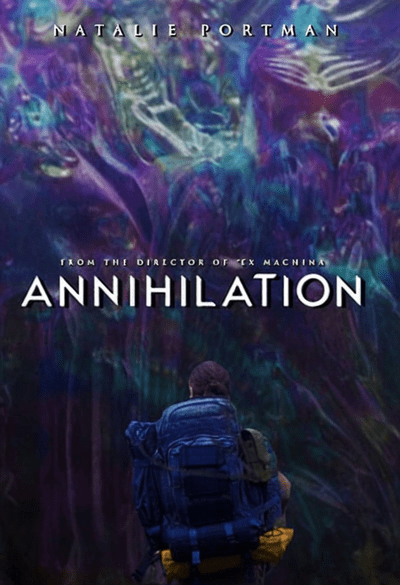
Annihilation is courtesy of Paramount Pictures and Skydance Media
A Journey Through Transformation
In 2018, Alex Garland’s Annihilation plunged viewers into a surreal and disturbing world, where the familiar dissolves into the unknown, and transformation is inevitable. Watching this movie back then, and rewatching it last night on Netflix, I found myself deeply moved by its haunting imagery and profound symbolism, which echoed my spiritual journey of Kundalini awakening. By delving into the film’s narrative and its vivid scenes, we uncover a rich parallel to the mystical process of awakening dormant energy within. Spoiler Alert: This post contains spoilers for those who haven’t seen Annihilation.
The Serpent Awakens
One of the most striking and unsettling scenes in Annihilation involves a soldier whose stomach is cut open, and we see his intestines move like a serpent inside him. This visceral image mirrors the ancient depiction of Kundalini energy as a coiled serpent at the base of the spine. In Kundalini traditions, this serpent represents latent spiritual energy, poised to rise and transform the individual. The soldier’s transformation, albeit grotesque, symbolizes the intense and sometimes chaotic nature of this awakening process.
Explosion and Rebirth
In another pivotal moment, the soldier explodes, leaving an intricate and eerie display on the wall. This explosion is reminiscent of the powerful release of Kundalini energy. Such energy can dismantle old patterns and structures, often causing upheaval before a new order can emerge. This scene captures the destructive yet transformative power of Kundalini, which breaks down the old self to pave the way for profound growth and understanding.
Kane’s Ultimate Sacrifice
Kane’s act of sitting cross-legged and detonating a grenade (played by Oscar Isaac) is another profound symbol. His posture suggests meditation or deep introspection, a practice central to awakening Kundalini. The ensuing explosion signifies a profound transformation—an act of self-destruction leading to rebirth. The image left behind symbolizes the remnants of the old self, giving rise to a new state of consciousness. This mirrors the death and rebirth cycle inherent in Kundalini awakening, where the dissolution of the ego precedes the emergence of a higher self.
The Shimmer as the Mystical Realm
The Shimmer, the film’s central enigma, serves as a metaphor for the mystical realm encountered during spiritual awakening. Within the Shimmer, reality bends and mutates, much like the inner landscape experienced during deep meditation and spiritual practices. Here, the boundaries of the self dissolve, and one is confronted with both beauty and terror—reflecting the dual nature of spiritual journeys.
Conclusion
Annihilation offers a hauntingly beautiful exploration of transformation, much like the journey of Kundalini awakening. Through its unsettling imagery and profound symbolism, the film invites viewers to contemplate the nature of change, the dissolution of the old, and the emergence of the new. By examining these parallels, we gain a deeper appreciation of both the cinematic experience and the spiritual process, enriching our understanding of transformation in all its forms.
Despite always wondering if anyone else had made this connection, I haven’t come across mentions of such interpretations. Yet, for me, the resemblance to my own experiences of Kundalini awakening is undeniable, providing a rich array of reflections on inner transformation. Only an individual who has gone through this process would truly understand these connections, as this is an event that must be experienced to be fully comprehended.
Morgan O. Smith
Yinnergy Meditation, Spiritual Life Coaching & My Book, Bodhi in the Brain…Available Now!
In the labyrinth of spiritual exploration, the nuanced differences between contextual and content enlightenment invite us to delve deeper into our understanding of consciousness. These dimensions, though intertwined, offer distinct perspectives on our journey toward self-realization. Let us explore the intricate play between whole and detailed awareness, qualities and their absence, and the dichotomy of shape and form versus the formless.
Contextual Enlightenment: Embracing the Whole
Contextual enlightenment transcends the specifics, inviting us to embrace the entire spectrum of existence as a unified whole. It is akin to perceiving the vast, boundless ocean rather than focusing on individual waves. This level of awareness envelops all experiences, thoughts, and sensations, recognizing their interconnectedness and the underlying unity.
In this sense, whole awareness is the recognition of the seamless fabric of reality. It dissolves the boundaries that separate the observer from the observed, the thinker from the thought. It is an expansive, inclusive state where everything is perceived as part of a larger, harmonious cosmic dance.
Content Enlightenment: The Beauty of Details
In contrast, content enlightenment delves into the specifics, illuminating each moment’s unique qualities and characteristics. It is the meticulous study of individual waves within the ocean, appreciating their distinct forms and patterns. This awareness sharpens our focus on the particulars, allowing us to see the intricacies and subtleties that compose the whole.
Detailed awareness is the keen observation of the myriad expressions of existence. It celebrates the diversity of forms, experiences, and sensations, recognizing their intrinsic value and beauty. This level of enlightenment encourages us to engage deeply with the present moment, savouring each nuance and detail.
Qualities vs. Without Qualities: The Essence of Being
The dichotomy of qualities versus the absence of qualities highlights another layer of our spiritual journey. Qualities refer to the attributes and characteristics that define our experiences and perceptions. They are the colours, textures, and flavours of our existence, shaping our understanding of reality.
Without qualities, however, points to a deeper, more subtle aspect of being. It is the state of pure awareness, devoid of any specific attributes or characteristics. This formless essence transcends the dualities of good and bad, pleasure and pain, presence and absence. It is the unmanifest potential from which all qualities arise and dissolve.
Shape and Form vs. The Formless: The Ultimate Paradox
Finally, the interplay between shape and form versus the formless presents the ultimate paradox of our spiritual exploration. Shape and form represent the tangible, perceivable aspects of existence. They are the visible, audible, and tactile manifestations of the underlying reality.
The formless, on the other hand, is the primordial ground of being. It is the unchanging, eternal essence that transcends all forms and shapes. This paradox invites us to see beyond the apparent duality, recognizing that shape and form are but temporary expressions of the formless. In this realization, we find the unity of all existence, the seamless flow between the manifest and the unmanifest.
Conclusion
In our quest for enlightenment, we are called to navigate these intricate dimensions of awareness. Contextual enlightenment invites us to embrace the whole, while content enlightenment beckons us to appreciate the details. The play of qualities and their absence, and the dance between shape, form, and the formless, guide us toward a deeper understanding of our true nature.
By holding these perspectives in balance, we can cultivate a holistic, integrated awareness that honours both the unity and diversity of existence.
Morgan O. Smith
Yinnergy Meditation, Spiritual Life Coaching & My Book, Bodhi in the Brain…Available Now!






 Morgan O. Smith