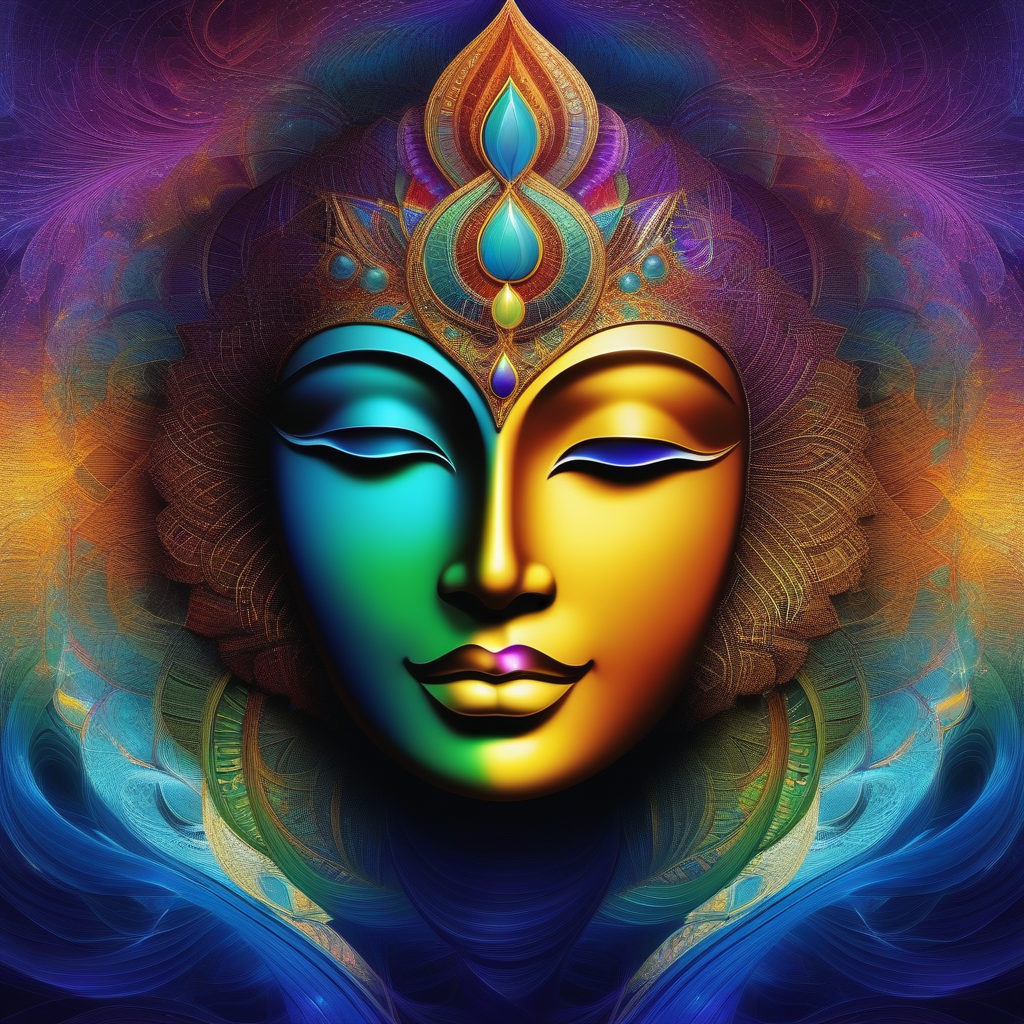
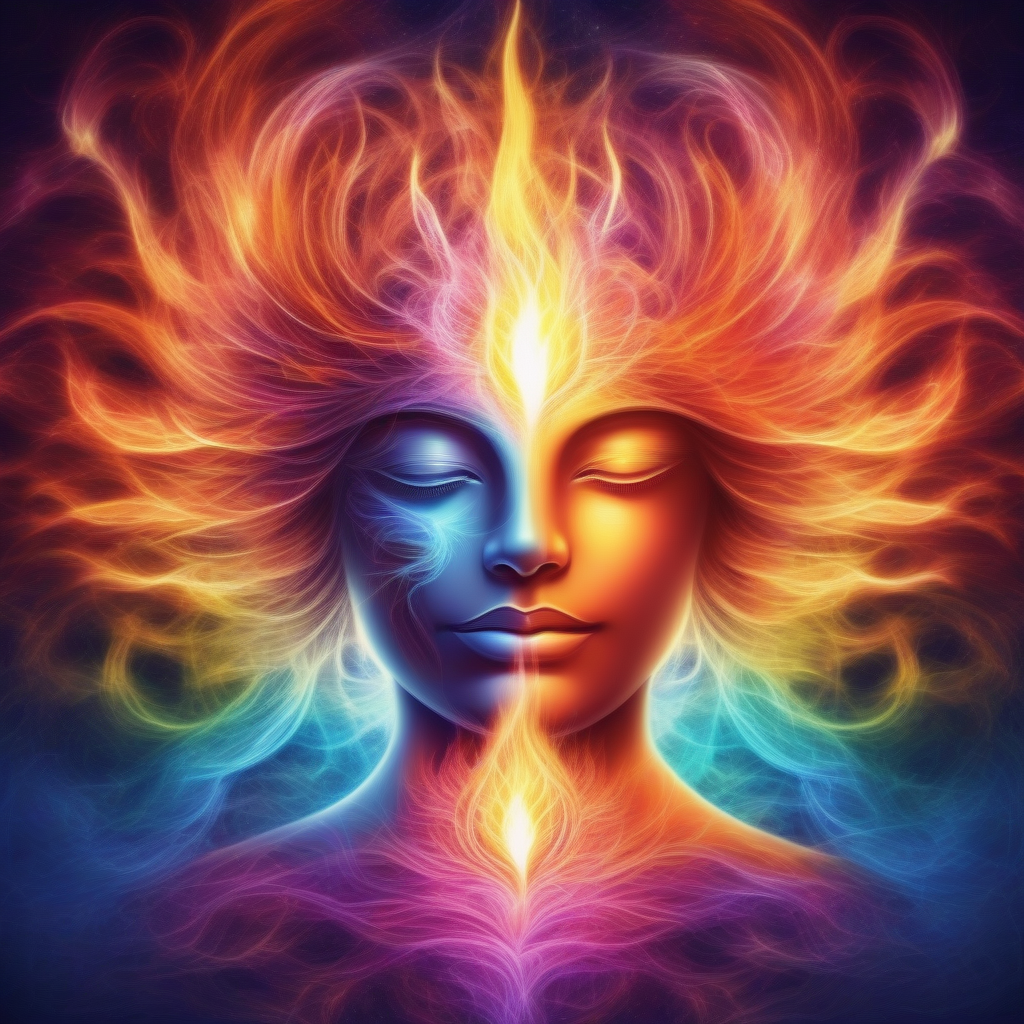
Meditate…

Until Your Internal World Resembles Paradise

In the bustling chaos of everyday life, where the noise of the external world often drowns out our inner peace, there is a profound need for sanctuary. Not a physical refuge, but a mental oasis that can be accessed anywhere, anytime. This sanctuary is not just a fleeting escape, but a transformation of our internal world into a paradise. The key to unlocking this paradise? Meditation.

Meditation, often misconceived as merely a relaxation technique, is a profound journey toward internal transformation. It’s about finding the silence amidst the noise, the stillness within the storm. Through meditation, we can delve into the depths of our consciousness, explore the landscapes of our minds, and cultivate a garden of tranquillity.

But how does one’s internal world become a paradise? It begins with understanding that paradise is not a physical location, but a state of being. It’s a place of balance, harmony, and a profound understanding of oneself. Meditation guides us toward this state by teaching us to observe our thoughts without attachment, to embrace our emotions without being overwhelmed by them, and to find clarity amid confusion.

As we meditate, we learn to let go of the clutter, the unnecessary burdens that weigh down our spirit. We learn to nurture thoughts and emotions that uplift and support our well-being. Slowly, the internal chaos gives way to a serene landscape, a paradise that is uniquely ours.

This journey, however, is not without its challenges. Just like any paradise, our internal world requires nurturing. It requires patience, dedication, and above all, a willingness to explore and accept ourselves fully. But the rewards are immeasurable. In this internal paradise, we find resilience against external turmoil, a deep sense of peace, and a wellspring of joy that is not dependent on external circumstances.

So, take a moment to close your eyes, breathe deeply, and embark on the most rewarding journey of all – the journey within. Meditate until your internal world blossoms into a paradise, a haven of peace and joy that you carry with you always.

Want to find your paradise within? Discover the transformative power of Yinnergy Meditation, a unique and effective program designed to unlock your inner potential. Yinnergy is not just a meditation method; it’s a journey toward emotional, mental, and spiritual growth. With Yinnergy, you can experience profound deep meditation, heightened relaxation, and a significant boost in creativity, focus, and intuition. It’s an ideal practice for both beginners and seasoned meditators, offering a simple yet powerful path to enhanced well-being and self-awareness. Embrace a life of clarity, balance, and harmony with Yinnergy Meditation. Start your transformative journey today and tap into your deepest potential!

Remember to make the most of our exclusive Holiday promotion. Apply the discount code R7X9Z2P for special savings on all Yinnergy products during checkout.

https://yinnergy.gumroad.com/

Brahman as the Ultimate Reality

In the realm of philosophical and spiritual inquiry, the concept of Brahman stands as a profound cornerstone, especially within the nondual traditions of Eastern philosophy. Brahman, as perceived through this lens, is not just an abstract concept but the very essence of reality itself—a reality that transcends the ordinary experiences of separation and duality which dominate our everyday lives.

At the heart of this understanding is the recognition that there is a fundamental oneness underlying all existence. This oneness, Brahman, is the eternal, unchanging truth that pervades every aspect of the universe. It’s an understanding that challenges the notion of individuality, as it posits that the deepest essence of our being, the Atman, is not separate from Brahman. In this view, the individual self and the universal self are not two but one.


This realization brings us to the experience of Sat-Chit-Ananda. These Sanskrit words translate to ‘existence, consciousness, and bliss.’ When one recognizes that their true nature is Brahman, they experience an unshakeable existence that is beyond birth and death, a consciousness that is vast and all-encompassing, and a bliss that transcends all worldly pleasures and pains.

The journey to this realization is deeply personal and transformative. It involves peeling away the layers of illusion or Maya that cause us to see ourselves as separate from the rest of existence. Through various practices such as meditation, self-inquiry, and devotion, one can gradually come to the direct experience of this truth.


The implications of this realization are vast. In seeing all beings and things as expressions of the same ultimate reality, our approach to life, our values, and our interactions with others undergo a profound shift. Compassion, empathy, and a sense of connectedness naturally arise when one sees themselves in others and others in themselves.

In conclusion, the concept of Brahman as the ultimate reality invites us to look beyond the surface of our experiences and question the very nature of existence. It’s a journey that leads us not only to deep philosophical understanding but also to a transformation of our entire being.

Morgan O. Smith

Yinnergy Meditation, Spiritual Life Coaching & My Book, Bodhi in the Brain…Available Now!

https://linktr.ee/morganosmith


Beyond Happiness

Embracing Non-Attachment and Eternal Bliss through Meditation

Creating a state of non-attachment and achieving contentment in life is a journey that many strive for. The key to this profound state of being lies in the practice of meditation, a tool that has been revered for centuries across various cultures for its transformative powers.

### The Illusion of Happiness


Happiness, as we often perceive it, is a fleeting emotion, a temporary state influenced by external circumstances. It’s like chasing the wind – always shifting and changing. This chase can often lead to a cycle of highs and lows, leaving us feeling more drained than fulfilled.

### Embracing Non-Attachment

Non-attachment, on the other hand, is a more stable state. It’s about finding peace and contentment regardless of the situation. This doesn’t mean becoming indifferent or emotionless. Rather, it’s about observing life’s ebbs and flows without being mentally and emotionally consumed.


### The Role of Meditation

Meditation is the bridge that leads us to non-attachment. Through consistent practice, meditation allows us to observe our thoughts and feelings without getting entangled in them. It’s like watching clouds pass by in the sky – they come and go, but the sky remains unchanged. This detachment from our transient thoughts and emotions reveals a deeper truth about our existence.

### Realization of the Self

As one delves deeper into meditation, a realization dawns – that we are the ground of all being. This profound understanding shows us that our true nature is not bound by the transient nature of worldly experiences. We are something more substantial, more permanent.

### Eternal Bliss

This realization paves the way for bliss, which is different from happiness. Bliss is a state of eternal contentment, unshaken by the changing tides of life. It’s a deep, internal fulfillment that does not depend on external factors.


### Conclusion

Non-attachment and bliss are states that can be realized through the practice of meditation. By observing our thoughts and emotions without attachment, we can discover the unchanging truth of our existence, leading to a life of deep contentment and eternal bliss.

 Morgan O. Smith

Yinnergy Meditation & My Book, Bodhi in the Brain…Available Now!

https://linktr.ee/morganosmith

Jungle Flower

A Beacon of Inspiration and Healing

In 2012, I had the incredible fortune of crossing paths with a remarkable soul – Jungle Flower. A former photographer, poet, speaker, writer, workshop and sound bath facilitator, Jungle is a mosaic of talents and a beacon of inspiration.

Our first meeting was at a social gathering with R.I.S.E. Edutainment members, where she played the violin with such grace, that it was as if the strings narrated stories of her deep resilience. That year also marked her first spiritual peak experience, an event I was privileged to witness.

Jungle Flower’s journey is one of remarkable courage. She has openly shared her path of healing from abuse and sexual violence through storytelling and spoken word. This journey led her to establish ‘Reclaim Your Voice’ – a BIPOC survivor-led initiative creating safe spaces for individuals to heal from abuse and sexual violence. Her symposiums, which I’ve attended and participated in, are a testament to her immense capacity for empathy and healing.

Beyond her professional achievements, it’s her heart that truly resonates. I recall a moment during our Kundalini Yoga training with Krishna Kaur. Post-session, a participant complimented Jungle Flower on her jacket. Without hesitation, she offered it to her. This act of kindness is a window into her soul.

Jungle’s journey with meditation, including becoming my student in the Yinnergy program, led to her receiving the Yinnergy Appreciation Award in 2014 for her community service. She then expanded her reach through talk radio with ‘Reclaim Your Voice’, a project I proudly sponsored.

Her accolades, including the Volunteer Toronto Legacy Award (2015), the Roger Fisher Scholarship (2016), the Write Your Self Scholarship (2017), and the Mayor’s Community Safety Award (2021), are just the tip of the iceberg. In 2019, she mesmerized a sold-out audience with her one-woman show, ‘Jungle Flower Dragon Heart’, where she shared memoirs through various artistic expressions.

Jungle Flower’s impact stretches beyond the Canadian borders, with invitations to speak at universities in the US. Her recent venture into sound baths is yet another layer of her multifaceted talent. Attending one of her sessions is an experience of deep relaxation, emotional stability, and a journey into heightened intuition and inner peace.

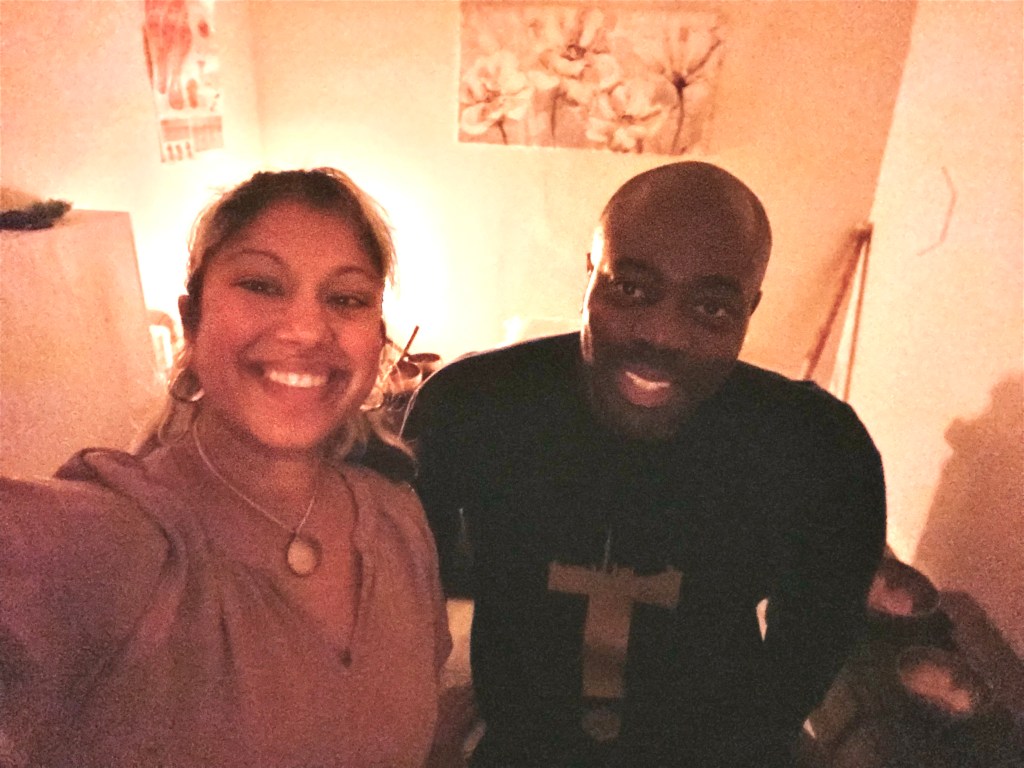
(Enjoying a transformative sound bath session with Jungle Flower)

For those in Toronto, seeking elevation, healing, and a profound connection, I cannot recommend Jungle Flower enough. Her individual, group, and couples sessions are transformative experiences that go beyond mere relaxation.

Discover more about Jungle Flower’s sound baths:

jungleflowerwellness.com

Morgan O. Smith

Embracing the Paradox of Nonduality

Beyond Cherry-Picking Reality

In pursuing spiritual understanding, the concept of nonduality presents a profound paradox. This philosophy, deeply rooted in various traditions, asserts that reality is an undivided whole, transcending the usual distinctions we make between self and other, here and there, or this and that. Nonduality suggests that these separations are illusions, conceptual divisions in the seamless fabric of existence.

However, a common pitfall in approaching nonduality is what could be termed “cherry-picking.” This is where one selectively embraces aspects of nonduality that appeal to them, while conveniently discarding others. It’s akin to admiring the beauty of a rose while ignoring its thorns. Yet, true nonduality, as a concept, includes and transcends all there is. It encompasses every aspect of existence, leaving nothing out, yet paradoxically, it also transcends everything we can conceive or perceive.


The crux of understanding nonduality lies in its experiential realization. Unlike concepts that can be learned from books or teachings, nonduality must be directly experienced to be truly known. This direct experience often defies language and intellectual comprehension. It’s a state of being where the boundaries that separate the self from the universe dissolve, revealing a fundamental unity.

This direct experience of nonduality often comes in fleeting moments of profound insight or deep meditation. In these moments, the constructs of the mind fall away, and what remains is a sense of oneness with all that is. This experience can be both exhilarating and disorienting, as it challenges the most fundamental beliefs about ourselves and the world.


The journey to nondual realization is, therefore, not about acquiring new knowledge but about unlearning – letting go of the deeply ingrained patterns of thought that keep us locked in the illusion of separateness. It’s a process of deconstruction, where one sheds layers of conditioned thinking to reveal the underlying unity of existence.

In embracing nonduality, one must be wary of the temptation to cherry-pick. The whole of existence, with its beauty and brutality, its joy and suffering, is included in the nondual understanding. Nothing is excluded, yet everything is transcended. This paradox is at the heart of nonduality – a reminder that the ultimate truth lies beyond the grasp of our usual ways of thinking and perceiving.

In conclusion, nonduality offers a radical perspective that challenges our conventional understanding of reality. It invites us to look beyond our selective perceptions and embrace the totality of existence. While its true essence can only be known through direct experience, the journey toward this realization can transform our understanding of ourselves and the world.

 Morgan O.  Smith

Yinnergy Meditation & My Book, Bodhi in the Brain…Available Now!

https://linktr.ee/morganosmith

The Paradox of Unconditional Love

From Relative to Ultimate Self

In the pursuit of understanding love, especially unconditional love, we encounter a profound dichotomy between our relative self and our ultimate self. This journey from dualistic thinking to a non-dualistic state of being offered a rich terrain for philosophical exploration.

#### Relative Self: The Duality of Love and Judgment

The relative self operates in a world of dualities. Here, we are taught to “love the sinner, hate the sin,” a phrase that encapsulates our struggle to navigate the complexities of love intertwined with judgment. This perspective, while grounded in good intentions, often leads us into a labyrinth of conditional affection, where love is metered out based on perceived right or wrong.

However, this is not the endpoint of our journey with love. As relative beings, we are called to observe our actions, thoughts, and emotions without judgment or bias. This doesn’t imply a passive existence but rather an active engagement in self-awareness. It’s about understanding our reactions and biases at every stage of our development.


#### Ultimate Self: Realizing Love as the Essence of Being

Transitioning to the concept of the ultimate self, we enter a realm where the individual self dissolves into a universal consciousness. In this state, “everything is the self, and of the self,” leading to the realization that all there is, is Love – with a capital L. This Love transcends the dualities of the relative self. It is not just an emotion or a state of being but the very essence of existence.

Unconditional love, in this ultimate sense, is not something one can force. It’s a realization that emerges as the soul matures and lets go of attachments and prejudices. It’s recognizing the self in all things and all things in the self.

#### The Path to Unconditional Love

The journey to unconditional love is neither linear nor predictable. It involves years of introspection, meditation, and conscious efforts to detach from the biases and attachments of the relative self. This path requires patience, as unconditional love doesn’t happen overnight.

In this process, action and acceptance go hand in hand. While it’s important to act and change situations for the better, it’s equally vital to accept what cannot be changed. This acceptance is a form of unconditional love, acknowledging that not everything is within our control or needs to be controlled.


#### Conclusion

Unconditional love is more than an ideal; it’s a transformative journey that bridges the gap between the relative and the ultimate self. It’s about realizing that at the core of our being, beyond the layers of judgment and bias, lies an all-encompassing love. This realization dawns not through force but through a gradual awakening of the soul, ready to embrace the self in all its forms.

 Morgan O.  Smith

Yinnergy Meditation & My Book, Bodhi in the Brain…Available Now!

https://linktr.ee/morganosmith

Inner Flame

The Dual Paths to Spiritual Enlightenment

Spiritual enlightenment is often perceived as the pinnacle of human consciousness, a state of profound insight and understanding that transcends ordinary perception. But is this enlightenment an attainment through arduous pursuit, or is it a state into which some are born?

The notion of being born spiritually enlightened is intriguing. It implies an intrinsic connection with the divine, an innate wisdom that does not require the rigours of spiritual discipline to uncover. This concept is not new; various traditions speak of souls incarnating with a certain level of spiritual awareness, suggesting that enlightenment is a continuing journey across lifetimes rather than a single life’s goal.


On the other hand, the pursuit of spiritual enlightenment is a cornerstone of many religious and philosophical systems. It is seen as a process of transformation, involving practices such as meditation, self-inquiry, and ethical living. This path suggests that enlightenment is not a starting point but a destination, reached through the cultivation of consciousness and the shedding of ignorance.

The difference between these perspectives raises profound questions. Is enlightenment a universal potential, available to all who seek it, or is it a rarefied state, the birthright of only a chosen few? The journey towards enlightenment, for many, involves peeling back the layers of personal illusion and societal conditioning to reveal a truth that is said to be ever-present, not granted or achieved but realized.


This duality of enlightenment — as both an inherent state and an achievement — reflects the complexity of the human spirit. Perhaps the truest answer lies in the synthesis of both views: that we are all born with a spark of the divine, yet it is through living, learning, and loving that we fan this spark into a flame bright enough to illuminate the depths of our being.

Morgan O.  Smith

Yinnergy Meditation & My Book, Bodhi in the Brain…Available Now!

https://linktr.ee/morganosmith

The Tapestry of Reality

Synchronicity and the Illusion of Separateness

In the dance of existence, our perceptions often lead us to believe in the solidity and separateness of things. The term “Maya,” derived from ancient philosophical traditions, refers to the illusory nature of the world. It’s a veil that covers the true essence of reality, suggesting that what we experience is not exactly what it seems.

The concept of “Atman,” on the other hand, points to a deeper truth. It is the individual soul, the pure, unchanging self within each person that is part of a universal soul, Brahman. The realization of Atman within oneself is to acknowledge that one is not just a passive observer of reality but an active creator of it. The synchronicities we encounter, those meaningful coincidences that seem to defy mere chance, are glimpses into this profound interconnectedness of all things.

Meditation serves as a pathway to peel back the layers of Maya, to expand our consciousness from the narrow confines of the ego and to experience the oneness with Brahman. Enlightenment, the pinnacle of spiritual realization, is the recognition that one is not separate from the universe but is the universe, participating in its unfolding as both creator and creation.

In this state, everything occurs simultaneously, and the distinctions between actor, action, and acted upon blur. You are the painter and the canvas, the dancer and the dance, the dreamer and the dream. Your everyday reality is a play of consciousness, a symphony where the whole orchestrates every part.

But the ego is not equipped to handle the enormity of this realization; hence, we experience reality in fragments, in synchronicities that hint at a larger, more intricate design. These moments are invitations to look deeper, to question, and to ultimately discover that you are, in essence, everything you perceive—boundless and infinite.

In the end, perhaps all of existence is an elaborate tapestry woven from the threads of nothingness, and in every stitch, there’s a story of creation and the creator, entwined in an eternal dance.

Morgan O.  Smith

Yinnergy Meditation & My Book, Bodhi in the Brain…Available Now!

https://linktr.ee/morganosmith

To Reach Beyond the Luminous

A Contemplation on Enlightenment and Distractions Along the Path

In our intrinsic pursuit of enlightenment, myriad entities, experiences, and spiritual phenomena often unveil themselves, presenting a paradoxical tapestry where understanding and distraction intertwine. When such entities or guides emerge along our path, they necessitate neither fixation nor rejection. For if they come, let them come, and if they decide to part, let them go. They are merely visitors, not permanent dwellers in our spiritual quest.

The venerable aphorism, “If you meet the Buddha on the road, kill him,” underscores the necessity of liberating ourselves from attachments and anticipated experiences in our spiritual pursuit. For, anything that becomes an object, a tangible or conceptual entity in our path, is not the ultimate truth. Therein, even the luminous light, an experience that many consider synonymous with spiritual ascension, is merely an objective reality, one that still exists within the domain of duality and separation.

The spiritual path unfurls itself as a journey where psychic powers, or Siddhis, may develop. If they do, they are not to be clung to. Enlightenment is neither a culmination nor an accumulation of powers or experiences, but a transcendence that paradoxically both surpasses yet includes all phenomena. It is an unceasing journey toward non-duality, where there is no seer, no seen, and no seeing – only a unified, unblemished consciousness that permeates all.

Phenomena, be they seemingly mundane or extraordinarily mystical, are to be acknowledged, witnessed, and permitted to drift away without attachment or aversion. They are waves on the surface of the ocean of consciousness, significant in their momentary existence, yet ultimately rejoining the vast, undulating expanse from whence they came.

Our ego becomes the most subtle, pervasive, and potentially pernicious impediment in this spiritual journey. It distorts, distracts, and sometimes destructs, coaxing us into traps that appear as enlightening experiences. The seductive allure of these experiences has ensnared many seekers, captivating them in a web that is woven from the threads of spiritual materialism.

The aspiration is not to annihilate the senses but to transcend and include them, to experience them in their fullest, most vibrant expressions, and yet remain unbound by them. It is to dive deep into the very essence of existence until all dichotomies, dualities, and senses converge into a singular, unified experience where distinctions cease, and all that remains is the unbounded, immeasurable expanse of Being.

Hence, the spiritual path might be perceived not as an endeavour of attaining or achieving, but as a continuous unfolding of letting go, a perpetual surrender. For in this surrender, we do not become devoid or nihilistic, but rather, we open ourselves to the entirety of existence, unshielded and unbounded.

All is a dream within the mind of God, and you, the dreamer, are no distinct from the dream you conjure, for at the ultimate level of who and what you are, is even beyond the luminous, beyond objectivity. To witness without becoming witnessed, to experience without becoming experienced – this is the path to enlightenment, where letting go is the ultimate embrace.

Morgan O.  Smith

Yinnergy Meditation & My Book, Bodhi in the Brain…Available Now!

https://linktr.ee/morganosmith

The Pursuit of Absolute Nothingness

A Journey Towards Enlightened Emptiness

Introduction: In the dynamic, incessant stream of thoughts, preferences, and subjective biases that characterize the human experience, the concept of attaining a state of Absolute Nothingness captivates imaginations. Is it possible to achieve a mental and emotional vacuum where thoughts, biases, judgments, and self cease to exist?

Understanding Absolute Nothingness:

  • Absolute Nothingness isn’t simply the absence of thought, but a profound emptiness that transcends understanding and defies our typical notions of existence and selfhood.
    • Exploring philosophical and theological contexts (Buddhism’s Sunyata or Zen’s Mu) can unveil varied interpretations and methods to approach nothingness.
  • The Paradox of Pursuing Nothingness:
  • Engaging in a quest towards absolute emptiness ironically imposes a desire and a goal, an antithesis to the state of desirelessness intrinsic to nothingness.
    • Considering the Daoist perspective, acting without intention (Wu Wei) might provide insights on pursuing without pursuing, and attaining without seeking.
  • Dismantling the Self:
  • Dissolving the self involves peeling away layers of personal identity, biases, and preconceptions, effectively blurring the lines between self and non-self.
    • This dismantlement raises questions about existence, consciousness, and whether one can truly function without the scaffold of selfhood in a society constructed upon individual identity.
  • Navigating Through Socio-Cultural Paradigms:
  • The endeavour to transcend preferences, judgments, and selfhood might be perceived as antithetical to societal norms that emphasize individuality, accomplishment, and progress.
    • Achieving absolute nothingness within the structural and cultural boundaries of our world presents a paradox between isolation and immersion in societal dynamics.
  • Ethical and Moral Dimensions:
  • The state of having no judgments, preferences, or perspectives raises questions regarding moral and ethical obligations. Does transcending biases and perspectives dissolve moral compasses?
    • Exploring the ethical implications of an unbiased existence may unravel whether absolute neutrality coexists with moral responsibility.
  • Psychological and Neuroscientific Perspectives:
  • The psychological viability of achieving a state devoid of thought and self-perception opens an intriguing discourse. Can one’s mental health be preserved, or even enhanced, in a state of nothingness?
    • Neuroscientific inquiries might delve into the processes and consequences of perpetually inhibiting cognitive and emotional functionalities to sustain a blank slate of consciousness.
  • Relinquishing Time and Anticipation:
  • With no anticipation, worries, or references to the past or future, time dissolves into an irrelevant concept, creating a perpetual ‘now’ with neither history nor destiny.
    • Contemplating a timeless existence fosters a reflection on how human experiences, relationships, and endeavours are intimately entwined with temporal perception.

Conclusion: Absolute Nothingness, both as a philosophical concept and a spiritual aspiration, navigates through paradoxes, ethical conundrums, and existential inquiries, offering a mesmerizing void that invites and perplexes. The possibility and implications of achieving a state devoid of self-thought, and time present not only a spiritual journey but also a philosophical and scientific exploration into the profound depths of consciousness and existence.

Morgan O.  Smith

Yinnergy Meditation & My Book, Bodhi in the Brain…Available Now!

https://linktr.ee/morganosmith