Being Lost in the Mind vs. Transcending the Mind

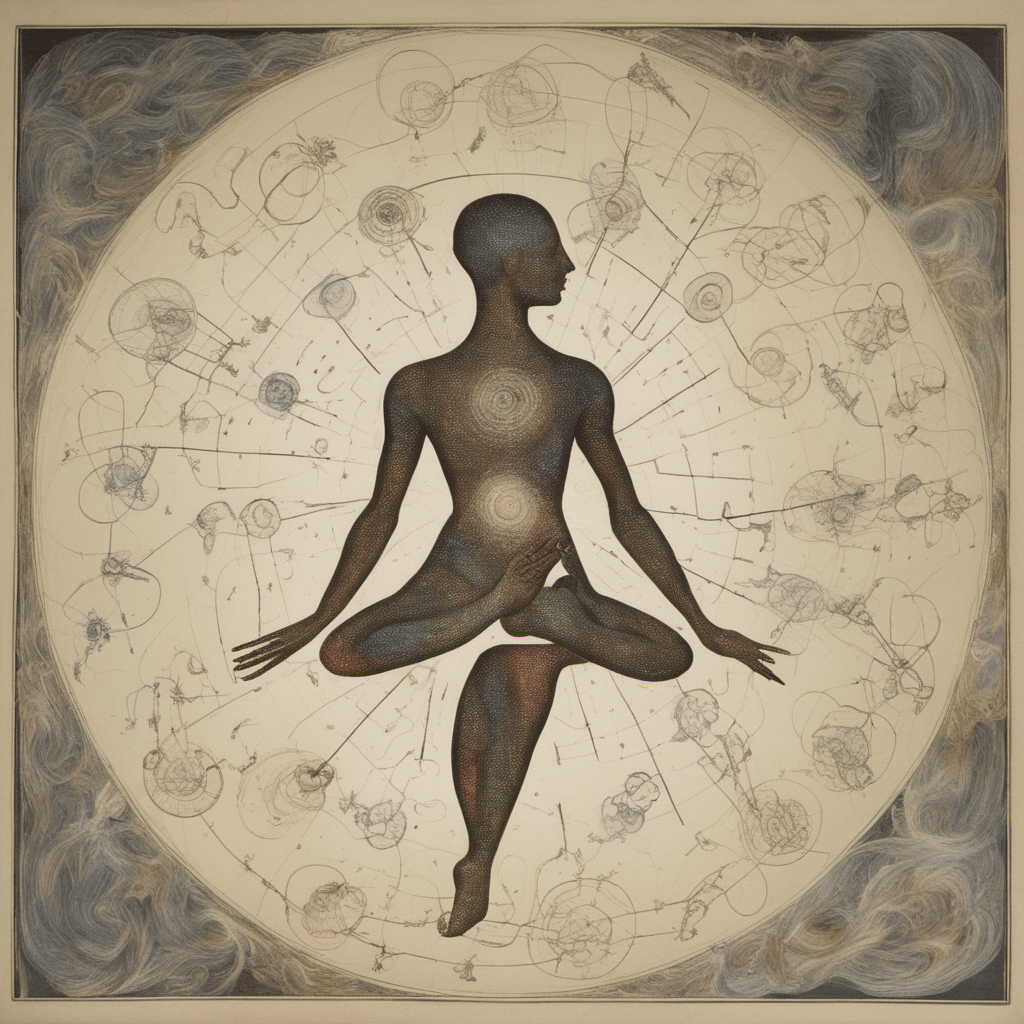
In the labyrinth of our thoughts, there lies a delicate balance between being entrapped and transcending the confines of the mind. The two might seem dichotomous, but they are simply two extremes of the spectrum of human consciousness.

**Being Lost in the Mind**


To be lost in the mind is to be ensnared by our thoughts, emotions, and perceptions. It’s like being caught in a storm where the waves of our anxieties, fears, and desires toss us to and fro. This state of being is often a result of overthinking, ruminating on the past, or excessively fearing the future. In essence, it’s when we become prisoners to our cognitive processes.

The pitfalls of such a state are evident. It can lead to anxiety, depression, and a sense of being overwhelmed. Yet, this state also harbours potential. Within the chaos of the mind, there is often a profound depth of creativity and introspection. It’s from the storm of thoughts that some of the world’s greatest art, literature, and inventions have emerged.

**Transcending the Mind**

On the other end lies the transcendence of the mind. This is a state of heightened awareness, where one is neither dominated by nor resistant to thoughts and emotions. It’s akin to finding a serene spot amid the storm where everything is calm and clear. In this state, one isn’t devoid of thoughts but is not chained by them either.

Transcending the mind is often associated with meditative and spiritual practices. It’s in this state that one finds peace, clarity, and a profound connection with the universe. Here, the trivialities of daily life fade, and one is left with a profound sense of being and purpose.

**The Balance**

The journey between these two states is not linear. We oscillate between feeling lost and moments of transcendence. Both states hold their unique value. While being lost offers depth and creativity, transcendence offers peace and clarity. The art of living lies in navigating between these two, understanding that neither is permanent, but both are essential facets of the human experience.

In conclusion, our mind is a vast expanse, capable of entrapping us and setting us free. It’s up to us to find our balance, to dance between the raindrops, and to find our moments of sunshine.

Morgan O.  Smith

Yinnergy Meditation & My Book, Bodhi in the Brain…Available Now!
https://linktr.ee/morganosmith

When Silence Echoes

The Power of Unspoken Revelations

We exist in a world where sound often dictates our experiences. From the cacophony of traffic to the incessant chimes of social media notifications, we’re constantly immersed in a sea of noise. But every so often, in the rare moments of introspection and spiritual awakening, we come to realize that the loudest voice doesn’t always need to be heard; it can be felt.

“During a mystical experience, my silence is the loudest voice in the room.” This quote encapsulates a profound truth about human existence. Amid a mystical experience, words often fall short. They are too limited, too confined by human construct, to adequately convey the depth of such moments. In these times, it is our silence that speaks volumes.

Silence, in this context, isn’t the absence of sound. It’s a resonant force, brimming with emotions, insights, and revelations. When we’re silent during a mystical encounter, we’re not devoid of expression; we’re teeming with it. The silence carries the weight of the universe, the wisdom of ages, and the profundity of personal epiphanies.

Our world tends to value verbosity. We admire those who can articulate their thoughts eloquently, who can debate, discuss, and declare with conviction. But what about those moments when words are insufficient? When does the experience transcend the boundaries of human language? That’s when silence takes center stage.

Imagine being in a room where everyone is talking, but you alone are silent. Yet, your presence is palpably felt, more so than anyone else’s words. That’s the power of silent revelation during a mystical experience. It’s not about shutting out the world, but about tuning into a frequency that words cannot reach.

As we navigate our lives, it’s crucial to recognize and respect these moments of silent resonance. Whether it’s during meditation, in nature, or the midst of a profound spiritual experience, let’s honour the voice of silence. For, in its depth, we might just find the answers we’ve been seeking.

Morgan O. Smith

Yinnergy Meditation & My Book, Bodhi in the Brain…Available Now!

https://linktr.ee/morganosmith

A Return to Guru Viking

An Odyssey into “Bodhi in the Brain”

As the leaves turn golden and the scent of autumn fills the air, my journey with the Guru Viking podcast continues to unfold. I’m ecstatic to share that my third appearance on this enlightening platform with the ever-insightful host, Steve James, is now live for all of you to indulge in.

This episode centers around “Bodhi in the Brain”, a manifestation of my passion, research, and personal experiences. This book is more than just words on paper—it’s a beacon of the transformative power that the Yinnergy meditation brainwave entrainment program harnesses. A program I poured my soul into, mathematically designing and birthing it in the serene month of August 2010. It has since become a transformative tool, sculpting the lives of countless individuals, with me being its first beneficiary.

For those who might’ve missed my initial sojourns on Guru Viking, here’s a glance:

Ep176: The Awakening of Mista Mo – A peek into my spiritual renaissance.

Ep195: Enlightened Comedian – A celebration where humour intertwines with spiritual profundity.

I’d love for all of you to journey with me. Listen, reflect, and maybe, find a part of yourself within these conversations.

🔗 For those yearning for a transformative meditative experience or eager to delve into the philosophical depth of “Bodhi in the Brain”, the gateway awaits: https://linktr.ee/morganosmith A friendly reminder for seekers everywhere: Guru Viking continues to unfurl wisdom every Friday on YouTube. Enrich your spiritual palette on Apple, SoundCloud, and Spotify as well. https://www.guruviking.com/

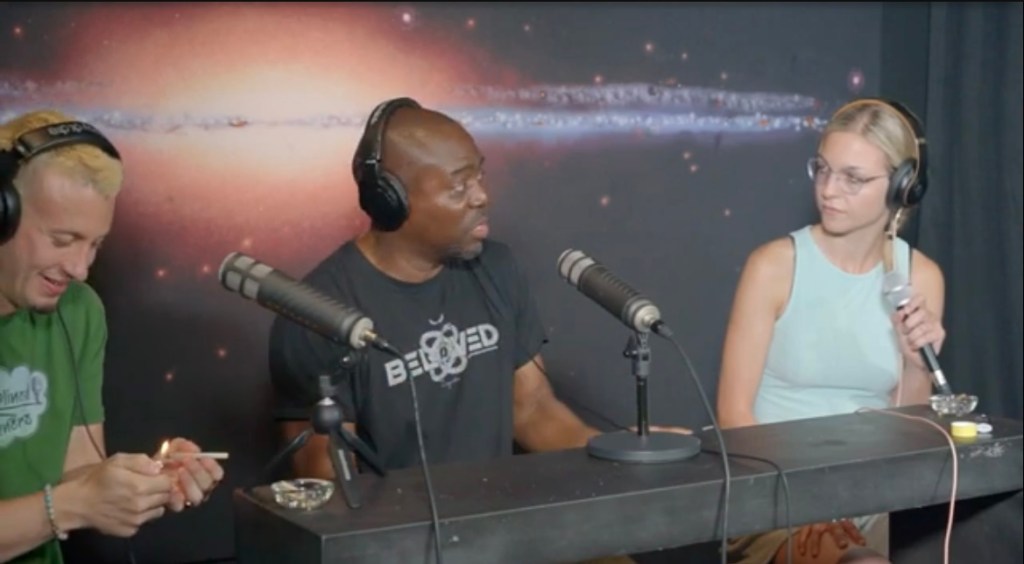
Disciplined Stoners (Episode 155) – Bodhi in the Brain

My Journey with Meditation, Consciousness, and Awakening

Exploring the intricate facets of consciousness and the enigma of meditation has been a lifelong quest for me. This week, I had the privilege to join Ellevan & Winny Clarke on the “Disciplined Stoners” podcast, sharing my insights, experiences, and discoveries.

I’m not just here as a meditation enthusiast; I introduced them to my creation, Yinnergy, a program born from my years of exploring and understanding the depths of inner peace and mental clarity. We also delved into the themes of my latest book, “Bodhi in the Brain,” embarking on a thrilling discourse on states of consciousness, spiritual awakenings, and the fascinating world of psychological development.

It was a transformative conversation, touching upon the delicate line between mere understanding and direct experience – a distinction that’s been pivotal in my personal and spiritual journey.

For those of you intrigued to dive deeper into my Yinnergy meditation or to navigate the pages of “Bodhi in the Brain,” you can explore them here at https://linktr.ee/morganosmith

Join us in this episode, where we venture beyond mere conversation, stepping into a realm of true transformation!


Embracing Anatta and Sunyata

A Buddhist Exploration of Spiritual Enlightenment

In the rich and intricate fabric of Buddhist philosophy, two profound concepts stand out: anatta, or the principle of no-self, and sunyata, or the notion of emptiness. These ideas challenge our conventional understanding of self and reality, offering a transformative path to spiritual enlightenment.

This blog post delves into the fascinating journey of embracing anatta and sunyata and what changes might occur in a person as a result.

Anatta: The Principle of No-Self

Anatta challenges the notion of a fixed and permanent self, a radical idea that has profound implications on how we perceive ourselves and the world. Upon realizing anatta, an individual may undergo the following transformations:

– **Loss of Attachment to Self-Identity**: Labels, roles, and personal narratives lose their grip, allowing for a more fluid and adaptable understanding of self.
– **Decrease in Ego-Driven Desires**: The pursuit of personal gain or recognition may fade, replaced by selfless compassion and loving-kindness.
– **Deepened Interconnectedness with Others**: Seeing beyond the illusion of separate selves fosters a profound connection with all beings.

Sunyata: Embracing the Emptiness

Sunyata refers to the empty nature of all phenomena, a state where things are devoid of inherent existence. The realization of sunyata leads to:

– **Transcending Dualities**: Ordinary distinctions such as good and bad, self and other, become irrelevant, replaced by an all-encompassing view of reality.
– **Detachment from Material Pursuits**: Recognizing the empty nature of material things may lead to a detachment from worldly desires and a more mindful way of living.
– **Harmony with the Present Moment**: Seeing things as they are, empty of inherent existence, nurtures a profound connection with the present moment.

The Journey Toward Enlightenment


Understanding anatta and sunyata is not an intellectual exercise but a profound experiential realization. The individual may engage in various practices such as meditation, mindfulness, and ethical living to cultivate this understanding.

The Impact on Relationships and Society

Embracing these principles fosters compassion, empathy, and altruism, reshaping relationships and offering a model of social harmony. It moves us towards a society rooted in wisdom and compassion, rather than division and selfishness.

Conclusion

The realization of anatta and sunyata is a transformative and enlightening experience that shifts our perception of self and reality. It dissolves the barriers that separate us and leads to a more compassionate and interconnected way of living.

In a world filled with complexity and conflict, these age-old Buddhist principles offer timeless wisdom and a path to inner peace. They invite us to let go of rigid self-identities and material pursuits, to see beyond the surface, and to embrace a more profound and holistic view of existence.

May the teachings of Anatta and Sunyata guide us towards a more awakened and compassionate life, where we recognize the interconnectedness of all beings and live in harmony with ourselves and the world.

Morgan O. Smith

Yinnergy Meditation & My Book, Bodhi in the Brain…Available Now!
https://linktr.ee/morganosmith

The Profound Transformation of Realizing Oneself as Brahman

A Journey Beyond the Self

In the boundless tapestry of human existence, few ideas are as profound and transformative as the realization of oneself as Brahman. A central concept in Hindu philosophy, Brahman refers to the ultimate reality or cosmic spirit, a principle that transcends the individual self and unites all living beings.

This blog post explores the many changes an individual might experience upon this realization, a journey that transcends mundane existence and awakens a new consciousness.

### The Loss of Ego and the Embrace of Unity

Perhaps the most radical shift in consciousness comes from losing the individual ego. Recognizing oneself as part of the universal oneness leads to a dissolution of the self, allowing the individual to see beyond the superficial distinctions that often characterize human perception. This leads to a profound sense of unity, empathy, and compassion, transcending barriers like race, nationality, and religion.

### A Shift in Values and Desire

The realization of Brahman changes the very fabric of desire and ambition. Material possessions, social status, and even relationships may lose their significance, replaced by spiritual growth and a deepened understanding of the cosmic order. The individual might pursue selfless service, finding fulfillment in contributing to the well-being of all.

### The Embrace of Paradox and the Transcendent Nature of Existence

This profound awakening allows for a comfortable acceptance of paradoxes and contradictions. Time becomes more fluid, creativity blossoms, and the person might develop an ability to recognize synchronicities, meaningful coincidences that reveal the interconnected web of existence.

### Living in Harmony and Transcending Social Constructs


Living in harmony with nature, respecting all life, and transcending conventional gender roles and social constructs, the enlightened individual moves through life with grace, mindfulness, and effortless action. Their actions are unforced, carried out with a sense of reverence and alignment with universal ethics.

### The Physical and Emotional Manifestations

The journey to realizing oneself as Brahman does not merely affect the mind but also resonates through the body and emotions. The individual may find improved physical well-being, experience deeper states of meditation, and become almost entirely devoid of internal and external conflict.

### The Inspiration to Others

Through this transformation, the individual becomes a living example of peace, love, and wisdom, inspiring others simply through their presence and way of being. They embody a philosophy that sees beyond the limitations of material existence and offers a path to spiritual awakening.

### Conclusion

The realization of oneself as Brahman is a profound spiritual concept that encompasses every aspect of being—mental, physical, emotional, and spiritual. It offers a glimpse into a state of consciousness that transcends the mundane and awakens a new way of perceiving reality.

In a world often driven by material pursuits and divisive ideologies, the teachings surrounding Brahman provide a timeless wisdom that calls for unity, compassion, and a life centred on spiritual truth. Whether viewed as a philosophical concept, a religious belief, or a spiritual experience, the realization of Brahman invites us to look beyond the self and embrace a vision of existence that is all-encompassing, transcendent, and profoundly transformational.

As we navigate the complexities of modern life, may we find inspiration in the ancient wisdom that teaches us to see ourselves not as isolated beings but as part of a grand, interconnected cosmos, guided by a principle that is at once beyond us and within us. It is a journey of discovery, a path to enlightenment, and a call to a deeper, more meaningful existence.

Morgan O. Smith

Yinnergy Meditation & My Book, Bodhi in the Brain…Available Now!

https://linktr.ee/morganosmith

Enlighten Up! w/ Special Guest, Elle de Lyon (Ep 13)

Welcome to Episode 13 of Enlighten Up! Join our hosts, Spiritual Teacher Morgan O. Smith and Comedian Nathan Griffith, with special guest Elle de Lyon from Pretty Dope Art. As a community developer, Elle organizes art events and showcases for emerging artists through RISE (Reaching Intelligent Souls Everywhere). Moreover, she’s a multi-faceted performing artist specializing in spoken word, visual arts, and yoga. In this enlightening episode, our hosts and guest explore the intricate concept of ego death. Listen in as Morgan poses the intriguing question, “What is ego death?” and prompts a discussion about the self, broken down into the id, ego, and super-ego. Delve into the duality of the ego as the false self, and consider the authentic self, free from the persona shaped by our environment. Discover Morgan’s take on the temporary death of the ego vs. the lowering of ego defence mechanisms. Nathan ponders the reason behind the common urge to ‘kill’ one’s ego. Morgan discusses the multifaceted nature of the ego, with each facet embodying its own persona, together forming the sense of self. Get into the psyche’s depths with Morgan’s insights on LSD and its capacity to analyze different aspects of the psyche. Hear about the obligations that lie between serving the group vs serving all of humanity and listen to Elle’s thoughts on personal space. Morgan distinguishes between the dark and golden shadow, leading into a discussion with Elle about the challenges of being a public figure and an entertainer. Share a profound moment with Morgan, Elle, and Nathan as they touch on the disconnection between persona and reality, and the disappointment it often brings. Yinnergy Meditation & Bodhi in the Brain are available now at https://linktr.ee/morganosmith.

Ego Death

A Symphony of Sense and Surrender into the Nondual Existence

The ego, a fortress of our individuality, a custodian of our senses, crumbles during a profound psychological event termed ego death. This process, which is akin to crossing the Rubicon of our minds, signifies the temporary dissolution of our self-identity, the fading of our senses, and the surfacing of a cosmic oneness often linked to deep meditative states, transcendental experiences, or psychedelic journeys.

Neurologically, ego death presents an intriguing event. Our brain’s default mode network (DMN), which curates our self-narrative and sets us apart from others, shows a marked decrease in activity. We can compare it to a maestro leaving the stage, silencing the orchestra of our everyday consciousness that incessantly plays symphonies of thoughts, memories, and future projections.

In the ensuing stillness, our senses embark on an incredible transformation. The self-nonself dichotomy wavers, and feelings of oneness and interconnectedness seep in.

The conventional five senses, along with lesser-known ones such as proprioception (spatial orientation of our body parts), and thermoception (sense of temperature), recede, rendering the self imperceptible. Even the sense of agency – the consciousness of controlling one’s actions – seems to dissolve.

In place of the sensory absence comes the phenomena of nonduality – the essence of existence, unblemished by ego-driven distortions. Here, the biological reality of our senses converges with an intense metaphysical experience.

Kundalini rising – a sensation akin to a large serpent ascending the spine, activating each energy center or ‘chakra’ – might manifest in this transformative journey. Biologically, it could be perceived as a surge in nervous energy influencing neural circuits, engendering a radical alteration in perception.

The dissolution of our sense of time – chronoception – engulfs us in a timeless realm. Our sense of spatial orientation capitulates, inducing a feeling of non-locality, a state where one’s existence feels omnipresent.

This whole process might seem like an experiential validation of ‘absolute monism’ – a philosophical school of thought propounding the universe’s oneness, discrediting any duality between the individual and the world.

Yet, ego death is not an end; it’s a transformative beginning. The insights gleaned about the interconnectedness of all life forms and the illusory separateness sculpted by our ego can significantly reshape our lives.

From a wider perspective, ego death can be seen as a philosophical odyssey leading to an experiential understanding of consciousness, the essence of selfhood, and the nature of reality. The unravelling of our senses and ego sheds light on our inherent unity, nurturing a profound sense of compassion that percolates into every aspect of our existence.

Ego death’s exploration and its impact on our senses offer an avenue to challenge our conventional ways of perceiving, question our established sense of being, and dive deeper into the mysteries of our inner and outer universe. It’s not merely a psychological event but a spiritual expedition and a philosophical exploration that propels us toward a truer understanding of existence.

Morgan O. Smith

Yinnergy Meditation & My Book, Bodhi in the Brain…Available Now!
https://linktr.ee/morganosmith

The Dance of Consciousness

How Traits and States Influence Each Other

Introduction:
In the realm of philosophy and neuroscience, the nature of consciousness has long been a subject of intense scrutiny. As we delve into the complex interplay between traits of consciousness and states of consciousness, we embark on a thought-provoking journey that explores how these facets of our mind shape and are shaped by each other.

Part I: The Essence of Traits of Consciousness
Traits of consciousness refer to the enduring qualities and patterns that define an individual’s cognitive, emotional, and behavioural makeup. These traits form the bedrock of one’s personality, shaping how they perceive the world, process information, and interact with others. From introversion to openness, resilience to empathy, traits of consciousness provide a unique lens through which individuals experience their existence.

Part II: Unraveling States of Consciousness
States of consciousness, on the other hand, are transient and ever-changing mental conditions. These states can range from heightened awareness during moments of meditation or creative inspiration to altered states induced by substances or intense emotional experiences. States of consciousness are like ripples on the surface of a vast ocean, reflecting our immediate perceptions and inner states.

Part III: The Bidirectional Influence

At first glance, it might appear that traits and states of consciousness operate independently. However, upon closer examination, we discover the profound bidirectional influence they exert on each other.

1. Traits Shaping States:

Our enduring traits of consciousness lay the foundation for how we perceive and react to various states. For instance, a highly empathetic individual might experience deeper connections with others during states of heightened compassion or love. Similarly, a person with a predisposition to anxiety may be more prone to states of distress during challenging situations.

2. States Shaping Traits:

The fluidity of consciousness states can leave lasting imprints on our traits. Profound transformative experiences, such as spiritual awakenings or near-death encounters, can lead to significant shifts in an individual’s personality and worldview. Moreover, states like mindfulness and meditation can foster positive traits like patience and self-awareness.

Part IV: The Dance of Consciousness
As the dance unfolds, we realize that consciousness is not static but rather a dynamic process, constantly in flux. Traits and states intertwine, shaping and reshaping one another in an intricate and evolving dance.

Conclusion:
The relationship between traits and states of consciousness is a fascinating exploration of the human mind’s complexity. Acknowledging this interconnectedness can empower us to cultivate positive traits while embracing the ebb and flow of transient states. As we embrace the intricacies of our consciousness, we embark on a journey of self-discovery, leading us to a deeper understanding of ourselves and the world around us. Remember, we are not merely passive observers of our consciousness; we are active participants in its unfolding story.

Morgan O. Smith

Yinnergy Meditation & My Book, Bodhi in the Brain…Available Now!

https://linktr.ee/morganosmith

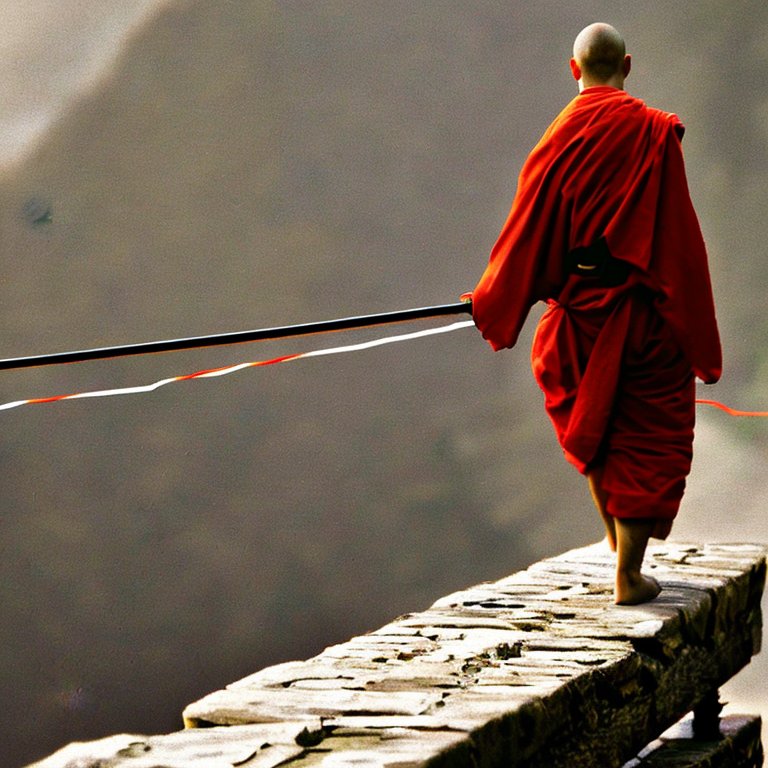
Walking the Tightrope

A Meditation on Life, Breath, and Existence

In our vast and infinite universe, there’s a remarkable dance that each living being performs, the perpetual tango between life and death. Every day, we navigate this tightrope, threading the narrow path that distinguishes the vibrant hues of existence from the void of non-existence. This intriguing equilibrium that defines our existence, balancing on the precipice of mortality, is an intricate choreography that brings to light the profundity of being alive.

Our breath, the subtle rhythm that underpins our existence, exemplifies this precarious balance. This rhythm – this continuous cycle of inhalation and exhalation – serves as the metronome of life itself. Each breath we take teeters on the edge of this existential tightrope, acting as the anchoring point in our ephemeral dance with life and death.

Delving deeper into this concept, one realizes that within every inhale and exhale, within the heart of that rhythmic balance, lies the essence of life. Every breath, an intimate connection between our body and the universe, is an affirmation of our existence, a silent declaration of life. The breath is an intimate dialogue with life, a personal narrative of our existence that is shared with the cosmos in a language as old as time.

But like any equilibrium, the delicate balance that our breath maintains requires moderation. If we linger too long on an inhale, or we dally on an exhale, we stray from the path of life. We break the cadence that ties us to life itself. We teeter, we falter, and eventually, we fall. To exist is to balance impeccably on this precipice, maintaining an impeccable rhythm in our breath that keeps us firmly planted within the domain of the living.

This concept, although simple in its description, bears profound implications. It calls us to be ever present, to appreciate the now, to be conscious of our place in the larger fabric of existence. It urges us to seek balance, to stay centered in the midst of our worldly experiences. Just as the rhythm of breath oscillates between inhale and exhale, so too should we find our balance amidst the highs and lows of life. For to be alive is not merely to exist, but to persist in this delicate dance on the existential tightrope.

In every breath, in every moment of our existence, we are called to embrace this profound balance. This realisation should provoke us to appreciate the transience of life, to value every breath as the gift it truly is. The rhythmic dance of breath is not just a biological necessity but an existential miracle that affirms our place in the grand tapestry of the universe.

Life and death. Inhale and exhale. Beginnings and endings. These dualities define the human condition. We walk the tightrope between these two extremes every day, maintaining a balance that is as delicate as it is essential. And in understanding this, we uncover a deeper appreciation of life itself, a more profound sense of our place within the cosmos, and a newfound reverence for the delicate balance that defines our existence.

Morgan O. Smith

Yinnergy Meditation & My Book, Bodhi in the Brain…Available Now!
https://linktr.ee/morganosmith