The Dance of Emptiness and Form

Unveiling the True Essence of Yoga

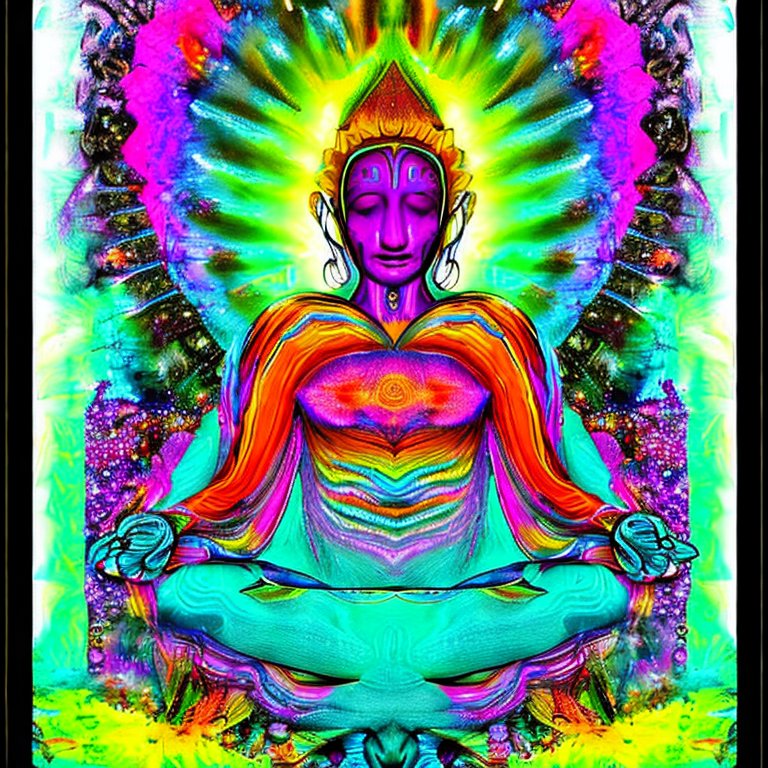
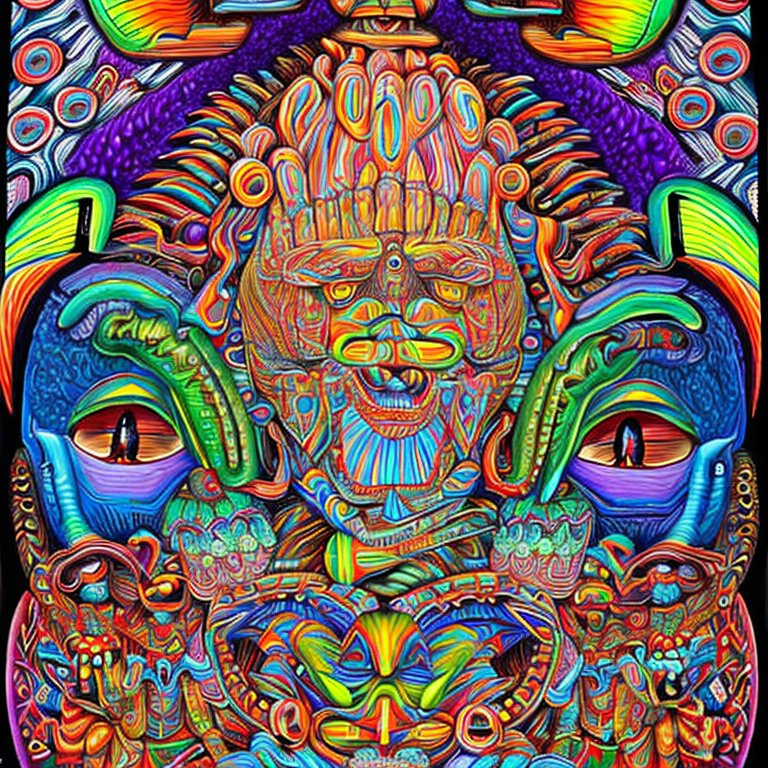
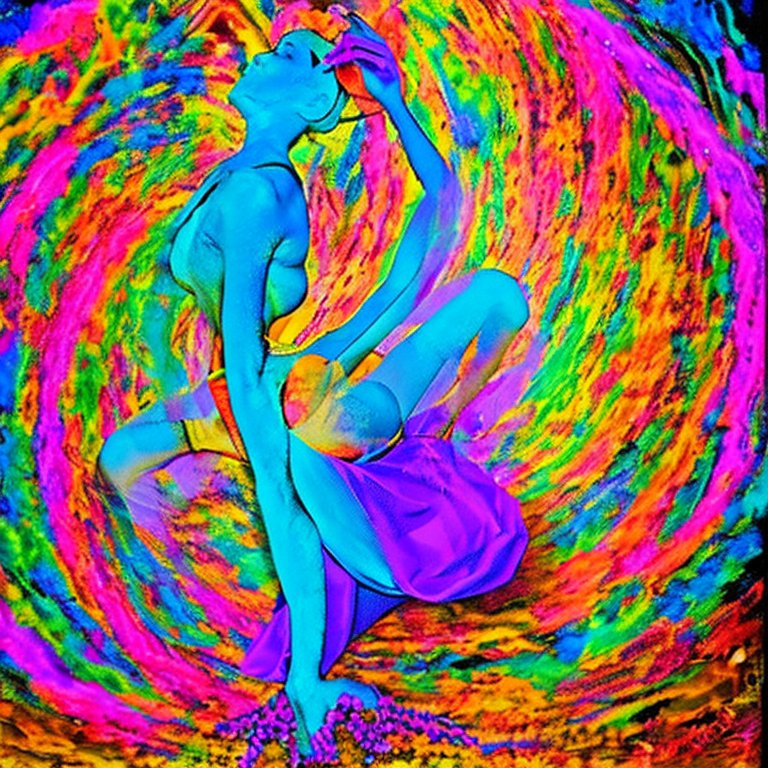
The philosophical underpinnings of Yoga transcend the popular perception of it as merely a physical discipline. Yoga, in its quintessence, is a union, a symbiotic dance between emptiness and form. This dance, a philosophical waltz within the vast expanses of the universe, finds a profound echo within us.

When we speak of form, we are drawn towards the tangible, quantifiable aspects of our existence—our body, the physical world around us. These are things we can touch, see, smell, hear, taste—the concrete attributes of our being. On the Yoga mat, the physical form is the obvious manifestation of our practice. Asanas are the embodiment of form, an expression of our grounded reality.

On the other hand, emptiness is an abstract concept, often considered synonymous with void or nothingness. In Eastern philosophies, emptiness does not signify a lack or absence but is regarded as the space that allows the form to exist, the silence that cradles the sound. It is the immaterial consciousness, the observer within us.

In the practice of Yoga, we cultivate the experience of both form and emptiness. Through asanas, we engage with form, enhancing our physical wellness and strength. Yet simultaneously, through meditation and breath control (Pranayama), we connect with the space of consciousness, the emptiness.

The union of emptiness and form in Yoga echoes the concept of Yin and Yang in Taoism. These seemingly opposing forces are complementary and interdependent. Similarly, in Yoga, the physical form (body) and the immaterial consciousness (emptiness) are intertwined in a dance, with neither one being superior to the other.

The realization of this union empowers us to perceive ourselves beyond the limitations of physical existence. We start to experience our oneness with the universe, recognizing that the emptiness within us is the same as the cosmic void, and the form is an expression of universal matter.

In true Yoga, we find balance and harmony between form and emptiness. We start understanding that emptiness isn’t a void but a space filled with infinite possibilities, and form is not rigid but a fluid and ever-changing phenomenon. This balance and harmonious interaction between emptiness and form illuminate the path toward self-realization and enlightenment.

Consequently, Yoga transforms from a practice into a way of life, a journey towards unveiling the veiled, harmonizing the paradox of existence and experiencing the profound unity of all creation. It’s a journey that, while dancing on the stage of duality, ultimately guides us back to unity.

In essence, Yoga teaches us to embrace the dance of life, the continuous ebb and flow between form and emptiness. In this dance, we discover our true selves, learning to live in harmony with our internal rhythms and the universal pulse. Only by acknowledging and understanding both emptiness and form can we truly unfold the potential within, ultimately experiencing the profound union that is the heart of Yoga.

Through this exploration, may we all find our unique rhythm in the cosmic dance and awaken to the truth that Yoga is not just something we do, but rather a state of being. A union of emptiness and form, a harmonious dance in the infinite canvas of existence.

Morgan O. Smith

Yinnergy Meditation & My Book, Bodhi in the Brain…Available Now!

https://linktr.ee/morganosmith

The Dawn of Syncretic Souls

A Harmonious Unveiling of Eastern and Western Spirituality

Introduction:
In the transcendent tapestry of human spirituality, East and West have often been seen as disparate threads. The West, with its logical rigour and scientific orientation, seems worlds apart from the East’s mystical, inward-focused spiritual traditions. However, in the heart of a spiritual awakening, a resplendent horizon emerges, revealing the unity and complementary nature of these spiritual worlds. This article explores this enigmatic integration, delving into how the confluence of Eastern and Western spirituality can offer a comprehensive and profound spiritual experience.

The Philosophical Underpinnings:
Eastern spirituality, rooted in traditions such as Hinduism, Buddhism, and Taoism, often emphasizes the notions of unity, interdependence, and the cyclical nature of existence. In contrast, Western spirituality, particularly in Abrahamic religions, has been more inclined toward linear progression, individual salvation, and a personal God. Notwithstanding these differences, both sides seek to understand the fundamental nature of existence and the path toward greater fulfillment and enlightenment.

The Awakening Confluence:
The moment of spiritual awakening can be likened to the dawn; the dark night of ignorance recedes as the sun of wisdom rises. In this pivotal moment, the dichotomies of East and West dissipate, as one comprehends the interwoven complexities of existence. The Eastern idea of interconnectedness suddenly harmonizes with the Western emphasis on individual worth, signifying that our individual journey has cosmic interconnected consequences.

Science and Mysticism:

One of the key avenues through which this integration is taking place is the dialogue between science (often associated with the West) and mysticism (a domain of the East). Through disciplines like quantum physics, Western science is beginning to echo Eastern concepts of interdependence and non-duality. The parallels between quantum entanglement and the interconnectedness emphasized in Eastern philosophies are a testament to this evolving synthesis.

A More Comprehensive Path:
By integrating Eastern and Western spirituality, individuals may find a more comprehensive and balanced path. For instance, the Western emphasis on social justice and activism can bolster the Eastern focus on inner peace and equanimity. Conversely, the Eastern practices of meditation and mindfulness can bring a sense of inner clarity and purpose to the Western pursuit of external achievements.

Conclusion:
As the human spirit continues to evolve, the integration of Eastern and Western spiritual perspectives offers a more holistic and enriched path. This synthesis, fully realized in the moment of spiritual awakening, acts as a bridge between dualities, fostering a deeper understanding of the self and the universe. Through this harmonious integration, humanity has the potential to weave a more intricate, compassionate, and enlightened tapestry of existence.

Morgan O. Smith

Yinnergy Meditation & My Book, Bodhi in the Brain…Available Now!
https://linktr.ee/morganosmith

Meditative Practices and the Illusory Nature of the False Self

A Journey Towards Self-Realization

Introduction:
Meditative practices have long been revered as transformative tools in the realm of self-discovery and spiritual growth. They offer a profound pathway for individuals to explore the depths of their consciousness, seeking truth, peace, and liberation. However, beneath the surface lies a fascinating paradox—the false self, which appears as the practitioner, ultimately leads to the revelation of the Ultimate Self, the Ground of All Being.

The Illusion of the False Self:
Within the tapestry of various spiritual traditions, the notion of the false self arises—a deceptive construct born out of our attachments to external roles, labels, and conditioned beliefs. This illusory identity emerges from our tendency to assign significance to transient aspects of our existence, such as social standing, material possessions, and superficial identities. Meditative practices, in their diverse forms, serve as illuminating mirrors, enabling us to perceive the transient nature of the false self and transcend its illusory grasp.

Meditation as a Mirror:
Meditation acts as a reflective surface, offering a clear reflection of the illusory nature of the false self. By turning inward and observing our thoughts, emotions, and sensations without judgment or attachment, we gain a heightened awareness of the ever-changing nature of our experiences. Regular practice nurtures a profound realization—an understanding that our thoughts come and go, emotions rise and subside, and identities shift fluidly. This awakening brings us closer to recognizing that the false self is not a fixed entity but a construct that can be deconstructed through the power of self-inquiry.

The Ultimate Self:
While meditative practices may originate from the false self, they hold within them the potential to reveal the Ultimate Self—the very essence of our being, the Ground of All Being. As we delve deeper into our meditative journey, we begin to touch upon an interconnectedness and unity with the vast cosmos. The boundaries that once separated our individual selves from the external world begin to dissolve, and we catch glimpses of the inherent oneness that permeates all existence. In this expanded state of awareness, the false self loses its grip, and we realize that our essential nature transcends the limitations of individual identity.

Integration and Transformation:
The true essence of meditative practices lies in the interplay between the false self and the Ultimate Self. The false self, while illusory, acts as a vehicle for the exploration and transformation of consciousness. Engaging with meditative practices allows us to intimately observe the patterns and tendencies of the false self, ultimately leading us to transcend its limitations. By embracing the false self as a catalyst for growth, we integrate its lessons and move closer to the realization of our true nature—the Ultimate Self.

Conclusion:
In the realm of meditative practices, the interconnection between the false self and the Ultimate Self invites profound contemplation. While the false self may present itself as real and compelling, it is merely a construct that can be unravelled through the transformative power of meditation. Engaging in these practices propels us on a journey of self-realization, unveiling the essence of our being—the Ground of All Being. Meditative practices serve as bridges, guiding us from the illusion of the false self to the profound truth of our interconnected existence. Embrace these practices, embrace the false self, and embark on the path toward ultimate liberation and self-realization.

Morgan O. Smith

Yinnergy Meditation & My Book, Bodhi in the Brain…Available Now!
https://linktr.ee/morganosmith

The Quest for Wholeness

Nirvana, Moksha, and Sahaja Samadhi

Introduction:

In the frantic, cacophonous world we inhabit, the pursuit of true peace of mind has become more essential than ever. Many of us harbour a longing, often unarticulated, for a state of being that transcends the mundanity of our daily routines. This is not just about calming the mind; it’s about an all-encompassing peace that permeates every fibre of our being – peace of the mind, heart, and gut. This form of liberation, known in different cultures as Nirvana, Moksha, or Sahaja Samadhi, is the ultimate aspiration.

Body:

I. Understanding the Concepts
Nirvana, a term originating from Buddhism, literally means ‘to extinguish’. It is the extinguishing of desires, ignorance, and the sense of self. Moksha, rooted in Hinduism, signifies liberation from the cycle of birth and rebirth, and the realization of one’s unity with the ultimate reality or Brahman. Sahaja Samadhi is an effortless state of deep spiritual absorption, where one is simultaneously aware of the inner Self and the external world. These three concepts, while having different origins, converge on the notion of liberation and inner peace.

II. The Nature of True Peace
True peace is not merely the absence of conflict; it is a profound sense of unity and harmony within oneself and with the universe. It’s a sense of completeness and fulfillment that is not contingent on external circumstances. It is in this state that the heart finds contentment, the mind is unshaken, and even the gut, often referred to as the ‘second brain’, is at ease.

III. The Journey Within
The quest for true peace demands a deep, inward journey. This is a path of self-discovery, contemplation, and inner transformation. Through meditation, self-reflection, and sometimes through guidance from spiritual traditions, one begins to detach from the illusions and constraints of the material world.

IV. The Liberation of the Self

In reaching Nirvana, Moksha, or Sahaja Samadhi, the self is liberated. This liberation is an awakening to the true nature of reality. It’s the realization that our essential self is not separate from the universe. This sense of oneness alleviates the turmoil of the heart, the restlessness of the mind, and the tension within the gut.

V. The Role of Compassion and Mindfulness
Compassion towards oneself and others is a vital component of this journey. It is through a compassionate heart that one can embrace the imperfections of human existence. Additionally, mindfulness helps in cultivating an awareness of the present moment, which is fundamental in the pursuit of inner peace.

Conclusion:

The pursuit of true peace, as epitomized in Nirvana, Moksha, or Sahaja Samadhi, is a deeply enriching and transformative journey. It’s not just an intellectual exercise but an all-encompassing spiritual endeavour that engages the mind, heart, and gut. This form of liberation is the pinnacle of human aspiration and a goal that can guide us toward a more harmonious and fulfilling existence.

Morgan O. Smith

Yinnergy Meditation & My Book, Bodhi in the Brain…Available Now!
https://linktr.ee/morganosmith

In the Depths of the Formless Visage

The Many Facets of Brahman

Imagine, if you will, the quiet solitude of a deep meditative trance. As your mind’s eye plunges further and further into the enigmatic depths of your own consciousness, a profound realization strikes you. There, in that unknowable abyss, you glimpse a reflection. But this reflection isn’t merely a physical mirror image; instead, it resonates from an abyssal chasm within you, echoing the depths of your very being.

As you behold this reflection, an uncanny awareness envelops you. You understand that this image recognizes your presence as surely as you perceive it. In a surreal dance of perception, you realize you’re not merely an observer, but an integral part of this grand cosmic tableau.

Before you unfold a vista of divine vastness, an ethereal ocean pulsating with life, a maelstrom of creation drawing in and expelling all existence in rhythmic, tidal waves of kinetic energy. You are at once an observer and an active participant in this unending cosmic ballet.

It feels as if a multitude of celestial entities, both angelic and demonic, coalesce into one entity, each a facet of your most authentic self. This visage is simultaneously overwhelming and exquisite, a shining testament to the divine.

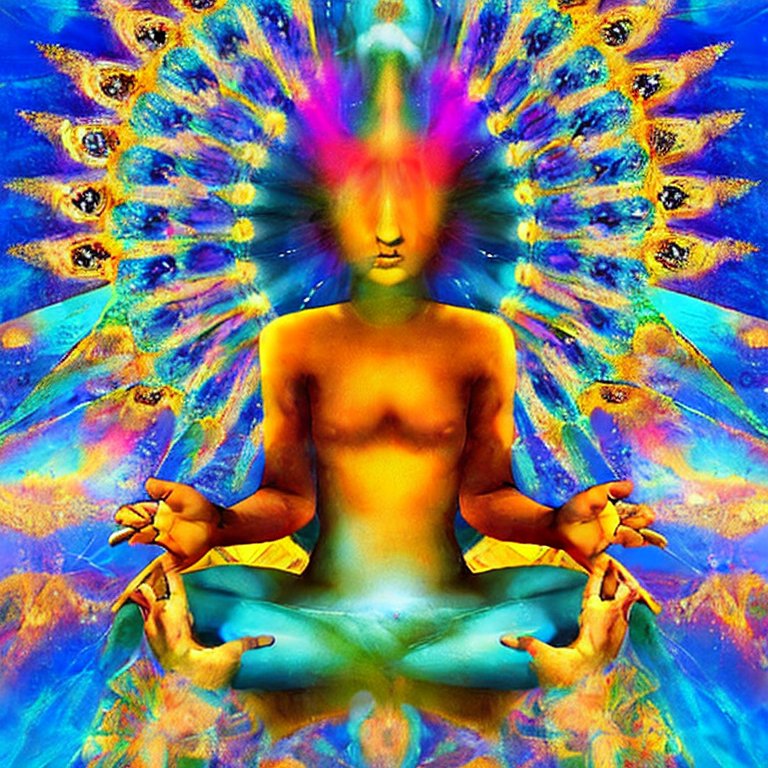
A face materializes from this cosmic maelstrom, familiar and yet strange. An expressionless countenance that embodies all expressions, radiating with joy despite the lack of a smile. This is a face that paradoxically appears as a stranger’s, yet evokes an uncanny sense of eternal familiarity. You are beholding the Sacred Abstract, an elusive and formless manifestation of that which remains unseen.

Its skin shimmers with contradiction – smooth like the tender touch of a lover, yet rugged as an unpolished gem. The skin shifts and morphs, revealing a sprawling desert scape so intricately detailed that every grain of sand seems to hold its own unique story. This desolate land is a paradox, an uncanny realm filled with an unfathomable complexity that defies even the wisest of seers, gurus, and mystics.

Just as water can be both fluid and solid, this ethereal face defies definition, appearing simultaneously soft yet unyielding. Its structure, or rather, its lack thereof, seems etched with glyphs of cosmic knowledge, a living testament to every living and non-living thing that has ever been.

Witnessing this wondrous face is an experience both beautiful and jarring. It’s as if your ego, that vestige of self-identity, melts away, leaving you feeling exposed and raw. The sight can be maddening, an intense psychological burden that tests your mental fortitude to its limits. The ancient scriptures speak of those who gaze upon the face of the divine and meet their end – a metaphor, you now understand, for the dissolution of the false self.

In the face of such grandeur, you might feel unworthy, unequipped to unite with the Supreme. But take heart, for the day will come when you are ready to reflect the divine mirror image in the celestial mirrors. If the radiance blinds you, persist, for soon you will appreciate your own inherent beauty, even with eyes closed. For true beauty, after all, is a perception held in the observer’s mind.

Morgan O. Smith

Yinnergy Meditation, and my book, Bodhi in the Brain…Available Now!
https://linktr.ee/morganosmith

The Role of Harsh Environments

In the Advancement of Spirituality and Eastern Philosophy

Introduction: As we delve into the realm of spiritual growth and philosophical evolution, we find ourselves drawn to the profound teachings of Eastern wisdom traditions like Hinduism, Buddhism, and Taoism. These knowledge traditions have birthed deep-seated understandings about the existential fabric of reality, the dimensions of human consciousness, and the varied contours of the human condition. This blog piece, filled with spiritual development insights and philosophy exploration, will unearth the significance of harsh environments in moulding these spiritual and philosophical systems. We’ll explore how survival instincts in tough circumstances could have been the catalyst for their evolution.

The Resource Scarcity Hypothesis and Cultural Adaptation Hypothesis: Unraveling the link between harsh environments and the growth of spirituality and philosophical thought, we can turn to theories like the “resource scarcity hypothesis” and the “cultural adaptation hypothesis.” The resource scarcity hypothesis highlights how societies living in resource-depleted environments tend to develop advanced technologies and intricate social organizations to manage the challenges they face. Similarly, the cultural adaptation hypothesis explains how groups foster distinctive knowledge, skills, and practices to adjust to their unique environments.

When we apply these concepts to spirituality and Eastern philosophy, it becomes evident that many of these traditions trace their origin back to regions with severe conditions – be it the arid landscapes of India, the rugged mountains of Tibet, or the isolated valleys of China. These environments may have acted as crucibles, fostering the emergence of complex spiritual and philosophical systems that provide solace amidst the hardships of everyday life, while offering a sense of purpose in adversity.

The Interplay of Spiritual Enlightenment and Survival Instincts: Survival instincts in the face of harsh environments could have played a pivotal role in the conceptualization of spiritual and philosophical doctrines like spiritual enlightenment. In Eastern philosophy, enlightenment often symbolizes the transcendence of suffering, heralding a state of inner peace, equilibrium, and liberation from the shackles of mundane existence.

In environments that test human endurance, the quest for spiritual enlightenment can be viewed as an answer to the physical and psychological trials faced by individuals and communities. In the quest to understand and overcome suffering, individuals can unearth the inner strength and resilience necessary to endure and flourish under severe circumstances.

Furthermore, practices that facilitate spiritual enlightenment – meditation, mindfulness, ethical living – are also effective stress management tools, which enhance personal well-being and nurture social unity during tough times.

Conclusion: While it’s crucial to avoid oversimplification of the intricate factors that nurture the growth of spirituality and Eastern philosophy, it’s undeniable that severe environments and survival instincts have significantly influenced these traditions. By offering a coping mechanism to life’s challenges and a route to inner peace and transcendence, spiritual enlightenment has served as a beacon of hope and inspiration for countless individuals across the epochs. As we navigate the trials of our era, the timeless wisdom of these ancient traditions offers invaluable lessons for our spiritual and philosophical growth.

Morgan O. Smith

Yinnergy Meditation & My book, Bodhi in the Brain…Available Now!