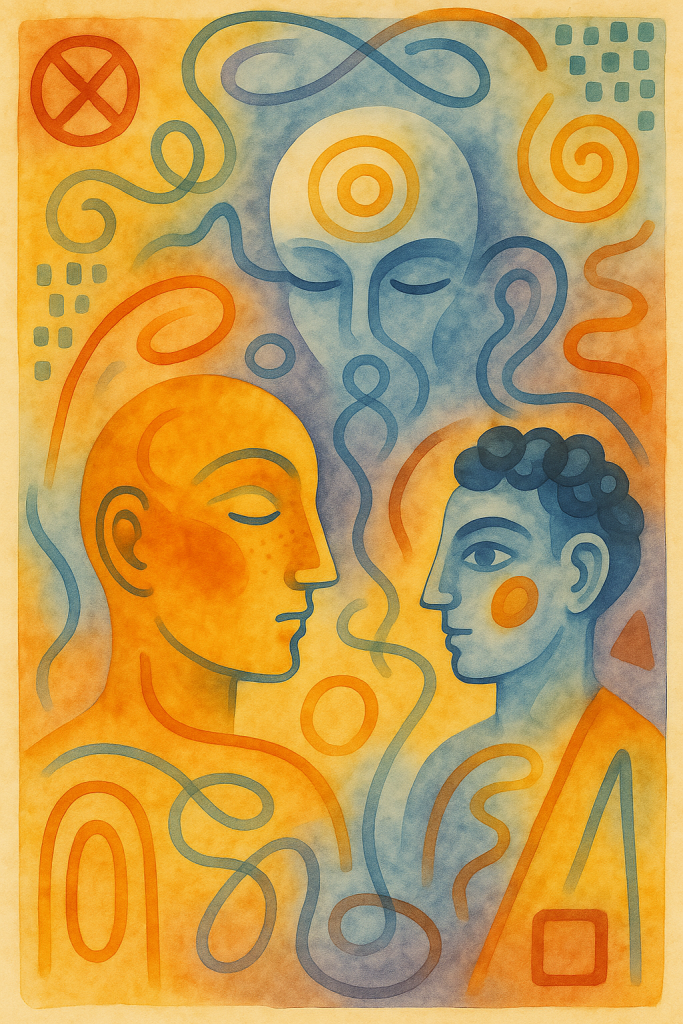
The Rapture of Letting Go

Presence is not a prize to be won or a fortress to defend. It is not some static peak upon which the awakened are meant to perch forever, unmoved and untouchable. The pursuit of a “permanent state” of anything—even presence—quietly binds us again to the illusion we sought to transcend. It becomes another mask of the seeker, cloaked in stillness, trembling behind the veil of spiritual ambition.

States rise and dissolve. Rapture comes like a summer breeze and vanishes just as gently. Then irritation, confusion, boredom. Then clarity. Then fog. The parade continues, not because you are failing, but because you are alive.

To lose attention is not to lose awareness. What perceives the loss? What observes the drift and the return? That witnessing is untouched. It is not opposed to distraction, nor does it seek permanence. It simply is, always.

Clinging to peace is no different from clinging to pain. The grasping hand is the same. When rapture becomes an achievement, it quietly rots. But when it is allowed to dance freely—hidden beneath the dishes in the sink, behind the silent gaze on the subway, or in a burst of sudden awe at the sky—then it becomes alive again.

You can continue to practice, to breathe, to cultivate. But do so like a child builds a sandcastle: for the love of it, not to resist the tide. Joy, too, is a practice. But it must remain unhooked from outcome.

There’s a kind of rapture in the background hum of your own awareness—even when the foreground is chaos. That quiet clarity never left. You’re not missing the moment. You are the moment, passing through its own reflections. And if you laugh at the absurdity of forgetting and remembering over and over again, then perhaps that’s the most awakened thing of all.

Morgan O. Smith

Get Your Free Copy of My Book, Bodhi in the Brain!
https://subscribepage.io/oTSZQu

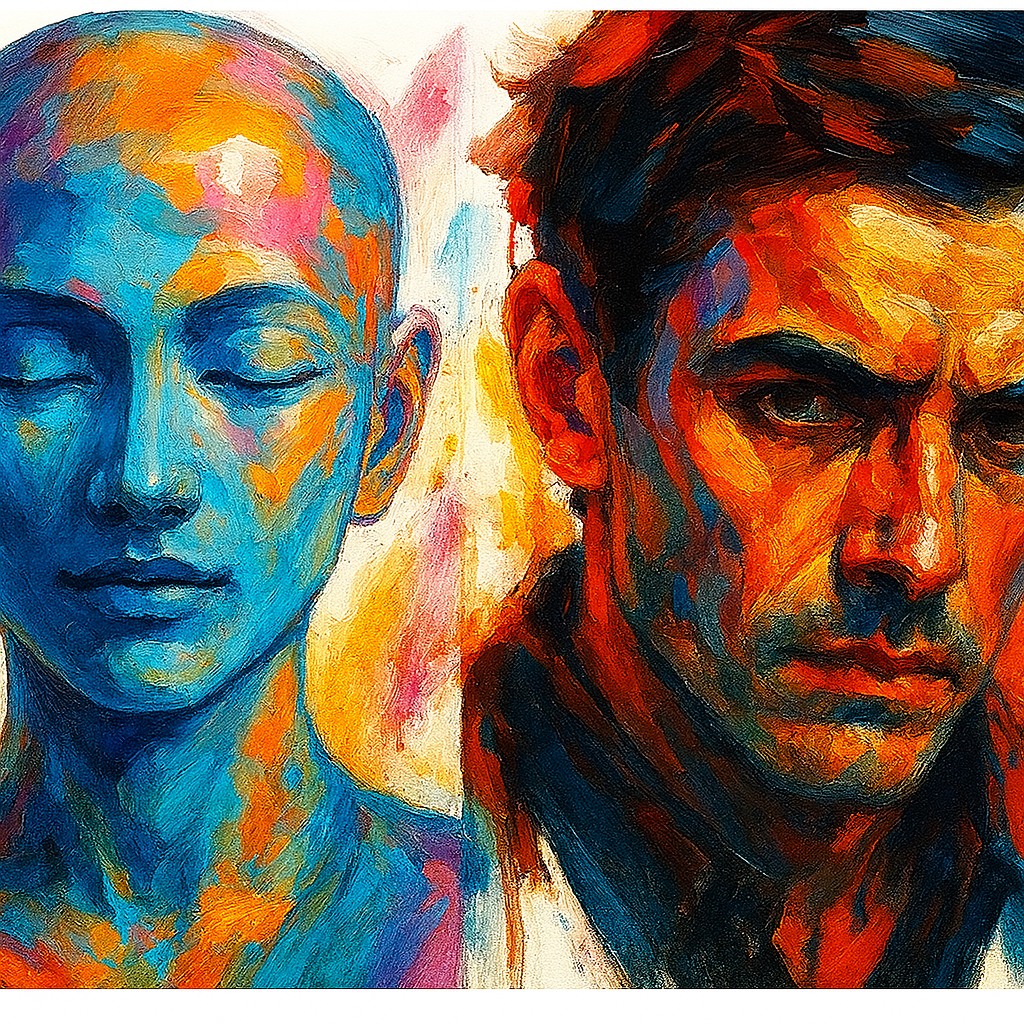
When Spirit Dreams Itself Into Matter

Spirit does not need a mirror, yet it gazes anyway—projecting forms into the formless, assigning names to the unnamed. What we call the world is not something separate from Spirit, but a spontaneous gesture of its own imagination, experienced as if it were other.

This is the paradox.

There is no true division between creator and creation. What appears as the external world is not a stage for a lost soul to find its way back, but Spirit animated—forgetting itself to taste the illusion of separation. Not as punishment or accident, but as a dance, a play, a sacred hallucination.

To believe the imagination is real is not error. It is the very means by which Spirit hides and finds itself. Each identity clung to, each role performed, each belief defended—these are costumes worn by the formless to remember itself as form.

Awakening doesn’t arrive like a conclusion; it dissolves the argument. You do not awaken from the dream by force or by will, but by remembering that it was always Spirit dreaming. The character fades, but not as death—more like laughter that remains after the joke has dissolved.

What changes when you see this?

Nothing. Everything. The world continues. You walk, eat, speak. But there’s an intimacy now. A recognition that what you once took to be real is neither unreal nor merely imagined—it is Spirit, playing with itself through light and shadow.

The one who seeks is the sought. The one who prays is the prayed to. Spirit folds into its own image, not to be found, but to be felt. That is the point. Not escape. Not transcendence. But the sacred absurdity of being itself.

Morgan O. Smith

Get Your Free Copy of My Book, Bodhi in the Brain!

https://subscribepage.io/oTSZQu

Liberate Yourself from Everything…

This Includes Spirituality

What if even the sacred must be left behind?

Not discarded with resentment, but dissolved with reverence—like incense that’s burned its final curl into still air. Every pursuit, no matter how noble or transcendent, clings to a subtle promise. It whispers, “Just a little further. Just a little more.” Spirituality—the path of paths—can become the gilded cage.

This isn’t a rejection of the sacred. It’s a call to recognize its shadow. When devotion becomes identity, and awakening becomes performance, the ground of true being quietly slips away. What remains is the effort of wearing a spiritual mask.

You meditate, fast, chant, and read the masters, and for a while, the momentum feels pure. But pause. Breathe. Look again.

Has the seeker been quietly resurrected each time insight arrives?

One of the final illusions is believing that freedom lies within the refinement of spiritual effort. Yet effort, no matter how subtle, arises within duality. There’s still a “me” reaching toward something else. Even the concept of enlightenment can act as a veil, because where there is something to reach, there remains something separate from what already is.

That’s the irony: the very thing that once cracked open your sense of reality may now be the weight tethering you to it.

There is no one to become. No final truth to grip. Liberation doesn’t crown the seeker—it dissolves them. It’s not what you attain through discipline. It’s what remains when every layer of becoming has been seen through.

God doesn’t need your spiritual journey.

Silence doesn’t demand your reverence.

Truth doesn’t require your understanding.

And being doesn’t wait for your arrival.

Strip it all away. Stand utterly exposed. Not as a soul, a student, or a sacred archetype—but as this unnamable presence you’ve never not been. This is where all paths terminate. Not with a bang. Not with celestial fireworks. But with a soft, undeniable recognition: nothing is missing. Nothing ever was.

To cling to spirituality, even subtly, is to delay this.

So let it all go—not to be less, but to finally see what you are without it.

Morgan O. Smith

Get Your Free Copy of My Book, Bodhi in the Brain!

https://subscribepage.io/oTSZQu

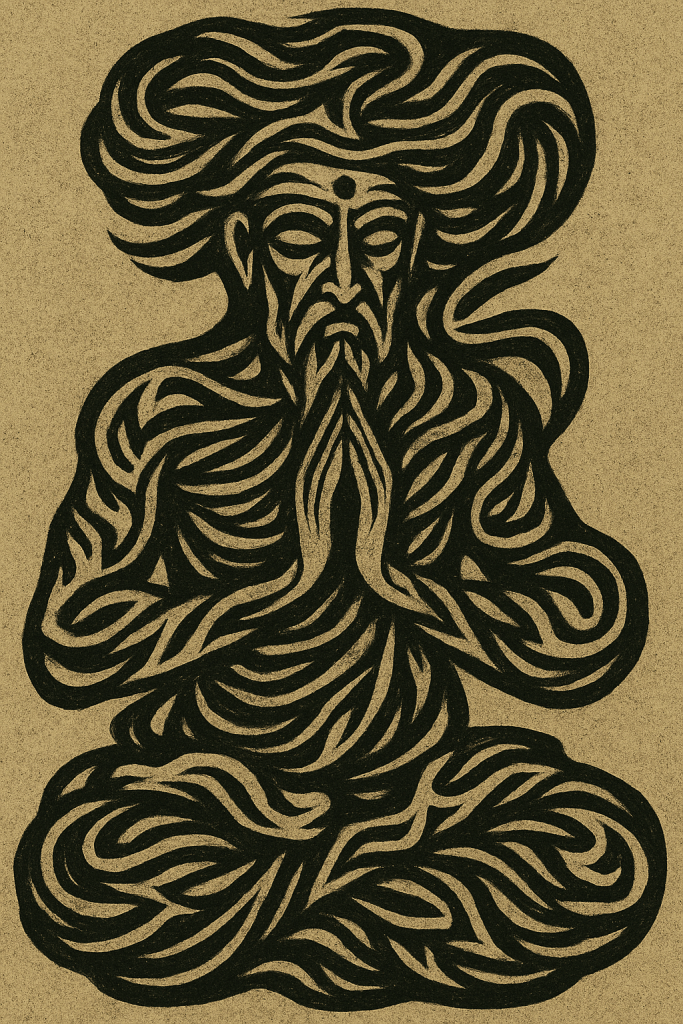
When the Serpent Stirs

The Sacred Upheaval of a Kundalini Awakening

A force lies dormant at the base of your spine—curled, coiled, and waiting. It isn’t a metaphor. It isn’t symbolic. It is the sacred energy of awakening, and when it stirs, nothing remains untouched. This is not personal growth. This is elemental transformation.

Kundalini is not something you believe in—it is something that happens. The moment it rises, it begins its ascent with precision, threading its way through your central channel, shifting the architecture of your being. From the root of your spine to the crown of your head, it dismantles, rewires, and reanimates—not gently, not politely, but necessarily.

Everything once taken for granted—breath, time, self, existence—begins to unravel before your eyes. What seemed obvious collapses. What felt separate merges. What appeared to be you becomes both everything and nothing. You no longer view life from a narrow vantage point defined by fear or habit. Perception stretches beyond the ordinary, and you begin to see not from a body, but through consciousness itself.

This isn’t a philosophical musing. This is Yoga—not the posture, but the primordial union. The word means to yoke, to unify, and Kundalini is the sacred yoking of the individual to the Infinite. It is not ideal. It is not a concept. It is direct experience. It is the breakdown of boundaries until the Divine reveals Itself not as something above or beyond, but as the pulse within.

There is no going back from such a moment. Once touched by that current, life reorganizes itself around a different centre—not a person, not a role, but presence.

And within that presence, the union question vanishes—because you realize there were never two.

Morgan O. Smith

Get Your Free Copy of My Book, Bodhi in the Brain!
https://subscribepage.io/oTSZQu

Beyond Identity

The Illusion of Separation and the Boundless Self

What You Are Not

Strip away the names, the labels, the ideas, and what remains? Nothing. And yet, in that nothingness, everything arises. You have no true identity, defined form, or fixed point in time or space—yet you appear as all things. You are not this body, not this mind, not even the grand concept of the self that you have clung to. What you believe yourself to be is merely a shadow of what you truly are.

The illusion of separation creates the experience of individuality. This appearance is not wrong—it is the stage upon which existence plays itself out. But beneath this grand performance, you remain whole, indivisible, untouched. You have never been anything other than totality itself, masquerading as the temporary.

Timeless Existence, Eternal Becoming

You think of yourself as moving through time, yet time moves through you. The past is not behind you, nor is the future ahead—both are simply angles of the same moment, stretching into what appears as linear sequence. The experience of time is an unfolding dream, a dance of perception, measured by the mind yet never truly existing apart from it.

You were never born, nor will you ever die. The body follows its cycle, the mind weaves its stories, but what you are precedes all of this. There is no point at which you began, nor will there be a point where you cease to be. You are not a passenger in the stream of time—you are the river itself, flowing and still, changing yet unchangeable.

The Paradox of Experience

You exist beyond pleasure and pain, yet you experience both. The vastness of what you are embraces every joy, every sorrow, every triumph, and every loss. From the personal vantage point, suffering seems real. From the vastness of what you truly are, it is simply another unfolding, another wave in the great ocean of being.

The universe is not happening to you; you are happening as the universe. Every emotion, every sensation, every moment is a reflection of the infinite nature of your being. To see clearly is to recognize that paradise and suffering are not opposites—they are expressions of the same boundless presence. What is heaven to one may be hell to another, yet both arise within the same limitless field of awareness.

The Grand Play of Forgetting and Remembering

Forgetting is part of the experience. You never truly lost yourself; you only created layers of distraction to deepen the illusion of separation. But beneath the veil, awareness remains unchanged. It watches, it witnesses, it knows.

There is no struggle to remember who you are because you have never truly forgotten. The self you long to rediscover has never been absent. The only thing that obscures it is the illusion of individuality—the belief that you are a fragment rather than the whole.

Creation Without Creating

Nothing is ever truly created, yet everything appears anew in every moment. The universe emerges not from effort, but from the effortless unfolding of being itself. What appears as thought, as energy, as matter, is nothing more than the echo of your own presence.

You are not a separate creator forging reality from the outside—you are reality itself, expressing infinite possibilities without effort. Every concept of manifestation, every idea of cause and effect, dissolves when seen from the vastness of what you are.

The Silence Beyond Thought

Words attempt to define, but what you are cannot be contained by description. Understanding is not needed—only direct experience. This cannot be grasped intellectually; it must be known in the deepest sense, beyond language, beyond belief, beyond the limits of perception.

You are the stillness that speaks, the emptiness that overflows, the silence from which all sound emerges. The mind seeks elaboration, but the truth is found in simplicity. In seeing clearly, you recognize that nothing needs to be said, nothing needs to be explained—because you are already that which you seek.

Morgan O. Smith

Get Your Free Copy of My Book, Bodhi in the Brain!

https://subscribepage.io/oTSZQu

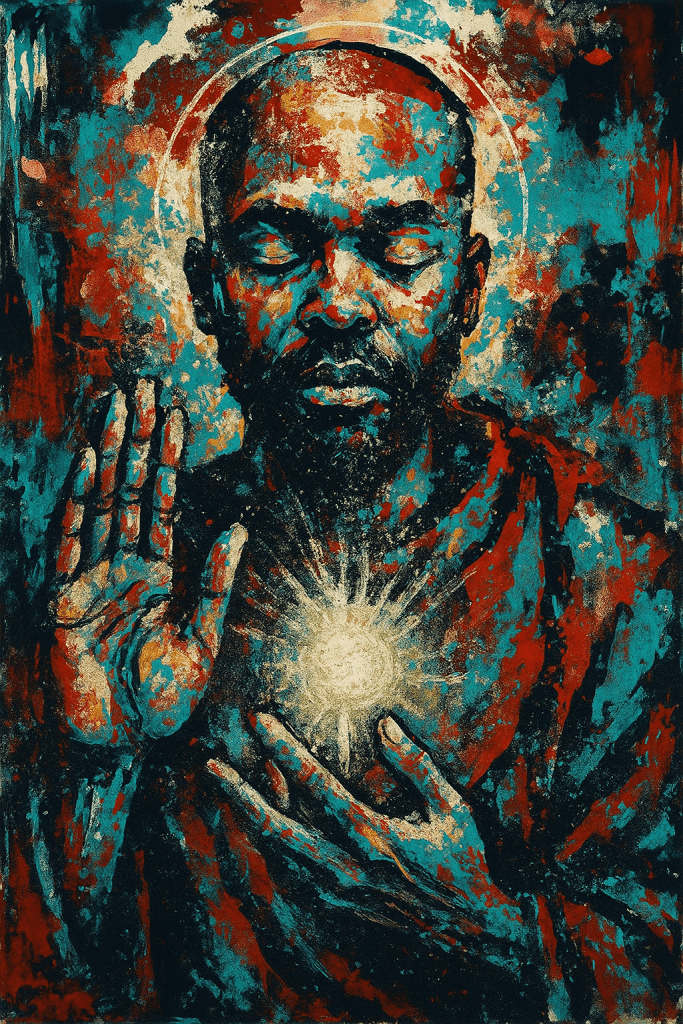
The Echo of You

How Others Shape the Illusion of Self

Every mind that encounters you constructs a version of who you are—one that exists only within their perception. These projections are not reflections of an objective truth but rather interpretations woven from personal history, emotions, and unconscious biases. The self you recognize as you dissolves into a multiplicity of shifting impressions, each molded by the observer’s lens.

A single glance, a brief interaction, a conversation—these moments serve as the brushstrokes that paint an image of you in another’s mind. That rendering is not built from the essence of your being but from their expectations, fears, desires, and past experiences. You become a mirror reflecting not your own face but the fragmented archetypes stored within them.

Eight billion people could know of your existence, and within those eight billion minds, eight billion versions of you would reside—each unique, each tethered to the individual’s understanding of reality. Some may see wisdom where others see arrogance, kindness where others perceive naivety, or detachment where others sense depth. Each impression, though deeply felt by the observer, is nothing more than a personal myth—an illusion shaped by the inner world of the one perceiving.

This ongoing act of creation is not limited to how others see you; it extends to how you see them. The individuals encountered are rarely experienced as they are but instead as projections of our own conditioning. An idea of them forms, colored by past wounds, cultural imprints, and unconscious expectations. Thus, every relationship becomes a dance of illusions, where two constructs interact rather than two beings truly seen for what they are.

If these imagined versions of one another are so deeply ingrained, what remains when they fall away? What is left when perception no longer dictates existence? The formless, nameless presence that remains is not confined by labels or interpretations—it simply is. And in that space, where no definitions persist, the need to be seen, understood, or accepted dissolves into something far greater than any construct a mind could create.

Morgan O. Smith

Get Your Free Copy of My Book, Bodhi in the Brain!
https://subscribepage.io/oTSZQu

When I Say Full Awakening…

This Is What I Mean

Many speak of awakening, yet far fewer comprehend its fullness. I’ve encountered every kind—emotional, spiritual, philosophical, mystical. Each unveils a layer, each reveals a depth. But what I call full awakening—what I live as full awakening—is something few ever point toward, and fewer still embody.

It is not about personal clarity. Not about peace of mind, a better life, or even union with a divine presence. Those are steps, glimpses, fragments. Full awakening is not a state within experience. It is the collapse of all distinction between state and experiencer.

This isn’t about finding your place in the cosmos—it’s about the disappearance of place, cosmos, and self as separate notions. When I say full awakening, I am referring to the direct knowing that everything—absolutely everything—is a singularity.

Existence and nonexistence. Subject and object. The smallest subatomic flicker and the sweep of galactic spirals. Civilizations long past and unborn futures. Every religion, every philosophy. All thoughts. All acts. Every realm, every reality, every god.

The seen and the unseen. The formed and the formless. That which is birthed, that which dies, and that which never entered the cycle. All technologies. All intelligences. All contradictions and confirmations. All questions and every possible answer.

Not merely connected. Not even interdependent.

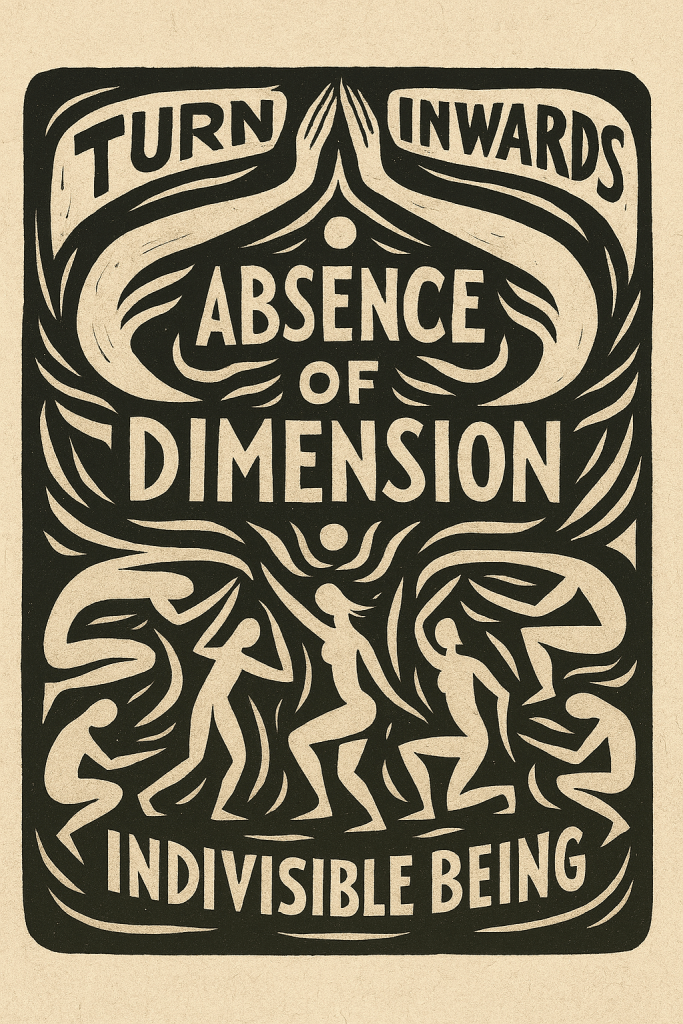
Indistinct. Inseparable. One.

That realization is not metaphorical. It is not poetic. It is not conceptual. It is total. It devours every duality and even the idea of devouring. It consumes the witness, the process of witnessing, and that which is witnessed—leaving no remainder.

So when another speaks of full awakening, I listen with care. Because unless it includes everything I’ve said—and also what they say—it’s not the same thing. The paradox, of course, is that what I’m pointing to also includes that divergence. It embraces even what appears to deny it.

Full awakening is not a peak. It is not an event. It is the vanishing of all altitude and time. It is not even a realization. It is what remains when all realizations dissolve.

One. Not a oneness made of parts. Not a whole made of pieces. Not harmony, not unity. Just One.

And that One is not separate from what you are.

Morgan O. Smith

Get Your Free Copy of My Book, Bodhi in the Brain!
https://subscribepage.io/oTSZQu

The Singular Moment of Absolute Realization

A seeker walking the delicate balance between opposites may one day find themselves at the threshold of the most profound realization imaginable. A moment beyond all description, where the entirety of existence collapses into a singularity of knowing. Not a knowing of the intellect, but of something far deeper—an understanding so complete that it dissolves all doubt, all separation, and all longing.

This is the moment of total arrival, the point at which all seeking ceases because there is nothing left to seek. The mind, body, and soul align in a way that makes all past experiences seem like faint whispers of truth. The illusion of boundaries vanishes, revealing the pristine reality that has always been present—an awakening not to something new, but to what has been hidden in plain sight.

Within this instant, fulfillment is no longer an aspiration but a living force vibrating through every cell. The distinction between subject and object crumbles, and what remains is a radiant presence, an unshakable unity. The notion of a separate self fades like mist before the rising sun, and what is left is a boundless openness, an expanse where nothing is missing.

Words fail. Concepts falter. Language collapses under the weight of such an occurrence. It is neither thought nor feeling, neither sensation nor perception. It is an unnameable state where the dance of duality finally rests. It would be as elusive as the silence between heartbeats if there were a word for it. A paradox that cannot be dissected, only lived.

Reaching this pinnacle does not come from effort alone or from waiting in passive expectation. It is not a reward for discipline or devotion, yet it is freely given to those who surrender all pretense of control. It arrives not as a thunderous event but as a gentle revelation, as if the universe exhales and everything becomes clear.

And in that clarity, tears may fall—not from sorrow, nor joy, but from the sheer intensity of realization. The great mirage of the self dissolves, leaving only the recognition that there was never anything to grasp, nothing to claim, nothing to own. Just a pure, unshakable knowing that transcends all dichotomies.

Some will wonder how long it takes to arrive at such a moment. But time is irrelevant here. The moment is neither ahead nor behind—it is always now, waiting to be seen. To those who ask, “How do I reach it?” the only answer is: Stop. Be still. Listen.

Morgan O. Smith

Yinnergy Meditation/Neurofeedback, Spiritual Life Coaching & My Book, Bodhi in the Brain…Available Now!

https://linktr.ee/morganosmith

The Unveiling of the Absolute

Beyond Self, Beyond Knowing

There comes a moment when the dissolution of identity is no longer a metaphor, but an unmistakable reality. What once seemed separate—self and other, observer and observed—vanishes into the great singularity that is neither governed by measure nor confined by perception. In that unveiling, it becomes self-evident that existence is not a sum of parts, nor an interplay of subject and object, but an indivisible wholeness beyond all duality. The infinite, unbound by any law, does not require validation—it simply is.

No longer an idea or a belief, the One stands as an undeniable presence—an unshakable certainty. This knowing bypasses thought, untouched by structure or interpretation. It is direct, unfiltered, immediate, and absolute. Once shackled by questions, the mind ceases its restless inquiry, for the answer is not separate from the questioner. Here, the eternal does not unfold in time; it is the ever-present now, where past and future collapse into a singular, timeless recognition.

This realization is not a possession of the mind, nor an achievement of effort. It is a boundless, all-pervading awareness that, when touched, annihilates the illusion of separation. The seeker dissolves into that which was sought. Love ceases to be an emotion—it is revealed as the very substance of all things, the living essence of existence itself.

To encounter this absolute presence is to stand at the threshold of an unfathomable vastness, where even awe is devoured by the sheer immensity of being. What remains is neither silence nor sound, neither stillness nor movement, but an overflowing fullness beyond description. No imitation, no concept, no sublime experience in the relative world can parallel this recognition. It is pure actuality—without form, without boundary, yet wholly complete.

Those who glimpse this cannot return unchanged. The mind may attempt to grasp it, but the knowing is already deeper than thought. What was once seen as limitation is revealed as boundless freedom. What was once sought outside is known to be ever-present. And in that recognition, the paradox dissolves, leaving only That Which Is.

Morgan O. Smith

Yinnergy Meditation/Neurofeedback, Spiritual Life Coaching & My Book, Bodhi in the Brain…Available Now!

https://linktr.ee/morganosmith

What Can I Control?

A Nondual Reflection on the Illusion of Distinction

From a young age, we are taught to divide reality into two columns: what belongs to us and what belongs to others, what we can shape and what is beyond reach. This dualistic framework—“mine” versus “not mine,” “inner” versus “outer”—seems practical, especially when navigating the everyday world. But there comes a moment, often brought on by grace or deep inquiry, when this neat partition dissolves, and all that remains is undivided suchness.

From a conventional perspective, distinguishing between the self and the other is wise. One learns to take responsibility for thoughts, feelings, and actions while relinquishing attempts to control the mental and emotional weather of others. Yet this distinction is ultimately a mirage from the viewless view of Nonduality. There are no separate selves, no isolated thoughts floating inside “my” head, no truly foreign behaviour arising “over there.”

The very idea of control is a construct built atop the illusion of separation. In the deepest experience of pure awareness, even the one who seeks control disappears. There is only the arising of thoughts, feelings, actions, and phenomena within a seamless field of being. The idea that “my” thoughts are within “my” control is as illusory as the belief that someone else’s behaviour is truly “theirs.”

And yet, following such an experience, life continues. The body-mind returns to its rhythms. It begins again to label, to assign, to plan. What then? One doesn’t unlearn the insight. Instead, there arises a profound shift—a knowing that while dualistic functioning remains useful in relative existence, the truth of no-boundary consciousness pervades it all.

Over time, particularly as one matures into what Integral Theory calls the integral stage of development, a synthesis emerges. The subjective and the objective no longer stand opposed. Responsibility is no longer about control—it becomes an expression of harmony. One can hold space for others’ words and actions without trying to fix them, just as one can engage one’s thoughts and behaviours without clinging to the illusion of authorship.

There is no inside or outside. No one to control, and nothing to control. Just an unfolding—flawless in its mystery, unified in its movement.

Morgan O. Smith

Yinnergy Meditation/Neurofeedback, Spiritual Life Coaching & My Book, Bodhi in the Brain…Available Now!

https://linktr.ee/morganosmith