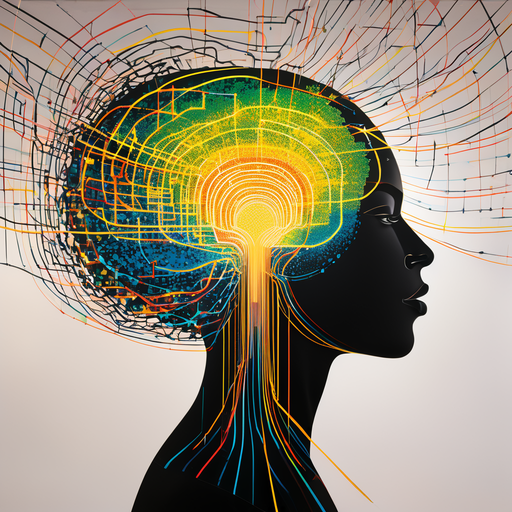
Unlocking the Mind’s Full Potential

A Journey Beyond the Ordinary

In a world where our thoughts often run on autopilot, dictated by routine and societal norms, the true potential of the human mind remains largely untapped. It’s akin to a vast, unexplored landscape, brimming with possibilities that transcend the mundane. But how do we navigate this inner wilderness and fully express the capabilities of our minds?

The first step is awareness. We must become conscious observers of our thought processes. This goes beyond mere introspection; it involves a deep, almost meditative attention to the way we think, feel, and perceive the world. Only then can we identify the habitual patterns that confine our mental agility.
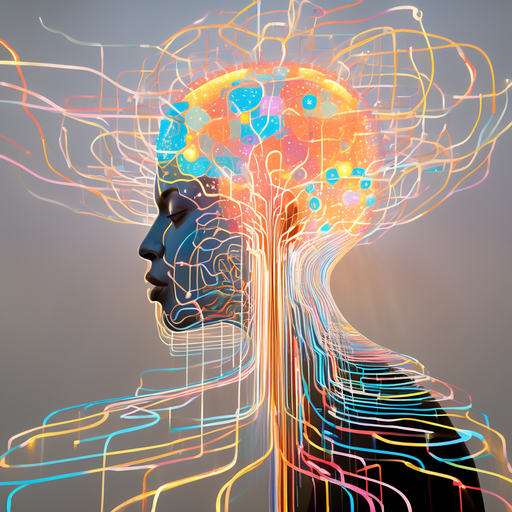

Next is the cultivation of curiosity. A curious mind is an active mind, always seeking, always questioning. It does not accept the world at face value but looks for the layers and connections that lie beneath the surface. This relentless quest for understanding and meaning propels our thoughts to new heights.

Creativity is the third key element. It’s not just about artistic endeavours; creativity is a way of thinking, a means of viewing the world through a lens of possibility and innovation. When we embrace our creative impulses, we give ourselves permission to think outside the conventional frameworks and explore new territories of thought.

Finally, there is the aspect of connection. Our minds are not isolated entities; they thrive on the exchange of ideas and experiences with others. Engaging in thoughtful dialogue, embracing diverse perspectives, and seeking collaborative ventures enrich our mental processes and broaden our understanding.


As we embark on this journey of mental exploration and expression, we discover that the human mind is not just a tool for navigating life’s practicalities. It is a dynamic, ever-evolving entity, capable of extraordinary insights and profound understanding. The journey to fully activate our brains is, in essence, the journey to a more fulfilled and enlightened existence.

Morgan O. Smith

Yinnergy Meditation, Spiritual Life Coaching & My Book, Bodhi in the Brain…Available Now!

https://linktr.ee/morganosmith

Drowning or Swimming? Decoding the Paradox of Mind Transcendence

Joseph Campbell, a luminary in the realm of comparative mythology and religion, once penned a remarkably profound quote: “The psychotic drowns in the same waters in which the mystic swims with delight.” This sentence invokes an evocative imagery of two people submerged in the same waters, yet experiencing entirely different outcomes. As we unravel the layers behind this quote, we delve into the profound disparity between losing one’s mind and transcending it.

On the surface, the quote suggests a nuanced understanding of how two people can experience the same reality in starkly different ways. But it goes deeper than that. It’s about the fine line that separates self-destruction and self-actualization, the boundary between psychosis and mysticism. The “waters” in this quote can be seen as the metaphorical sea of consciousness – the vast, undefined, often unruly and chaotic realm of the mind.

For the psychotic, these waters are treacherous, overwhelming, and ultimately engulfing. This individual is at the mercy of their thoughts, emotions, and perceptions, succumbing to the unfiltered and uncontrollable tide of the mind’s creations. They ‘drown’ as they lose their ability to discern between their constructed thoughts and objective reality.

On the other hand, the mystic does not just survive but thrives in these waters. How so? They are those who have mastered the art of transcending the mind. They don’t seek to control or suppress their thoughts and feelings but rather learn to navigate them. By developing a keen awareness of their internal states, they can distance themselves from their thoughts, recognizing that they are not defined or confined by them. This detachment isn’t a rejection of the mind but a profound understanding of its place.

Does this mean transcending the mind is merely about survival? Not in the least. For the mystic, the sea of consciousness becomes a source of delight and wonder, a playground of existential exploration. The waters which are tumultuous for the psychotic become serene for the mystic. They can revel in the complexities and curiosities of the mind, but they never forget they are swimming – not sinking.

So, what distinguishes the drowning psychotic from the delightfully swimming mystic? It lies in the relationship each holds with their mind. The psychotic is subjugated by their mind, entangled in a brutal dance with their thoughts, leading to the loss of self. Conversely, the mystic views the mind as a tool, a companion in their quest for enlightenment, not a ruthless master.

We can argue that the art of swimming in these waters, as a mystic does, is accessible to us all. The question is whether we can cultivate mindfulness, detach from our thoughts without suppression, and remain open to the vast possibilities of human consciousness. After all, the goal isn’t to escape the waters but to learn to swim and ultimately delight in them.

Joseph Campbell’s metaphor presents a thought-provoking dichotomy between two extremes of human consciousness. It is a profound reminder that our relationship with our mind can either lead to our downfall or our enlightenment. It urges us to transcend rather than lose ourselves in the convoluted maze that is the human mind. The water, after all, is the same. It’s the swimmers who are different.

Morgan O. Smith

Yinnergy Meditation & My Book, Bodhi in the Brain…Available Now!

https://linktr.ee/morganosmith