The Face of the Observing Self

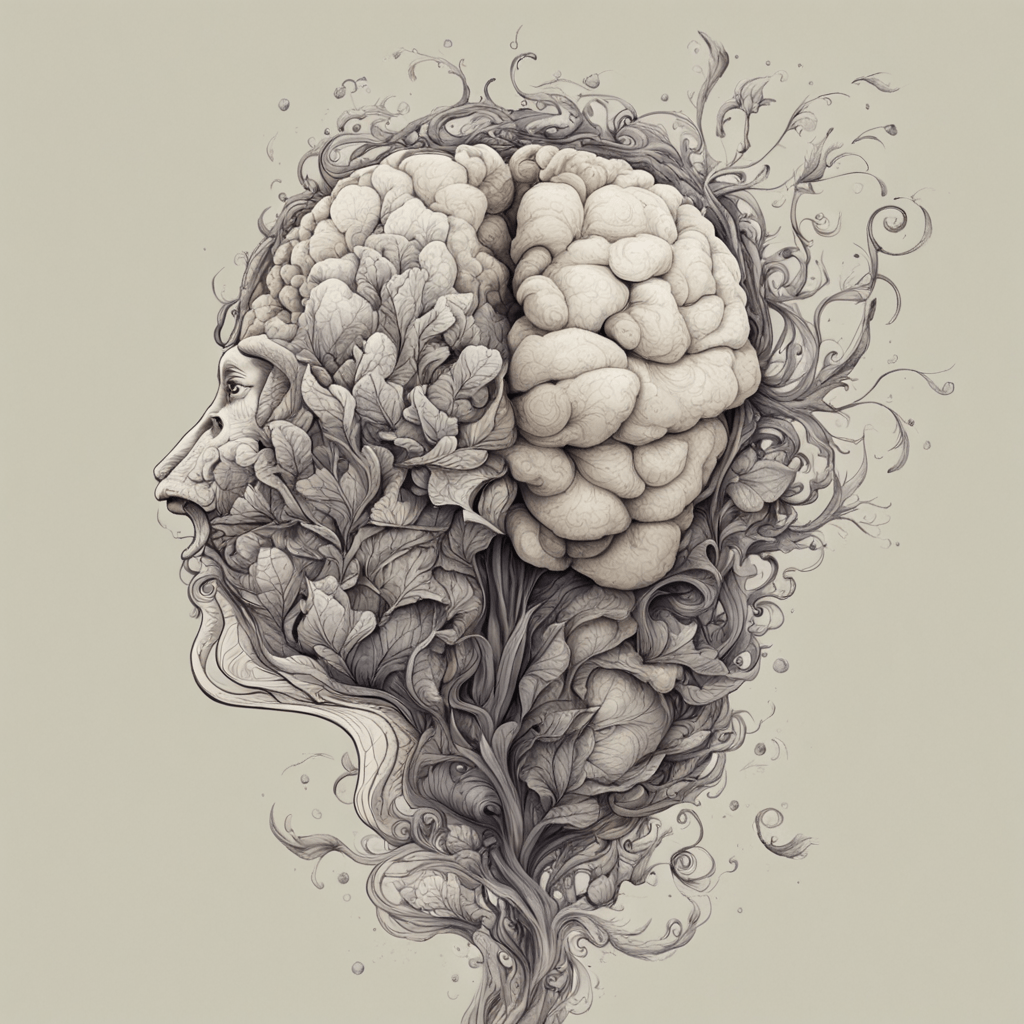
What does it mean to observe oneself? To truly look inward is to confront the observer and the observed paradox. Self-observation reveals something both unsettling and liberating: the absence of a concrete “self” to observe. Yet, this absence is not a void; it is a vast, dynamic awareness that holds all experience without judgment or attachment.

When the mind turns its gaze inward, it seeks to grasp the essence of identity. Who is the one observing? Is it the body, the thoughts, or the emotions? As the layers of identity dissolve under scrutiny, the “face” of the observing self becomes clear: it has no features, no boundaries, no name. It is an awareness that exists beyond the stories we tell ourselves, beyond the constructs of past and future.

This realization often stirs resistance. The mind, conditioned to identify with roles and narratives, may fight to hold onto the illusion of a solid self. But the observing self invites surrender—not as a defeat but as a return to authenticity. To analyze its face is not to define it but to recognize that it is the source of all definitions, all perceptions, and all experiences.

In this space of pure observation, there is no judgment. Thoughts arise and fall away like waves; emotions flow without resistance. The observer does not interfere, label, or categorize. It is simply present, awake, and unattached. This is where true freedom lies—not in controlling the waves of experience but in abiding by the unmoving awareness beneath them.

The practice of observing oneself is not an escape from life but a profound engagement with it. It is the realization that the one who suffers, the one who desires, and the one who fears is not the ultimate truth of who we are. Beyond these transient identities lies the still, eternal witness, untouched by the flux of existence.

To analyze the face of the observing self is to encounter the formless essence of being. It is a mirror reflecting the infinite, a gateway to profound peace. This realization transforms how we engage with the world, fostering a deep compassion for ourselves and others. For when the illusion of separation falls away, what remains is love—the recognition that the observer and the observed are one.

Morgan O. Smith

Yinnergy Meditation, Spiritual Life Coaching & My Book, Bodhi in the Brain…Available Now!

https://linktr.ee/morganosmith

A Mind Fully Expressed

The human brain holds untapped dimensions of potential, yet most individuals navigate life using only fragments of its capability. This limitation is not due to biology but to patterns of thinking and perception shaped by societal conditioning, habitual behaviours, and resistance to change. The question arises: What does it mean to fully activate the brain? And how can this lead to a fully expressed mind?

A fully activated brain does not signify busyness or overstimulation. Instead, it represents a harmonious integration of logic, creativity, intuition, and awareness. When these dimensions align, the mind ceases to operate in fragmented dualities—right versus wrong, success versus failure—and begins to function as an instrument of boundless expression.

Achieving this state requires more than intellectual stimulation or the accumulation of knowledge. Practices such as meditation, neuroplastic exercises, and deep creative play open pathways to dormant brain regions. These practices cultivate a unified consciousness where clarity replaces confusion, and insight transcends limitation.

Activation begins by challenging the mind’s default settings. Unlearn the need for control, question the narratives you’ve inherited, and observe the interplay between thought and emotion without attachment. By dissolving mental rigidity, space emerges for new possibilities to take root.

A fully expressed mind doesn’t simply solve problems; it creates realities. When the brain functions as an integrated whole, life transforms into a canvas for profound exploration, innovation, and growth. Every action, from the simplest interaction to the grandest creation, becomes a reflection of an awakened state of being.

This level of brain activation is not reserved for the mystics, the prodigies, or the geniuses. It is the birthright of every human being willing to dismantle the barriers within and embrace the unknown. The fully expressed mind is a testament to the infinite nature of consciousness, a reminder that the boundaries we perceive are self-imposed illusions.

Are you ready to unlock this potential? The journey requires courage, but the reward is a life that radiates authenticity, creativity, and boundless freedom.

Morgan O. Smith

Yinnergy Meditation, Spiritual Life Coaching & My Book, Bodhi in the Brain…Available Now!

https://linktr.ee/morganosmith

Exciting Updates: Podcasts, Articles & More!

Hello Friends,

I’m thrilled to share some exciting updates about the work I’ve been doing and the new insights I’ve been exploring. From podcasts to articles and more, here’s what’s new in my world of meditation, neuroscience, and personal transformation.

Diving Into the Mind on Guru Viking Podcast

I recently had the pleasure of joining Steve James on the Guru Viking Podcast for another enlightening discussion. This time, I was joined by Alex Ni of Divergence Neuro Technologies and Columbia University neuroscience student Chelsey Fasano to explore the fascinating world of my unique brainwave patterns.

These brainwaves, cultivated over two decades of dedicated meditation, offer profound insights into how the mind and meditation can intersect with neuroscience and personal growth.

Stay tuned for the full episode, but you can see some of my results here:
Exploring the Mind of an Advanced Meditator Pt. 2.

Check out Guru Viking every Friday on YouTube, Apple Podcasts, SoundCloud, and Spotify!

My Story Featured in Usainstants & Brainz Magazine

I’m honored to have my journey featured in Usainstants, where you can read about my transformation from awakening to creating the Yinnergy program. This story highlights how meditation has reshaped my life and the lives of many others. Read the full article here: Morgan’s Transformative Journey.

Additionally, as an Executive Contributor to Brainz Magazine, I’ve been sharing my perspectives on mindfulness, spirituality, and transformation. You can explore my latest articles here: Brainz Magazine.

Stay Tuned for More

I’m so grateful to be able to share my journey with you through these platforms. From podcasts to articles, each step is another opportunity to explore the limitless possibilities of the human mind and spirit.

Thank you for being a part of this journey. Together, let’s continue to unlock the extraordinary potential within us all.

With gratitude and excitement,

Morgan O. Smith

Yinnergy Meditation, Spiritual Life Coaching & My Book, Bodhi in the Brain…Available Now!

https://linktr.ee/morganosmith

Finding True Happiness

Embracing the Wholeness of Emotions

Happiness, as it is often pursued, can feel like a fleeting dream—a constant chase for experiences that promise joy while running away from anything that feels uncomfortable. Yet, this pursuit can leave us fragmented, perpetually seeking and never arriving. The paradox of true happiness lies in the radical act of embracing all feelings, not just the pleasant ones.

Contentment is not the absence of discomfort; it is the presence of wholeness. Life offers a vast spectrum of emotions, each carrying its wisdom and significance. Joy and sorrow, hope and despair, love and fear—none exist in isolation. To deny one is to diminish the richness of the other. True happiness begins not when we suppress pain but fully meet it without resistance.

Imagine standing during a thunderstorm. Most would run for shelter, seeking safety from the discomfort of the rain. But what if, instead, you stood still, feeling the rain on your skin, hearing the rhythm of its fall, and witnessing its cleansing power? Embracing emotions is like this: a willingness to be with what is, not wishing it away but seeing its beauty and necessity.

When joy arises, celebrate it without clinging. When sadness visits, honour its presence without judgment. Anger, fear, excitement, and serenity all have their place in the dance of existence. Each emotion becomes a teacher, guiding us to deeper self-awareness and authenticity.

The secret is to observe emotions without becoming consumed by them. Like waves in the ocean, they rise and fall, but the essence of who we are—vast, still, and unshaken—remains constant. This shift in perspective transforms the way we experience life. Happiness is no longer a fleeting feeling tied to circumstances but an enduring sense of contentment rooted in presence.

When we no longer resist the full range of our humanity, happiness is no longer conditional. It becomes a state of being that arises from accepting life as it is—unfiltered, raw, and real. In this acceptance, a profound peace unfolds, transcending temporary highs and lows.

The journey to true happiness begins by welcoming all parts of ourselves. In every moment, every feeling, and every breath, there is an invitation to return to wholeness.

Morgan O. Smith

Yinnergy Meditation, Spiritual Life Coaching & My Book, Bodhi in the Brain…Available Now!

https://linktr.ee/morganosmith

The Birth of Purpose

Unveiling the “Why” of Your Life

Mark Twain’s poignant observation—that our lives are defined by the day we are born and the day we discover why—speaks to a universal quest for meaning. Birth introduces us to the world, but it is purpose that gives our existence depth and significance. This discovery transforms a mere life into a profound journey.

The search for one’s purpose often feels elusive, like chasing shadows in the dark. It demands more than intellectual effort; it requires us to pause, reflect, and confront the silence beneath our everyday noise. Purpose rarely presents itself in grand revelations. Instead, it whispers in moments of clarity, when life’s chaos subsides and we sense an alignment between who we are and what we do.

For some, this purpose is tied to service—offering a helping hand or inspiring others to rise. For others, it is found in the relentless pursuit of a dream, an expression of creativity, or simply being present and whole. Whatever the form, discovering purpose feels less like an addition to life and more like the peeling away of layers, revealing what was always there.

However, the question arises: How do we find it?

The process begins with self-awareness. Quiet observation of one’s passions, strengths, and values can illuminate the direction toward purpose. Those moments when time seems to dissolve when you feel most alive and authentic, hold clues. Follow them. Trust them. They are markers on the path.

Another step is embracing uncertainty. Searching for “why” does not always yield immediate answers. Life’s purpose evolves as you do, shifting with growth and perspective. What feels meaningful today may expand or transform tomorrow. Purpose is not a destination but an ongoing inquiry, a question to be lived rather than solved.

The most profound realization about purpose may be this: it is less about finding a specific role or mission and more about being attuned to the present. Purposeful living is born not from monumental achievements but from how we engage with each moment, each relationship, and each opportunity to learn and grow.

When we shift our focus from doing to being, from achieving to experiencing, we realize that purpose is not a far-off goal but something we cultivate daily. The journey becomes its reward. And in those rare, luminous moments when we connect with our “why,” we find ourselves not only alive but truly living.

Morgan O. Smith

Yinnergy Meditation, Spiritual Life Coaching & My Book, Bodhi in the Brain…Available Now!

https://linktr.ee/morganosmith

The Unseen Path to Happiness

Happiness often appears as a destination—something to be attained by seeking pleasurable experiences, avoiding pain, and curating external conditions. Yet, this pursuit can feel elusive, as if true happiness constantly moves just beyond reach. Perhaps this is because happiness isn’t found in the suppression or control of emotions, but in embracing them all as integral aspects of our human experience.

Emotions are often categorized as “positive” or “negative,” with joy, love, and excitement praised, while sadness, anger, and fear are seen as obstacles to overcome. However, this dualistic view creates resistance. Denying so-called negative emotions only magnifies their intensity, embedding them deeper within the psyche. True contentment arises not from avoiding discomfort but by fully experiencing and accepting it without judgment.

Imagine sitting with sorrow as you might with an old friend—acknowledging its presence, listening to its message, and recognizing its role in your life. Sadness, when embraced, transforms from an adversary into a teacher. It illuminates where attachments or unmet desires linger and invites you to release the illusion of control. Similarly, anger, when approached without suppression or overindulgence, becomes a fierce energy capable of clarifying boundaries and catalyzing change.

Contentment is not denying the human condition but a deep surrender to its unfolding. This surrender doesn’t mean passivity; it is an active engagement with the present moment. By welcoming all emotions, the inner landscape transforms. Happiness is no longer confined to fleeting highs but instead becomes an abiding state of being—anchored in equanimity, rooted in authenticity.

In this light, happiness is not the absence of pain but the profound realization that all emotions—joy and sorrow, peace and unrest—are sacred facets of existence. Each one offers an opportunity for growth, insight, and connection. To find contentment within them is to see life as whole, unbroken, and imperfect.

By sitting with your emotions and embracing their entirety, you awaken to the simple truth: happiness is not found in resisting life but in meeting it fully.

Morgan O. Smith

Yinnergy Meditation, Spiritual Life Coaching & My Book, Bodhi in the Brain…Available Now!

https://linktr.ee/morganosmith

Exploring the Mystical Depths of Meditation

Insights from a Neurofeedback EEG Assessment

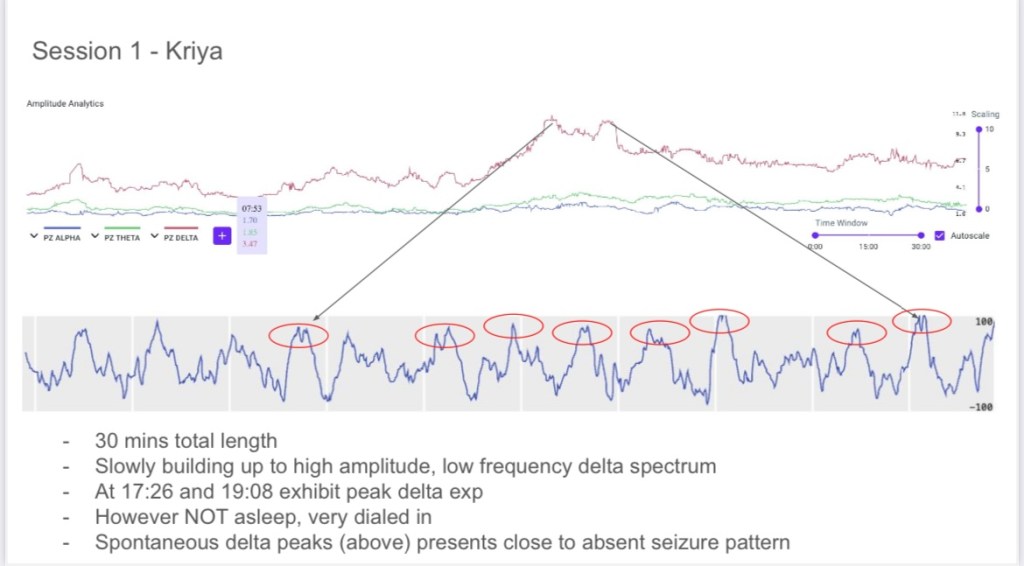
On Friday, November 22, I had the unique opportunity to undergo a neurofeedback EEG assessment to evaluate my brain’s activity during meditation. This fascinating experience was facilitated by neurofeedback expert Alex Ni, the CEO of Divergence Neuro Technologies. The results revealed something extraordinary: my brainwave patterns reflect those of an advanced meditator, marked by the ability to generate high-amplitude delta waves while fully awake and completely still.

This outcome did not arise overnight—it is the culmination of over 21 years of dedicated meditation practice. For at least an hour every day, without missing a single session, I have cultivated this state of deep awareness. Meditation has been my unwavering companion on a journey of transformation, healing, and spiritual exploration.

Key Findings

  1. High-Amplitude Delta Waves in Wakefulness
    The assessment showed that I could produce delta waves typically seen in deep sleep or unconscious states, but while fully conscious and still. These peaks, which appeared spontaneously, resemble absent seizure patterns in their electrical signature. Yet, instead of being pathological, they occurred in a meditative state, reflecting a refined and balanced neural state.
  2. Kriya and Kundalini Correlations
    The kriyas, spontaneous energetic movements often experienced during meditation, seem directly connected to these delta peaks. This activity suggests a state where the body-mind system is releasing suppressed energies or blockages, facilitated by deep equanimity and heightened awareness.
    The presence of delta spikes may also be a physiological manifestation of kundalini energy—the subtle, transformative force described in spiritual traditions as rising through the chakras.
  3. Expert Validation
    Alex Ni was so intrigued by the findings that he consulted Dr. Jeff Tarrant, a 30-year expert in brainwave research. Dr. Tarrant noted that similar patterns were observed in his three-year study with mediums—further validating the unique nature of these results.

Bridging Neuroscience and Spirituality

The findings of this assessment reveal a fascinating convergence of neuroscience and spirituality. The high-amplitude delta waves, kriyas, and kundalini energy point to a profound transformation occurring at the intersection of the nervous system and consciousness. These patterns suggest that meditative practices have the potential to fundamentally alter neural pathways, facilitating deep healing and profound states of awareness.

Implications of Advanced Meditation

  1. Energetic Purification
    The kriyas and delta spikes may signify a cleansing process, releasing deep-seated energetic blockages and re-aligning the body-mind system.
  2. Non-Dual Awareness
    The ability to remain conscious during delta brainwave peaks reflects a state of non-dual awareness—where presence and transcendence coexist seamlessly. This aligns with descriptions of advanced meditation states where the ego dissolves, creating space for higher consciousness.
  3. Kundalini and Neural Rewiring
    The resemblance of these patterns to absent seizures may indicate neural rewiring as the body adjusts to the heightened kundalini energy. This profound restructuring of the nervous system is often associated with spiritual awakening processes.

A Path Forward

Next week, I will participate in another study to explore this phenomenon further. These experiences offer a glimpse into the transformative potential of meditation—not just as a tool for relaxation but as a gateway to the depths of human consciousness and spiritual awakening.

For anyone intrigued by these groundbreaking insights into meditation and neuroscience, I encourage you to explore the work of Divergence Neuro Technologies at www.divergenceneuro.com. Their cutting-edge research continues to illuminate the profound connections between the brain and consciousness, offering a deeper understanding of what it means to transcend the ordinary and touch the extraordinary.

Through this journey, it’s clear that meditation is more than a practice—it’s a bridge between worlds, where the boundaries of science and spirituality dissolve into the infinite.

It’s humbling to reflect on how two decades of unwavering dedication to meditation have paved the way for these remarkable insights. This is an affirmation that the time and intention invested in inner stillness have the power to transform not only the mind and body but also our very relationship with existence itself.

Morgan O. Smith

Yinnergy Meditation, Spiritual Life Coaching & My Book, Bodhi in the Brain…Available Now!

https://linktr.ee/morganosmith

We Shine Brighter Than Light

In the quiet depths of existence, there lies a paradox that many struggle to reconcile. Darkness is often shunned, relegated to the shadows of our awareness, and misunderstood as something to escape or avoid. Yet, within this shadowed realm exists a profound luminosity, a radiance that surpasses even the most blinding light. It’s a subtle brilliance—silent, invisible, but undeniable for those who dare to look beyond the surface.

Darkness is not the absence of light but its origin. It is the womb that cradles potential, the fertile ground where all things come to be. Darkness envelops us with a kind of raw intimacy, inviting us to release attachments to form and identity. It is the space where ego dissolves, where judgments fade, and where we can finally meet ourselves without the filters we have spent lifetimes building. Here, in the stillness, a new kind of light emerges—a light that is not separate from the dark but intertwined, indistinguishable from it.

Consider that every act of creation begins within the void. The artist stares at a blank canvas, the writer faces a blank page, and the thinker sits with a blank mind. It is only by surrendering to the unknown, to the formless, that something profound can emerge. Darkness doesn’t just consume or diminish; it adds depth, layers, and meaning. It carves out spaces within us, allowing us to perceive dimensions of ourselves and the universe that we could never touch through brightness alone.

This radiant darkness reflects the essence of life itself. We are beings that expand and contract, that are filled and emptied in cycles. Every breath, every heartbeat, every experience is a reminder of this cosmic dance of giving and receiving, of adding to and taking away. When we stop resisting this rhythm, we find that what we once perceived as shadows are simply reminders of our potential, our uncharted depths.

To shine as darkness is not to reject light but to transcend the duality of light and dark altogether. It is to recognize that true illumination doesn’t come from escaping or vanquishing shadows but from integrating them. This process transforms our understanding, allowing us to embody a different kind of luminosity—a light that isn’t bound by external visibility but shines from an unshakable inner knowing.

We are both the night and the stars within it, shaping and reshaping ourselves continuously. As we embrace the shadows within, we awaken to a deeper reality, one where every facet of existence has its rightful place. This acceptance, this deep union with both light and dark, is what ultimately enables us to shine brighter than light itself.

Morgan O. Smith

Yinnergy Meditation, Spiritual Life Coaching & My Book, Bodhi in the Brain…Available Now!

https://linktr.ee/morganosmith

The Shadow Self of the Grandiose

The concept of the shadow self—a term Carl Jung coined—reveals layers of ourselves we often choose to hide, repress, or deny. These shadow aspects are usually relegated to a dark corner of our psyche, only surfacing in fleeting glimpses. Yet, when the shadow self takes on a grandiose form, it ceases to be subtle, becoming instead a dominating force. It blinds us with illusions of superiority, entitlement, or self-importance, distorting our perception and interactions.

In personal growth and spiritual awakening, confronting the shadow self is both inevitable and essential. However, when the shadow becomes grandiose, it can convince us we are immune to error, beyond reproach, or uniquely enlightened. This delusion becomes a veil, preventing authentic growth and genuine self-reflection.

The grandiose shadow is not merely about arrogance. It’s a defence mechanism, an armour forged in the fires of insecurity and fear. By building up the self as untouchable or superior, we attempt to ward off the vulnerability of true introspection. But this shield, rather than protecting us, leads to isolation, as others feel the weight of this projection and distance themselves, sensing the ego’s hunger for validation cloaked in supposed wisdom or enlightenment.

In many spiritual or philosophical circles, grandiosity masquerading as enlightenment can become especially potent. The grandiose shadow asserts itself under the guise of spiritual authority or moral righteousness, leading us to believe we are above others on the path. But this illusion only widens the gap between our authentic self and the mask we’ve constructed.

To navigate this terrain, a key question emerges: Are we genuinely pursuing self-understanding, or are we feeding a need to feel special, above, or untouchable? True growth does not demand recognition or approval; it thrives in humility and quiet awareness.

Recognizing when our shadow has grown too grandiose is challenging but necessary. It requires questioning our motives, embracing vulnerability, and letting go of the need to stand above. Only by shedding the inflated version of ourselves can we step into true authenticity and spiritual liberation.

 Morgan O. Smith

Yinnergy Meditation, Spiritual Life Coaching & My Book, Bodhi in the Brain…Available Now!

https://linktr.ee/morganosmith

The Unraveling of the Self

Emotional and Mental Breakdowns During Spiritual Awakening

Introduction

The journey toward spiritual awakening often appears, from the outside, as a serene and enlightened path. Yet, for those who walk it, the experience can be anything but peaceful. Emotional and mental breakdowns are common, and they serve a profound purpose. These breakdowns are not merely unfortunate side effects but are integral to the transformation that takes place during spiritual awakening. Understanding why and how they occur sheds light on the deeply transformative nature of this journey.

The Dissolution of the Ego

At the heart of spiritual awakening lies the dissolution of the ego, the part of us that identifies with our thoughts, emotions, and external identities. The ego forms a protective shell around our innermost being, creating a sense of separation from the world and others. As spiritual awakening progresses, this shell begins to crack and dissolve. The breakdowns that occur during this process are the ego’s desperate attempts to hold onto the illusions it has created.

Emotional turmoil arises as old wounds, suppressed fears, and unresolved traumas surface. These are not new experiences; they are fragments of our psyche that have been buried deep within. The awakening process brings them to the surface, demanding that they be acknowledged, felt, and released. This can manifest as intense sadness, anger, or anxiety, often without a clear trigger. The breakdowns are not a sign of failure but a necessary purging of what no longer serves the soul’s evolution.

Mental Deconstruction

Alongside the emotional upheaval, there is often a mental breakdown that accompanies spiritual awakening. Our minds are accustomed to operating within the framework of duality—right and wrong, good and bad, self and other. As awakening deepens, this framework begins to disintegrate, leading to confusion, disorientation, and a sense of losing touch with reality.

The mind, which has always sought control through understanding and categorizing, now faces the incomprehensible. Concepts that once provided a sense of stability and security—such as time, identity, and purpose—start to unravel. This can feel like madness, as the mind struggles to find footing in a reality that no longer adheres to the rules it once knew.

However, this mental breakdown is a gateway to a higher understanding. It forces the individual to let go of the need to intellectually grasp the vastness of existence and instead invites them to surrender to the mystery of being. What emerges from this surrender is a more expansive awareness that transcends the limitations of the thinking mind.

The Purpose Behind the Breakdown

The emotional and mental breakdowns during spiritual awakening serve a profound purpose. They are not signs of weakness or instability but are essential phases of the journey. These breakdowns break open the rigid structures of the ego and the mind, allowing the true self to emerge. The pain and confusion are catalysts for shedding the old, making way for a new way of being.

In essence, these breakdowns are acts of grace. They strip away the false layers of the self, revealing the underlying essence that is interconnected with all of existence. Through the process of breaking down, one is rebuilt on a foundation of truth, love, and unity.

Navigating the Breakdown

For those experiencing these breakdowns, it’s important to understand that they are temporary and purposeful. Practicing self-compassion and seeking support from others who understand the journey can be invaluable. Meditation, grounding practices, and connecting with nature can also help stabilize the experience. Above all, embracing the breakdown as part of the awakening process allows for a more graceful passage through these intense phases.

When to Seek Extra Support

These breakdowns are not obstacles for most individuals. But there are cases where mental illness could be a factor and needs to be identified and not mistaken for the awakening process. Extra support and seeking professional help in these cases may be needed. They should never be avoided or spiritually bypassed. In some cases, spiritual practices should be avoided altogether, especially if they exacerbate the symptoms or lead to further confusion and distress. Understanding the difference between a spiritual crisis and a mental health issue is crucial, as neglecting the latter can lead to unnecessary suffering and hinder the healing process.

Conclusion

Spiritual awakening is not a gentle process; it is a profound upheaval that shakes the very core of our being. The emotional and mental breakdowns that occur are not obstacles but necessary steps in the dissolution of the old self. By understanding and embracing these breakdowns, one can move through them with greater ease, allowing the transformation they bring to unfold fully. In the end, what emerges from the ashes of the breakdown is a self that is more authentic, whole, and deeply connected to the essence of life itself.

Morgan O. Smith

Yinnergy Meditation, Spiritual Life Coaching & My Book, Bodhi in the Brain…Available Now!

https://linktr.ee/morganosmith