I Am the Beauty That Comes Out of My Own Chaos

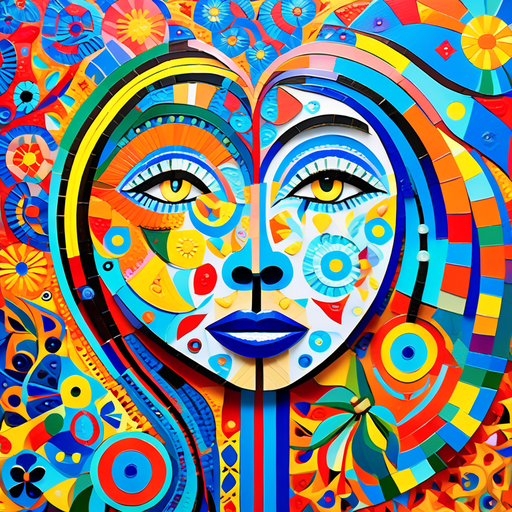
In the vast, intricate dance of existence, chaos often seems like an unwelcome guest. Yet, from this very chaos, beauty arises, like a phoenix emerging from the ashes. To perceive oneself as the beauty that emerges from chaos is to embrace a profound truth about the nature of reality and the self.

Chaos is often misunderstood. It is seen as disorder, confusion, and disruption. However, chaos is the birthplace of creativity and transformation. It is the fertile ground from which new patterns, understandings, and ways of being emerge. In the crucible of chaos, the old is dissolved, allowing the new to take shape.

Our personal lives are no different. Each of us encounters moments of chaos, those times when life seems to fall apart when our carefully constructed worlds crumble. It is in these moments that we are offered a rare opportunity: the chance to reconstruct ourselves anew, to find beauty in our brokenness.

Embracing chaos requires a shift in perspective. Rather than resisting or fearing it, we can learn to welcome it as a necessary part of our evolution. This shift is rooted in the understanding that chaos and order are not opposites but are part of a dynamic interplay that drives the universe. In every storm, there is a hidden order; in every upheaval, there is a silent harmony waiting to be discovered.


When we see ourselves as the beauty that emerges from chaos, we acknowledge our inherent resilience and capacity for growth. We recognize that our greatest strengths are often forged in the fires of adversity. The scars we bear are not marks of defeat but symbols of our journey through chaos to a deeper, more profound beauty.

This perspective aligns closely with the wisdom of nonduality, which teaches that all dualities are ultimately illusory. Chaos and order, beauty and ugliness, success and failure—these are simply different expressions of the same underlying reality. By transcending these dualities, we come to see ourselves not as fragmented beings caught in the struggle between opposites, but as whole, complete, and inherently beautiful.

As we navigate the chaos in our lives, we can draw upon the insights of Eastern philosophy to guide us. The Taoist concept of Wu Wei, or effortless action, teaches us to flow with the natural rhythms of life rather than against them. By surrendering to the flow, we allow the beauty of our true nature to emerge spontaneously from the chaos.

In the stillness of meditation, we can find a refuge from the turmoil. By turning inward, we reconnect with the unchanging essence of who we are—a presence that remains untouched by the vicissitudes of life. This inner stillness is the eye of the storm, the center of the cyclone where chaos transforms into clarity and beauty.


Ultimately, to see oneself as the beauty that comes out of chaos is to live in harmony with the ever-changing dance of life. It is to trust in the process of transformation and to embrace every moment, no matter how chaotic, as an integral part of our journey toward greater self-discovery and enlightenment.

Morgan O. Smith

Yinnergy Meditation, Spiritual Life Coaching & My Book, Bodhi in the Brain…Available Now!

https://linktr.ee/morganosmith

The Essence of Expression

Unveiling the Human Experience

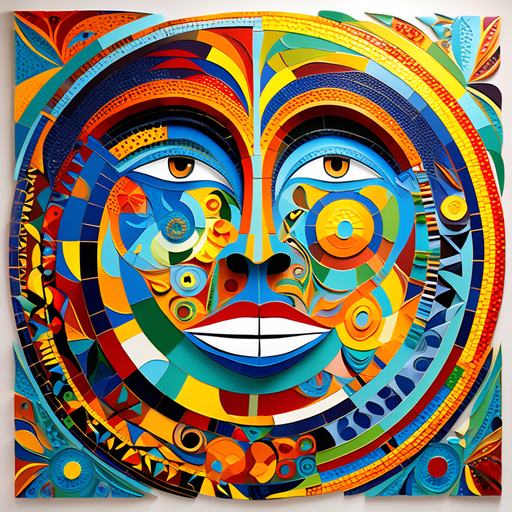
In the mosaic of human existence, expression stands as a crucial piece, interlocking with every aspect of our lives. To express is to be human; it is turning our inner world into something others can perceive, a bridge from the solitary island of self to the vast continent of shared experience. Yet, in a world increasingly shaped by digital interaction and fast-paced lifestyles, the art of genuine expression often seems at risk. This leads us to question: Is a human being who doesn’t express truly living the full spectrum of their humanity?

To understand this, we must first acknowledge that expression takes many forms – spoken words, written prose, the nuanced dance of facial expressions, the silent language of art, and the unspoken symphony of emotions. It’s not just about conveying information; it’s about sharing parts of our souls, joys, fears, hopes, and dreams. Expression is the window that lets others glimpse our innermost selves.

However, reluctance or inability to express can come from various places – societal norms deem certain emotions as weakness, personal insecurities, or even the fear of being misunderstood or judged. This suppression, whether conscious or unconscious, can lead to a life half-lived, a persona half-realized. It breeds loneliness, misunderstanding, and a gap between what is felt and what is shared.


The consequences of such restraint are significant. Psychologically, the inability to express can result in a build-up of stress, anxiety, and depression. Socially, it hampers the development of deep, meaningful relationships. On a broader scale, a society that stifles expression also stifles innovation, empathy, and progress.


In contrast, embracing expression in its various forms can be freeing. It promotes self-awareness and growth. It builds bridges of understanding and empathy among people. It fuels creativity and innovation. When we express ourselves, we not only affirm our humanity but also recognize and celebrate the humanity of others.


In conclusion, to express oneself is not just to be human; it is to engage in the human experience actively. It is through our shared expressions that we create a rich, vibrant mosaic of human connection, understanding, and coexistence. Let us, therefore, encourage and embrace expression in ourselves and others, for in doing so, we enrich not just our own lives, but the very essence of what it means to be human.

Morgan O. Smith

Yinnergy Meditation, Spiritual Life Coaching & My Book, Bodhi in the Brain…Available Now!

https://linktr.ee/morganosmith

Devils of Tasmania

Embracing Our Inner Demons

In the depths of our psyche lurks a hidden shame, explicit yet unacknowledged. We live most of our lives concealing our darker selves, fearing the part within capable of mass destruction and devoid of remorse. This fear drives us to repress these inner demons, to maintain the facade of our public persona, free from shame and disgrace.


Yet, these impulses, these inner monsters, are potent forces, akin to natural disasters. They are not acts of God but inherent parts of our being, capable of tearing down everything in their path. Their destructive nature is unchanging and inevitable. Our task is not to deny them but to accept and direct their fury toward crumbling edifices that lack a solid foundation.

These demons, if unchecked, can ruin lives. However, harnessed correctly, they have the power to demolish outdated beliefs and paradigms, shedding light on areas we need to confront and overcome. Their destructive capabilities allow us to rebuild from the ashes creatively. They give us a chance to construct anew – to erect buildings of thought and behaviour that are more resilient and robust than ever before.


Our distress over this destruction stems from our attachment to what we have built and our reluctance to accept the impermanence of all things. Only by acknowledging and embracing these internal devils can we truly liberate ourselves from their hold and transform their destructive power into a force for personal growth and renewal.

Morgan O. Smith

Yinnergy Meditation, Spiritual Life Coaching & My Book, Bodhi in the Brain…Available Now!

https://linktr.ee/morganosmith

Meditate…

Until Your Internal World Resembles Paradise

In the bustling chaos of everyday life, where the noise of the external world often drowns out our inner peace, there is a profound need for sanctuary. Not a physical refuge, but a mental oasis that can be accessed anywhere, anytime. This sanctuary is not just a fleeting escape, but a transformation of our internal world into a paradise. The key to unlocking this paradise? Meditation.

Meditation, often misconceived as merely a relaxation technique, is a profound journey toward internal transformation. It’s about finding the silence amidst the noise, the stillness within the storm. Through meditation, we can delve into the depths of our consciousness, explore the landscapes of our minds, and cultivate a garden of tranquillity.

But how does one’s internal world become a paradise? It begins with understanding that paradise is not a physical location, but a state of being. It’s a place of balance, harmony, and a profound understanding of oneself. Meditation guides us toward this state by teaching us to observe our thoughts without attachment, to embrace our emotions without being overwhelmed by them, and to find clarity amid confusion.

As we meditate, we learn to let go of the clutter, the unnecessary burdens that weigh down our spirit. We learn to nurture thoughts and emotions that uplift and support our well-being. Slowly, the internal chaos gives way to a serene landscape, a paradise that is uniquely ours.

This journey, however, is not without its challenges. Just like any paradise, our internal world requires nurturing. It requires patience, dedication, and above all, a willingness to explore and accept ourselves fully. But the rewards are immeasurable. In this internal paradise, we find resilience against external turmoil, a deep sense of peace, and a wellspring of joy that is not dependent on external circumstances.

So, take a moment to close your eyes, breathe deeply, and embark on the most rewarding journey of all – the journey within. Meditate until your internal world blossoms into a paradise, a haven of peace and joy that you carry with you always.

Want to find your paradise within? Discover the transformative power of Yinnergy Meditation, a unique and effective program designed to unlock your inner potential. Yinnergy is not just a meditation method; it’s a journey toward emotional, mental, and spiritual growth. With Yinnergy, you can experience profound deep meditation, heightened relaxation, and a significant boost in creativity, focus, and intuition. It’s an ideal practice for both beginners and seasoned meditators, offering a simple yet powerful path to enhanced well-being and self-awareness. Embrace a life of clarity, balance, and harmony with Yinnergy Meditation. Start your transformative journey today and tap into your deepest potential!

Remember to make the most of our exclusive Holiday promotion. Apply the discount code R7X9Z2P for special savings on all Yinnergy products during checkout.

https://yinnergy.gumroad.com/

FOR IMMEDIATE RELEASE

Author Morgan O. Smith Champions Dementia Support with Generous Donation

September 21, 2023 – Morgan O. Smith, the distinguished author behind the transformative guide, “Bodhi in the Brain,” has donated $1,000 to the newly inaugurated charitable foundation, “A Rose For Grandma Wellness Hub.” This heartfelt contribution resonates deeply with Smith, whose own paternal grandmother passed away due to dementia in 2019.

A Rose For Grandma Wellness Hub’s mission focuses on offering much-needed assistance and resources for Black, Indigenous, and People of Colour (BIPOC) contending with dementia. The organization’s efforts revolve around extending vital support to affected families, a cause Morgan feels a profound connection.

Smith’s groundbreaking book, “Bodhi in the Brain,” presents Yinnergy Meditation – an avant-garde approach to harnessing the latent power of the subconscious mind. Drawing upon state-of-the-art research from the realms of neuroscience and psychology, the Yinnergy Meditation program stands out as an effective and unparalleled tool for ameliorating mental and emotional health, while also enriching overall well-being.

Designed for individuals across all walks of life and varying levels of meditation experience, Yinnergy Meditation taps into the brain’s inherent neuroplasticity. It aids in restructuring thinking patterns, boosting mental resilience, and achieving a harmonious equilibrium. With its step-by-step guidance, coupled with exclusive audio technology, users embark on a transformational journey to discover their innate potential.

Smith’s dedication to mental wellness goes beyond the written word. In 2011, he spearheaded the Yinnergy Meditation grassroots initiative, emphasizing emotional, mental, and spiritual growth through deep, audio-aided meditation. Moreover, in acknowledgment of the exceptional contributions of young changemakers, Smith established the Yinnergy Appreciation Awards.

Whether you aim to alleviate stress, break free from negative thought cycles, or elevate your overall life quality, “Bodhi in the Brain” emerges as an indispensable guide to mental fortitude and tranquillity.

For more information on “Bodhi in the Brain,” Yinnergy Meditation, or to explore potential collaborations, please contact Morgan innovativecoaching@gmail.com.

About Morgan O. Smith:
Morgan O. Smith stands at the forefront of modern meditation and neuroscience literature. With a fervent passion for mental well-being and community upliftment, Smith’s endeavours reflect his commitment to societal betterment, both on the individual and collective front.

###ENDS###

https://linktr.ee/morganosmith

Drowning or Swimming? Decoding the Paradox of Mind Transcendence

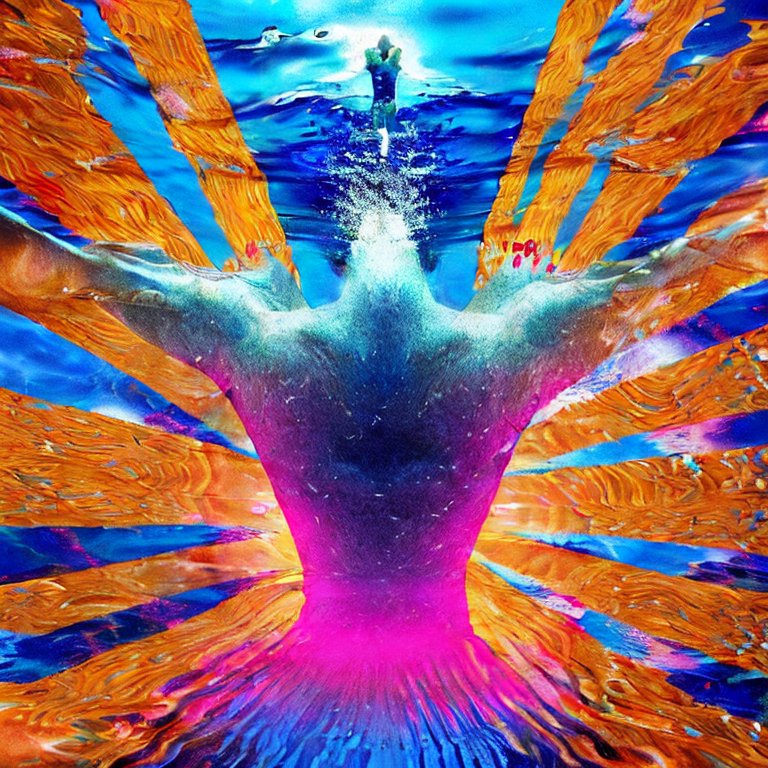
Joseph Campbell, a luminary in the realm of comparative mythology and religion, once penned a remarkably profound quote: “The psychotic drowns in the same waters in which the mystic swims with delight.” This sentence invokes an evocative imagery of two people submerged in the same waters, yet experiencing entirely different outcomes. As we unravel the layers behind this quote, we delve into the profound disparity between losing one’s mind and transcending it.

On the surface, the quote suggests a nuanced understanding of how two people can experience the same reality in starkly different ways. But it goes deeper than that. It’s about the fine line that separates self-destruction and self-actualization, the boundary between psychosis and mysticism. The “waters” in this quote can be seen as the metaphorical sea of consciousness – the vast, undefined, often unruly and chaotic realm of the mind.

For the psychotic, these waters are treacherous, overwhelming, and ultimately engulfing. This individual is at the mercy of their thoughts, emotions, and perceptions, succumbing to the unfiltered and uncontrollable tide of the mind’s creations. They ‘drown’ as they lose their ability to discern between their constructed thoughts and objective reality.

On the other hand, the mystic does not just survive but thrives in these waters. How so? They are those who have mastered the art of transcending the mind. They don’t seek to control or suppress their thoughts and feelings but rather learn to navigate them. By developing a keen awareness of their internal states, they can distance themselves from their thoughts, recognizing that they are not defined or confined by them. This detachment isn’t a rejection of the mind but a profound understanding of its place.

Does this mean transcending the mind is merely about survival? Not in the least. For the mystic, the sea of consciousness becomes a source of delight and wonder, a playground of existential exploration. The waters which are tumultuous for the psychotic become serene for the mystic. They can revel in the complexities and curiosities of the mind, but they never forget they are swimming – not sinking.

So, what distinguishes the drowning psychotic from the delightfully swimming mystic? It lies in the relationship each holds with their mind. The psychotic is subjugated by their mind, entangled in a brutal dance with their thoughts, leading to the loss of self. Conversely, the mystic views the mind as a tool, a companion in their quest for enlightenment, not a ruthless master.

We can argue that the art of swimming in these waters, as a mystic does, is accessible to us all. The question is whether we can cultivate mindfulness, detach from our thoughts without suppression, and remain open to the vast possibilities of human consciousness. After all, the goal isn’t to escape the waters but to learn to swim and ultimately delight in them.

Joseph Campbell’s metaphor presents a thought-provoking dichotomy between two extremes of human consciousness. It is a profound reminder that our relationship with our mind can either lead to our downfall or our enlightenment. It urges us to transcend rather than lose ourselves in the convoluted maze that is the human mind. The water, after all, is the same. It’s the swimmers who are different.

Morgan O. Smith

Yinnergy Meditation & My Book, Bodhi in the Brain…Available Now!
https://linktr.ee/morganosmith