The Paradox of Purpose in the Ground of All Being

In philosophical discourse, few concepts are as intriguing and paradoxical as the nature of the “ground of all being.” This term, often used in metaphysical and theological discussions, refers to the fundamental basis or underlying reality of all that exists. At the heart of this concept lies a profound paradox concerning purpose.

#### Purposelessness at the Core


The ground of all being, by its very definition, transcends all known dimensions, including space and time. The ultimate reality underpins everything, yet it stands outside the boundaries of our physical and temporal world. In this sense, the ground of all being is inherently purposeless. It does not pursue goals or objectives because it exists beyond the constructs where purpose holds meaning. In its neutrality and transcendence, it simply ‘is’, unburdened by the need for purpose that characterizes human existence.


#### The Emergence of Purpose

Yet, curiously, from this purposeless ground emerges all purpose. The universe, with its myriad galaxies, stars, and planets, including our own, sprang from this foundational reality. Every atom, every life form, every human thought and endeavour finds its origin in this ground of all being. The very space and time that it transcends are the platforms upon which purpose is built and realized. In human terms, purpose is inextricably linked to our existence within space and time. Our goals, dreams, and aspirations are rooted in our temporal journey through life.

#### A Flourishing of Purpose within Constraints


It is within the confines of space and time that purpose finds its expression and fulfillment. Human endeavours, whether artistic, scientific, or personal, unfold within the physical world and over time. The space-time continuum is not just a physical reality but a canvas for manifesting purpose. The ground of all being, while itself devoid of purpose, is the source from which all purposes derive and the stage upon which they play out.


#### Conclusion: A Profound Duality

The ground of all being presents us with a profound duality. It is a realm devoid of purpose, yet it is the very source from which all purpose in the universe springs. This paradox is a philosophical quandary and a reflection of the profound mystery at the heart of existence. In understanding this, we gain a deeper appreciation of the complexities and wonders of the universe and our place within it.

Morgan O. Smith

Yinnergy Meditation, Spiritual Life Coaching & My Book, Bodhi in the Brain…Available Now!

https://linktr.ee/morganosmith

The Dance of the Cosmos

Understanding the Interconnectedness of Existence

In the grand tapestry of existence, every thread is intricately woven into a larger, more complex pattern. This pattern, a vibrant mosaic of life and energy, highlights the profound interconnectedness of all things in the universe. It is a concept that transcends mere physicality, inviting us to explore the deeper spiritual and metaphysical aspects of our existence.

At the heart of this interconnectedness is the idea that everything in the universe, from the smallest particle to the vastest galaxy, is an expression of divine creativity. This perspective offers a profound sense of unity and harmony, suggesting that every element of the cosmos, including ourselves, is part of a larger, purposeful whole.


The physical universe, in this view, is not a static entity but a dynamic and ever-changing phenomenon. It is characterized by a continual process of transformation, a cycle of dying and rebirthing that underlines the concept of eternal renewal. This cyclical nature of existence echoes in every aspect of our lives, reminding us that change and transformation are not only inevitable but also essential components of the cosmic dance.

In this cosmic scheme, each element plays a crucial role. Like individual notes in a grand symphony, every aspect of the universe contributes to the creation of a harmonious and balanced whole. This interconnectedness implies a deep responsibility: our actions, thoughts, and beliefs have far-reaching consequences, influencing not only our immediate environment but also the broader fabric of existence.


Understanding and embracing this interconnectedness can lead to a more conscious and intentional way of living. It encourages us to recognize the impact of our actions, to live in harmony with the natural world, and to cultivate a sense of compassion and empathy for all beings. It’s a call to see beyond the illusion of separation and to acknowledge our role in the ongoing creation and evolution of the universe.

In conclusion, the concept of interconnectedness in existence is not just a philosophical idea; it’s a call to action. It invites us to participate actively in the cosmic dance, to embrace change, and to contribute positively to the ongoing saga of the universe. By recognizing our interconnected nature, we can find a deeper sense of purpose, belonging, and unity.


Morgan O. Smith

Yinnergy Meditation, Spiritual Life Coaching & My Book, Bodhi in the Brain…Available Now!
https://linktr.ee/morganosmith

The Unfathomable Brahman

Exploring the Indivisible Reality from Multiple Perspectives

The quest to understand Brahman is a journey into the heart of existence itself, a pursuit that has intrigued philosophers, sages, and seekers for millennia. In the vast expanse of Hindu philosophy, Brahman is the ultimate reality, the fabric of all that exists and beyond. It is both immanent and transcendent, the core of our being and the cosmos. This exploration of Brahman from various perspectives—gross, subtle, causal, and nondual—invites us to expand our minds beyond the limits of ordinary perception.

**From the Gross Perspective: Brahman as the World**


When we look at Brahman from the gross perspective, we see the universe in all its material splendour. Here, Brahman is not an abstract concept but the physical universe that we interact with through our senses. It is the mountains, rivers, stars, and galaxies; the dance of creation and destruction visible to the naked eye. This manifestation is known as Saguna Brahman, the form with qualities, where the Divine is seen with attributes and forms, engaged in the act of creation.

**From the Subtle Perspective: Brahman as Consciousness**


Venture deeper, and we encounter the subtle perspective. Here, Brahman is the essence of consciousness that animates life. This is not the consciousness that fluctuates with our thoughts and feelings, but the pure awareness that observes, untouched and unchanging. This subtle Brahman also referred to as Nirguna Brahman, is without qualities, where God is not limited by any attributes. It is the silent witness to the play of the universe, the inner light that illuminates our experiences.

**From the Causal Perspective: Brahman as the Source**

Moving into the causal perspective, we touch on the very source of existence. Brahman here is the unseen cause behind everything—the seed from which the tree of the universe grows. This aspect of Brahman is deeply mysterious, for it is the origin of time, space, and causality itself. It is Avidya, ignorance, not in the sense of lack of knowledge, but as the primal forgetfulness that makes us perceive duality in the nondual.

**From the Nondual Perspective: Brahman as the One without a Second**


Finally, from the nondual perspective, Brahman is realized as the one without a second—Advaita. It is not a deity, not an entity, not even a ‘thing’ that can be comprehended by the intellect. It is the underlying oneness that pervades all dualities, where the seeker and the sought merge. In this view, the individual self (Atman) and the universal self (Brahman) are the same. All distinctions between creator and creation dissolve, revealing that there is nothing but Brahman—pure existence, consciousness, and bliss (Sat-Chit-Ananda).

This journey through the perspectives of Brahman reflects the layered depths of our existence. From the tangible reality of our day-to-day lives to the deepest spiritual realization, Brahman remains the unchanging truth. Each perspective is a step closer to the ultimate truth, leading us from the outward expressions of divinity to the profound inner revelation that we are, in essence, the infinite Brahman.

To understand Brahman is to expand our awareness across the spectrum of existence. The gross perspective roots us in our environment, the subtle unfolds the inner cosmos, the causal leads us to the primal source, and the nondual reveals our true infinite nature. In contemplating these perspectives, we may find that the journey to understand Brahman is not a journey outward but a profound voyage within, to the very core of who we are.

Morgan O.  Smith

Yinnergy Meditation & My Book, Bodhi in the Brain…Available Now!
https://linktr.ee/morganosmith

The Infinite Self

Time Travel and the Nondualistic Journey Within

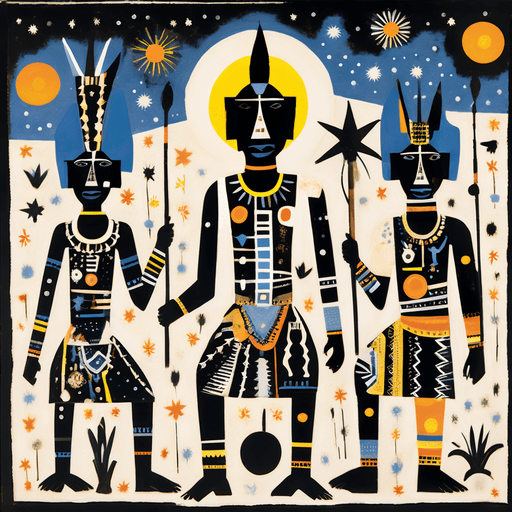
In the silence that stretches between thoughts, in the space that houses the cosmos, there exists a philosophy that stretches the bounds of conventional understanding—nondualism. It’s an ancient perspective that posits a simple, yet profound truth: all of existence, the myriad forms and vacuous voids, the dance of particles and the march of time, are expressions of a singular, unified reality. You are not a mere participant in the universe; you are the universe itself, experiencing itself endlessly.

Consider the concept of time travel, a staple of science fiction and a tantalizing possibility for the human imagination. Time, from a nondual standpoint, is not a river that flows from past to future, nor a serpent that eats its tail in an eternal loop. It is a dimension of existence that is inseparable from you. You are time, as much as you are matter, energy, thought, and consciousness. If you could traverse the temporal plane, to cavort in the gardens of Babylon or witness the birth of a star eons from now, would you be visiting foreign lands or would you be exploring the contours of your boundless self?

By recognizing time as an aspect of the self, the idea of time travel takes on a new dimension. It becomes a metaphor for self-exploration and self-understanding. Each journey back to the past can be viewed as an introspective dive into our collective memory, our shared history, and the unconscious mind. Moving forward, then, is an imaginative leap into potential futures, the realm of dreams, hopes, and the unmanifested aspects of the self.

This perspective invites a radical shift in consciousness. The anxieties of the past and the uncertainties of the future are not separate from the present moment; they are all-encompassing and present within the now that is perpetually experienced. Every moment is an act of creation, a reconfiguration of the universe, a reinterpretation of the self. Through the lens of nondualism, time travel becomes a poetic expression of the human desire to know the self fully, to experience all facets of being, and to embrace the ultimate unity of existence.

If we can see ourselves in the stars and the stones, in the ebbs and flows of civilizations and the silent growth of a seedling, then perhaps the ultimate journey does not require us to break the physical bonds of time but to transcend the psychological barriers that prevent us from seeing the unity of all things. In doing so, we might find that every step we take, every choice we make, and every path we walk or leave untrodden, is an exploration of the infinite self.

As you ponder this unity, this grand tapestry of existence where you are both the weaver and the thread, the observer and the observed, consider what destinations you might seek within the boundless realms of your being. What would you discover in the recesses of millennia past, and what futures could you paint with the brush of your current intentions and actions? The voyage of time is but a journey within, and every moment is a destination waiting to be understood.

Morgan O.  Smith

Yinnergy Meditation & My Book, Bodhi in the Brain…Available Now!
https://linktr.ee/morganosmith

The Unity of Being

When Heads, Shoulders, Knees, and Toes Merge into Oneness

The ancient wisdom embedded in children’s songs and games can sometimes surface in the most unexpected of philosophical realms. Take, for instance, the playful melody “Heads, Shoulders, Knees, and Toes.” When investigated through the lens of Nondual philosophy, it becomes a metaphor for a journey toward universal oneness and interconnectedness.

In Nondualism, the self and the universe are not two separate entities, but rather manifestations of a single, unifying reality. The concept of separateness – the idea that heads, shoulders, knees, and toes are distinct parts – is seen as a mere illusion, a construct of our perceptive capabilities. When we immerse ourselves in the quintessential essence that underlies all beings and things, we begin to perceive that beneath the superficial distinctiveness and multiplicity, there is a fundamental oneness.

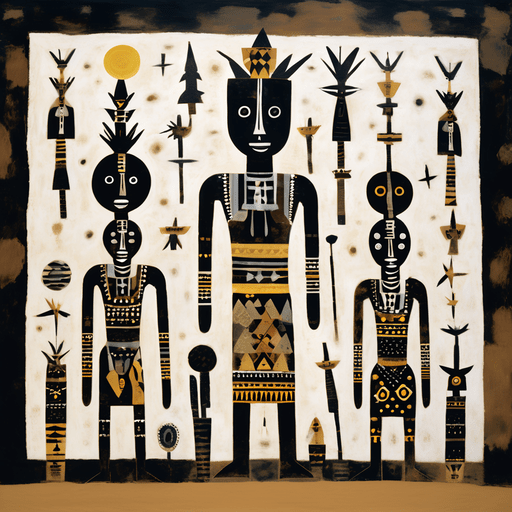
Just as the child, in the innocence of play, connects each body part in a joyful, seamless movement without pondering the philosophical depth intertwined, perhaps we too, in our adult complexity, can rediscover that inherent interconnectedness. Our heads, representing our thoughts and intellect; our shoulders, symbolizing our burdens and responsibilities; our knees, embodying our flexibility and humility; and our toes, reflecting our foundation and stability, though seemingly separate, all derive from and exist within the same unified source.

In this unity, the dissimilarities and boundaries that appear to separate us from others, from the world, and the divine, dissolve into a boundless ocean of oneness. Our heads, shoulders, knees, and toes, then, become not isolated components, but rather expressions of the singular reality, dancing together in a harmonious rhythm of existence.

The reconciliation of our physical and non-physical aspects, the visible and the invisible, and the manifold and the one, invites us to explore the possibility that we are not merely beings traversing through the world, but the world itself. As we navigate through the multifaceted reality of life, can we embrace the Nondual perspective, perceiving not separateness, but unity in the myriad forms and experiences?

So, we may joyously sing, not just with nostalgia but with profound insight into our existence: “Heads, shoulders, knees, and toes.” In the simplicity of these words, let’s find a reminder that beneath the diversity and complexity of our being, we are all interconnected, interwoven parts of the same undivided reality.

The depth of such unity nudges us to perceive ourselves and the world around us with eyes that see beyond the physical and the apparent, inviting us into a holistic existence where every head, shoulder, knee, and toe sings in unison with our oneness.

Morgan O.  Smith

Yinnergy Meditation & My Book, Bodhi in the Brain…Available Now!
https://linktr.ee/morganosmith

The Pursuit of Absolute Nothingness

A Journey Towards Enlightened Emptiness

Introduction: In the dynamic, incessant stream of thoughts, preferences, and subjective biases that characterize the human experience, the concept of attaining a state of Absolute Nothingness captivates imaginations. Is it possible to achieve a mental and emotional vacuum where thoughts, biases, judgments, and self cease to exist?

Understanding Absolute Nothingness:

  • Absolute Nothingness isn’t simply the absence of thought, but a profound emptiness that transcends understanding and defies our typical notions of existence and selfhood.
    • Exploring philosophical and theological contexts (Buddhism’s Sunyata or Zen’s Mu) can unveil varied interpretations and methods to approach nothingness.
  • The Paradox of Pursuing Nothingness:
  • Engaging in a quest towards absolute emptiness ironically imposes a desire and a goal, an antithesis to the state of desirelessness intrinsic to nothingness.
    • Considering the Daoist perspective, acting without intention (Wu Wei) might provide insights on pursuing without pursuing, and attaining without seeking.
  • Dismantling the Self:
  • Dissolving the self involves peeling away layers of personal identity, biases, and preconceptions, effectively blurring the lines between self and non-self.
    • This dismantlement raises questions about existence, consciousness, and whether one can truly function without the scaffold of selfhood in a society constructed upon individual identity.
  • Navigating Through Socio-Cultural Paradigms:
  • The endeavour to transcend preferences, judgments, and selfhood might be perceived as antithetical to societal norms that emphasize individuality, accomplishment, and progress.
    • Achieving absolute nothingness within the structural and cultural boundaries of our world presents a paradox between isolation and immersion in societal dynamics.
  • Ethical and Moral Dimensions:
  • The state of having no judgments, preferences, or perspectives raises questions regarding moral and ethical obligations. Does transcending biases and perspectives dissolve moral compasses?
    • Exploring the ethical implications of an unbiased existence may unravel whether absolute neutrality coexists with moral responsibility.
  • Psychological and Neuroscientific Perspectives:
  • The psychological viability of achieving a state devoid of thought and self-perception opens an intriguing discourse. Can one’s mental health be preserved, or even enhanced, in a state of nothingness?
    • Neuroscientific inquiries might delve into the processes and consequences of perpetually inhibiting cognitive and emotional functionalities to sustain a blank slate of consciousness.
  • Relinquishing Time and Anticipation:
  • With no anticipation, worries, or references to the past or future, time dissolves into an irrelevant concept, creating a perpetual ‘now’ with neither history nor destiny.
    • Contemplating a timeless existence fosters a reflection on how human experiences, relationships, and endeavours are intimately entwined with temporal perception.

Conclusion: Absolute Nothingness, both as a philosophical concept and a spiritual aspiration, navigates through paradoxes, ethical conundrums, and existential inquiries, offering a mesmerizing void that invites and perplexes. The possibility and implications of achieving a state devoid of self-thought, and time present not only a spiritual journey but also a philosophical and scientific exploration into the profound depths of consciousness and existence.

Morgan O.  Smith

Yinnergy Meditation & My Book, Bodhi in the Brain…Available Now!
https://linktr.ee/morganosmith

Bridging Quantum Realms and Turiyatita

The Web of Interconnection

In the intricate and mystifying world of quantum mechanics, one phenomenon stands out as particularly thought-provoking: quantum entanglement. It’s a concept that defies our everyday logic, connecting particles across vast distances in such a way that the state of one instantly influences the state of the other. This interconnectedness, existing beyond space and time, might find an unlikely companion in an ancient spiritual concept: turiyatita, the attainment of spiritual enlightenment.

The Interconnected Universe

Quantum entanglement illustrates how, at the fundamental level, all things in the universe are interconnected. This idea resonates with spiritual teachings across cultures that speak of the oneness of existence and the interconnectedness of all life. In Indian philosophy, turiyatita represents a state of consciousness that transcends the conventional realms of waking, dreaming, deep sleep, and even the transcendental state known as turiya. It’s a state of realization that everything is part of a singular divine essence.

Could these two concepts, one rooted in the cutting-edge science of quantum physics and the other in ancient spiritual wisdom, have something to say to each other?

A Metaphor for Enlightenment


Quantum entanglement could be seen as a metaphor for the experience of spiritual enlightenment. The entangled particles, seemingly separate but inherently connected, might symbolize how everything in existence is part of the same cosmic dance. Likewise, the experience of turiyatita transcends the illusion of separateness, revealing an underlying unity.

In this metaphorical sense, the realization of enlightenment could be likened to experiencing the world in its entangled state, where divisions melt away and a profound interconnectedness is revealed.

A Dance of Mystery

Yet, the relationship between quantum entanglement and turiyatita is more than a simple analogy. Both concepts challenge our conventional understanding of reality. They both hint at a world far more complex and interconnected than our ordinary senses can perceive.

Is it possible that these two ideas, one from the realm of science and the other from the domain of spirituality, are glimpses of the same underlying truth? Is there a hidden dance of connection that plays out both in the microscopic world of quantum particles and the expansive world of human consciousness?

Conclusion

The connection between quantum entanglement and turiyatita may be speculative and metaphorical, but it invites us to ponder the profound mysteries of existence. It’s a reminder that the world is far more complex and beautiful than we often realize and that science and spirituality, seemingly disparate, might have something profound to say to each other.

This dance of connection between the physical and the metaphysical invites us to explore, wonder, and perhaps even transcend our conventional understanding of reality. It’s a poetic reminder that we are all interconnected, in ways that both science and spirituality continue to explore and celebrate.

Morgan O. Smith

Yinnergy Meditation & My Book, Bodhi in the Brain…Available Now!

https://linktr.ee/morganosmith

The Soul’s Paradox

A Dance of Definites and Possibilities

As one treads the expansive corridors of philosophy, few subjects engender as much fascination as the soul – that elusive, ethereal concept often seen as the essence of who we are. A common question on this voyage of introspection is: where does the soul reside?

The simplest answer might be: within the physical body. After all, we experience life, feel emotions, think thoughts, and dream dreams all within this organic structure we call a body. Yet, to confine the soul strictly within the physical body is a reduction that strips the soul of its sublime complexity.

In truth, the soul is non-local. Like a scent carried on the wind, it isn’t confined to a single spot but diffuses through the spaces and structures we inhabit. It permeates the cosmos yet is intimately tied to our bodies. The physical body may be viewed as its vessel – a corporeal nexus in the unfathomable cosmic network.

Yet, the body is not just a vessel. It is also a localized expression of the soul – a physical manifestation reflecting the soul’s ongoing journey. Our bodies transform from conception to birth, from childhood to adolescence, adulthood, and eventually to old age. This journey is a mirror, echoing the multi-cycle, or trans-cycle, of the soul – an individual expression of the all-encompassing Spirit, or Ground of All Being.

To this understanding, the soul both resides in and outside the body. Yet simultaneously, it neither exists inside nor outside nor does it exist at all in a conventional sense. This seeming paradox is at the heart of the soul’s mystery. It exists within the realm of definite and indefinite, possible and impossible, probable and improbable.

To elucidate, imagine the soul as a song. The notes (definite, possible, probable) resonate within our physical form, the singer. Yet, the melody (indefinite, impossible, improbable) drifts beyond, filling the room, seeping through walls, and touching those within its reach. Even when the song ends, the echo lingers – it remains within and beyond us, simultaneously nowhere and everywhere.

This enigmatic duality of the soul invites us to question our preconceived notions about reality and selfhood. It prompts us to view ourselves not merely as static, defined entities, but as dynamic participants in the cosmic dance of existence. We are both the dancer and the dance, the singer and the song, the vessel and the soul, embodying a myriad of possibilities, probabilities, and beautiful impossibilities.

To journey towards understanding the soul is not about seeking a destination, but engaging in an ongoing dance of discovery, where questions are as crucial as answers. It’s a dance that challenges us to embrace both the physical and metaphysical aspects of our being, and to live in the mystery that we are far more than just our physical bodies. We are the enigmatic soul – definite and indefinite, possible and impossible, probable and improbable, and beautifully, profoundly, paradoxically both everything and nothing.

Morgan O. Smith

Yinnergy Meditation & My Book, Bodhi in the Brain…Available Now!

https://linktr.ee/morganosmith

Reincarnation Unfolding

The Mystical Dance of Life at the Subatomic Scale

Reincarnation is often conceived as a cycle of birth, death, and rebirth. This process, however, is not confined merely to the level of an individual’s life journey, but also at a minute, an invisible scale that continuously unfolds within us.

The human body is composed of about 37 trillion cells, with each one possessing its lifecycle. Old cells die and new ones are born in a ceaseless symphony of life. Every second, millions of cells in your body reincarnate, dying and then being reborn anew. This minute cycle mirrors the grandeur of the reincarnation concept, challenging us to rethink what it means at the fundamental level.

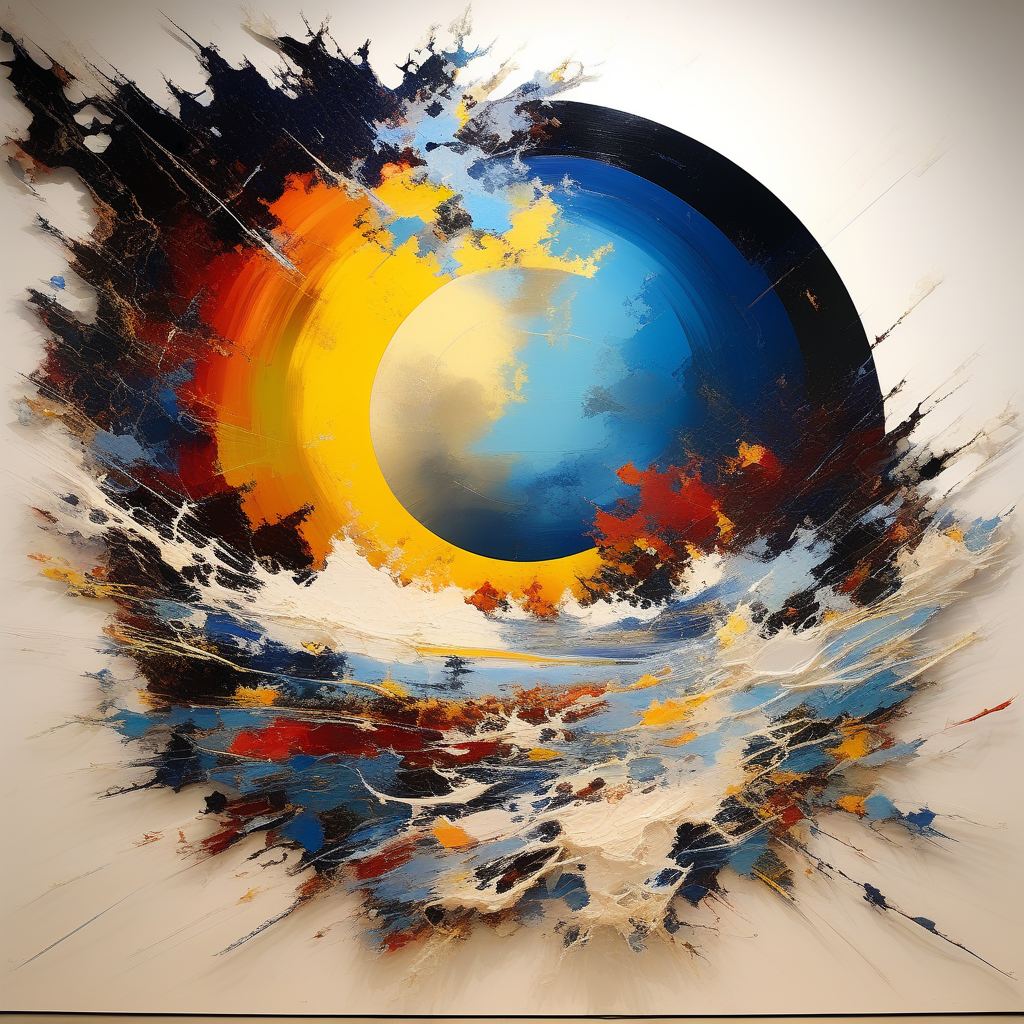
To delve deeper, each cell consists of molecules, atoms, and subatomic particles, each undergoing their cycles of transformation. These minuscule particles don’t die or are born in the traditional sense, but rather transform, changing their states, swapping places, decaying, and then being reincarnated into different particles. From this viewpoint, reincarnation becomes a ubiquitous process that is playing out at every moment.

In light of this perspective, where does the soul reside? Is it just in the whole or also in the parts? If we consider the soul as the essence of life and consciousness, then every cell, every molecule, and even every atom has a part of this essence. This soulful essence, then, is constantly dying and being reborn, experiencing its cycle of reincarnation at a cellular, molecular, and atomic level.

Then arises the concept of karma, a law of moral causation. Can it apply at a subatomic level? At first glance, it might seem improbable. After all, karma is about action and consequence, and cells or atoms don’t have agency in the same way humans do.

However, if we think of karma less as moral action and more as causality, things start to take shape. Each cell’s fate—its health, its functioning, its lifespan—is determined by previous actions, or karmas, at the molecular and atomic levels. These actions could be genetic expressions, protein formations, or even quantum fluctuations.

Molecular karma plays out in the creation of proteins, cellular karma in the orchestration of life processes, and atomic karma in fundamental interactions. The sum of all these karma of parts can even influence the karma of the whole, impacting our health, our mind, and our life.

Through this lens, the concept of reincarnation and karma expands beyond a spiritual or religious doctrine and becomes a fundamental principle of life, from the grand scale of human existence to the tiny dance of atoms.

Thus, the journey of life and death is not a one-time event; it is a constant process. Every moment, we are dying and being reborn, at various levels of our existence. Our karma, too, is being created, fulfilled, and carried forward at these multiple levels. Such a realization can provide us with a profound perspective on life, death, reincarnation, and karma, reminding us of our intricate connection with the cosmos.

This understanding, although awe-inspiring, is only the tip of the iceberg. The philosophical implications are profound, leaving us to ponder the mysterious dance of life and death that is taking place within us, every moment, at every level.

Morgan O. Smith

Yinnergy Meditation & My Book, Bodhi in the Brain…Available Now!
https://linktr.ee/morganosmith

Moksha

The Universe in Liberation

As we traverse the intricate corridors of Hindu philosophy, a term that emerges as a beacon of liberation is ‘Moksha’. This concept, commonly associated with individual salvation from the cycle of birth, death, and rebirth, presents a spiritual zenith. However, what if we zoom out from the individual perspective and consider Moksha at a cosmic level? What if the Universe itself were to attain Moksha?

The Big Bang marked the birth of the Universe, setting forth an infinite dance of creation, preservation, and destruction. Stars were born, galaxies sculpted, and planets formed, only to one day succumb to the grand design of entropy. This cyclical nature bears a striking resemblance to the cycle of Samsara in Hindu thought, where souls are continuously born and reborn in different forms until Moksha is achieved.

If the Universe could experience Moksha, it would transcend its cycle of cosmic Samsara – from the Big Bang to the eventual Big Crunch or Heat Death, depending on which theoretical physicist you ask. This liberation would mean breaking free from the constraints of time, space, and causality, reaching a state of infinite, timeless existence.

So, what would this feel like for the Universe?

When we ponder this question, we must acknowledge that the Universe’s experience, in this context, is beyond human comprehension. But let’s indulge in the thought experiment. We could imagine this state as one of perfect harmony and unity. There would be no ‘other’, no ‘alien’, and no ‘external’. The galaxies, stars, planets, and even the tiniest quantum particles would exist in a state of interconnection and oneness.

From the perspective of sentient beings, this would mean a profound sense of unity with everything else. Distinctions that currently cause division – species, races, cultures, even life and non-life – would become irrelevant. All of existence, inanimate and animate, would be seen as expressions of the same cosmic consciousness.

And yet, paradoxically, this unified existence would also mean the cessation of experience as we know it. Experience implies a subject and an object, an experiencer and the experienced. But in the absolute unity of cosmic Moksha, these dualities would dissolve. Therefore, in a sense, the Universe would be in a state of ‘experiencing without an experiencer’ or ‘knowing without a knower’.

In the grand scheme of cosmic liberation, human Moksha could be seen as a fractal microcosm – a ripple that mirrors the pattern of the whole. Each being achieving liberation contributes to the whole Universe moving towards its own Moksha, its release from the cosmic cycle of birth and death. This profound realization places our spiritual quests in a broader context and imbues them with a universal significance.

However, the implications of this concept are not just metaphysical, but deeply ethical. Recognizing our shared journey toward liberation fosters compassion, humility, and a sense of stewardship for all of existence. Our actions, in this view, can either facilitate or hinder the Universe’s journey toward Moksha.

In conclusion, contemplating Moksha at a universal scale stretches the boundaries of our imagination and empathy. It invites us to view ourselves not as isolated entities but as integral parts of a grand cosmic dance seeking the ultimate liberation.

Morgan O. Smith

Yinnergy Meditation & My Book, Bodhi in the Brain…Available Now!
https://linktr.ee/morganosmith