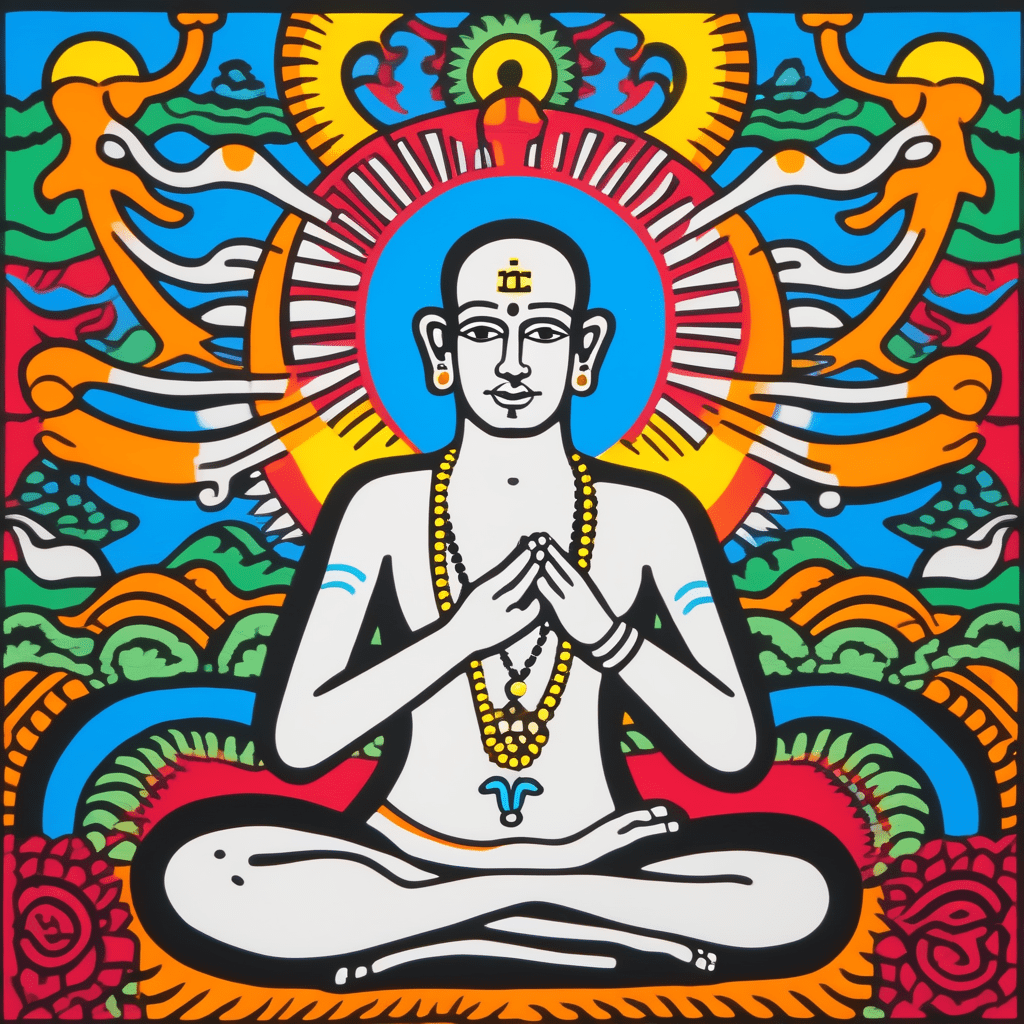
Ego Death

A Symphony of Sense and Surrender into the Nondual Existence

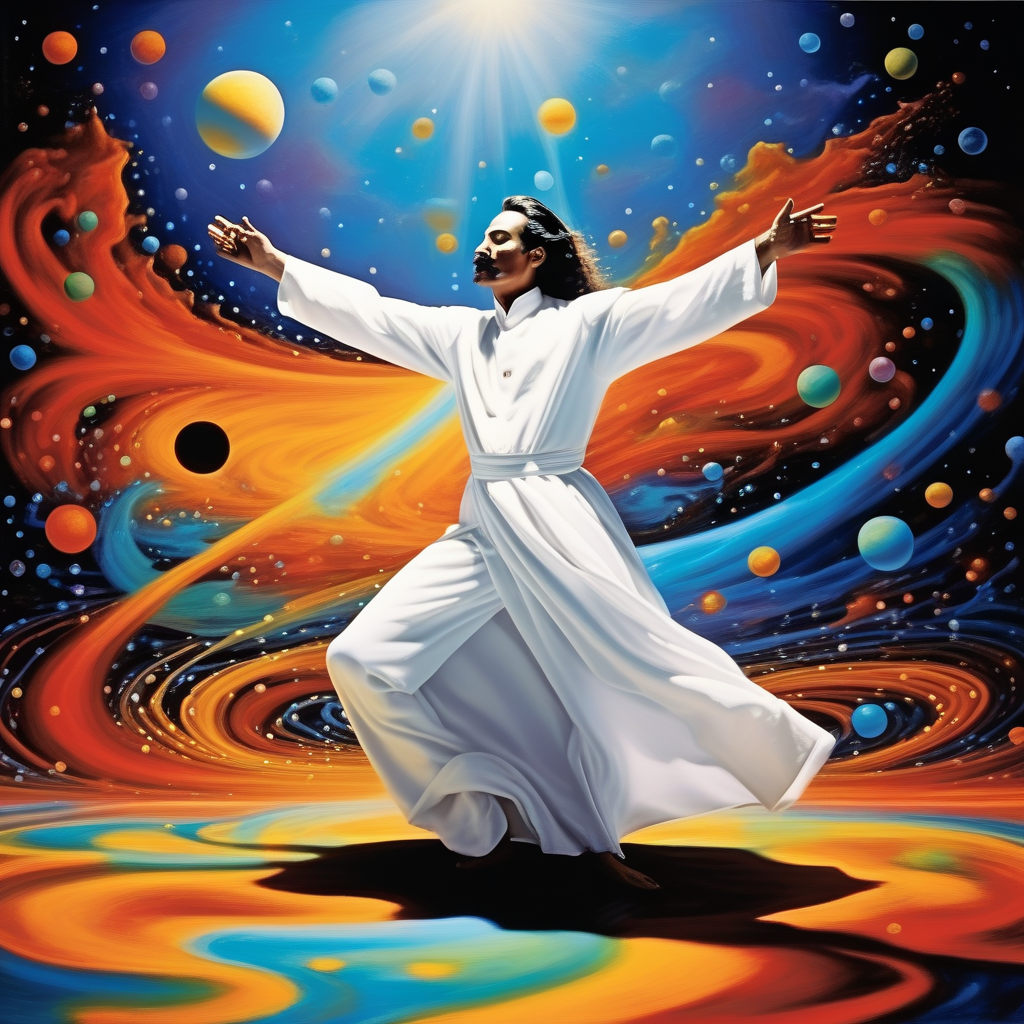
The ego, a fortress of our individuality, a custodian of our senses, crumbles during a profound psychological event termed ego death. This process, which is akin to crossing the Rubicon of our minds, signifies the temporary dissolution of our self-identity, the fading of our senses, and the surfacing of a cosmic oneness often linked to deep meditative states, transcendental experiences, or psychedelic journeys.

Neurologically, ego death presents an intriguing event. Our brain’s default mode network (DMN), which curates our self-narrative and sets us apart from others, shows a marked decrease in activity. We can compare it to a maestro leaving the stage, silencing the orchestra of our everyday consciousness that incessantly plays symphonies of thoughts, memories, and future projections.

In the ensuing stillness, our senses embark on an incredible transformation. The self-nonself dichotomy wavers, and feelings of oneness and interconnectedness seep in.

The conventional five senses, along with lesser-known ones such as proprioception (spatial orientation of our body parts), and thermoception (sense of temperature), recede, rendering the self imperceptible. Even the sense of agency – the consciousness of controlling one’s actions – seems to dissolve.

In place of the sensory absence comes the phenomena of nonduality – the essence of existence, unblemished by ego-driven distortions. Here, the biological reality of our senses converges with an intense metaphysical experience.

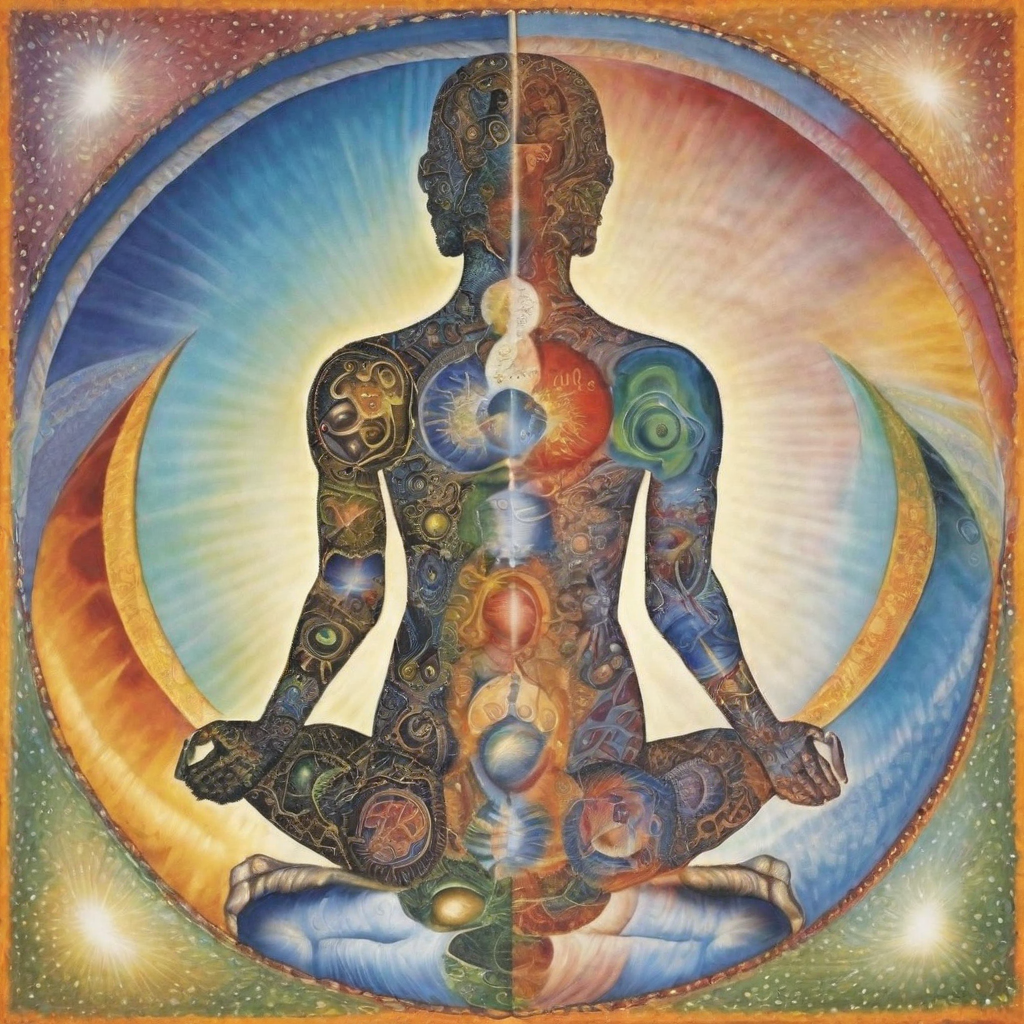
Kundalini rising – a sensation akin to a large serpent ascending the spine, activating each energy center or ‘chakra’ – might manifest in this transformative journey. Biologically, it could be perceived as a surge in nervous energy influencing neural circuits, engendering a radical alteration in perception.

The dissolution of our sense of time – chronoception – engulfs us in a timeless realm. Our sense of spatial orientation capitulates, inducing a feeling of non-locality, a state where one’s existence feels omnipresent.

This whole process might seem like an experiential validation of ‘absolute monism’ – a philosophical school of thought propounding the universe’s oneness, discrediting any duality between the individual and the world.

Yet, ego death is not an end; it’s a transformative beginning. The insights gleaned about the interconnectedness of all life forms and the illusory separateness sculpted by our ego can significantly reshape our lives.

From a wider perspective, ego death can be seen as a philosophical odyssey leading to an experiential understanding of consciousness, the essence of selfhood, and the nature of reality. The unravelling of our senses and ego sheds light on our inherent unity, nurturing a profound sense of compassion that percolates into every aspect of our existence.

Ego death’s exploration and its impact on our senses offer an avenue to challenge our conventional ways of perceiving, question our established sense of being, and dive deeper into the mysteries of our inner and outer universe. It’s not merely a psychological event but a spiritual expedition and a philosophical exploration that propels us toward a truer understanding of existence.

Morgan O. Smith

Yinnergy Meditation & My Book, Bodhi in the Brain…Available Now!
https://linktr.ee/morganosmith

The Timeless Universe

A Journey into the Eternal Now

As humans, we are fundamentally tethered to the concept of time. We perceive our lives as an unceasing flow of moments, an endless river cascading from the mountains of the past into the oceans of the future. But what if we could untether ourselves from this chronology, detaching from the past and the future to dwell in an “eternal now”? This concept might seem paradoxical, even inconceivable, yet it offers a fascinating vista of our understanding of reality.

First, we must address the elephant in the room: Can we truly conceptualize a universe without time? The removal of time from our universe plunges us into the depths of a reality where the progression of events ceases. In this static universe, everything exists in an unending present state, with no evolution or motion since these phenomena require time to define their existence.

Yet, the concept of an “eternal now” still implies a temporal dimension. In other words, to speak of an ‘eternal’ now, we inadvertently evoke the notion of time. Herein lies the paradox: while we yearn for a grasp on the timeless, our very language and cognition are steeped in the temporal.

So, what does it mean to experience this “eternal now”? We find an enlightening perspective in the Zen Buddhist concept of “satori”. Satori represents a sudden awakening, an immersion in the present moment that is so profound that it transcends time. This experience of enlightenment unveils a reality where past and future merge into a single, timeless instant. In satori, one perceives reality unfettered by the usual constraints of time or even individual self.

Despite its paradoxical nature, the exploration of an “eternal now” serves as an intellectual and philosophical exercise that tests the boundaries of our understanding. It underscores the limitations of our human comprehension, reminding us of the extraordinary mystery that is our universe.

Dwelling in the “eternal now” is a concept that nudges us to revisit our accepted notions about time and reality. It invites us to question whether our perception of linear time, with its forward march from the past to the future, is the only possible way to experience the universe.

Could there be other forms of reality, other universes perhaps, where time as we know it does not exist? Or could our very perception of time be an illusion, a cognitive construct born out of necessity? In the vast cosmos, are we just temporal beings trying to make sense of a timeless existence?

We might not be able to fully answer these questions, yet in asking them, we expand our intellectual horizons and deepen our understanding of the universe. In this exploration, perhaps we may even inch closer to experiencing a taste of the enigmatic “eternal now”.

Morgan O. Smith

Yinnergy Meditation & My Book, Bodhi in the Brain…Available Now!

https://linktr.ee/morganosmith

Exploring Spiritual Enlightenment

Unveiling the Essence of Being

Introduction:
In the realm of spirituality, few concepts captivate the human imagination as profoundly as spiritual enlightenment. It has been sought after, contemplated upon, and revered across cultures and traditions. At its core, spiritual enlightenment encompasses a holistic realization, knowing, comprehension, recognition, and liberation, leading to an intimate understanding of one’s essence as the Ground of all Being. In this thought-provoking blog, we embark on a journey to unravel the depths of spiritual enlightenment and explore its transformative power.

Realization: The Full Realization of What You Are as The Ground of All Being
The journey toward spiritual enlightenment begins with a profound realization—an awakening to the fundamental truth of one’s existence. It is an experiential revelation that transcends intellectual understanding, offering a direct encounter with the essence of reality. This realization unveils the interconnectedness of all existence and dissolves the boundaries that separate the self from the world.

Knowing: Knowing Who and What You Are as The Ground of All Being

Knowing, in the context of spiritual enlightenment, goes beyond intellectual knowledge or beliefs. It is a direct and intimate knowing of one’s true nature, beyond the ephemeral constructs of ego and identity. This knowing arises from experiential wisdom that transcends language and logic, revealing the profound interconnectedness of all life.

Comprehension: Comprehending What You Are as The Ground of All Being
Comprehension in spiritual enlightenment refers to a deep understanding that arises from the integration of realization and knowing. It involves grasping the inherent wisdom that pervades all existence and recognizing the underlying unity amidst the apparent diversity. This comprehension allows us to perceive the world through a lens of compassion, empathy, and interconnectedness.

Recognition: Recognizing What You Are as The Ground of All Being

Recognition entails a moment of profound insight where the illusory veils of separation and limitation fall away, revealing the truth of one’s being. It is a transformative recognition of our true nature as vast, boundless awareness, intimately interconnected with the entire cosmos. Through this recognition, we come to acknowledge the divinity that resides within ourselves and all beings.

Liberation: Being Liberated from Shape or Form, Free from Illusion and Attachments

Liberation represents the ultimate culmination of spiritual enlightenment—a state of profound freedom and liberation from the constraints of ego, attachment, and illusion. It is an experiential transcendence of the limited, conditioned self, allowing one to dwell in the realm of pure emptiness. Yet, paradoxically, this liberation is not a detachment from the world but a unification with it, as the awakened individual realizes their inseparability from the tapestry of existence.

Conclusion:
Spiritual enlightenment encompasses a multidimensional journey that surpasses the limitations of language and rationality. It is a profound exploration of the self and the universe, revealing our interconnectedness and inherent divinity. Through realization, knowing, comprehension, recognition, and liberation, we can embark on a transformative path that leads to a deeper understanding of our existence. By embracing the essence of spiritual enlightenment, we may find ourselves united with everything that is form while being liberated from the illusory constraints that bind us. May this exploration inspire you on your quest for self-discovery and awakening to the timeless truth of the Ground of all Being.

Morgan O. Smith

Yinnergy Meditation & My Book, Bodhi in the Brain…Available Now!