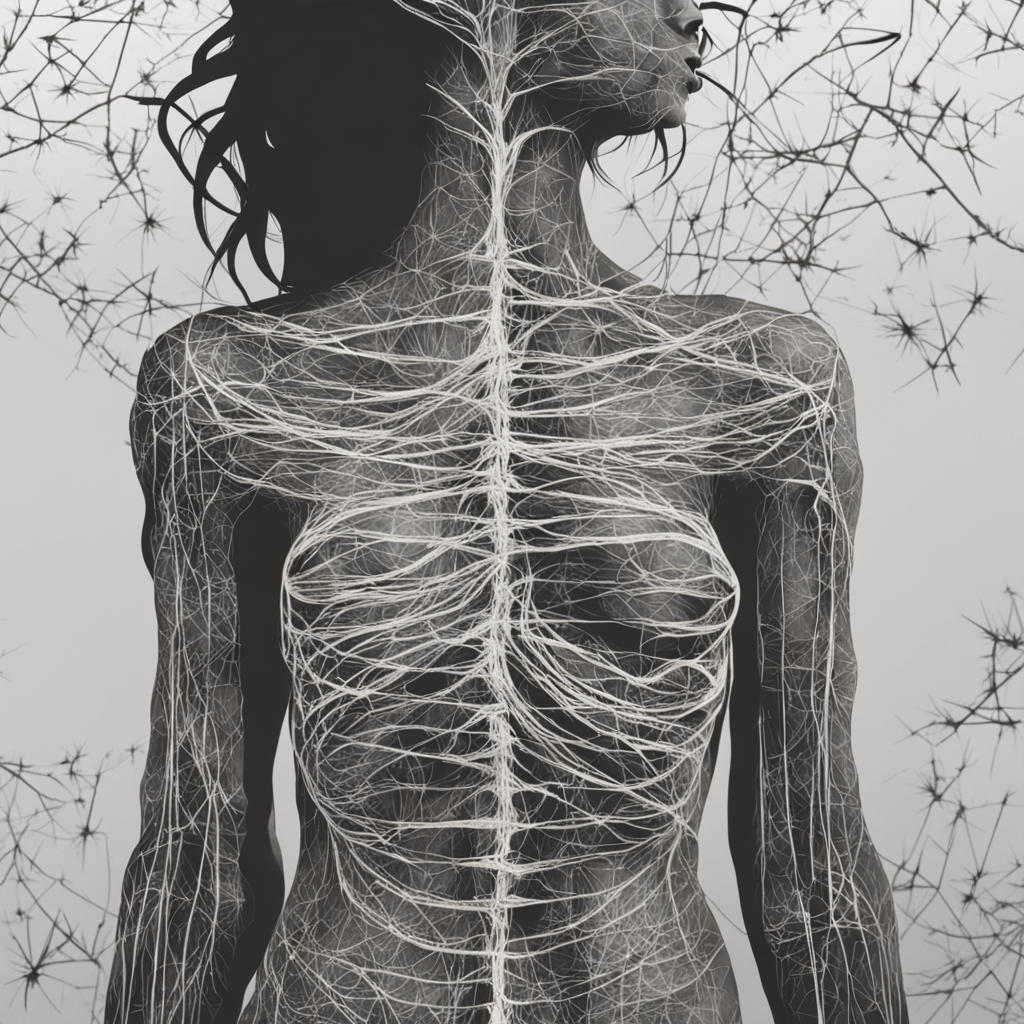
The Perfect Gift Wrapped in Mind

The body is often seen as a vessel, a biological mechanism enabling experience and action. But what if we approached it differently? What if we recognized the body as the ultimate gift—intricately wrapped in layers of mind, emotion, and perception? This perspective shifts us from treating the body as a passive object to understanding it as an intelligent instrument of the infinite.

Each sensation the body offers is a doorway. The ache in your shoulders, the flutter in your stomach, the breath moving through your chest—these aren’t merely physiological events. They are signals, invitations to become aware of the mind’s imprints and the silent intelligence that animates them. The body reveals the unseen layers of the mind, not to entangle us but to set us free.

Consider the interplay of movement and stillness. A heartbeat pulses within every moment of quietude, a reminder that even in perceived rest, life hums with activity. Similarly, the mind often overlays the body’s simplicity with stories—self-judgment, desires, and fears. Yet, beneath this mental wrapping lies pure awareness, unclouded and ever-present.

True liberation doesn’t come from rejecting the body or attempting to transcend it but from embracing its divine design. The body is where the formless meets form, where consciousness expresses itself in tangible, palpable ways. When we cease resisting its messages and begin listening with curiosity, the body transforms from an object of control into a teacher of profound wisdom.

This realization is not merely theoretical. It can be felt. Try sitting quietly and attuning to the subtleties of your breath. Notice the places where tension resides, where the body’s natural rhythms feel interrupted. With gentle attention, ask: “What is this teaching me?” Often, the mind will resist—habitually seeking distraction or interpretation. But as you remain present, something deeper emerges: an understanding that the body and mind are not separate, but two facets of the same infinite presence.

Awakening is not about leaving the body behind but about fully inhabiting it. By appreciating its perfect gift and unwrapping the layers of mind that obscure it, we find ourselves drawn closer to our true nature.

The next time you feel pain, joy, or anything in between, pause. Let the body be your guide, not just a vehicle for experience but the very expression of life’s sacred mystery.

Morgan O. Smith

Yinnergy Meditation, Spiritual Life Coaching & My Book, Bodhi in the Brain…Available Now!

https://linktr.ee/morganosmith

The Role of Harsh Environments

In the Advancement of Spirituality and Eastern Philosophy

Introduction: As we delve into the realm of spiritual growth and philosophical evolution, we find ourselves drawn to the profound teachings of Eastern wisdom traditions like Hinduism, Buddhism, and Taoism. These knowledge traditions have birthed deep-seated understandings about the existential fabric of reality, the dimensions of human consciousness, and the varied contours of the human condition. This blog piece, filled with spiritual development insights and philosophy exploration, will unearth the significance of harsh environments in moulding these spiritual and philosophical systems. We’ll explore how survival instincts in tough circumstances could have been the catalyst for their evolution.

The Resource Scarcity Hypothesis and Cultural Adaptation Hypothesis: Unraveling the link between harsh environments and the growth of spirituality and philosophical thought, we can turn to theories like the “resource scarcity hypothesis” and the “cultural adaptation hypothesis.” The resource scarcity hypothesis highlights how societies living in resource-depleted environments tend to develop advanced technologies and intricate social organizations to manage the challenges they face. Similarly, the cultural adaptation hypothesis explains how groups foster distinctive knowledge, skills, and practices to adjust to their unique environments.

When we apply these concepts to spirituality and Eastern philosophy, it becomes evident that many of these traditions trace their origin back to regions with severe conditions – be it the arid landscapes of India, the rugged mountains of Tibet, or the isolated valleys of China. These environments may have acted as crucibles, fostering the emergence of complex spiritual and philosophical systems that provide solace amidst the hardships of everyday life, while offering a sense of purpose in adversity.

The Interplay of Spiritual Enlightenment and Survival Instincts: Survival instincts in the face of harsh environments could have played a pivotal role in the conceptualization of spiritual and philosophical doctrines like spiritual enlightenment. In Eastern philosophy, enlightenment often symbolizes the transcendence of suffering, heralding a state of inner peace, equilibrium, and liberation from the shackles of mundane existence.

In environments that test human endurance, the quest for spiritual enlightenment can be viewed as an answer to the physical and psychological trials faced by individuals and communities. In the quest to understand and overcome suffering, individuals can unearth the inner strength and resilience necessary to endure and flourish under severe circumstances.

Furthermore, practices that facilitate spiritual enlightenment – meditation, mindfulness, ethical living – are also effective stress management tools, which enhance personal well-being and nurture social unity during tough times.

Conclusion: While it’s crucial to avoid oversimplification of the intricate factors that nurture the growth of spirituality and Eastern philosophy, it’s undeniable that severe environments and survival instincts have significantly influenced these traditions. By offering a coping mechanism to life’s challenges and a route to inner peace and transcendence, spiritual enlightenment has served as a beacon of hope and inspiration for countless individuals across the epochs. As we navigate the trials of our era, the timeless wisdom of these ancient traditions offers invaluable lessons for our spiritual and philosophical growth.

Morgan O. Smith

Yinnergy Meditation & My book, Bodhi in the Brain…Available Now!