Nonduality

The Unspoken Reality

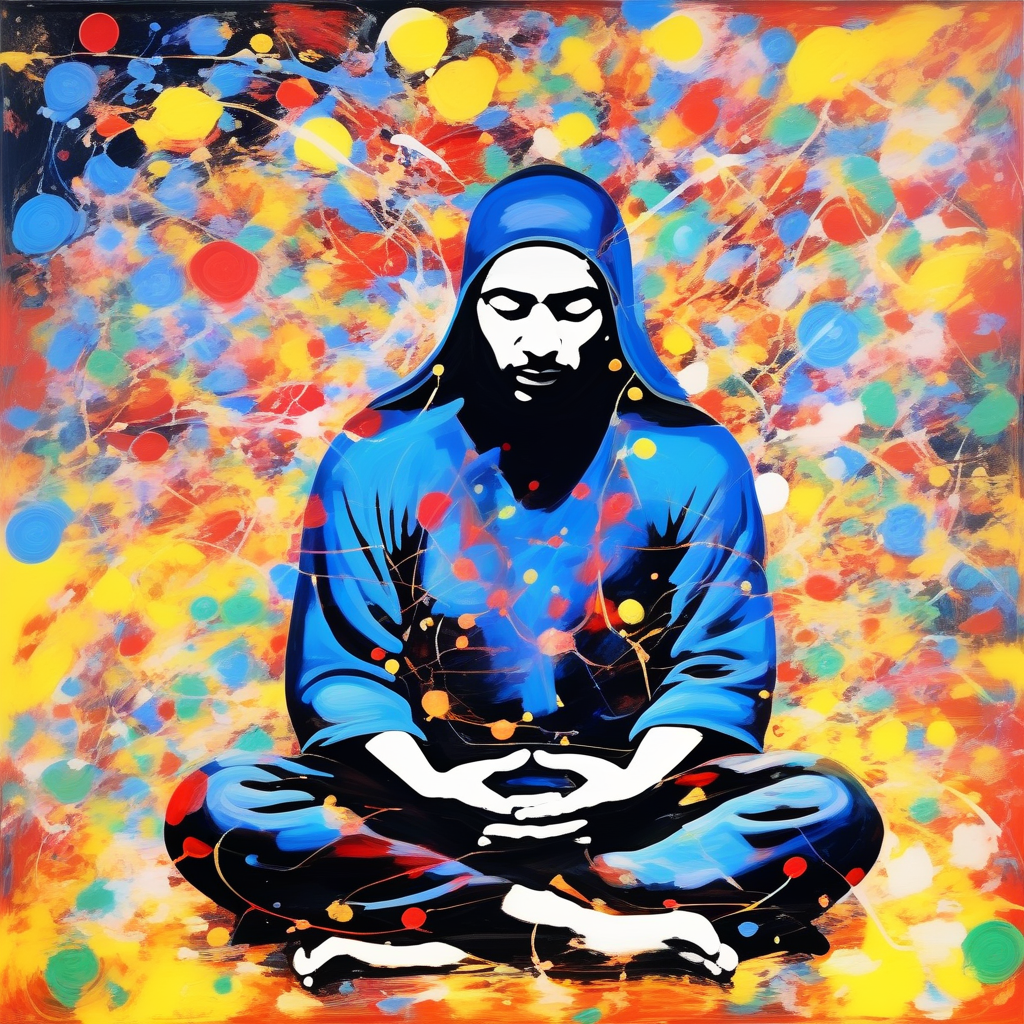
In the realm of spirituality and philosophy, few concepts are as intriguing and paradoxical as nonduality. Nonduality, often associated with Eastern philosophies like Vedanta and Buddhism, refers to the idea that the dualistic distinctions we make between self and other, subject and object, mind and matter, are ultimately illusory or not fundamentally real.

The profound irony of nonduality is that any attempt to discuss or conceptualize it inherently contradicts its very essence. Speaking or thinking about nonduality is, by its nature, a dualistic activity. This is because language and thought are tools that rely on differentiation and distinction. They are the media through which we carve out the ‘self’ from the ‘other’, the ‘this’ from the ‘that’. In doing so, they perpetuate the illusion of duality – the very illusion that nonduality seeks to transcend.


This paradox highlights a fundamental challenge in human cognition: our reliance on dualistic frameworks to make sense of the world. From the moment we are born, our minds are trained to categorize and differentiate. This cognitive structuring is crucial for our survival and functioning in the world, yet it also confines us within the boundaries of dualistic thinking.

Nonduality suggests a state of consciousness where these dualistic distinctions dissolve. It points to an experiential understanding where the division between subject and object, observer and observed, ceases to exist. In this state, the egoic self expands into a boundless, undifferentiated whole.

Yet, the path to realizing nonduality is not through intellectual understanding. Since it is beyond the grasp of dualistic thought and language, nonduality is often approached through practices that transcend rational thinking, such as meditation, mindfulness, or other forms of spiritual contemplation. These practices aim to quiet the mind and dissolve the ego, allowing for a direct, non-conceptual experience of reality, unfiltered by the distorting lens of dualistic thought.
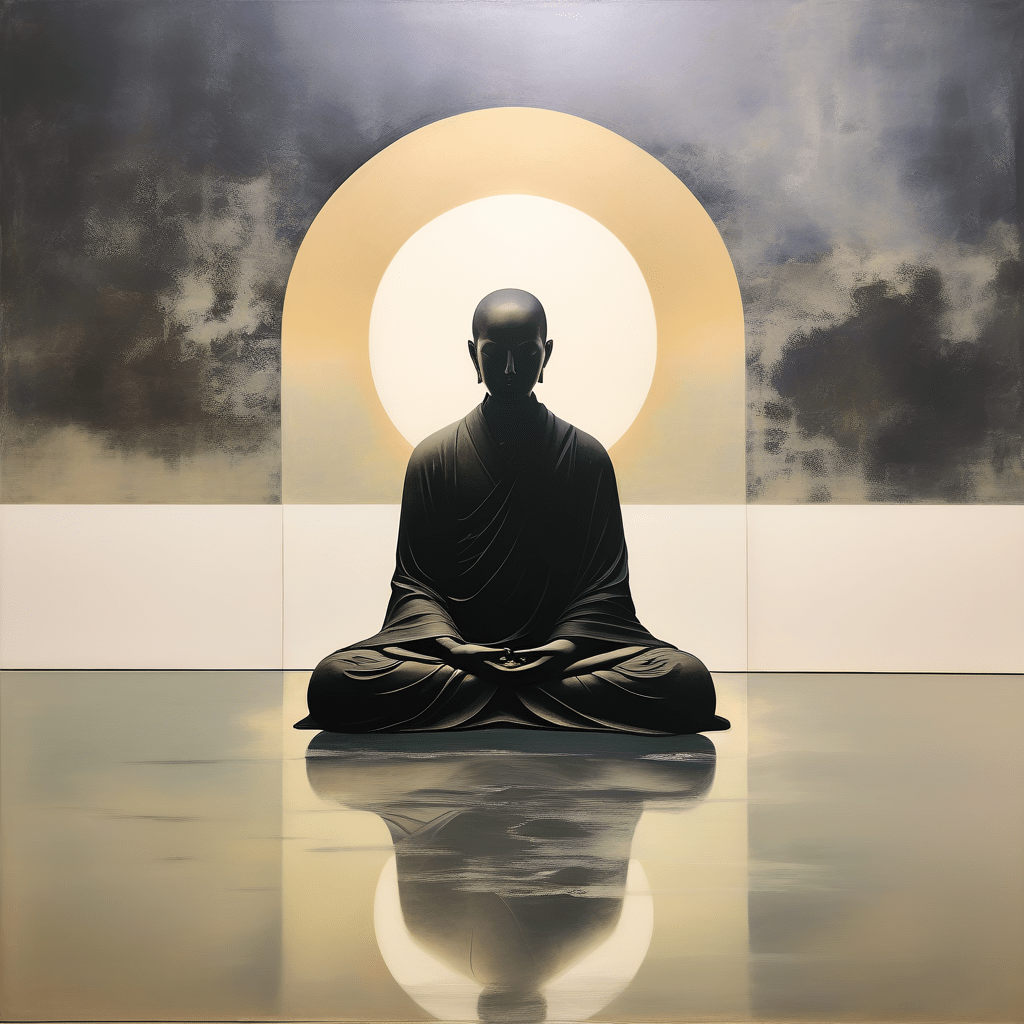

In conclusion, nonduality remains an enigmatic yet profoundly significant concept. It challenges us to look beyond the apparent separateness and fragmentation of our experiences and to question the very foundations of our understanding of reality. While it may never be fully captured in words or thoughts, it stands as a powerful reminder of the limitations of our dualistic perspectives and invites us to explore the depths of our consciousness.

Morgan O. Smith

Yinnergy Meditation, Spiritual Life Coaching & My Book, Bodhi in the Brain…Available Now!

https://linktr.ee/morganosmith

Everyone Falls Back Asleep After Awakening, But No One Falls Asleep After Enlightenment

In the journey of self-awareness and understanding, there’s a profound adage that resonates deeply: “Everyone falls back asleep after awakening, but no one falls asleep after enlightenment.” This statement, while seemingly simple, carries with it a world of meaning and depth, particularly in the context of spiritual and personal growth.

#### The Paradox of Awakening and Enlightenment

At first glance, the idea of “falling back asleep after awakening” seems counterintuitive. Isn’t awakening supposed to be a permanent shift in consciousness? The truth, however, lies in the subtle difference between temporary awakenings and true enlightenment. Many of us experience moments of awakening — brief glimpses into a deeper reality or a sudden awareness of a profound truth. These moments can be sparked by various experiences: a beautiful sunset, a piece of art, or a moment of deep connection with another person. However, these are often transient, and we find ourselves slipping back into our habitual patterns of thought and behaviour.

Enlightenment, on the other hand, represents a fundamental and irreversible shift. It’s akin to a door that, once opened, cannot be closed again. In enlightenment, there is a permanent transformation of perspective, a sustained awareness that transcends the ordinary consciousness. This state is often described as a deep, unshakable understanding of the nature of reality, self, and existence.


#### The Role of Meditation in Enlightenment

This statement emphasizes the necessity of years of meditation for true enlightenment. Meditation, in its various forms, is more than just a practice of calming the mind. It’s a tool for deep introspection, for peeling away the layers of illusion and ego that cloud our true nature. Through persistent meditation, one can gradually dissolve these barriers, fostering a greater connection with the inner self and the universe.

Meditation teaches patience, discipline, and, most importantly, the ability to observe without attachment. These qualities are essential in moving from fleeting moments of awakening to a sustained state of enlightenment. It’s a journey of continuous growth and learning, where each meditative experience builds upon the last, gradually leading to a profound understanding and acceptance of what is.


#### Conclusion

In conclusion, the journey from awakening to enlightenment is not a straight path. It involves many cycles of falling back into unconsciousness and rising again with a deeper understanding. This process is necessary and valuable, as each fall and rise polishes the soul, preparing it for the ultimate state of enlightenment. The years of meditation are not just a discipline but a devotion to the inner journey, a commitment to uncovering and living one’s truth.

Morgan O. Smith

Yinnergy Meditation, Spiritual Life Coaching & My Book, Bodhi in the Brain…Available Now!

https://linktr.ee/morganosmith

Transcending the Mind

A Journey into the Realms of True Reality

In the labyrinth of human existence, there lies a profound truth that often remains hidden beneath layers of perception and thought: the essence of reality as it truly is, unfiltered and pure. This realization dawns only when the mind transcends its boundaries, stepping beyond the constraints of its conditioned patterns and habitual ways of thinking.

The mind, a magnificent tool for navigation in the physical world, is often shackled by its creations – thoughts, beliefs, and assumptions. These mental constructs, while useful, can also act as barriers, filtering and altering reality as it presents itself to us. The journey towards understanding true reality thus begins with a paradoxical task: using the mind to transcend the mind.

In this transcendence, one experiences a shift in perspective. What was once seen as absolute may reveal its relativity. The solid ground of ‘facts’ might turn into a dance of possibilities. This isn’t a disavowal of logic or reason, but an expansion of them. It’s an acknowledgment that reality, in its vastness, cannot be fully contained within the confines of human thought.

What emerges from this transcendental experience is a sense of profound connection. The boundaries that separate the self from the universe begin to blur. In this state, one doesn’t just observe reality; one becomes a part of it, engaged in a harmonious dance where the distinction between the observer and the observed diminishes. It’s a state where the ego dissolves, and in its place arises a sense of unity with all existence.

This journey is not about acquiring new knowledge but about unlearning what obstructs the vision of reality. It’s about silencing the incessant chatter of the mind to listen to the silence that speaks volumes. In this silence, reality reveals itself not as a concept to be grasped but as an experience to be lived.

As we embark on this journey of transcending the mind, we open ourselves to a reality that is more vivid, more alive, and infinitely more profound than our habitual ways of seeing can allow. It’s a journey from the illusion of knowing to the wisdom of understanding, from the confinement of the mind to the liberation of consciousness.

In this exploration, we find not just the essence of reality but also the essence of ourselves, as beings intrinsically connected to the vast, intricate tapestry of existence. We discover that in transcending the mind, we don’t lose ourselves; we find ourselves in everything.

Morgan O. Smith

Yinnergy Meditation, Spiritual Life Coaching & My Book, Bodhi in the Brain…Available Now!

https://linktr.ee/morganosmith


Meditative Practice as a Perpetual State

An Evolutionary Stage in Spiritual Development

In the journey of self-discovery and spiritual growth, the concept of meditation often surfaces as a pivotal practice. However, there’s an evolutionary stage within this practice that transcends beyond the mere act of meditating – it’s the transformation of meditative practice into a perpetual state of meditation. This shift marks a significant milestone in an individual’s spiritual development, where meditation is no longer an isolated activity but an intrinsic part of one’s existence.

## The Essence of Perpetual Meditation

Perpetual meditation is not about allocating specific hours of the day to meditate; it’s about integrating the essence of meditation into every moment of life. This stage is reached when the clarity, calmness, and mindfulness cultivated during meditation persist throughout the day, influencing our thoughts, actions, and interactions. It’s a state where the mind is constantly attuned to the present, free from the clutches of past regrets and future anxieties.

## Evolutionary Spiritual Development

Reaching this stage of perpetual meditation signifies a profound shift in spiritual evolution. It’s a transformation from doing to being – from practicing meditation as a task to living meditatively. This evolution is marked by a heightened sense of awareness and a deep connection with the inner self. It’s a journey from the surface layers of consciousness to the deeper, more subtle realms of existence.

## The Impact on Individual and Collective Consciousness

The transition to a perpetual state of meditation has far-reaching implications, both for the individual and the collective consciousness. On a personal level, it cultivates inner peace, resilience, and a profound understanding of life. On a collective level, it can lead to a more compassionate, empathetic, and conscious society, as individuals who embody this state naturally radiate positivity and understanding.

## Navigating the Path

The path to this evolutionary stage is unique for each individual, yet some universal practices can guide the journey. Regular meditation, mindfulness exercises, and a conscious effort to stay present can gradually lead to the internalization of meditative awareness. It’s a path of patience, persistence, and profound introspection.

## Conclusion

Transforming meditative practice into a perpetual state of meditation is a significant evolutionary step in spiritual development. It’s a journey towards becoming a beacon of peace and awareness, influencing not only one’s life but also the world at large. This state is not an end but a beginning – a gateway to deeper spiritual realms and a more profound understanding of existence.

Yinnergy Meditation


Embark on a transformative journey with Yinnergy Meditation, a distinctive and potent program crafted to unleash your inner capabilities. More than just a meditation technology, Yinnergy guides you on a path of emotional, mental, and spiritual evolution. Experience the depths of meditation, increased tranquillity, and notable improvements in creativity, concentration, and intuition through Yinnergy. Suitable for both novices and experienced practitioners, it offers an accessible yet impactful route to heightened self-awareness and well-being. Choose Yinnergy Meditation for a life filled with clarity, equilibrium, and harmony. Begin your journey of transformation today and connect with your deepest inner strengths!

Remember to make the most of our exclusive Holiday promotion. Apply the discount code R7X9Z2P for special savings on all Yinnergy products during checkout.

https://yinnergy.gumroad.com/

Meditate…

Until Your Internal World Resembles Paradise

In the bustling chaos of everyday life, where the noise of the external world often drowns out our inner peace, there is a profound need for sanctuary. Not a physical refuge, but a mental oasis that can be accessed anywhere, anytime. This sanctuary is not just a fleeting escape, but a transformation of our internal world into a paradise. The key to unlocking this paradise? Meditation.

Meditation, often misconceived as merely a relaxation technique, is a profound journey toward internal transformation. It’s about finding the silence amidst the noise, the stillness within the storm. Through meditation, we can delve into the depths of our consciousness, explore the landscapes of our minds, and cultivate a garden of tranquillity.

But how does one’s internal world become a paradise? It begins with understanding that paradise is not a physical location, but a state of being. It’s a place of balance, harmony, and a profound understanding of oneself. Meditation guides us toward this state by teaching us to observe our thoughts without attachment, to embrace our emotions without being overwhelmed by them, and to find clarity amid confusion.

As we meditate, we learn to let go of the clutter, the unnecessary burdens that weigh down our spirit. We learn to nurture thoughts and emotions that uplift and support our well-being. Slowly, the internal chaos gives way to a serene landscape, a paradise that is uniquely ours.

This journey, however, is not without its challenges. Just like any paradise, our internal world requires nurturing. It requires patience, dedication, and above all, a willingness to explore and accept ourselves fully. But the rewards are immeasurable. In this internal paradise, we find resilience against external turmoil, a deep sense of peace, and a wellspring of joy that is not dependent on external circumstances.

So, take a moment to close your eyes, breathe deeply, and embark on the most rewarding journey of all – the journey within. Meditate until your internal world blossoms into a paradise, a haven of peace and joy that you carry with you always.

Want to find your paradise within? Discover the transformative power of Yinnergy Meditation, a unique and effective program designed to unlock your inner potential. Yinnergy is not just a meditation method; it’s a journey toward emotional, mental, and spiritual growth. With Yinnergy, you can experience profound deep meditation, heightened relaxation, and a significant boost in creativity, focus, and intuition. It’s an ideal practice for both beginners and seasoned meditators, offering a simple yet powerful path to enhanced well-being and self-awareness. Embrace a life of clarity, balance, and harmony with Yinnergy Meditation. Start your transformative journey today and tap into your deepest potential!

Remember to make the most of our exclusive Holiday promotion. Apply the discount code R7X9Z2P for special savings on all Yinnergy products during checkout.

https://yinnergy.gumroad.com/

Embracing Life’s Paradox

The Path to Tranquility Through Suffering

In the tapestry of human existence, suffering is often perceived as an unwelcome intruder, an aberration in the otherwise serene flow of life. Yet, this perspective overlooks a profound truth: suffering is not just an integral part of life, but it can also be a conduit for deep, transformative growth. The statement, “All life is suffering until we watch our sufferings without bias or judgment,” encapsulates a significant philosophical stance, inviting us to reevaluate our relationship with pain and hardship.

At the core of this idea lies the Buddhist philosophy of Dukkha, which suggests that suffering is inherent in the very fabric of life. This suffering stems from various sources: the pain of change, the anxiety of impermanence, and the dissatisfaction arising from unfulfilled desires. However, the key to alleviating this suffering is not found in the external world but within our perceptions and reactions.


Watching our sufferings without bias or judgment means observing our pains and challenges with a sense of detachment and mindfulness. It’s about recognizing that suffering is a natural part of life and not something to be feared or avoided. This mindful observation allows us to understand the impermanent nature of our experiences, leading to a sense of liberation and peace.

Moreover, this approach transforms suffering from a state of passive endurance to an active process of introspection and learning. It becomes an opportunity to cultivate resilience, empathy, and wisdom. Through this lens, we see that our most challenging moments are often our greatest teachers, guiding us toward a deeper understanding of ourselves and the world around us.


In essence, the path to tranquillity and inner peace is paradoxically paved by accepting and understanding suffering. It is about shifting our perspective from seeing suffering as a curse to embracing it as a catalyst for personal growth and enlightenment.

Morgan O. Smith

Yinnergy Meditation, Spiritual Life Coaching & My Book, Bodhi in the Brain…Available Now!
https://linktr.ee/morganosmith

Bend the Mind, Twist the Mind, Stretch the Mind, Crunch the Mind

In the labyrinth of our thoughts, we often find ourselves entangled in a web of complexities and perplexities. The mind, a powerful tool, yet an enigma, needs to be bent, twisted, stretched, and sometimes crunched to unlock its true potential. But what happens when we let it remain still?

The Power of Stillness

In stillness, there is a profound awakening. When the relentless chatter of the mind ceases, we step into a realm of pure awareness. It’s akin to the calm after a storm, where clarity emerges from the chaos. In this tranquil state, the mind becomes a mirror, reflecting the movements of the universe in its truest form.


Universal Movements and the Mind


The universe is in constant motion – stars burn, galaxies spin, and life evolves. In our usual state of mental noise, we are detached from this cosmic dance. However, as our mind quiets, we begin to synchronize with these universal rhythms. This synchronization is not just observation; it is a profound connection, an understanding that we are part of this grand symphony.

The Mind’s Journey

Bending, twisting, stretching, and crunching the mind are not just metaphorical. These are processes of challenging our thoughts, questioning our beliefs, and stretching our understanding. It’s a journey from the known to the unknown, from certainty to curiosity, from noise to silence.


Conclusion

The still mind is not a void; it is full of awareness. It’s a state where we realize that we are not separate from the universe but integral to it. It’s a realization that every thought, every action is a ripple in the cosmic ocean. This understanding doesn’t come from the constant churning of thoughts but from the serene stillness where we hear the universe speak.

Morgan O. Smith

Yinnergy Meditation, Spiritual Life Coaching & My Book, Bodhi in the Brain…Available Now!

https://linktr.ee/morganosmith

Absolute Causality and the Epiphany of Absolute Monism

In the profound journey of spiritual exploration, a moment stands out as particularly transformative: the moment of spiritual enlightenment. This isn’t just a fleeting insight; it’s an experiential understanding of “Absolute Monism”. This is a state where one perceives the unity and interconnectedness of all things, leading to an astonishing realization: every action, behaviour, situation, or event, regardless of its scale or significance, is intrinsically linked to the very cause of the universe’s existence – the Big Bang.

This concept, which I term “Absolute Causality”, posits that the Big Bang isn’t just a distant historical event; it’s an ongoing process that manifests in every aspect of our lives. This perspective radically alters our understanding of time, causality, and our place in the universe. We begin to see that our every action isn’t merely a drop in the ocean but is, in fact, part of the ocean itself.


Absolute Monism, in this context, becomes more than a philosophical idea; it’s a lived experience. It dissolves the illusion of separation between the self and the universe, leading to a profound sense of unity and interconnectedness with all existence. This realization fosters a deeper sense of responsibility and mindfulness in our actions, as we understand that what we do has a ripple effect throughout the fabric of the cosmos.

Furthermore, Absolute Causality redefines our understanding of time. Rather than viewing the Big Bang as a one-time event in the distant past, we perceive it as an eternal process that continuously unfolds in every moment. This view aligns with certain interpretations of quantum physics, suggesting that time is not linear but a more complex, interconnected web of events and possibilities.


In conclusion, the experience of Absolute Monism and the realization of Absolute Causality offer a transformative lens through which we can view our existence. It’s a perspective that encourages us to live more consciously, understanding that our actions are not just our own but part of a grand, cosmic dance that began with the universe itself.

 Morgan O. Smith

Yinnergy Meditation, Spiritual Life Coaching & My Book, Bodhi in the Brain…Available Now!

https://linktr.ee/morganosmith

Embracing the Now

The Path to Ego Death and True Awareness

In our relentless pursuit of self-improvement and understanding, we often overlook a fundamental truth: the power of simply being in the present moment. This idea, though simple, holds profound implications for our journey towards inner peace and self-realization.

**Letting Go of Judgment and Bias**

To truly embrace the present, we must first release ourselves from the shackles of judgment and bias. This means observing our experiences, thoughts, and feelings without labelling them as good or bad, right or wrong. It’s about being an impartial witness to our own life.


**The Surrender to ‘What Is’**

Surrendering to ‘what is’ requires a deep acceptance of the present moment, regardless of its nature. It’s not about resignation or defeat; rather, it’s an active engagement with the now. In doing so, we allow life to flow naturally, without the resistance that often leads to suffering.

**Death of the Ego**


The ego, often seen as our conscious self or identity, thrives on differentiation, judgment, and past-future thinking. By embracing the present and letting go of these traits, we facilitate the ‘death’ of the ego. Now this does mean losing our sense of self, transcending the limited, subjective view of the ego.


**A New Perspective**

As we learn to live in the present, our perspective on life shifts. We begin to see the interconnectedness of all things and the beauty in simplicity. The burdens of past regrets and future anxieties lighten, offering a sense of liberation.

**Final Thoughts**

The journey towards ego death and true awareness is not about gaining something new but about losing the misconceptions and biases that cloud our true nature. It’s a path of unlearning, of returning to the essence of who we are.

Morgan O. Smith

Yinnergy Meditation, Spiritual Life Coaching & My Book, Bodhi in the Brain…Available Now!
https://linktr.ee/morganosmith

Embracing Fear in the Journey to God-Realization

Finding Harmony in Human and Divine Experiences

Fear, often perceived as a negative emotion, does not simply vanish upon reaching a state of God-realization or profound spiritual awakening. This insight sheds light on a profound truth about our human experience: we are here to embrace the full spectrum of life, including emotions and experiences that seem to contradict our divine nature.

The essence of being human lies in experiencing contrast. We understand light because of darkness, joy due to sorrow, and similarly, the divine by experiencing the non-divine. In this journey of life, fear is just as essential as love or joy. It’s not an obstacle to spiritual growth but a facet of it.


When fear arises, the approach shouldn’t be to suppress or eliminate it but to observe it with neutrality. Watching fear without judgment or bias is a practice of mindfulness. It allows us to understand fear, not as an enemy, but as a part of our human experience. This observation leads to acceptance – accepting fear as it is, not as we wish it to be.

The ultimate goal of spiritual or God-realized living is not about eradicating emotions like fear. It’s about embracing and accepting them. It’s about realizing that our spiritual nature coexists with our human emotions. Acceptance doesn’t mean passive resignation; it means understanding the nature of reality and our reactions to it. It’s about finding peace amid all experiences – both divine and human.


As we embark on this journey, let’s remind ourselves: whatever happens, let it be okay. This acceptance is not a defeat but a victory of understanding over resistance, of peace over turmoil. Embrace your humanity, embrace your divinity, and in the dance of these opposites, find the harmony of existence.

Morgan O. Smith

Yinnergy Meditation, Spiritual Life Coaching & My Book, Bodhi in the Brain…Available Now!

https://linktr.ee/morganosmith