
One Shared Journey

A Grateful Reflection

Every connection begins with a spark. Each visitor, reader, and seeker who has engaged with these writings have shaped this growing conversation. Across 132 nations, 10,507 curiosity, contemplation, and resonance moments have unfolded. This is more than numbers—it is a living testament to the interconnected spirit that binds us all.

Today holds special significance beyond gratitude alone—it is my birthday. I celebrate 53 years of life, reflection, and continuous exploration alongside this global community of seekers. There is no better way to mark this day than to extend heartfelt appreciation to each of you who has journeyed alongside me in thought and awareness.

A heart filled with gratitude reaches toward my homeland, Canada, the United States, Australia, India, and the United Kingdom—nations that have provided thousands of glimpses into this shared exploration. Vietnam, the Philippines, Germany, my place of birth, Jamaica, my place of ancestry,  Nigeria, Mexico, Indonesia, Ireland, South Africa, Pakistan, and the Netherlands—each one adding its own voice, its own energy, its own questions to the unfolding dialogue.

Thailand, Sweden, Italy, France, Japan, Malaysia, Romania, Spain, Austria, Brazil, Kenya, Poland, Jordan, Ghana, and China—there is no border to wisdom, no limitation to the reach of understanding. Every reader who paused to reflect, who allowed these words to stir something within, has contributed to a silent but powerful movement toward deeper awareness.

New Zealand, Singapore, South Korea, Greece, Israel, Russia, Hungary, Tanzania, Norway, Türkiye, Laos, Bangladesh, Saudi Arabia, Trinidad & Tobago, Belgium, Switzerland, Portugal, Uganda, Colombia, Ukraine, Taiwan, and Finland—each visit is a ripple of shared thought, proving that the human longing for meaning transcends language and culture.

Bosnia & Herzegovina, Cayman Islands, Hong Kong, Denmark, Slovenia, Bahamas, Kosovo, Egypt, U.S. Virgin Islands, Somalia, Argentina, Fiji, Latvia, Benin, Sri Lanka, Cameroon, Zimbabwe, Serbia, Slovakia, Armenia, Puerto Rico, Senegal, Tunisia, Chile, Dominican Republic, Kuwait, Morocco, Nepal, Gambia, Venezuela, Côte d’Ivoire, Peru, Bolivia, Guam, Myanmar (Burma), Qatar, Ecuador, Bulgaria, United Arab Emirates, Georgia, Mauritius, Czechia, Albania, Liberia, Belarus, Papua New Guinea, Guyana, Bahrain, Zambia, Namibia, North Macedonia, Syria, Kyrgyzstan, Lithuania, Kazakhstan, Oman, Croatia, Réunion, Cuba, Nicaragua, Paraguay, Mongolia, Malta, Guatemala, Seychelles, Sierra Leone, Niger, Ethiopia, Dominica, Congo – Kinshasa, St. Kitts & Nevis, Barbados, Costa Rica, Mozambique, Cambodia, Martinique, El Salvador, Lesotho, Botswana—your presence in this shared space carries meaning beyond what words can express.

Gratitude is more than an acknowledgment—it is a recognition of the unseen, the vast web of connection linking every individual to something greater. The search for understanding does not belong to one culture, one belief system, or one mind. It moves through all of us, revealing the essence of being beyond any division.

To every reader, to every soul that has journeyed through these thoughts—thank you. The exchange is sacred, and the dialogue continues.

Morgan O. Smith

Yinnergy Meditation, Spiritual Life Coaching & My Book, Bodhi in the Brain…Available Now!
https://linktr.ee/morganosmith

The Catalyst for the Ego’s Demise

The experience often referred to as “ego death” is not the obliteration of the self, but rather the dissolution of its illusions. The ego, a construct woven from the threads of identity, attachment, and fear, functions as a survival mechanism. It clings to roles, titles, and the narrative of separation to sustain its existence. Yet, this clinging obscures the deeper truth of who we are—a boundless consciousness that cannot be confined by labels or stories.

Ego death is not an event brought about by force, but a consequence of profound surrender. It arises when the conditions are ripe, often catalyzed by deep meditation, spiritual awakening, or transformative life experiences. These moments of clarity reveal the ego for what it is: a temporary construct, a shadow cast by the mind in its attempt to define the undefinable.

The catalyst for this unravelling often comes disguised. It may appear as a crisis—a moment when the identity we have constructed no longer holds up against the weight of reality. It may manifest as awe, where the boundaries of self dissolve in the face of something greater than the mind can grasp. Sometimes, it is the gradual erosion of ego through years of contemplation and self-inquiry, as if the winds of awareness slowly wear away the stone of selfhood.

The process of ego death can feel terrifying. The ego perceives its dissolution as annihilation, a threat to its very existence. Yet, for the one who witnesses this unravelling, it is liberation. What is revealed is not a void, but fullness—an infinite presence, free of the limitations imposed by the ego’s grip.

Paradoxically, the ego’s demise does not result in the loss of individuality, but a clearer expression of it. Freed from the distortions of fear and attachment, the individual becomes a unique channel for universal consciousness. Actions flow not from a sense of lack or separation, but from wholeness and authenticity.

This death of the ego is not a single moment, but an ongoing practice of letting go. It requires vigilance and a willingness to face the shadows that linger in the mind. Each time the ego asserts itself through judgment, resistance, or attachment, it offers an opportunity to recognize its presence and release its hold.

The catalyst for the ego’s demise is ultimately the realization that it was never truly alive. It is a phantom, a mirage that dissolves when illuminated by the light of awareness. In its absence, what remains is not emptiness, but the unshakable truth of being—a truth that was always present, quietly waiting to be revealed.

Morgan O. Smith

Yinnergy Meditation, Spiritual Life Coaching & My Book, Bodhi in the Brain…Available Now!

https://linktr.ee/morganosmith

Who and What Is Wearing the Ego

You Can Fully Know the Ego, or You Can Fully Know Who and What Is Wearing the Ego

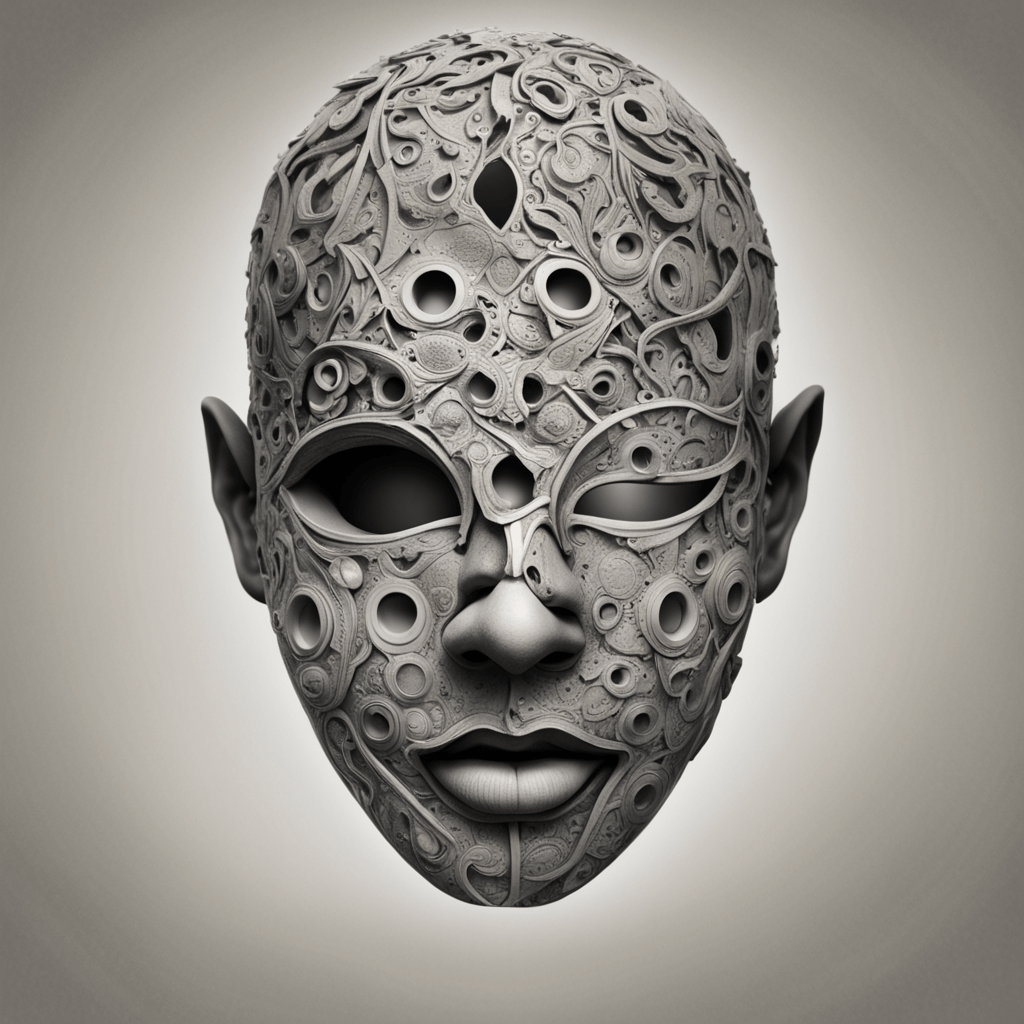
The ego is a master of disguise, shaping itself to fit the roles, masks, and identities that define one’s place in the world. It is the voice narrating our experiences, the architect of our self-concept, and the filter through which we perceive reality. Yet, there comes a moment in every profound spiritual inquiry when the ego’s narrative starts to unravel, and a deeper question arises: Who is wearing the ego?

To fully know the ego is to observe its patterns, trace its motivations, and untangle its many threads. It is a deep and necessary work—this excavation of the self—but it often stops short of true liberation. Why? Because while one might understand the mechanisms of the ego, its fears, desires, and attachments, this understanding still operates within the ego’s domain. It is akin to studying a dream while remaining unaware that one is the dreamer.

The greater mystery lies beyond the ego’s web, in the silent witness observing it all. This witness is not a product of thought, nor is it bound by the limitations of identity. It is pure awareness, the unchanging presence in which the ego arises, performs, and dissolves.

To fully know who or what is wearing the ego requires a radical shift in perspective. It is not about fixing or eradicating the ego but seeing through its illusion altogether. The ego is neither enemy nor ally; it is merely a tool, a temporary garment worn by the ineffable essence of who you truly are.

This inquiry demands a willingness to surrender everything you believe about yourself, even the most cherished notions of spirituality and growth. It calls for courage to rest in the unknown, where no concepts or roles can anchor you. From this space, the ego’s dance loses its grip. The masks fall away, not because they were stripped, but because they were never truly real.

What remains is indescribable—a boundless, formless essence that cannot be confined to the limitations of egoic perception. To recognize this is to shift from being caught in the drama of the ego to embracing the freedom of the witness. This is the difference between living as the role and awakening as the wearer of all roles.

Ultimately, the choice is yours. You can spend a lifetime studying the ego, mapping its terrain, and understanding its dynamics. Or, you can turn inward, past the shadows and reflections, and discover the luminous presence wearing the ego—a presence that has been free all along.

Morgan O. Smith

Yinnergy Meditation, Spiritual Life Coaching & My Book, Bodhi in the Brain…Available Now!
https://linktr.ee/morganosmith

The Great I AM

The Great I AM Cannot Be Uttered by the Chattering Tongue

The essence of “I AM” defies articulation. Language, though beautiful, often becomes a noisy river of concepts, attempting to capture something that simply cannot be grasped. The chattering tongue thrives on duality, building walls between subject and object, speaker and listener, self and other. Yet, the Great I AM stands outside this dualistic framework, unbounded, whole, and utterly silent.

“I AM” is not a statement. It is the root of being itself, preceding thought, identity, and all constructs of the mind. To utter it is to already veil its truth. Words can point to the presence of the I AM, but they are shadows trying to explain the light. The moment you speak, it slips through the cracks of description, retreating into the stillness from which it arises.

Why, then, does the tongue chatter? It chatters because it fears the void—the stillness where the mind dissolves, and the self is no more. The ego’s survival depends on noise, distraction, and the endless creation of stories. In silence, it falters, confronted by the stark and undeniable simplicity of being.

To encounter the Great I AM is not to think about it but to dissolve into it. It is to rest in the awareness that observes the thoughts, the feelings, the words, and even the idea of “I.” This awareness has no form, no beginning or end. It is neither here nor there, neither this nor that. It is simply what is—timeless, spaceless, and unchanging.

When the tongue is still, the mind quiets, and the veil of separation thins. There, in that profound stillness, lies the Great I AM. It cannot be possessed, named, or claimed. It is the ground of all existence and yet entirely untouched by it. It is not yours or mine, yet it is undeniably the essence of what we are.

To live in the awareness of the Great I AM is to recognize that all the noise, all the chatter, is simply a dance of form arising within the formless. It is to see that even the ego, with all its stories, is just a fleeting ripple in the infinite ocean of being.

Silence does not mean the absence of sound; it means the absence of resistance. It is the acceptance of all that is, without judgment or clinging. In this silence, the Great I AM reveals itself—not as a word, a concept, or a thought, but as the ever-present reality of existence itself.

The chattering tongue will never grasp this truth, but the silent heart already knows.

Morgan O. Smith

Yinnergy Meditation, Spiritual Life Coaching & My Book, Bodhi in the Brain…Available Now!

https://linktr.ee/morganosmith

The Face of the Observing Self

What does it mean to observe oneself? To truly look inward is to confront the observer and the observed paradox. Self-observation reveals something both unsettling and liberating: the absence of a concrete “self” to observe. Yet, this absence is not a void; it is a vast, dynamic awareness that holds all experience without judgment or attachment.

When the mind turns its gaze inward, it seeks to grasp the essence of identity. Who is the one observing? Is it the body, the thoughts, or the emotions? As the layers of identity dissolve under scrutiny, the “face” of the observing self becomes clear: it has no features, no boundaries, no name. It is an awareness that exists beyond the stories we tell ourselves, beyond the constructs of past and future.

This realization often stirs resistance. The mind, conditioned to identify with roles and narratives, may fight to hold onto the illusion of a solid self. But the observing self invites surrender—not as a defeat but as a return to authenticity. To analyze its face is not to define it but to recognize that it is the source of all definitions, all perceptions, and all experiences.

In this space of pure observation, there is no judgment. Thoughts arise and fall away like waves; emotions flow without resistance. The observer does not interfere, label, or categorize. It is simply present, awake, and unattached. This is where true freedom lies—not in controlling the waves of experience but in abiding by the unmoving awareness beneath them.

The practice of observing oneself is not an escape from life but a profound engagement with it. It is the realization that the one who suffers, the one who desires, and the one who fears is not the ultimate truth of who we are. Beyond these transient identities lies the still, eternal witness, untouched by the flux of existence.

To analyze the face of the observing self is to encounter the formless essence of being. It is a mirror reflecting the infinite, a gateway to profound peace. This realization transforms how we engage with the world, fostering a deep compassion for ourselves and others. For when the illusion of separation falls away, what remains is love—the recognition that the observer and the observed are one.

Morgan O. Smith

Yinnergy Meditation, Spiritual Life Coaching & My Book, Bodhi in the Brain…Available Now!

https://linktr.ee/morganosmith

A Mind Fully Expressed

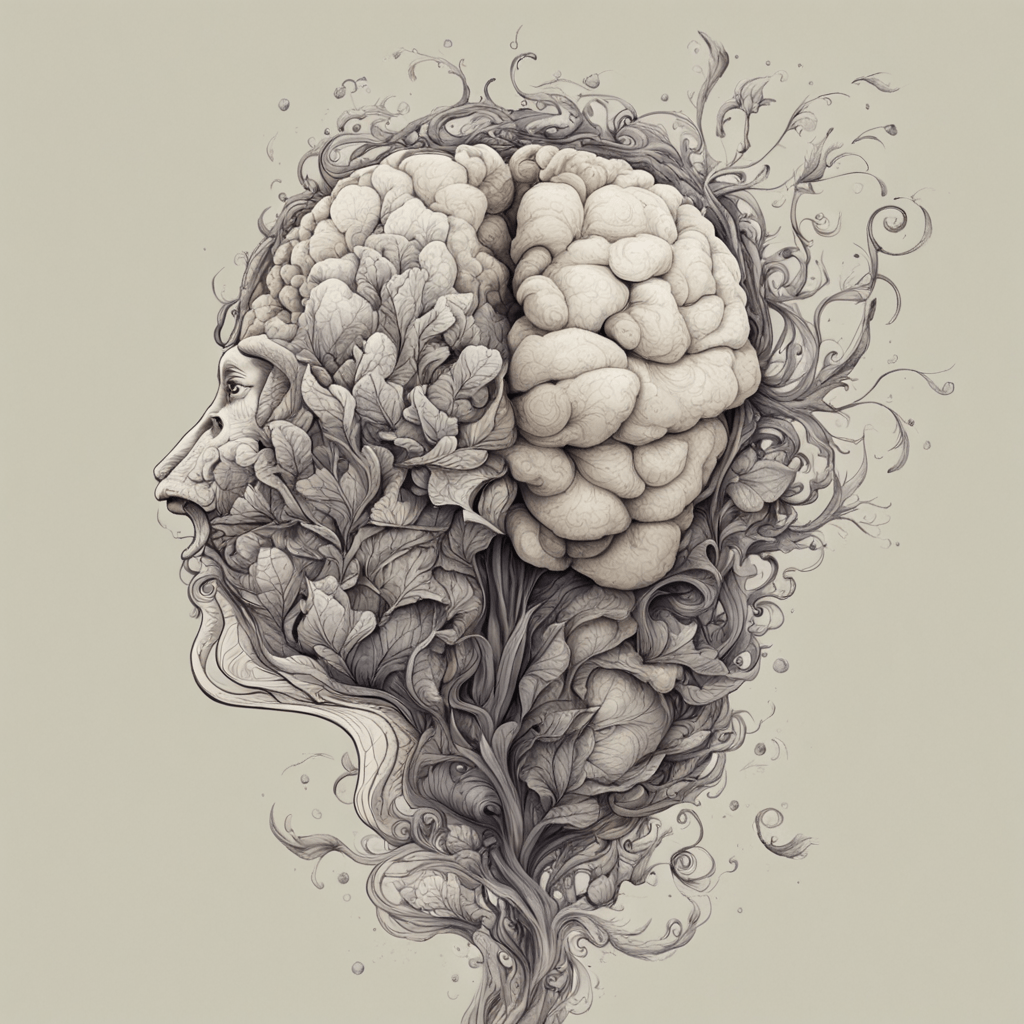
The human brain holds untapped dimensions of potential, yet most individuals navigate life using only fragments of its capability. This limitation is not due to biology but to patterns of thinking and perception shaped by societal conditioning, habitual behaviours, and resistance to change. The question arises: What does it mean to fully activate the brain? And how can this lead to a fully expressed mind?

A fully activated brain does not signify busyness or overstimulation. Instead, it represents a harmonious integration of logic, creativity, intuition, and awareness. When these dimensions align, the mind ceases to operate in fragmented dualities—right versus wrong, success versus failure—and begins to function as an instrument of boundless expression.

Achieving this state requires more than intellectual stimulation or the accumulation of knowledge. Practices such as meditation, neuroplastic exercises, and deep creative play open pathways to dormant brain regions. These practices cultivate a unified consciousness where clarity replaces confusion, and insight transcends limitation.

Activation begins by challenging the mind’s default settings. Unlearn the need for control, question the narratives you’ve inherited, and observe the interplay between thought and emotion without attachment. By dissolving mental rigidity, space emerges for new possibilities to take root.

A fully expressed mind doesn’t simply solve problems; it creates realities. When the brain functions as an integrated whole, life transforms into a canvas for profound exploration, innovation, and growth. Every action, from the simplest interaction to the grandest creation, becomes a reflection of an awakened state of being.

This level of brain activation is not reserved for the mystics, the prodigies, or the geniuses. It is the birthright of every human being willing to dismantle the barriers within and embrace the unknown. The fully expressed mind is a testament to the infinite nature of consciousness, a reminder that the boundaries we perceive are self-imposed illusions.

Are you ready to unlock this potential? The journey requires courage, but the reward is a life that radiates authenticity, creativity, and boundless freedom.

Morgan O. Smith

Yinnergy Meditation, Spiritual Life Coaching & My Book, Bodhi in the Brain…Available Now!

https://linktr.ee/morganosmith

The Perfect Gift Wrapped in Mind

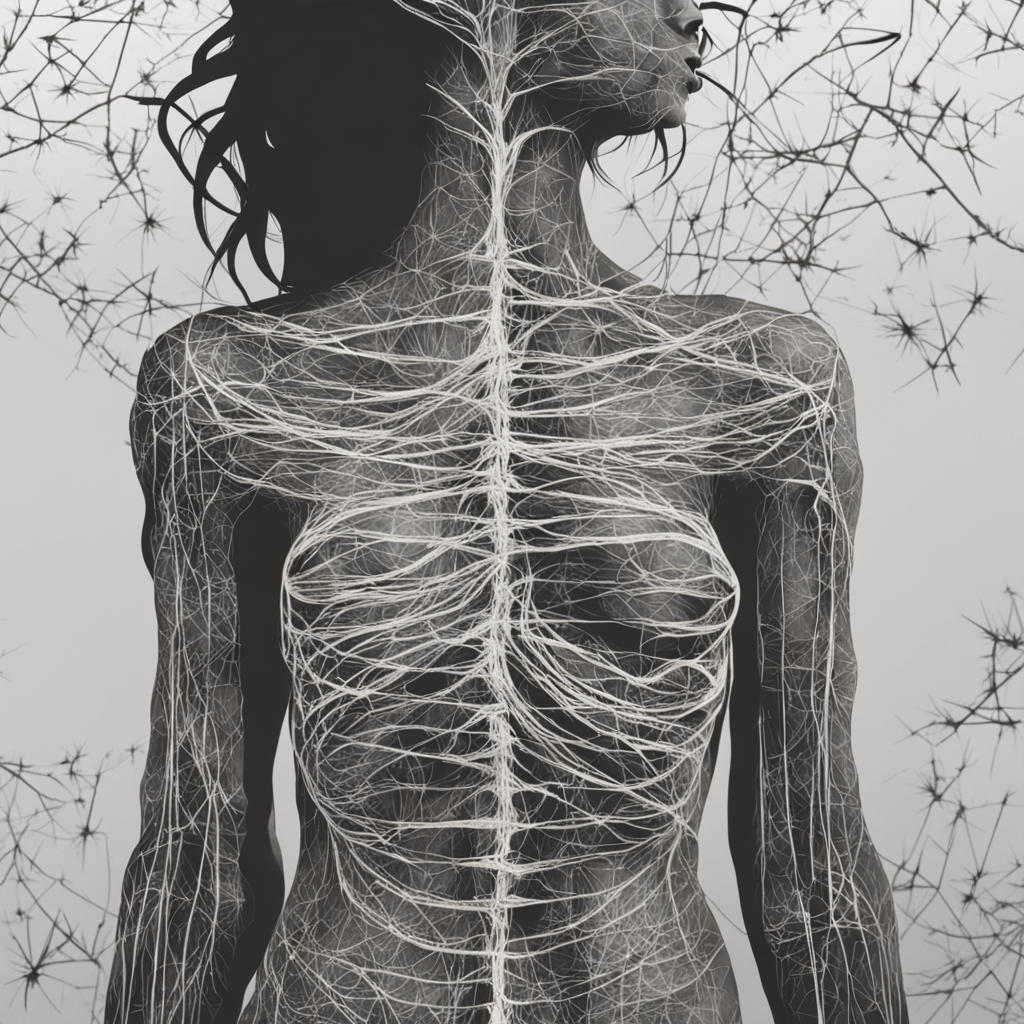
The body is often seen as a vessel, a biological mechanism enabling experience and action. But what if we approached it differently? What if we recognized the body as the ultimate gift—intricately wrapped in layers of mind, emotion, and perception? This perspective shifts us from treating the body as a passive object to understanding it as an intelligent instrument of the infinite.

Each sensation the body offers is a doorway. The ache in your shoulders, the flutter in your stomach, the breath moving through your chest—these aren’t merely physiological events. They are signals, invitations to become aware of the mind’s imprints and the silent intelligence that animates them. The body reveals the unseen layers of the mind, not to entangle us but to set us free.

Consider the interplay of movement and stillness. A heartbeat pulses within every moment of quietude, a reminder that even in perceived rest, life hums with activity. Similarly, the mind often overlays the body’s simplicity with stories—self-judgment, desires, and fears. Yet, beneath this mental wrapping lies pure awareness, unclouded and ever-present.

True liberation doesn’t come from rejecting the body or attempting to transcend it but from embracing its divine design. The body is where the formless meets form, where consciousness expresses itself in tangible, palpable ways. When we cease resisting its messages and begin listening with curiosity, the body transforms from an object of control into a teacher of profound wisdom.

This realization is not merely theoretical. It can be felt. Try sitting quietly and attuning to the subtleties of your breath. Notice the places where tension resides, where the body’s natural rhythms feel interrupted. With gentle attention, ask: “What is this teaching me?” Often, the mind will resist—habitually seeking distraction or interpretation. But as you remain present, something deeper emerges: an understanding that the body and mind are not separate, but two facets of the same infinite presence.

Awakening is not about leaving the body behind but about fully inhabiting it. By appreciating its perfect gift and unwrapping the layers of mind that obscure it, we find ourselves drawn closer to our true nature.

The next time you feel pain, joy, or anything in between, pause. Let the body be your guide, not just a vehicle for experience but the very expression of life’s sacred mystery.

Morgan O. Smith

Yinnergy Meditation, Spiritual Life Coaching & My Book, Bodhi in the Brain…Available Now!
https://linktr.ee/morganosmith

Exciting Updates: Podcasts, Articles & More!

Hello Friends,

I’m thrilled to share some exciting updates about the work I’ve been doing and the new insights I’ve been exploring. From podcasts to articles and more, here’s what’s new in my world of meditation, neuroscience, and personal transformation.

Diving Into the Mind on Guru Viking Podcast

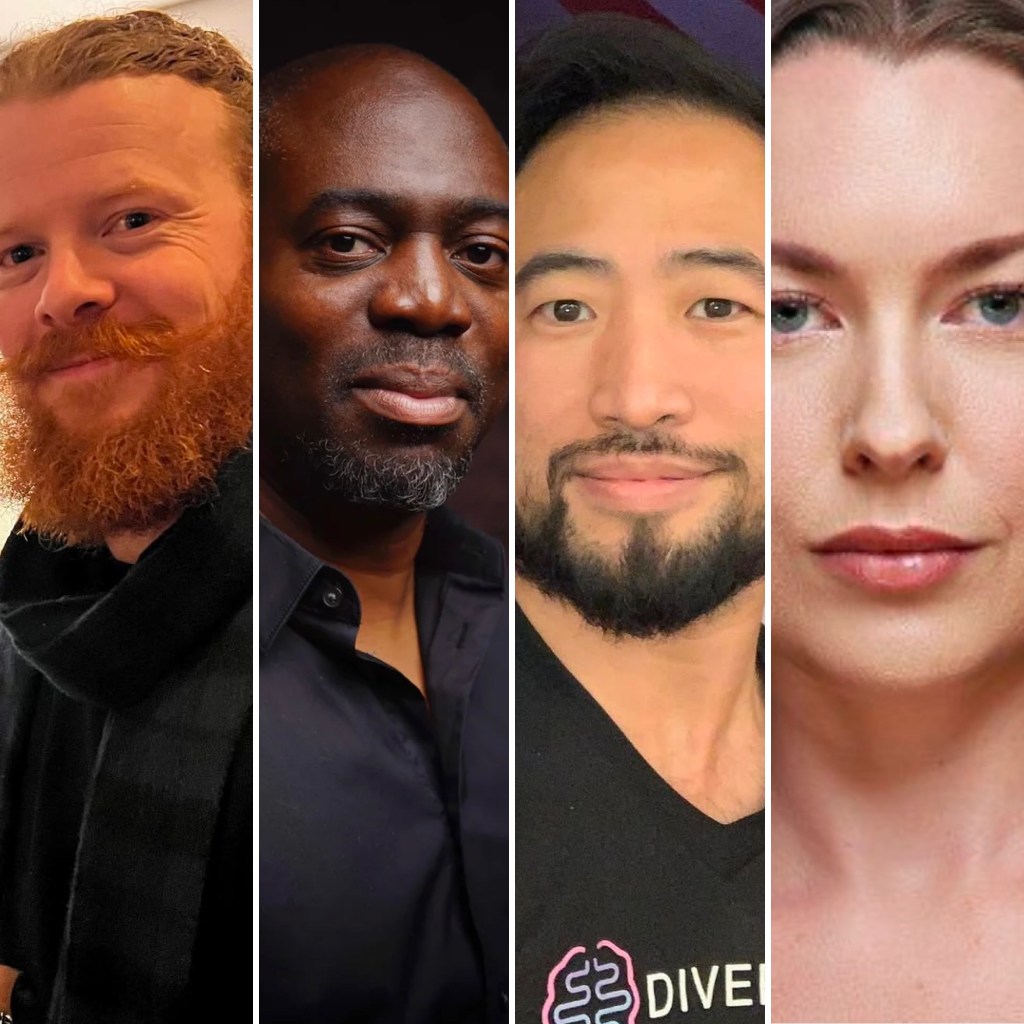
I recently had the pleasure of joining Steve James on the Guru Viking Podcast for another enlightening discussion. This time, I was joined by Alex Ni of Divergence Neuro Technologies and Columbia University neuroscience student Chelsey Fasano to explore the fascinating world of my unique brainwave patterns.

These brainwaves, cultivated over two decades of dedicated meditation, offer profound insights into how the mind and meditation can intersect with neuroscience and personal growth.

Stay tuned for the full episode, but you can see some of my results here:
Exploring the Mind of an Advanced Meditator Pt. 2.

Check out Guru Viking every Friday on YouTube, Apple Podcasts, SoundCloud, and Spotify!

My Story Featured in Usainstants & Brainz Magazine

I’m honored to have my journey featured in Usainstants, where you can read about my transformation from awakening to creating the Yinnergy program. This story highlights how meditation has reshaped my life and the lives of many others. Read the full article here: Morgan’s Transformative Journey.

Additionally, as an Executive Contributor to Brainz Magazine, I’ve been sharing my perspectives on mindfulness, spirituality, and transformation. You can explore my latest articles here: Brainz Magazine.

Stay Tuned for More

I’m so grateful to be able to share my journey with you through these platforms. From podcasts to articles, each step is another opportunity to explore the limitless possibilities of the human mind and spirit.

Thank you for being a part of this journey. Together, let’s continue to unlock the extraordinary potential within us all.

With gratitude and excitement,

Morgan O. Smith

Yinnergy Meditation, Spiritual Life Coaching & My Book, Bodhi in the Brain…Available Now!
https://linktr.ee/morganosmith

Nothing Exists

The Witness Alone Remains

Every belief we hold about reality begins with a fundamental assumption: that something exists. Objects, thoughts, emotions, and even the concept of the self are taken as undeniable truths. But when we look closer, reality reveals itself to be far less solid. Strip away perceptions, dismantle the narratives, and what remains? Nothing. Not the nothing of absence, but a profound, living nothingness that holds the potential for everything.

The paradox lies here: if nothing truly exists, then what is aware of this nothing? What observes the rise and fall of sensations, thoughts, and forms? The answer is the witness—pure awareness, untouched by the shifting currents of existence. It is not an object that can be grasped, but the context in which all objects appear.

What Is the Witness?

The witness is not the thinking mind or the personality you’ve constructed through years of conditioning. It is that which observes even the mind itself. The witness is silent, still, and ever-present. It is not bound by time, nor does it possess a location. While the body and thoughts belong to the world of form, the witness transcends it entirely.

When you recognize the witness, the illusion of existence begins to unravel. The objects of your awareness—whether external events or internal thoughts—are revealed to be fleeting, momentary phenomena. They appear, they shift, and they dissolve, leaving no trace of permanence. The witness alone remains unchanged, untouched by the dance of creation and destruction.

Nothingness as Freedom

The recognition that nothing exists liberates you from attachment. If everything is transient, then clinging to any experience, belief, or identity is an exercise in futility. This does not mean rejecting the world but meeting it with openness, seeing it for what it is: a play of appearances arising within the vastness of nothingness.

This nothingness is not cold or lifeless. It is the fertile void from which all existence springs, a source of infinite creativity and potential. The witness watches the unfolding of this creative process, yet remains uninvolved, free from entanglement.

Who Experiences Existence?

The ultimate question arises: if nothing exists, how can existence be experienced at all? The witness is both the perceiver and the essence of existence itself. It is through the act of witnessing that “existence” takes on meaning. Without the witness, there is no one to perceive existence. The world, as we know it, cannot exist independently of the awareness observing it.

This insight has profound implications. The separation between the experiencer and the experienced dissolves. Reality is no longer something “out there” to be analyzed or controlled; it is a dynamic flow that arises within you, as you. The witness is not apart from existence—it is existence, recognizing itself through the illusion of separation.

Living as the Witness

To live as the witness does not mean rejecting the world or detaching from life. It means fully engaging with reality while knowing its true nature. You move through life with clarity, seeing that every thought, every sensation, and every moment arises from nothing and returns to nothing. The recognition of this emptiness brings freedom—not a withdrawal from life, but a deeper immersion in its sacredness.

When the witness becomes your anchor, suffering loses its grip. Challenges and emotions no longer define you; they are simply waves in the ocean of awareness. Relationships deepen, as you no longer seek validation or fulfillment from others. The peace of the witness is enough.

This realization is not a conclusion but an ongoing experience. Every moment offers an opportunity to rest in the witness, to see through the illusions of existence, and to marvel at the profound simplicity of being.

Morgan O. Smith

Yinnergy Meditation, Spiritual Life Coaching & My Book, Bodhi in the Brain…Available Now!

https://linktr.ee/morganosmith

The Neutrality of Being

Beyond Preference and Bias

Human experience revolves around preferences—good versus bad, desirable versus undesirable. From a young age, we are conditioned to label moments, objects, and relationships based on our likes or dislikes, shaping a world of duality. Yet, something remarkable may begin to unfold for those who experience a profound spiritual awakening. The intensity of preferences softens, and the once-compelling narratives around right and wrong, beautiful and ugly, start to lose their grip.

This shift isn’t forced or rehearsed; it arises organically as consciousness deepens. It’s not about suppressing preferences or pretending they don’t exist. Rather, it’s about witnessing them without attachment. You might still notice that one meal tastes better than another, or that one kind of weather feels more comfortable, but the emotional charge—the bias for or against—diminishes.

This state of neutrality doesn’t negate the ability to express feelings about situations or objects. Joy, sadness, appreciation, or aversion may still arise naturally. However, the inner dialogue changes. An object once deemed essential for happiness may now appear as just an object. A situation that would have previously elicited anger or frustration may no longer hold the same power.

Neutrality is not numbness or indifference; it is the ultimate expression of freedom. When bias fades, life’s experiences are not judged as lacking or sufficient—they simply are. This perspective offers a profound sense of peace. When preferences no longer dominate the mind, the heart is free to engage with reality exactly as it unfolds.

This state isn’t something that needs to be chased or consciously cultivated. It arises as a natural byproduct of deep inner awakening. The realization that all phenomena are transient allows one to meet life with equanimity. Dualities are not eradicated but are seen for what they are—part of the play of existence, neither to be clung to nor rejected.

If you’re on the path of spiritual exploration, allow yourself to relax into the flow of awareness. Don’t try to force neutrality; simply observe the moments when it arises. Over time, you may notice that this spacious, bias-free perspective becomes less of an exception and more of your default state of being.

Morgan O. Smith

Yinnergy Meditation, Spiritual Life Coaching & My Book, Bodhi in the Brain…Available Now!
https://linktr.ee/morganosmith