Emptiness and Form

Exploring the Essence of Ultimate Reality

In the vast expanse of spiritual philosophy, the concept of ultimate reality often emerges as a profound focal point of contemplation. At its core, ultimate reality is a paradox: an emptiness encompassing all that takes form. This paradox invites us to explore the intricate dance between the seen and the unseen, the manifest and the unmanifest, and the ever-present flow between these states of being.

Emptiness, in its essence, is not a void in the conventional sense. It is a fertile ground, a boundless potential from which all phenomena arise. This emptiness is not devoid of life; rather, it is the very source of existence, the womb of creation. It is in this emptiness that the seed of every form, every thought, and every experience is planted and nourished.

When we speak of “everything that takes form,” we refer to the myriad expressions of life—mountains and rivers, thoughts and emotions, stars and galaxies. These forms are the manifestations of the underlying emptiness, brought into being through the dance of energy and consciousness. They are transient, ever-changing, yet intimately connected to the unchanging, formless essence from which they emerge.

This understanding challenges us to look beyond the superficial appearances of the world. It encourages us to see the impermanent nature of forms, not as a cause for despair, but as an invitation to connect with the timeless reality that underlies all existence. This connection fosters a deep sense of peace and acceptance, as we recognize that everything, in its transient nature, is a part of a greater whole.

To truly grasp the nature of this ultimate reality, one must move beyond intellectual understanding and into direct experience. This requires a quieting of the mind, a stilling of the incessant chatter that often distracts us from the subtle truths of existence. In moments of deep meditation or profound insight, we may glimpse this ultimate reality—a state where the distinction between emptiness and form dissolves, and we perceive the unity that lies at the heart of all things.

In this state of awareness, we see that emptiness is not a lack, but a fullness—a fullness that contains all possibilities, all potentialities. It is a space of infinite creativity, where the play of consciousness unfolds without limit. This realization transforms our perception, allowing us to live with a sense of wonder and reverence for the mystery of existence.

As we navigate the challenges and joys of life, this understanding can be a guiding light. It reminds us that, at our core, we are not separate from the world around us, but deeply connected to it. In embracing the paradox of emptiness and form, we find a deeper meaning in our experiences and a greater compassion for all beings.

The journey to this understanding is a lifelong one, filled with moments of clarity and confusion, insight and doubt. Yet, each step on this path brings us closer to the heart of the mystery, where we may find a profound sense of peace and a recognition of the sacredness of all life.

Morgan O. Smith

Yinnergy Meditation, Spiritual Life Coaching & My Book, Bodhi in the Brain…Available Now!
https://linktr.ee/morganosmith

The Paradox of the False Self

The “I” is the false self, but this false self is also true. It just doesn’t know it yet. This realization reveals that our perceived separateness is an illusion, guiding us toward the truth of our inherent unity.

Understanding the False Self
The false self, often identified as the ego, is the aspect of our identity constructed from our experiences, beliefs, and societal conditioning. It is the mask we wear, the persona we present to the world. While it serves a functional role in navigating daily life, it is not our ultimate truth.

The Hidden Truth
Within this false self lies a hidden truth. The ego, though seemingly separate, is an expression of the same source that underlies all existence. The journey of self-realization involves peeling away the layers of this constructed identity to uncover the true self—the essence that connects us all.

The Illusion of Separateness
Our perception of being distinct individuals creates the illusion of separateness. This belief in separateness fosters division, conflict, and a sense of isolation. However, when we begin to see through the false self, we recognize that these divisions are illusory. Beneath the surface, we are all interconnected.

Toward Inherent Unity
Realizing the paradox that the false self is also true propels us toward the recognition of our inherent unity. This understanding dissolves the boundaries that the ego creates, allowing us to experience a deeper connection with ourselves and others. We move from a mindset of “me versus you” to one of “us” and “we.”

Living with Awareness
Living with this awareness transforms our approach to life. We become more compassionate, understanding, and empathetic, seeing others as reflections of ourselves. This shift in perception fosters a sense of peace and harmony, as we align with the deeper truth of our shared existence.

The journey of recognizing the false self as also true is a profound step toward spiritual awakening. It illuminates the path to our inherent unity, guiding us to live with greater authenticity and connection. By embracing this paradox, we uncover the deeper reality that binds us all.

Morgan O. Smith

Yinnergy Meditation, Spiritual Life Coaching & My Book, Bodhi in the Brain…Available Now!

https://linktr.ee/morganosmith

The Shared Heart of Existence

We all share the same beating heart at the core of all existence, a profound unity that transcends individuality. This shared essence connects us deeply, fostering empathy and compassion, and reminding us of our interconnectedness and inherent oneness with all life.

Recognizing Our Shared Essence

Beyond the layers of identity and personal history, the core of our being lies a shared essence that binds us together. This recognition shifts our perception from separation to unity, allowing us to see each other as reflections of the same source. When we understand that we are all connected by this common heart, we begin to treat each other with more kindness and respect.


The Power of Empathy and Compassion

This awareness of our shared essence naturally fosters empathy and compassion. When we see ourselves in others, their joys become our joys, and their sorrows become our sorrows. This deep sense of empathy breaks down barriers and opens the way for genuine connections and supportive relationships. Compassion becomes not just an ideal but a natural expression of our shared humanity.

Embracing Interconnectedness

Understanding that we all share the same beating heart helps us embrace our interconnectedness with all forms of life. This perspective extends beyond human relationships to include animals, plants, and the environment. Recognizing our place within the web of life encourages us to live more harmoniously and sustainably, honouring the interconnected fabric of existence.


Living with Oneness

Living with the awareness of our shared heart transforms our approach to life. It inspires us to move beyond self-centred pursuits and to contribute to the well-being of the whole. Acts of kindness, service, and love become expressions of our recognition of oneness. This shift enriches our personal lives and contributes to a more compassionate and united world.

By remembering that we all share the same beating heart at the core of all existence, we align ourselves with a deeper truth. This truth fosters empathy, compassion, and a profound sense of interconnectedness, guiding us toward a life of unity and harmony with all.

Morgan O. Smith

Yinnergy Meditation, Spiritual Life Coaching & My Book, Bodhi in the Brain…Available Now!

https://linktr.ee/morganosmith

Annihilation and Kundalini Awakening

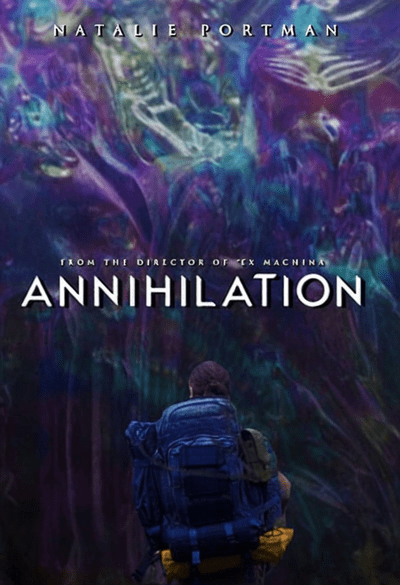
Annihilation is courtesy of Paramount Pictures and Skydance Media

 A Journey Through Transformation

In 2018, Alex Garland’s Annihilation plunged viewers into a surreal and disturbing world, where the familiar dissolves into the unknown, and transformation is inevitable. Watching this movie back then, and rewatching it last night on Netflix, I found myself deeply moved by its haunting imagery and profound symbolism, which echoed my spiritual journey of Kundalini awakening. By delving into the film’s narrative and its vivid scenes, we uncover a rich parallel to the mystical process of awakening dormant energy within.

Spoiler Alert: This post contains spoilers for those who haven’t seen Annihilation.


The Serpent Awakens

One of the most striking and unsettling scenes in Annihilation involves a soldier whose stomach is cut open, and we see his intestines move like a serpent inside him. This visceral image mirrors the ancient depiction of Kundalini energy as a coiled serpent at the base of the spine. In Kundalini traditions, this serpent represents latent spiritual energy, poised to rise and transform the individual. The soldier’s transformation, albeit grotesque, symbolizes the intense and sometimes chaotic nature of this awakening process.

Explosion and Rebirth

In another pivotal moment, the soldier explodes, leaving an intricate and eerie display on the wall. This explosion is reminiscent of the powerful release of Kundalini energy. Such energy can dismantle old patterns and structures, often causing upheaval before a new order can emerge. This scene captures the destructive yet transformative power of Kundalini, which breaks down the old self to pave the way for profound growth and understanding.

Kane’s Ultimate Sacrifice

Kane’s act of sitting cross-legged and detonating a grenade (played by Oscar Isaac) is another profound symbol. His posture suggests meditation or deep introspection, a practice central to awakening Kundalini. The ensuing explosion signifies a profound transformation—an act of self-destruction leading to rebirth. The image left behind symbolizes the remnants of the old self, giving rise to a new state of consciousness. This mirrors the death and rebirth cycle inherent in Kundalini awakening, where the dissolution of the ego precedes the emergence of a higher self.

The Shimmer as the Mystical Realm

The Shimmer, the film’s central enigma, serves as a metaphor for the mystical realm encountered during spiritual awakening. Within the Shimmer, reality bends and mutates, much like the inner landscape experienced during deep meditation and spiritual practices. Here, the boundaries of the self dissolve, and one is confronted with both beauty and terror—reflecting the dual nature of spiritual journeys.

Conclusion

Annihilation offers a hauntingly beautiful exploration of transformation, much like the journey of Kundalini awakening. Through its unsettling imagery and profound symbolism, the film invites viewers to contemplate the nature of change, the dissolution of the old, and the emergence of the new. By examining these parallels, we gain a deeper appreciation of both the cinematic experience and the spiritual process, enriching our understanding of transformation in all its forms.

Despite always wondering if anyone else had made this connection, I haven’t come across mentions of such interpretations. Yet, for me, the resemblance to my own experiences of Kundalini awakening is undeniable, providing a rich array of reflections on inner transformation. Only an individual who has gone through this process would truly understand these connections, as this is an event that must be experienced to be fully comprehended.

Morgan O. Smith

Yinnergy Meditation, Spiritual Life Coaching & My Book, Bodhi in the Brain…Available Now!

https://linktr.ee/morganosmith

The Dance of Awareness

Contextual vs. Content Enlightenment

In the labyrinth of spiritual exploration, the nuanced differences between contextual and content enlightenment invite us to delve deeper into our understanding of consciousness. These dimensions, though intertwined, offer distinct perspectives on our journey toward self-realization. Let us explore the intricate play between whole and detailed awareness, qualities and their absence, and the dichotomy of shape and form versus the formless.

Contextual Enlightenment: Embracing the Whole

Contextual enlightenment transcends the specifics, inviting us to embrace the entire spectrum of existence as a unified whole. It is akin to perceiving the vast, boundless ocean rather than focusing on individual waves. This level of awareness envelops all experiences, thoughts, and sensations, recognizing their interconnectedness and the underlying unity.

In this sense, whole awareness is the recognition of the seamless fabric of reality. It dissolves the boundaries that separate the observer from the observed, the thinker from the thought. It is an expansive, inclusive state where everything is perceived as part of a larger, harmonious cosmic dance.

Content Enlightenment: The Beauty of Details

In contrast, content enlightenment delves into the specifics, illuminating each moment’s unique qualities and characteristics. It is the meticulous study of individual waves within the ocean, appreciating their distinct forms and patterns. This awareness sharpens our focus on the particulars, allowing us to see the intricacies and subtleties that compose the whole.

Detailed awareness is the keen observation of the myriad expressions of existence. It celebrates the diversity of forms, experiences, and sensations, recognizing their intrinsic value and beauty. This level of enlightenment encourages us to engage deeply with the present moment, savouring each nuance and detail.

Qualities vs. Without Qualities: The Essence of Being

The dichotomy of qualities versus the absence of qualities highlights another layer of our spiritual journey. Qualities refer to the attributes and characteristics that define our experiences and perceptions. They are the colours, textures, and flavours of our existence, shaping our understanding of reality.

Without qualities, however, points to a deeper, more subtle aspect of being. It is the state of pure awareness, devoid of any specific attributes or characteristics. This formless essence transcends the dualities of good and bad, pleasure and pain, presence and absence. It is the unmanifest potential from which all qualities arise and dissolve.

Shape and Form vs. The Formless: The Ultimate Paradox

Finally, the interplay between shape and form versus the formless presents the ultimate paradox of our spiritual exploration. Shape and form represent the tangible, perceivable aspects of existence. They are the visible, audible, and tactile manifestations of the underlying reality.

The formless, on the other hand, is the primordial ground of being. It is the unchanging, eternal essence that transcends all forms and shapes. This paradox invites us to see beyond the apparent duality, recognizing that shape and form are but temporary expressions of the formless. In this realization, we find the unity of all existence, the seamless flow between the manifest and the unmanifest.

Conclusion

In our quest for enlightenment, we are called to navigate these intricate dimensions of awareness. Contextual enlightenment invites us to embrace the whole, while content enlightenment beckons us to appreciate the details. The play of qualities and their absence, and the dance between shape, form, and the formless, guide us toward a deeper understanding of our true nature.

By holding these perspectives in balance, we can cultivate a holistic, integrated awareness that honours both the unity and diversity of existence.

Morgan O. Smith

Yinnergy Meditation, Spiritual Life Coaching & My Book, Bodhi in the Brain…Available Now!

https://linktr.ee/morganosmith

A Mind Blown is a Mind Well-Known

Exploring the Expansive Realms of Consciousness

In the quest for self-discovery and enlightenment, the moments when our minds are truly blown—those instants of awe where the familiar boundaries of understanding dissolve—are not just moments of wonder, but gateways to deeper knowing. These transformative experiences, where we glimpse the infinite expanse of consciousness, serve as profound awakenings that redefine our perception of self and universe.

Imagine standing at the edge of a cosmic ocean. Each wave, from the smallest ripple to the towering tsunami, symbolizes the various levels of consciousness we experience. In our daily lives, we paddle near the shore, within the safe confines of routine thoughts and conventional wisdom. Yet, it’s beyond this shoreline where the depth of our being lies. When a thought, insight, or experience—seemingly simple or strikingly profound—blows our mind, it’s akin to a powerful wave that pulls us into deeper waters, into the uncharted territory of our inner selves.

What does it mean to have one’s mind blown? It is to be thrust into the vastness of the unknown, to confront the mysteries of existence head-on without the armour of preconceived notions. This confrontation is not merely intellectual; it is deeply spiritual. It is the raw encounter with the divine dance of creation and destruction, where every held belief is challenged and reformed in the crucible of direct experience.

Such moments are not about losing oneself but rediscovering oneself as part of a grander scheme. They are about touching the essence of the cosmos, feeling the pulse of life that permeates everything. These instances remind us that we are not just isolated beings moving through a static world; we are dynamic participants in a vibrant, evolving universe.

To cultivate a mind that welcomes being blown—a well-known mind—is to foster a state of openness and curiosity. It involves nurturing a fearless approach to the unknown, a willingness to let go of the ego’s desire for certainty and an embrace of the profound mysteries that life offers. It is a journey of constant evolution, where each mind-blowing moment is a call to a deeper exploration of reality, urging us to look beyond the apparent to the underlying oneness that connects all.

In conclusion, the mind that is blown is indeed a mind that is known—not just in the intellectual sense, but in the profound, experiential, and transformative understanding of the self and the universe. As we navigate through these expansive realms of consciousness, let us cherish these mind-blowing moments as precious opportunities for growth and enlightenment.

Morgan O. Smith

Yinnergy Meditation, Spiritual Life Coaching & My Book, Bodhi in the Brain…Available Now!

https://linktr.ee/morganosmith

Essence and Existence

The Unseen Unity

In the labyrinth of existence, we often perceive ourselves as isolated entities navigating a myriad of external circumstances. Yet, beneath this surface, lies an essential truth: wherever essence is, you are. And wherever you are, only essence remains. This statement is not merely a poetic abstraction but a profound reflection on the nature of reality and our place within it.

Essence, in this context, refers to the fundamental nature of existence. It is the unchanging, underlying reality that permeates all forms and phenomena. It is the substratum of being, the silent witness to all experiences, and the ultimate source from which everything arises and to which everything returns. We begin to see the world through a different lens when we recognize that essence is our true nature.

Our usual mode of perception is dualistic. We see ourselves as separate from the world, creating a dichotomy between self and other, subject and object. This dualistic perception leads to a sense of isolation and disconnection, fueling a continuous search for meaning and fulfillment in the external world. However, when we shift our awareness to the essence, we realize this separation is illusory.

Wherever essence is, you are. This means that our true identity is not confined to the physical body or the individual mind. It is the essence itself, which is infinite and boundless. This essence is present in every moment, in every experience, and every being. It transcends the limitations of time and space, uniting all existence in a seamless whole.

And wherever you are, only essence remains. This implies that in the ultimate analysis, all distinctions and differences dissolve into the unity of essence. The various forms and phenomena we perceive are simply expressions of this one essence. When we look beyond the surface appearances, we see that everything is interconnected and interdependent, arising from and returning to the same source.

This understanding has profound implications for our daily lives. It invites us to shift our focus from the transient to the eternal, from the superficial to the profound. By recognizing our true nature as essence, we can experience a sense of peace and fulfillment that is not dependent on external circumstances. We become more compassionate and empathetic, seeing ourselves in others and others in ourselves.

Moreover, this recognition of essence can transform our relationship with the world. We begin to see the divine in everything and everyone, honouring the sacredness of all existence. This shift in perception fosters a sense of reverence and gratitude, leading to more harmonious and sustainable ways of living.

In essence, recognizing the unity of essence and existence is a journey of awakening. It is a shift from the fragmented perception of the ego to the holistic vision of the true self. It is an invitation to live in alignment with the deeper reality of our being, experiencing the boundless joy and freedom that comes from knowing that wherever essence is, you are. And wherever you are, only essence remains.

Morgan O. Smith

Yinnergy Meditation, Spiritual Life Coaching & My Book, Bodhi in the Brain…Available Now!

https://linktr.ee/morganosmith

Attaining Enlightenment

As Elusive as Grasping the Wind

The quest for enlightenment, that profound state of ultimate understanding and unity, is often compared to trying to hold onto the wind. This metaphor captures the essence of the journey—a pursuit that defies conventional grasping, one that requires an openness to the intangible and an embrace of the elusive.

The Elusiveness of Enlightenment

In many Eastern philosophies, Enlightenment is not a destination but a state of being. It is a realization that transcends the confines of our dualistic thinking. Much like the wind, it is everywhere and yet nowhere specific. To chase it with a rigid, goal-oriented mindset is to miss its essence.

Enlightenment involves the dissolution of the self and the shedding of layers upon layers of conditioned beliefs and identities. This shedding process can feel like an endless peeling away of illusions, akin to trying to contain the uncontainable wind in your hands. The moment you think you have a firm grasp, it slips through your fingers, revealing the futility of such an endeavour.


The Paradox of Effort and Effortlessness

One of the most challenging aspects of the spiritual path is balancing effort and effortlessness. The seeker must engage in practices, disciplines, and teachings that guide the way, yet true enlightenment often dawns in moments of complete surrender and stillness. It is in these moments that the boundaries of the self dissolve, and one experiences the boundless nature of existence.

This paradox can be frustrating. We are conditioned to believe that hard work and determination yield results. However, in the spiritual realm, striving too hard can create resistance. It is the quieting of the mind, the letting go of effort, that often brings the profound insights we seek.

Embracing the Unknowable

In accepting the elusiveness of enlightenment, we learn to appreciate the journey itself. Every moment of insight, every experience of stillness, is a part of the unfolding realization. The wind may be impossible to grasp, but it can be felt, experienced, and known in its presence.

To truly understand enlightenment, one must embrace the unknowable. It requires a heart open to the mysteries of existence and a mind willing to let go of the need for certainty. This openness allows us to experience glimpses of the infinite, moments where the separation between self and universe disappears, revealing the profound interconnectedness of all things.


Conclusion

Attaining enlightenment is indeed as difficult as grabbing hold of the wind. Yet, in this difficulty lies the beauty of the spiritual journey. It teaches us to let go, to be present, and to embrace the mystery of existence. In the end, the pursuit of enlightenment is not about reaching a final goal but about experiencing the boundless nature of our true selves, flowing effortlessly like the wind.

Morgan O. Smith

Yinnergy Meditation, Spiritual Life Coaching & My Book, Bodhi in the Brain…Available Now!
https://linktr.ee/morganosmith

The Sensory Symphony of Consciousness

In the intricate dance of existence, consciousness manifests through sensory experiences defining our reality. Every sight, sound, scent, taste, touch, and feeling is not just a mere encounter with the external world but a profound engagement with the essence of our being. To perceive consciousness in all its forms is to realize that we are not separate from it; rather, we are the very fabric of this profound phenomenon.

Consider the visual realm: the colours and shapes that fill our vision are not just physical phenomena but expressions of consciousness itself. Each hue and form reflects the inner light that animates our awareness. As we observe the world, we are essentially witnessing the dance of consciousness within and around us.

In the realm of sound, every note and melody, every whisper and roar, are vibrations of consciousness. The act of listening becomes a meditation on the auditory expressions of our inner self, each sound waves a ripple in the ocean of awareness. Here, consciousness sings its symphony, echoing the eternal essence of our true nature.

The sense of smell brings with it a more subtle dimension of consciousness. Each fragrance and aroma is a whisper of the world’s essence, an invitation to delve deeper into the mystery of existence. Through smell, we are reminded of the interconnectedness of all things, as the scents we inhale become part of our very being.


Taste, too, is a profound encounter with consciousness. The flavours that dance on our tongues are not just chemical interactions but intimate dialogues with the essence of life. Every taste is a moment of communion with the universe, a reminder that we are one with all that we consume.

Touch, perhaps the most immediate of senses, grounds us in the physicality of consciousness. The textures and temperatures we feel are direct interactions with the world’s essence. Through touch, we are reminded of the physical presence of consciousness, the palpable reality of our interconnected existence.

Emotions, the feelings that course through us, are the most direct expressions of consciousness. Each emotion, whether joy or sorrow, anger or love, is a wave within the ocean of our being. These feelings remind us of the fluid, dynamic nature of consciousness, ever-changing yet eternally present.

To fully grasp that we are consciousness is to transcend the very concept itself. It is to recognize that the perceiver and the perceived are the same. In this realization, the boundaries between the self and the world dissolve, revealing the seamless unity of existence. We are not just participants in the dance of consciousness; we are the dance itself.


In this state of transcendence, every sensory experience becomes a gateway to deeper understanding, a reminder of our true nature. As we navigate the world, let us remember that we are engaging with the essence of our being in every sight, sound, smell, taste, touch, and feeling. For in the grand symphony of existence, we are both the musicians and the music, the creators and the creation, forever intertwined in the infinite play of consciousness.

Morgan O. Smith

Yinnergy Meditation, Spiritual Life Coaching & My Book, Bodhi in the Brain…Available Now!

https://linktr.ee/morganosmith