The Hidden Beast

A Reflection of the Disowned Self

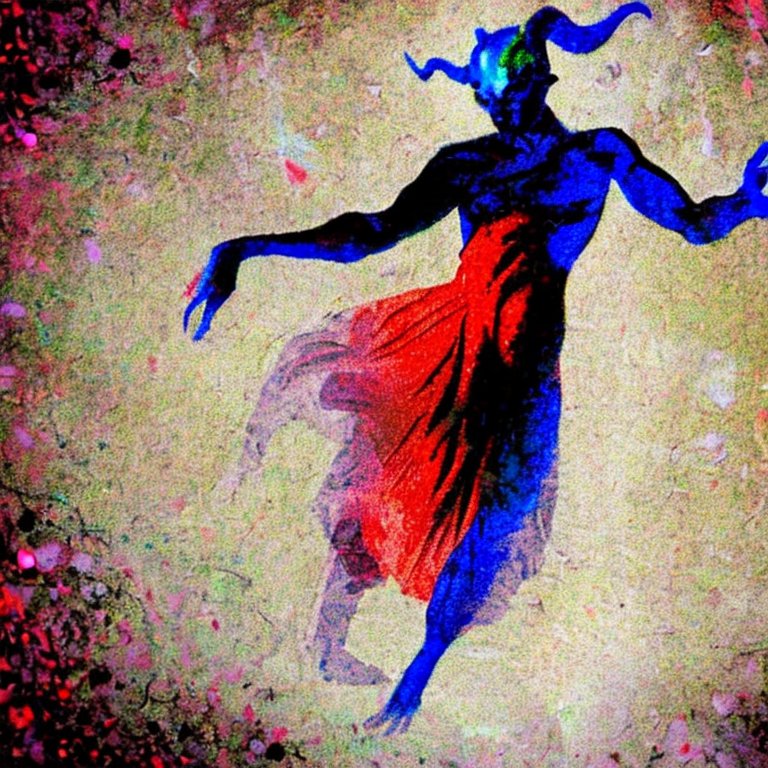
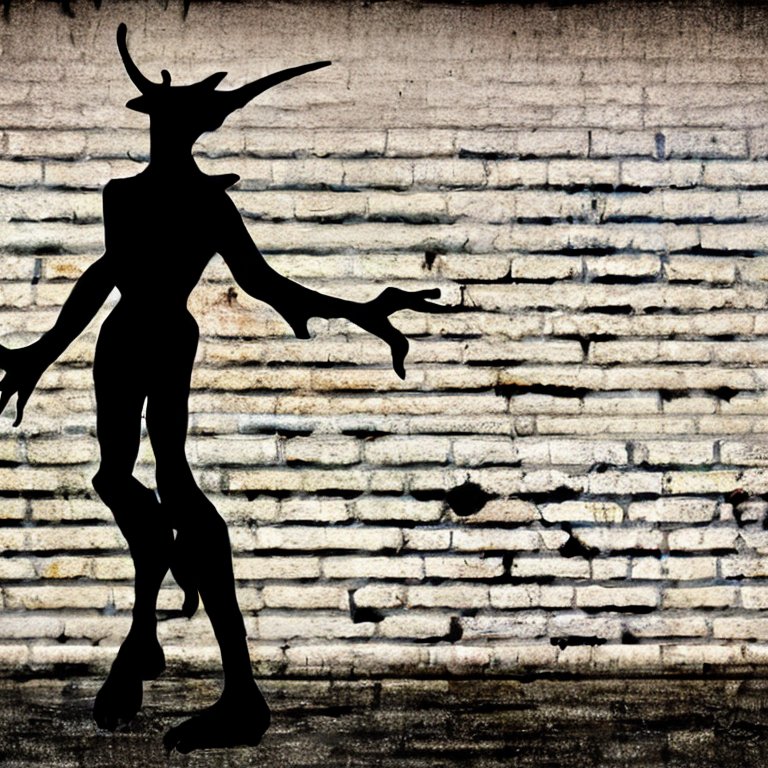
A cunning force moves through the unseen corridors of the unconscious, concealed within those who reject the parts of themselves they fear most. It does not wear horns or breathe fire, nor does it announce its presence with grand gestures. Instead, it drapes itself in the illusion of virtue, speaking with the tongue of righteousness while burying its most primal aspects beneath layers of denial.

This force is not the false prophet itself but the unclaimed shadow—the rejected fragment of the psyche that festers in the void of self-neglect. It lingers where awareness falters, whispering through the cracks of pretense, waiting for moments of weakness to make itself known. Some may catch its presence through a subtle unease, a tension within that signals something amiss. The senses pick up on what the eyes cannot see.

The more one denies this silent presence, the more erratic its manifestations become. When left unacknowledged, it erupts in impulsive behaviours, reckless speech, and actions that defy the carefully crafted image of moral certainty. It demands attention, forcing its way into reality through chaos and contradiction.

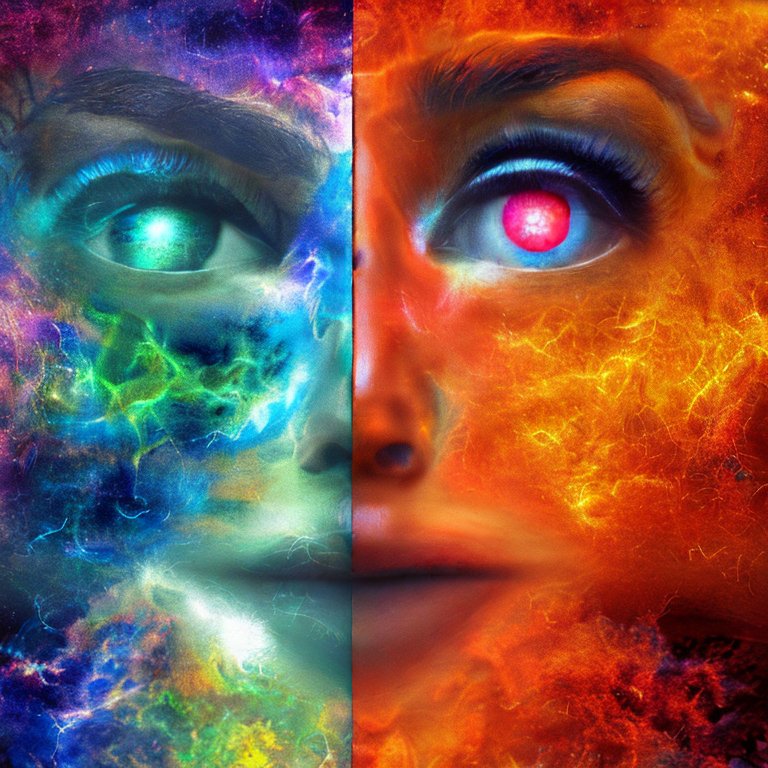
Yet, those who witness this in others must tread carefully. Casting judgment only strengthens the illusion of separation. The beast is not exclusive to one person, nor is it bound to a single host. Every individual carries a shadow—a hidden reservoir of unprocessed fears, desires, and forgotten aspects of the self. Recognizing it in another is merely an invitation to acknowledge what lies within.

True transformation does not come from condemnation but from confrontation. The journey is not about silencing the beast but understanding its purpose. When met with awareness, the shadow no longer acts out in defiance but instead becomes an ally. It teaches, refines, and reveals the depth of one’s being.

To see this force in another is an opportunity to turn inward. Rather than dismissing the reflection, one must embrace it, integrate it, and walk the path of self-illumination. Through this, judgment dissolves, tolerance deepens, and empathy emerges—not as an act of virtue but as the inevitable result of knowing oneself completely.

Morgan O. Smith

Yinnergy Meditation/Neurofeedback, Spiritual Life Coaching & My Book, Bodhi in the Brain…Available Now!

https://linktr.ee/morganosmith

Navigating the Shades of Morality

Embracing Our Humanity Through Spiritual Evolution

In the labyrinth of human experience, we often find ourselves at a crossroads between contrasting moral landscapes. This journey, fraught with myriad complexities, guides us through a transformative process—a shift from seeing the world in stark contrasts to embracing the nuanced shades of morality that define our existence. It’s a journey that doesn’t just challenge our perceptions but also enriches our understanding of what it means to be inherently human.

The Evolution of Perception

As we embark on this spiritual and psychological evolution, our initial encounters with morality are often painted in broad strokes of black and white. This dichotomy, while offering clarity, is also a testament to our nascent understanding of the moral universe. However, as we delve deeper into our journey of self-discovery and spiritual awakening, we begin to notice the emergence of grey areas. These are not mere anomalies but signposts of our evolving consciousness.

The Tug of War Within

This recognition ushers in a period of internal conflict—a tug-of-war between the polarities of good and evil, right and wrong. It’s a battle that rages within, pulling us in opposing directions. Yet, it’s through this struggle that we learn the invaluable lesson of acceptance. By integrating these disparate aspects of our being, we unlock a more profound comprehension of our nature and the world around us.


Standing Firm in the Middle

The ultimate aim of this journey is not to choose a side but to find equilibrium amidst the chaos. To stand firm in the middle is to acknowledge our capacity for both the divine and the diabolical. It is in this space that we discover true empathy and compassion, unburdened by bias and judgment. This balanced stance does not signify indifference but a deeper connection to the vast spectrum of human experiences and emotions.

The Gift of Empathy and Compassion

By embracing the grey areas of morality, we cultivate a more empathetic and compassionate perspective. This transformation is not just personal but collective, as our increased understanding and acceptance ripple outwards, influencing our interactions and relationships. In recognizing our complexities, we become more forgiving of others, bridging divides and fostering a sense of shared humanity.


Conclusion: Embracing Our Humanity

The journey through the shades of morality is an integral part of our spiritual evolution. It challenges us to confront and reconcile the complexities within ourselves, leading to a more empathetic, compassionate, and balanced existence. By standing in the middle of our moral landscape, we embrace the full spectrum of our humanity, finding peace in the acceptance of our multifaceted nature.

Morgan O. Smith

Yinnergy Meditation, Spiritual Life Coaching & My Book, Bodhi in the Brain…Available Now!
https://linktr.ee/morganosmith

The Paradox of Suffering

A Perspective on Compassion’s Existence

In a world untouched by suffering and misfortune, one might ponder compassion’s existence or even the necessity. This philosophical contemplation leads us to a profound question: If there were no suffering, would the concept of compassion still hold any significance?

Central to this debate is the idea of the Absolute at the causal stage, a concept that suggests a higher power or universal force responsible for orchestrating the cause and effect in our lives. This notion posits that events and situations are not merely random occurrences but deliberate creations intended to foster specific outcomes or experiences.

Within this framework, suffering and misfortune are seen not as unfortunate byproducts of existence but as essential elements in a grander scheme. They are the variables that necessitate and give birth to compassion. It’s as if the universe, or the Absolute, constructs scenarios to evoke and observe the act of compassion.

This perspective suggests a universe where compassion is a response to suffering and a desired outcome, a necessary expression in the cosmic play. It implies that our experiences of pain and grief are not just happenstances but are integral parts of a larger, perhaps even cosmic, narrative. This narrative is about enduring hardships and the opportunity these hardships present for compassion to arise and flourish. In this view, suffering is not meaningless; rather, it catalyzes the expression of compassion, which could be argued as one of the purest forms of human connection and empathy.

But this viewpoint is not without its controversies. It raises questions about the nature of the Absolute and its role in human affairs. Is suffering deliberately inflicted by a higher power for its amusement or purpose? Does this make the act of compassion a mere tool in a larger, possibly indifferent cosmic game? These questions challenge our understanding of morality and the nature of existence itself.

Furthermore, this perspective can be seen as a double-edged sword. On one hand, it gives a deeper meaning to our struggles, suggesting that our pain and the compassion it invokes are part of a grand, meaningful process. On the other, it might lead to a fatalistic or passive acceptance of suffering, undermining efforts to alleviate it.

In conclusion, the idea that suffering is necessary for compassion presents a challenging yet thought-provoking viewpoint. It forces us to examine the deeper implications of our experiences and the potential purpose behind them. Whether one sees this as a comforting thought or a disturbing implication, it undoubtedly opens up a rich field for philosophical and ethical exploration.

Morgan O. Smith

Yinnergy Meditation, Spiritual Life Coaching & My Book, Bodhi in the Brain…Available Now!

https://linktr.ee/morganosmith

Embracing the Infinite

Understanding Para Brahman as the Ultimate Reality

God, referred to as Para Brahman in this context, represents the absolute of all absolutes – an entity encompassing everything from the beautiful to the good, the bad, and the ugly. This concept presents a holistic view of divinity, not limited to only the positive or traditionally ‘godly’ aspects but encompassing all facets of existence.

Para Brahman, in many Eastern philosophies, particularly in Hinduism, is seen as the highest form of Brahman – the ultimate reality or cosmic spirit. This interpretation of God goes beyond the traditional Western notion of a deity who is separate from its creation. Instead, Para Brahman is seen as both immanent and transcendent, existing within and beyond all things.

This idea challenges our typical understanding of divinity and morality. It suggests that everything in existence, regardless of our human judgments of good or bad, is part of this ultimate reality. This inclusive view of the divine implies a deeper, perhaps incomprehensible, unity to all aspects of existence.


This perspective can be both comforting and disconcerting. Comforting, because it suggests a universe that is intrinsically connected and purposeful. Disconcerting, because it challenges our notions of morality and justice, blurring the lines between what we typically consider ‘good’ and ‘evil.’

Such a viewpoint can lead to a more compassionate and understanding approach to life. Recognizing that all aspects of existence, including what we perceive as negative or undesirable, are part of a greater whole, can foster a sense of tolerance and empathy. It encourages us to look beyond our immediate judgments and understand the broader context of life’s events.

However, it also raises complex questions about free will, destiny, and the nature of existence. If everything is part of Para Brahman, what does that say about individual agency and the consequences of our actions? Are good and evil just human constructs with no basis in the ultimate reality? These answers lie within.


In conclusion, viewing God as Para Brahman – the absolute of all absolutes – offers a profound and encompassing perspective on divinity and existence. It challenges our conventional views and invites us to contemplate the deeper connections and meanings of all that occurs in our lives and the universe at large.

Morgan O. Smith

Yinnergy Meditation, Spiritual Life Coaching & My Book, Bodhi in the Brain…Available Now!
https://linktr.ee/morganosmith

The Pursuit of Absolute Nothingness

A Journey Towards Enlightened Emptiness

Introduction: In the dynamic, incessant stream of thoughts, preferences, and subjective biases that characterize the human experience, the concept of attaining a state of Absolute Nothingness captivates imaginations. Is it possible to achieve a mental and emotional vacuum where thoughts, biases, judgments, and self cease to exist?

Understanding Absolute Nothingness:

  • Absolute Nothingness isn’t simply the absence of thought, but a profound emptiness that transcends understanding and defies our typical notions of existence and selfhood.
    • Exploring philosophical and theological contexts (Buddhism’s Sunyata or Zen’s Mu) can unveil varied interpretations and methods to approach nothingness.
  • The Paradox of Pursuing Nothingness:
  • Engaging in a quest towards absolute emptiness ironically imposes a desire and a goal, an antithesis to the state of desirelessness intrinsic to nothingness.
    • Considering the Daoist perspective, acting without intention (Wu Wei) might provide insights on pursuing without pursuing, and attaining without seeking.
  • Dismantling the Self:
  • Dissolving the self involves peeling away layers of personal identity, biases, and preconceptions, effectively blurring the lines between self and non-self.
    • This dismantlement raises questions about existence, consciousness, and whether one can truly function without the scaffold of selfhood in a society constructed upon individual identity.
  • Navigating Through Socio-Cultural Paradigms:
  • The endeavour to transcend preferences, judgments, and selfhood might be perceived as antithetical to societal norms that emphasize individuality, accomplishment, and progress.
    • Achieving absolute nothingness within the structural and cultural boundaries of our world presents a paradox between isolation and immersion in societal dynamics.
  • Ethical and Moral Dimensions:
  • The state of having no judgments, preferences, or perspectives raises questions regarding moral and ethical obligations. Does transcending biases and perspectives dissolve moral compasses?
    • Exploring the ethical implications of an unbiased existence may unravel whether absolute neutrality coexists with moral responsibility.
  • Psychological and Neuroscientific Perspectives:
  • The psychological viability of achieving a state devoid of thought and self-perception opens an intriguing discourse. Can one’s mental health be preserved, or even enhanced, in a state of nothingness?
    • Neuroscientific inquiries might delve into the processes and consequences of perpetually inhibiting cognitive and emotional functionalities to sustain a blank slate of consciousness.
  • Relinquishing Time and Anticipation:
  • With no anticipation, worries, or references to the past or future, time dissolves into an irrelevant concept, creating a perpetual ‘now’ with neither history nor destiny.
    • Contemplating a timeless existence fosters a reflection on how human experiences, relationships, and endeavours are intimately entwined with temporal perception.

Conclusion: Absolute Nothingness, both as a philosophical concept and a spiritual aspiration, navigates through paradoxes, ethical conundrums, and existential inquiries, offering a mesmerizing void that invites and perplexes. The possibility and implications of achieving a state devoid of self-thought, and time present not only a spiritual journey but also a philosophical and scientific exploration into the profound depths of consciousness and existence.

Morgan O.  Smith

Yinnergy Meditation & My Book, Bodhi in the Brain…Available Now!
https://linktr.ee/morganosmith

Dancing with Shadows

The Devil as Society’s Dark Projection

Intro:

As we sail through the oceans of human consciousness, we often encounter tempests that unveil the darker facets of our nature. If the divine represents society’s golden shadow, virtues, and aspirations, could the devil figure embody society’s dark shadow, a reflection of our collective id and repressed instincts? This article plunges into the depths of this unsettling yet captivating hypothesis.

Understanding the Dark Shadow:

Carl Jung posited the existence of the shadow as a component of the unconscious, housing both positive and negative elements that are not integrated into the conscious self. The dark shadow encompasses the negative aspects – our fears, impulses, and darker instincts.

The Devil as Society’s Dark Shadow:

Across cultures, the devil often symbolizes the epitome of evil, temptation, and the darker aspects of human nature. By projecting these qualities onto a devil figure, society externalizes its inner darkness, creating a ‘scapegoat’ onto which it can cast its sins and unwanted characteristics.

The Collective Unconscious and the Id:

Sigmund Freud’s concept of the id complements Jung’s shadow. The id is the instinctual part of the mind that contains sexual and aggressive drives and desires. Society’s projection of the id onto the devil may represent a form of collective defence mechanism, an attempt to deal with the disconcerting aspects of our nature.

The Devil as an Archetype:

In Jungian terms, the devil can be seen as an archetype, a universal symbol that dwells in the collective unconscious of mankind. This archetype manifests in various forms in different cultures, but its core characteristics usually represent the antithesis of societal norms and moral values.

Facing Our Demons:

Recognizing the devil as a projection of society’s dark shadow calls for the courageous endeavour to face our inner demons. Individuals and societies can work towards a more balanced and authentic existence by accepting and integrating these shadow aspects.

Conclusion:

The notion of the devil as society’s dark shadow casts a new light on the traditional narratives of good and evil. It invites us to reflect upon how the figures of deities and demons are not only external entities but also potent symbols of the complexities of human nature. Through understanding these shadows, society stands on the precipice of deeper self-awareness and a more holistic grasp of the human condition.

Morgan O. Smith

Yinnergy Meditation & My Book, Bodhi in the Brain…Available Now!

https://linktr.ee/morganosmith

The Constructed Sovereign Born from our Profound Void

The Illusion of Divinity and the Awakening of Inner Sovereignty

When we summon the image of an omnipotent moral authority, an unseen deity, we’re sketching a spectre birthed within the confines of our minds. This entity isn’t a divine phenomenon, but an offspring of our collective ego — an abstract amalgamation of ethics, morality, societal norms, rules, and dogmas. It thrives within the interconnected webs of our cultural and religious environment, existing as a part of us we’ve divorced from our understanding, enthroned too high in sacred spheres to accept it as our creation.

This fabricated deity stands as a sentinel, shielding us from the lure of a so-called demon, our id. This id, a tempestuous, liberated facet of our psyche, intimately bound to our physicality, represents the part we battle relentlessly. It’s in this internal war where the dream of resolution dawns, an arena where the ego and the id duel to claim dominance, awaiting a day when one will stand victorious upon the self’s throne.

We hold a solution in our grasp. Yet when enlightened souls, unhindered by societal constructs, attempt to illuminate the truth about this divine entity, we recoil. We revile them with hushed condemnations, predicting their doom by the flickering light of divine retribution. We imagine they’ll be smitten by a wrathful deity, ironic considering we believe this god granted us the right to reason critically and voice our truths.

Despite the inflexibility of our beliefs, the spectre remains. Even if we dismantle our collective ego, or raze all institutional bodies of authority and religious tenets, this deity will endure. Its eradication would unleash the collective id in a surge of high entropy chaos, shredding order, poised to reconstruct once our desires breed more disillusionment.

So, we are left under the shadow of a perceived dominator, who indeed governs as long as we believe it defends virtue. We extol this deity as the supreme entity, blind to the reality that we, the self-proclaimed limited beings, are the puppeteers. The stern god we fear is merely a man-made construct, a mythical lord over a land it doesn’t possess. We’re the true sovereigns, unknowingly directing a god on a leash, a faithful creature that bows to our every whim.

I implore you to see beyond the shimmering facade of your golden idol. The essence of the authentic divine, indivisible from us, is the omnipresent force permeating the All. To fathom the authentic divine is to realize there’s no puppet god, and in embracing this enlightenment, we shatter the chains of ignorance.

A creator does exist, but not outside of you. The world you perceive as external is an extension of your internal narrative. You are Consciousness, Spirit, Existence, and Ultimate Reality embodied, performing the roles of physical, psychological, and emotional existence. You are not merely a being, but a Presence, an omnipresent force enacting a grand cosmic play of energy, particles, atoms, cells, objects, systems, and their operational mechanics. This essence, forever within your grasp, is empowered by your belief in it, yet you offer this power to a creator birthed from you, the genuine Almighty.

Morgan O. Smith

Yinnergy Meditation & My Book, Bodhi in the Brain…Available Now!

https://linktr.ee/morganosmith